Stories

October 25, 2023

SHARE:

For years, Cantonese Americans/Canadians like Sheldon Ho have struggled to learn Mandarin, feeling like existing language learning apps weren’t designed with them in mind.

Through the Canto to Mando Blueprint, there’s a solution that takes advantage of their existing Cantonese knowledge to help them master Mandarin in a fraction of the time.

The Canto to Mando Blueprint is the brainchild of Sheldon, who personally struggled for years with Mandarin learning. Not only has it helped countless Cantonese Americans reconnect with their Chinese culture, but it has also enabled them to learn more of their native tongue.

The success of this program speaks for itself – it has over 400 students and counting! It’s time for the world to take notice of this groundbreaking innovation in language learning. 

Read through as Sheldon shares more about his story and how the Canto to Mando Blueprint is changing the game for Cantonese Americans learning Mandarin.

FAILING TO LEARN CHINESE AS A KID

Growing up, I was really resentful of my culture.

I think having failed at learning Chinese as a kid made me detached from my Chinese culture and resent it. As a result, I grew up hating being Chinese and always felt it was uncool. It made me want to be “extra” Western. 

I would speak to my parents in English intentionally instead of Cantonese and as a result, my Cantonese became mediocre. I never realized this all came as a result of having failed Chinese as a kid but now that I’m older, I can see how things would have been different had I learned the language better when I was young. I would have learned more about my culture, and ancestors, and since the culture is naturally pretty cool, I would have definitely embraced it more.

AN ASIAN AMERICAN CHINESE LANGUAGE LEARNER’S PERSPECTIVE

The big thing plaguing the language learning industry is learning resources that are made for the mass market. I think that language learning businesses definitely cater to the mass market with good reason. ALL Americans Can benefit from one single Chinese learning resource made for English speakers. There’s a lot more money in that space because the market is a lot larger and they have the opportunity to help more people. Given that logic, there’s absolutely no incentive to make something for the Cantonese American market.

Another thing plaguing the language learning industry is having solely native speakers teaching the language. This is due to the curse of knowledge. It’s when you know too much in your brain and you can’t relate to your students as much anymore. They actually find it HARDER to learn from you. 

That’s why from an Asian American Chinese language learner’s perspective, I think representation is really important. I think having more Asian American teachers as opposed to pure Chinese teachers is really beneficial. 

When I was learning, all teachers were from China and while their Mandarin level was top-notch, there was a gap in their ability to relate to my struggles as a Chinese learner. This is because they have never been in my position as they grew up in a 100% Chinese environment. Employing techniques made for kids in China doesn’t work the same with us.

This is why most Asian Americans flunked out of Chinese school when they were kids. It’s made by native Chinese people who don’t understand the differences between the struggles of learning Chinese here in the West vs in China. In the same way, I also can’t relate to the struggles they may have faced learning English. I can confidently say that I’m probably not gonna be a good English teacher because I don’t understand the struggles ESL learners face. 

On the other hand, I understand very well what struggles Cantonese Americans may face when trying to learn Mandarin and improve their Cantonese. I literally went through all those struggles myself. I was the kid unable to write his own Chinese name.

THAT “YOU LOOK CHINESE BUT YOU CAN’T SPEAK CHINESE” MOMENT

I’ve tried countless times to learn Mandarin. I think I’ve had “I’m gonna learn Mandarin this year” as my new year’s resolution for like 10 years straight.

Each time I failed, I wasted MORE time but more importantly, it made me feel like more of a failure. I felt like maybe I was just too dumb to learn my language, maybe I was just too dumb overall. How many more tutors, apps, and university classes am I gonna waste time and money on?

I went through my lowest point when I was unable to talk to the family of the girl I was dating at the time. It was a really big “you look Chinese but you can’t speak Chinese” moment for me where I felt quite embarrassed.

It was a big mental hurdle that really messed with me. Things changed when I finally took time to think about how I could learn by leveraging my existing Cantonese. What if I just took my Cantonese and brought it over to Mandarin? Through an arduous process of figuring out how to do that, I finally learned Mandarin. 

Once I learned this, I realized how easy it is to learn this language for Cantonese speakers. I realized that we’ve been being taught wrong all our lives and that is the reason why we haven’t been able to learn. This motivated me to create this platform. I wanted to help Cantonese Americans finally get this Mandarin learning thing handled and hopefully through that, help them with embracing their culture.

CANTONESE AMERICANS ARE IN A WEIRD MIDDLE GROUND

I always felt that Mandarin was so hard to learn. It always baffled me that I was thrown into the same class as Craig, someone who had no Chinese background at all. 

I tried so many different learning apps and went to so many different Mandarin classes and tutors in college and it was ALWAYS the same. We always wasted WEEKS on basic stuff like “ni hao.” This felt stupid to me as a Cantonese person. I knew “ni hao.”

Cantonese Americans are in a weird middle ground. For the most part, we speak just enough Cantonese to have an advantage over people with no Chinese background – yet we can’t read Chinese, and aren’t good enough to take advantage of Mandarin resources meant for true native Canto people in Hong Kong which leverage your Cantonese. As a result, we have to stick with English resources made for white people.

So fundamentally, when setting up our program the only goal in mind was to create something for Cantonese Americans who can speak a little bit of Cantonese. We wanted to make something for the Cantonese American who spoke a little but couldn’t read or write Chinese. We’d teach them all the fundamentals while leveraging their existing Cantonese.

PLATFORMS MADE FOR PURE ENGLISH SPEAKERS CAN’T DO THIS

With our method, students improve their Cantonese while learning Mandarin. Most Cantonese speakers want to learn Mandarin but it’s also important to them that they improve in their heritage language. 

Because Mandarin and Cantonese have such similar structures – if you know how to leverage them, you can improve on both languages at the same time. This way, as your Cantonese gets better, so does your Mandarin, and vice versa.

Platforms made for pure English speakers can’t do this since they’re not made for Cantonese speakers. The next thing is the speed at which you learn. Our students start speaking literally from day 1 because we’re essentially just teaching you how to bring your Cantonese over to Mandarin in the beginning. 

There are a lot of tips and tricks that make things a lot faster. For example, the Cantonese ‘G’ becomes a Mandarin J about 80% of the time. This takes away a lot of the memorization work when it comes to learning Mandarin. 

So the main difference is just the speed of learning. It’s a lot faster. I don’t want to say the other apps or university courses don’t work because of course they do. But when you have to wait months for marginal results it’s really easy to get discouraged. That’s why we made it a PRIORITY to get people speaking from Day 1 so they see results right away.

SUCCESS STORIES

A large portion of our students happens to be in healthcare. There was this nurse who often felt ashamed at work. Chinese patients would reach out to her because she looked Chinese but when she couldn’t reply in Mandarin – she would feel sad for being unable to help her own people. This is what made her reach out to me and within the first couple weeks of doing the program, she shared with us how good it felt to be able to communicate with Chinese patients, and that was a big win. 

Another success story is about this girl who wanted to surprise her parents with her Mandarin. She started texting them on day one of the program, and it made them really happy.

But my favorite story is about one of our students who had been dating her Taiwanese boyfriend for 10 years. Each time she hung out with his family, it’d be in English. She would have very basic and shallow conversations with her boyfriend’s mom. Note that it’s been 10 years!

Recently, she told me that she had a full Mando conversation with her boyfriend’s mom and that she was so excited that she could finally speak Mandarin. If I could put it in her words, it was like the mom went from being almost mute to being the most talkative person in the world! Excitement grew on her face and she said “OMG I can take you to Taiwan now and show you everywhere!”

IT’S WHAT I WISH I HAD

What we have is a program and curriculum specifically designed for Cantonese Speakers to leverage their Cantonese (no matter what level) to learn Mandarin and improve their Cantonese. 

Along the way, we have tutors for support who are fluent in BOTH Cantonese, Mandarin, and English. From my experience, oftentimes, Mandarin tutors only speak one language. They speak Mandarin amazingly – but the lessons aren’t conveyed in the best way in English. They can’t convey certain concepts to English speakers. We make sure our tutors are able to do that, as well as in the Cantonese perspective. Lessons are all given with the Cantonese English Perspective in mind.

The truth is, in most cases, Mandarin tutors are overqualified in the wrong thing. Cantonese diaspora don’t need someone who studied classical chinese literature and classical chinese to teach them Mandarin. They just need someone who can speak good Mandarin, and understands how to convey that effectively in English to them.

We make sure our tutors have that. I took big a part in training our tutors on how to view things from a Cantonese-American perspective. 

I’ve been through the journey myself as a Cantonese Canadian who learned Mandarin. I pretty much know what each student will struggle with, where the pain points will be, and what type of questions everyone will have. I’ve poured that knowledge into the program and poured that knowledge into our tutors. 

An example is the simple understanding that Cantonese Americans can speak a little bit of Cantonese, but can’t read or write Chinese. How do you tailor-make something for that person? That’s what we sat down for months to figure out. It’s what I wish I had.

HOW THE COMMUNITY HAS RECEIVED THEM

The Cantonese American community has been really thankful to have something made for them.

A lot of people dealt with the same struggles I dealt with so I’ve received a lot of comments from people thanking our team for what we’re building as well. 

From the broader language learning community, there’s been a lot of intrigue about seeing a course that dives this deep into linguistics. We really dug into textbooks to find information like how Cantonese tones map to Mandarin and at what percentage. For instance, it’s really fascinating to know that you can map your Cantonese tones to Mandarin with about 80% accuracy. This means that Cantonese speakers can essentially skip memorizing Mandarin tones and still be right about 80% of the time. This is knowledge that takes YEARS off the Mandarin learning curve.

PROGRAM TAKEAWAYS

Three things that I hope users will take away from using our platform and learning Mandarin through our program:

  • How beautiful Chinese culture is and how great it feels to reconnect with it. If they can get a deeper sense of belonging and more interest in their roots, that’d be incredible.
  • A deeper love for Cantonese. Through our program, students will also improve their Cantonese. As they learn about the differences between Cantonese and Mandarin, they’ll see that Cantonese has its own writing system that makes it really unique. Through this, I hope they feel more pride as Cantonese speakers. I grew up resenting my Cantonese side because Mandarin is more popular – but ironically, as I learned more Mandarin, I grew to love Cantonese more and more.
  • A renewed sense of confidence in their ability to learn. A lot of people feel traumatized as kids because Chinese school was so ineffective. We feel that we’re failures because we couldn’t learn our native tongue and then make memes on subtle Asian traits to feel better about ourselves. I can confidently say that the way they teach Chinese in the West is not the best. I want to help people recover and feel better from that Chinese school trauma.

MANDO TO CANTO

I was surprised by how many Mandarin speakers are interested in learning Cantonese so I’m excited to share that the next big project we’re working on is Mando to Canto! We’re currently in the R&D phase.

CONNECT WITH SHELDON 

Instagram: @sheldonhoho
Related Articles

the business journals-jpg

News

Immigrant Entrepreneur JJ Xu Empowers Communication and Entrepreneurship

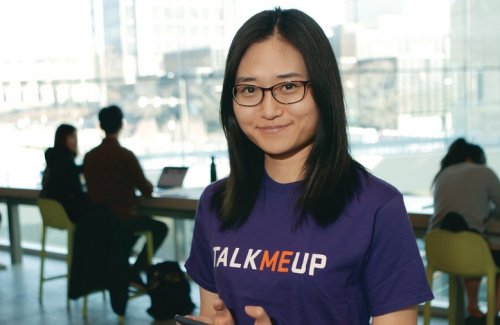
This series shines a light on accomplished immigrant entrepreneurs who have made significant contributions to the business landscape in the United States. Hailing from China, Xu’s journey from her homeland to becoming the founder and CEO of the award-winning tech startup TalkMeUp is a testament to the potential immigrants bring to the world of entrepreneurship.

EIG is a Washington, DC-based, bipartisan public policy organization that advocates for a diverse and innovative American economy. Since immigrants make up 14% of the US population, over 30% of US innovators, and 38% of Americans who have won the Nobel Prizes in physics, chemistry, and medicine since 2000, Xu’s story serves as a prime example of the importance of fostering an atmosphere that encourages immigrant talent and achievements.

According to Yahoo! Finance, Xu’s experiences in diverse roles, including positions at Groupon and Huawei, provided Xu with invaluable insights into effective communication and cross-cultural dynamics. Recognizing the gap in accessible communication training resources, she embarked on a mission to democratize communication skills through TalkMeUp.

TalkMeUp, Inc. is based in Pittsburgh with deep roots in Carnegie Mellon University. It has pioneered solutions that propel business success through the art of effective communication.

Driven by a mission to empower individuals and organizations worldwide, TalkMeUp’s AI-powered platform allows professionals to gauge their communication effectiveness and audience engagement during video interactions. Through personalized practice and training, TalkMeUp equips users with the essential communication attributes required for career advancement and seamless transitions.

Featured Image Source: The Business Journals

Luxe Du Jour-jpg

Stories

Luxe Du Jour is Making Luxury Fashion More Sustainable and Accessible and This is How

Luxury fashion gets a new face with Luxe Du Jour, a brand driven by innovation and purpose. Tammy Phan, the visionary behind the brand, embarked on this journey to bridge a gap in the market for selling high-end designer handbags. Her pursuit of accessible luxury has reshaped the industry.

Beyond fashion, Luxe Du Jour has redefined the concept of luxury itself. Through Luxe Bag Rental, they’ve unlocked a unique way to experience elegance without the hefty price tag. With a commitment to Recycle, Reuse, and Restore, they’re championing sustainability. Each pre-owned item holds a story of responsible consumption.

Luxe Du Jour’s journey has been marked by challenges, but their ethos remains unwavering. With education and community at the core, they’re leading the charge toward a future where luxury is synonymous with accessibility, ethics, and sustainability.

Join us as we delve deeper into their story.

HOW IT WAS FOUNDED

Luxe Du Jour all started with solving a problem for the founder, Tammy Phan, where she struggled to find a trustworthy place to sell high-end designer handbags. Back then, it was only eBay or your local clothing consignment shop. But eBay was a nightmare of dealing with lowballers, scam payments, and tie wasters and the local clothing consignment shops took 50-60% in commission.

Phan knew there had to be a better way so she started to sell her items on Instagram when the platform was peaking which was the start of the company. Luxe Du Jour ended up building a community on social media and the rest is history!

ABOUT THE FOUNDER

Phan grew up poor to immigrant parents. The typical expectations of her being a doctor or engineer were the only means of success in her parents’ eyes. However, life did not pan out that way for Phan, and she had to drop out of high school to get a job to help support herself, because she thought by doing this—it would be one less child for her parents to worry about financially. 

Phan’s strong desire for luxury stemmed from not growing up around it, and she made it her goal to one day be able to afford a designer handbag. She worked hard, saved enough money and did just that.

Discovering her one Chanel bag increased in value over time and being able to profit on it after she sold it years down the road sparked a joy that she knew she wanted others to experience. Thus beginning an interest in the value of the luxury designer resale market!

Her mission is to make designer luxury more affordable, accessible, and sustainable.

LUXE BAG RENTAL

Shopping for pre owned designer luxury has not changed in the last decade and the prices of designer luxury constantly keep increasing but the shopping experience in store hasn’t changed or evolved to make the price hikes worth it. 

Why are we able to test drive cars before committing thousands of dollars to it and not be able to do that with expensive designer handbags that also cost thousands of dollars even $10,000+?

Luxe Bag Rental saw a huge hole in the market that women wanted to constantly switch up their styles more often, try it before they buy it, or just wear an item once for a special event or photoshoot without the hassle of trying to sell it after. Luxe Bag Rental clients now get to experience a completely new way of shopping and trying out designer fashion. If they love the bag, they can opt for rent-to-own. It gives consumers a chance to really experience the items first-hand providing a smarter and more approachable way to shop. 

REDUCE, REUSE, RECYCLE

Everything done at Luxe Du Jour integrates the 3 R’s.

When you shop or sell preowned, you are RECYCLING that designer handbag. When you rent with Luxe Bag Rental you are REUSING that designer handbag and when you restore a bag back to life with Luxe Bag Spa you are REDUCING waste because a bag you were not going to wear anymore due to its damage now has a second chance at being worn and loved again!

It takes up approximately 629 kg of CO2 to produce one leather handbag so we are reducing a lot of carbon emissions every time a designer handbag is sold, rented, or restored! The fashion industry is so wrapped up in having everything brand new, Luxe Du Jour wants to focus on how to normalize pre-owned and continue to find ways to push for positive environmental impact. 

AUTHENTICITY AND SUSTAINABILITY

Authenticity is the core of Luxe Du Jour’s business. A 3-step authentication process is done to ensure authenticity for every item sold or rented out hence why Luxe Du Jour offers a lifetime guarantee or you get your money back.

A rise of counterfeits and fast fashion has flooded the market and Luxe Du Jour focuses on educating our community on the negative impacts of buying counterfeit and fast fashion by building a community and nurturing that community to  fulfill their needs.

LOOKING FORWARD

We aspire for Luxe Du Jour to be a huge disrupter in designer luxury fashion and want to lead the path so that the luxury giants follow and want to be a part of the positive impact we are making for those who love authentic designer luxury.

Luxe Du Jour will continue to be innovative and bring a new look to preowned.

CONNECT WITH LUXE DU JOUR

Website: luxedujour.ca

Instagram: @luxedujour

Tiktok: @shopluxedujour

Facebook: Luxe Du Jour

YouTube: Luxe Du Jour

Pinterest: Luxe Du Jour

Twitter: @luxe_dujour

ezgif.com-webp-to-jpg (4)-jpg

News

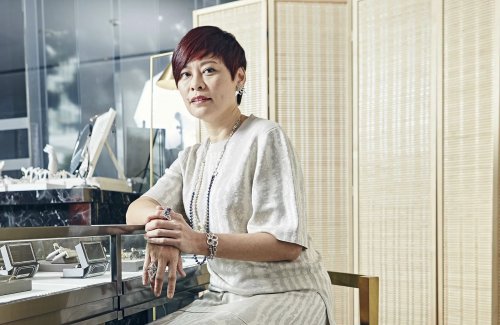
Carolyn Kan’s Impactful Journey in Crafting Stories through Jewelry Design

Carolyn Kan, the visionary behind Carrie K Jewellery, has left an indelible mark on Singapore’s creative landscape.

Known for her intricate fine jewelry reflecting Southeast Asian heritage, wit, and emotion, Carolyn’s influence transcends mere craftsmanship. Her unwavering commitment to the local creative community adds depth to her legacy.

To Carolyn, that means trying new things to make special jewelry. It’s not just about looking nice; it’s about making jewelry that has feelings and meaning, like a piece of art you can wear.

The pandemic made her think about why her jewelry matters. She realized her designs show love and comfort even when times are tough. “Our designs share messages of love,” she explains, showing how important her work is.

From fun accessories to really well-made jewelry with special metals and gems, Carrie K Jewellery shows how much Carolyn cares about celebrating life and love. She also focuses on being creative and making jewelry that fits different styles and moods.

Aside from the beautiful design, Carolyn’s jewelry is also good for the Earth. She makes pieces that you can use in lots of different ways, so you don’t need too many things. She also has a special service where she takes old family jewelry and makes it new again. This helps keep special memories alive.

Now that the pandemic is over, Carolyn wants to share her jewelry with more people and make different kinds of engagement and wedding pieces. She’s found new ways to work with people from far away, making special jewelry that tells their stories.

Featured Image Source: Her World SG

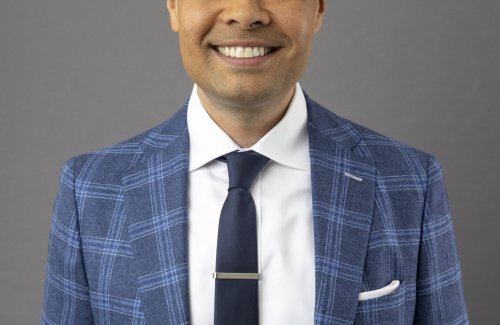
Mike Yam poses in the studio on Thursday, July 14, 2022 in Inglewood, California

Stories

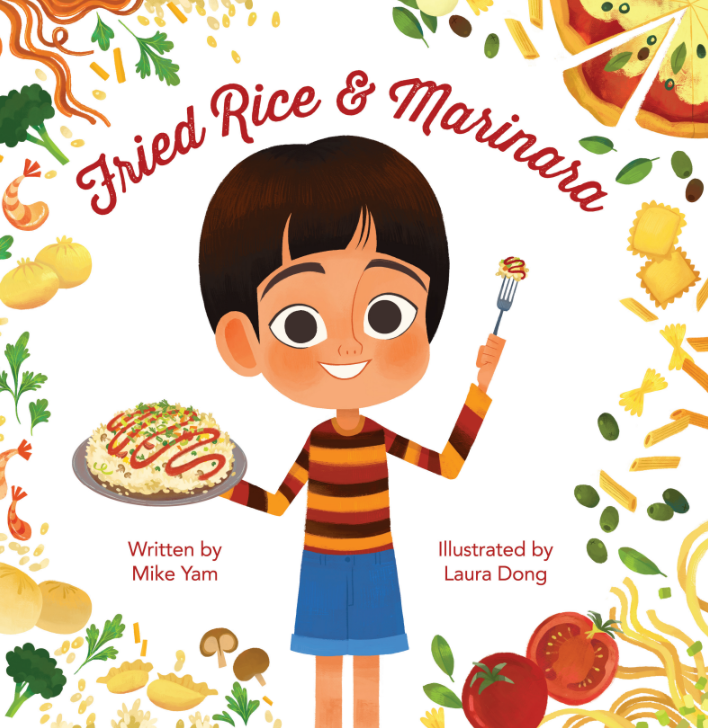
Michael Yam’s Mission to Empower Readers with His Children’s Book ‘Fried Rice and Marinara’

Michael Yam, the host of NFL Total Access on NFL Network, has now ventured into the world of children’s books with his first-ever creation, “Fried Rice and Marinara.”

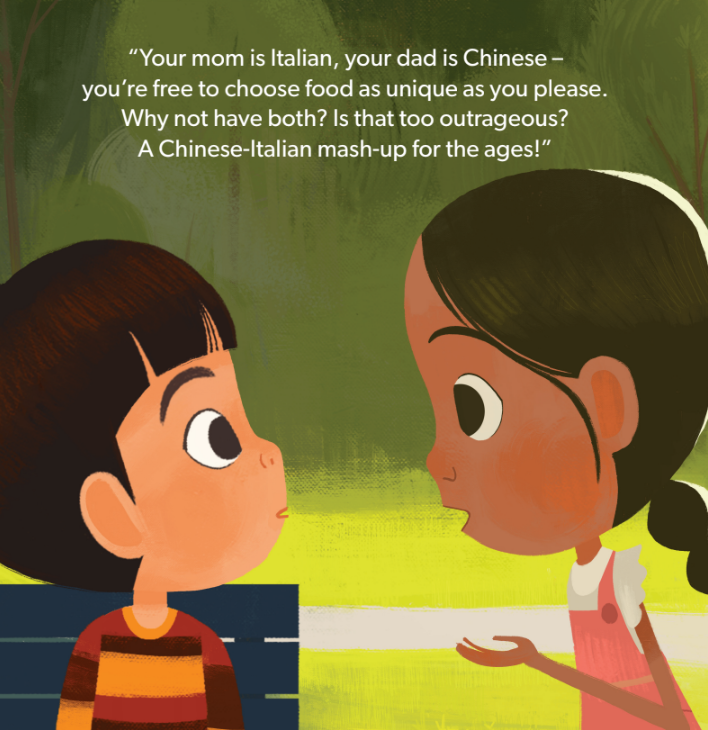
This heartwarming tale revolves around Mikey Yam, a character just like Michael, who cherishes both his Chinese and Italian heritage. Michael wrote this story to show young readers that it’s okay to have a diverse background and to be proud of who they are.

Drawing inspiration from his own life, Michael wanted to share the joy of embracing different cultures with children. In “Fried Rice and Marinara”, he uses the magic of food to bring the story to life and spark curiosity about diverse backgrounds. Through this delightful book, Michael hopes to encourage kids to learn about their own heritage and appreciate the uniqueness of others.

As a first-time children’s book author and illustrator, Michael faced some challenges, but his passion for storytelling and connecting with young readers drove him forward.

Read through as we learn more about Michael and how he aims to inspire all children to feel confident in their identities with his book “Fried Rice and Marinara”, through an interview with Asian Hustle Network.

BREAKING BARRIERS WITH “FRIED RICE AND MARINARA”

During the course of my career, I have been fortunate enough to speak to students about a path in broadcasting. I have always been disheartened by the lack of Asian representation in media classes. Aside from cultural factors, I believe the lack of widespread representation at high levels of sportscasting is a major reason why Asian American students are picking other career paths.

Strengthening the pipeline is one of the ways I think this changes. If young kids can see themselves in stories, I think it can spark an interest in storytelling. 

MIKEY YAM AS A MULTIETHNIC LEAD CHARACTER

As a kid, I didn’t think anything of the different cultures. I always knew I was Chinese and Italian, but as I got older, I realized that my friends didn’t have to think about or balance multiple cultural experiences that were very different.

Part of the reason I wanted to write “Fried Rice and Marinara” was to have young readers see a multiethnic character in a lead role. I also wanted to spark the thought that families with diverse backgrounds are normal.

At times in my childhood, I thought I had to “pick a side”, which is weird to think about now. I really want young kids to be able to embrace their heritage and be proud of their background. I know for my family, food was a backdrop to everything we did. I wanted to use cuisine as a vehicle to bring the story to life.

NAVIGATING BOTH SIDES OF HIS HERITAGE

First and foremost, it’s about embracing both cultures. I think many people focus on the differences between ethnicities, but we would all be in a better place if we gravitated to what’s the same.

Both my Chinese and Italian sides value family and the joy that comes from spending time with each other. I have fond memories of BBQs as a kid and my birthday parties having both Italian and Chinese food. 

CHALLENGES HE FACED IN THE WRITING PROCESS

I’ve spent my career telling the stories of athletes. I’m comfortable in that realm, but with “Fried Rice and Mariana”, it’s the first time I tried to connect with a young audience in a medium I’ve never worked in.

I have always loved having fun with my nieces and nephews, telling them crazy stories at home. I tried to imagine telling them this story as if we were in person. No, I can’t rhyme on the fly like in the book, but it’s about the tone.

I always love asking kids questions to see where their mind goes. If you notice at the back of the book, there is a page that gives kids an opportunity to write their funky food combinations with the ability to draw them, too. It’s really important to me that the experience with the book doesn’t end when they’re finished reading it. 

WHAT HE HOPES FOR READERS TO TAKE FROM HIS BOOK

I want young Asian readers to be able to see themselves as a main character in a story.

According to a study conducted by the University of Wisconsin (2022) you are nearly as likely (39% BIPOC/37% Animal/Object) to see a children’s story about an animal or object than you are to see a story depicting a character from a diverse background. I see that as a problem. 

I want all children to be exposed to various cultures. The child who doesn’t often get to see characters who look like them will hopefully feel confident and have more self-worth. My hope is other children will be exposed to other cultures and develop an appreciation for experiences different from their own.  

CONNECT WITH MIKE YAM

Instagram: @Mike_Yam

Twitter: @Mike_Yam

Threads: @Mike_Yam