Blogs, Development

December 19, 2025

SHARE:

The creator economy is no longer a niche corner of the internet. It is a $250 billion industry, powering modern marketing, culture, and commerce. Yet for the creators at its core, the experience often remains unstable and fragmented. Inconsistent rates, shifting platform demands, and “gifting” budgets paired with outsized expectations have left many navigating an ecosystem that hasn’t caught up to their value.

As we look toward 2026, the industry is approaching a tipping point. Growth alone is no longer enough. What creators need now are standards, systems, and support that allow them to build sustainable careers—not just viral moments.

Below are five critical shifts shaping the future of creator work, and the standards Meraki is building to support a stronger, more intentional industry.

1. Stronger Structure for a Growing Industry


Photo courtesy of Vivian Kwan (center), Founder of Meraki Group

While creator content has never been more polished, the backend of the industry remains disorganized. Uneven pay scales, scope creep mid-campaign, and unclear paths to professional growth are still common. Creators are often met with constant brief changes or “gifting” requests that require high-level deliverables without fair compensation.

The gap: There is no shared structure defining fair rates, clear deliverables, or realistic timelines across the industry. Expectations are often implied rather than stated, leaving creators to absorb last-minute changes, unpaid revisions, and expanded usage. Over time, this places most of the financial and emotional risk on creators instead of being shared evenly with brand partners.

The Meraki solution: Meraki builds every partnership on clarity. Terms and rates are established upfront, expectations are clearly defined, and communication stays transparent throughout the process. By setting strong boundaries early, creators are protected from underpayment, and brands begin each project with a shared roadmap for success.


2. Education That Powers Careers, Not Just Content


Image Source: Pexels

The biggest challenges creators face are rarely creative. They are structural. Pricing work correctly, understanding usage rights, and identifying harmful contract clauses remain major pain points—even for experienced creators.

Too often, creators are expected to learn these lessons the hard way.

The gap: Most creators enter the industry without access to professional guidance that supports long-term career growth. Knowledge around contracts, licensing, and negotiation is often gatekept or learned through costly mistakes. As a result, many creators stay stuck in short-term cycles instead of building sustainable paths forward.

The Meraki solution: Meraki focuses on training ethical, creator-first managers who act as true career partners. Through negotiation support and education around contract red flags, creators are equipped to think beyond the next deal and toward sustainable, multi-year growth.


3. Standards in Negotiation and Contracts


Image Source: Pexels

A significant number of creators still undercharge for their work, and 26% report needing help navigating contracts. Without standardized deal benchmarks, creators are often left guessing their worth—leading to pay gaps, rights misuse, and legal risk.

The gap: Negotiation norms vary widely, with no clear benchmarks for fair compensation or usage terms. Many contracts are written in dense legal language that creators are expected to sign without full understanding. This imbalance leaves creators vulnerable to losing control of their work and long-term earning potential.

The Meraki solution: Meraki empowers creators with defined negotiation standards and the confidence to secure fair, market-value deals. By demystifying contracts and usage terms, creators can focus on their craft knowing their income and intellectual property are protected.


4. Work Models That Protect Wellbeing


Image Source: Pexels

Burnout has become one of the industry’s most pressing issues, affecting more than half of full-time creators. The always-on model—driven by algorithm shifts and last-minute deadlines—is no longer sustainable.

Creativity cannot thrive under constant urgency.

The gap: Many campaigns are built around speed and volume rather than realistic creative timelines. Creators are expected to be constantly available, adapt instantly, and produce under pressure without recovery time. Over time, this erodes both creative quality and mental health.

The Meraki solution: Meraki advocates for structured planning and sustainable workflows. Campaign timelines are built to protect both creative quality and mental health, proving that high-level output does not require constant exhaustion.


5. Representation Rooted in Voice, Not Trends

 

Image Source: Pexels

Creators are increasingly resistant to being reduced to labels or treated as trend-driven checkboxes. True representation starts with understanding a creator’s voice—not forcing them into a predefined brand narrative.

The gap: Many partnerships remain transactional, prioritizing short-term relevance over genuine alignment. Creators are often selected to fill a category rather than for their perspective or long-term vision. This leads to inauthentic work that disconnects creators from their communities.

The Meraki solution: Meraki begins every partnership by listening. By understanding each creator’s goals and vision, Meraki aligns them with brands that share their values—fostering long-term relationships that feel authentic to both the creator and their community.
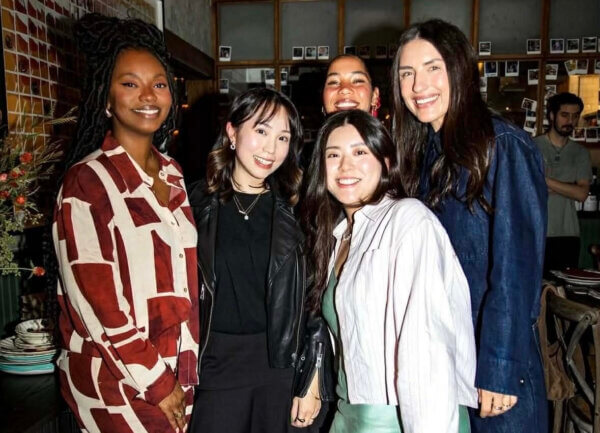
 

Photo courtesy of Vivian Kwan (second from left), Founder of Meraki Group


The Next Era: Purpose Over Pressure

As we look toward 2026, the transition from a “Wild West” to a professionalized industry requires more than just better tools—it requires a fundamental shift in how we value the humans behind the content. 

Meraki sits at the center of this new era, bridging creative passion with real professional growth. By pushing for fair standards, ethical representation, and sustainable careers, Meraki does more than manage creators; they help protect the future of creative work.wi

Learn more about Meraki Group:

📍Website

📍Instagram 

Related Articles

Image Source: K.M. Cannon / Las Vegas Review-Journal

News

Rochelle Nguyen Sits As The First Asian American Nevada Senator

Clark County Commission appoints Nevada’s first Asian American senator, Rochelle Nguyen, a state assemblywoman. 

“I plan on working hard to ensure we are adequately funding our public schools, that health care is affordable as well as accessible, and that all voices are represented,” Nguyen said, who will replace former state Sen. Chris Brooks for a job in the private sector.

Nguyen was nominated by Senate Majority Leader Nicole Cannizzaro, D-Las Vegas. The new Nevada senator’s appointment to the Finance, Judiciary, and Health and Human Services committees for the next parliamentary session was made public by the Democratic caucus. She will hold the position’s vice chair.

The caucus acknowledged her efforts on “landmark” legislation, which included reforming the criminal justice system, regulating short-term rental agencies, and advocating for victims of domestic abuse.

When Brooks was elected to the state Senate in 2019, Clark County made the decision to nominate Nguyen to replace Brooks in the Assembly. She eventually won the election for the seat in both 2020 and 2022.

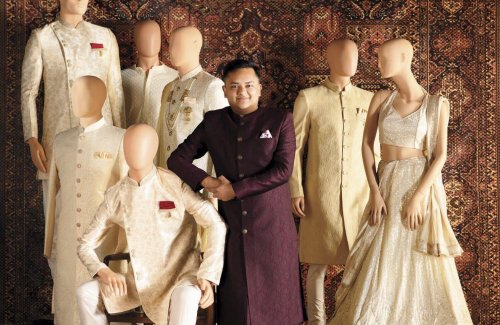
Image Source: Vedant Fashions

News

Vedant Fashions Founder Made It To India’s Richest List From Selling Affordable Indian Wedding Couture

Ravi Modi started Vedant Fashions in 1999 with the Manyavar brand, selling pajamas, saris, sherwanis(long-sleeved outer coats), kurtas, lehengas (ankle-length skirt), and salwar sets (trouser-and-tunic combination).

Vedant Fashions designs clothes but outsources bulk of the manufacturing. It currently has 590 outlets in 228 Indian towns and 13 in North America and the UAE. 

Manyavar is its flagship men’s line, while Mohey is its 2015 women’s collection. Both are mid-premium or affordable aspirational.

According to Forbes, Modi listed 15% of the company on the Indian stock exchanges in February—the basis of his $3.75 billion fortune that adds him to the ranks of India’s richest this year for the first time.

Modi grew up with three sisters in Kolkata. His father was a first-generation entrepreneur who opened a clothes company in 1975. Kolkata’s AC Market is one of the city’s earliest air-conditioned markets, including clothing, jewelry, and electronics retailers. 

The 45-year-old billionaire lives in a big bungalow on the outskirts of Kolkata where he grows his own fruits and vegetables. With 30 years of retail expertise, he provides a fresh perspective on money and career. “Earning wealth without earning time is meaningless,” he told Forbes.

Moreover, according to Forbes, he spends a quarter of his time on business, asset management, and philanthropy, and the rest on health, relationships, and learning. His daily activities include meditation, yoga, and studying strategies of retailers such as LVMH, Nike, and Uniqlo.

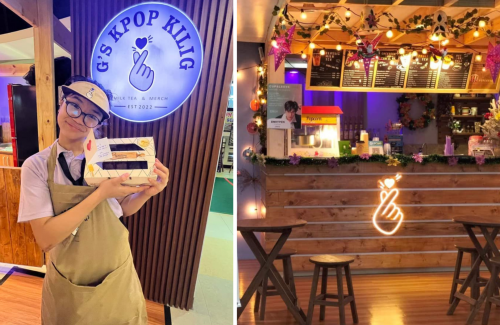
Image Source: G’s Kpop Kilig Facebook

Stories

13-Year-Old Took Her Fangirling Into Greater Heights, Opens a K-Pop Inspired Milk Tea Shop

Filipino teenager Given Mendoza turned her fangirling into a business. As a K-Pop fan, she loves collecting merch of her favorite Korean pop idols. 

Given realized that these items can increase in value. She then found a way to earn by reselling them and worked on growing the business.

With the business’ great potential, the 13-year-old launched her online store, G’s KPop Kilig, “I decided to buy some albums for myself. I also bought some extra albums to sell, to see if I can earn profit,” she told the local news.

Later on, she was able to save enough to open a physical store in Baguio City, Philippines, and sells milk tea and K-Pop merch. As an “Army ”of the popular Korean group BTS, she also incorporates some inspiration to her milk teas.

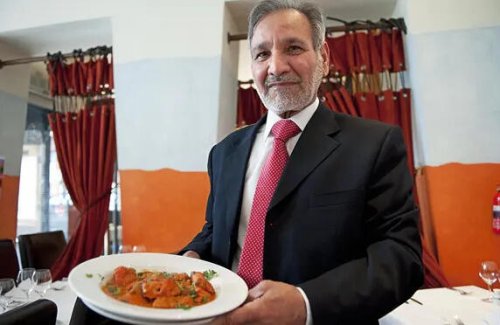
Image Source: AFP News Agency

Stories

British-Pakistani Chef Ali Ahmed Aslam Who Invented Chicken Tikka Masala Passes Away at 77

Ali Ahmed Aslam, a chef who is thought to have created Britain’s favorite curry the ‘chicken tikka masala’, passed away at the age of 77.

Aslam’s death was announced by his Glasgow restaurant, Shish Mahal, which closed for 48 hours as a sign of respect. His funeral was held at Glasgow Central Mosque, where the public was invited to attend.

Aslam was born in Pakistan and moved to Glasgow as a child, establishing Shish Mahal in 1964.

Aslam told the AFP news agency that he came up with the chicken tikka masala in the 1970s after a customer asked if there was a way to make his chicken tikka less dry. He then added a creamy tomato sauce.

In 2009, Aslam advocated for the city to be recognized as the chicken tikka masala’s birthplace.

He pushed for Glasgow to get EU Protected Designation of Origin status for its curry and introduced an early-day motion. However, several other places in the UK have claimed to have originated the dish.