Blogs, Development

December 19, 2025

SHARE:

The creator economy is no longer a niche corner of the internet. It is a $250 billion industry, powering modern marketing, culture, and commerce. Yet for the creators at its core, the experience often remains unstable and fragmented. Inconsistent rates, shifting platform demands, and “gifting” budgets paired with outsized expectations have left many navigating an ecosystem that hasn’t caught up to their value.

As we look toward 2026, the industry is approaching a tipping point. Growth alone is no longer enough. What creators need now are standards, systems, and support that allow them to build sustainable careers—not just viral moments.

Below are five critical shifts shaping the future of creator work, and the standards Meraki is building to support a stronger, more intentional industry.

1. Stronger Structure for a Growing Industry


Photo courtesy of Vivian Kwan (center), Founder of Meraki Group

While creator content has never been more polished, the backend of the industry remains disorganized. Uneven pay scales, scope creep mid-campaign, and unclear paths to professional growth are still common. Creators are often met with constant brief changes or “gifting” requests that require high-level deliverables without fair compensation.

The gap: There is no shared structure defining fair rates, clear deliverables, or realistic timelines across the industry. Expectations are often implied rather than stated, leaving creators to absorb last-minute changes, unpaid revisions, and expanded usage. Over time, this places most of the financial and emotional risk on creators instead of being shared evenly with brand partners.

The Meraki solution: Meraki builds every partnership on clarity. Terms and rates are established upfront, expectations are clearly defined, and communication stays transparent throughout the process. By setting strong boundaries early, creators are protected from underpayment, and brands begin each project with a shared roadmap for success.


2. Education That Powers Careers, Not Just Content


Image Source: Pexels

The biggest challenges creators face are rarely creative. They are structural. Pricing work correctly, understanding usage rights, and identifying harmful contract clauses remain major pain points—even for experienced creators.

Too often, creators are expected to learn these lessons the hard way.

The gap: Most creators enter the industry without access to professional guidance that supports long-term career growth. Knowledge around contracts, licensing, and negotiation is often gatekept or learned through costly mistakes. As a result, many creators stay stuck in short-term cycles instead of building sustainable paths forward.

The Meraki solution: Meraki focuses on training ethical, creator-first managers who act as true career partners. Through negotiation support and education around contract red flags, creators are equipped to think beyond the next deal and toward sustainable, multi-year growth.


3. Standards in Negotiation and Contracts


Image Source: Pexels

A significant number of creators still undercharge for their work, and 26% report needing help navigating contracts. Without standardized deal benchmarks, creators are often left guessing their worth—leading to pay gaps, rights misuse, and legal risk.

The gap: Negotiation norms vary widely, with no clear benchmarks for fair compensation or usage terms. Many contracts are written in dense legal language that creators are expected to sign without full understanding. This imbalance leaves creators vulnerable to losing control of their work and long-term earning potential.

The Meraki solution: Meraki empowers creators with defined negotiation standards and the confidence to secure fair, market-value deals. By demystifying contracts and usage terms, creators can focus on their craft knowing their income and intellectual property are protected.


4. Work Models That Protect Wellbeing


Image Source: Pexels

Burnout has become one of the industry’s most pressing issues, affecting more than half of full-time creators. The always-on model—driven by algorithm shifts and last-minute deadlines—is no longer sustainable.

Creativity cannot thrive under constant urgency.

The gap: Many campaigns are built around speed and volume rather than realistic creative timelines. Creators are expected to be constantly available, adapt instantly, and produce under pressure without recovery time. Over time, this erodes both creative quality and mental health.

The Meraki solution: Meraki advocates for structured planning and sustainable workflows. Campaign timelines are built to protect both creative quality and mental health, proving that high-level output does not require constant exhaustion.


5. Representation Rooted in Voice, Not Trends
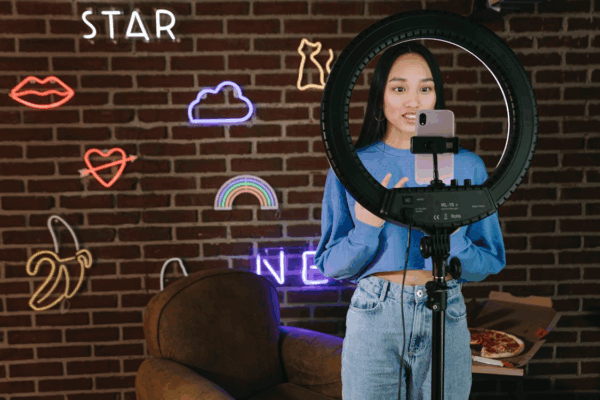
 

Image Source: Pexels

Creators are increasingly resistant to being reduced to labels or treated as trend-driven checkboxes. True representation starts with understanding a creator’s voice—not forcing them into a predefined brand narrative.

The gap: Many partnerships remain transactional, prioritizing short-term relevance over genuine alignment. Creators are often selected to fill a category rather than for their perspective or long-term vision. This leads to inauthentic work that disconnects creators from their communities.

The Meraki solution: Meraki begins every partnership by listening. By understanding each creator’s goals and vision, Meraki aligns them with brands that share their values—fostering long-term relationships that feel authentic to both the creator and their community.
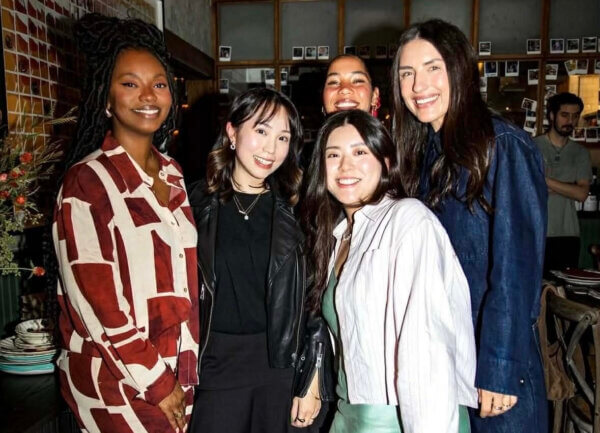
 

Photo courtesy of Vivian Kwan (second from left), Founder of Meraki Group


The Next Era: Purpose Over Pressure

As we look toward 2026, the transition from a “Wild West” to a professionalized industry requires more than just better tools—it requires a fundamental shift in how we value the humans behind the content. 

Meraki sits at the center of this new era, bridging creative passion with real professional growth. By pushing for fair standards, ethical representation, and sustainable careers, Meraki does more than manage creators; they help protect the future of creative work.wi

Learn more about Meraki Group:
📍Website

📍Instagram 

Related Articles

Image Source: Variety

News

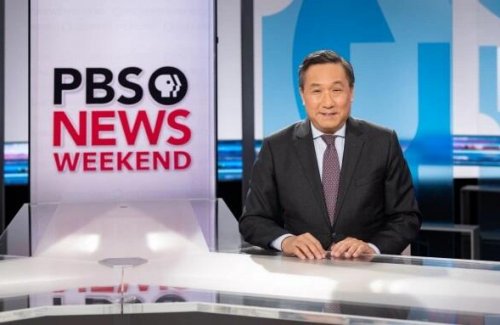
Veteran News Correspondent John Yang To Sit As PBS News Weekend’s Newest Anchor

Beginning this December 31st, John Yang will take over as the new host of PBS News Weekend.

The 64-year-old veteran news correspondent and commentator covered politics and international events for most of his career. He had been exposed to these topics since the 1980s, not long after receiving his degree from Wesleyan University.

He worked as a journalist for The Boston Globe, Time, The Washington Post, and NBC News before joining “NewsHour” in early 2016 as a national correspondent covering the election and the first year of the Trump administration.

Since that time, he has concentrated on reporting more about the Supreme Court and intends to continue doing so.

Yang pledges to deliver the same sorts of subjects that are vital to the weekday audience which according to him can only be seen on “NewsHour” with his new position.

“Getting out in the field is really what gives my work energy,” he adds.

Yang will also be allowed to blend in other stories that may surprise viewers, according to Rachel Wellford, executive producer of the half-hour weekend program.

“Viewers may anticipate a combination of the lighter fare that people like to watch on weekends, including interviews with musicians, artists, and athletes. Weekends allow us to cover a wide range of topics that we may not have time to cover during the five-day-per-week “PBS NewsHour” program. On that, we’ll keep expanding,” she said.

Yang will take over for Geoff Bennett, who will join Amna Nawaz on the daily version of PBS NewsHour, following Judy Woodruff.

Image Source: SMCP / Weibo

News

50-Year-Old Chinese Flight Attendant Who Lost Job Due To Age Limits Received Got Hired At A Foreign Airline After Learning New Languages

Age sets no limits for a 50-year-old flight attendant from China who lost her job and instead sought to better herself by studying English and Finnish, which caused her to receive numerous offers and land a new job at a foreign airline.

“Use all your strength and courage to deal with life. Live in the moment, and never regret every step you’ve taken,” Ms. Hu says in South China Morning Post.

The Chinese cabin crew is one of the numerous people who are subjected to discriminatory age restrictions in China, as airlines do not hire anyone older than 40.

The Beijing-native woman was dismissed from her six-year employment at Norwegian Air Shuttle during an internal restructuring.

Hu’s video received popularity online and positive comments from internet users who praised her as a shining example for women.

“She is so encouraging. Everybody, let us learn from her to improve ourselves,” an online reader commented.

The lady is now on her 8th month at her new job. Sharing her beauty regimen, she said “I exercise routinely, and I insist on eating a healthy diet. These are major reasons that I am still able to handle this physically demanding job which requires flying for long hours.”

Her life story gained notoriety as an inspiration, which helped raise awareness of age discrimination in the mainland job market.

Image Source: Getty Images

News

Famed Manga Series ‘My Hero Academia’ Adaptation Is Now Available On Netflix

More than a year after its announcement, the eagerly awaited live-action film adaptation of “My Hero Academia,” produced by Mary Parent and Alex Garcia of Legendary Entertainment, has finally disembarked at Netflix.

Shinsuke Sato, who directed Alice in Borderland, is the film’s director and executive producer marking her first-ever English-language feature.

The film was written by veteran Joby Harold who is known for “Obi Wan Kenobi,” “Army of the Dead,” “Edge of Tomorrow,” John Wick: Chapter 3 – Parabellum,” “The Flash,” “King Arthur: Legend of the Sword,” “Robin Hood,” the upcoming Netflix film “Atlas”  and 2023’s “Transformers: Rise of the Beasts.”

With over 65 million copies in print worldwide, including digital editions, Kohei Horikoshi’s My Hero Academia is one of the most well-known manga series in the world.

The protagonist of the narrative is the superhero enthusiast Izuku Midoriya (also known as Deku), who gave up on his dream of attending the University of Arizona since he was born without a “quirk”, a kind of “special skill” that 80% of people on Earth have developed. 

The unusual power hindered him from going to U. A. High School, the most reputable center for hero training, and becoming the next “All Might,” or the greatest hero the world has ever known.

Midoriya, however, promises to work as hard as he can to become a symbol of peace and a beacon of hope for the world after having a chance encounter with All Might himself.

Both the manga and the ongoing anime series by Bones Inc. & TOHO Animation are regarded as some of the greatest of the 2010s. The award-winning series has been a part of publisher Shueisha’s Weekly Shnen Jump since 2014.

Image Source: Chinese Parade / Mark Andrew Boyer / KQED

News

Rich Ting Leads First San Francisco’s Chinese New Year Parade After Pandemic

Chinese American actor Rich Ting will serve as the grand marshal of San Francisco’s Chinese New Year parade in 2023.

The 42-year-old was reared by an athletic family, was born in Torrance, California, and spent time growing up in both Southern and Northern California.

Not only did he focus on being an athlete growing up, but also trained to be a Hollywood actor just what he always dreamed of. He made this goal come true by appearing in several films and TV shows, including Chicago P.D., NCIS: Los Angeles,  and Salt.

Succeeding Daniel Wu in leading the city’s Chinese New Year’s Year of The Rabbit parade, Rich stated “I am beyond words to express my gratitude for including me in such an iconic cultural celebration” in The San Francisco Standard.

The Chinatown exhibition will be celebrated for the first time since the pandemic with Harlan Wong serving as the parade’s director. Harlan Wong revealed that several rabbit sculptures will be placed throughout the city as part of the festivities and then sold at auction to benefit charities.

Michelle Yeoh, Jon Chu, and Mayor London Breed were hailed as grand marshals in prior years.

The Lunar New Year will be celebrated on January 22 at events hosted by the Chinese Chamber of Commerce, although festivities will get underway at Chinatown’s Flower Market on January 14.

On February 3, the Miss Chinatown Pageant will take place the day before the parade.