Blogs, Development

December 19, 2025

SHARE:

The creator economy is no longer a niche corner of the internet. It is a $250 billion industry, powering modern marketing, culture, and commerce. Yet for the creators at its core, the experience often remains unstable and fragmented. Inconsistent rates, shifting platform demands, and “gifting” budgets paired with outsized expectations have left many navigating an ecosystem that hasn’t caught up to their value.

As we look toward 2026, the industry is approaching a tipping point. Growth alone is no longer enough. What creators need now are standards, systems, and support that allow them to build sustainable careers—not just viral moments.

Below are five critical shifts shaping the future of creator work, and the standards Meraki is building to support a stronger, more intentional industry.

1. Stronger Structure for a Growing Industry


Photo courtesy of Vivian Kwan (center), Founder of Meraki Group

While creator content has never been more polished, the backend of the industry remains disorganized. Uneven pay scales, scope creep mid-campaign, and unclear paths to professional growth are still common. Creators are often met with constant brief changes or “gifting” requests that require high-level deliverables without fair compensation.

The gap: There is no shared structure defining fair rates, clear deliverables, or realistic timelines across the industry. Expectations are often implied rather than stated, leaving creators to absorb last-minute changes, unpaid revisions, and expanded usage. Over time, this places most of the financial and emotional risk on creators instead of being shared evenly with brand partners.

The Meraki solution: Meraki builds every partnership on clarity. Terms and rates are established upfront, expectations are clearly defined, and communication stays transparent throughout the process. By setting strong boundaries early, creators are protected from underpayment, and brands begin each project with a shared roadmap for success.


2. Education That Powers Careers, Not Just Content


Image Source: Pexels

The biggest challenges creators face are rarely creative. They are structural. Pricing work correctly, understanding usage rights, and identifying harmful contract clauses remain major pain points—even for experienced creators.

Too often, creators are expected to learn these lessons the hard way.

The gap: Most creators enter the industry without access to professional guidance that supports long-term career growth. Knowledge around contracts, licensing, and negotiation is often gatekept or learned through costly mistakes. As a result, many creators stay stuck in short-term cycles instead of building sustainable paths forward.

The Meraki solution: Meraki focuses on training ethical, creator-first managers who act as true career partners. Through negotiation support and education around contract red flags, creators are equipped to think beyond the next deal and toward sustainable, multi-year growth.


3. Standards in Negotiation and Contracts


Image Source: Pexels

A significant number of creators still undercharge for their work, and 26% report needing help navigating contracts. Without standardized deal benchmarks, creators are often left guessing their worth—leading to pay gaps, rights misuse, and legal risk.

The gap: Negotiation norms vary widely, with no clear benchmarks for fair compensation or usage terms. Many contracts are written in dense legal language that creators are expected to sign without full understanding. This imbalance leaves creators vulnerable to losing control of their work and long-term earning potential.

The Meraki solution: Meraki empowers creators with defined negotiation standards and the confidence to secure fair, market-value deals. By demystifying contracts and usage terms, creators can focus on their craft knowing their income and intellectual property are protected.


4. Work Models That Protect Wellbeing


Image Source: Pexels

Burnout has become one of the industry’s most pressing issues, affecting more than half of full-time creators. The always-on model—driven by algorithm shifts and last-minute deadlines—is no longer sustainable.

Creativity cannot thrive under constant urgency.

The gap: Many campaigns are built around speed and volume rather than realistic creative timelines. Creators are expected to be constantly available, adapt instantly, and produce under pressure without recovery time. Over time, this erodes both creative quality and mental health.

The Meraki solution: Meraki advocates for structured planning and sustainable workflows. Campaign timelines are built to protect both creative quality and mental health, proving that high-level output does not require constant exhaustion.


5. Representation Rooted in Voice, Not Trends

 

Image Source: Pexels

Creators are increasingly resistant to being reduced to labels or treated as trend-driven checkboxes. True representation starts with understanding a creator’s voice—not forcing them into a predefined brand narrative.

The gap: Many partnerships remain transactional, prioritizing short-term relevance over genuine alignment. Creators are often selected to fill a category rather than for their perspective or long-term vision. This leads to inauthentic work that disconnects creators from their communities.

The Meraki solution: Meraki begins every partnership by listening. By understanding each creator’s goals and vision, Meraki aligns them with brands that share their values—fostering long-term relationships that feel authentic to both the creator and their community.
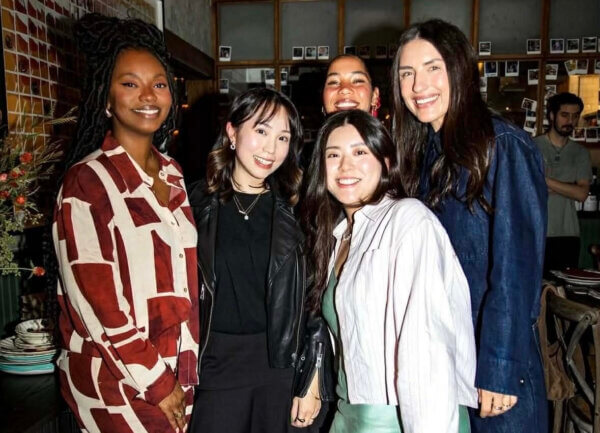
 

Photo courtesy of Vivian Kwan (second from left), Founder of Meraki Group


The Next Era: Purpose Over Pressure

As we look toward 2026, the transition from a “Wild West” to a professionalized industry requires more than just better tools—it requires a fundamental shift in how we value the humans behind the content. 

Meraki sits at the center of this new era, bridging creative passion with real professional growth. By pushing for fair standards, ethical representation, and sustainable careers, Meraki does more than manage creators; they help protect the future of creative work.wi

Learn more about Meraki Group:
📍Website

📍Instagram 

Related Articles

Image Source: Strait Times

Stories

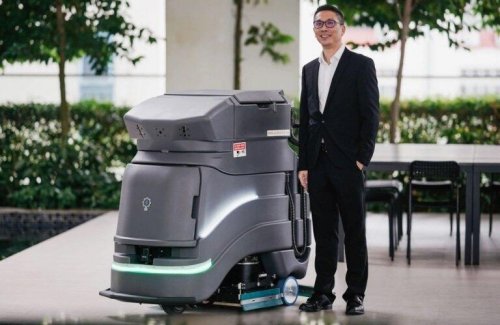
What Motivated A Cleaner To Become Singapore’s Primech Services & Engineering CEO

Starting out poor and being dumped by a girl because she saw no better life with a cleaner is truly a successful and inspirational story for a man who now makes fortune.

Instead of getting frustrated, Vernon Kwek used his heartbreak and the discrimination he went through from his girlfriend who chose a university guy over him as a motivation of working hard and striving further in life.

The 48-year-old is now Singapore’s Primech Services & Engineering CEO who owns a 10% share in the company.

Simultaneously, Vernon also runs A&P Maintenance Services and Maint-Kleen, two other cleaning companies handling some of the biggest companies in Singapore, including Changi Airport Group, with over 3,000 employees under his power.

Vernon was born to a humble family. When he was barely 13 years old, he helped his father find a new job after losing the latter’s job as a salesman.

After his father was accepted as a cleaning supervisor, Vernon manifested his hard work and family-orientedness by helping his father in cleaning toilets and offices during the weekends.

A year after, he gave up school just to work as a full-time cleaner to help his family. Being a responsible teenager, he was shortly promoted to cleaning supervisor at the age of 14.

“I asked the manager if he was sure. My dad became a supervisor only when he was 40. I was only 14. But he said: ‘Don’t worry. You have your dad’s genes. He has leadership qualities, you should have the same too,’” Vernon shared in Strait Times

Later on, he was again promoted to a higher position as a senior supervisor until he finally became the company’s CEO.

Nevertheless, Vernon experienced many downfalls in his journey but never lost hope as he was determined to have a better life. Now, he is a successful family man with four kids.

Image Source: Weilyn Chong Linkedin

Stories

A College Freshman’s “Failure Class” Podcast Project Paved Her Way To Times Square

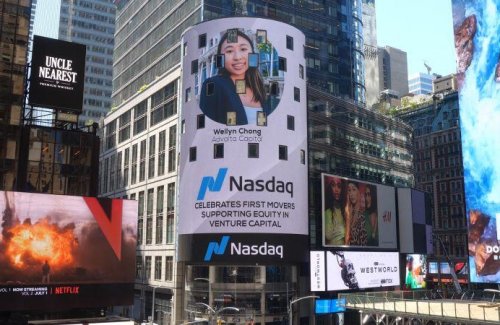
When Weilyn Chong’s name and photo appeared on a Times Square billboard from the Nasdaq Tower, it instantly went viral, inspiring many young Singaporeans to pursue entrepreneurial endeavors.

Weilyn acknowledges the value of entrepreneurship in Southeast Asia despite the fact that the majority of her work with founders is focused in the US.

Growing up, 20-year-old Weilyn Chong has lived from one place to another between Singapore, Hong Kong, and the Netherlands which made her immersed in varied cultures.

Weilyn’s global exposure enabled her to be more flexible in dealing with many kinds of people especially since their family annually joins in Singapore Global Network events.

Despite their frequent moves, Weilyn’s mother made sure to give them a strong sense of connection to their roots by taking them to see their grandparents, spending time with family, and eating Singaporean food. 

The Singaporean third-year economics student at Princeton University expressed how being among passionate individuals inspires her.

Weilyn started a podcast about women entrepreneurs with her failure project for “The Other ‘F’ Word” class when she was still a freshman, and she has since enjoyed it.

Together with her high school friend Ali Debow, she even converted it into a regular extracurricular activity by co-founding The Entrepre女ers Network, a podcasting startup that connects and promotes female entrepreneurs with topics including design, young changemakers, and Gen Z female founders.

Weilyn wants to increase the visibility of female business owners and give them connections opportunities. Her team has spoken with over 130 creators in a year and increased their listenership and social media reach to 30,000.

She said that they hope to get young females to dream of being an entrepreneur and understand that entrepreneurship doesn’t have to look a specific way.

Learning that bias happens between genders in the global arena as only 2% of total venture capital funding goes to women because they are women, she attended a conference put on by the Nasdaq Entrepreneurial Center (NEC) to address the complex issue of inequity in venture for entrepreneurs of color and women entrepreneurs.

There, she met people from the Center and expressed her interest to get involved in the work they do in any capacity. 

She was asked to join the NEC board in order to represent Generation Z and put a spotlight on young entrepreneurship.

“I grew up thinking those two things are mutually exclusive – either you do charity work or you make money. But what we’re seeing is that you can raise a lot of money and make a positive impact on the world,” she said on CNBC.

Image Source: Taho Klasiko

Stories

Former Teachers Went Outside of Their Comfort Zones, Found Success in MilkTea-Inspired Taho Shop

Both Filipino educators, Camille Ona and Marvin Paclibare found a different world and passion out of their classrooms during the pandemic as teachers-turned-entrepreneurs and founders of Taho Klasiko, a special milk tea-inspired taho shop.

Breaking free from their first-loved profession, the two sculpt their name as entrepreneurs who choose to walk into another path.

Marvin said that if not for the pandemic, he might still be teaching now just as he thought that he would forever be a teacher. He also added how he realized that there is a bigger world waiting outside teaching.

With people becoming more mindful of their health, especially during the onslaught of the pandemic, Marvin said that they eyed tendering a healthier version of milk tea.

The shop attained a grand slam as the two now earn 6-digit figures per month, an amount far way better than their incomes as teachers in the Philippines.

Camille mentioned in an interview that although they are still passionate about teaching, they just chose to be practical.

Despite entering the world of business, the owners are still having the vibe of teaching as entrepreneurs who are open to learning and improving their craft just like when they were still teaching.

They also shared that they hired working students to extend help to them. 

As a piece of advice, the former teachers said that would-be entrepreneurs should go outside of their comfort zones and open their ways to many opportunities.

“It’s not enough that you have a dream; you need to work hard to make it a reality,” Camille added.

Image Source: Shark Tank

Stories

Slime Company Started By High School Student In His Garage Made $1.2 Million Sales After Joining “Shark Tank”

Mark Lin was only 17 when he started selling food-scented slime out of his Burbank, California garage in 2020. 

He then won over venture capitalists on an episode of ABC’s “Shark Tank,” with his zeal for pitching and the amazing yield his company was generating, where $300,000 was a net profit out of the $540,000 in sales he obtained at the time.

With the assistance of a couple of his buddies, whom he employed for packaging and shipping, Lin, a high school freshman and novice in the industry, developed the slime successfully, enabling him to make $50,000 in sales in his first year of operation.

CNBC reports that Lin’s sales increased to $580,000 the following year.

Sliimeyhoney now sells edible and food-scented slimes with flavors like banana milk, hot cocoa, and birthday cake batter for between $10 and $16 per six-ounce jar utilizing Tiktok as his marketing platform.

The company consistently achieves sold-out sales for its weekly introduction of new products to its almost one million followers.

After a thorough negotiation with Kevin O’Leary and Daymond John, Lin secured $150,000 for 20% share from the two.

This, according to Lin, will be beneficial in moving his company from his garage into a warehouse and gaining mentorship while he still pursues his studies.

John was quoted saying “I believe in you, and we’re going to make sure you go to school, and I will help you with this business.”

Lin is now a first-year college student at UCLA with his company continuously rising.