Blogs, Development

December 19, 2025

SHARE:

The creator economy is no longer a niche corner of the internet. It is a $250 billion industry, powering modern marketing, culture, and commerce. Yet for the creators at its core, the experience often remains unstable and fragmented. Inconsistent rates, shifting platform demands, and “gifting” budgets paired with outsized expectations have left many navigating an ecosystem that hasn’t caught up to their value.

As we look toward 2026, the industry is approaching a tipping point. Growth alone is no longer enough. What creators need now are standards, systems, and support that allow them to build sustainable careers—not just viral moments.

Below are five critical shifts shaping the future of creator work, and the standards Meraki is building to support a stronger, more intentional industry.

1. Stronger Structure for a Growing Industry


Photo courtesy of Vivian Kwan (center), Founder of Meraki Group

While creator content has never been more polished, the backend of the industry remains disorganized. Uneven pay scales, scope creep mid-campaign, and unclear paths to professional growth are still common. Creators are often met with constant brief changes or “gifting” requests that require high-level deliverables without fair compensation.

The gap: There is no shared structure defining fair rates, clear deliverables, or realistic timelines across the industry. Expectations are often implied rather than stated, leaving creators to absorb last-minute changes, unpaid revisions, and expanded usage. Over time, this places most of the financial and emotional risk on creators instead of being shared evenly with brand partners.

The Meraki solution: Meraki builds every partnership on clarity. Terms and rates are established upfront, expectations are clearly defined, and communication stays transparent throughout the process. By setting strong boundaries early, creators are protected from underpayment, and brands begin each project with a shared roadmap for success.


2. Education That Powers Careers, Not Just Content


Image Source: Pexels

The biggest challenges creators face are rarely creative. They are structural. Pricing work correctly, understanding usage rights, and identifying harmful contract clauses remain major pain points—even for experienced creators.

Too often, creators are expected to learn these lessons the hard way.

The gap: Most creators enter the industry without access to professional guidance that supports long-term career growth. Knowledge around contracts, licensing, and negotiation is often gatekept or learned through costly mistakes. As a result, many creators stay stuck in short-term cycles instead of building sustainable paths forward.

The Meraki solution: Meraki focuses on training ethical, creator-first managers who act as true career partners. Through negotiation support and education around contract red flags, creators are equipped to think beyond the next deal and toward sustainable, multi-year growth.


3. Standards in Negotiation and Contracts


Image Source: Pexels

A significant number of creators still undercharge for their work, and 26% report needing help navigating contracts. Without standardized deal benchmarks, creators are often left guessing their worth—leading to pay gaps, rights misuse, and legal risk.

The gap: Negotiation norms vary widely, with no clear benchmarks for fair compensation or usage terms. Many contracts are written in dense legal language that creators are expected to sign without full understanding. This imbalance leaves creators vulnerable to losing control of their work and long-term earning potential.

The Meraki solution: Meraki empowers creators with defined negotiation standards and the confidence to secure fair, market-value deals. By demystifying contracts and usage terms, creators can focus on their craft knowing their income and intellectual property are protected.


4. Work Models That Protect Wellbeing


Image Source: Pexels

Burnout has become one of the industry’s most pressing issues, affecting more than half of full-time creators. The always-on model—driven by algorithm shifts and last-minute deadlines—is no longer sustainable.

Creativity cannot thrive under constant urgency.

The gap: Many campaigns are built around speed and volume rather than realistic creative timelines. Creators are expected to be constantly available, adapt instantly, and produce under pressure without recovery time. Over time, this erodes both creative quality and mental health.

The Meraki solution: Meraki advocates for structured planning and sustainable workflows. Campaign timelines are built to protect both creative quality and mental health, proving that high-level output does not require constant exhaustion.


5. Representation Rooted in Voice, Not Trends

 

Image Source: Pexels

Creators are increasingly resistant to being reduced to labels or treated as trend-driven checkboxes. True representation starts with understanding a creator’s voice—not forcing them into a predefined brand narrative.

The gap: Many partnerships remain transactional, prioritizing short-term relevance over genuine alignment. Creators are often selected to fill a category rather than for their perspective or long-term vision. This leads to inauthentic work that disconnects creators from their communities.

The Meraki solution: Meraki begins every partnership by listening. By understanding each creator’s goals and vision, Meraki aligns them with brands that share their values—fostering long-term relationships that feel authentic to both the creator and their community.
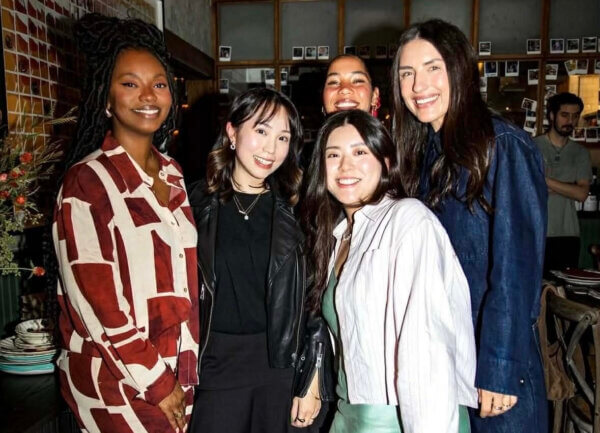
 

Photo courtesy of Vivian Kwan (second from left), Founder of Meraki Group


The Next Era: Purpose Over Pressure

As we look toward 2026, the transition from a “Wild West” to a professionalized industry requires more than just better tools—it requires a fundamental shift in how we value the humans behind the content. 

Meraki sits at the center of this new era, bridging creative passion with real professional growth. By pushing for fair standards, ethical representation, and sustainable careers, Meraki does more than manage creators; they help protect the future of creative work.wi

Learn more about Meraki Group:
📍Website

📍Instagram 

Related Articles

Nanxi and Tina

News

Blaze.tech Launches and Raises $3.5 Million Pre-Seed Round for AI-Powered No-Code Software Development

LOS ANGELES, January 11, 2023 — Blaze.tech, the smarter no-code platform that’s revolutionizing the way teams build web apps and tools, announced its official launch and has raised a $3.5 million pre-seed round led by Flybridge Capital and MaC Venture Capital. The round also included participation from investors and unicorn founders in enterprise SaaS including Vlad Magdalin (CEO, Webflow), Mada Seghete (Co-founder, Branch), Mark Schopmeyer (Co-CEO, CaptivateIQ), ACTAI Ventures, Sangha Capital, and Bill Tai. This funding round will accelerate Blaze’s growing customer base, increase the platforms’ integrations, and expand its AI capabilities. 

Today’s public launch follows a successful beta phase in which Fortune 500 companies and startups used Blaze to build dashboards, HIPAA compliant apps, complex workflows, automated invoice generators, and inventory management systems all without writing any code. Because of Blaze’s emphasis on security and its robust suite of enterprise security features, the company has found popularity with organizations in highly regulated industries like healthcare, legal, construction, transportation and logistics, and finance.

With Blaze’s AI-powered no-code platform, teams are able to create and launch highly custom and secure applications and internal tools in minutes. Blaze gives non-technical people the superpower to be entrepreneurial product builders with an intuitive all-in-one drag-and-drop interface and AI system. Blaze AI is powered by OpenAI’s GPT-3 model, the same one used by ChatGPT. App creators can tell Blaze AI to create complex workflows, automatic triggers, custom filters, advanced calculations, and more.

Blaze improves operations and productivity, and with pre-built integrations into Airtable, DocuSign, Freshdesk, Google Sheets, Salesforce, Stripe, Shopify, and many more tools, users can build multiple apps on top of their existing tech stack.

The no-code/low-code market is one of the fastest growing markets (from $25 Billion to $187 Billion in 2030), and Blaze’s unique positioning is enabling teams to build software with complexity, customizability, and security that otherwise would require writing code.

“We’re so excited to maximize the talents of people inside organizations by giving them the ability to solve business problems with software,” said Nanxi Liu, Co-CEO of Blaze. “We’re seeing individuals supercharge and significantly increase the efficiency of their team’s operations with Blaze.”

“Our users can implement their app’s business logic in just a few clicks because Blaze has done all the difficult work on the technical side to provide a platform that generates intuitive front-ends and secure, scalable back-ends,” said Tina Denuit-Wojcik, Co-CEO of Blaze.

“We are thrilled to support the Blaze team in their mission to create powerful tools and dashboards without the need for expensive engineering resources,” said Adrian Fenty, General Partner and Co-Founder of MaC Venture Capital. “Nanxi and Tina have the business acumen to be huge disruptors in the industry, and because they’ve experienced these challenges first-hand, we know Blaze is building a top-tier product.”

“Nanxi and Tina are exceptionally talented founders with deep insights into the needs of Blaze’s customer base. Having watched how well they led and capital efficiently managed their prior company to significant success, we were delighted to invest in this dynamic duo,” said Chip Hazard, General Partner and Co-Founder of Flybridge Capital.

Additional investors in the round include Dean Schnider (Partner, Najafi Companies), Felicia Curcuru (CEO of Binti), Holly Liu (Co-Founder, Kabam), Lin Capital, Michael Einziger (co-founder of the band Incubus), Mike Lu (co-founder of Triller), Root and Shoot Ventures, Socially Financed, and The K Fund.

About Blaze.tech

Blaze.tech is the smarter no-code platform that’s revolutionizing the way teams build web apps and tools. Blaze’s AI-powered platform improves operations and productivity by enabling non-technical people to build and launch custom software in minutes, without writing any code! From dashboards and workflows to portals and more, Blaze’s all-in-one-builder has pre-built integrations, security and reliability. 

Blaze is headquartered in Los Angeles and was founded in 2022. The founders, Nanxi Liu and Tina Denuit-Wojcik, previously founded Enplug, a leading digital signage software, which was acquired in 2021.

For more information, visit Blaze.tech.

Press Contact:

press@blaze.tech 

Press release documents here.

Image Source: Mila Supinskaya Glashchenko / Shutterstock

News

Indian-American’s Thriving Community Create A Positive Impact In North Texas

The rising population of Indian-Americans in North Texas is proving to be a strong force. Indian-Americans like Singh have permanently shaped North Texas’ cultural landscape in a variety of fields, including technology, education, and politics.

Tony Singh grew up with a father in the Indian Navy and moved every couple of years. Today, he’s settled in Little Elm, and even elected as councilman to serve his new neighborhood. Singh established initiatives to benefit Little Elm residents, while actively and regularly volunteering himself.

Most Indian-American employees work in only three industries: computer science and mathematics, management, and health care. Among all immigrants, Indian-Americans are the highest earners in the state. For this reason, Dinesh Hooda came to Texas in 2011 in search of employment.

Dinesh Hooda’s family had trouble adjusting until he attended India Association of North Texas’ Indian Independence Day. Through this, they established friends with Indian-Americans in North Texas who share similar experiences and struggles. Hooda is currently Uber’s senior technical program manager.

The fastest-growing ethnic group in the state is Asian, with Indian-Americans making up the majority of the group. Texas has the second-largest population of Indian Americans in the nation overall. This group will expand even more in the upcoming years, which could have a significant impact in the area. 

And while there are many struggles and difficulties to face as immigrants in the state, there are also lots of groups and communities willing to reach out to help one another and make each other feel welcome and at home.

Image Souce: olliecantos.com

News

Blind Filipino-American Civil Rights Attorney Gets Elected As West Covina City Council Member

Filipino-American Ollie Cantos, who was born with a visual impairment, is now taking his experience and knowledge to West Covina City Hall.

In 1997, he graduated from Loyola Law School in Los Angeles with a law degree. He served as a staff attorney at the Disability Rights Legal Center after graduating. He also held various roles as a civil rights attorney in the Washington, D.C. government before the coronavirus emerged.

Now, he is a sworn-in member of the West Covina city council and is looking forward to contributing back to his community, where he was raised by his Filipino immigrant parents.

“My excitement level is off the charts because this represents the culmination of a lot of hard work of countless people that got us here and when we look at the opportunities that are ahead of us to unite, and to be supportive of making the city better, this day is also historic,” Cantos said in an interview.

Cantos will collaborate with a fellow Filipino on the current city council, as Letty Lopez-Viado, the first Filipino-Mexican mayor of the city, was also elected unopposed in November. She was first elected to the city council in 2018 and served as mayor of the city from 2020 to 2021.

“Though he can’t see with his eyes, he sees with his heart,” Lopez-Viado said of Cantos as she got sworn in. “He’s a very intelligent, well-spoken gentleman, and I’m very excited to work with him.”

Image Source: Considered Objects

Stories

Japanese-American Designer Sara Sakanaka Revamps Vintage Kimonos Into Modern Clothing

Each of us has a unique way of imparting the memories, stories, and mementos we want to pass on to our future generations. As for 39-year-old Japanese-American designer Sara Sakanaka, the way is by incorporating ancient tales into modern clothing.

In her studio in Brooklyn, Sara preserves a little drawstring bag that her grandmother sewed for her decades ago. One of Sakanaka’s oldest mementos, this heirloom represents a long-standing ideology and was made from leftover fabric.

You will also find in her studio, folded stacks of rescued textiles waiting for her to stitch them into something new, exactly like her grandmother used to do as a hobby.

After her grandmother passed away, Sara began studying the kimonos she had inherited from her. She realized that giving these garments a second chance through reconstruction was a means of healing and re-establishing her identity and cultural roots.

Her initial creation was a classic, collared, button-down shirt. She embroidered a tiered patchwork flower fashioned from leftover silk scraps inside each garment she produced.

“There’s this whole idea that objects have lives,” she says in a Vogue interview. “I like to see every piece as a truly considered object in that way,” thus, naming her label as Considered Objects.

Considered Objects offers tapered silk slacks, oversized coats, two-toned vests, draped dresses, and hand-sewn accessories. Each item is made of recyclable materials, and within each garment is a silk scrap flower and a tag. Each shirt comes with a drawstring bag, a keepsake designed to be handed on like the one she inherited from her grandma.