Blogs, Development

December 19, 2025

SHARE:

The creator economy is no longer a niche corner of the internet. It is a $250 billion industry, powering modern marketing, culture, and commerce. Yet for the creators at its core, the experience often remains unstable and fragmented. Inconsistent rates, shifting platform demands, and “gifting” budgets paired with outsized expectations have left many navigating an ecosystem that hasn’t caught up to their value.

As we look toward 2026, the industry is approaching a tipping point. Growth alone is no longer enough. What creators need now are standards, systems, and support that allow them to build sustainable careers—not just viral moments.

Below are five critical shifts shaping the future of creator work, and the standards Meraki is building to support a stronger, more intentional industry.

1. Stronger Structure for a Growing Industry


Photo courtesy of Vivian Kwan (center), Founder of Meraki Group

While creator content has never been more polished, the backend of the industry remains disorganized. Uneven pay scales, scope creep mid-campaign, and unclear paths to professional growth are still common. Creators are often met with constant brief changes or “gifting” requests that require high-level deliverables without fair compensation.

The gap: There is no shared structure defining fair rates, clear deliverables, or realistic timelines across the industry. Expectations are often implied rather than stated, leaving creators to absorb last-minute changes, unpaid revisions, and expanded usage. Over time, this places most of the financial and emotional risk on creators instead of being shared evenly with brand partners.

The Meraki solution: Meraki builds every partnership on clarity. Terms and rates are established upfront, expectations are clearly defined, and communication stays transparent throughout the process. By setting strong boundaries early, creators are protected from underpayment, and brands begin each project with a shared roadmap for success.


2. Education That Powers Careers, Not Just Content


Image Source: Pexels

The biggest challenges creators face are rarely creative. They are structural. Pricing work correctly, understanding usage rights, and identifying harmful contract clauses remain major pain points—even for experienced creators.

Too often, creators are expected to learn these lessons the hard way.

The gap: Most creators enter the industry without access to professional guidance that supports long-term career growth. Knowledge around contracts, licensing, and negotiation is often gatekept or learned through costly mistakes. As a result, many creators stay stuck in short-term cycles instead of building sustainable paths forward.

The Meraki solution: Meraki focuses on training ethical, creator-first managers who act as true career partners. Through negotiation support and education around contract red flags, creators are equipped to think beyond the next deal and toward sustainable, multi-year growth.


3. Standards in Negotiation and Contracts


Image Source: Pexels

A significant number of creators still undercharge for their work, and 26% report needing help navigating contracts. Without standardized deal benchmarks, creators are often left guessing their worth—leading to pay gaps, rights misuse, and legal risk.

The gap: Negotiation norms vary widely, with no clear benchmarks for fair compensation or usage terms. Many contracts are written in dense legal language that creators are expected to sign without full understanding. This imbalance leaves creators vulnerable to losing control of their work and long-term earning potential.

The Meraki solution: Meraki empowers creators with defined negotiation standards and the confidence to secure fair, market-value deals. By demystifying contracts and usage terms, creators can focus on their craft knowing their income and intellectual property are protected.


4. Work Models That Protect Wellbeing


Image Source: Pexels

Burnout has become one of the industry’s most pressing issues, affecting more than half of full-time creators. The always-on model—driven by algorithm shifts and last-minute deadlines—is no longer sustainable.

Creativity cannot thrive under constant urgency.

The gap: Many campaigns are built around speed and volume rather than realistic creative timelines. Creators are expected to be constantly available, adapt instantly, and produce under pressure without recovery time. Over time, this erodes both creative quality and mental health.

The Meraki solution: Meraki advocates for structured planning and sustainable workflows. Campaign timelines are built to protect both creative quality and mental health, proving that high-level output does not require constant exhaustion.


5. Representation Rooted in Voice, Not Trends
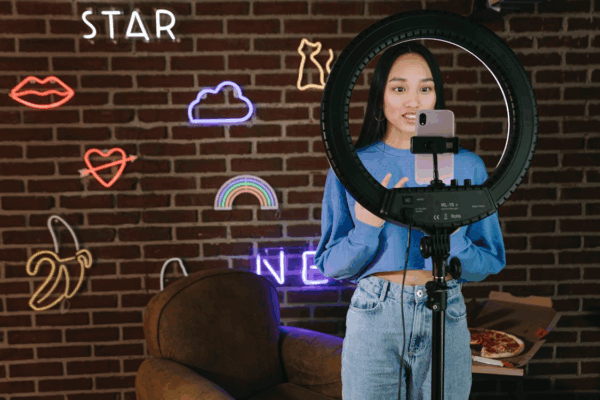
 

Image Source: Pexels

Creators are increasingly resistant to being reduced to labels or treated as trend-driven checkboxes. True representation starts with understanding a creator’s voice—not forcing them into a predefined brand narrative.

The gap: Many partnerships remain transactional, prioritizing short-term relevance over genuine alignment. Creators are often selected to fill a category rather than for their perspective or long-term vision. This leads to inauthentic work that disconnects creators from their communities.

The Meraki solution: Meraki begins every partnership by listening. By understanding each creator’s goals and vision, Meraki aligns them with brands that share their values—fostering long-term relationships that feel authentic to both the creator and their community.
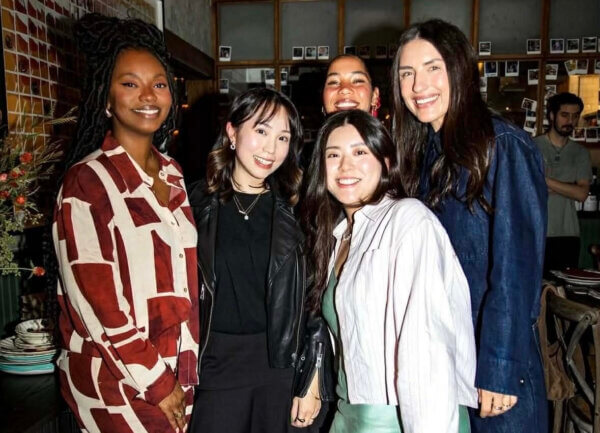
 

Photo courtesy of Vivian Kwan (second from left), Founder of Meraki Group


The Next Era: Purpose Over Pressure

As we look toward 2026, the transition from a “Wild West” to a professionalized industry requires more than just better tools—it requires a fundamental shift in how we value the humans behind the content. 

Meraki sits at the center of this new era, bridging creative passion with real professional growth. By pushing for fair standards, ethical representation, and sustainable careers, Meraki does more than manage creators; they help protect the future of creative work.wi

Learn more about Meraki Group:
📍Website

📍Instagram 

Related Articles

Image Source: The Harvest Official Trailer - YouTube

News

Upcoming ‘The Harvest’ Movie Features a Hmong Family and the Strength and Endurance of their Bond

Recently, Asian Americans are receiving a lot of praise in both film and television. The fact that Asian Americans are becoming more visible is fantastic, but most of these movies just focus on Chinese Americans, which is limiting for other Asians, particularly South and Southeast Asians.

This is what inspired Caylee So’s The Harvest, highlighting the Hmong community, illustrating how similar and yet dissimilar this culture is to what western society considers to be “Asian.”

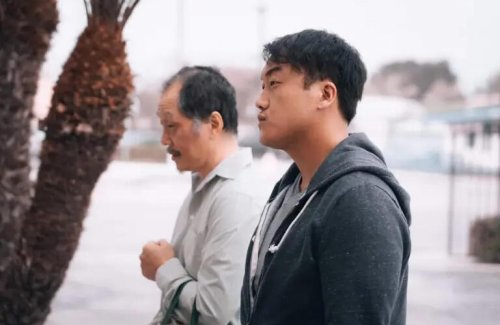
The synopsis of the movie is that, Thai Moua returns to his family’s home in Southern California after several years of living in San Francisco to find his entire world in chaos.Thai and his family maintain a brave façade while witnessing the debilitating effects of his father Cher’s kidney failure. Thai is torn between trying to please his father and wanting to live his own life, between being a good son and growing up, but most of all, he is conflicted about keeping the cause that has kept him away for so long a secret.

The Harvest addresses the tenacity and endurance of family ties and how they can carry us through even the most trying times in a powerful and sympathetic way.

Doua Moua, who plays Thai and also wrote the compelling screenplay, said in a press statement, “As an actor, I was told my type of Asian does not fit into the narrative of America, which led me to writing narratives that I wanted to tell. I want to redefine what diversity really means and that is inclusion in front and in back of the camera.”

The show stars Doua Moua (Mulan & Gran Torino), Perry Yung (Warriors & The Knick), Dawn Ying Yuen, Chrisna Chhor, Lucas Velazquez, Hua Lee, Alfonso Caballero, Tomas K Thao, Mai Moua, Tsabmim Xyooj, Kue Lee, Chai Yang, ZhongKhang Yang, Mary Ly, Amery K Thao, Anneston Pisayavong, Arianna Rivas, Blake Kevin Dwyer, Greg Yoder, Christine Lin, and Tress Glenn.

The Harvest is not yet scheduled for release.

Image Source: Bloomberg

Stories

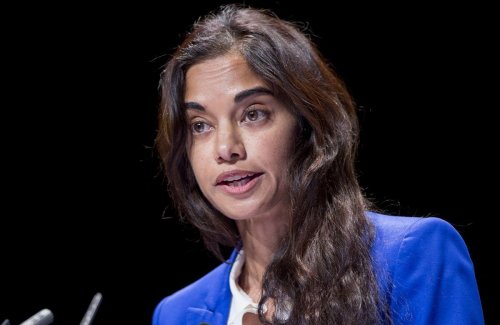
Mala Gaonkar – The Woman in Charge of the Biggest Hedge Fund Launch

With $1.8 billion under management, Mala Gaonkar’s SurgoCap Partners began trading and made history as the largest debut of a woman-led hedge fund in the industry’s history.

SurgoCap Partners invests in technology’s influence on financials, industrials, healthcare, and corporate data. The 20-person company bets on and against equities and can invest 25% of its assets in privately held enterprises.

At an investor conference in June, Gaonkar expressed her support for ServiceNow Inc., an enterprise software provider that aids in workflow automation.

Born in the US and raised in Bengaluru, India, Mala was a Kauffman Fellow. After graduating from Harvard with an MBA and economics degree, she founded Lone Pine in 1998. Later, she managed technology, media, internet, and telecom bets as a portfolio manager. She led the firm’s long-only funds.

She is also a founding trustee of Ariadne Labs, the Queen Elizabeth Prize for Engineering, the Tate Foundation, and Surgo Ventures, a charity that produces data-driven social and health solutions.

She is setting aside $100 million in capacity at SurgoCap for smaller endowments, foundations, and organizations that support marginalized populations or address climate change. She has amassed $35 million thus far.

Mala signed the Giving Pledge that she would devote the majority of her wealth to charitable causes.

Image Source: Legacies of War

News

First Lao-American and Millennial To Sit As Chair Of The US Campaign To Ban Landmines – Cluster Munition Coalition

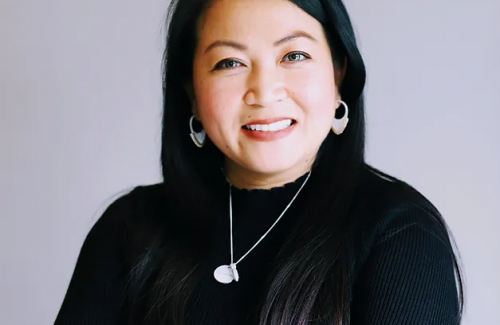
Legacies of War (LoW) CEO Sera Koulabdara is the new Chair of the US Campaign to Ban Landmines – Cluster Munition Coalition (USCBL-CMC). She will be the first millennial, BIPOC, and afflicted nation native to assume the job.

LoW is the only worldwide U.S. advocacy and educational organisation that addresses the repercussions of the American Secret War in Laos and its battles in Cambodia and Vietnam during the Vietnam War, including UXO disposal and victim/survivor support.

Héctor Guerra, Director of International Campaign to Ban Landmines (ICBL), has welcomed LoW, acknowledging their work as a great example of global collaborative efforts in supporting communities affected by landmines and cluster munitions.

According to Mary Wareham, Arms Advocacy Director of Human Rights Watch, there could not be a better placed organization to coordinate the USCBL-CMC than LoW, as it is committed to ensuring that the US joins and adheres to the international treaties prohibiting antipersonnel landmines and cluster munitions.

CEO of Roots of Peace, Heidi Kuhn, also recognized how fortunate USCBL-CMC is to have Sera as Chair, with her unique qualifications as a leader in mine action, and her family heritage in Laos as the basis of her passion. She claimed that Sera brings a renewed spirit of home to the UXO campaign.

Sera shared in her bio in LoW’s website, that she hopes to make a positive difference in the lives of the people in her father’s beloved homeland, Laos, and to create hope for future generations.

Image Source: Business News PH

Stories

Through Perseverance, Young Entrepreneur Operates 5 Fried Rice Restaurants and 30 Takoyaki Stalls At Age 21

Rice is an essential part of the Asian diet, and it is enjoyed in many different forms. One of these is the classic fried rice, which everybody knows is a tasty and easy meal.

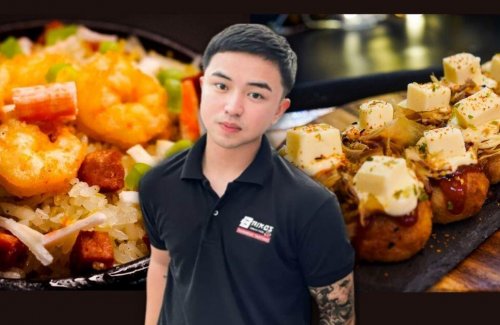
At the age of 21 years old, Briko Galeon from Tarlac City, Philippines, was able to expand his Korean Spam BKB Fried Rice business to 5 branches in just a span of 3 months. Aside from this, he also has a takoyaki business that he was able to expand into 30 branches within 1 and a half years of operation.

One of Briko’s franchisees, Sharmaine Anne De Leon, shared that she used to scroll social media posts about Korean fried rice and have cravings for it. She also said that BKB Fried Rice products are really good, and that’s why getting a franchise with BKB was an easy decision for her.

Briko shared that his inspiration for putting up businesses was his parents. He wanted to give back to his parents and be able to buy them gifts using his own money. Due to his success, he was able to buy 2 cars and is now providing for his family’s needs.

There isn’t an age too young or too old for a person to become an entrepreneur. Briko’s advice is to find a product that you genuinely love or are passionate about. Once you do this, it will be easier for you to learn about the product, its market, and how to serve it.