Uncategorized

July 19, 2022

SHARE:

In the view of society, hair is connected with youthfulness and beauty in women, virility, and masculinity in men. It should come as no surprise that hair loss may make many men and women feel self-conscious. But should that be always the case?

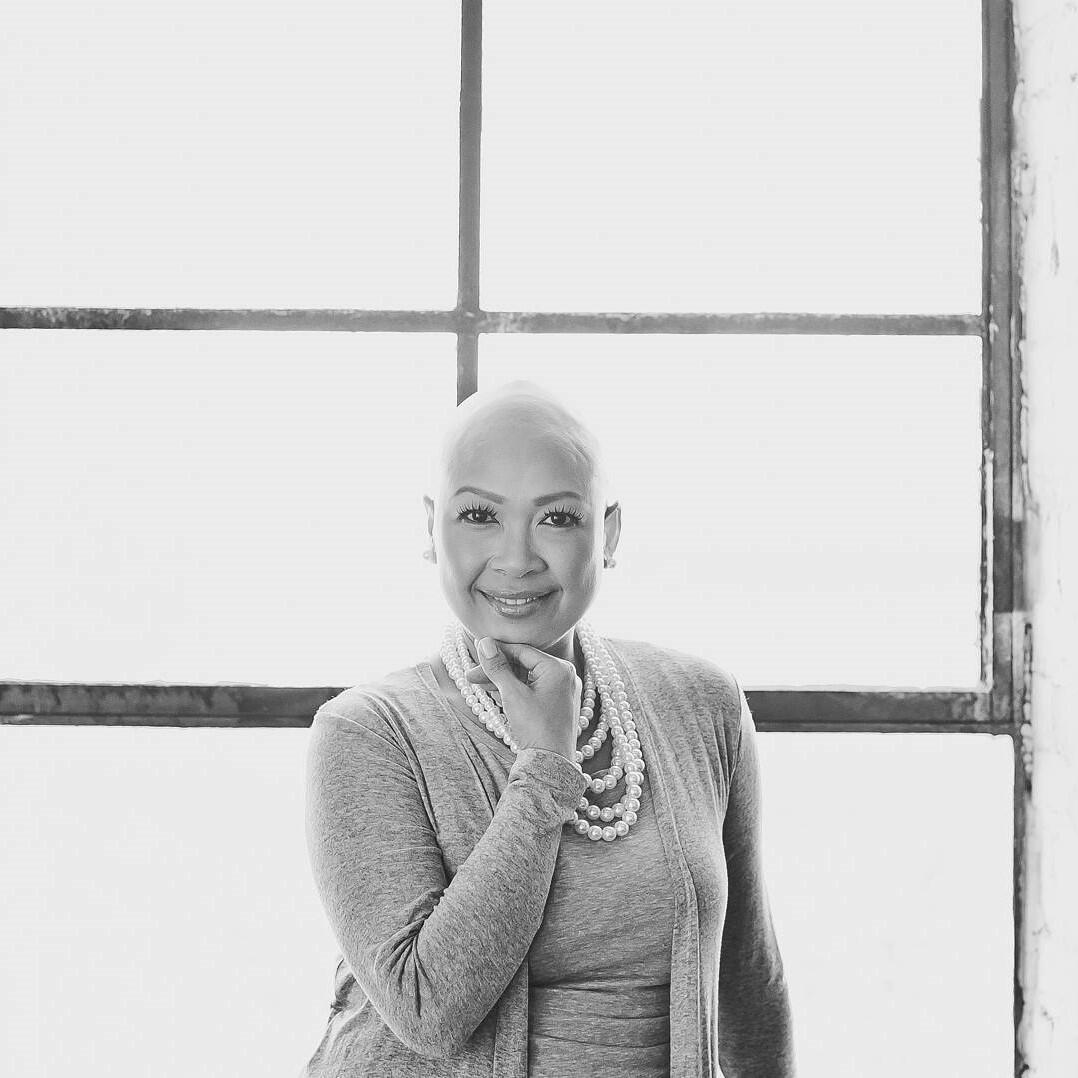
Caroline Mangune Alanis was only 4 years old when she lost all her hair, “I don’t even know what it is like to have hair.” she said. Caroline has Alopecia Universalis (AU)  — the rarest form of Alopecia Areata, it’s an autoimmune condition that attacks the hair follicles.

Growing up Bald

Born in the Philippines to a strict father and a sweet and kind soul mother, as she describes, “My dad didn’t allow me to go out with friends a lot. I was never allowed to go on sleepovers.  He sheltered me from people. I never realized that until I was an adult, and reflected on my childhood.” She also has two brothers who were protective as well.

At the tender age of 4, she was already practicing “DAILY AFFIRMATIONS” although she never knew how impactful they were,  “I was always told to look in the front of the mirror.  I would say, I am beautiful, I am strong, I am special. I have beautiful eyes, beautiful skin, etc.”  Her parents never told her the pain and heartbreak of raising her, rather they just always told her how special and beautiful she was, “They always told me I was meant to stand out.”

She had no recollection of the time her hair started falling out, but she was told that her hair fell off within a 2-week time frame, “My mom said it could have been brought by stress from an earthquake we had in the Philippines.”  

Caroline was never allowed to say negative words about herself, or else her father would scold her. She was imparted that words she says about herself will either bring her up or tear her down, “So maybe I thought negative things about myself, but I never said it. Growing up bald, I never felt ugly, just incomplete.”

Growing up bald, I never felt ugly, just incomplete.

– Caroline Mangune Alanis

Although her parents taught her how to be courageous and had always made her feel how beautiful and blessed she was, growing up bald was not easy — she had to endure the everyday pressure of life. “There was the pressure of seeing little girls with beautiful hair and wishing every day that I had that. There was the pressure of kids being mean and pulling off my bandana and laughing at me because I was bald.” She faced the pressure of name-calling and bullying.

Caroline’s parents finally convinced her to start wearing a wig which, unfortunately, didn’t make things easier as she recalls. Walking home from school one day with her brother, a girl decided it would be fun to pull Caroline’s wig off and throw it on the ground. “At that moment, all I could do was cry and run home,” she adds, “every day I feared leaving the house, the emotional scar is unimaginable.”

She learned how to hide her AU, she felt as if people wouldn’t accept her for being her so it became a secret, and only her family and those she truly trusted, which were not many, knew the real Caroline.

In high school, only a handful knew about her AU, “which made it so easy to try to blend in since I never wanted to stand out, never!” The ironic part about it, as Caroline describes, was she would always be the one to be called by her teachers to lead a project, sing solos, and participate in plays and fashion shows. They even nominated her to join the homecoming queen and enter a beauty pageant. However, “I realized that my fear never really went away by keeping my AU a secret and the emotional scar was also still a part of my life.”

Every day I feared leaving the house, the emotional scar is unimaginable.

-Caroline Mangune Alanis

Being Bold With The Love Of Her Life

She met her husband Mark from work, where they were both managing stores at a mall in Chicago. They became best friends and were each other’s plus one at weddings, “We didn’t start dating until I transferred to another mall.” she said.    

But the day has to come when she must tell Mark about her condition, “Telling Mark about my alopecia was very difficult. He once told me that he loved hair and eyes on a woman,” she adds, “He himself has gorgeous hair.” Caroline felt she didn’t have one of the criteria Mark was looking for. Although she mentioned several times that she had something to tell him and he would always say “whenever you are ready.” Caroline thought that they both knew that Mark is aware of her wearing a wig, they just never talked about it. 

Mark and Caroline had been dating for about a year when she finally tried to tell him one evening. She got choked up and started crying. He told her, “Caroline, don’t you think I know you by now from your head down to your toes?” He had tears in his eyes. She then asked Mark why he didn’t tell her.  He replied, “I wanted you to trust me enough to tell me”.  

As they began to start their family, Caroline’s AU became their secret. She held her family bound to her alopecia. When her daughters’ were infants, she wouldn’t carry them in public for fear that they would pull her wig. “They were taught never to touch mommy’s hair, ever!” 

Her daughter could never have friends sleep over because it would be very uncomfortable for Caroline to be her in her own home. “My daughters were always fearful when we were out in public, especially on windy days.” 

Caroline’s baldness was a big secret, even her husband’s family didn’t know, “because I hid so much all my life, I didn’t realize I walked in fear every day.  I didn’t realize I lived in bondage.”

Mark told her, “Caroline, don’t you think I know you by now from your head down to your toes?” He had tears in his eyes. She then asked Mark why he didn’t tell her.  He replied, “I wanted you to trust me enough to tell me”.  

Embracing Being Beautiful

In the summer of 2015, her life opened a new door, she became a part of an International Alopecia Group on Facebook and realized that her journey with AU has prepared her to help others like her. She saw so many men and women devastated by losing their hair. They were going through a lot of emotional pain, “You see, alopecia can happen at any time in one’s life so the adults experience a loss and have to grieve.” Caroline said. Alopecia might not be life-threatening but it is life-altering. Hair, eyebrows, and lashes truly make a difference in one’s appearance, “I myself put my face on every day.” she added. 

She also saw some men and women walking proudly bald. One man, in particular, Anthony Carrigan, an actor who also kept his alopecia a secret but he came out and had been helping others and is a beacon of light.  

Then, Caroline started giving advice about doing daily affirmations, “doing lots of SELF LOVE!”  as well as giving makeup tips, the alopecia community knows her as the “Eyelash Queen”.

But once the parents of alopecia children started posting their heartbreaks, “that’s when I realized my parents’ challenges of raising me, a bald child.” Caroline started reiterating what her parents taught her. She gave advice to parents, about how special their child was, how they were perfect and beautiful just as they were. “Alopecia children are so strong,” she noted.

“I then realized I was all those things: perfect, beautiful, and strong,” she said, but her baldness was still a secret. Caroline thought to herself, how does she encourage others to accept themselves if she herself could not let people know about her condition? So as those thoughts lingered in her head, she began telling her family and friends — she only wanted to tell people, not show people. Her goal was to have 30 different wigs for each day of the month.

“But God! God had other plans for me,” the unexplainable started occurring, her wigs became unbearably uncomfortable to wear, “it almost felt like my scalp was burning,” which she thought was completely strange since she has been wearing them for 40 years. It took a lot to take a look at herself bald.  She then began to think, “How can I tell my daughters  and others that beauty really lies deep within if I myself can’t see past my lack of hair?”

On August 14, 2015, on her way home with her husband from dinner, Caroline’s wig was getting itchy so she took it off to scratch her head. She was about to put her wig back on but Mark held her hand to stop her. He said “Honey, don’t put it on, you’re fine. You are safe with me, nothing can hurt you, and no one will hurt you. You are beautiful.” She reluctantly did what he asked and wanted to be strong for him. 

Mark kept holding her hand tight and kept asking if she was okay,  “I just kept saying it is scary.”  As they were nearing their home, her husband pulled over and said “Come on let’s take a selfie.” to lighten the situation. Her husband dropped Caroline off in front of their home, with her wig in her purse. Mark told her to go ahead and go into their home.  

“For the first time in 40  years, I felt God’s love on my head. The soft wind touched my head, a few raindrops falling on my head. I cried and laughed as I ran to my house.” she recalls.  

After that night, her husband helped Caroline with her small steps into seeing herself for who she was — a beautiful woman living with AU. Slowly, she found herself no longer wearing her wigs. They would go on drives and take walks on the beach. “I felt free, my secret slowly fading; including the emotional scar.”

I felt free, my secret slowly fading; including the emotional scar.

-Caroline Mangune Alanis

“On Sept 9, 2015, I posted it on Facebook, I cried the whole night.  Everyone was so kind.  I was still afraid, but I started walking bald.” she expressed.

In the fall of that year, it started getting cold and she didn’t like her hats since they looked terrible without any hair. She was pretty sad because she really did not want to start wearing her wigs again, “I just prayed and asked God to lead me in what I am supposed to do. I got my answer on Sunday, October 4th,” A lady stopped her and asked if she has Alopecia, to which she responded “Yes!”. The woman said, so did she, and asked Caroline, how does she do it? — She knew the lady meant how she could walk around without her wig.

Caroline answered “I don’t know. This is all new to me. “God is giving me the strength to do this. I couldn’t have done this on my own.” So that day, she officially retired all her wigs. “Yes, I put them all away for those special occasions,” she added.

She has met so many people just like her all over the world which inspired her to start her own Alopecia Group in Chicago, where they meet once a month. “I love having a family I call my own, people who truly understand me.”

The Chicago Alopecians

Caroline together with her friends started the Facebook group, with her as the main facilitator. It is a place where they can share their personal journeys and ask for advice or help. The Chicago Alopecians’ mission is to ensure that no one feels alone. Recently, they have been planning to create more events to cater to everyone, children, teens, and men. 

“We each have our own alopecia journey and we just want to connect with each other,” said Caroline. They also allow wig vendors in the group, “Chicagoland is such a big place. I love having a solution for everyone in the group.” As of writing, they currently have 332 members, and they’ve also started an Instagram page to widen their reach.

For the international group, Caroline is also encouraging others to create their own alopecia groups — their own tribe in their local towns.

“I have always known God wanted me to stand out, but I was always afraid.  These days, I am no longer afraid to not have my wig on, I embrace it.”

Caroline is truly a woman who is defying what society calls “beautiful”. 

Related Articles

Daily Expert News-jpg

News

Indian Designer’s Iconic Lehengas Make Mark in Sustainable Fashion

Renowned fashion designer Rahul Mishra has emerged as a leading advocate of ‘slow fashion’ in the industry, redefining bridal wear with his unique ethos.

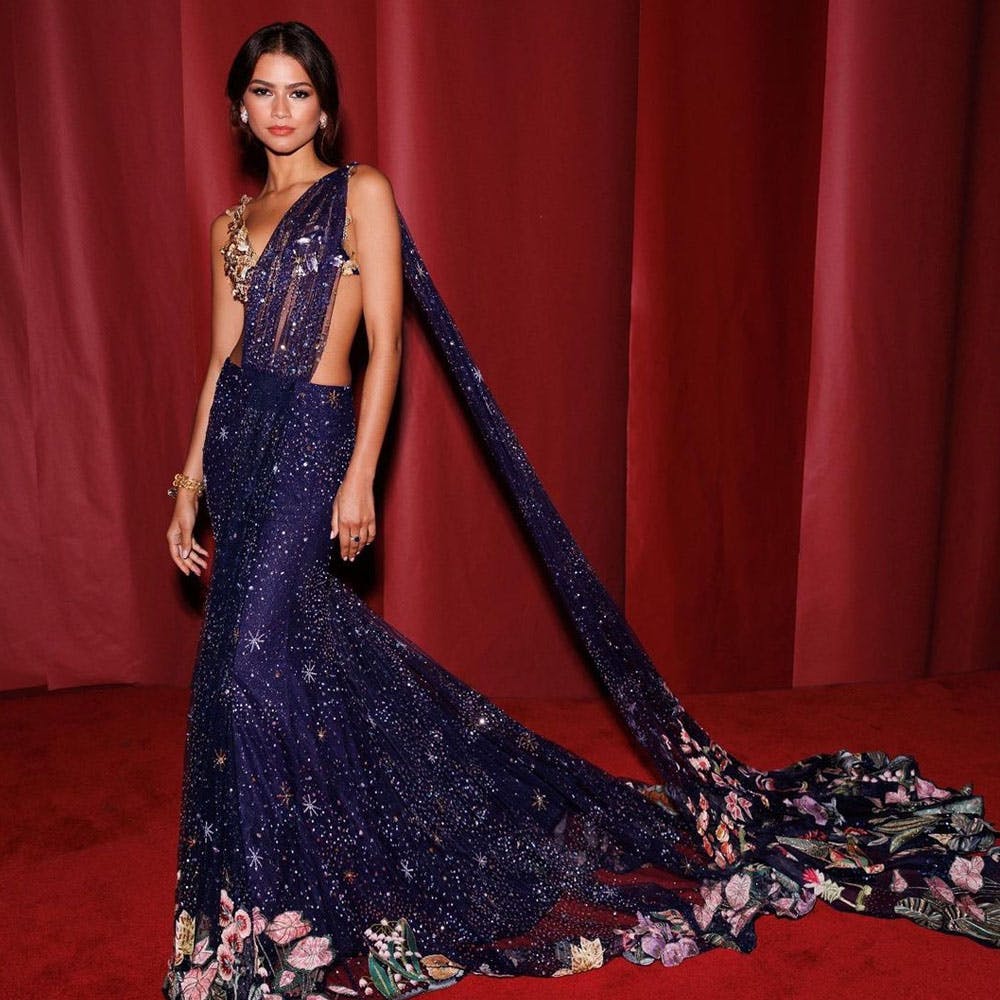
Since his debut in 2017, Mishra has seen a remarkable rise in demand for his bridal lehengas. Today, eager customers face an almost five-month wait to own one of his coveted designs. Mishra’s talent has also caught the attention of international celebrities. He recently made headlines for dressing Zendaya in a stunning blue sari at the opening of the Nita Mukesh Ambani Cultural Center in Mumbai.

Image Source: LBB

Mishra’s accomplishments include being the first Indian designer to showcase his collection at Paris Haute Couture Week in 2020, a feat he continues to achieve year after year.

Drawing inspiration from ancient Indian designs that utilized calico textile, an unbleached fabric made from cotton fibers, Mishra creates lehengas that embody an off-white, ecru aesthetic. The brides who choose Rahul Mishra lehengas appreciate the uniqueness of his designs, characterized by intricate embroidery and unparalleled craftsmanship.

The surge in wedding attire sales, especially during the COVID-19 pandemic, has helped Mishra support and provide employment to over 1,200 embroiderers from rural communities in India. The impact of his creations extends beyond fashion, creating meaningful opportunities for artisans and their families.

Rahul Mishra’s journey started from a small village in Uttar Pradesh. Although his initial aspirations to become a cinematographer were met with rejection, his decision to enroll in an apparel design program opened doors to a fulfilling career in fashion.

Featured Image Source: Daily Expert News

Screen Shot 2023-07-07 at 11.30.52 AM-png

News

Former Pharmacist Opens Cafe While Competing on Gordon Ramsay’s Show

While preparing to open a new cafe in Chicago’s vibrant Uptown neighborhood, pharmacist-turned-entrepreneur Lan Ho is also competing on Gordon Ramsay’s Food Stars, a reality show featuring aspiring chefs and culinary innovators.

The cafe will showcase her own brand Fat Miilk and will pay homage to Vietnamese culture through its space and food offerings.

Image Source: Fat Miilk

Vietnamese coffee holds a significant place in Vietnamese culture, and Lan Ho is determined to offer an elevated coffee experience that truly captures the essence of this rich tradition. By working closely with local farmers throughout Vietnam, Fat Miilk ensures that only the highest quality Robusta beans are sourced for their coffee. 

According to TimeOut, these organic green beans, renowned for their sweet and fruity flavor, are cultivated at different elevations and roasted using the traditional Vietnamese slow drip method. By focusing on Robusta beans, Fat Miilk stands out from other coffee brands, striving to serve the most authentic and flavorsome Vietnamese coffee.

Ho’s Vietnamese heritage and her family’s entrepreneurial spirit have been influential in her journey. As the child of Vietnamese refugees, she witnessed the determination and resilience of her family members who started businesses to provide for their loved ones. This upbringing instilled in Ho a strong sense of purpose and resilience, which helped her in starting her own business.

Participating in Gordon Ramsay’s Food Stars has been a transformative experience for Ho, teaching her valuable lessons in self-advocacy and self-care. 

As the opening of Fat Miilk’s flagship cafe approaches, Lan Ho remains committed to creating a space that authentically represents Vietnamese coffee culture. The cafe will not only serve an array of Vietnamese coffee options but will also feature Vietnamese meat pies and other delicacies.

Featured Image Source: @iamlanho

forbes-jpg

News

Hong Kong-Based and Women-Led VC Firm Invests in Food Security Solutions

CGV Ventures, a Hong Kong-based venture capital firm led by women and backed by fashion billionaire Michael Ying, is actively seeking investments in the food technology sector.

Co-founders Claudine Ying and Mimi Lau are focused on supporting innovative startups that address food security concerns, ranging from fermented oil to AI weeding technology. CGV has already invested in ten companies, with nine based in the United States and one in Hong Kong.

CGV’s portfolio includes notable investments such as Brightseed, a San Francisco-based company recognized in Forbes’ AI 50 list, and Zero Acre Farms, a startup backed by Richard Branson’s Virgin Group and actor Robert Downey Jr.’s Footprint Coalition.

According to Forbes, CGV takes a meticulous approach to selecting investments, evaluating the scientific validity and market potential of startup products, as well as the founder’s experience and execution capabilities. To assess market readiness, Ying and Lau even personally tested products from prospective portfolio companies.

Looking ahead, CGV plans to expand its investments in Asia, beginning with Hong Kong. Good Food Technologies, a plant-based meat startup, received CGV’s sole investment in Hong Kong, securing $1.5 million in seed funding. The duo believes that Asia’s booming countries, such as Singapore and China, face severe food security risks that drive interest in alternative proteins.

For Ying and Lau, investing in FoodTech and AgTech is a matter of survival. They see agriculture and food security as fundamental principles for the future, driven by the belief that farming can be meaningful, economically viable, and free from laborious stereotypes. Ultimately, CGV Ventures aims to contribute to a more secure, sustainable, and just food system.

Featured Image Source: Forbes

20210226_175427 (1)-jpg

Stories

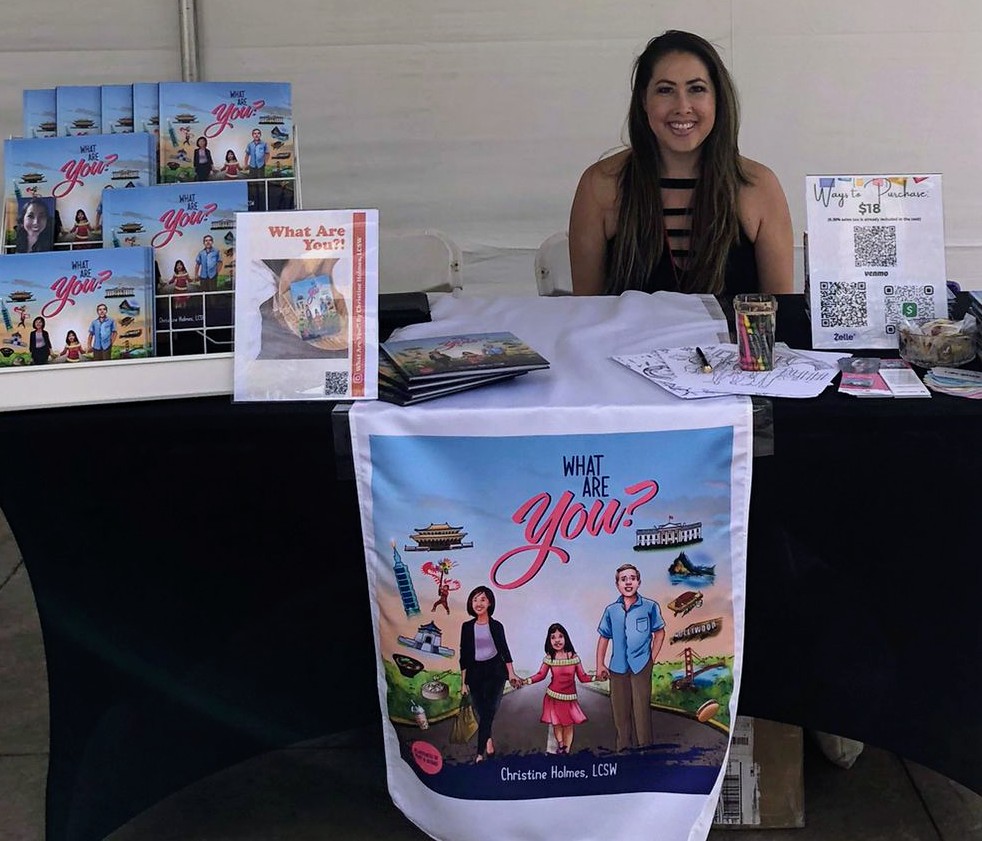
She Wrote a Book to Help Mixed Asian Children Navigate Through Their Cultural Identities in a Way She Never Did When She Was a Kid

Christine Holmes grew up feeling different from her peers due to being a bi-racial Taiwanese-American.

Christine was often referred to as either the “Asian girl” by her non-Asian friends and the “White girl” by her Asian peers until eventually, they referred to her as “Whasian girl,” which she liked because it represented both of her ethnicities.

She struggled to embrace her cultural background and wished to be fully White. It took her long before she learned to love her identity and cultural heritage, but she did.

Inspired by her personal experiences, she wrote the book “What Are You?” to provide representation in children’s literature for mixed Asian children.

The book touches on her personal struggles with food and language, among other things, and highlights the importance of representation in literature for children who come from mixed cultural backgrounds.

GROWING UP WITH A TAIWANESE MOTHER AND AN AMERICAN FATHER

Christine grew up in Irvine, CA, where the population was predominantly white and Asian. However, there were very few mixed children, which made Christine feel very different from her peers, who were either fully White or fully Asian.

As a child, Christine was immersed in Chinese School, Chinese Choir, piano, and tennis, which made her feel even more different from her peers because most of them were fully Asian.

Christine’s dad, who is White but very much into Asian culture and a world-renowned Master of martial arts, made it very important for them that Christine knew her Taiwanese/Chinese culture. Christine’s mother cooked Chinese food for most dinners, and her first language was Mandarin.

Their home is filled with beautiful Chinese/Taiwanese antiques, and they used to visit Taiwan every year until Christine was in junior high/high school.

CHALLENGES OF BEING THE “WHASIAN” GIRL

“To my White friends, I was the Asian girl but to my Asian friends, I was the White girl until I got into high school and my friends decided to call me the “Whasian” girl which I preferred since it represented both of my ethnicities.”

Christine felt different from everybody growing up, which bothered her internally. In fact, she had a teacher in her Chinese school that wasn’t very nice to her because even though she can speak Chinese, she couldn’t write Chinese like the other children. This treatment left Christine feeling isolated and alone, until she eventually quit Chinese school altogether.

Her non-Asian friends also often made comments about the food her mom would bring to potlucks or the bags she would use to pack her lunch, making her feel ashamed of her culture. When her mom spoke Mandarin, her non-Asian friends would be offended and ask why she had to speak Mandarin in front of them. She would have to explain that it was sometimes easier for her mom to speak in her native language than speak English. This made her feel uncomfortable, and she would get angry at her mom for it.

At this point, she wished that she was fully White, perhaps because being White and blonde was considered the most beautiful when she was growing up. Her mom used to pinch her nose to make it look “taller” and less stubby like a typical Asian nose. Some of her Asian peers even told her that she was lucky to be at least half White compared to them being fully Asian.

THE TURNING POINT

It wasn’t until college that she fully embraced being mixed and started to love her identity. Christine found herself surrounded by a diverse group of friends who not only accepted her but celebrated her mixed heritage.

“In college, most of my friends were either mixed or of different ethnicities other than White or full Asian. And, they embraced me,” she said.

They appreciated the unique perspective she brought to the table and encouraged her to embrace her identity. For the first time in her life, Christine felt truly proud of her background and of who she is.

WRITING THE BOOK

Christine’s personal experiences served as the inspiration behind her book, “What Are You?” which is a story about her life growing up as a mixed-race individual in a predominantly white and Asian community.

Christine wrote the book when she realized there were no books that represented mixed Asian children. Despite being able to find books for her own children who are half Black, she couldn’t find any for children who were mixed Asian. So, she decided to create something that represented kids like herself.

“I think the part of the book that was most emotionally challenging was writing about the food and how embarrassed I was about my mom packing me Asian food even though I secretly loved it.” Christine admits to feeling a lot of guilt now as an adult for all the times she blamed and got mad at her mom as a child.

REPRESENTATION IN CHILDREN’S LITERATURE

Christine strongly believes in the power of representation and the need for diverse books that accurately reflect the experiences of mixed-race individuals. Having grown up without any books that reflected her own identity, she recognizes the importance of seeing oneself represented in literature.

She saw firsthand how much her own children appreciated books with characters that looked like them and had similar cultural backgrounds. Writing her book, “What Are You?”, she received overwhelming positive feedback from other mixed Asian individuals who wished they had a book like this when they were children.

Despite increased awareness and acceptance of mixed-race identities in modern times, Christine recognizes that children may still struggle with their identity and the pressure to choose one ethnicity over the other. Her book seeks to empower mixed-race children to embrace and celebrate all aspects of their identity.

OVERJOYED BY THE POSITIVE FEEDBACK

Christine initially had doubts about the book’s reception due to her own insecurities about putting herself out there. However, the encouraging and uplifting words from her readers have exceeded her expectations.

“I was featured on a TikTok page, twice, by someone with 1 million followers, who’s sister bought the book for her. She shared that my book had emotionally resonated with her in many ways. It was then that I realized the impact that my book has had on some people.”

HOPE FOR THE FUTURE

Christine hopes that her book will inspire readers to embrace their identity, no matter where they come from. She wants readers to know that they don’t have to choose between different cultural backgrounds and can be proud of their unique mix.

“I hope they embrace their cultural background, and they are proud of their roots.”

By highlighting her personal experiences, Christine hopes her book will contribute to a larger conversation about identity and belonging in our society today, and ultimately help break down barriers and build more inclusive communities.

CONNECT WITH CHRISTINE

Website: publishyourgift.lpages.co/christine/

Instagram: @whatareyoubook  

Facebook:  What Are You? Book

TikTok: @whatareyoubook