Uncategorized

July 19, 2022

SHARE:

In the view of society, hair is connected with youthfulness and beauty in women, virility, and masculinity in men. It should come as no surprise that hair loss may make many men and women feel self-conscious. But should that be always the case?

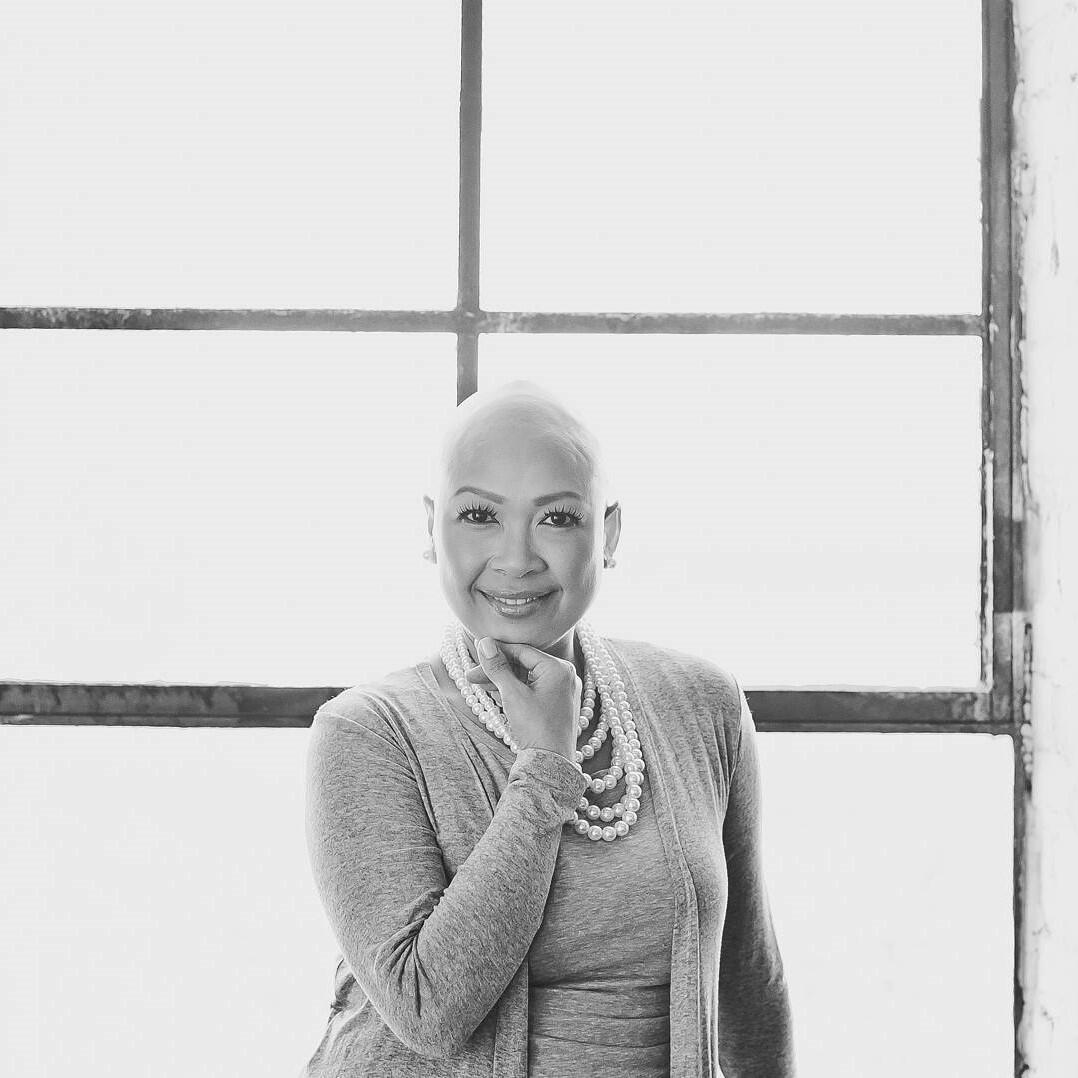
Caroline Mangune Alanis was only 4 years old when she lost all her hair, “I don’t even know what it is like to have hair.” she said. Caroline has Alopecia Universalis (AU)  — the rarest form of Alopecia Areata, it’s an autoimmune condition that attacks the hair follicles.

Growing up Bald

Born in the Philippines to a strict father and a sweet and kind soul mother, as she describes, “My dad didn’t allow me to go out with friends a lot. I was never allowed to go on sleepovers.  He sheltered me from people. I never realized that until I was an adult, and reflected on my childhood.” She also has two brothers who were protective as well.

At the tender age of 4, she was already practicing “DAILY AFFIRMATIONS” although she never knew how impactful they were,  “I was always told to look in the front of the mirror.  I would say, I am beautiful, I am strong, I am special. I have beautiful eyes, beautiful skin, etc.”  Her parents never told her the pain and heartbreak of raising her, rather they just always told her how special and beautiful she was, “They always told me I was meant to stand out.”

She had no recollection of the time her hair started falling out, but she was told that her hair fell off within a 2-week time frame, “My mom said it could have been brought by stress from an earthquake we had in the Philippines.”  

Caroline was never allowed to say negative words about herself, or else her father would scold her. She was imparted that words she says about herself will either bring her up or tear her down, “So maybe I thought negative things about myself, but I never said it. Growing up bald, I never felt ugly, just incomplete.”

Growing up bald, I never felt ugly, just incomplete.

– Caroline Mangune Alanis

Although her parents taught her how to be courageous and had always made her feel how beautiful and blessed she was, growing up bald was not easy — she had to endure the everyday pressure of life. “There was the pressure of seeing little girls with beautiful hair and wishing every day that I had that. There was the pressure of kids being mean and pulling off my bandana and laughing at me because I was bald.” She faced the pressure of name-calling and bullying.

Caroline’s parents finally convinced her to start wearing a wig which, unfortunately, didn’t make things easier as she recalls. Walking home from school one day with her brother, a girl decided it would be fun to pull Caroline’s wig off and throw it on the ground. “At that moment, all I could do was cry and run home,” she adds, “every day I feared leaving the house, the emotional scar is unimaginable.”

She learned how to hide her AU, she felt as if people wouldn’t accept her for being her so it became a secret, and only her family and those she truly trusted, which were not many, knew the real Caroline.

In high school, only a handful knew about her AU, “which made it so easy to try to blend in since I never wanted to stand out, never!” The ironic part about it, as Caroline describes, was she would always be the one to be called by her teachers to lead a project, sing solos, and participate in plays and fashion shows. They even nominated her to join the homecoming queen and enter a beauty pageant. However, “I realized that my fear never really went away by keeping my AU a secret and the emotional scar was also still a part of my life.”

Every day I feared leaving the house, the emotional scar is unimaginable.

-Caroline Mangune Alanis

Being Bold With The Love Of Her Life

She met her husband Mark from work, where they were both managing stores at a mall in Chicago. They became best friends and were each other’s plus one at weddings, “We didn’t start dating until I transferred to another mall.” she said.    

But the day has to come when she must tell Mark about her condition, “Telling Mark about my alopecia was very difficult. He once told me that he loved hair and eyes on a woman,” she adds, “He himself has gorgeous hair.” Caroline felt she didn’t have one of the criteria Mark was looking for. Although she mentioned several times that she had something to tell him and he would always say “whenever you are ready.” Caroline thought that they both knew that Mark is aware of her wearing a wig, they just never talked about it. 

Mark and Caroline had been dating for about a year when she finally tried to tell him one evening. She got choked up and started crying. He told her, “Caroline, don’t you think I know you by now from your head down to your toes?” He had tears in his eyes. She then asked Mark why he didn’t tell her.  He replied, “I wanted you to trust me enough to tell me”.  

As they began to start their family, Caroline’s AU became their secret. She held her family bound to her alopecia. When her daughters’ were infants, she wouldn’t carry them in public for fear that they would pull her wig. “They were taught never to touch mommy’s hair, ever!” 

Her daughter could never have friends sleep over because it would be very uncomfortable for Caroline to be her in her own home. “My daughters were always fearful when we were out in public, especially on windy days.” 

Caroline’s baldness was a big secret, even her husband’s family didn’t know, “because I hid so much all my life, I didn’t realize I walked in fear every day.  I didn’t realize I lived in bondage.”

Mark told her, “Caroline, don’t you think I know you by now from your head down to your toes?” He had tears in his eyes. She then asked Mark why he didn’t tell her.  He replied, “I wanted you to trust me enough to tell me”.  

Embracing Being Beautiful

In the summer of 2015, her life opened a new door, she became a part of an International Alopecia Group on Facebook and realized that her journey with AU has prepared her to help others like her. She saw so many men and women devastated by losing their hair. They were going through a lot of emotional pain, “You see, alopecia can happen at any time in one’s life so the adults experience a loss and have to grieve.” Caroline said. Alopecia might not be life-threatening but it is life-altering. Hair, eyebrows, and lashes truly make a difference in one’s appearance, “I myself put my face on every day.” she added. 

She also saw some men and women walking proudly bald. One man, in particular, Anthony Carrigan, an actor who also kept his alopecia a secret but he came out and had been helping others and is a beacon of light.  

Then, Caroline started giving advice about doing daily affirmations, “doing lots of SELF LOVE!”  as well as giving makeup tips, the alopecia community knows her as the “Eyelash Queen”.

But once the parents of alopecia children started posting their heartbreaks, “that’s when I realized my parents’ challenges of raising me, a bald child.” Caroline started reiterating what her parents taught her. She gave advice to parents, about how special their child was, how they were perfect and beautiful just as they were. “Alopecia children are so strong,” she noted.

“I then realized I was all those things: perfect, beautiful, and strong,” she said, but her baldness was still a secret. Caroline thought to herself, how does she encourage others to accept themselves if she herself could not let people know about her condition? So as those thoughts lingered in her head, she began telling her family and friends — she only wanted to tell people, not show people. Her goal was to have 30 different wigs for each day of the month.

“But God! God had other plans for me,” the unexplainable started occurring, her wigs became unbearably uncomfortable to wear, “it almost felt like my scalp was burning,” which she thought was completely strange since she has been wearing them for 40 years. It took a lot to take a look at herself bald.  She then began to think, “How can I tell my daughters  and others that beauty really lies deep within if I myself can’t see past my lack of hair?”

On August 14, 2015, on her way home with her husband from dinner, Caroline’s wig was getting itchy so she took it off to scratch her head. She was about to put her wig back on but Mark held her hand to stop her. He said “Honey, don’t put it on, you’re fine. You are safe with me, nothing can hurt you, and no one will hurt you. You are beautiful.” She reluctantly did what he asked and wanted to be strong for him. 

Mark kept holding her hand tight and kept asking if she was okay,  “I just kept saying it is scary.”  As they were nearing their home, her husband pulled over and said “Come on let’s take a selfie.” to lighten the situation. Her husband dropped Caroline off in front of their home, with her wig in her purse. Mark told her to go ahead and go into their home.  

“For the first time in 40  years, I felt God’s love on my head. The soft wind touched my head, a few raindrops falling on my head. I cried and laughed as I ran to my house.” she recalls.  

After that night, her husband helped Caroline with her small steps into seeing herself for who she was — a beautiful woman living with AU. Slowly, she found herself no longer wearing her wigs. They would go on drives and take walks on the beach. “I felt free, my secret slowly fading; including the emotional scar.”

I felt free, my secret slowly fading; including the emotional scar.

-Caroline Mangune Alanis

“On Sept 9, 2015, I posted it on Facebook, I cried the whole night.  Everyone was so kind.  I was still afraid, but I started walking bald.” she expressed.

In the fall of that year, it started getting cold and she didn’t like her hats since they looked terrible without any hair. She was pretty sad because she really did not want to start wearing her wigs again, “I just prayed and asked God to lead me in what I am supposed to do. I got my answer on Sunday, October 4th,” A lady stopped her and asked if she has Alopecia, to which she responded “Yes!”. The woman said, so did she, and asked Caroline, how does she do it? — She knew the lady meant how she could walk around without her wig.

Caroline answered “I don’t know. This is all new to me. “God is giving me the strength to do this. I couldn’t have done this on my own.” So that day, she officially retired all her wigs. “Yes, I put them all away for those special occasions,” she added.

She has met so many people just like her all over the world which inspired her to start her own Alopecia Group in Chicago, where they meet once a month. “I love having a family I call my own, people who truly understand me.”

The Chicago Alopecians

Caroline together with her friends started the Facebook group, with her as the main facilitator. It is a place where they can share their personal journeys and ask for advice or help. The Chicago Alopecians’ mission is to ensure that no one feels alone. Recently, they have been planning to create more events to cater to everyone, children, teens, and men. 

“We each have our own alopecia journey and we just want to connect with each other,” said Caroline. They also allow wig vendors in the group, “Chicagoland is such a big place. I love having a solution for everyone in the group.” As of writing, they currently have 332 members, and they’ve also started an Instagram page to widen their reach.

For the international group, Caroline is also encouraging others to create their own alopecia groups — their own tribe in their local towns.

“I have always known God wanted me to stand out, but I was always afraid.  These days, I am no longer afraid to not have my wig on, I embrace it.”

Caroline is truly a woman who is defying what society calls “beautiful”. 
Related Articles

20221203_083614-jpg

Stories

How This Woman Overcame Her Parents’ Doubts and Started Her Own Medical Aesthetic Business

Growing up with stereotypical Asian tiger parents, Angie had always been interested in entrepreneurship but was constantly discouraged.

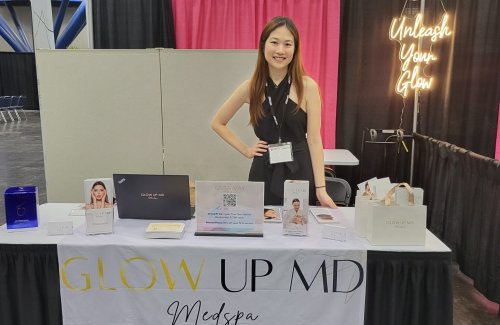
Angie Kim is the physician and CEO of Glow Up MD Medical Aesthetics and Wellness Practice. Her journey to success was far from easy. Angie grew up with traditional Asian immigrant parents who believed that taking risks in business was foolish.

She did all the stereotypical Asian things such as playing piano, being good at math, and going to a good college. She studied engineering and went on to complete medical school. And like most Asian women are expected to be, Angie was very quiet and had low self confidence.

But after completing her medical training, Angie realized that working for someone else was not what she wanted for her life. She refused to work for people without medical education and decided to take a chance on herself.

Starting her own business was an intimidating prospect for her. She had no background in business and had to navigate legal regulations, insurance requirements, and financial planning on her own. But with determination and persistence, she and her husband were able to set up a successful brick and mortar practice within just a few months.

Angie’s journey serves as a reminder that there is never a perfect time to start a business and that sometimes the best way to learn is by doing.

I DID IT ANYWAY

Even in middle school and high school, starting a business always piqued Angie’s interest. She had even presented a few ideas, such as a t-shirt business, to her parents when she was in middle school. Unfortunately, her parents always shot her ideas down, telling her they were stupid.

Angie’s parents have always been extremely risk averse and were against anything that required any type of investment with uncertain return. They wouldn’t even let her spend money to create a website.

Despite the discouragement, Angie was still very interested in entrepreneurship. She would constantly read articles about people who developed new apps or websites that became very popular. However, she had to put those aspirations on the backburner and focus on her education as her parents placed a high emphasis on education.

Even still, she would come up with ideas every so often and kept a list of these on her computer, hoping to return to them one day to get them started. “One thing that’s been constant since my childhood has been that whenever they told me I wouldn’t be able to accomplish something, I did it anyway,” she said.

BIGGEST CHALLENGES

Initially, one of their biggest challenges was trying to figure out the laws surrounding opening a medical practice. They looked at so many sources but kept finding contradicting or incomplete information.

The actual legalese was difficult to understand and they didn’t trust their interpretation of it. They finally spoke to a lawyer who confirmed what they understood. This allowed them to feel comfortable enough to continue on.

As of right now, the biggest challenge they’re facing is marketing and getting the word out. They are still trying to figure out the best way to do this. It has been mostly through trial and error. They are constantly trying different strategies, such as Facebook ads, in-person events, local SEO, local media and print, and direct mailing.

THE TURNING POINT

While working in the hospital, Angie began noticing little things over time that pointed towards the toxicity of the working environment, such as how little control and autonomy physicians have in taking care of their own patients, the backstabbing from other healthcare workers, and how physicians from other healthcare systems all had similar stories.

“I came to the realization that this would not change if I just changed jobs. The only solution was to start my own practice,” she said.

LOOKING BACK ON HER JOURNEY

The most rewarding aspect for Angie is the freedom to practice medicine the way it should be practiced. “I can spend as much time as I need to with patients. I don’t need to spend extra time trying to fight insurance companies. And my patients have been happy with their results,” she said.

She is hoping to grow her practice enough that she can open a second location and eventually franchise it, which would allow her to help even more patients and improve the healthcare system in her own small way.

“If I were to do it all over again, I would document my journey. I thought about it this time, but I felt like I didn’t know what I was doing the whole time.”

ANGIE’S ADVICE FOR OTHERS FACING SIMILAR CHALLENGES FROM THEIR FAMILIES

“People are always going to doubt you when you start, especially those closest to you. You can’t let that get to you. If it’s what you really want and you can’t stop thinking about it, then you should go for it. It’s going to be lonely and somewhat isolating when you start, but it’ll be worth it,” Angie said. 

She believes that there’s always a way to solve a problem. If you feel like you’ve hit a roadblock, you can try looking at the problem from a different perspective.

Right now, Angie still hasn’t told her parents about her business and she’s waiting for the right time when she can finally tell them.

CONNECT WITH ANGIE

Instagram: @glowupmdspa

Facebook: Glow Up MD Medspa

Luxurywedding (1)

Stories

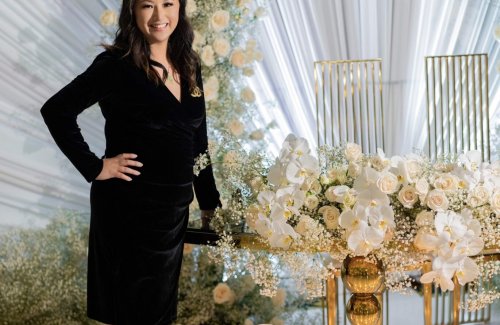
How One Immigrant Daughter Pivoted Her Career and Built an Award-Winning Event Production Company

Dee Lee’s journey from being a middle school teacher to the founder of an award-winning event production company is a story that inspires us all to pursue our passion.

Despite facing various challenges and setbacks along the way, Dee persevered and learned from her mistakes, which ultimately led to her success. The road has been filled with ups and downs, but she never gave up.

Dee is a first-generation Teo-Chew Cambodian woman born in the United States. Her parents escaped from the Cambodian genocide and she is the oldest of three siblings. As a daughter of immigrants, she loves to use her platform to educate, inspire, and bless it forward to her AAPI community. 

Join us as we explore the challenges Dee faced and the valuable lessons she learned on her journey towards success.

FROM MIDDLE SCHOOL EDUCATOR TO EVENT PRODUCTION COMPANY OWNER

Dee was a middle school teacher in the largest school district, Los Angeles Unified, starting full-time teaching at just 23 years old. She had a talent for grant writing for the various schools she worked at. However, Dee’s pivot came when her daughters were born, and she felt unsupported.

“I was doing events and photography as a hobbyist. I quickly learned that I found a new love and pursued it part time. Eventually I retired from teaching and opened my first  LLC, got liability insurance, and the rest was history,” Dee said.

She faced a lot of challenges at first, mostly because she didn’t have enough business background to understand how to properly run a business. “Both my Bachelors and Masters were in education. I didn’t have a mentor. I learned a lot through trial and error.”

Eventually she found a network of event professionals that opened more doors for her. She started out in the Quinceañera market, where she made a name for herself as a designer in a Latino market. Although it was challenging, Dee thrived in it.

Along with the challenges she faced, she also encountered people who told her that she couldn’t make it. There was a time that she assisted a celebrity planner she admired, and was told that she was only good enough for small things. This was a devastating blow to Dee’s confidence. But despite these challenges, Dee persisted and emerged victorious. She continued to grow her business and inspire others with her journey.

MISTAKES SHE FACED ALONG THE WAY

Dee made a lot of entrepreneurial mistakes in the beginning of her journey. It was a new learning curve for her. She quickly learned why liability insurance was so important to have as a business owner, and she learned about quarterly taxes. She wanted to buy everything but she knew she shouldn’t.

“I still had a hobbyist attitude about pricing when I jumped into it full time. I didn’t know what market value was on anything and had to do a lot of research,” Dee said.

Networking was also a crucial part of her journey, as she learned the value of connecting with others in her industry and receiving valuable advice from them. Every piece of advice was like a gold nugget for her, and she took it all in. She was realistic with her expectations of growth and knew that success would not come overnight.

WHAT MOTIVATED HER DESPITE ALL HER SETBACKS

The honest truth about why Dee was so motivated and determined to succeed was the fact that she was the oldest daughter of her immigrant parents, and they thought that she was crazy to leave her profession as an educator and her two degrees. Even her cousins thought that she was just wasting her time in event planning.

She considered every mistake and situation as a learning experience, and worked tirelessly to establish herself and her business. Her goal was to become so successful that everyone would know who “Dee Lee” was.

HER CREATIVE PROCESS OF MAKING EACH EVENT UNIQUE AND PERSONAL TO EVERY CLIENT

When it comes to designing unique and personalized events for each client, Dee takes a meticulous approach. She is passionate about her work and loves the design process. She begins by sending her clients a list of discovery questions to help her gather information about their preferences and needs. She then schedules a virtual discovery call with her clients via Google Meet or Zoom, where she listens carefully to their ideas and aspirations.

Dee involves her clients in every step of the process, creating design boards together, and incorporating their personal preferences into the final product. Her approach is to make the process less transactional and more personable by humanizing the whole process.

Dee values building personal relationships with her clients, and they often embark on wedding planning and foodie adventures together. This helps her clients get to know her better, and it also enables Dee to understand her clients’ personalities and preferences. As a result, Dee is able to design events that are unique and tailored to each client’s needs.

ADVICE TO THOSE WHO WANT TO PURSUE THEIR PASSIONS AND THOSE WHO WANT TO ENTER THE EVENTS PLANNING INDUSTRY

Dee advises those who want to pursue their passions but don’t have the courage to do so to align themselves with a mentor to shadow. She emphasizes the importance of learning to do things the right way, which can be achieved by having a mentor who can guide and teach them. Dee also suggests networking and meeting new people, as it can lead to opportunities and connections in the industry.  Community is important to growth.

Dee receives a lot of emails from people who want to shadow or become a wedding planner until they see it unfold live. She acknowledges that this kind of job is not for the faint of heart.

“There is a reason it is not made for everyone and it is one of the top ten most stressful jobs. You have to know how to think on your feet, fix things on the fly, in order to survive,” Dee said.

CONNECT WITH DEE

Facebook: Dee Lee Designs

Instagram: @deeleedesigns

Pinterest: Dee Lee Designs

TikTok: @deeleedesings

William-Yu-4_v2-jpg

Stories

Korean American Screenwriter’s Journey From Working in Advertising to Redefining Asian American Narratives in Hollywood

In the bustling world of Hollywood, where dreams are forged and narratives come to life, Korean American screenwriter William Yu has emerged as a rising force.

Hailing from Philadelphia, Hong Kong, Boston, and New York, and now based in Los Angeles, William has taken the leap from having a successful advertising career into the world of screenwriting, fueled by a desire to create ambitious stories with vibrant and nuanced characters and to challenge the boundaries of Asian American representation.

William writes sharp, biting stories about witty underdogs who rise to upend the systems that they’ve been held back by.

Projects like “Good Boy,” a dramedy exploring the clash between personal dreams and familial expectations, and his feature romantic comedy “It Was You,” recognized by the esteemed Black List, showcase William’s talent and ambition. As an alum of the prestigious Sundance Episodic Labs and the NBCU Launch TV Writers Program, his work not only contributes to the larger conversation on Asian American representation in the entertainment industry but also pushes the boundaries of storytelling.

In an interview with Asian Hustle Network, William gives us a front seat on his journey as a screenwriter. Join us as we delve into his inspiring story.

TRANSITIONING FROM HIS ADVERTISING CAREER TO BECOMING A SCREENWRITER

Before becoming a screenwriter, I worked in advertising as a Creative Strategist for some years. Having this professional background not only gave me the structure and discipline that I’ve carried over to writing but also instilled a self-starter mindset that gets excited by creative ideas that go against the grain.

Two things happened. The first: I hit a quarter-life crisis after finding a list of goals I had written down after I graduated college. I realized that I had accomplished most of these milestones, but was finding my mental health was quickly deteriorating to the point where I had to make a change.

The second: I had recently created a project called #StarringJohnCho that sparked a viral, global conversation about Asian representation in media. Seeing so many communities engage in this movement demonstrated to me that a profound cultural shift was happening. I could either sit on the sidelines in advertising and continue to critique Hollywood from the outside, or I could dive into this world, participate in the craft, and write the stories I wish I knew. So, I took the leap.

CHALLENGES OF BEING A SCREENWRITER FROM AN UNDERREPRESENTED BACKGROUND

I entered Hollywood because I wanted to expand the definition and labels that have traditionally been assigned to the Asian American community, to go from “good” and “bad” to “awkward” and “messy” and “joyful” and “gut-wrenching.” But as much as I want to create characters and narratives that are rooted in my experience, I need to write stories that are first and foremost–entertaining.

As a screenwriter from an underrepresented group, there is always a well-intentioned instinct to cast our people in a soft, non-offensive glow. But who wants to watch that film or TV series? Part of the representation that I want to add to is demonstrating that as much as we are brave and tenacious, we are also flawed and dangerous, whether that’s in a small indie project or a massive studio tentpole. I believe that the faster we can jump into that conversation, exciting stories are destined to follow.

ABOUT THE DRAMEDY “GOOD BOY”

The short film is a proof of concept for a TV series I’m developing that’s been workshopped through the Sundance Episodic Labs. It’s a personal story that’s loosely based on my time working at Bodega – the world-famous sneaker shop started in Boston – and various conversations and feelings that I’ve had with exes, best friends, my family, and other people that I love.

Streetwear is a world where the clash of cultures is the point. There is no “right answer” – It’s funny and ugly and inspiring. Isn’t that the case for life as well?

‘Good Boy’ was my way of reflecting on moments in my life when I’ve felt cared for, hurt, joyous, and lost. I tried to not just depict what I was feeling, but also reflect on why I felt those feelings. When I first started writing the original pilot script in the Fall of 2019, I was simultaneously embracing my own agency in my life. My hope is that this story might nudge others to also own their journeys moving forward.

MORE OF WILLIAM’S PROJECTS

I’m extremely proud of ‘It Was You,’ my feature romantic comedy that’s like if Nora Ephron’s ‘You’ve Got Mail’ was set in Manhattan Chinatown. The script was voted to the annual Black List – a compilation of the most well-liked unproduced scripts in Hollywood – and ‘Crazy Rich Asians’ director Jon M. Chu is attached as a producer. I’m such a massive fan of those ‘90s-era rom-coms and this story was such a light to write during the pandemic. 

My latest TV project is a political scandal drama called ‘Koreagate’ which is based on the true story set in the 1970s of a charming swindler in Washington D.C. known as “The Asian Gatsby” who was found to be bribing U.S. Congressmen in the name of South Korean interests. It’s a wild, pulpy, fast-paced tale in the vein of The Wolf Of Wall Street and The Post that showcases America at its best and its worst. And it all really happened!

WILLIAM’S CONTRIBUTION TO ASIAN AMERICAN REPRESENTATION IN THE ENTERTAINMENT INDUSTRY

My main goal as a storyteller is to create ambitious stories with vibrant and nuanced characters. If I can hold up my end of the equation, I believe the representation conversation will only expand and grow in complexity.

What’s so exciting is that this is a LARGE conversation, there are so many voices and stories from our community that have yet to come to the forefront. And when we all overlap and intersect and discuss, that’s when the magic happens.

WILLIAM’S ASPIRATIONS LOOKING FORWARD AS A SCREENWRITER

First off, my biggest hope right now is that the WGA strike ends soon and that the studios pay us writers what we deserve.

What excites me is continuing to push my ideas to new heights in terms of scale and wonder. Stories that push the boundaries of the imagination. That wink at you while flipping you off. I’ve been working on a family adventure blockbuster and romance crime drama lately, and have a romantic comedy feature script that takes a surprise turn into a thriller in the works next. Right now, I feel drawn to stories that feel twisted and that showcase characters brushing up against the extremities of who they are.

ADVICE TO THOSE WHO WANT TO START A CAREER IN THE ENTERTAINMENT INDUSTRY

I can only really speak for the screenwriting side of things. This industry may seem like it’s an image-driven business, but it’s actually a product-driven one.

Everyone has an idea for a story, so make sure you’re the one that has a script (or scripts!) ready to go when someone asks. Know that there are lots of stories of those who follow the “rules” or those who are “exceptions”, but know that there is no “right way” of making it in this industry. Lastly: Be kind.

CONNECT WITH WILLIAM

Instagram: @its_willyu

Twitter: @its_willyu

Website: itswillyu.com

Stream Good Boy

Good Boy Instagram: @goodboyteevee

Good Boy Twitter: @goodboyteevee

Good Boy Website: goodboytv.com

328706802_2196885747184445_1375533947303608836_n-jpg

Stories

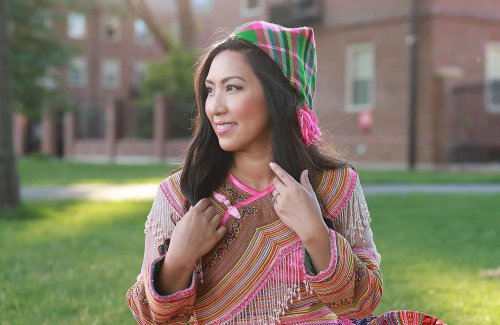
From growing up in a refugee camp to struggling financially in college, Mai Hlee has learned to hustle from an early age

Mai Hlee’s journey is a testament to the power of resilience and hard work.

Mai’s entrepreneurial spirit comes from her mother, who taught her life-long skills. Mai’s resilience is evident in her journey to paying off her student loans, living frugally, and raising a family of 6. She started her first online business documenting her journey on her blog where she shared savings tips to help others save too

Despite experiencing mental health challenges and social anxiety, she found strength in vulnerability and persevered to become a public figure in her community. Her tenacity and resourcefulness show that with hard work and determination, anything is possible.

THE HUSTLE STARTS EARLY

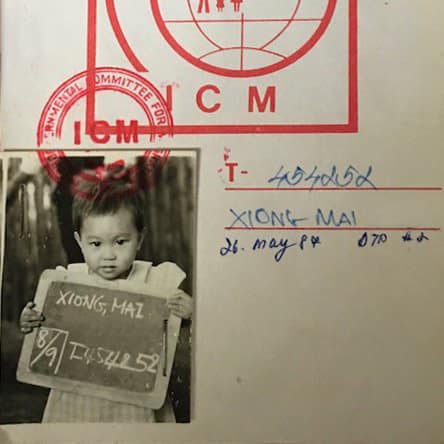
Born in a refugee camp in Thailand after her family fled the aftermath of the Vietnam War, Mai’s parents and older siblings swam across the Mekong River in the middle of the night to escape to Thailand, where they lived in a refugee camp for seven years. Mai was born in 1984 and when she was 3 years old, Mai and her family were accepted into the United States. Mai became the first in her family to receive a full public school education.

Mai learned to hustle at an early age. Her dad was a machine operator and made $6 an hour while her mother found odd jobs and became a seamstress while taking care of her and her other 8 siblings. Mai had to learn how to use a sewing machine at an early age so that she could help her mom. While she was sewing letters on college sweatshirts and hoodies alongside her mom, other kids her age were playing outside. “Now that I look back, I am so grateful for the life-long skills that my mom taught me. My entrepreneurial spirit comes from her,” Mai said.

TURNING ADVERSITY INTO MOTIVATION

When her parents were able to buy their first personal computer that she had to share with her siblings, she took the opportunity to learn how to code in HTML. And at the age of 12, she secured an internship at Ohio.com.

But despite how hard she worked, she still struggled financially in college. There was a time when she had no more than $5 in her pocket and faced the dilemma of using it to either buy gas or get a slice of pizza. You could say that she starved most days.

During her childhood, church people would knock on their door on weekends and bring giant, clear trash bags filled with donuts. Donuts that no one else wanted. It was one of her best memories as a child because she never got to eat sweets. Only to find out that all those years, she has been eating expired donuts. “I came home one night crying my eyeballs out and telling myself that one day I would never ever be poor again or allow my future children to experience what I did.”

FROM FRUGAL LIVING TO INFLUENCER SUCCESS 

After graduating from the College for Creative Studies with her Bachelor of Fine Arts in 2007, she already had a full-time job as a Web Designer lined up for her at an advertising agency. She used the money from her job to publish her own cultural Hmong magazine, with 10,000 in circulation at its peak, and eventually, she went to work for a startup company as a Frontend Developer. She took on side jobs, building websites, designing logos, and doing photography.

When she was pregnant with her first daughter in 2011, she still had over $50,000 in student loan debt, and was paying the bare minimum. She wasn’t taught or prepared to manage her own finances and her parents worked so hard to provide for a family of 11 that even they were stretched thin.

She made a promise to herself to pay off all her loans before her daughter started her own educational path. So she started to live as frugally as possible. She sold anything she had that was worth anything, learned how to extreme coupon. She documented her journey, shared deals and saving tips on a blog and on social media. She amassed a 170,000+ following on Facebook and 50,000 on Instagram.

Before the term Influencer even became popular, she was already working with brands like Nestle, Pampers, Kellogg’s, Walmart, and Sam’s Club. She was able to make multiple six-figures in passive income from Amazon, Google Adsense, and other sources. Eventually, she was able to pay off the full amount of her student loan, and even took her kids to Disney World twice.

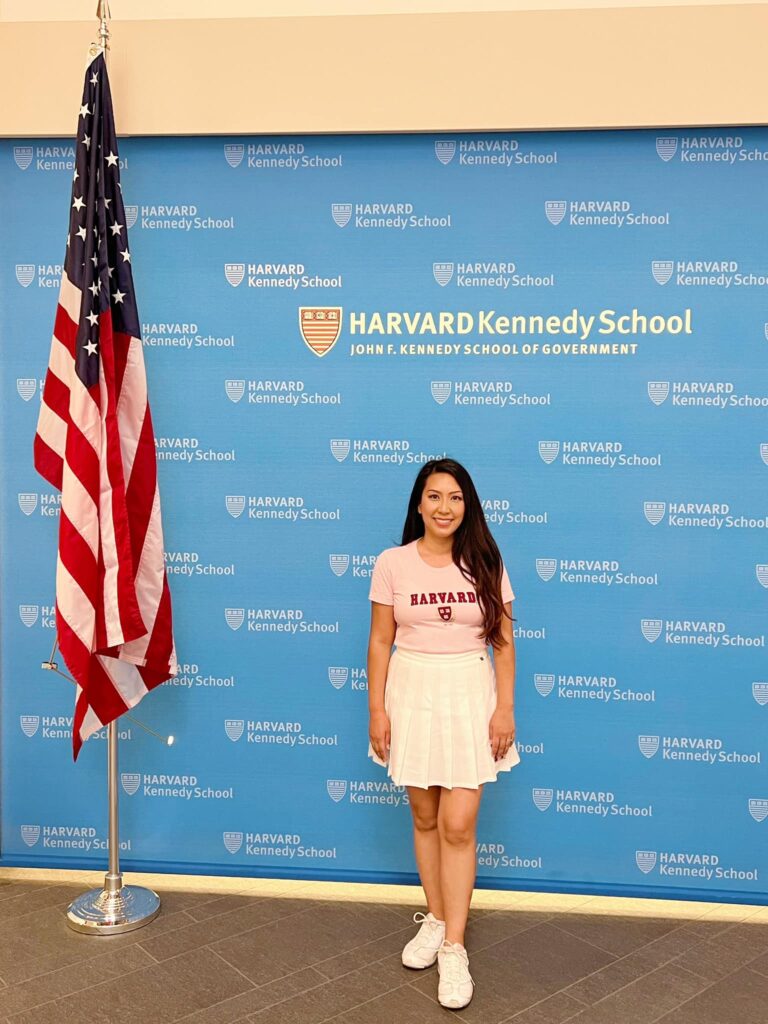
Just last year, Mai received two scholarships and a fellowship to attend Harvard University and Michigan State University to further enhance her public speaking and leadership skills. This year, she became an honorary Ambassador and was chosen to travel to Japan to learn about the culture, economy and its people.

FINDING STRENGTH IN VULNERABILITY

Despite her digital and online success, she was diagnosed with PTSD due to a harrowing situation that caused her to have social anxiety and mental health problems, including self-doubt. “Meeting my husband saved me. While others pointed their fingers and laughed at me, he was my protector and my biggest supporter.”

While Mai was in college, she entered a Hmong pageant and became the Miss Lao-Hmong Wisconsin in 2004 without any experience or formal training. The pageant became a platform for Mai to advocate for her community while bringing awareness to the Hmong genocide in Laos. She joined two more pageants after that but shortly after the last pageant and in the summer of 2008, Mai became the victim of a cyber stalker.

Her perpetrator used social media to harass, terrorize and sabotage her life. He had spent weeks gathering images of her, from creating a fake social media account to friending her, lifting and gathering photos of her, and making video collages with explicit messages to taunt her. 

Mai couldn’t trust anyone around her because she had no idea who it was. She just knew it had to be someone who had been watching her for a long time. She reached out to the police but they were unable to identify the cyberstalker.

One night, she decided to use her technical background in Web Design to track her cyber stalker, and the perpetrator was eventually found and arraigned. However, Mai faced backlash from her community when they found out her cyber stalker was a Hmong man. Relatives that supported her initially turned against her, and the woman she had interviewed for her magazine’s front cover dropped out. Mai’s parents were pressured by the Hmong elders to drop the case. Traditionally, Hmong girls are taught to be quiet, timid, and domesticated at an early age.

But Mai was their daughter, so they supported her. Mai had to face her stalker in court and be judged, after a year of waiting for her case to be brought to a trial because the cyberstalker did not budge or take a plea.

The case lasted one week, and the jury found the stalker guilty.

THE LIGHT AT THE END OF THE TUNNEL

After a decade of healing and overcoming her anxiety and fear of being around people, she was voted by the people to be a public figure in her community. Mai now oversees a more than a billion dollar annual budget, attends conferences, public events and is proud to share her experiences with others.

Overcoming PTSD and her mental health challenges made Mai a more resilient person. After the cyberstalking, becoming an outcast in her community, and facing a grueling trial, she looked back on her life and what she went through and realized that she came out as a stronger person. There was nothing anyone could say or do that would hurt her. She had been at the lowest of the low and now, there was nowhere else to go, but up.

During the trial, Mai met her now husband, Adam. Although he knew what happened to Mai, his kindness and support for her never wavered. While everyone was quick to judge her and cast her away, he protected her.

Mai’s parents didn’t live long enough to see her success, and her husband lost his parents when he was younger, so raising their family has been challenging.

But despite all the hardships she has been through, Mai has overcome adversity and continues to thrive in her personal and professional life through hard work and determination.

“When my darkest clouds lifted, I saw just how beautiful the sunlight really was. There is a light at the end of the tunnel.” -Mai

TIPS ON PASSIVE INCOME

  1. Define your niche. Usually, it’s what you love to do or what you’re very interested in. For me, it was personal finance.
  2. Be consistent. Just like a full-time job, show up on time and schedule your tasks and get them done, consistently  
  3. Show up as your true self and you’ll build the right audience –people who are eager to know you and be in your circle
  4. Pitch to brands that you’re passionate about. I would look at things I already have in my house and look up the brand’s story, the founders, and identify what I can bring to the table to make them even better
  5. Automate or outsource anything that you don’t like to do so that you can focus on the things that spark your passion

ADVICE FROM ONE HUSTLER TO ANOTHER

Don’t ever let people tell you that you can’t do it. Don’t let people define your future. Listen to your intuition, that inside voice that is telling you what feels right. When you get rejected by clients or hiring managers, ask them what you can do to be better next time and the kind of person they’re looking for. 

Forge a different path: when people are “Zig-ing” –you “Zag.”  

CONNECT WITH MAI

Facebook: Mai Hlee

Instagram: @maihleex

Website: maihleex.com