Stories

March 17, 2023

SHARE:

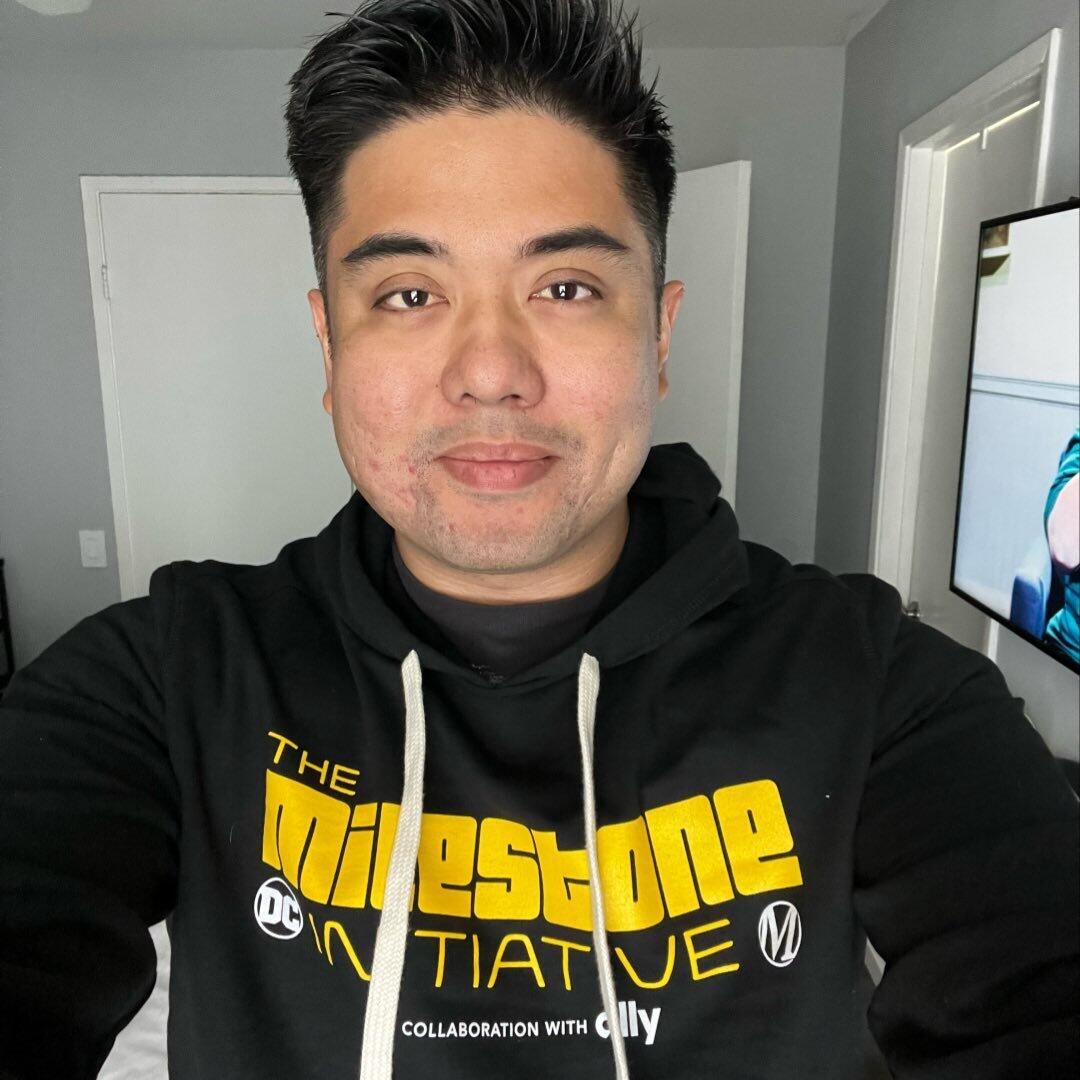
Nathaniel “Nathan” Cayanan is a Filipino-American currently working as a lecturer at Cal State Fullerton part-time, where he teaches business communication. He has been teaching English composition and academic writing for almost a decade and has been in education for 17 years, 8 of those years in college. He studied creative writing and screenwriting at USC and earned a master’s in writing because he wanted to be a filmmaker, but found himself teaching English comp – which he loved for a time.

On a whim last year, Nathan applied for DC Comics Milestone Initiative, a talent development program created in partnership with groundbreaking publisher Milestone Media and Ally Financial for marginalized writers and artists who want to break into the industry. It was highly competitive, but, somehow, the story he wrote for the application caught their eye, and he was officially accepted into their inaugural class. He took part in a program that mentored them as they tried to advance in the comic book industry.

He’s putting more effort into his creative career, not only writing some comics or graphic novels but drawing too. Now, he will be making his DC Comics debut as a writer. His story features the superhero Icon during the Cambodian Civil War.

With his first story to release in just a few months, Nathan’s career is on the rise. But how did he get to this point? Let’s explore the decisions and experiences that brought him here.

I APPLIED BELIEVING THAT I WOULD FAIL

I’ve always loved stories, be they in movies, books, or comics. I have read comics ever since I was about eight years old, my first comic being Batman #416. I watched movies as much as I could growing up, falling in love with not only the stories, but also the craft of telling them. 

I studied creative writing and screenwriting, but as most people know, it’s not a career rife with opportunities, so I found a day job teaching while I tried to develop my creative career. But teaching was a job that took a lot of time and energy, so the amount of effort into my writing career was relatively low. I loved teaching, so I was okay with this for a while, especially since I constantly got rejections for stories I wrote. In short, I settled.

However, about 5-6 years into my college teaching career, I started to feel pigeonholed. Despite earning stellar reviews and even winning Teacher of the Year in 2018, I wasn’t getting consistent opportunities. I was passed up for full-time positions several times. And even though it’s common for adjuncts to make up for a lack of full-time work by finding employment at multiple colleges, many community colleges would not hire me to teach part-time despite me having more experience and qualifications than other candidates they did hire.

So, I realized I needed to let go of this career and go back to school in 2019 for something more practical and get an MBA to pursue opportunities outside higher ed. My logic was that I would continue to teach part-time at only one school and leave my admin job at another school, while I went to graduate school (again).

Then the pandemic happened, and I started to also lose some of the classes at that school because of low enrollment and cut hours. Simultaneously, while I was doing well in my business program (I was earning a 4.0 at the time), I was a bit depressed. The world was collapsing, people were just very unpleasant, student-teacher dynamics changed, and I felt like a failure in TWO careers I pursued.

I applied for the Milestone Initiative, thinking that I’m going to just go work in an office if I give up my passions completely, so I might as well make one last effort and “die trying,” knowing that I fought until the bitter end. I actually applied believing that I would fail and that I just needed one more rejection letter to make it official. But, instead, I was accepted, and that really changed things moving forward.

The world was collapsing, people were just very unpleasant, student-teacher dynamics changed, and I felt like a failure in TWO careers I pursued.

nathan cayanan

CREATIVE INFLUENCES

I have so many creative influences. In film, there are Wong Kar Wai, Christopher Nolan, Quentin Tarantino, Martin Scorsese, and Aaron Sorkin.

If we’re talking literature: Haruki Marakami, Juno Diaz, Amy Tan, Lan Samantha Chang, Edgar Allan Poe, Cormac McCarthy. Comics, Tom King (who was my mentor in the Milestone Initiative), Scott Snyder, Jim Lee, Alan Moore, and Frank Miller. I mean, this list can go on and on, and they all have different influences on my creative voice and eye.

Digital illustration of Sugar Pie DeSant, Filipina jazz singer in the mid-1900s. Drawn by Nathan Cayanan. Colors by Lala Narita.

CHALLENGES OF TRANSITIONING INTO THE CAREER

Most of my work so far is indie and still in the process of being made. I have one comic I’m writing and drawing and any money I get will come after it’s printed, and assuming that it sells enough.

Similarly, I have a graphic novel I’m writing, and an artist is drawing it, and we’ve been offered the opportunity to publish it when it’s finished, but we won’t see a dime until we see units sold in the future. This is why many of us have day jobs. I still teach, just less than I did, and only at a university closer to home. But we do this because we love the art of telling stories.

Drawn by Nathan Cayanan: Ninoy Aquino, a Filipino politician who was assassinated during Ferdinand Marcos’ rule in the Philippines. This illustration depicts Aquino and his wife, future president Cory Aquino, when they lived in Boston, after he was exiled for standing against Marcos.

ADVICE FOR ASPIRING WRITERS OR ARTISTS

It’s not easy, and I think admitting that first is important. Too many young aspiring artists ask for advice, but what I feel like they’re asking is how they make this a career where the opportunities are plentiful, the money is endless, they can do it only from 9-to-5, get a 401K, and feel happy 24/7.

Every person I’ve met in the creative world (especially in comics) has said the same thing. It’s a grind. But, if you love the art, I mean genuinely love it (as opposed to the potential for fame and money), then go for it. But, as many writers and artists have told me, 90% of us have a day job. So, prepare to work, even if you make it. And even when you do, enjoy it, because it may not last.

Also, while it may not feel like it should be important, your ability to work and communicate with others is highly important. VERY few people are talented enough to never have to interact with others. Instead, most must be able to work with each other.

Editors have told me that they don’t care if you’re talented. If you’re not professional, no one’s going to give you the opportunity, especially if you’re rude, always late, flakey, or overly stubborn. You don’t have to be the life of the party or admired by the masses. But surely, you have to be reliable and don’t be a d*&k. 

Drawn by Nathan Cayanan: “It just speaks to the times as we see Asian hate crimes on the rise.”

Website: nathanielcayanan.com

Instagram: @nathan_a.k.a

Related Articles

Image Source: Koury Angelo / Forbes

Uncategorized

Rejections Didn’t Stop Kinside CEO Shadiah Sigala To Reach A Stellar Entrepreneurial Career

Shadiah Sigala co-founded HoneyBook, a $2 billion financial management software platform for small businesses, motivated by her ability to negotiate uncertainty while gathering information and making decisions.

When Shadiah was a child, her Mexican mother together with her two siblings moved to southern California. Despite most of her family members being unable to attend college, she was an honor student whose lifelong ambition was to acquire the greatest degree of education.

Shadia attended Pomona College for Latin American Studies and Harvard Kennedy School for public policy. As a result, she established a strategy for reaching goals she wasn’t sure about.

Before becoming an accomplished millennial, she finished her master’s degree and became the highest-earning member of their family as a project manager at Aetna, a health insurance company, where she learned about entrepreneurship, realized she is a “builder,” and thought starting her own company was the best option.

However, Shadia realized that she wouldn’t be happy there since she wouldn’t be valued. Shadia ultimately started a personal chef business in 2010, using her Pomona College alumni network to find well-off grads who wanted someone to cook for them.

In 2012, another realization occurred to her that cooking wasn’t for her. Shadiah then decided to move with her then-husband to San Francisco and found tech. She arranged informative interviews with everyone in the sector and learned that the problem she wanted to tackle was one she’d experienced as a business owner: no effective method to handle backend logistics like emails, payments, and bills.

With the three Israeli business people who have a similar concern as hers, they decided to digitize all these tedious procedures that micro small firms must complete to free them up to genuinely focus on doing what they love.

Using that concept, Shadia established HoneyBook in 2013 and worked there for five years according to CNBC.

As her most recent business, Shadia co-founded Kinside in 2018, a child-care marketplace that is available to employees that offers new parents a centralized location to look for daycare in their neighborhood, which has reached over $16 million, according to Crunchbase. 

Letting fear and excitement be one’s guide and being open-minded is what Shadia advises to other aspirants. According to her, opportunities that “feel like they are beyond your pay grade” are exactly how stellar is made.

Image Source Artbound

Uncategorized

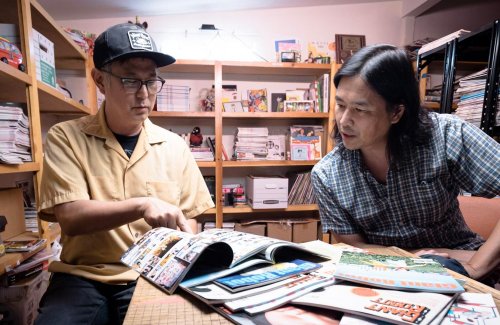
ARTBOUND Features Giant Robot’s Asian-American Pop Culture Influence In Its Latest Episode

Highlighting the impact of the Asian-American pop culture publication Giant Robot, the debut of the latest episode entitled “Giant Robot: Asian Pop Culture and Beyond” was finally aired last October 26 in the acclaimed arts and culture series ARTBOUND on KCET.

The episode showed Giant Robot’s examination of Sawtelle Boulevard as a Japanese-American neighborhood, sparking interest in Asian and Asian-American popular culture which resulted to a long line of Asian American artists who won recognition on a global scale. 

Established in 1994, Giant Robot was a bimonthly journal that focused on Asian popular culture that soon included works by Asian-American artists including David Choe and James Jean.

Eric Nakamura began publishing Giant Robot as a digest-sized zine. The piece covered a variety of subjects, including trendy Asian American independent filmmakers, Japanese punk rock, and contemporary Hong Kong films. National media sources including the New York Times, Wired, and LA Weekly published the story.

In 2001, Nakamura opened his first store named “Giant Robot Store” in Sawtelle Japantown and expanded in 2003.

Giant Robot co-founder, Martin Wong edited all 68 issues of the glossy magazine on Asian, Asian-American, and new hybrid culture from 1994 to 2010, when it was still a punk zine. His wife Wendy Lau served as Giant Robot’s graphic designer beginning with issue 18. Even today, Martin continues to publish zines and contribute to them.

The popular weekly television program and online site ARTBOUND captures the essence of California’s expanding arts and cultural scene and investigates how it is transforming the state into the world’s creative capital. 

The KCET Original series investigates and clarifies contemporary cultural challenges, offering insightful in-depth study of how the arts and culture impact society.

Image Source: Julie’s Bakeshop

Uncategorized

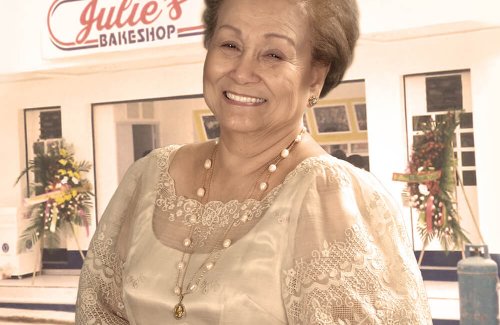
Dreams Set No Limits To 50-Year-Old Who Started A Bakeshop Now The Philippines’ Most Famous Brand

“In a way, I was poor. I was hungry, maybe not for food but for self-achievement. I thought there must be something more I can do than just being a housewife. I was very determined to succeed, in whatever came my way,” thus said Julie Gandionco as quoted by the Inquirer, the Philippines’ local newspaper.

In January 1981, then-50-year-old Julia Gandionco opened Julie’s Bakeshop to satisfy her thirst for proving that she is more than a housewife.

Julie’s Bakeshop gloriously celebrates being one of the Philippines’ largest bakery chains with more than 500 branches all over the country, which can be traced back to Mandaue City on the Island of Cebu as its place of origin.

In the 1970s, Julie was a canteen concessionaire at a rattan company, and subsequently became a manager of its sister company. She also opened another canteen a year later.

Having these three canteens being managed, she felt the rising demand for bread which made her take the chance of opening a bakeshop, despite having zero knowledge of baking.

Julie stressed that her bakeshop exists because of “a growing need for bread products and a strong trust in God,” and that she desires to encourage and uplift other mothers to dream big and strive for their goals.

Image Source: South China Morning Post

News

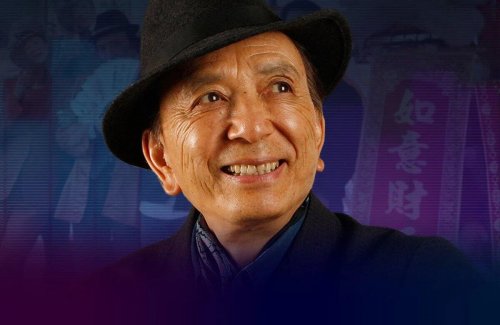
Veteran Actor James Hong Lauds Asian-American Representation In Entertainment Industry

During the Critics Choice Association (CCA)’s Inaugural Celebration of Asian Pacific Cinema & Television, veteran actor James Hong received the prestigious Icon award along with a few other awardees.

The veteran actor reflects on his over 700 roles and how Asian representation has changed: “When I was a kid, ‘The Good Earth’ was played by Caucasian leads that taped their eyes up.”

In his speech, Hong commended Asian-American creatives for “carrying through” work to advance their careers in the entertainment world and emphasized that his ultimate goal was to stop hatred and boost the whole level of Asian-Americans.

“To see an organization collect all these people together and work together and stop this hatred for Asians is our main goal, I think, and just boost the whole level of Asian-Americans,” Hong mentioned to the PA News Agency.

Held at Fairmont Century Plaza, CCA’s celebrity-filled event highlighted both new and experienced talents and featured other notable figures from the Asian film industry.

At the age of 93, the veteran vigorously demonstrated a few martial arts movements for the photographers with a smile on his face during the occasion.

In his more than six decades-old career, Hong is a well-accomplished actor with hundreds of film and television credits who co-founded the East West Players in 1965, making him more than deserving to receive the Icon award.

The actor stated that CCA is perhaps one of the pioneering organizations that promote culture.