Stories

March 17, 2023

SHARE:

Nathaniel “Nathan” Cayanan is a Filipino-American currently working as a lecturer at Cal State Fullerton part-time, where he teaches business communication. He has been teaching English composition and academic writing for almost a decade and has been in education for 17 years, 8 of those years in college. He studied creative writing and screenwriting at USC and earned a master’s in writing because he wanted to be a filmmaker, but found himself teaching English comp – which he loved for a time.

On a whim last year, Nathan applied for DC Comics Milestone Initiative, a talent development program created in partnership with groundbreaking publisher Milestone Media and Ally Financial for marginalized writers and artists who want to break into the industry. It was highly competitive, but, somehow, the story he wrote for the application caught their eye, and he was officially accepted into their inaugural class. He took part in a program that mentored them as they tried to advance in the comic book industry.

He’s putting more effort into his creative career, not only writing some comics or graphic novels but drawing too. Now, he will be making his DC Comics debut as a writer. His story features the superhero Icon during the Cambodian Civil War.

With his first story to release in just a few months, Nathan’s career is on the rise. But how did he get to this point? Let’s explore the decisions and experiences that brought him here.

I APPLIED BELIEVING THAT I WOULD FAIL

I’ve always loved stories, be they in movies, books, or comics. I have read comics ever since I was about eight years old, my first comic being Batman #416. I watched movies as much as I could growing up, falling in love with not only the stories, but also the craft of telling them. 

I studied creative writing and screenwriting, but as most people know, it’s not a career rife with opportunities, so I found a day job teaching while I tried to develop my creative career. But teaching was a job that took a lot of time and energy, so the amount of effort into my writing career was relatively low. I loved teaching, so I was okay with this for a while, especially since I constantly got rejections for stories I wrote. In short, I settled.

However, about 5-6 years into my college teaching career, I started to feel pigeonholed. Despite earning stellar reviews and even winning Teacher of the Year in 2018, I wasn’t getting consistent opportunities. I was passed up for full-time positions several times. And even though it’s common for adjuncts to make up for a lack of full-time work by finding employment at multiple colleges, many community colleges would not hire me to teach part-time despite me having more experience and qualifications than other candidates they did hire.

So, I realized I needed to let go of this career and go back to school in 2019 for something more practical and get an MBA to pursue opportunities outside higher ed. My logic was that I would continue to teach part-time at only one school and leave my admin job at another school, while I went to graduate school (again).

Then the pandemic happened, and I started to also lose some of the classes at that school because of low enrollment and cut hours. Simultaneously, while I was doing well in my business program (I was earning a 4.0 at the time), I was a bit depressed. The world was collapsing, people were just very unpleasant, student-teacher dynamics changed, and I felt like a failure in TWO careers I pursued.

I applied for the Milestone Initiative, thinking that I’m going to just go work in an office if I give up my passions completely, so I might as well make one last effort and “die trying,” knowing that I fought until the bitter end. I actually applied believing that I would fail and that I just needed one more rejection letter to make it official. But, instead, I was accepted, and that really changed things moving forward.

The world was collapsing, people were just very unpleasant, student-teacher dynamics changed, and I felt like a failure in TWO careers I pursued.

nathan cayanan

CREATIVE INFLUENCES

I have so many creative influences. In film, there are Wong Kar Wai, Christopher Nolan, Quentin Tarantino, Martin Scorsese, and Aaron Sorkin.

If we’re talking literature: Haruki Marakami, Juno Diaz, Amy Tan, Lan Samantha Chang, Edgar Allan Poe, Cormac McCarthy. Comics, Tom King (who was my mentor in the Milestone Initiative), Scott Snyder, Jim Lee, Alan Moore, and Frank Miller. I mean, this list can go on and on, and they all have different influences on my creative voice and eye.

Digital illustration of Sugar Pie DeSant, Filipina jazz singer in the mid-1900s. Drawn by Nathan Cayanan. Colors by Lala Narita.

CHALLENGES OF TRANSITIONING INTO THE CAREER

Most of my work so far is indie and still in the process of being made. I have one comic I’m writing and drawing and any money I get will come after it’s printed, and assuming that it sells enough.

Similarly, I have a graphic novel I’m writing, and an artist is drawing it, and we’ve been offered the opportunity to publish it when it’s finished, but we won’t see a dime until we see units sold in the future. This is why many of us have day jobs. I still teach, just less than I did, and only at a university closer to home. But we do this because we love the art of telling stories.

Drawn by Nathan Cayanan: Ninoy Aquino, a Filipino politician who was assassinated during Ferdinand Marcos’ rule in the Philippines. This illustration depicts Aquino and his wife, future president Cory Aquino, when they lived in Boston, after he was exiled for standing against Marcos.

ADVICE FOR ASPIRING WRITERS OR ARTISTS

It’s not easy, and I think admitting that first is important. Too many young aspiring artists ask for advice, but what I feel like they’re asking is how they make this a career where the opportunities are plentiful, the money is endless, they can do it only from 9-to-5, get a 401K, and feel happy 24/7.

Every person I’ve met in the creative world (especially in comics) has said the same thing. It’s a grind. But, if you love the art, I mean genuinely love it (as opposed to the potential for fame and money), then go for it. But, as many writers and artists have told me, 90% of us have a day job. So, prepare to work, even if you make it. And even when you do, enjoy it, because it may not last.

Also, while it may not feel like it should be important, your ability to work and communicate with others is highly important. VERY few people are talented enough to never have to interact with others. Instead, most must be able to work with each other.

Editors have told me that they don’t care if you’re talented. If you’re not professional, no one’s going to give you the opportunity, especially if you’re rude, always late, flakey, or overly stubborn. You don’t have to be the life of the party or admired by the masses. But surely, you have to be reliable and don’t be a d*&k. 

Drawn by Nathan Cayanan: “It just speaks to the times as we see Asian hate crimes on the rise.”

Website: nathanielcayanan.com

Instagram: @nathan_a.k.a
Related Articles

Image Source: Carla Tramullas / MycoWorks

Uncategorized

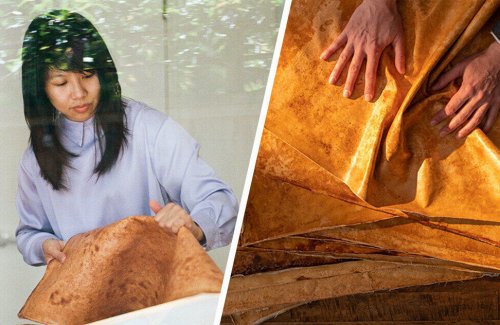
MycoWorks’ Sustainable Mushroom Leather Raised Over $187M From General Motors and Hollywood A-Listers

“Growing the future has only just started. This industry will continue to surprise people,” says Philip Ross, co-founder of MycoWorks, a mycelium material founder and producer.

As the innovator of high-quality mushroom “leather” for the luxurious Hermes bags, the business acquired $187 million from Natalie Portman, John Legend, and General Motors and will soon cover the latter’s electric car interiors.

Ross unintentionally discovered leather-like material in reishi mushrooms, a fungus he farmed for his cancer and AIDS more than four decades ago. He then became a mycelium artist and featured his fungus-based works at famous museums.

According to Sophia Wang, co-founder of MycoWorks whom Phil met six years before they founded the firm while working together on art ventures, Ross’s discovery marked the “leather’s” birth to the globe.

Wang and Ross continued to discover more about mycelium and later realized that the material is enticing to buyers who don’t like synthesized contaminants and materials which are produced from animals.

Alongside raising their funding source, the company also conducted a groundbreaking at South Carolina Factory with the aim of attaining a sufficient supply of their fancy product.

With about 200 employees, Matt Scullin, the company’s CEO, said that the “Brands are making very significant changes to address what is really a growing demographic of people who want to buy sustainable products that have provenance and traceability and a lower carbon footprint, lower water use—and mycelium does all of those things.”

Compared to animal leather, the mushroom leather-like material is far more environmentally friendly as the former adds up to about a million tons of carbon dioxide which is tantamount to 30 million cars’ yearly emissions.

Despite environmental and animal issues, people prefer biomaterials or “next-gen” materials over the past decade making it in-demand as multi-billion dollars are invested in the industry.

Nonetheless, Hermes’ firm in France is soon to release its $4,200-worth “Victoria” bag made from MycoWorks’ amber-hued exquisite mycelium.

Image Source: Ricci Chocolates & Michiko Liquete Facebook

Uncategorized

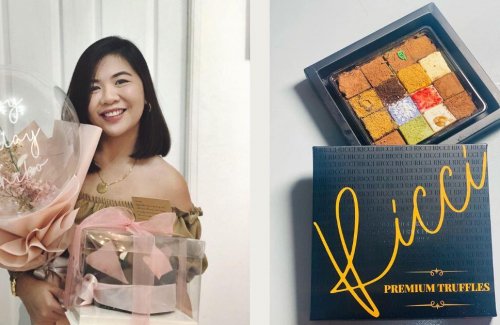
Mom Without Prior Baking Experience But Through Perseverance Finds Success With Homemade Chocolates

Despite having zero experience in baking, this mom entrepreneur was able to give birth to Ricci Chocolates, now branded as the “Home of the Best Tasting Truffles in Baguio City, Philippines” 

Mitchiko Liquete clarified that she is a dessert lover but never a chocolate fanatic. Initially having no interest in making desserts nor in cooking, she capitalized on believing in herself with the vision of making her products look off-the-peg.

To better her craft, Mitchicko heeded the DTI’s Kapatid Mentor ME (KMME) free online training program in September 2022 to learn about branding and marketing while in a ‘hit and miss’ process in chocolate-making, which she considered as a great help for business-starters like her. 

Mitchiko’s 100% homemade premium chocolates got 20 to 30 boxes of sales per day that eventually reached over and above 2,000 to 3,000 packs weekly and enabled the company to supply more than 100 resellers and distributors nationwide.

The success of Mitchicko’s purely hand-crafted, first-class, and domestically produced chocolates paved the way for opening four stores and actualized $17,000 income in one year alone making Mitchiko more than proud.

She plans to expand her sweet business by making Ricci Chocolates visible in every mall in the Philippines.

Image Source: Plant Habitat Facebook

Uncategorized

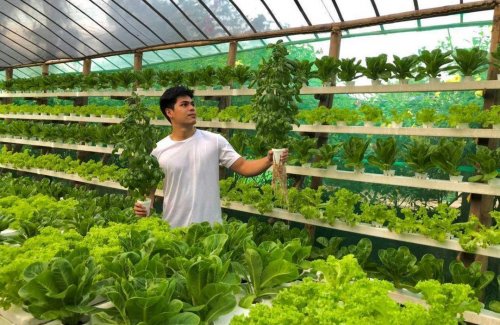
This Filipino Millennial Started With $20 To Pursue Hydroponics Farming Business

Nothing is impossible for this 21-year-old Filipino who engaged in modern farming with only $20 as a starting capital.

Despite being dissuaded by his grandfather who wanted him to become an engineer, Harold Zapata was determined to uplift farming, recognize farmers, and attest that farmers are the providers of our staple food and without them, it would be challenging for us to live.

As a farmer, his grandfather believed that farming is tantamount to poverty which made him influence his grandson to pursue a different profession.

However, the farmer’s blood runs in Harold’s veins, with Harold’s minimal capital and resourcefulness, he initially started hydroponics farming using used styrofoams which he asked from vendors in their local market.

Unlike traditional farming, hydroponics farming is cheaper as it is a type of farming where plants are grown in water and not in soil and a farmer would spend money only on styro cups, coco peat, feeds, and nutrients.

As a beginner, he only had a miniature greenhouse that could hold 80 pieces of lettuce and made him earn as much as $300 a month, which gradually allowed him to expand his business.

Harold’s hobby-turned-business serves him as a source of income not only from the harvests but from offering for-sale seedlings, building greenhouses, and providing consultations with his customers.

He also exclaimed that pursuing one’s interest unlocks many possibilities and that farming also teaches life lessons.

Image Source: Boy Isaw Instagram

Uncategorized

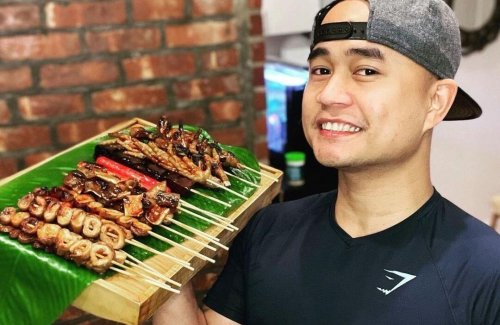
Hard Work Pays Off For Bringing Filipino Street Food “Boy Isaw” To New York, Now Makes 14$K A Month

The Filipino street food vendor admits that perseverance and hard work were really his main capitals in achieving his dream.

After introducing one of the most popular Filipino barbeque street food, “ihaw-ihaw,” especially the isaw (grilled chicken or pork intestines), to New York, Filipino street food seller Robin John Calalo has seen the fruits of his labor, earning more than $14,000 each month.

His shop, “Boy Isaw,” became well-known among fellow Filipinos and even foreigners who yearned for a taste of isaw, betamax (coagulated chicken blood), adidas (chicken feet), and other Filipino street food. 

Robin’s success came as a surprise considering that his small firm only had $50 when it was founded in 2019, during the onset of the pandemic. He claims that while in the supermarket, he suddenly made the decision to open his BBQ food cart due to a craving for Filipino food with his friends and family as the first customers.

According to Business News Philippines, Boy Isaw peddles in food bazaars and engages in online selling where he posts for-sale ready-to-grill street foods.

Aside from grilled food including hotdogs, chicken, and others which he posts on his Instagram, he also serves rice and chicharon bulaklak (deep-fried pork intestine) which is also a bestseller.