Stories

March 17, 2023

SHARE:

Nathaniel “Nathan” Cayanan is a Filipino-American currently working as a lecturer at Cal State Fullerton part-time, where he teaches business communication. He has been teaching English composition and academic writing for almost a decade and has been in education for 17 years, 8 of those years in college. He studied creative writing and screenwriting at USC and earned a master’s in writing because he wanted to be a filmmaker, but found himself teaching English comp – which he loved for a time.

On a whim last year, Nathan applied for DC Comics Milestone Initiative, a talent development program created in partnership with groundbreaking publisher Milestone Media and Ally Financial for marginalized writers and artists who want to break into the industry. It was highly competitive, but, somehow, the story he wrote for the application caught their eye, and he was officially accepted into their inaugural class. He took part in a program that mentored them as they tried to advance in the comic book industry.

He’s putting more effort into his creative career, not only writing some comics or graphic novels but drawing too. Now, he will be making his DC Comics debut as a writer. His story features the superhero Icon during the Cambodian Civil War.

With his first story to release in just a few months, Nathan’s career is on the rise. But how did he get to this point? Let’s explore the decisions and experiences that brought him here.

I APPLIED BELIEVING THAT I WOULD FAIL

I’ve always loved stories, be they in movies, books, or comics. I have read comics ever since I was about eight years old, my first comic being Batman #416. I watched movies as much as I could growing up, falling in love with not only the stories, but also the craft of telling them. 

I studied creative writing and screenwriting, but as most people know, it’s not a career rife with opportunities, so I found a day job teaching while I tried to develop my creative career. But teaching was a job that took a lot of time and energy, so the amount of effort into my writing career was relatively low. I loved teaching, so I was okay with this for a while, especially since I constantly got rejections for stories I wrote. In short, I settled.

However, about 5-6 years into my college teaching career, I started to feel pigeonholed. Despite earning stellar reviews and even winning Teacher of the Year in 2018, I wasn’t getting consistent opportunities. I was passed up for full-time positions several times. And even though it’s common for adjuncts to make up for a lack of full-time work by finding employment at multiple colleges, many community colleges would not hire me to teach part-time despite me having more experience and qualifications than other candidates they did hire.

So, I realized I needed to let go of this career and go back to school in 2019 for something more practical and get an MBA to pursue opportunities outside higher ed. My logic was that I would continue to teach part-time at only one school and leave my admin job at another school, while I went to graduate school (again).

Then the pandemic happened, and I started to also lose some of the classes at that school because of low enrollment and cut hours. Simultaneously, while I was doing well in my business program (I was earning a 4.0 at the time), I was a bit depressed. The world was collapsing, people were just very unpleasant, student-teacher dynamics changed, and I felt like a failure in TWO careers I pursued.

I applied for the Milestone Initiative, thinking that I’m going to just go work in an office if I give up my passions completely, so I might as well make one last effort and “die trying,” knowing that I fought until the bitter end. I actually applied believing that I would fail and that I just needed one more rejection letter to make it official. But, instead, I was accepted, and that really changed things moving forward.

The world was collapsing, people were just very unpleasant, student-teacher dynamics changed, and I felt like a failure in TWO careers I pursued.

nathan cayanan

CREATIVE INFLUENCES

I have so many creative influences. In film, there are Wong Kar Wai, Christopher Nolan, Quentin Tarantino, Martin Scorsese, and Aaron Sorkin.

If we’re talking literature: Haruki Marakami, Juno Diaz, Amy Tan, Lan Samantha Chang, Edgar Allan Poe, Cormac McCarthy. Comics, Tom King (who was my mentor in the Milestone Initiative), Scott Snyder, Jim Lee, Alan Moore, and Frank Miller. I mean, this list can go on and on, and they all have different influences on my creative voice and eye.

Digital illustration of Sugar Pie DeSant, Filipina jazz singer in the mid-1900s. Drawn by Nathan Cayanan. Colors by Lala Narita.

CHALLENGES OF TRANSITIONING INTO THE CAREER

Most of my work so far is indie and still in the process of being made. I have one comic I’m writing and drawing and any money I get will come after it’s printed, and assuming that it sells enough.

Similarly, I have a graphic novel I’m writing, and an artist is drawing it, and we’ve been offered the opportunity to publish it when it’s finished, but we won’t see a dime until we see units sold in the future. This is why many of us have day jobs. I still teach, just less than I did, and only at a university closer to home. But we do this because we love the art of telling stories.

Drawn by Nathan Cayanan: Ninoy Aquino, a Filipino politician who was assassinated during Ferdinand Marcos’ rule in the Philippines. This illustration depicts Aquino and his wife, future president Cory Aquino, when they lived in Boston, after he was exiled for standing against Marcos.

ADVICE FOR ASPIRING WRITERS OR ARTISTS

It’s not easy, and I think admitting that first is important. Too many young aspiring artists ask for advice, but what I feel like they’re asking is how they make this a career where the opportunities are plentiful, the money is endless, they can do it only from 9-to-5, get a 401K, and feel happy 24/7.

Every person I’ve met in the creative world (especially in comics) has said the same thing. It’s a grind. But, if you love the art, I mean genuinely love it (as opposed to the potential for fame and money), then go for it. But, as many writers and artists have told me, 90% of us have a day job. So, prepare to work, even if you make it. And even when you do, enjoy it, because it may not last.

Also, while it may not feel like it should be important, your ability to work and communicate with others is highly important. VERY few people are talented enough to never have to interact with others. Instead, most must be able to work with each other.

Editors have told me that they don’t care if you’re talented. If you’re not professional, no one’s going to give you the opportunity, especially if you’re rude, always late, flakey, or overly stubborn. You don’t have to be the life of the party or admired by the masses. But surely, you have to be reliable and don’t be a d*&k. 

Drawn by Nathan Cayanan: “It just speaks to the times as we see Asian hate crimes on the rise.”

Website: nathanielcayanan.com

Instagram: @nathan_a.k.a
Related Articles

Image Source: Dominic Lorrimer/ Australian Financial Review

News

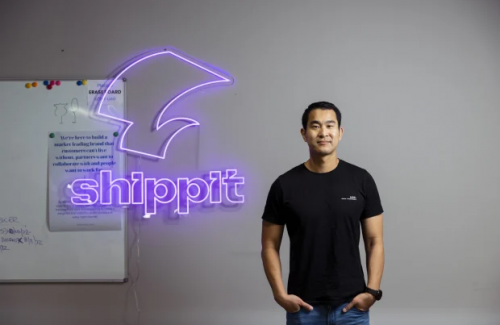
Australian Logistics Tech Firm Shippit Procures Singapore Startup Luwjistik for $11M

Shippit has announced that it will pay $18 million to buy the logistics SaaS platform Luwjistik, based in Singapore. 

Founded by longtime friends William On and Rob Hango-Zada in 2014, with a mission to improve shipping for small businesses, as they have personally experienced the drawbacks of online shopping.

After two years of operations in the region for the Sydney-based company, the Australian logistics tech company co-founder and co-CEO William On has relocated to Singapore to lead the new expansion and manage the existing 50-person Luwjistik team.

This comes after the company raised $65 million in Series B2 funding, which helped operations in Southeast Asia, and almost seven months after it bought the last mile logistics tech platform Premonition.

Shippit’s inclusion of Luwjistik’s co-founders, who bring extensive industry experience and connections to the table, is expected to revolutionize the company’s approach. The acquisition of Luwjistik will also enable the company to provide tailored solutions for the Southeast Asian market. Therefore, Shippit can be the best option for many who manage their warehouse or search for a logistics partner.

The startup works with carriers such as Ninja Van, J&T Express, and JNE Express, as well as logistics companies such as Maersk, POS Malaysia, Lion Parcel, and Summer International.

Within a month of launching Luwjistik, the duo raised US$1.1 million (AUD$1.7 million) in a seed round led by East Ventures, including MDI-Arise Finches and Global Founders Capital.

William anticipated a significant increase in e-commerce in Southeastern Asia, which will continue if Shippit and Luwjistik join forces. Currently, they can provide a one-stop platform for enterprises and the expanding SME segment, particularly in Indonesia, Malaysia, the Philippines, and Thailand.

More than 40 million deliveries were booked via the Shippit platform in the fiscal year 2022. Since its inception in 2014, Sydney-based Shippit has fulfilled e-commerce orders worth $5.5 billion for more than 3,500 retailers.

“I strongly believe that by combining our strengths, we can continuously innovate and offer the most impactful, reliable, and relevant solutions to a fast-changing, dynamic market.” – William shared with Business News Australia.

Image Source: Social Bella

News

A Millennial’s Gamble Pays Off As Her New Beauty Product Line Has Just Raised Over $225M

When the pandemic struck, all Chrisanti Indiana wanted to do was help her family and create jobs in her community.

Nonetheless, as the pandemic worsened, each day appeared to be a gamble. She gambled on her dreams, created her employment opportunity, and risked everything for her family because she had no safety or security options.

The Indonesian co-founder, and chief marketing officer of Social Bella, surprised everyone by taking her successful online store offline. In 2019, her online beauty and personal care store, Sociolla, already had two physical locations in Indonesia. It currently operates 47 outlets in Indonesia and 16 in Vietnam, making its earnings multiplied by ten by the end of 2021.

It started after Indiana had finished her studies in Australia in 2015 when she moved back to Jakarta, where she conceived the idea for Sociolla.

Chrisanti found that Australia was a great place to stock up on her favorite cosmetics because of the abundance of international brands. There couldn’t have been a bigger contrast with Indonesia.

With a combined $13,000, Indiana, her brother, and a close friend founded Social Bella to provide customers with access to legitimate goods and services.

“Since we started, we ensure that we only work with authorized distributors or brand owners,” Indiana said. 

The three founders of Sociolla had bigger plans than just building an online store. They have expanded beyond offline stores to become a global beauty and personal care product distributor. In Indonesia, they also became an associate partner for numerous international brands.

‘We want to ensure that we are scaling up and reaching more and more consumers. If Social Bella becomes a unicorn, it’s a bonus.” – Chrisanti Indiana shared with CNBC.

Image Source: DoorDash

Blogs, Development, Ideas, Stories

What Separates DoorDash Founder Tony Xu From The Rest Of The Tech Billionaire

Learn more about Tony Xu, the co-founder, and CEO of DoorDash, the most extensive service in the US for delivering food. Xu is a Chinese-American tech billionaire who has worked for eBay and PayPal in the past, but he attributes his current success to the experience he gained working as a dishwasher.

DoorDash went public in December 2020 after being co-founded in 2012 by a group of excellent Stanford University students, including Xu. Today, the platform has more than 6,000 employees and more than half the market share in the food ordering and delivery industry. Company earnings for 2021 were reported to be over US$4.8 billion.

Xu shared that he once felt discriminated against when surrounded by other entrepreneurs who were different from him. As the sole Asian-American cofounder of the company, he proudly and responsibly accepted the challenge. He is aware that there are not nearly as many Asian-American CEOs or other types of founders, so he remains a minority throughout this setting. He believes it serves as a gentle reminder always to recognize that and to maintain a lowly but humble attitude.

Not only has Xu found success with DoorDash, but he also serves on the board of directors for Meta, the parent company of Facebook, and was named to Fortune’s 40. He is also a huge NBA fan, leading to DoorDash becoming the league’s first official food delivery partner.

As of 2022, Xu’s net worth was estimated at US$1.3 billion, placing him at #2,190 on Forbes’ list of billionaires.

Image Source: Paulo Chun / NBC News

Stories

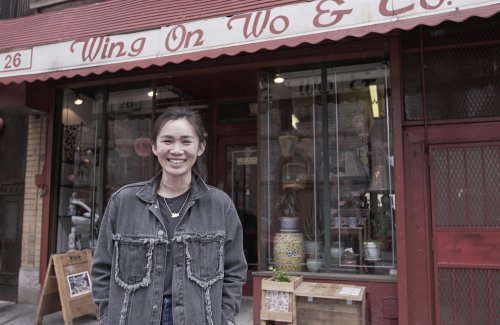
Fifth-generation Entrepreneur Reimagines NYC Chinatown Landmark While Preserving Cultural Traditions

Even though times are tough and New York’s Chinatown is on the verge of dying, there is one place where things appear to be mostly the same as they have always been.

Since Mei Lum started volunteering as a child, Wing on Wo & Co has been run by her family. Brilliant and creative heritage enterprises have withstood generations of economic ups and downs. Mei represents her family’s legacy and New Yorkers and future generations of Chinatown residents.

The 32-year-old fifth-generation owner has bigger plans. Mei revived Wing on Wo’s late-19th-century ambiance. The store was a meeting place, credit union, and informal post office for low-income Chinese employees during the Chinese Exclusion Act.

She wants to run things because she has always wanted to expand the store’s conceptual boundaries. “A business doesn’t have to be so economically driven. There can still be genuine connections, which sustain a community,” she told The Guardian.

Wing on Wo is still primarily run by the original family for over a century. For 30 years, Mei’s father Gary has chatted with clients at the counter. Lorraine, her mother, handles the website and order processing. Her 105-year-old grandmother, Nancy, promotes the store’s hand-painted wine cups, fish-shaped glazed vases, and elegant dinner plates on Instagram.

In 2016, her grandmother intended to sell the family-owned porcelain specialty shop, which was worth close to $10 million. Mei took over the business to preserve it and create a community hub. She was planning to study international relations at Columbia University, but she now wants to run the family business. She wanted the store to be a hub for activists and artists to fight gentrification and displacement.

As a result of the pandemic, Mei decided to focus her efforts on online sales, digital advertising, and social media. To ensure that the business is preserving tradition and shaping the future of Chinatown, she has added several new initiatives, such as youth programs, an artist residency, and a ceramicist fair.