Stories

June 23, 2023

SHARE:

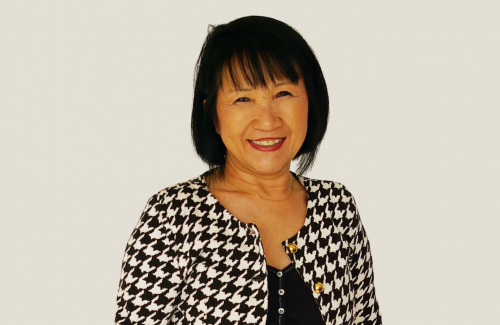
Meet Joyce Ai, a woman with a passion for two seemingly different things – healing and raving. By day, she’s a physical therapist, helping patients recover from injuries and regain strength. But by night (and on weekends), she transforms into something of a superhero: ThePhysioRaver.

That’s right! Joyce is a hardcore raver, and she’s on a mission to help others in the raving community party safely, including DJs, shufflers, and ravers. With her extensive background in strength and conditioning, Joyce is uniquely qualified to help fellow ravers stay healthy, fit, and injury-free.

Her ultimate goal? To keep herself and other ravers stay in top shape so they can keep dancing until they’re 80, or beyond!

Read through as Joyce dives into her journey, explores her passion for both healing and dancing, and let’s learn how she’s using her skills to make a difference in the world as ThePhysioRaver. So turn up the volume, lace up your dancing shoes, and get ready to rave – Joyce-style!

THE STORY OF ‘THEPHYSIORAVER’

I was born and raised in Guangzhou, China, where I spent most of my childhood before my parents and I immigrated to Canada.

I got into physical therapy because I thought the human body was super interesting. I took a human anatomy dissection course in my first year of college. I was amazed by how all the tissues, fascias, tendons, and ligaments were connected.

I have also always enjoyed being active and staying fit, so physical therapy seemed like the natural pathway for me. As I continue to work in this field, I’ve also discovered that the more fulfilling part of this job is being able to help people and truly make a difference in their lives, which is super meaningful and rewarding. 

WORKING WITH THE RAVING COMMUNITY

What I love the most about working with the raving community is that we share a common culture and love for music. Music and live concerts are a big part of my life. Whenever I go to an event, I know everyone there comes to vibe out, enjoy the music, and take a break from their busy lives. Whenever I encounter a patient in the clinic who is also a raver, we always instantly hit it off and become best friends. Wouldn’t you want to be able to work with all of your best friends?

The most common injuries for ravers are back pain, knee pain, and foot pain. The most common injuries for shufflers are knee pain and ankle pain. The most common injuries for DJs are usually neck, shoulder, jaw, and back pain.

My treatment philosophy is that everything we do is goal oriented. There is a clear end goal in mind, and knowing these individuals’ goals helps me reverse engineer a solution to help them get there. In that way, my job is really cool because what it looks like for every patient is going to be different depending on their personality, their hobbies, their injury history, their demographics, and most importantly their goals and aspirations.

THE ROAD AHEAD FOR ‘THEPHYSIORAVER’

For now, this is a side hustle that I am doing that I eventually want to turn into a full-blown full-time business. I’m currently trying to produce consistent and high-quality educational content to bring more awareness to the importance of health and wellness in the raving community.

I have been connecting to some other accounts with a similar niche to potentially collaborate, and spread more awareness that way. I also plan on being more present in the local community, setting up booths at community events, and shuffle dance competitions to help broadcast my services.

FINDING HER CALLING

The most rewarding aspect of my work is making people feel heard. A lot of the time, the raving community tends to be an underserved community. 

People who get hurt in a mosh pit tend to cover up the real reason they got hurt and tell the doctor something else to save themselves from embarrassment. When asked about goals, people also tend to not list “being able to last through a whole festival” as one of their goals, because most of the time, they will be told off by their doctors or physical therapists to “just don’t go to these festivals”.

Moreover, since I am an avid shuffler myself and have gone through my fair share of shuffling-related aches and pains, I am uniquely equipped to help this community rehab and reach its goals, something that a traditional physical therapist with no shuffling experience is not quite prepared to do. This is why they are always very appreciative when talking to me because I actually listen to their stories, relate to their pain points, and genuinely want to help them get better so they can go raving and dancing all night long. 

The biggest lesson that I gleaned from this experience is to never stop trying and to always take consistent, uncertain action. I had a lot of doubts before launching this business. My inner critic kept telling me “but Joyce, you’re an academic, you’re not a businesswoman, and there is no way you’d be an entrepreneur.” Then, when I finally overcame that obstacle, my inner voice kept saying “you are creating a problem that does not exist. There is a reason why no one has done this yet because ravers, shufflers, and DJs do not need your services”.

It wasn’t until I got my first client that finally these voices were getting smaller. They still pop up from time to time, but I know that I am staying true to myself and my mission. This is corny, but you miss 100% of the shots you don’t take. If I never made the leap to put myself out there, I would have never had the opportunity to work with this population that I have been truly called to serve.

If I never made the leap to put myself out there, I would have never had the opportunity to work with this population that I have been truly called to serve.

-Joyce ai
Related Articles

Image Source: Forbes

Uncategorized

Korean Startup Dongnae Makes Apartment Hunting More Affordable And Accessible

Its key product, Dongnae FLEX, offers short-term, fully-furnished rentals with low deposits, appealing to fresh graduates or travelers unable to cough up the hefty deposits typically required of Korea’s apartments.

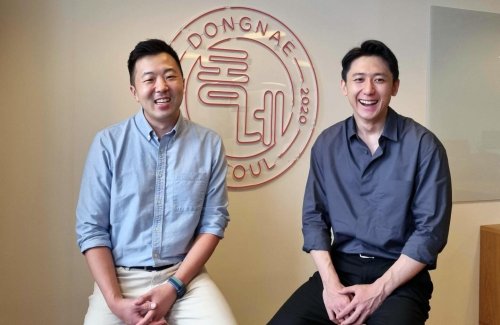
Former WeWork executives Insong Kim and Korean-American Matthew Shampine founded Dongnae in 2020. They are “Making it a better experience for the brokers, for the landlords, and especially for the tenants,”  Shampine said in an interview.

Dongnae has welcomed local and global investors. Its $21m series A funding round in March included Lyft and Doordash backer NFX, Airbnb backer MetaProp, and Korea’s oldest investment fund Daol Investment and Hana Financial.

More than 80% of Korean household wealth is in real estate, but it’s increasingly harder to become a homeowner. In Seoul, South Korea’s capital and most populated city, the average apartment price doubled between 2017 and 2021.

The startup company began as a listing platform for renters to book agency visits, but it was unsuccessful. Shampine believes the business model’s early failure generated “good and healthy” but painful reflections. According to Forbes, conversations with customers, brokers, and team members on the ground informed Dongnae’s goal of “becoming the supply, instead of hunting for the supply.” 

The firm switched to serviced apartments in July 2021. At the end of its current investment, the business had 60 apartment buildings; now it has 80 across 12 Seoul districts.

Dongnae wants to offer more home services to its residents in the future, taking advantage of Korea’s booming market for furniture and other lifestyle goods.

Image Source: gerryrobert.com

Uncategorized

Lush Enterprises CEO Kim-Manzolini Took Trading To The Next Level To Build Her Empire

Who wouldn’t want to engage in something that generates value? It took a while before you could achieve something like this. You had to be determined and keep going to get through the process. 

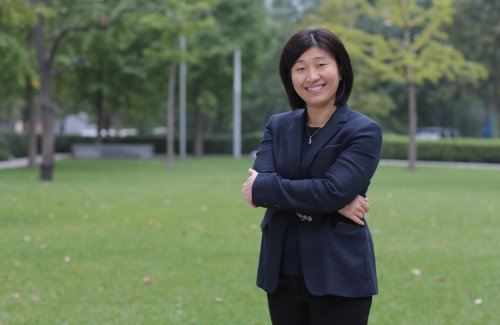
Think about how CEO Sun Yong Kim-Manzolini runs Lush Enterprises as an entrepreneur and, at the same, an investor. After working in the medical field for 33 years, she transitioned into entrepreneurship and trading options. She used her same can-do spirit and created opportunities.

All of her struggles, Kim-Manzolini told the USA Today, have helped to mold her into the woman she is today. She grew up as an orphan in Korea and was adopted by an American couple at 14. As an adult, she got into an unhealthy relationship but eventually got the courage to leave and move forward.

Kim-Manzolini knows that changing careers requires a great deal of hard work and self-control on her part. For years, she dedicated many hours per day to studying the ins and outs of the options trading industry and eventually mastered it. She simply had faith that she could pull it off, so she gave it her all without holding back.

Trading options expose investors to a diverse range of potentially significant risks. Even a single misfortune can completely wipe out a trader’s profits on the foreign exchange market due to the high risk associated with trading. But Kim-Manzolini did not let the challenges she faced discourage her, as she started gaining a new perspective on the situation. Instead of questioning why her experience was challenging, she adopted the mantra “Why not me?”

And as a result, she made $178,000 in her first year of live trading. Kim-Manzolini is now the owner of a multi-million dollar business. Her understanding of how to trade successfully was aided by the incredible commitment and sacrifice she made. 

The fact that Kim-Manzolini didn’t give up when it would have been simpler to do so is something for which she is grateful. She decided to focus on the positive aspects of the situation rather than ruminating on the potential downsides. She also put in a lot of time and energy and came up with a unique approach.

Image Source: Voyage LA

News

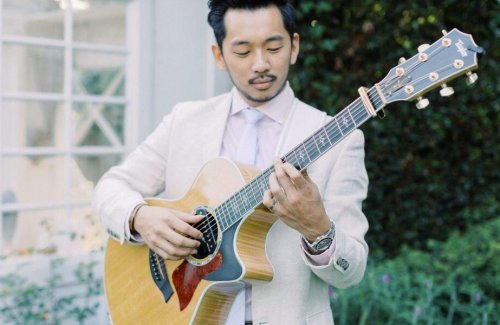
29-Year-Old Wedding Guitarist Made A Pandemic Pivot To Real Estate Earns $245K A Year

The best part is that playing weddings “doesn’t even feel like working. We’re just partying.” Moses Lin told CNBC Make It’s Millennial Money series.

Early in Lin’s career in 2016, he played at a coffee shop for three hours and got $3 tips. Today, his work takes him from New York to Hawaii, even to Cancun, and earns $175,000 before tips.

In the last two years, Lin has invested most of his wedding earnings into real estate.

Before becoming a real estate investor, Lin left college with just one semester left to pursue music full-time back in 2017. Several months later, Disney saw his YouTube videos and hired him to play in Disneyland’s hotels and restaurants. He took the job and decided he was never going back to college.

In the same year, Lin played a friend’s wedding as a favor and enjoyed it. He then charged $250 for his first wedding booking. After learning that wedding musician rates are $1200, he doubled his prices. Despite raising his rates, clients kept coming. Now, he charges $4,000 to $6,000 per wedding, depending on when the couple wants him to play. 

Lin became interested in real estate investing in 2014 and bought his first property in May 2020 as a “pandemic pivot” when Covid restrictions slowed his wedding gigs. He found a 4-bedroom house for $120,000 online and put down 20% plus $10,000 to renovate. His wedding earnings helped him buy a $40,000 home in Little Rock, including closing costs.

He rented the house for $1,425 and quickly found a tenant. He liked the process so much that he decided to buy a second property before the end of the year.

Today, Lin owns and rents out four properties in Little Rock. Lin didn’t turn a profit on his rental properties in 2021, but is in it for the long haul.

His goal with real estate is to get to a point where the passive income from his rentals pays all of his bills.

Lin pays a property manager to handle things on the ground, “so I’m able to focus 100% of my attention on weddings [and] on music, and real estate just makes money on the side.” he tells CNBC, “My whole master business plan is make money in weddings, dump it into real estate and let that grow itself.”

CONNECT WITH MOSES LIN

Instagram: instagram.com/moseslinmusic
Website: moseslinmusic.com

Image Source: kr-asia.com

Uncategorized

GGV Capital’s Jenny Lee: From Jet Engineer To One Of World’s Best Venture Capitalists

Recognized as one of the world’s top 100 venture capitalists by Forbes for 11 years in a row, Singaporean venture capitalist Jenny Lee stayed in her hometown to raise money for four new funds launched by her firm GGV Capital at the height of the pandemic in 2020. 

For four months, according to Forbes, the veteran VC barely slept as she made 250 zoom calls and remotely raised $2.5 billion from investors around the world. Lee and her team raised the most capital in GGV’s 22-year history, boosting assets by 27% to $9.2 billion. 

Long before she became one of Asia’s most powerful businesswomen, she earned a bachelor’s and master’s in Electrical Engineering at Cornell in 1995. She became an aviation engineer at Singapore’s ST Aerospace, where she modified F-16 fighter planes.

In 2001, the company sent Lee to attend Northwestern University’s Kellogg School of Management where she earned an M.B.A., but she had wanted to be a venture capitalist for a long time, so she quit her job that same year to follow her hidden passion.

Lee paid ST Aerospace $300,000 for not finishing the 11-year scholarship bond that paid for her bachelor’s, master’s, and M.B.A., but she has no regrets. For her, it was the best move.

She got her start as a venture capitalist at Morgan Stanley and Jafco Asia, but she made her name in China after joining GGV to create its office there in 2005. One of Lee’s more successful discoveries was the mobile phone maker Xiaomi before it had sold its first handphone.

Today, Lee is one of GGV’s top-tier managing partners along with Singaporean Jixun Foo, an early Grab investor. Hans Tung, who’s been on the Midas List 11 times. And VCs who have U.S. investment, industrial, and entrepreneurial expertise.

GGV’s 354 firms are balanced between Asia-Pacific and the Americas (GGV claims its investments include more than 85 unicorns). With the U.S. having more investments, at roughly 130, and 77 in China.

The company’s assets under management have expanded more than 50 times since its founding in 2000.