News

January 24, 2025

SHARE:

Japan has an old proverb: “The nail that sticks up gets hammered down.” 

While in China, there is a saying, “The higher the tree, the stronger the wind.”

In a critical lens, both idioms illustrate harmony and unity – a vital essence of Asian culture and heritage. Nevertheless, the proverbs also shed light on a contrasting school of thought: conformity and crab mentality. 

Crab mentality refers to the situation one can explore by placing a crab or a collective of crabs in a bucket. A lone crab can inevitably crawl out of the bucket, however, a peculiar scenario would arise if one situates a group of crabs in a bucket. As a crab tries to crawl out, the other crabs will pull it back down. If it tries again, the others will rip its claws off to ensure it can never do so again. Ultimately, no crabs can go anywhere besides the stew pot you are brewing. 

Crab in a bucket scenario (Image source: Microsoft Designer)

Crab in a bucket scenario (Image source: Microsoft Designer)

It is naivety to assume human beings are a unified collective group. History, wars, and jealous conflicts are testaments to human being’s selfishness. Hence, it is arguable that we are inclined to place ourselves above others, even if it means at the expense of our peers. Despite being a precarious thought, this insight opens new dimensions to understanding crab mentality in the human context. 

“Remember your cousin Timmy in China? He has 15 years of experience. He’s nine!” 

Steven He’s dad (played by Steven He) exclaimed.

Terms like “Asian-level difficulty,” “Tiger Moms,” and “Asian parents” have become widely recognized through memes, movies, and other mainstream media, serving as a lens for global audiences to understand and appreciate aspects of Asian culture. Yet, one community still paints a negative view of the Asian community, even discriminating against its individuals – and the answer is ironically the Asian community itself.

The purpose of this work is not to discriminate or criticize any peculiar group but to foster intellectual discourse and encourage reflection on societal dynamics and individual perspectives. The chosen quote embodies this intention, capturing four intertwined facets.

Understanding the concept of face is crucial when discussing Asian culture and heritage. Face serves as a societal construct that governs social interactions and determines one’s standing within a social hierarchy. It is a dynamic measure that can be given, earned, taken away, or lost, often extending beyond the individual to include family and friends. For those unfamiliar with this concept, here’s a simplified explanation:

  • A wife who earns a promotion gains face for herself in front of her boss, while also bringing face to her husband and parents through her achievement. 
  • Conversely, a student who performs poorly on an exam loses face among peers, and their parents, in turn, lose face within their social and familial circles.

Despite being debatable, visualizing face as a form of currency provides an interesting lens through which to examine crab mentality in Asian communities. Much like any valuable asset, currency must be earned, safeguarded, and strategically utilized. Losses, even those meant for long-term gains, are approached with caution and calculation. Consequently, individuals strive to enhance their reputation while using criticism to diminish the face of others.

The concept of face is deeply tied to education and parenting, playing a role in fostering crab mentality. Asian children are often raised to prioritize self-achievement above personal aspirations, adhering to predetermined paths for the “greater good” of the family. This emphasis on collective reputation often comes at the cost of individual dreams, reinforcing a mindset where personal success is weighed against familial expectations.

Parenting can affect mindsets, a reflection on Tiger Moms (Image source: Mims On The Move)

Parenting can affect mindsets, a reflection on Tiger Moms (Image source: Mims On The Move)

Indeed this is a generalized claim that leaves certain minorities for speculation, but the interplay between face and sacrifice is crucial in understanding the environment Asian children grow up. Literary works like Truyện Kiều (Tales of Kieu), a renowned Vietnamese poem, highlight traditional ideals through terms like cầm-kỳ-thi-họa—the four virtues defining a successful woman. Similarly, the stereotype of Asian children being expected to become doctors or lawyers has become a familiar cultural reference in contemporary discourse.

No parents want their children to grow up as bad people. Hence, it would be injudicious to blame parents and the system for a negative societal mentality. Yet, there are certain repercussions to sacrificing a child’s dream in return for a destined path to greatness. This leads to the third facet of crab mentality in Asian communities: A ramification for every child following the same success path means comparison and competition. 

Let’s revisit Steven He’s joke: Timmy is used as a benchmark for comparison. The only way for Steven to save face is by climbing the same ladder and offering Timmy a similar spiteful insult. This vicious cycle of comparison fuels crab mentality within families, peers, and the broader community. True to reality, Asian students often spend countless hours in extra classes and clubs to meet rigorous expectations. Tiger moms push their children to excel in every class as if their lives depend on it. There is no middle ground—you’re either a winner or a failure.

This brings us to the final facet: the absence of praise and apologies. Ironically, according to BBC and Vocal Media, Asia is home to some of the politest people in the world, with countries like Japan and Thailand leading the way. Despite this, hierarchy plays a pivotal role in relationship dynamics. To save face, many Asian parents rarely offer praise to their children. Astonishingly, when it comes to apologies, parents often go to great lengths to defend their actions rather than acknowledge their mistakes. 

A similar response can be seen in Asian workplaces, where higher-ups are more inclined to criticize and are far out of reach from their team members. Individuals will praise their peers and colleagues in hopes of receiving similar treatment instead of actual commemoration. Workers often segregate themselves into teams of interest to promote one another instead of collaborating as a group. These groups create outcasts who, despite their talents, are looked down upon and have their accomplishments taken or snuffed out by negative criticisms. This reluctance to give praise and apologize reinforces a mindset of self-achievement above all else. At first glance, mentality such as these are not wrong, but they leave cracks for detrimental thoughts of arrogance and selfishness – ultimately sustaining the crab mentality.

While this article explores the crab mentality within the Asian community, it is important to recognize that this negative mindset is not exclusive to any one group—it exists everywhere. The concepts of face, self-achievement, competitiveness, community, and sacrifice are what make Asian heritage unique and beautiful. This work argues that these cultural elements are not the root cause of the crab mentality, but rather, insights into why such a mindset may emerge. 

Related Articles

© Jordan Katz 2019

Stories

This Ai-Powered Coaching Platform Helps Managers and Teams Improve Effectiveness and Relationships in The Workplace

Pianpian’s own experience struggling with leadership and relationships in her professional life inspired her to create a solution that would help others facing similar challenges.

Amotions, founded by Pianpian Xu Guthrie, is a platform that aims to improve managers and hybrid teams’ productivity and connection by upskilling their soft skills such as emotional intelligence with AI-powered coaching.

Recognizing that not everyone can afford an executive coach or passively consume content to learn skills like emotional intelligence, interpersonal skills, and leadership skills, she set out to create an accessible and affordable platform that could provide people across various social-economic circumstances with the tools and support network they need to reach their potential.

At Amotions, they believe that each person has unlimited potential and can grow with the right support and encouragement, and with the right tools and support, anyone can achieve greatness.

COMING UP WITH THE IDEA OF AN AI VIRTUAL COACH

Growing up in a rural village house in Taishan, China, Pianpian’s parents worked tirelessly to provide her with education and opportunities. When she discovered the internet in high school, it opened up a world of possibilities for her, allowing her to connect with mentors and educators from around the world.

Pianpian received her master’s degrees in sociology from Yale University with a thesis on social mobility and psychological well-being. She was a teaching and research fellow in social science at Yale and Hong Kong University of Science and Technology. She then led product management and growth at multiple tech companies in hybrid and remote settings before founding Amotions, Inc.

Inspired by her own struggles with managing teams and relationships in the tech industry, Pianpian came up with the idea of building an AI virtual coach that could help people regulate their emotions in high-pressure situations, build better connection with their colleagues and people around them, and reach their full potential.

“I had the idea of building an AI virtual coach which can listen to me and give me tips when I am raising my voice and say “Seems like you are getting upset, take a deep breath, calm down first, so you are not getting into an argument with your coworkers and destroy your relationships.” Then as I discussed the idea with the team members and potential users and customers, I realized that we can also utilize the power of a human support system,” Pianpian shares.

Amotions uses technology to connect users with knowledgeable peers, coaches, advisors, and mentors, providing a powerful network of support for those looking to advance their careers and personal development. Amotions is poised to transform the way people learn and grow, empowering individuals to reach their full potential with the help of technology and human kindness.

WHERE AMOTIONS COMES IN

Millions of people struggle with emotion management and relationship issues in their personal and professional lives, but there are no accessible and affordable solutions. Executive coaches are expensive, and passive learning methods like books and videos are often ineffective in learning important skills like emotional intelligence and leadership.

As teamwork and collaboration become increasingly important in the modern workplace, there is a growing need for individuals to improve their interpersonal skills and develop emotional intelligence. This is where Amotions comes in.

Amotions aims to provide a platform and support network for everyone to continue to grow themselves both professionally and personally. Their solutions are designed to be accessible and affordable for people of all social-economic circumstances around the world.

“As a mother, I want my children to have the self-motivation and support network to grow themselves, and have great relationships in their professional and personal lives. I hope to create the kind of environment needed for them and many others. The world will be a better place when a lot of people are happy with their lives and care about each other,” Pianpian said.

IMPROVING THE PERFORMANCE OF MANAGERS AND HYBRID TEAMS

Amotions leverages AI-powered coaching to enhance the connection and performance of managers and hybrid teams.

Through daily practices, real-time insights, communities, and AI-powered coaching conversations, Amotions helps upskill people-facing roles, leading to improved employee efficiency and engagement.

With sentiment analysis and recommendations, powered by AI, and integration with calendars, Slack, and Zoom for context, Amotions provides a platform approach that allows companies, experts, and coaches to upload content. Users can also converse with an AI coach and participate in peer communities for support and practice. 

AMOTION-AL CHALLENGES

One of the biggest challenges that Pianpian faced in building Amotions was determining the best products and experience to address these challenges and acquire customers and users.

“We have been reaching out to people in our network, as well as reaching out to potential users and customers, and having lots of conversations with them. Support from people like the Asian Hustle Network founder Bryan Pham and members like Jenny He, Kerry Wei, Jane Lee and others helps too, as well from other founders, mentors, friends, alumni from Yale, Sun Yat-sen University, and other universities I attended, former colleagues, and kind people I encountered,” Pianpian shared.

THE FOUNDING TEAM

The founding team of Amotions is comprised of Pianpian Xu Guthrie, Jerry Hong, and a few other engineers and designers.

Pianpian has over ten years of experience as a product lead at various companies, including GoDaddy, Ticketmaster, Priceline, and several startups. She also earned a Master’s degree in Sociology from Yale University, providing her with a deep understanding of social science.

Jerry, on the other hand, has over 20 years of experience as a senior software engineer and manager, working for companies such as Ticketmaster and several startups.

With their extensive backgrounds in software product development and social science, the founding team brings a unique perspective to creating effective solutions for emotion management and relationship issues in professional and personal lives.

NOT YOUR ORDINARY WORKPLACE TRAINING SOLUTIONS

Amotions differentiates itself from other workplace training solutions in the market by offering an AI-powered coaching platform that provides quick solutions for users’ problems, available 24/7.

Unlike traditional corporate trainings, which are not effective for long-term learning, Amotions’ platform allows users to learn by doing, reflecting, interacting with others, and getting real-time feedback. Additionally, the platform is affordable and accessible for people from various socio-economic backgrounds, offering daily practices, peer communities, sentiment analysis, and recommendations powered by AI.

Amotions’ approach focuses on developing soft skills, such as emotional intelligence, interpersonal skills, and leadership skills, that are essential for success in the modern workplace, providing a comprehensive solution that goes beyond one-off training sessions.

THE FUTURE FOR AMOTIONS

Pianpian envisions the company as a tool to empower millions of individuals worldwide to reach their full potential and transform organizations through high-performing teams and next-generation leaders.

“We start with helping managers and teams develop soft skills and solve problems they face, and I can see that we expand to help employees upskills and reskills also technical skills and functional skills, and to be the biggest player in the professional development and personal development space,” she said.

As the company grows, it plans to continue leveraging technology to personalize the experience and provide real-time insights and recommendations to users.

We are looking to connect with founders and company leaders and angel/pre-seed/seed investors interested in innovation and building high-performing teams to get feedback on what we are building and learn more about their needs. Please let me know if you are interested in connecting with me for a 15-minute conversation, or if you know if anyone I should connect with.

What can you offer to this community?

Happy to help with manager training and leadership development, soft skills development, product management, emotional wellness, Chinese and Japanese cultures and markets, or any way I can. We also offer free trials and discounted access to our product.  

CONNECT WITH PIANPIAN

Website: amotionsinc.com

Linkedin: Pianpian Xu Guthrie

Twitter: @PianpianCarolyn

ig-png

News

Indian Teen Entrepreneur Aaman Shah Makes Waves in the Sneaker Industry

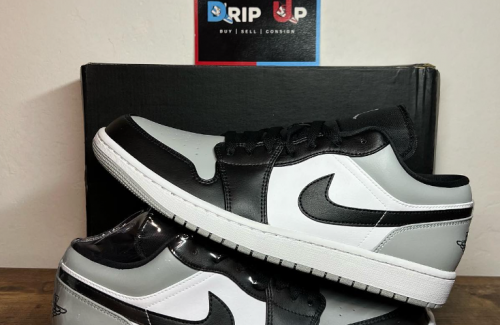
Aaman Shah’s inspiring entrepreneurial journey started when he was just 16 years old. Aaman comes from India and started a company called DripUp – a global enterprise reaching the USA, India, and Canada, with a specific focus on engaging the youth.

Aaman Shah’s story started with his curiosity about sneakers, wondering why people are willing to spend lots of money on sneakers like Nike and Jordan. He went to other places outside his hometown and noticed lots of people loving sneakers. Collaborating with his friends Dhruv Seth and Mufi Dharani, Aaman delved into the latest sneaker trends, discovering their potential for substantial profit.

Aaman went from being a sneaker fan to someone who sells them. In 2020, he saw people spending $20,000 on sneakers that used to cost just $200. That’s when he got the idea to start DripUp.

DripUp has carved a niche in the sneaker market by leveraging online platforms such as Instagram, WhatsApp, and Facebook. Aaman’s ingenious approach to the business, centered around fostering a strong sneaker culture while ensuring customer satisfaction, has earned DripUp a reputation as a trusted source for premium sneakers and watches. Through the challenges of the ever-evolving market and the complexities of running a business as a student, DripUp has not only survived but thrived.

When people ask why customers spend a lot on sneakers, Aaman Shah says it’s because they’re special and not everyone can get them. He thinks people buy from him because they know he’s trustworthy, according to his interview with Startup Story Media.

Aside from just making money, Aaman aims to have good relationships with his customers. He sells special sneakers like Yeezy and Jordans, and he’s honest about how much he makes from it.

Even though the sneaker business has some tough parts, Aaman Shah’s dedication to the sneaker world and his ability to handle tough situations show that he’s a strong and determined young businessperson.

Featured Image Source: Instagram

V2 2023 AHN News & Stories Cards-png

News

Kylie Chang and Erin Kwon Triumph as Miss Asian Global and Miss Asian America 2023

In a big event celebrating Asian American beauty and success, the Miss Asian Global and Miss Asian America Pageant, known for being the longest-running beauty contest for Asian Americans in the US, has picked its winners for this year: Kylie Chang and Erin Kwon. This event is really important as it shows how Asian Americans can be confident leaders.

According to NextShark, Kylie Chang, who is 18 years old, won the 38th Miss Asian Global title at a special place called the Herbst Theatre in San Francisco. She shared with KRON4 that she was really happy and said all her hard work paid off.

She loves dancing and shares that joy with kids who might not have the same chances. She volunteers as a dance teacher at Friends of Children with Special Needs, which helps them feel good about themselves. Kylie also does good things with fashion – she’s a part of an organization called Catwalk for Charitable Causes that uses fashion to help charities.

Erin Kwon is 24 years old and is studying to become a doctor in Irvine, California. She’s also this year’s Miss Asian America. Erin really cares about older Asian Americans and wants them to know more about staying healthy. She helps people in hospices, which are places where very sick people get special care, as an advocate for better healthcare education in the Asian American elderly community.

“I didn’t even expect to place. I just wanted to have an experience where I meet other women and just do something outside of my comfort zone, but I got way more than I ever expected so I’m very, very pleased,” Kwon told KRON4.

The contest has been around since 1985 when Rose Chung started it at an event called the Asian Arts Festival. It’s all about helping young Asian women grow and become strong leaders.

Featured Image Source: Miss Asian Global

the business journals-jpg

News

Immigrant Entrepreneur JJ Xu Empowers Communication and Entrepreneurship

This series shines a light on accomplished immigrant entrepreneurs who have made significant contributions to the business landscape in the United States. Hailing from China, Xu’s journey from her homeland to becoming the founder and CEO of the award-winning tech startup TalkMeUp is a testament to the potential immigrants bring to the world of entrepreneurship.

EIG is a Washington, DC-based, bipartisan public policy organization that advocates for a diverse and innovative American economy. Since immigrants make up 14% of the US population, over 30% of US innovators, and 38% of Americans who have won the Nobel Prizes in physics, chemistry, and medicine since 2000, Xu’s story serves as a prime example of the importance of fostering an atmosphere that encourages immigrant talent and achievements.

According to Yahoo! Finance, Xu’s experiences in diverse roles, including positions at Groupon and Huawei, provided Xu with invaluable insights into effective communication and cross-cultural dynamics. Recognizing the gap in accessible communication training resources, she embarked on a mission to democratize communication skills through TalkMeUp.

TalkMeUp, Inc. is based in Pittsburgh with deep roots in Carnegie Mellon University. It has pioneered solutions that propel business success through the art of effective communication.

Driven by a mission to empower individuals and organizations worldwide, TalkMeUp’s AI-powered platform allows professionals to gauge their communication effectiveness and audience engagement during video interactions. Through personalized practice and training, TalkMeUp equips users with the essential communication attributes required for career advancement and seamless transitions.

Featured Image Source: The Business Journals