News

January 24, 2025

SHARE:

Japan has an old proverb: “The nail that sticks up gets hammered down.” 

While in China, there is a saying, “The higher the tree, the stronger the wind.”

In a critical lens, both idioms illustrate harmony and unity – a vital essence of Asian culture and heritage. Nevertheless, the proverbs also shed light on a contrasting school of thought: conformity and crab mentality. 

Crab mentality refers to the situation one can explore by placing a crab or a collective of crabs in a bucket. A lone crab can inevitably crawl out of the bucket, however, a peculiar scenario would arise if one situates a group of crabs in a bucket. As a crab tries to crawl out, the other crabs will pull it back down. If it tries again, the others will rip its claws off to ensure it can never do so again. Ultimately, no crabs can go anywhere besides the stew pot you are brewing. 

Crab in a bucket scenario (Image source: Microsoft Designer)

Crab in a bucket scenario (Image source: Microsoft Designer)

It is naivety to assume human beings are a unified collective group. History, wars, and jealous conflicts are testaments to human being’s selfishness. Hence, it is arguable that we are inclined to place ourselves above others, even if it means at the expense of our peers. Despite being a precarious thought, this insight opens new dimensions to understanding crab mentality in the human context. 

“Remember your cousin Timmy in China? He has 15 years of experience. He’s nine!” 

Steven He’s dad (played by Steven He) exclaimed.

Terms like “Asian-level difficulty,” “Tiger Moms,” and “Asian parents” have become widely recognized through memes, movies, and other mainstream media, serving as a lens for global audiences to understand and appreciate aspects of Asian culture. Yet, one community still paints a negative view of the Asian community, even discriminating against its individuals – and the answer is ironically the Asian community itself.

The purpose of this work is not to discriminate or criticize any peculiar group but to foster intellectual discourse and encourage reflection on societal dynamics and individual perspectives. The chosen quote embodies this intention, capturing four intertwined facets.

Understanding the concept of face is crucial when discussing Asian culture and heritage. Face serves as a societal construct that governs social interactions and determines one’s standing within a social hierarchy. It is a dynamic measure that can be given, earned, taken away, or lost, often extending beyond the individual to include family and friends. For those unfamiliar with this concept, here’s a simplified explanation:

  • A wife who earns a promotion gains face for herself in front of her boss, while also bringing face to her husband and parents through her achievement. 
  • Conversely, a student who performs poorly on an exam loses face among peers, and their parents, in turn, lose face within their social and familial circles.

Despite being debatable, visualizing face as a form of currency provides an interesting lens through which to examine crab mentality in Asian communities. Much like any valuable asset, currency must be earned, safeguarded, and strategically utilized. Losses, even those meant for long-term gains, are approached with caution and calculation. Consequently, individuals strive to enhance their reputation while using criticism to diminish the face of others.

The concept of face is deeply tied to education and parenting, playing a role in fostering crab mentality. Asian children are often raised to prioritize self-achievement above personal aspirations, adhering to predetermined paths for the “greater good” of the family. This emphasis on collective reputation often comes at the cost of individual dreams, reinforcing a mindset where personal success is weighed against familial expectations.

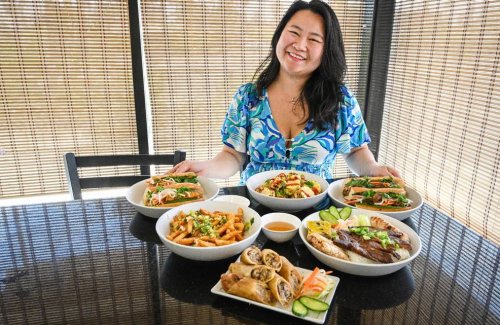
Parenting can affect mindsets, a reflection on Tiger Moms (Image source: Mims On The Move)

Parenting can affect mindsets, a reflection on Tiger Moms (Image source: Mims On The Move)

Indeed this is a generalized claim that leaves certain minorities for speculation, but the interplay between face and sacrifice is crucial in understanding the environment Asian children grow up. Literary works like Truyện Kiều (Tales of Kieu), a renowned Vietnamese poem, highlight traditional ideals through terms like cầm-kỳ-thi-họa—the four virtues defining a successful woman. Similarly, the stereotype of Asian children being expected to become doctors or lawyers has become a familiar cultural reference in contemporary discourse.

No parents want their children to grow up as bad people. Hence, it would be injudicious to blame parents and the system for a negative societal mentality. Yet, there are certain repercussions to sacrificing a child’s dream in return for a destined path to greatness. This leads to the third facet of crab mentality in Asian communities: A ramification for every child following the same success path means comparison and competition. 

Let’s revisit Steven He’s joke: Timmy is used as a benchmark for comparison. The only way for Steven to save face is by climbing the same ladder and offering Timmy a similar spiteful insult. This vicious cycle of comparison fuels crab mentality within families, peers, and the broader community. True to reality, Asian students often spend countless hours in extra classes and clubs to meet rigorous expectations. Tiger moms push their children to excel in every class as if their lives depend on it. There is no middle ground—you’re either a winner or a failure.

This brings us to the final facet: the absence of praise and apologies. Ironically, according to BBC and Vocal Media, Asia is home to some of the politest people in the world, with countries like Japan and Thailand leading the way. Despite this, hierarchy plays a pivotal role in relationship dynamics. To save face, many Asian parents rarely offer praise to their children. Astonishingly, when it comes to apologies, parents often go to great lengths to defend their actions rather than acknowledge their mistakes. 

A similar response can be seen in Asian workplaces, where higher-ups are more inclined to criticize and are far out of reach from their team members. Individuals will praise their peers and colleagues in hopes of receiving similar treatment instead of actual commemoration. Workers often segregate themselves into teams of interest to promote one another instead of collaborating as a group. These groups create outcasts who, despite their talents, are looked down upon and have their accomplishments taken or snuffed out by negative criticisms. This reluctance to give praise and apologize reinforces a mindset of self-achievement above all else. At first glance, mentality such as these are not wrong, but they leave cracks for detrimental thoughts of arrogance and selfishness – ultimately sustaining the crab mentality.

While this article explores the crab mentality within the Asian community, it is important to recognize that this negative mindset is not exclusive to any one group—it exists everywhere. The concepts of face, self-achievement, competitiveness, community, and sacrifice are what make Asian heritage unique and beautiful. This work argues that these cultural elements are not the root cause of the crab mentality, but rather, insights into why such a mindset may emerge. 
Related Articles

Eater LA-jpg

News

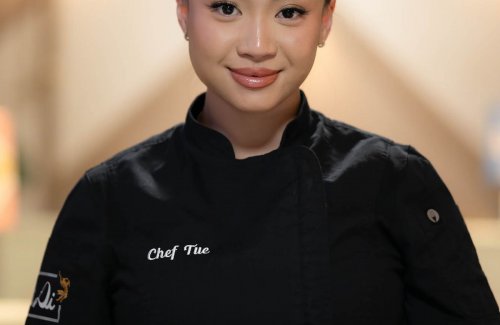
Tue Nguyen’s Journey from TikTok Stardom to Opening Her Own Restaurant

Tue Nguyen is a young cook who came to the US from Vietnam as a kid. She became extremely well-known on TikTok for demonstrating how to prepare Vietnamese food. She went from posting videos of her cooking Vietnamese dishes on TikTok during the pandemic to opening her own restaurant called Di Di near Los Angeles.

“I think that’s always kind of been like a dream. But… I honestly didn’t know that it would come this fast,” Nguyen shared in a recent interview with AFP.

She learned cooking in a special school, but her real talent came from her family’s way of cooking. Her mom and stepdad taught her how to make good food and trust her taste.

At first, Tue put videos online as TwayDaBae where she did mukbangs. People liked them, but they loved her cooking videos more. She saw that most of her audience didn’t just want to watch, they also wanted to learn how to make the delicious food themselves.

Tue didn’t start by making a big restaurant. She began with small places where she cooked for people. The first place where she did this is now her restaurant, called Di Di. Many people follow her on social media like Instagram and TikTok. They like her videos a lot, but Tue thinks that sharing recipes online won’t stop people from coming to her restaurant. She says her online recipes are simple, while her restaurant food looks and tastes more special.

Di Di, which means “Let’s go” in Vietnamese, is like a piece of Tue’s heart. It’s filled with comfy chairs, pretty lamps, and plants. It opened recently and is already making people happy. Tue mixes what she learned in cooking school with the flavors from her family.

Featured Image Source: Eater LA

The Fresno Bee-jpg

News

How Leila Jace Built a Thriving Street Food Joint Inspired by Childhood Memories in Vietnam

Growing up in Vietnam, Leila Jace cherished the simple joys of childhood, like the intoxicating aroma of smoky grilled corn wafting from street vendors as she walked home from school. She didn’t have much money, but she saved up her lunch money to buy a treat she loved – a slightly charred corn on the cob sprinkled with scallions for extra flavor.

Little did she know that this fond memory would become the star of her own restaurant in Fresno, California.

Just nine months ago, Leila’s dream came true as she opened the doors to Sizzle n’ Steam, a cozy spot at Maroa and Shields avenues in Fresno. This Vietnamese street food joint has quickly become a hit, boasting an impressive 4.5-star rating on Yelp.com and even snagging the third spot in The Bee’s poll for the most underrated restaurant in town.

Leila’s journey to becoming a food entrepreneur is quite a story. According to The Fresno Bee, Leila came to California at 14 without speaking much English. She pursued her studies and even built a successful career in retirement planning. But a longing for change and a desire to be close to her parents led her to Fresno, where she decided to give life a new flavor – by opening a restaurant.

What makes Sizzle n’ Steam so special? It’s all about fusing Leila’s unique style and travel adventures with the mouthwatering Vietnamese street food. Yes, the menu features well-known delicacies like pho, spring rolls, and bowls of vermicelli noodles. But the real magic lies in the lesser-known treats that Leila has added, like the Gilroy garlicky fries that pay homage to the place her family first settled when they came to the U.S. The restaurant also offers an array of vegan and vegetarian options, catering to a diverse clientele.

Aside from what her restaurant has to offer, Leila’s warm hospitality is outstanding, transforming her customers into friends, and turning Sizzle n’ Steam into a hub where diners feel right at home.

Featured Image Source: The Fresno Bee

gulf news-jpg

News

Filipino Entrepreneur’s Journey From Being an Employee to Owning Three Businesses in UAE

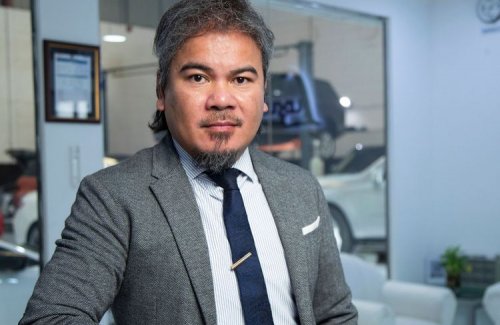
Dubai has long been known as a hub of opportunity, a place where dreams can flourish and aspirations come true. Frando Sarmiento’s journey from a regular worker to a successful entrepreneur is a great example of this. He now owns not one, not two, but three thriving businesses in the UAE. Let’s dive into his inspiring story and see how he made it happen.

Frando Sarmiento’s story began in a small fishing village in the Philippines. His parents worked hard to raise him and provide a good education. Even though life was simple, his parents’ efforts and support shaped his dreams of doing something big one day.

In 2005, Sarmiento came to Dubai to explore job options. He started with jobs like sales manager and gained experience in different companies. These experiences gave him insights into various industries and ignited his desire to run his own businesses someday.

The efficient process of setting up a company surprised him and made his entrepreneurial journey smoother. According to Gulf News, Sarmiento was amazed by how easy it was to start a business in the UAE, and this played a big role in his success.

“It is best to start while you’re young. Whatever happens, one is bound to learn something profound that will benefit him in many ways. When we are young, we are not afraid of making mistakes. There is a lot of time left to recover and learn. This is something I would have told myself during my younger years. But, as they say, it is never too late to start building what you want,” Sarmiento shared with Gulf News.

Featured Image Source: Gulf News

82EF93C1-0E09-4458-B3F1-EE5FF945AC38

Stories

Meet the CrossFit Athlete Breaking Records and Stereotypes in a Field We All Thought We Knew

Meet Dana Paran, a Filipino-American athlete who has broken down stereotypes and redefined what it means to be a CrossFit champion. Dana’s path, as one of the first people from her background to make her imprint on the global scene, is a powerful symbol of dedication and diversity.

Dana’s path to success is paved with sacrifices that reflect her unwavering commitment, including a daily routine that revolves around rigorous training, meticulous nutrition, and forsaking ordinary celebrations in pursuit of greatness.

Through an exclusive AHN interview with Dana, we witness not just a remarkable athlete, but a true advocate for change and a trailblazer for a more diverse and inclusive future in sports.

Join us as we discover more about her journey in the world of CrossFit.

HOW DOES IT FEEL TO REPRESENT THE PHILIPPINES AND ASIAN ATHLETES IN THE WORLD OF CROSSFIT?

Mixed emotions. I feel very privileged and extremely proud to represent the Philippines as one of the first Fil-American athletes – the fact that I am one of the first points out the lack of DEI (diversity – equity – inclusion) in the sport.

Representation matters. Seeing professional athletes that represent minorities is crucial for aspiring athletes. I hope that I can inspire Filipino/AAPI/Asian athletes to continue to break stereotypes.

COULD YOU SHARE A SPECIFIC INSTANCE WHERE YOU HAD TO MAKE A SIGNIFICANT SACRIFICE TO PURSUE YOUR GOALS?

Honestly, from the outside looking in, my entire career is one overarching ‘sacrifice.’ My daily activities are all dictated by the fact that I need to be able to train for 5-8 hours, fuel my body to sustain my training, and get enough rest and recovery to do it all again when I wake up.

For now, I miss out on celebrating weddings, date nights, vacations, and holidays all in the pursuit of greatness. On the days that my motivation battery is at 0, I am able to lean on the fact that all of the elements of my training are not actually a ‘sacrifice,’ but a temporary expenditure for tomorrow’s success. 

AS AN ATHLETE WHO HAS COMPETED IN VARIOUS INTERNATIONAL CHAMPIONSHIPS, HOW DO YOU APPROACH THE MENTAL AND EMOTIONAL ASPECTS OF COMPETITION?

“Have courage” is a mantra I repeat to myself in moments of doubt – whether I am training or before the 3-2-1 countdown in competition. To me, having courage means having strength in the face of something that frightens me, hardships, or adversity.

It’s an affirmation to myself that “I belong here & I believe in myself.”

WHAT ARE SOME OF THE CHALLENGES YOU HAVE FACED IN FINDING SUPPORT IN A SPORT WITH LIMITED SPONSORSHIP OPPORTUNITIES FOR ATHLETES LIKE YOU?

CrossFit is a niche sport and Asian brands actively marketing in the CrossFit space seem close to non-existent. I have tried to branch out to brands that market to the general ‘fitness’ industry but have been met with little interest on their end for partnerships. 

While it is discouraging to be rejected, I am hopeful that a “no” today will become a “yes” tomorrow. The reality is every competition I go to I have Asian spectators approach me to say how special it is to see themselves in an Elite athlete. I am hopeful that, as we show that we belong in CrossFit, Asian athletes will have many opportunities to align with brands that mirror who they are.

AS YOU AIM TO ELEVATE YOUR ATHLETIC CAREER TO NEW HEIGHTS, WHAT ARE SOME OF THE GOALS YOU HAVE SET FOR YOURSELF?

The CrossFit Games is the biggest and final stage in our sport.

Only the fittest of the fittest in the world qualify and it is an amazing opportunity to showcase what got you there in the first place. As I work towards that opportunity, I have been sure to ‘stay in my lane,’ recognizing the aspects of my training that are conducive to success and tailoring my training, recovery, and the people around me to ensure that I’m moving forward. 

While competing at the Games (and other Elite level competitions, such as the Rogue Invitational) is an athletic goal, another of my goals will always be encouraging diversity in the sport & making fitness inclusive to those who have historically felt unwelcome. I am actively networking with individuals and brands that align with my purpose to amplify that message. 

WHAT IS THE MOST IMPORTANT PIECE OF ADVICE YOU WOULD GIVE TO ANYONE PURSUING THEIR PASSIONS, WHETHER IT BE IN SPORTS OR ANY OTHER FIELD?

Being successful doesn’t have to come at the expense of your well-being. As a society, we have accepted that drops in physical health should be attended to, but mental health is overlooked or ignored.

I’ve realized that protecting your peace & knowing when to take a step back to “refill your own cup” is incredibly important. You cannot push through with an empty cup & it’s okay to acknowledge that you need to rest and recover in order to keep moving forward.

CONNECT WITH DANA

Instagram: @dvnveverest

Facebook: Dana Paran