Awaken* newsletter

September 12, 2024

SHARE:

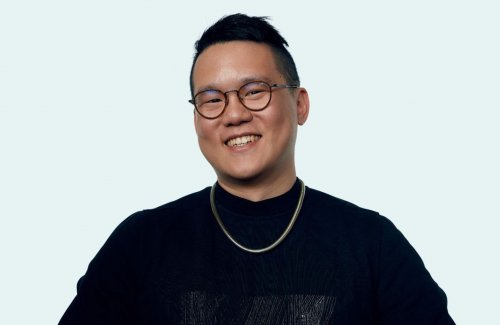
In the half-year I’ve been writing this newsletter I have only interviewed established founders. This article is my first deviation from the pattern and I couldn’t have asked for a better guest. Emily Luk–though a first-time founder–is not new to startups, having joined Stripe as a founding member of their growth team back when the company was around ~150 employees.

Now, she is building Plenty, an investment platform for modern couples. Talking to Emily has convinced me of two things, first–that this is a very large and important problem, second–that Emily is probably the right person to build it. I’m excited to share my conversation with her.

TLDR; Key Takeaways

If you only have a few moments, here are a few golden nuggets from my conversation with Emily:

  • An exercise to find your calling: Write down everything that makes you happy, ~100 words. Keep cutting the list in half until you have five words. What’s the grounding/theme that goes through all five? That’s a good starting point to find your calling.
  • Address opportunity costs before starting a company: Running a successful startup is a long journey, the average time to IPO is 7-10 years. If possible, do the things you’d regret missing out on before embarking on your journey.
  • Aspiring founders should focus on developing taste: As a founder, you don’t need to do everything personally yourself, but you need to know what great looks like. Working alongside great talent can help you develop this intuition.
  • Being relatable is a core part of business: People are much more likely to do business with you if they can relate to you. Put in some effort to learn about common interests of the type of people you want to do business with.
  • We are in the middle of a generational shift: 33% of millennials got married or entered a long-term partnership in the past five years. This is the first generation where dual-income families are normal.
  • Financial products for couples need an update: Many financial products used today were built for single-income households and aren’t adapted for dual-income families.

Tell me about your journey, how did you end up in the Bay Area/tech?

It goes pretty far back. My grandfather started two companies. One he ran for 20 years, and the other for 25 years. Then my parents emigrated to Canada, started this company, and ran it for 18 years. Growing up, I thought most people started companies. It wasn’t until my grade seven careers class, where they walked you through all the different careers and had a chart about the percentage of people in each career, that I realized entrepreneurs are less than 10% of the population. I thought it was a much higher percentage because everyone around my parents was an entrepreneur. I have always been interested in starting businesses. I was that stereotypical kid who kept running side hustles.

I read that your first entrepreneurial endeavor was a fundraiser for UNICEF.

Yeah, it was grade one, and the teacher decided to have a competition to raise money for UNICEF. The idea was to go trick-or-treating using those orange UNICEF boxes to collect donations. I lived in Edmonton at the time, which is the most populated city that far north, so winter was basically already here by Halloween. We had this competition in class to see how much money people could raise, but my parents were really worried my brother and I would get sick if we went trick-or-treating outside when there was already a foot of snow on the ground. I really wanted to make sure I wasn’t going to lose in the UNICEF competition, so instead, I decided to take a bunch of origami, fold it into different shapes like planes and boats, and sell it during recess to the teachers. All the money went to UNICEF. This was my way of being like, “Okay, great, I can do this all the time during recess for a month,” and then raise enough money instead of going trick-or-treating as a workaround for that.

Let’s go back to your story.

I’d already started my own company in high school and had been really involved with startups in university, running a student-run venture fund that organized pitch nights. Because of these experiences, I had the chance to work at the largest VC fund in Canada when I graduated.  It was an incredible experience because we got to see a large breadth of startups during that vintage. Some of the companies I personally worked on included Sonder in their pre-seed stage and Hopper in the earlier days. About two years into my time in a venture, my younger brother told me he was thinking of moving to the Bay Area when he graduated from Waterloo. We’re very close, and I wanted to be in the same city as him. Around the same time, I was thinking about applying for jobs. My brother wasn’t going to graduate yet, but I figured I would start looking for a job there. And so I started applying for some jobs and just started talking to more people and getting more involved in the Bay Area. 

Right around the same time, Stripe ended up reaching out to me. I had met members of their team, and this was back when the company was like 150 people. The company was much smaller; they had just hired a COO and were just starting to build up their business and growth teams. We chatted about whether I would be interested in joining the stuff they were doing on the growth side. Around the same time, I had gotten connected to Gold House founder Bing Chen. I went to Bing for career advice because I had a couple of other opportunities that were also in the Bay which I was considering. I was 22 years old, trying to figure out what to do with these opportunities in front of me. On top of that, I was potentially moving to another country on the other side of the continent. I don’t even know if Bing will remember this, but it left such a mark on me. He walked me through an exercise he did when he was in university. It was something he found really helpful to understand your own values and what brings you joy. 

The exercise he walked me through was to start with an empty piece of paper and write down, in free form, everything that makes you happy. Anything that brings you joy—it can be an item, an exercise, or an activity. I jotted down like 100 different words. Then he said, “Now start to cut it down. Cut it in half. Take the ones that don’t matter. Now you have 50. Now cut it down to 25.” This is when it starts to get really hard. “Now cut it down to 10. Now cut it down to 5.” With the last five words, is there a grounding or a theme that goes through all of it? If those are the things that really bring you joy after you’ve processed this and wondered, that’s probably a very good starting point to think about what you dedicate your time to.

So what were your last five words?

For me, I remember really thinking about how I loved making and empowering. That was one of the words that came out. It was empowering, teaching. I really believed in it. At the time, I had done my CPA and CFA when I was in venture, and I really understood and saw how in the world of finance, things were so opaque. I had also thought a lot about family and friends, and I started thinking about how those words could formulate into almost like my North Star. Big credit to Bing; after I went through that exercise, the answer was very obvious to me. What was so exciting about joining Stripe back in 2015 was that we were really focused on helping SMBs and startups in this opaque world of finance. At the time, payment companies were used to dealing with massive enterprises, so if you were a startup or an SMB, you basically didn’t matter. The products were terrible, it was hard to integrate, and the process of using the product was terrible. For many entrepreneurs, being able to accept money for your product or service is a critical part of running your business. If you don’t have revenue, nothing else works.

For me, it was so obvious that of all the opportunities I had been looking at, Stripe was clearly the best one. Ironically, now in hindsight, I can say this: the other thing that was really crazy was when I decided to join Stripe, I didn’t know my title. I actually forgot to ask what my title was until I received the offer letter. I didn’t even bother asking. I knew what I was going to work on, and I knew who I was going to work with. It was also by far the lowest salary package compared to all the other companies. Given how much Stripe has grown, it’s definitely turned into the best decision. At the time when I joined, it was so clear that it aligned with the things I cared about most. The other things like compensation or title just didn’t matter as much.

You took a sabbatical from work before starting Plenty in 2022. What inspired the sabbatical?

When my parents started their business, they ran it for 18 years. My grandparents ran their businesses for almost 20-25 years. So, I never thought of starting a company as a quick two to three-year journey. I thought it would be a very long journey, and I wanted to feel like I was ready to commit that kind of time and have that kind of endurance. That was one part that was really important. Travel is very important to me–being able to see the world. I knew that if I didn’t have this period of travel, I would always wonder if I missed out.

Part of how I thought about the mental preparation to become a founder is being able to think about how it might feel. One of the parts that helps with the mental endurance of it is being able to realize what might make it harder and, if possible, try to solve some of that earlier. The sabbatical year was basically that. If I didn’t have it, I would look back at the very hard moments when you need to keep going when you’re starting a company and think, “Oh man, maybe I should just stop. Maybe now I can have my travel year because I never had it. Was it worth the sacrifice?” I think it just makes it so much harder instead of getting ahead of it.

What made you feel that it was the right time to start your founder journey? 

I think of myself as a lifelong learner. When I experience anything in life, I immediately start to think about what I can learn, what I can do differently, what I would do in the future, and what might have changed the outcome. That is deeply ingrained in who I am. I realized I would probably always feel like there was more to learn and never feel ready.

My mother had a philosophy when she was running her company: you don’t need to do everything personally yourself, but you need to know what great looks like. You need to have enough exposure to know what great products, sales, and marketing look like and have that intuition. You don’t have to do every single thing personally, and frankly, you can’t. There was a point at which I realized I had been exposed to enough people who did their jobs great and did really great work. That shift in mindset was really valuable. I thought, “I might not ever feel ready, and that’s okay, but I’ve also had some experience, so maybe it is time to take a bet on myself.”

For young people who aspire to start their own business in the future, would you say that the function of what they are doing is secondary to who they are around?

Here’s how I approached it when I was at Stripe. I was really lucky because Stripe had an incredibly high talent bar. I was surrounded by so many people. I was also the youngest person on the business team, so I was surrounded by all these people who were 5, 10, 15 years ahead of me career-wise. They were at the top of their game at what they did, and I just tried to be as much of a sponge as possible. I also moved teams a couple of times, which helped with getting exposure to a lot of parts of the organization.

One of the things I’m most grateful for is that Stripe used to have this policy where every email that is sent across teams or externally, is copied to an email list so anyone in the company can read it. It’s complete email transparency. They don’t do this anymore, but for the entirety of the time that I was there, that’s what they did. Also, every single team had to send meeting notes at the end of every meeting to these email lists, and anyone in the company could read the meeting notes. Every one or two months, I would really focus on understanding what another team did. For example, when I was on the sales team, I’d really focus on what the partnership team did and read every single one of their meeting notes for two months. Then I would rotate to another team. I spent a month thinking about risk and compliance, a month reading everything in the world related to the legal side of things, and then I would rotate to what product is doing, what engineering is doing, and how infrastructure works.

It felt like I created my own mini-MBA because I got to see not just the theory but how all functions actually work in a company. I took being a sponge really seriously. It was honestly so fun for me. I know it was rare to have access to all of this knowledge, to have that quality of thought and quality of people around me that I could easily learn from.

Could that be replicated at larger companies?

It’s really only startups where you can get that level of access. Another thing that benefited my learning was that Stripe was growing rapidly while I was there. It grew from a couple hundred to a couple thousand people during my time there. Because it was growing so quickly, I saw many chapters of a startup during that time. There was such an emphasis on communication. Because the company was growing so quickly, documentation was especially critical so that work was not duplicated. That, I think, is one of the unique growth opportunities of being in a startup that is harder to get access to when you’re at a big company.

Given that you come from a family of entrepreneurs, do you find yourself asking your parents and grandparents for business advice?

I definitely talk to them about work a lot more after starting my company. Before I started Plenty, when I talked to them about work, it was sometimes a little frustrating because they’d say, “Why don’t you just ask for the promotion?” I’d be like, “Mom, it doesn’t work like that. You have to earn it and wait your time.” My mom, being an ultra-entrepreneur, thinks it’s exclusively merit-based. In reality, in a big organization, there are performance cycles, and you have to wait six months. You can’t just suddenly say, “I want to be promoted today,” and have a multi-hundred or multi-thousand-person organization just say yes. It doesn’t work like that. 

At that time, it was much harder to ask for career advice. But now, it’s really helpful because my parents deeply understand. It’s not even the practical business advice, frankly; it’s the emotional journey. It’s so hard to hire, support someone to perform, deal with a supplier not living up to expectations, or have a backup plan in case things don’t work out. These are all fairly generalizable pieces of advice that have been incredibly helpful. More than anything, starting a company is an extremely lonely experience. It’s been incredible to talk to my parents, not about the specifics like our cost per click, but about the emotional aspects. It’s hard to feel the pressure of needing to have all the answers and supporting your team’s families. They instinctively understand it on an emotional level, which doesn’t need to be explained.

What is the core problem that inspired you to start Plenty?

If you look at the two generations that are going to undergo the largest amounts of change in the next decade, it’s the baby boomers (who we are not optimistic about being able to sell software to), and then the millennial generation. The reality is that millennials are now turning 30, and this chapter from 30 to 40 years old is generally when you find a partner, buy a house, have kids, and get promoted. There’s so much change that happens. If you navigate your finances well during this chapter, you can set yourself up for the rest of your life.

We saw that it’s also the chapter where people want to take their finances more seriously. They’re actively looking for things to do, but if you’re building up to your first million dollars, there aren’t great products or services meant for that. Once you get over a million dollars, there are lots of financial advisors who are really good and can help you, but why would the best financial advisors want to work with clients with less capital? What we saw was that this industry doesn’t have the best people working with the people who arguably need the most help.

The other aspect of Plenty came from personal experience. When Channing and I got engaged, we couldn’t find any products that made it easy for us to manage our money together. We believe very deeply that the best decisions we make as a partnership are the ones we make together, and that financial decisions are very important in unlocking optionality down the road. If there aren’t great products that make it easy for you to work together, then you’re probably going to have a much harder time trying to figure out things in the future too, right? Those two things were the core motivations for starting Plenty.

Why do you think there is a gap in products to help couples manage their finances in tandem?

Nowadays, it’s normal to be dual-income because both people are educated and everything costs more. It’s more fulfilling to feel like you both have careers and jobs, and it might be necessary in order to support a family. At this point, about 80% of this generation are dual-income families and couples. 

This used to not be the case. In the two generations before us, the majority of people were single-income families. A lot of the financial products we use today were designed by people who were single-income household members of other single-income households. So it completely makes sense why they designed a lot of joint products the way they did because it used to make sense, but it doesn’t make sense anymore. 

One example of this is if you look at American Express or Chase, there is no concept of a joint credit card. You are both legally on the hook for paying the bill, but both of you don’t get to see what you’ve spent. That doesn’t make sense. So if you get a credit card with Chase and add your partner to it, your partner doesn’t even get a login. They can’t see anything, even though they have a credit card with their name on it. American Express is quirky in a different way. We have both of these cards and from personal experience, when you add your partner to an American Express card, they can only see what they spent on their card. They cannot see what you’ve spent on the main card, even though you both share the card. 

There are all these little bumps related to access or permission, but it dates back to a time when it was very normal for one person to earn an income, but it’s not very normal anymore. People and couples nowadays expect to have fairly equal access to understanding their money together. It’s not the same as, “Oh, if they know everything, that’s fine. I don’t need to know anything.” That’s just not nearly as common anymore. Nowadays, conversations around family finances are happening with both people being more equal than ever before. 

What we also noticed is that because people are getting married later than ever, they are already used to having their own financial accounts. Even after getting married, maybe they open up some things that they share. But it’s a journey towards sharing more of their finances. They still have things under each of our names. A lot of the financial system was built around the reality of the single-income family that had everything fully joined. But that’s just not the case anymore. That has changed especially quickly in the last five years. Five years ago 33% of this generation was married, and now almost 60-70% of this generation is married or in a long-term partnership.

How do you think being Asian has impacted your founder’s journey? 

For better or worse, I have been on the other end of bias, but not because I’m Asian. At least, I think not because I’m Asian. But for other reasons, like being part of a husband and wife team. I’ve even had a VC comment about how he would never report to his wife. I don’t think anyone has ever explicitly called out the fact that I was Asian, but it is something that I am aware of. And here’s the reason why. I feel like I have to work extra hard to be relatable, and frankly, there are assumptions that people have.

My husband is from Virginia and his family’s been in the US for a while. Lots of people are surprised when I mention that I’m the sports person in the relationship. I watch basketball, I watch football, I know the players, and he doesn’t watch any of it. Even when we’re in conversations with potential investors, they’re surprised by that. I don’t know why that might be the case, but I joke about it. I say, you probably wouldn’t have expected a short little Canadian Asian female to know this much about football, right? 

I do think what you like to talk about is important. When it comes to attracting business partners, of course, the way you think about business and strategy makes people want to work with you. But there’s another aspect to it. If someone feels like you have something in common with them, they think that you can be a friend. Whether or not they want to spend more time with you is actually really impactful for whether or not they want to back you.

I think I’ve always been aware that I have to work extra hard to be relatable, but I don’t try to spend too much time thinking about it beyond thinking of ways that I can support other Asian founders, because it’s not something I can change. Frankly, I just focus on what needs to be done. I’ve always enjoyed football, but I’ve definitely put in the effort to stay aware of what’s going on because I know it is something that is unexpected when I talk about it.

I’ve talked to a few female CEOs whose husbands are also part of the company. Can you comment on what that’s like?

I think it might be happening more frequently as we go along. I mean, it makes a lot of sense, right? There is no one else in your life that you respect, admire, and trust to that degree. Building a startup is not an easy or linear path. In those moments where you’re like, “Oh gosh, what should we do?” not needing to doubt if you’re building with the right person or if you can trust that person is actually so important. It helps stabilize you through the hard moments because you know they’re in it with you, you can trust them completely, and they care about you. That psychological trust is crucial.

–

Plenty is hiring! If you are interested in working with Emily to build financial tools for the modern couple, check out the available job listings here!

Emily has also graciously offered a 3-month free promo code for our readers. If you are interested in trying out Plenty, use code AHNCommunity to get 3 months free. Thank you Emily for joining us!


Related Articles

unnamed-jpg

Stories

John D. Tran Overcomes Industry Barriers to Empower Startups 

Navigating the world of law and order as an Asian American can be convoluted. However, as John D. Tran Talks about working with start-ups like AHN, overcoming industry barriers, and the power of mentorship.

A fun fact that encapsulates John’s impact is that he was the trademark attorney who helped protect and register the ASIAN HUSTLE NETWORK name back in 2019—a contribution that underscores his dedication to empowering the Asian American community.

As a Partner at the Rhema Law Group®, John has spent over 20 years working as a Registered Patent Attorney, Intellectual Property Counsel & IP litigator, driven by a mission to aid startups & emerging companies navigating the complex business world. 

Finding Balance & Purpose in the Madness

In 2012, with the arrival of their boy-girl twins, John and his wife Rosalind Ong switched gears. Both seasoned lawyers at larger firms, the duo seized this joyful moment and joined forces to partner at a private law firm, Rhema Law Group, which specializes in intellectual property, business, and corporate law. While people may think being a lawyer trades much of one’s freedom for endless tedious readings into acts and regulations, John finds a nice work/life balance being a “cool” dad to twins (double the coolness), playing basketball, and being an avid sports fan, but finds ultimate enjoyment in spending time with friends and family.  

Protecting the Interests of Start-Ups & Emerging Businesses

Working as a lawyer for startups can be tough, considering how new and fragile they are in the market. While his work requires a focus on quality, integrity, and community, John treats startups with extreme care and attention, prioritizing personalization and case-by-case flexibility for each of his clients. He understands that these new businesses often operate on tight budgets, but also wants his clients to recognize the importance of investing in intellectual property protection right from the start. 

This is not just about legal protection—it’s an act of partnership, building relationships with the clients, getting to know who they are, and helping them grow. John said in an interview with AHN:

“With start-ups, even those backed by investors or venture capitalists, you’re usually dealing with a limited budget that needs to be responsibly allocated across various areas, such as R&D, marketing, sales, employment, and more. A good IP attorney will understand these constraints and focus on identifying the core IP of the start-up that needs to be protected from the outset while determining which IP can be addressed later.

Also, we find it important to conduct IP ‘think tank’ sessions, where we work closely with our clients to identify what protectable IP the company has and then develop an overall IP portfolio strategy. From trademarks, patents, copyrights and even trade secrets, approaching a business’s IP ensures that the start-up’s IP is properly protected at every stage of its growth. It’s incredibly rewarding to work with start-ups and emerging companies, watching them grow and mature over the years, and being a small part of their journey to success.”

John finds pride in working with primarily Vietnamese, Asian and minority-run companies.  His client list ranges from the small entrepreneur with an idea to multi-million dollar manufacturers with hundreds of employees working overseas. 

Building Leaders and Communities

His legal acumen has been shaped by mentorship, as he profoundly affirms his gratitude and advocacy for what mentorship has given him, “I think mentorship is so important, and I wouldn’t be where I am today without being fortunate enough to be mentored by some great people in my life, both professionally and personally.”

Above all, mentorship is not just a veteran-novice work of professional guidance, but, to John, it is a way of personal growth for everyone involved. This mindset coheres with his work ethic, where he hones his expertise (as startups can be quite a hard case to crack, your honor) while supporting their growth. 

“Mentoring builds up individuals, individuals build up communities, and communities raise families, support businesses, and can become the social networks that bring people together. For me, personally, mentorship has been a valued and rewarding part of my life. My wife and I have been fortunate to mentor several individuals for over 15 years, many of whom we met while volunteering at a leadership camp for foster care and at-risk teens.”

For John, mentorship is about time, consistency, and authenticity—qualities he embodies both professionally and personally.

“One particular mentee has become a little brother to me. We have mentored Salesi since he was 12, and then he served in the Army after high school and later worked at our law firm as a paralegal. Now, we’re proud to say that he has just been accepted to law school on scholarship! He was the first in his family to graduate from college and is now on his way to becoming a lawyer. Watching him grow and being there with him through the years has been such a rewarding experience, and it truly highlights the power of mentorship.”

A photo of John D. Tran (L) with his mentee who served in the Army and has just been accepted to law school on scholarship.

Navigating the Legal Landscape as an Asian American

Now, let’s get to the part where most Asian parents will be intrigued to see—being an Asian American attorney. There’s nothing that excites them more than when their kids come home and say “I want to be an attorney.” Respect, stability, and profitability—needless to say more. However, as an Asian American attorney in a predominantly white male-dominated industry, John has faced a sense of isolation and underrepresentation within the industry, forging the urge to always have to outperform himself. 

“I remember the first time I appeared in court on a case—the judge looked at me, smiled, and asked if I was still in law school because I looked so young (haha). It’s that Asian curse! But thinking back now, although there have been great strides made in recent times, the legal industry is still greatly underrepresented when it comes to Asian American attorneys. In my field of intellectual property law, I primarily practice before the federal courts, which are still largely dominated by older white males. That’s just the way it is, and as an Asian American attorney, you can sometimes feel like you’re the only one and feel pressure to prove that you belong in such a competitive space.”

John has overcome them by focusing on his craft and building a reputation for doing great work. John’s advice to aspiring legal professionals all comes down to self-awareness and passion, emphasizing the importance of choosing a practice area that aligns with one’s strengths and personality, as well as the value of giving back through mentorship and community service.

“Matching your personality and skill set to a particular area of law is often overlooked. For example, if you’re an extrovert who likes to be ‘in the action’ of things, becoming a transactional attorney who drafts contracts and agreements at your desk all day may not be the best fit for you. Conversely, if you’re more of an introvert, choosing to become a litigator where you’re in court frequently and presenting oral arguments to a judge or jury may not be a good fit either… Additionally, I think serving on some non-profit organizations and local organizations are things that help provide joy & fulfillment, including what we talked about earlier regarding the power of mentorship.”

Connect With John D. Tran / Rhema Law Group®

“One thing I love about the law is that, for the most part, it is impartial.  So, if you’re a good attorney doing great work, it doesn’t matter if you’re white, black, brown, or blue,, there’s no limits to what you can achieve and accomplish.”

X: @patentjt

Website: www.rhemalaw.com 

Contact:  jdt@rhemalaw.com | 949-852-4430 

Newsletter KPOP graphics-png

News

Keith Dorrington and IW Group Bring ‘Hou Yi’ to Life, Exploring Family and Identity

Inspired by a career geographic shift and the late 90s nostalgia for a foreign land, Keith Dorrington and IW Group’s “Hou Yi” is an exploration of family identity, ego, and how love and care have the power to change the course of things.

Keith Dorrington, the man behind the storyline of “The Fighter,” and award-winning AAPI marketing firm IW Group have collaborated on a new movie project, which serves as his follow-up to the critically acclaimed boxing drama “The Fighter.”

In China, the film tells the story of a self-absorbed executive who unexpectedly becomes the guardian of a three-year-old orphan named Hou Yi. Despite the challenges of language and cultural differences, this unlikely duo develops a profound connection that transforms both their lives.

On “Hou Yi,” the movie broadens his cinematic ambiance, shifting from less “kicking and screaming” to a more subtle and lighter tone. However, the complexities of family and existentialist values that can be felt in “The Fighter” are still well-retained, even if there’s a perspective shift to fatherhood.

Dorrington’s partnership with the multicultural firm IW Group is one to note as the agency is known for connecting and highlighting cultures in their campaigns through impactful storytelling. Set in China, this movie marks a dynamic cross-production as Dorrington’s personal experience and the firm’s cultural expertise will meld into the rawest and most well-done cinematic universe for the audience. 

Dorrington expressed, “Bringing ‘Hou Yi’ to the screen has been a deeply personal mission of mine for over two decades. I’m thrilled to take this important step in making that happen.” He will executive-produce the film based on his original screenplay. He added, “This story means the world to me because it is inspired by the events surrounding my own daughter’s adoption. While I spent time in China in my former career, I’m by no means a cultural expert. I’m excited to partner with IW Group to deliver this story in the most authentic way possible.”

Keith Dorrington | Writer of “The Fighter” (2010) (Image Source: BigSpeak)

As a multicultural and multigenerational organization, IW Group has long been acknowledged for their cross-cultural marketing endeavors. Boasting a strong portfolio of partnerships with Walt Disney, Warner Bros., and the mega-viral “Barbie” campaign last year, the agency will be the main force behind “Hou Yi”’s marketing strategy and cross-national account management. Moreover, this also marks their initial direction towards filmmaking, which promises an explosive celebration of culture and stories.

“As an agency that works at the intersection of Hollywood, Madison Avenue, and Asia, we feel there are some amazing untapped opportunities in his current media landscape,” said Bill Imada, co-founder and chairman of IW Group and 2024 AAF Advertising Hall of Fame inductee, who serves as a producer on “Hou Yi.” “With IW Group approaching our 35th anniversary next year, I felt it was time to embark on an exciting new chapter and I can’t think of a better way to begin this journey than to collaborate with a writer of Keith’s caliber to bring his powerful and inspirational story to the silver screen.”  

Bill Imada, co-founder and chairman of IW Group and a 2024 AAF Advertising Hall of Fame inductee, who is also a producer on “Hou Yi,” said, “As an agency that operates at the crossroads of Hollywood, Madison Avenue, and Asia, we see incredible untapped opportunities in the current media landscape. 

Bill  Imada |  Co-founder and chairman of IW Group (Image Source: Bill Imada/ LinkedIn)

Telly Wong, IW Group Chief Content Officer and SVP, who is also a producer on “Hou Yi,” added, “We have two simple goals for “Hou Yi:” to produce a great film that resonates with global audiences and to explore the additional role our agency can play in the evolving world of media, entertainment, and culture. IW Group has always specialized in telling unique cultural stories in bold and innovative ways, and this new venture takes that philosophy to an exciting new level.”

1 (3)

Stories

Spinning Dreams: DJ Baby Yu’s Quest to Celebrate Asian Talent and Transform the Music Scene

Paddling the world of parties and turntables, DJ Baby Yu’s story may not be in many Asian parents’ favor, who prefer more stable nine-to-five academic jobs. He talks about family expectations, the entertainment industry, the values of his “unconventional” job, and more. 

We all love dancing, don’t we? Sometimes, it feels good to just let your hair down and move to the music for a bit. That’s where DJs come in, blending beats and energizing crowds from all walks of life.

Nonetheless, this job may receive quite a few skeptical and questioning frowns from Asian parents. Uncontrollable parties, unprecedented futures, and unstoppable debaucheries are what the music industry is all about, many would argue. However, DJ Baby Yu is here to bring more Asian creatives to the forefront, shattering the traditional barriers that may hinder them.

Rewind to 28 years ago, in tight-knit local college radios and nightclubs, flooded with ravers and heart-throbbing hip-hop music. Daniel Nakayama, known as Baby Yu, who made mixtapes featuring hosts like Ye, Ciara, and The Game, might be unmoored; but he knew what he was doing and that he was doing it for the fun of it all.

Asian Parents and Conventional Jobs

If the nine-to-five cyclic life is considered to be successful in many Asian households, then the fun-blasting, bass-hitting life would be considered to be one of the most unconventional career paths. “Not all of us are destined for high-paying traditional jobs,” he said. “Generally speaking, our parents weren’t supportive unless we finished school, earned a degree, and pursued a prestigious job.”

Upon the chance meeting with an old friend who happened to be DJ-ing at a house party, uninvited yet inspired, he bought a pair of turntables and records the day right after. Starting to DJ in high school and defining his career at university, he describes the universal battle of fighting for your dream, especially for someone with an immigrant background, where traditional values were the guiding star.

As a child of immigrant parents from Miyazaki, Japan, I share the growing pains experienced by many first-generation Asian children. Our parents often try to shape our futures, pushing us toward careers like doctors, nurses, or lawyers, without considering our personal interests and passions.

At the end of the day, those expectations only came from their own experiences and their desire for their children to have a happy and stable future.

However, once my parents saw me perform on TV, heard me on the radio, and received praise from their friends’ children, they understood that I had found something that made me happy. That realization was all that mattered to them.

The Mash-Ups of Highs and Lows in the Music Industry

This industry is no stranger to a bad reputation, where another rising public darling replaces the ones who don’t transform, where every part of your career move is baselessly evaluated and overblown, where the radio label could count you out if they can no longer profit from you.

DJ Baby Yu (center) with Drake (left) and Jeezy

It’s tough work being an artist in this competitive landscape. One may have to toe the line for mainstream appeal. Some may scream “Smash it, I’m here to do my own thing.”

Whatever approach they may choose, the Internet has given rise to the demand for artists with distinctive musical personalities. “There are no rules for how you should express yourself in life,” he says. “If people understand and believe in you, they’ll follow. If not, that’s okay—they’re not your audience. There will always be those who appreciate your art and direction. Focusing on this has helped me overcome any obstacles life throws my way.”

He Did It for the Fun and He Did It for the Asians

Despite the struggles, Daniel took a moment to reflect on what he had learned from his shows around the world, where he gets to travel to new places, meet new people, throw joyful parties, and try new things.

As I matured in the industry, I ventured into new areas, working on artist development and taking on marketing and branding projects for companies like Puff Puff in Thailand and Whims in Austin. Event planning is another passion of mine, and I particularly enjoy creating fun and unique events.

A shot from the Wiz Khalifa: Under The Influence of Music Tour in Toronto, Canada, featuring Daniel as the tour DJ for Jeezy

Back in Toronto, he was holding a “branded party” called Playbook Social, where he mixed “food, cocktails, karaoke and DJs.” The party sold out, seated the most versatile community in the city. Of course, if you were in the game for the right purpose, like-minded individuals will team up and recognize what you’re doing, even way before you realize it. It turns out that what he’s been doing has such a tremendous impact on the AAPI community.

There have been several times in my life when loyal supporters have come up to me and thanked me for what I do, often ending with the phrase, “You’re doing it for all the Asians!” For a while, I didn’t fully understand that sentiment. In my mind, I was doing it for myself, for the love of music, and to make everyone around me happy.

However, as I traveled and understood my cultural position in the industry, whether I was the only Asian in a room full of Hip Hop leaders or in the pop scene dominated by white people, I realized there weren’t many Asians in these spaces. Times have changed now, with K-pop gaining global popularity, but back then, it was different. Asians weren’t the creators of R&B, soul, Hip Hop, house, rock, or pop music; we were lovers of these cultures, trying to fit in.

Connect With DJ Baby Yu

Curating a unique and eventful experience is the ultimate wish of any musician. DJ Baby Yu has never been one to shy away from collaborating with rising Asian talents. His upcoming event, a collaboration project with UPRISERS, a Japanese female-owned AAPI streetwear brand, is meant to bring together great Asian talent and leaders for celebration and appreciation.

I’ve teamed up with UPRISERS, a Japanese female-owned AAPI streetwear brand, to celebrate their 5th anniversary. Other AAPI groups, such as FACE (Filipinos Advancing Creative Education) and Represent ASIAN Project, are also promoting this event. My goal is to bring together great Asian talent and leaders under one roof to celebrate each other.

This event is also one of the official events of SKAM Summer 2024, a two-day DJ and influencer weekend at the Mondrian Hotel in West Hollywood, created by Sujit Kundu of SKAM Artist (more information at https://skamartist.com/skamsummer).

“Now, I truly understand when people say, “I’m doing it for the Asians.” As a leader, I want to guide and nurture the next generations with the experiences and knowledge I’ve gained over my 28-year career, especially within the Asian community. Collaborating with Uprisers is one way to bring Asian leaders together to celebrate life and acknowledge our achievements.”

Event details:
RSVP: https://UPRISERSxSKAMSUMMERxBABYYU.eventbrite.com
Date: Monday, August 19, 2024
Time: 8 PM – Midnight (PT)
Location: Kimpton Everly Hotel, 1800 Argyle Ave, Los Angeles, CA 90028

Personal contact
Website: https://babyyu.com/
IG: @djbabyyu

Ivan Zhang

Awaken* newsletter

From Gamer to AI Unicorn Co-founder: A Conversation with Cohere’s Ivan Zhang

If you have followed the news in any capacity over the last few years, you have undoubtedly heard about LLMs, and the companies building these models. Though the consumer-facing models from companies such as Open AI have captured the hearts and minds of the public, enterprises have different concerns–things such as data privacy, and model reliability.

Enter Cohere, a company developing LLMs to address these issues. Started in 2019, Cohere partners with companies such as McKinsey, Oracle, and all the hyperscalers, and boasts a valuation of $5.5 billion. I sat down with one of the co-founders, Ivan Zhang, to talk about his journey.

TLDR; Key Takeaways

If you only have a few minutes, here are a few golden nuggets from my conversation with Ivan:

  • Sales should be customer-centric. This seems obvious, but have you ever started a sales conversation by talking about your product? Instead, try starting the conversation by asking your customer about their pain points, and then addressing them.
  • Data will be a bottleneck for AI development. Not in the sense that we will run out of internet to train on, but rather that there are types of data which we don’t have a lot of published datasets for. 
  • Your startup doesn’t have to be in the Bay to succeed. Cohere is headquartered in Toronto. This works for them because VCs are more open to remote work after the pandemic and Toronto has a lot of budding technical talent.
  • A key signal to look for when hiring is mastery in any domain. Learning how to master something is fairly transferable. Masters in one domain can likely become masters in another.
  • Being the lone Asian in a leadership room takes some time to adjust to. Getting more reps in has helped Ivan get used to his position.

Tell me about your upbringing, what pushed you to become a hacker?

I was born in Shenzhen, China, and moved to Toronto when I was eight. As a kid, I was always on the computer, even in China, playing the most random arcade games. I don’t want to paint Asians with a broad stroke, but if you’re a male Asian person who has been to high school in the past decade, more likely than not, you’ve played a ton of video games. I did that a lot, and I feel like it built a digital tolerance and stamina for sitting in front of a screen for long hours. Gaming was a big part of why I’m so drawn to building things, working really hard, and doing crazy hours in front of a screen. 

When I got to university, I discovered the hackathon community. Every weekend, we would just meet up at random Ontario universities and sometimes U.S. universities. We would build for the whole weekend. Gaming addiction primed me to get really good at software engineering. I spent my entire first year going to hackathons, building stuff on the side. I had this realization that I could be spending 18 hours playing League of Legends, or I could use the same energy to build stuff, which is also very fun and not as frustrating as a solo queue. It felt like a natural progression.

How has your role within Cohere changed as the company has grown?

When you’re in a startup, your role tends to evolve a lot. That’s been especially true for my time at Cohere. When we started, I was hands-on coding every day, building some of our early systems and pipelines. Eventually, the company grew, and we hired people. Some of our founders had to step up and do some people management.

Eventually, we hired people managers as well, so I have to do less of that. Nowadays, I’m much more settled. I’d say I spend probably 50% of my time still doing technical stuff like machine learning and data processing. For the other 50%, I spend time with customers, either building new relationships, fostering existing ones, or really bringing in business. I think that’s a big part of a founder’s job, like founder-led sales.

How was the transition to doing sales? Did that come naturally to you?

As someone who spent most of my time as the most backend of backend developers, it was definitely uncomfortable at first. When you think about sales, you might think of a business guy with a suit trying to convince someone to give you money for stuff. But when I started doing it more and more, it ended up being about genuinely trying to learn more about your customers, asking them good questions, and figuring out what issues they have. It’s honestly the most important thing you could do. Why are you building anything if you don’t know what your customers want? 

Sales has been super fun because it informs my technical work. I’m starting to see patterns across these conversations, which help inform what we should focus on. Another aspect is that as a founder, when you’re doing sales, you’re meeting executives and other founders as well–so you’re building good professional relationships. For anyone who’s new to it, you should expect some discomfort. But, like anything, you just learn to do it.

Why did you guys decide to focus on enterprise?

The enterprise market is often seen as boring, but actually, most of the world’s efficiency will come from automating a lot of these back-end use cases that don’t necessarily need human potential. A lot of these tasks we’re automating don’t need a well-educated human being sitting at a computer for eight hours a day. We’re much more interested in unlocking that human time for something else. Enterprise is where a lot of this kind of work is done. For example, Oracle is one of our customers, and they’ve deployed our models into their NetSuite features. So, a ton of HR and ERP use cases are now powered by our models. Our mission is scaling intelligence to serve humanity, and what better way to do it than to target the people doing this kind of back-end work at scale? 

We also liked the idea of not having to suck up all of our customers’ data to train these models. In enterprise, we actually ship our models on-prem and we air gap them, so we don’t see any of our customers’ data. In those kinds of scenarios, we have to build our models slightly differently. We have to teach our models to use the enterprise’s internal knowledge bases, use the information returned from these knowledge bases, and then write an answer and cite it. This is all RAG (retrieval augmented generation), which is what we’re focused on because we deploy these models in this air-gapped environment where we can’t continuously suck up people’s usage data. We still have an API and a demo, but the majority of our deployments are on-premise.

What are some areas of AI, whether infrastructure or application, that you think more people should be building in?

I think there will be a bottleneck in terms of training data, but not in the way it’s currently been communicated to the public. Some people paint a picture that we’ll run out of the internet to scrape. I think that’s a naive understanding of how these models work and how to train them. In terms of capturing digital signals—thoughts, demonstrations, audio, video, images, sensory data—there’s going to be a big bottleneck in capturing data from the world that’s not already represented on the internet. The internet does a good job of capturing data and it grows exponentially every year, but there’s information about the world that we experience on a daily basis.

Do you mean information that isn’t easily digitally representable, such as smell?

Yeah, so smell for example–we’d have to build this hypersensitive chemical detector. So if we want autonomous interactive robots in the real world that can smell, there is an information problem we have to solve for the robots, right? They don’t have a nose; we don’t have a great digital nose for them. And I’m sure there’s other stuff.

Why have you decided to keep Cohere headquartered in Toronto instead of the Bay Area?

The three of us co-founders just really like living in Toronto. We grew up here, we have roots here. We also realized that it is actually a pretty great city for A.I. At some point in time, most of the people leading A.I. in the Valley came from Toronto. They came from Jeff Hinton’s lab at the University of Toronto. So there’s a ton of great early talent here. And I think because of how the VC attitude has shifted since the pandemic, investors are investing everywhere. They aren’t restricting investments to the Valley. Remote work is a thing now. And so luckily for us, we’ve been able to raise successfully. We’ve been able to build good models. 

I’ve heard that you don’t pursue brand-name resumes when hiring. What are some signals that you look at instead of pedigree that indicate someone could be a great hire?

I’ve thought about this a lot. I try to think about my own trajectory and places that have rejected me and what signals they didn’t see. What it comes down to is that I look for folks who are extremely skilled at something. Once you’re skilled at something, you can take that anywhere else. Sometimes we want to hire more experienced folks, for sure. But especially in a field like ours where disciplines such as pre-training haven’t been around long enough for anyone to have much experience, you want high-energy, high-autonomy individuals who are excited to learn, experiment, and fail fast.

I try to ask a few questions that probe at stuff related to this. Like, “What’s the coolest thing you’ve worked on?” Then I get to see if they’re going into a lot of detail and are really excited about this random thing. “What’s the hardest you’ve worked on anything?” I want to see if they can go the equivalent of 16 hours a day, seven days a week when they’ve actually gone to bat for something. And then obviously, experience in the field is definitely a big plus, but honestly, the best hires we’ve made have just been high-energy, hardworking, genuinely curious people who are also skilled at software engineering.

How has being Asian impacted your founder’s journey?

I’m not ignorant of it. I definitely know it’s a thing. For example, on my board, I’m the only Asian guy on it. But I’ve been fortunate in that, growing up in Toronto and starting this company in Toronto, it’s not that weird to be an Asian guy in tech. So on the technical front, I don’t see it as a hindrance whatsoever. But it’s definitely been a factor for my own comfort in leadership situations–being the only person that looks like me in certain situations. But honestly, once I got the reps in, being in those situations, it was totally fine. And I think there are a few things that, depending on how you were raised, could affect you in doing business at the leadership level here. But generally, once you get the reps in, it doesn’t even matter.

Is there anything you’d like to shout out?

I’d like to shoutout my wife, she’s a big inspiration for me. Shoutouts to my mom, my dad, my sister. I think my parents taught me what it means to work really hard. I think this is true for many of us immigrants, watching our parents and grandparents work the most menial labor jobs just so we can be fed and go to school. It’s super inspiring. It makes me think: Why am I not working harder? Why am I not thinking about how I can level up and help them retire? My family has been a big inspiration to me. Lastly, shoutouts to Cohere and my co-founders. It’s been super fun, and I’m privileged to be working on this tech. I think it’s genuinely the most interesting thing I could be doing right now.

If you are high-energy, hardworking, and highly curious about AI, please consider applying to work with Ivan at Cohere! You can check out available positions at this link.

Thank you for joining us, Ivan!