In Luffy Huang’s Vision for Pulse Events, Cultures Align Through EDM Music
Stories
September 22, 2024
SHARE:
CEO of Pulse Events Luffy Huang made waves across New York City this past Labor Day weekend. Known as “the world’s wettest party,” the S2O event made a splash in the Brooklyn neighborhood, delivering euphoric EDM melodies with Thai-inspired traditions that stretch across borders to America.
But as the CEO of Pulse Events, his vision yearns for unity and togetherness through the power of music. Throughout the years, Luffy has been a driving force behind the diversification of the EDM festival scene, condensing the beats into a spectacular celebration of culture and community.
The Sounds of Luffy Huang’s Chinese Upbringing and American Dream
Growing up in China, his early passion for music led him to a career as a singer and TV host between 15 to 20 years ago. Encouraged by the eclectic soundscape in the U.S., his American dream for a successful music career was granted by one of the artists he was touring along with, paving the way for his move to the States.
“I grew up in China and following my passion for music, I became a singer and TV host 15 to 20 years ago. Since it was always my dream to break into the music industry in the U.S., I began touring with artists and finally came to America with one of them in 2020.”
When he arrived in the U.S., Luffy was bewildered yet determined. The hustle in a foreign land might have caught him off guard for a moment but it also helped him head towards a new direction. “I found the industry here to be very open-minded and felt inspired and encouraged to start my own entertainment company here,” he says.
Luffy left China for the U.S., driven by the fast-paced music scene.
This geographic shift is a tableau of music inspirations, cultural shock and a deepening sense of identity, all of which prompted him to create Pulse Events, an event agency focused on bridging the Eastern and Western cultures through music and community.
Cultural Harmony Through Music and Luffy Huang’s Pulse Events Journey
“What inspired me the most was seeing people of different cultures embrace shows produced in Asia and influenced by Eastern traditions,” he says.
Such ethos were themselves echoed throughout his work, by introducing a global audience to the purpose he wanted to share more of, from highlighting notable Asian creatives and talents, to celebrating the vibrant culture of the Asian community. “I realized that this experience was missing in the U.S. and it became my mission to produce shows here that expose fans to the traditions and dance community culture in Asia,” he says. “I am proud that my shows include elements like Asian night markets, lion dances and spraying water that is the Songkran Thai New Year custom.”
One of the drawbacks of starting Pulse Events in a new country, however, is the balance and harmony among different communities, especially in the U.S. where multiculturalism has long been its celebrated trademark. Yet, despite this animated diversity, Luffy needs to traverse the tricky waters of inclusivity, representation and U.S. culture:
“Turning my vision into a reality took a bit of time. But once we put on our first Pulse Events show, we learned from the process and got into a good rhythm where we put on multiple shows annually and continued to expand. One of thechallenges I face on a daily basis is figuring out how to represent Asian culture in the most authentic way possible, while having our shows appeal to a diverse audience. Striking that balance takes a lot of thought and hard work, finding the right partners to bring that to life. Another challenge I face is that English is my second language, so I sometimes have to take the extra step of using translation tools or making a greater effort to make sure my ideas are communicated correctly.”
Luffy Huang leads Pulse Events with determination, expanding the reach of Asian culture through unforgettable shows
While those challenges might have vexed him in the beginning, every show, event and festival was an emblem of the connectivity that he always has in mind for Pulse Events. The 2023 Spring Festival that Pulse Events had orchestrated last year was an EDM-heavy event to honor Lunar New Year and pull together traditional elements, joyful moments and different communities. It was the first event to infuse electronic music and Asian culture that introduced the beauty of this cultural festival to more American youths:
“I am proud of every show Pulse Events has put on and the legacy we are slowly building by making them annual. We are gearing up for our second Winter Festival in November and our third Spring Festival next year, and planning to bring back S2O after debuting it to the U.S. this past Labor Day weekend. I feel fortunate that we have established a good working relationship with one of the most famous venues in New York City and the world, The Brooklyn Mirage. I am also proud to be the founder of the Krazy Super Concert elevating K-pop in America.”
When East Meets West in Luffy Huang’s Vision for Pulse Events
As an organization that holds the same values as AHN to uplift and highlight the Asian community, AHN takes this interview as a special opportunity to explore how Asian talents are being showcased and represented in the industry. Luffy’s vision remains unchanged:
“Themission and vision of Pulse Events is to bridge the East and the West through music events that unite people of all backgrounds and educate them. Through bringing fans of all kinds together through the common love of music, we are able to open their minds and hearts to understanding Asian culture and embracing the immense talent within our community, from music producers and DJs to entrepreneurs like myself and my colleagues.”
This determination and commitment has led Luffy on a road of success, producing annual mega shows like the Lunar New Year Spring Festival, the Winter Festival and most recently S2O New York, all to celebrate cultures and unite communities through EDM. Even just at the start, Pulse Events has landed performance deals with many prominent artists in the electronic music scene, from the enigmatic Marshmello to platinum record-selling DJ Afrojack.
Luffy’s goal is clear: bridge the East and West through music, uniting fans from all backgrounds while showcasing Asian talents.
Connect With Luffy Huang
Much of Luffy’s current success comes less from pure luck and more from a consistent performance of hard work and innovation. Whether it be electric live festivals, or getting deep down into his heritage, Luffy knows better than ever that Pulse Events was a child of hustle and resilience, no matter where you came from and who you are:
“From my own journey,I believe that if you hustle hard enough and never give up on your dreams, you will succeed, even in a foreign country or place outside of your comfort zone.”
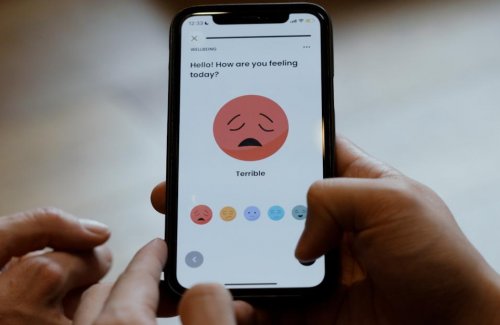
Breaking down societal stigma and creating a new mental healthcare system for the Asia-Pacific area are two of Theodoric Chew’s objectives, founder of the digital mental health app, Intellect.
Founded in 2019, the mobile app frequently monitors users’ moods, delivers rescue sessions and exercises, and lets them chat with therapists in real-time.
The 26-year-old explained that mental health is just as important as physical health, “You and I face things like stress, burnout, sleep issues, and relationship struggle as well.” he told CNN, “ That’s where actually a lot of us should start working on our mental wellbeing.”
Since early 2020, the startup serves over 3 million Asia-Pacific users in 15 languages. According to CNN Business, the Singapore-based mobile app has raised $20 million in its Series A funding, the largest amount raised by a mental health start-up in Asia.
Early this year, Singapore and Jakarta-based digital mental healthcare start-up, Ami, has raised at least $3 million from a number of investors, including Meta, the owner of Facebook. The firm was founded by Justin Kim, a Forbes 30 Under 30 Asia alum with Beknazar Abdikamalov.
Both digital mental health companies are targeting employers in their business models, where companies can subscribe to provide staff unlimited, private access to their services.
According to the WHO, depression and anxiety disorders cost the global economy $1 trillion a year in lost productivity. In March, it was reported that anxiety and sadness surged 25% worldwide in the first year of the pandemic.
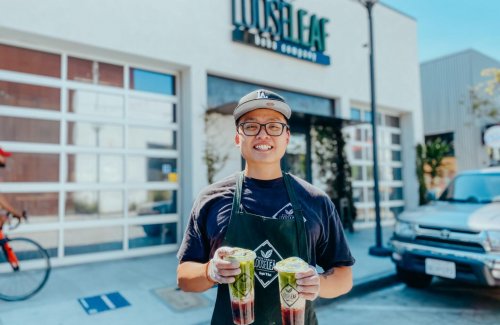
Loose Leaf Boba Company is not only well-known for its expert “bobaristas.” but also for its diverse cultural representation including Burmese, Thai, Filipino, and Hispanic. “Going out for boba” was a childhood tradition that assisted the company’s mission of unifying people by normalizing cultural differences.
The brand constantly values cultural inclusivity and also empowers BIPOC, AAPI, women, and the LGBTQ+ community.
Loose Leaf Boba Company’s sharp vision of “Building a Better Boba Company” comes to life every time a customer experiences a foreign favorite, for which they make beverages for customers to try global favorites. This means making tasty beverages like Vietnamese Egg Coffee or Mexican-inspired Guava Atole.
Founded in 2012 by husband and wife duo Thomas and Jasmine Liu in West Covina, the viral third-wave shop has locations across the United States, including Connecticut, California, and Massachusetts. This bubble tea tycoon has big plans to grow large retail sites in metro Dallas, TX, Northampton, MA, and Hadley, MA.
In the course of COVID-19, a significant number of people have reported having insufficient access to fresh food entirely for sustainable living.
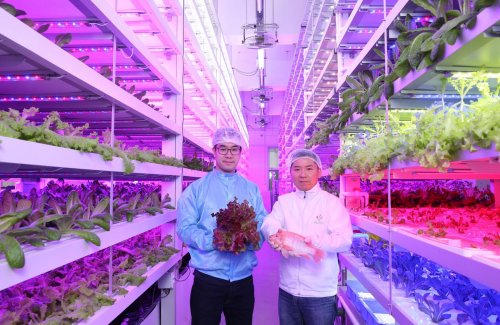
Gordon Tam has created an urban farm that solves this problem. He is the co-founder and CEO of the Hong Kong-based vertical farming – Farm66. With advanced farming technology, he grows fresh vegetables inside skyscrapers in Hong Kong.
In 2013, Tam and Billy Lam, Farm66’s COO, founded Hong Kong’s first high-tech vertical farm and developed LED lighting and wavelength innovations for farms. Tam and his team found that different light wavelengths affect plant growth. Red LEDs generate longer, stronger stems, whereas blue LEDs produce larger, stronger leaves.
The technological and robotic advances at Farm66 are also both groundbreaking. The 20,000-square-foot indoor farm is managed with IoT sensors and robots for quality assurance and other tasks.
When asked about the challenges facing conventional farming, Tam cites a lack of talent as a significant issue. “It’s because the children of many remaining farmers don’t want to take over the farms. They think it’s a very tedious job.” – he told Forbes. This is why he placed a premium on technology and saw it as a means to attract young people to farming by making the industry more appealing.
Farm66’s latest farming mechanism impressed billionaire Tang Yiu’s tech-focused venture capital firm ParticleX. The Alibaba Entrepreneurs Fund, Sino Group, and the Hong Kong government’s Cyberport and Science & Technology Parks are also investors. A total of over $4 million in funding has been acquired so far. Hengqin Financial Investment and the City University of Hong Kong have also backed Farm66.
There are currently fifteen full-time workers at Farm66, including data analysts, food scientists, and mechanical engineers, who can harvest as much as seven tons of vegetables every month. Tam hopes to share its company’s urban farming methods and success in Hong Kong with other cities. For instance, Farm66 converted a shipping container into a mobile farm for use in Middle Eastern desert cities.
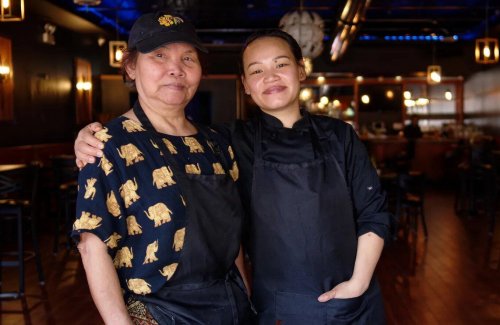
Khmai Fine Dining is a unique Cambodian restaurant in Rogers Park, Chicago. Owned by executive chef Mona Sang, the name is a mix of “Khmer,” the language and ethnicity of native Cambodians, and “me,” the Khmer term for mother, to emphasize her mother’s important role in presenting traditional Cambodian cuisine.
Mona, together with her sister, two brothers, and mother Sarom Sieng came to the US in early 1980 after surviving the Cambodian genocide. The Khmer Rouge tortured Sarom and executed her husband as the family fled to Thai refugee camps.
A single mother who never spoke English, Sarom began cooking for other families in the Cambodian community in order to survive and eventually expanded into catering events at Living Water Community Church in Rogers Park.
Mona hasn’t heard every detail of Sarom’s experience during the genocide, but the trauma her mother went through is still very clear to her. “I don’t know the whole story, but she tells it little by little when she’s cooking,” Mona told Eater Chicago. “I think there’s a lot of other people out there who have been through the same thing, but their story has never been told.”
In 2018, another family tragedy came when one of Mona’s brothers died unexpectedly in his sleep. Her mother discovered him the next morning and that image haunted Sarom.
Now that she is almost 80 years old, Sarom spends her days with her 13 grandchildren or assisting at Khmai.
According to Eater, Mona isn’t simply conveying a message to its customers with Khmai’s name. It is also a way of healing and writing a love letter to her mother who has fought for them to survive through the restaurant.
Khmai’s mesmerizing dishes include “Nom Bahn Chok”, a vermicelli noodle dish with minced tilapia marinated in kreoung and prahok, simmered in coconut fish stock, “Sach Koh Ang”, beef skewers marinated in lemongrass, Khmer spices and chili peppers, and Mai’s famous eggrolls stuffed with ground chicken, bean thread noodles and taro root.