Blogs, Development

December 19, 2025

SHARE:

The creator economy is no longer a niche corner of the internet. It is a $250 billion industry, powering modern marketing, culture, and commerce. Yet for the creators at its core, the experience often remains unstable and fragmented. Inconsistent rates, shifting platform demands, and “gifting” budgets paired with outsized expectations have left many navigating an ecosystem that hasn’t caught up to their value.

As we look toward 2026, the industry is approaching a tipping point. Growth alone is no longer enough. What creators need now are standards, systems, and support that allow them to build sustainable careers—not just viral moments.

Below are five critical shifts shaping the future of creator work, and the standards Meraki is building to support a stronger, more intentional industry.

1. Stronger Structure for a Growing Industry


Photo courtesy of Vivian Kwan (center), Founder of Meraki Group

While creator content has never been more polished, the backend of the industry remains disorganized. Uneven pay scales, scope creep mid-campaign, and unclear paths to professional growth are still common. Creators are often met with constant brief changes or “gifting” requests that require high-level deliverables without fair compensation.

The gap: There is no shared structure defining fair rates, clear deliverables, or realistic timelines across the industry. Expectations are often implied rather than stated, leaving creators to absorb last-minute changes, unpaid revisions, and expanded usage. Over time, this places most of the financial and emotional risk on creators instead of being shared evenly with brand partners.

The Meraki solution: Meraki builds every partnership on clarity. Terms and rates are established upfront, expectations are clearly defined, and communication stays transparent throughout the process. By setting strong boundaries early, creators are protected from underpayment, and brands begin each project with a shared roadmap for success.


2. Education That Powers Careers, Not Just Content


Image Source: Pexels

The biggest challenges creators face are rarely creative. They are structural. Pricing work correctly, understanding usage rights, and identifying harmful contract clauses remain major pain points—even for experienced creators.

Too often, creators are expected to learn these lessons the hard way.

The gap: Most creators enter the industry without access to professional guidance that supports long-term career growth. Knowledge around contracts, licensing, and negotiation is often gatekept or learned through costly mistakes. As a result, many creators stay stuck in short-term cycles instead of building sustainable paths forward.

The Meraki solution: Meraki focuses on training ethical, creator-first managers who act as true career partners. Through negotiation support and education around contract red flags, creators are equipped to think beyond the next deal and toward sustainable, multi-year growth.


3. Standards in Negotiation and Contracts


Image Source: Pexels

A significant number of creators still undercharge for their work, and 26% report needing help navigating contracts. Without standardized deal benchmarks, creators are often left guessing their worth—leading to pay gaps, rights misuse, and legal risk.

The gap: Negotiation norms vary widely, with no clear benchmarks for fair compensation or usage terms. Many contracts are written in dense legal language that creators are expected to sign without full understanding. This imbalance leaves creators vulnerable to losing control of their work and long-term earning potential.

The Meraki solution: Meraki empowers creators with defined negotiation standards and the confidence to secure fair, market-value deals. By demystifying contracts and usage terms, creators can focus on their craft knowing their income and intellectual property are protected.


4. Work Models That Protect Wellbeing


Image Source: Pexels

Burnout has become one of the industry’s most pressing issues, affecting more than half of full-time creators. The always-on model—driven by algorithm shifts and last-minute deadlines—is no longer sustainable.

Creativity cannot thrive under constant urgency.

The gap: Many campaigns are built around speed and volume rather than realistic creative timelines. Creators are expected to be constantly available, adapt instantly, and produce under pressure without recovery time. Over time, this erodes both creative quality and mental health.

The Meraki solution: Meraki advocates for structured planning and sustainable workflows. Campaign timelines are built to protect both creative quality and mental health, proving that high-level output does not require constant exhaustion.


5. Representation Rooted in Voice, Not Trends
 

Image Source: Pexels

Creators are increasingly resistant to being reduced to labels or treated as trend-driven checkboxes. True representation starts with understanding a creator’s voice—not forcing them into a predefined brand narrative.

The gap: Many partnerships remain transactional, prioritizing short-term relevance over genuine alignment. Creators are often selected to fill a category rather than for their perspective or long-term vision. This leads to inauthentic work that disconnects creators from their communities.

The Meraki solution: Meraki begins every partnership by listening. By understanding each creator’s goals and vision, Meraki aligns them with brands that share their values—fostering long-term relationships that feel authentic to both the creator and their community.
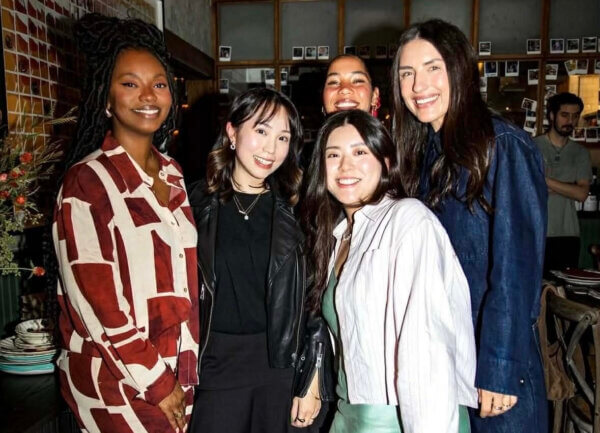
 

Photo courtesy of Vivian Kwan (second from left), Founder of Meraki Group


The Next Era: Purpose Over Pressure

As we look toward 2026, the transition from a “Wild West” to a professionalized industry requires more than just better tools—it requires a fundamental shift in how we value the humans behind the content. 

Meraki sits at the center of this new era, bridging creative passion with real professional growth. By pushing for fair standards, ethical representation, and sustainable careers, Meraki does more than manage creators; they help protect the future of creative work.wi

Learn more about Meraki Group:
📍Website

📍Instagram 

Related Articles

Image Source: South China Morning Post

Uncategorized

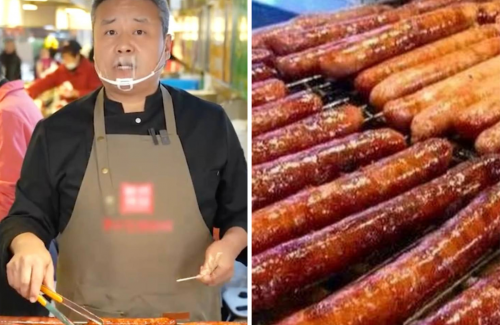
Bankrupt Chinese Restaurant Owner Bounces Back To Pay $6.4 Million Debt Through Sausage-Selling

“We are born with nothing. Why be scared of starting all over again?” says Chinese Tang Jian after starting up a street food stall in Hangzhou, China following his business bankruptcy which left him with $6.4 million.

At 52, the former millionaire Chinese restaurant proprietor is positive of earning funds to pay his multi-million debt by selling barbecued sausages.

Thus, his optimism put netizens in awe as a person, who despite losing his 16-year-old business venture and everything he had because of the unsuccessful investment in the landscape engineering industry, is still hopeful of being able to recover from the downfall.

Tang was once a successful businessman starting at the age of 36. However, because of the fruitless outlay, he was compelled to sell everything he founded through his business including his restaurants, homes, and cars.

Still unable to pay his debts in full, Tang decided to put up the small-time sausage-selling business.

Tang proudly exclaimed that “Every sausage is genuinely filled with meat, and there is no starch in it. When compared with those sold in amusement parks or markets, ours will make you feel safer,” as quoted in South China Morning Post.

Upon knowing that his story trended in social media, Tang explained that it was because all of us face our own challenges in life, however, we must always have that strong spirit of winning each battle. 

He also said that he is really determined to settle his debts although still uncertain when it would be.

Tang shared that bravery is a key to overcoming hardships and going on in life and that we should always seek strength, especially during hard times.

Uncategorized

Virginia Embraces Diversity and Korean Culture, Celebrates First Kimchi Day

Being home to one of the biggest Korean communities in the nation, Virginia had its first-ever Kimchi Day on November 22, through the Korean American Women’s Association.

Held at the Good Shepherd Evangelical Church in  Springfield, the festivity was materialized especially for this motive: acknowledge kimchi as a nonnative dish in Virginia which is specially imported for the increasing number of Korean American citizens in the country. It also reflects how the state has embraced diversity.

During the celebration, roughly 150 people of different colors converged to make their own kimchi, following the traditional and neat process of kimchi preparation. 

Originally, families and acquaintances converge to happily prepare the ingredients, store them in jars, and place them underground for fermentation producing a savory, piquant, and sugary kimchi. This is done every November, a month after harvesting cabbage.

On the other hand, it was officially moved to be celebrated in January through Irene Shin (D), the foremost Korean American servant in the House of Delegates, who acquired two-way support for her proposition.

For Koreans, kimchi is beyond being a cuisine. It narrates Korea’s past, its folks’ tenacity, and its landscape which Koreans are more than proud of. Kimchi is a celebration of family and blessings.

Northern Virginia and Annandale seem to be “Korea Towns” as Korean establishments like diners, worship places, food markets, bakeries, and beauty shops in Hangul inscriptions are all over. The state and Korea have found strong connections with each other that Fairfax County Economic Development Authority can even be found in the latter’s capital.

A Korean American mentioned how Kimchi Day appreciates the essence of exporting not only the product but of Korean culture; a manifestation of how the US whole-heartedly accepted acculturation.

Image Source: Tufts Daily

Uncategorized

Sunil Kumar To Sit As The First Person Color President of Tufts University in 2023

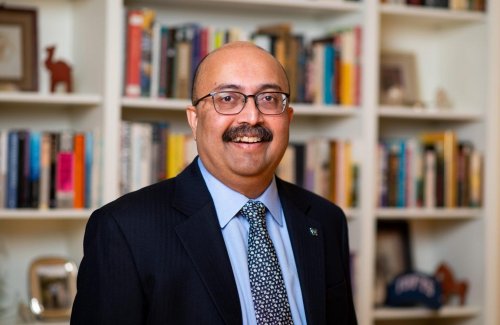
The Board of Trustees commissioned Indian politician Sunil Kumar as the 14th president of Tufts University, Massachusetts in 2023 succeeding President Anthony P. Monaco, after the latter’s 12-year term.

Kumar is currently a provost and Vice President for Academic Affairs at Johns Hopkins University and was once the dean of the University of Chicago Booth School of Business with a Ph.D. in electrical engineering and is a competent operations manager.

The head of the commission on presidential search and BOT, Peter Dolan, proudly exclaimed that Kumar’s never-ending dedication to providing first-rate tertiary education and extraordinary track in leadership, teaching, and interpersonal skills are essential as a presidential successor. 

Furthermore, Kumar’s colleagues at Johns Hopkins mentioned him as a wholesome partner and co-worker who has the distinct qualifications of an outstanding leader.

Looking back at how Kumar started, he is a son of a police officer who attained his master’s in Computer Science Automation at the Indian Institute of Science, Bangalore two years after he completed his bachelor’s degree at Mangalore University in 1990. While having his master’s, he met a professor from the University of Illinois who enlisted him in the prestigious university for a doctorate program which he finished in 1996.

Kumar had his first teaching experience at Stanford Graduate School of Business where he exclaimed how was amazed to be paid for the work he is passionate about and after more than a decade there, he became the Dean of the University of Chicago Booth School of Business, leading him to the provost and senior vice president posts in Johns Hopkins in 2016.

Nonetheless, he said that being a mathematician served him well in his profession.

Prior to being named as the new president, Kumar already has his eyes on Tufts because of its pursuit of serving not just those who are inside the school but the wider community outside its premises.

As the newly-elected leader to sit on July 1, 2023, Kumar’s mission is to reach out to people to a greater degree by giving them an opportunity to know the school by experience and make that experience extraordinary.

Image Source: Nike

Uncategorized

Two Indigenous Women Set Fire As Nike’s Latest N7 Collection Ambassadors

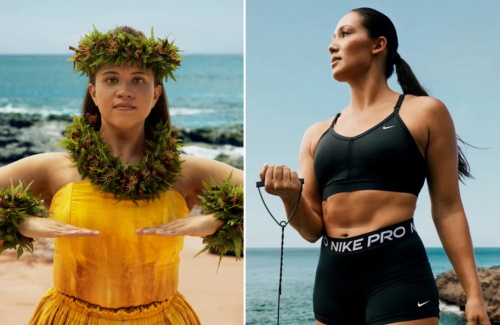
Nike powerhouse unveils two new faces for their latest indigenous collection in the name of 2022 Miss Aloha Hula Piʻikea Lopes and Native American Professional Track, and Field Athlete Janee’ Kassanavoid.

Lopes is the first-ever Native Hawaiian featured in the special edition collection. She gracefully showcased her indigenous origin and award-winning antique sway and fashion in the Times Square advertisement.

At 22, Lopes is an accomplished young maiden: a hula dancing champion and skilled powerlifter defender who graduated from the University of Hawaii-Manoa and is soon to graduate with her master’s in teaching.

 “It’s nice being noticed by a globally known brand wanting to feature Hawaiʻi and acknowledge hula as a sport,” she said.

Meanwhile, Janee’ Kassanavoid from Missouri stands in the same limelight highlighting her glory of being the first indigenous woman to victory in the 2022 World Track and Field Championships, through her passion for the hammer throw.

Geared on shedding light on Native American youth and Indigenous societies in the Northern part of America, Nike conducts multi-million dollars’ worth of extension programs to make their grantees live a wholesome, pleasing, and prosperous life just as what they are doing to Lopes and Kassanavoid.