Blogs, Development

December 19, 2025

SHARE:

The creator economy is no longer a niche corner of the internet. It is a $250 billion industry, powering modern marketing, culture, and commerce. Yet for the creators at its core, the experience often remains unstable and fragmented. Inconsistent rates, shifting platform demands, and “gifting” budgets paired with outsized expectations have left many navigating an ecosystem that hasn’t caught up to their value.

As we look toward 2026, the industry is approaching a tipping point. Growth alone is no longer enough. What creators need now are standards, systems, and support that allow them to build sustainable careers—not just viral moments.

Below are five critical shifts shaping the future of creator work, and the standards Meraki is building to support a stronger, more intentional industry.

1. Stronger Structure for a Growing Industry


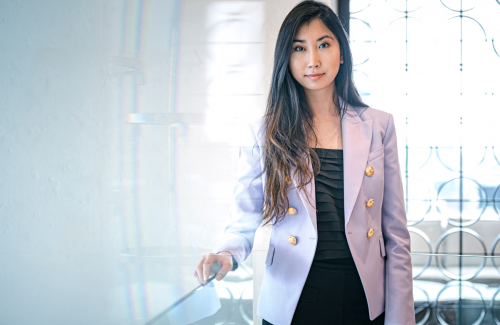
Photo courtesy of Vivian Kwan (center), Founder of Meraki Group

While creator content has never been more polished, the backend of the industry remains disorganized. Uneven pay scales, scope creep mid-campaign, and unclear paths to professional growth are still common. Creators are often met with constant brief changes or “gifting” requests that require high-level deliverables without fair compensation.

The gap: There is no shared structure defining fair rates, clear deliverables, or realistic timelines across the industry. Expectations are often implied rather than stated, leaving creators to absorb last-minute changes, unpaid revisions, and expanded usage. Over time, this places most of the financial and emotional risk on creators instead of being shared evenly with brand partners.

The Meraki solution: Meraki builds every partnership on clarity. Terms and rates are established upfront, expectations are clearly defined, and communication stays transparent throughout the process. By setting strong boundaries early, creators are protected from underpayment, and brands begin each project with a shared roadmap for success.


2. Education That Powers Careers, Not Just Content


Image Source: Pexels

The biggest challenges creators face are rarely creative. They are structural. Pricing work correctly, understanding usage rights, and identifying harmful contract clauses remain major pain points—even for experienced creators.

Too often, creators are expected to learn these lessons the hard way.

The gap: Most creators enter the industry without access to professional guidance that supports long-term career growth. Knowledge around contracts, licensing, and negotiation is often gatekept or learned through costly mistakes. As a result, many creators stay stuck in short-term cycles instead of building sustainable paths forward.

The Meraki solution: Meraki focuses on training ethical, creator-first managers who act as true career partners. Through negotiation support and education around contract red flags, creators are equipped to think beyond the next deal and toward sustainable, multi-year growth.


3. Standards in Negotiation and Contracts


Image Source: Pexels

A significant number of creators still undercharge for their work, and 26% report needing help navigating contracts. Without standardized deal benchmarks, creators are often left guessing their worth—leading to pay gaps, rights misuse, and legal risk.

The gap: Negotiation norms vary widely, with no clear benchmarks for fair compensation or usage terms. Many contracts are written in dense legal language that creators are expected to sign without full understanding. This imbalance leaves creators vulnerable to losing control of their work and long-term earning potential.

The Meraki solution: Meraki empowers creators with defined negotiation standards and the confidence to secure fair, market-value deals. By demystifying contracts and usage terms, creators can focus on their craft knowing their income and intellectual property are protected.


4. Work Models That Protect Wellbeing


Image Source: Pexels

Burnout has become one of the industry’s most pressing issues, affecting more than half of full-time creators. The always-on model—driven by algorithm shifts and last-minute deadlines—is no longer sustainable.

Creativity cannot thrive under constant urgency.

The gap: Many campaigns are built around speed and volume rather than realistic creative timelines. Creators are expected to be constantly available, adapt instantly, and produce under pressure without recovery time. Over time, this erodes both creative quality and mental health.

The Meraki solution: Meraki advocates for structured planning and sustainable workflows. Campaign timelines are built to protect both creative quality and mental health, proving that high-level output does not require constant exhaustion.


5. Representation Rooted in Voice, Not Trends
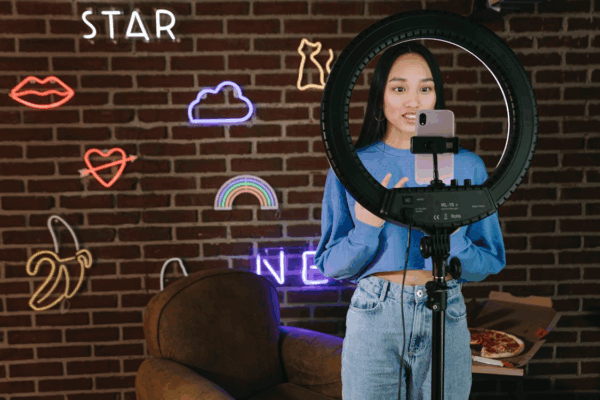
 

Image Source: Pexels

Creators are increasingly resistant to being reduced to labels or treated as trend-driven checkboxes. True representation starts with understanding a creator’s voice—not forcing them into a predefined brand narrative.

The gap: Many partnerships remain transactional, prioritizing short-term relevance over genuine alignment. Creators are often selected to fill a category rather than for their perspective or long-term vision. This leads to inauthentic work that disconnects creators from their communities.

The Meraki solution: Meraki begins every partnership by listening. By understanding each creator’s goals and vision, Meraki aligns them with brands that share their values—fostering long-term relationships that feel authentic to both the creator and their community.
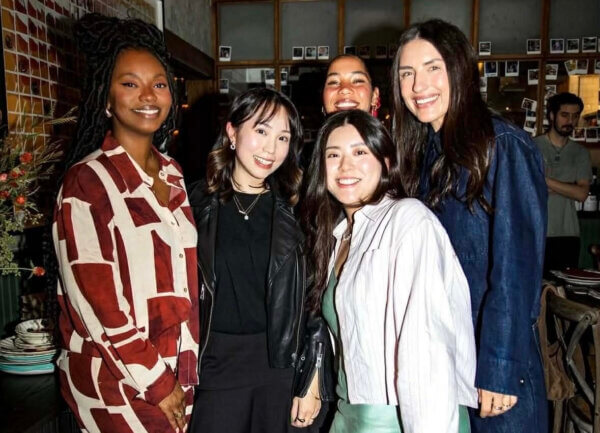
 

Photo courtesy of Vivian Kwan (second from left), Founder of Meraki Group


The Next Era: Purpose Over Pressure

As we look toward 2026, the transition from a “Wild West” to a professionalized industry requires more than just better tools—it requires a fundamental shift in how we value the humans behind the content. 

Meraki sits at the center of this new era, bridging creative passion with real professional growth. By pushing for fair standards, ethical representation, and sustainable careers, Meraki does more than manage creators; they help protect the future of creative work.wi

Learn more about Meraki Group:
📍Website

📍Instagram 

Related Articles

Image Source: Locke Bio

Uncategorized

How This Sci-Entrepreneur Became A Company CEO At The Age Of 18

Capitalizing on her 14-year-old self’s science enthusiasm 12 years ago, Cathy Tie, transformed herself into a successful bioinformatician and entrepreneur.

At 18, the young Canadian became the co-founder of the $1 million dollar worth Ranomics company, a health risk prediction provider. While she co-founded Locke Bio, an e-commerce platform for pharmaceutical and other FDA-approved product suppliers when she was 23.

Today, the 26-year-old sci-entrepreneur shares that having a broader view is her key to being integrative and cross-disciplined in the many fields she is engaged in, as art and creativity are easier said than done.

During an interview with CNBC, Tie mentions her ability to connect ideas and see them far differently from how others perceive, including how science can grow and expand for beginners which she thinks is more artistic and creative than technical. 

This skill, however, is uncommon among teenagers. Yet, Tie’s innate dexterity manifested in her secondary years as she reserved a special place for science and relevant practical activities in her heart ever since a kid. 

Discontented with the standard curriculum, she wrote unsolicited letters to her professors seeking to tour the school labs, perform studies, and assist in their scientific projects, which taught her a lot until she had her first paper published in a peer-reviewed journal at age 16. 

However, she realized that getting entrepreneurial financing is better than relying on academic allowances since she could do more research. She applied to entrepreneur programs to assist her in the startup world.

Upon getting acquainted with Leo Wan who was then a Ph.D. student at the school where she was a neophyte, they worked together and were admitted into IndieBio, a startup platform that finances and mentors science entrepreneurs.

With Tie having prime knowledge on how to figure out issues on genetic trial precision, she subsequently co-founded Randomics with Wan after quitting college and leaving for San Francisco where she became the CEO for the three early years.

Thereafter, she was asked to apply and was accepted to The Thiel Fellowship, which aids a $100,000 subsidy to out-of-college inexperienced entrepreneurs.

A year following her collaboration with Cervin Ventures, she founded Locke Bio, which currently has three U.S. and Canadian business resources.

Tie’s business is nonexempt to challenges that a company experiences, yet, hard work and reflection make it possible for her to always “see the bigger picture. In this light, she and her team have a lot ahead for the company.

Image Source: Maye Felices-McDonald Facebook

Uncategorized

Former Caregiver Now CEO Of Multi-Million Dollar Companies In The US

Stirred by her dream, perseverance, and thrust, Filipina-American Maye Felices-McDonald etches her name as the owner and CEO of quite a few businesses in the US such as GETMEFIT Slimming Products, and Mama’s Angels Senior Care.

Maye’s voyage was not a piece of cake. She developed her entrepreneurial skills as a vendor of sweets and paper dolls in school when she was still a kid, as a caretaker of her mother’s sari-sari store (sundry store), and as a student assistant when she was in college while studying Ladderized Nursing.

In 2017, Maye started as a part-time caregiver who made her car home for eight long months. Eventually, she courageously established her own caregiving firm named Mama’s Angels Care and later on catered to and met the caregiving demands in Maryland, Washington D.C., and Virginia starting with three caregivers to 49 healthcare providers at present. With this, she was also able to help fellow Filipinos by hiring them into her company.

As a dream-chaser, Maye capitalized on her 5Ps: Passion, Persistency, Perseverance, Positive Mindset, and the Power of Resilience which led her to the realization of her dreams which she found in the US.

As her business considerably grew, it became distinguished in the US, and in September this year, she proudly ramped up her well-known product on the esteemed New York Fashion Week runway putting in high spot her advocacy of unifying health, wellness, fitness, and fashion and her drive to take part in her young ambassadors’ will of fostering mental health awareness to the young ones.

Maye toiled and worked hard in achieving her dreams making her more than deserving of receiving laurels for her successful business undertakings along the lines of Modern CEO, Most Influential Young CEO for Business and Entrepreneurship, and Best Slimming Product of USA.

Image Source: Brían Nguyen Instagram

Uncategorized

Vietnamese-American Transgender Model Made History Winning local ‘Miss America’ Pageant

In the 100-year history of Miss America, 19-year-old Brían Nguyen has become the first transgender contestant to win a local Miss America Organization beauty pageant, Miss Greater Derry 2023.

The teenager from New Hampshire won a crown, title, and scholarship. She ecstatically wrote on her Instagram, “No words can describe the feeling of having the opportunity to serve my community and represent my community for the very first time at Miss New Hampshire.” 

Nguyen continued, “I am so honored to be crowned your new Miss Greater Derry 2023, and I am thrilled to show you all what I have up my sleeves. This will be an amazing year.”

Founded in 1986, the Miss Greater Derry Scholarship Program awards scholarships to young women in the Greater Derry area for academic skills, talent, character, community service, and poise.

The Miss Greater Derry Scholarship Pageant is also a preliminary event for the Miss New Hampshire Pageant and, ultimately, the Miss America Pageant.

As the new Miss Greater Derry, she recently attended the annual Best Buddies Champion Gala to support those with intellectual and developmental disabilities. $150,000 was raised over that night to help out their champion nominees. She will be working with Best Buddies New Hampshire throughout her reign.

Image Source: Carla Tramullas / MycoWorks

Uncategorized

MycoWorks’ Sustainable Mushroom Leather Raised Over $187M From General Motors and Hollywood A-Listers

“Growing the future has only just started. This industry will continue to surprise people,” says Philip Ross, co-founder of MycoWorks, a mycelium material founder and producer.

As the innovator of high-quality mushroom “leather” for the luxurious Hermes bags, the business acquired $187 million from Natalie Portman, John Legend, and General Motors and will soon cover the latter’s electric car interiors.

Ross unintentionally discovered leather-like material in reishi mushrooms, a fungus he farmed for his cancer and AIDS more than four decades ago. He then became a mycelium artist and featured his fungus-based works at famous museums.

According to Sophia Wang, co-founder of MycoWorks whom Phil met six years before they founded the firm while working together on art ventures, Ross’s discovery marked the “leather’s” birth to the globe.

Wang and Ross continued to discover more about mycelium and later realized that the material is enticing to buyers who don’t like synthesized contaminants and materials which are produced from animals.

Alongside raising their funding source, the company also conducted a groundbreaking at South Carolina Factory with the aim of attaining a sufficient supply of their fancy product.

With about 200 employees, Matt Scullin, the company’s CEO, said that the “Brands are making very significant changes to address what is really a growing demographic of people who want to buy sustainable products that have provenance and traceability and a lower carbon footprint, lower water use—and mycelium does all of those things.”

Compared to animal leather, the mushroom leather-like material is far more environmentally friendly as the former adds up to about a million tons of carbon dioxide which is tantamount to 30 million cars’ yearly emissions.

Despite environmental and animal issues, people prefer biomaterials or “next-gen” materials over the past decade making it in-demand as multi-billion dollars are invested in the industry.

Nonetheless, Hermes’ firm in France is soon to release its $4,200-worth “Victoria” bag made from MycoWorks’ amber-hued exquisite mycelium.