Blogs, Development

December 19, 2025

SHARE:

The creator economy is no longer a niche corner of the internet. It is a $250 billion industry, powering modern marketing, culture, and commerce. Yet for the creators at its core, the experience often remains unstable and fragmented. Inconsistent rates, shifting platform demands, and “gifting” budgets paired with outsized expectations have left many navigating an ecosystem that hasn’t caught up to their value.

As we look toward 2026, the industry is approaching a tipping point. Growth alone is no longer enough. What creators need now are standards, systems, and support that allow them to build sustainable careers—not just viral moments.

Below are five critical shifts shaping the future of creator work, and the standards Meraki is building to support a stronger, more intentional industry.

1. Stronger Structure for a Growing Industry


Photo courtesy of Vivian Kwan (center), Founder of Meraki Group

While creator content has never been more polished, the backend of the industry remains disorganized. Uneven pay scales, scope creep mid-campaign, and unclear paths to professional growth are still common. Creators are often met with constant brief changes or “gifting” requests that require high-level deliverables without fair compensation.

The gap: There is no shared structure defining fair rates, clear deliverables, or realistic timelines across the industry. Expectations are often implied rather than stated, leaving creators to absorb last-minute changes, unpaid revisions, and expanded usage. Over time, this places most of the financial and emotional risk on creators instead of being shared evenly with brand partners.

The Meraki solution: Meraki builds every partnership on clarity. Terms and rates are established upfront, expectations are clearly defined, and communication stays transparent throughout the process. By setting strong boundaries early, creators are protected from underpayment, and brands begin each project with a shared roadmap for success.


2. Education That Powers Careers, Not Just Content


Image Source: Pexels

The biggest challenges creators face are rarely creative. They are structural. Pricing work correctly, understanding usage rights, and identifying harmful contract clauses remain major pain points—even for experienced creators.

Too often, creators are expected to learn these lessons the hard way.

The gap: Most creators enter the industry without access to professional guidance that supports long-term career growth. Knowledge around contracts, licensing, and negotiation is often gatekept or learned through costly mistakes. As a result, many creators stay stuck in short-term cycles instead of building sustainable paths forward.

The Meraki solution: Meraki focuses on training ethical, creator-first managers who act as true career partners. Through negotiation support and education around contract red flags, creators are equipped to think beyond the next deal and toward sustainable, multi-year growth.


3. Standards in Negotiation and Contracts


Image Source: Pexels

A significant number of creators still undercharge for their work, and 26% report needing help navigating contracts. Without standardized deal benchmarks, creators are often left guessing their worth—leading to pay gaps, rights misuse, and legal risk.

The gap: Negotiation norms vary widely, with no clear benchmarks for fair compensation or usage terms. Many contracts are written in dense legal language that creators are expected to sign without full understanding. This imbalance leaves creators vulnerable to losing control of their work and long-term earning potential.

The Meraki solution: Meraki empowers creators with defined negotiation standards and the confidence to secure fair, market-value deals. By demystifying contracts and usage terms, creators can focus on their craft knowing their income and intellectual property are protected.


4. Work Models That Protect Wellbeing


Image Source: Pexels

Burnout has become one of the industry’s most pressing issues, affecting more than half of full-time creators. The always-on model—driven by algorithm shifts and last-minute deadlines—is no longer sustainable.

Creativity cannot thrive under constant urgency.

The gap: Many campaigns are built around speed and volume rather than realistic creative timelines. Creators are expected to be constantly available, adapt instantly, and produce under pressure without recovery time. Over time, this erodes both creative quality and mental health.

The Meraki solution: Meraki advocates for structured planning and sustainable workflows. Campaign timelines are built to protect both creative quality and mental health, proving that high-level output does not require constant exhaustion.


5. Representation Rooted in Voice, Not Trends
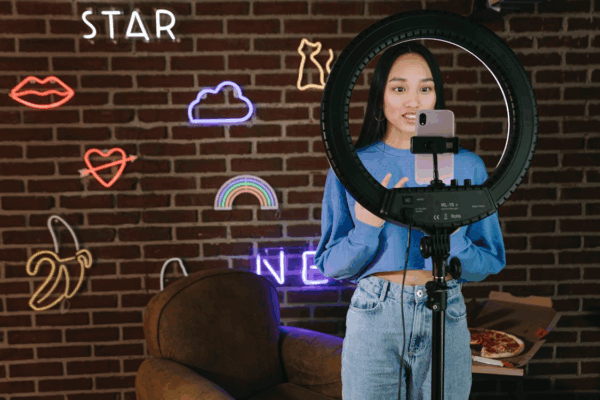
 

Image Source: Pexels

Creators are increasingly resistant to being reduced to labels or treated as trend-driven checkboxes. True representation starts with understanding a creator’s voice—not forcing them into a predefined brand narrative.

The gap: Many partnerships remain transactional, prioritizing short-term relevance over genuine alignment. Creators are often selected to fill a category rather than for their perspective or long-term vision. This leads to inauthentic work that disconnects creators from their communities.

The Meraki solution: Meraki begins every partnership by listening. By understanding each creator’s goals and vision, Meraki aligns them with brands that share their values—fostering long-term relationships that feel authentic to both the creator and their community.
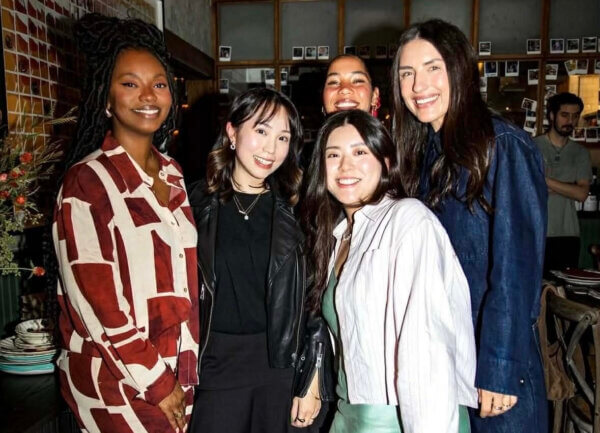
 

Photo courtesy of Vivian Kwan (second from left), Founder of Meraki Group


The Next Era: Purpose Over Pressure

As we look toward 2026, the transition from a “Wild West” to a professionalized industry requires more than just better tools—it requires a fundamental shift in how we value the humans behind the content. 

Meraki sits at the center of this new era, bridging creative passion with real professional growth. By pushing for fair standards, ethical representation, and sustainable careers, Meraki does more than manage creators; they help protect the future of creative work.wi

Learn more about Meraki Group:
📍Website

📍Instagram 

Related Articles

Image Source: Twrl Milk Tea

Stories

These Two Moms Started Milk Tea Company To Take Pride Of Their AAPI Identity

In order to realize their dream of founding a food company, Olivia Chen and Pauline Ang chose to create Twrl, a milk tea business that embodies their beliefs as mothers, graduates of Berkeley, and members of the AAPI community.

For their whole 20-year friendship, they have always shared a love of food.

In spite of the challenges of setting up a tiny business in the midst of a pandemic, Pauline took the time to experiment and eventually make the tea she wanted. In the Twrl, she invented the first vegan, low-sugar, and low-fat milk tea.

The two eventually hired a co-packer and a food scientist for their canned and on-the-go product.

The co-founders’ early supply purchases from small family farms had been stirring. They were able to help them by making them their suppliers and even assisted them to get non-GMO certification through their products.

Because peas have a neutral flavor, require very little water, and produce significantly fewer carbon emissions than soy and almonds, Twrl used them to make sustainable milk tea.

Olivia and Pauline chose the name Twrl for their company based on a Chinese tale about brewed tea. Twrl is a company that embodies tradition and history with a touch of modernism.

As Asian-Americans who grew up drinking milk tea as part of their family heritage, they are major admirers of it and have even changed its ingredients with their loved ones.

Olivia went on to say that teas in cafés have extremely high-calorie content, low-quality ingredients, and impractical portability. In Twrl, they created its antithesis.

Olivia said they are motivated by the need to create a product that accurately represents America as a nation of immigrants, just like them and their families. A company that offers people the chance to blend their races and serve as role models in the community.

She clears up that as the organization’s founders, they are an Asian-American brand rather than an Asian or American brand.

Image Source: qz.com

Stories

How This CEO and Co-Founder of Insurance Company Raised $25M During Her Pregnancy

Founding a business startup and starting a family simultaneously was proved possible by the CEO and co-founder Hanna Wu of Amplify Life Insurance, a life insurance platform focused on helping people build wealth.

Wu first realized the importance of insurance policy when her 20-year-long best friend lost his father and financial backbone at the same time after the latter’s father died of cancer.

Upon knowing more than a year ago that she was pregnant, it gave her mixed emotions as a 16-hour working woman who travels from here and there.

Trying to sort out the situation, she researched articles on early-stage founders as moms but failed to find ones that fit.

As a BIPOC member, she sought a community from the same race who are also women founders only to find out that barely 7% of the global fintech community are women and that they only receive 2.4% of the total capital invested for startups.

Finding no one, Wu felt alone and wondered how others balanced the various startup stages while starting a family.

The journey was never easy for Wu but truly, hard work, goal orientation, and perseverance make everything achievable.

Wu started to plan everything before and after her delivery and how she would be able to raise funds for her business considering the time when the market dropped so low.

While thinking about getting a nanny and how the set-up would be after her delivery, Wu engaged in lower-stakes conversations to test investor sentiments, and fortunately, she was able to secure a large reinsurer’s venture arm.

Wu also woke up early in the morning daily to study for her investment adviser exam and everything else she did with her impending delivery as motivation.

Three days before finally giving birth, they signed the term sheet for the company.

In the 9-month time of pregnancy and struggle towards establishing the business, Wu raised over $25 million in investments and thereafter hired a full leadership team, kicked off their RIA status, signed several significant partnership contracts, and grew their revenue four times: everything planned in her to-do list.

With her success, she shares in Quartz 5 work strategies to prepare for parenthood:

Sort your parental leave plan. It’s harder for early-stage founders to take leave, but preparing your care plan and naming what’s important to you.

Consider your travel schedule. Prioritize travel by business needs, and don’t be afraid to break from the way it “should be” done.

Become an expert on roles and responsibilities at home. You, your co-parents, and caregivers must become experts on the roles and responsibilities at home. Stay connected to the right people and in the right ways. 

Plan for everything and expect failure. Be easy on yourself when mistakes happen, or roadblocks pop up.

You don’t have to choose. We don’t have to choose between our careers and families. It’s not easy, it will be far from perfect, and undoubtedly you’ll need a lot of support, but you can have it all if that’s what you want.

Image Source: NBC Sports

News

Dallas Stars Jason Robertson Carves Name in NHL History As Highest Pointer in Latest Season

Jason Robertson made NHL history by playing the second longest-drawn-out game in franchise record and the most lengthy game in Dallas history.

With 22 goals, the most in the NHL, the 23-year-old Filipino-American left winger for the Dallas Stars, made his season a success.

Robertson extended his point streak to 13 games, tying the Dallas Stars record set by Dave Gagner in the early 90s with a point over their opponent Blackhawks on Wednesday.

On Thursday night, he scored three goals, which were assisted by Joel Kiviranta and Wyatt Johnston, as well as Oettinger’s 31 saves in a shutout victory.

His 39 points ranked second in the league, trailing only Connor McDavid and setting himself as the highest-pointer in the 24 games of the season for Dallas Stars. 

Leading the way for the Stars, the victory was the team’s second straight triumph and was the 10th time Dallas had scored points in the previous 11 games.

Additionally, Miro Heiskanen and Roope Hintz also both enjoyed multi-point outings with three and two assists, respectively.

Stars coach Pete DeBoer reportedly claimed that “Robo is a guy that’s honestly hard to defend because he scores in a bunch of different ways,” according to the Dallas Morning News.

“He can score off the rush, he scores kind of lurking around the quiet areas of the ice waiting for the puck to come to him. It always seems to come to him. Tougher to defend a guy like that isn’t predictable,” the coach continued.

Coach Pete also remarked on how amazed he was to see Robertson play such an exceptional game and how incredible the player was for making it seem simple despite the difficulty of the game.

With his nightly exploits, Robertson is starting to catch the attention of the hockey world, which is quite an achievement in a market like Dallas, far from the hockey capital of Toronto. 

He’s outperforming expectations for his $7.75 million cap charge and propelled himself into the early race for the Hart Trophy.

Furthermore, Dallas Stars captain Jamie Benn stated that Robertson is leading the attack with confidence.

Image Source: South China Morning Post

Stories

Earthquake Victim With Amputated Legs Masters Dancing With Husband’s Self-Made Prosthetic Limbs

Nothing is impossible to 30-year-old Liao Zhi of Sichuan, China who lost her legs during an earthquake in 2008 but now mastered the art of dancing while wearing high heels with her now husband’s self-made prosthetic legs.

The Chinese former dance teacher caught the online community’s attention with her talent and story being an epitome of hope and faithfulness.

“It’s like she dances with life,” a netizen commented.

During the tragic incident in Sichuan where Zhi was trapped in the ruins of a building for 30 hours, she not only lost her legs but the most important persons in her life, her 10-month-old daughter who died in the disaster and her husband who divorced her seven months after the tragedy.

Being the only one to survive in the devastated building, the brave woman neither shed a tear nor complained of everything she went through including her legs being amputated.

Instead, Zhi said that “The earthquake gave me rebirth.”

After learning to walk with her artificial limbs, Zhi moved on from the nightmare by continuing and staging her passion in different places.

Although the training had been difficult and painful, Zhi was determined in doing what she loves. 

According to the South China Morning Post, she and her husband-dance partner defeated competitors in China and won as first runner-up in the reality show Dance Out My Life in 2013. 

Her husband became her strong support in recovering from her downfall.

Despite having been through a lot, Zhi remained optimistic. “Dance is my ray of sunshine, and while I would also be fine if I didn’t dance, I would not feel the same sense of joy that it gives me when I do,” she said.

Being an inspiration to many, Zhi’s life story was turned into a play entitled Angel’s Psalm that was staged at Kwai Tsing Theatre in 2015.

In an article by CCTGN, it was said that Liao is currently a happy wife as well as a proud mother. However, she is still fighting for a higher ambition – helping more people like her to recover their life value.