What is UX

Design

March 13, 2025

SHARE:

What does UX stand for? Learn more about what UX means, why it’s so important and what defines good UX.

“UX” stands for “user experience.” It describes the quality of the experience an end user has with a specific product, service, company or brand.

Although it’s often talked about in relation to digital products, like apps and websites, UX can relate to anything that an end user can interact with or encounter.

Take the example of going into your local bank to open a new account. If the process is quick and simple with clear instructions, easy-to-find information and friendly customer service, you’d come away feeling like you had a good user experience.

The same goes for ordering something online or using an app on your phone. If you’re able to accomplish your desired tasks with minimal effort, you’ll find the user experience to be a pleasant one.

UX doesn’t relate to one specific thing. It’s the sum of all the smaller parts that determines whether the overall encounter between the product/service and the user is a positive one. You can think of it as the impression the user leaves with and whether or not they’d be keen to repeat the experience. To learn more, keep reading.

What is user experience (UX) design?

If UX describes the quality of a user’s encounter with a particular product or service, UX design is the process of creating and shaping these experiences, with the goal of making them positive, pleasant and valuable for the end user.

UX design isn’t about how a product looks; that’s just one aspect of the overall user experience. It’s about ensuring that the product is logical, functional, easy to navigate and generally user-friendly.

There are 5 elements of UX design to consider:

  1. Strategy: Deciding which objectives the product should meet, including both end user goals and client/business stakeholder objectives.
  2. Scope: Fleshing out the details of the product, determining which features and functionality it should offer.
  3. Structure: Mapping out the structure of the product, considering how users will navigate from one point to the next and what information they’ll need to move around the product and accomplish their goals.
  4. Skeleton: Drilling down to the finer details of how each page should be structured and which elements (buttons, menus and other content) will go where.
  5. Surface: Considering the user’s sensory experience of the product, defining how the product will look in terms of colors, imagery, spacing, typography and so on. This is where UI design comes in.

Where does the term “UX” come from?

The term “UX” was invented by Donald Norman, a cognitive psychologist who started working at Apple in the early 1990s. He took on the role of User Experience Architect, making him the first (known) person in history to have UX in their job title.

Explaining the origins of UX, Donald Norman said:

“I invented the term because I thought human interface and usability were too narrow. I wanted to cover all aspects of the person’s experience with a system, including industrial design, graphics, the interface, the physical interaction and the manual.”

What is the difference between UX and UI?

If you’ve heard of UX, you’ve probably also heard of UI. The terms are often used together but it’s important to be clear on the difference between them.

UX is a much broader term, covering everything that influences how a user feels when they use a product or service. It’s a comprehensive discipline that involves research, analysis, and understanding user needs. 

UI stands for “user interface”, which is the point of interaction between an end user and a digital product. It’s a more narrow discipline that involves the visual design of the screens, buttons and other touchpoints you might use to navigate an app or a website. 

The way the user interface (UI) is designed has an impact on the overall user experience, so UI is an important part of UX.

UXUI
Stands for “user experience”Stands for “user interface”
A broad disciplineA narrow discipline
Involves the quality of the experience as a wholeInvolves the design of the user interface
Concerned with research, analysis, and understanding user needsConcerned with visual design

You can learn more about the difference between the two, as well as how they go hand-in-hand, in this guide to UX vs. UI.

Why is UX important?

UX is important for two reasons: business value and human value. Let’s look at both.

The business value of UX design

If you have a positive experience with a product or service, you’re more likely to use it again and become a loyal customer. You might even recommend it to friends and family. That’s great for the brand reputation, which ultimately determines whether or not the product or service is successful and profitable.

On the flip side, a negative user experience leaves a bad impression of the product, service or brand. If it’s less than satisfactory, you’ll be inclined to go elsewhere, like a competitor with better UX.

Wherever there are two similar products or services offering the same functionality, the one with the best UX will always win out. UX is therefore crucial for winning and keeping customers, developing a positive brand reputation and, ultimately, for driving profit and business growth.

In sum, the business value of UX design includes:

  • A competitive edge in the market
  • Increased sales and revenue
  • Higher conversion rates
  • Better word-of-mouth marketing
  • A strong brand reputation
  • Improved customer loyalty and retention

We compiled some interesting statistics about the business value of UX, like the fact that 66% of customers are willing to pay more for a great user experience. 

The human value of UX design

In addition to being valuable to businesses, end users also value good UX even if they don’t know it. UX influences whether we enjoy an experience or not and whether products and services are efficient and easy or frustrating and difficult. 

In addition, UX determines whether products are accessible and inclusive for as many users as possible. Whether they are disabled, come from a different place with different needs, or have different requirements, good UX make products and services accessible for all.

What defines good UX? The fundamental principles of UX design

Defining good UX can be tricky. It’s not down to one specific thing. There are seven principles of UX design that all designers should follow. They are:

  • User-centricity — Design products and services in a way that centres the user’s needs and helps to solve their problems.
  • Consistency — This can mean keeping your designs consistent across all pages, screens, and products within the same product family. It can also mean meeting the user’s expectations for the kind of product you’re designing.
  • Hierarchy — This includes putting more important elements in more prominent positions in both a site’s information architecture and in the visual hierarchy. 
  • Context — Consider the circumstances in which your products of services will be used and how that will effect the user experience.
  • User control — Give the user the right amount of control over their interactions with a product, such as being able to reverse or undo errors to a text message without throwing the whole user experience into disarray.
  • Accessibility — Ensure your product or service is accessible to as many users as possible, including people with disabilities or in other environments.
  • Usability — Usability relates to how easy a given product is to use and it’s influenced by things like:
    • Learnability – how easy it is for a user to learn how to use the product for the first time.
    • Efficiency – how quickly and seamlessly the user is able to complete their goals and tasks.
    • Memorability – how easy it is for the user to jump back into the product after not using it for a while.
    • Errors – how many errors does a user typically make when using the product.
    • Satisfaction – how pleasant or enjoyable is the product to use.

What is the UX design process?

The UX design process focuses on identifying and solving a problem for a specific target audience. It includes:

  • Conducting user research to understand who you’re designing the experience for and what problems they need solving.
  • Narrowing it down to one problem and coming up with potential solutions.
  • Designing the chosen solution.
  • Making prototypes to test and validate the design, i.e. to make sure it will actually solve the user’s problem.
  • Developing the prototypes into a fully-fledged product or service which people can use.
  • Continuously improving the product/service (and thus the user experience) based on continuous testing and feedback.
Related Articles

IMG_7365

Stories

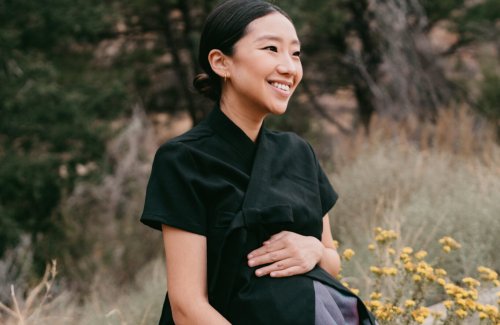
She Has Built A Community of Over 150k Parents Through Her Social Media Platform to Share Knowledge and Amplify the Marginalized

In a world where racial divisions persist and human dignity is often overlooked, Esther Park, a Korean American, has chosen to raise her voice and make a positive impact. Growing up as an immigrant child, she witnessed the struggles faced by her parents and the marginalized communities around her.

Esther’s journey led her to work with Liberty in North Korea, a non-profit organization that rescues refugees and advocates for their rights. She passionately believes in the inherent value of every human being, regardless of their background. Esther’s commitment to social justice extends beyond her work at Liberty in North Korea.

As a content creator, she has built a community of over 150,000 parents, using her platform to share knowledge and inspire others. Despite the challenges of balancing her various roles, Esther’s dedication to her daughter, her faith, and her mission remains unwavering. She aims to harness the power of social media to drive positive change, advocating for dignity, equality, and the betterment of society.

Through her journey and her inspiring message, Esther encourages everyone to embrace their influence and use it to uplift others, spreading love and serving those in need. Read through as Esther shares with us her experiences growing up as a Korean American, her work at Liberty in North Korea, her role in the church, and her journey as a social media influencer advocating for marginalized communities and give a voice to the voiceless. 

GROWING UP AS A KOREAN AMERICAN

Growing up in Seattle, Washington, a predominately majority culture city, I was the “popular Asian kid.” My friends would say things like “Oh but you’re the cool Asian.” There were some ways I clung to that. But it also unsettled me. A lot. It bothered me that certain people were determined as “in” and accepted or not by the color of their skin. But I never spoke up. Since then, I’ve witnessed many horrors of racism. And I truly believe in the need for racial reconciliation. Especially now, living as an Asian American through Covid-19, I’ve realized that I need to raise my voice.

MANY ASK IF I GOT INVOLVED BECAUSE I’M KOREAN, BUT MY ANSWER HAS AND ALWAYS WILL BE: “NO, I’M INVOLVED BECAUSE I’M HUMAN”. 

Growing up our family didn’t have much but I know that my mom always worked hard and tirelessly to make sure we had the best childhood growing up. We were fortunate enough that our hard working immigrant parents could make just enough, but I knew early on that it wasn’t the case for everyone. I went to school with friends who simply couldn’t get good grades or make it to all of their classes because they were busy working part time jobs while going to school to support their families from an early age. It was so heartbreaking for me. The experience as an immigrant child is unique yet unsettling. We see our parents working harder than most yet they struggle to even reach the middle class because of language barriers and learning to assimilate to a new culture. I always knew growing up that I’d want to make sure that I could do everything in my power to help minorities and to help those that didn’t have a voice.  

I’ve also spent almost my whole life in the church during ministry and mostly my focus has been on local outreach and missions. I currently oversee our City Partnerships ministry which is where me and my team are able to give our church members an opportunity to serve the city of Los Angeles that may be living under the poverty line. A few of the organizations that we work with is LA Mission, which is a non profit that works with the houseless population in Los Angeles to empower them to get back up on their feet and also with a non profit called Lincoln Heights Tutorial program that is a non profit with a mission to serve underserved and overlooked youth of East Los Angeles. They focus on making a local and significant community impact. They do this through a combination of tutoring services to close the academic gap, and youth programs to prepare teens for life after high school.

THE ROLE MY FAMILY PLAY IN SHAPING MY VALUES, PASSIONS, AND WORK

My mom immigrated to the States when she was in High School, as the eldest she was busy helping my grandparents with language barriers and her and my aunts and uncles all helped with their gas station. My dad came sometime after College, he started off as a dishwasher at a Sushi restaurant and eventually made his way up and now is a Sushi Chef and restaurant owner that is well known for some of his rolls in menus at different Sushi restaurants. He is also known for making Sushi for some of the top Major League Baseball players and South Korea baseball teams. My family came with absolutely nothing besides the thought of raising their families to achieve the “American dream”. I’m sure their eyes were opened to the brokenness of this country, but they worked hard to give their children everything. 

In many ways, my family and a lot of immigrant families were looked down on, this from an early age made me realize that I would never look down on someone for being different. I believe that we are all thread together as humanity and that we all must work together in helping this world become a better and brighter place.

Processed with VSCO with a6 preset

WORK AT LIBERTY IN NORTH KOREA

I’ve spent most of my late 20s working with Liberty in North Korea – a non-profit that rescues North Korean refugees hiding in China. Many ask if I got involved because I’m Korean, but my answer has and always will be: “No, I’m involved because I’m human”. What first sparked my interest in this issue was because I saw other human beings being treated less than just based on the circumstance or situation they were placed in. I hope that helping people dwelling in the margins, living every day in fear and helplessness, will never come with a condition. That we’ll continue to feel the tug to love and serve those in need. After all, we’re all human. 

Liberty in North Korea is a non-profit organization that believes that one day every North Korean man, woman and child will be free. We believe that every human being believes to have their basic human rights and dignities. We’re helping North Koreans escape a brutal regime through a 3,000-mile secret rescue route to freedom. It’s illegal for North Koreans to leave their country yet thousands of North Koreans risk their lives to reach freedom. Once they get into China, they are still not free. Because of the relationship that China has with North Korea, if North Koreans are caught by Chinese authorities they can be sent back to North Korea where they can face harsh punishments and imprisonment. 70% of women that are hiding in China are trafficked or sold as sex brides because of their difficult situations. This is where we come in to help them reach freedom through our rescue routes.

Once they have been rescued and resettled in South Korea and America, we also work with them in their resettlement journey to help them build self efficacy and reach success in their new lives. We also have a program called “Changing the Narrative”, unfortunately most of the world knows and sees North Korea based on what we see on the news which is about the Kim Regime or their nuclear missiles but we want to shift the focus to the 25 million innocent and real lives of the North Korean people, people who are just like you and I. 

I got involved with Liberty in North Korea when I went to UCLA, I helped start the chapter there and started having fundraisers very regularly and got involved with our headquarters that way. The summer of my senior year of college I went on a Christian mission trip to the border of China and North Korea that was life changing. I was able to hear from and befriend many North Koreans that were hiding in China and hear their stories. We would have to go to their homes at 3AM and turn off the lights and whisper to hear their stories. Right after that I interned with Liberty in North Korea where I traveled around the East Coast for 3 months sharing the stories of the North Korean people for hundreds of people. During that internship the HR manager called me and asked if I wanted to apply for a position and working at Liberty in North Korea was my first full time job after graduating at UCLA. 

BUILDING A COMMUNITY OF OVER 150K PARENTS AND PARENTS-TO-BE

During my maternity leave when I was able to step away from my day jobs to recover and to take care of my newborn, I was able to find a way to do something fun and meaningful. I spent a lot of time when my newborn was napping to learn about parenting and different methods and ways to ensure that my daughter was getting the best rest and care possible. I started posting my journey on Instagram and was able to build a following on Instagram and Tiktok of over 150,000 parents and parents-to-be in a matter of 3 months. It was an innovative way of creating value based on my circumstance. I’ve always believed that people come first, so this new venture I’ve entered into has always been about my community. I love being able to engage with them and share what I’ve experienced and learned so that they can learn from my mistakes and so that I can learn from them as well. 

BALANCING WORK AT LIBERTY IN NORTH KOREA,CHURCH, AND SOCIAL MEDIA

To be honest, it’s been hard. But I try to focus on my work at Liberty in North Korea from 9-5 and focus on Church ministry and content creation during the evenings or on weekends when Shiloh is asleep. But when Shiloh is awake I try to interact with her and spend as much time with her as possible. It’s important to me that she sees a mom that isn’t always working and on her screen but that is interacting with her and always putting her first. To be honest, a lot of this is of course because I am passionate about the work that I do but it’s also a means to a way to provide a life to Shiloh where she can flourish and grow in some ways that I may not have been able to. She is my ultimate motivation. 

CHALLENGES FACED IN VARIOUS ROLES, AND HOW I’VE WORKED TO OVERCOME THEM

I think the work I’ve done at non-profits isn’t very “cool” or “flashy”, it’s hard to get people to care about these issues, so that has always been very difficult. I love that there has been a huge movement of young individuals that have risen up to use their voices. For example, there was so much attention around the Black Lives Matters movement and the Stop AAPI Hate movement, which is so encouraging to me. It made me so happy to know that this type of awareness could be made. But it’s been heartbreaking to see that so few people in the world know about what’s going on in North Korea. The UN has deemed that North Korea has one of the greatest human rights crises in the world, yet I feel that there is little to almost no focus in the media on North Korea.

I know that it’s a complicated issue but they need our help. I oversee the grassroots movements of students and supporters at Liberty in North Korea and although it’s been discouraging at times, I am so grateful for the consistent supporters that we have all over the world. We have over 100 student and community led LiNK Teams all over the world that I have the privilege to lead and oversee. They are the ones that are showing up and helping to change the narrative to focus on the North Korean people. 

HARNESSING SOCIAL MEDIA TO DRIVE POSITIVE CHANGE TO ADVOCATE FOR DIGNITY AND EQUALITY

I think what I’m passionate about is two fold:

  1. When people are not treated with dignity and care, I believe that all human beings deserve this. 
  1. When people are suffering because of the lack of resources that they have, when there is an abundance in the world that ought to be shared.

So when it comes to these two areas, I want to be able to use my platform to share about what’s going on in the world and how we can help. For example, sharing different go fund me’s and fundraisers, sharing opportunities to help a specific person or community in need, starting my own fundraiser, sharing ways to contact your congressman or senator to push for change, etc. I have been able to raise over $40,000 holding fundraisers for Liberty in North Korea and other charities that I’ve mostly been able to leverage through my social media channels. 

ADVICE TO MOM CONTENT CREATORS  LOOKING TO MAKE A POSITIVE IMPACT THROUGH SOCIAL MEDIA 

I really don’t like the word “influencer”, but what I do want to share is that we indeed are all influencers whether small or big your following. There will always be someone that is influenced by you. You may be influencing your child everyday because they look up to you and learn from you just by watching you. You may have watched a good Netflix show that you’ve told all of your friends about. You may have taught your mom and dad how to use the latest app on their smartphones. We are all influencing others in some way or another, but whether we are influencing people to do good or to do bad, is the choice that we get to make everyday. My faith is very important to me and something that I have always lived by is to love God and to love others.

I know that God has placed me on this earth to love others and to always put others before myself. But whether you believe in God or not, I’d want to encourage other moms that want to make a positive impact in the world to always think of the other and to always look at everything you do (including social media and content creation) with the lens of “how can I love or serve the other today”. I know that everyone is fighting their own battles and struggling so I try to find ways to make people smile through my content and if that’s the way that God is using me as a channel of His love and blessing, then I’m grateful for that opportunity. 

CONNECT WITH ESTHER

Instagram: @estheryunpark  

Tiktok: @esthersoyunpark 

Youtube: Esther Soyun Park

fb-jpeg

News

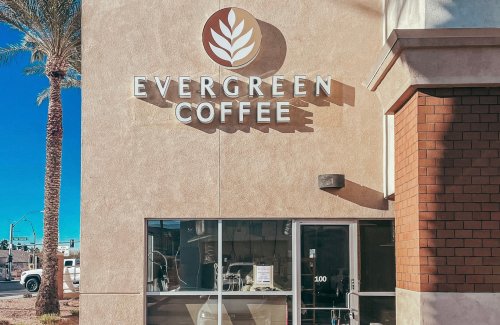
Henderson Welcomes New Asian-Owned Coffee Shop Inspiring the Asian Community

Henderson, Nevada has recently welcomed a new coffee shop that not only offers a unique Asian twist but also serves as a place of representation and empowerment for the community.

In the spirit of celebrating Asian American and Pacific Islander Heritage Month, local business owner Abel Garcia introduces Lovely Mempin to KTNV, the proud owner of Evergreen Coffee, who aims to inspire and empower fellow entrepreneurs from similar backgrounds.

Owning a business has always been a cherished dream for Lovely, driven by her desire to succeed in a society that often limits opportunities for minorities.

“Growing up I felt like there was a very defined narrative of what it meant to be Asian and I struggled with that because I felt like I was never good enough to be Asian or good enough to be American,” Lovely said to KTNV. She was originally from Manila, Philippines, moved to California, and eventually to Las Vegas.

Image Source: Linkedin / Lovely Mempin

Evergreen Coffee showcases a diverse range of Asian delicacies, including the peach mango pie from Lovely’s childhood and Indian-style toast, which breathe life into her cultural heritage.

Customers like Kyle Wong find solace in businesses like Evergreen Coffee, as they provide a sense of belonging and allow genuine representation of Asian culture. Wong appreciates establishments that bring forth authentic Asian experiences, such as tea businesses that evoke a nostalgic sense of home.

Aside from providing a delightful Asian-inspired coffee experience, Evergreen Coffee also symbolizes the strength and resilience of the Asian community in Las Vegas. Through her business, Lovely seeks to inspire others in the Asian community and to set an example for them to be bold and to take risks.

Featured Image Source: FB (Evergreen Coffee)

341742102_699791085234766_8776330555256744004_n-jpg

Stories

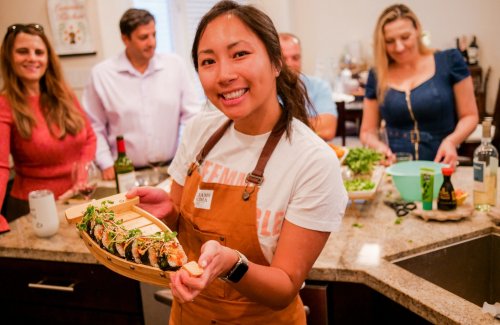
She Started A Sushi Side Hustle After Getting Engaged, Generated $100K One Year Later For Her Wedding

Whether you’re planning a wedding, considering starting a side hustle, or simply looking for some inspiration to pursue your passions, this story is one you won’t want to miss.

Weddings are supposed to be one of the most memorable moments in a couple’s life, but the reality is that the cost of making that dream a reality can be overwhelming, especially for Asian weddings – with the elaborate customs and traditions, and the pressure of inviting every distant relative, including aunts you may not even know.

This is why last year, Lavinia Doan (Bao Nhu) decided to start LAV SUSHI, shortly after getting engaged. She wasn’t sure how to come up with funds for her wedding, and as a daughter of refugees, she had to start from scratch.

In a year of engagement, Lav achieved a milestone: she was able to save up $100K from this side hustle that she used to pay for her wedding. From being a one-woman team, her husband has now joined her in her sushi journey.

FOR THE LAV OF SUSHI

Lav is originally from DC, but she moved to Texas about 5 years ago for a job in oil and gas. She was supposed to work off-shore as an engineer in South America, but due to COVID, she was sent to various places like Midland, Carlsbad, and West Virginia. Although not the most exciting places, she tried to make the most of it by expensing meals, specifically sushi, which she loved. However, she found that the sushi in those places was terrible, so she started making her own.

Lav enjoyed making sushi, but there was a lot of prep work involved, so she started inviting friends over for sushi-making parties to share her passion with them. For her, having friends and family over for a meal was a way to show that she cared for them. Eventually, she left her job in oil and gas and started working in tech, where she was fully remote. Missing the human interaction from her previous job, she began seeking out ways to meet new people.

Being an extroverted person, Lav decided to list sushi classes on Airbnb Experiences as a way to meet people and share her passion with them. What started as a passion project soon turned into a side hustle when she got engaged and needed to find a way to pay for her wedding.

They started with sushi classes which are still their bread and butter, but have since expanded into catering, and homakases (omakase at home).

CHALLENGES OF STARTING HER BUSINESS

It was only two months after the first few classes when Lav got engaged.

Lav and her partner, Dan, started the wedding planning process and quickly realized that the cost of their dream wedding was almost triple what they had planned for. Post-COVID backups and inflation made for an expensive wedding. She knew that they had to either sacrifice their vision for the wedding or find another way to save up.

For them, the wedding was more than just a party to celebrate their marriage; it was an opportunity to give back to their friends, family, and colleagues and treat them to a fun weekend. They felt positively impacted by the people around them and wanted to return the favor at their wedding.

Starting her own business posed the biggest challenge for Lav as she struggled to manage and prioritize her time. In addition to working full time and planning their wedding in the US and Vietnam, she also wanted to maintain a semi-normal social life. She enjoyed spending time with friends, family, her partner, and even alone time. The business was a one-woman show for a long time until she realized that it wasn’t sustainable.

“I would joke with my partner that we would be able to afford the wedding we wanted but wouldn’t have anyone to invite because I hadn’t been able to find time to spend time with friends and colleagues, even my dog and partner were feeling the neglect!” Lav shared. She sacrificed sleep, workouts, and nutrition.

Many nights, after a long day of work and sushi-making, she questioned if it would all be worth it.

EFFECTIVE TIME MANAGEMENT WHILE RUNNING A BUSINESS AND PLANNING A WEDDING

In terms of time management, Lav admits that she is still learning how to do it well.

“I am a normal person and sometimes find myself spending too much time on my phone mindlessly scrolling, forgetting tasks that need to be done, and inefficiently bouncing from one task to the other. But I think it’s okay!” Lav said, and shared a few strategies that have helped her become more productive:

  • Waking up early – She wakes up early every morning at 6 am to work out at a pilates studio that charges her if she misses a class. This incentivizes her to start the day early and avoid the temptation to stay in bed and scroll through her phone.
  • Blocking off hours – She blocks off hours in her schedule to focus on specific tasks, which helps her prioritize and manage her time more effectively.
  • Outsourcing – She has learned to outsource tasks that don’t bring her joy or are too time-consuming. This includes hiring people to help with her sushi business and outsourcing tasks in her personal life.
  • Knowing your worth and what your time is worth – This helps her weed out opportunities that aren’t worth pursuing from a time, profitability, and brand standpoint.
  • Never compromising the mission – Her mission is to bring the joy of sushi into people’s homes and educate them along the way. She refuses to sacrifice the quality of ingredients or cut costs to increase profitability because the joy and fulfillment of bringing this experience to people’s homes are more important to her than money.

MEMORABLE MOMENTS AND EXPERIENCES

Most of Lav’s friends know that she really likes a challenge, so much so that she feels like being purposefully unprepared presents its own challenge.

Lav signed up for the Houston Marathon, her second marathon ever at that point in time, which she had not trained at all for. She also accidentally overbooked a public sushi class for that same evening in her home. It was her biggest class so far.

So she ran the Houston Marathon, walked to a bar to get some drinks with friends, and then went home to start prepping for her sushi class. LAV SUSHI was still very young at this point, so procedures weren’t very optimized at that point. “The class went well, but there were definitely moments where I thought I would drop the rice pot because my legs were quivering, and I could definitely tell that some guests were uncomfortable by how full the class was. Let me tell you, I never overbooked a class again,” she shared.

That’s not the end of it. After class, Lav cleaned up and started packing for a 2-month ski trip in Colorado. She couldn’t remember if she slept or not, but she did manage to catch her 5 am redeye the following morning.

“Sometimes I think about that day, and get tired just thinking about it. But I really did show myself what I can get done in a day. There are countless amazing experiences I have had with clients that I could write a novel. I have made so many friends and connections through the business, and am thankful to have gotten to know these people!” she adds.

EXCITING NEWS FOR LAV SUSHI

Despite all the challenges that Lav faced in running her business, she was able to generate $100K in one year for her wedding.

Lav and Dan got married just a month ago and they are now taking a break from their Houston-based business to focus on personal matters and other projects. They will soon embark on a six-week expedition to Asia to celebrate their second wedding and honeymoon adventure.

Their dedicated team will be taking care of LAV SUSHI in their absence, ensuring the city continues to enjoy the sushi experiences they offer.

In the meantime, they have some exciting news to share:

“We have been working on launching LAV SUSHI in Atlanta and it is fully operating and ramping up. We would LOVE some AHN support in ATL!”

WHAT MAKES LAV SUSHI UNIQUE AND WELL-LOVED

Lav thinks that the reason why clients of 2000+ love LAV SUSHI could be due to the personalized experience that is tailored to their taste preferences, with each menu being curated to suit their needs.

LAV SUSHI also offers unique catering menus that include a live chef and unlimited sushi, which always brings a “wow” factor to the guests. “People love that they can watch the chef’s roll the sushi right in front of them, and that they can make any requests on demand,” Lav said.

Another highlight of LAV SUSHI is their omakase concept, where they curate a surprise menu within the clients’ budget, which they can enjoy in the comforts of their own home.

CONNECT WITH LAV

Instagram: @lavsushi

Facebook: @lavsushi

Tiktok: @lavsushimaking

kelly-bit-sublima-jewelry-headshot-png

Stories

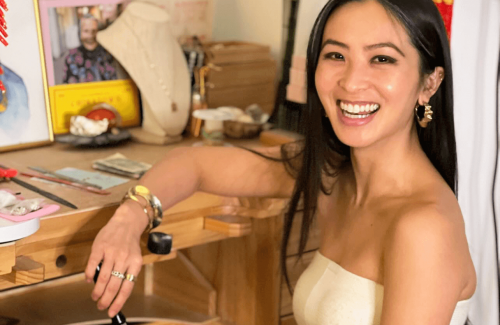
This Former Journalist Pursued Her Passion of Creating Wearable Art Through SUBLIMA Jewelry

In a world that often values practicality over creativity, it can be challenging to pursue our passions and follow our hearts. But for Kelly Bit, the founder of SUBLIMA, it was a calling that she couldn’t ignore.

After years of working as a financial news journalist, Kelly realized that she missed the creative arts as a major part of her life. She started spending her free time making jewelry, and the intentional lifestyle switch brought her a lot of fulfillment.

SUBLIMA is a sustainable, handmade jewelry brand, referencing subliminal messages that produce hidden feelings in our everyday lives. Art imitating life.

In this article, we will explore Kelly’s journey of following her passions, the artistry and intentionality behind her jewelry, and how she is bringing her love of art and design to the world through SUBLIMA.

HOW IT ALL STARTED

I’ve always loved crafting. I’m an only child, and when I was very young, I spent a lot of my time drawing or creating cardboard models of things that I found delightful. I’ve always been captivated by beautiful forms and well-loved objects in our every day and creating artful homages to them.

During my career as a journalist, I missed crafting and the creative arts, so I started spending my free time making—drawing, painting, sewing, and creating jewelry. I wanted to invest in one of those hobbies in a more disciplined way, and I saw jewelry as having commercial prospects. I enrolled in metal smithing and wax carving classes after work, and that’s what gave me the skills and confidence to start a jewelry brand.

THE CREATIVE PROCESS

I love commemorating ordinary moments of delight by capturing something of their essence through elevated and artful jewelry that I make by hand.

I have many delightful memories centered around food and the people I enjoy it with, so that’s one reason why many of the pieces are Asian food inspired. I also tend to notice beautiful and aesthetic aspects of food all the time—like the way milk tea splashes with movement, or the mesmerizing repeating folds of dumplings—so those types of details make me want to highlight how interesting they look through an unexpected art medium.

The way that I make my pieces is by carving wax by hand to create wax prototypes. The prototypes are then molded, and from the molds, the pieces are cast in recycled brass or sterling silver and polished and assembled by hand.

HER APPROACH TO SUSTAINABILITY IN MAKING JEWELRY

The casting company I work with, which is based in midtown Manhattan and family-run, uses a New York-based company called United Precious Metals to recycle their metal and for purchasing refined recycled metal to use in new castings.

In choosing to partner with my casting company, their ability to source recycled metals was important, and I love how I’ve been able to offer sustainable jewelry since day one. It’s important to me because using recycled metals compared to newly mined metals reduces greenhouse gas emissions and conserves natural resources. And I’m thrilled with the quality of the pieces—the recycled brass and sterling silver are both beautiful bright colors, and I provide a polishing cloth to keep the pieces shiny forever since none of the casted pieces are plated.

WHAT SHE HOPES TO COMMUNICATE WITH HER DESIGNS

I love seeing how different people style the jewelry and how they implement their vision of themselves—what they want to project into the world through their self-expression—using the jewelry as part of their toolkit.

My general hope is that the pieces can be marveled at as wearable works of art and that conceptually they serve as a reminder to see an elevated beauty in everyday moments. For some styles, like those based on Asian food or other cultural motifs, I’d love for people to wear them with a sense of pride or appreciation of Asian culture.

WHAT SETS SUBLIMA APART FROM OTHER BRANDS

Aesthetically, I aim to make jewelry that looks unlike anything else in the market, at once striking and timeless, with quality that lasts a lifetime. My designs are unusual and eye-catching, somewhat abstract, and can be styled as edgy or classic. Executing these concepts while drawing inspiration from my Chinese American heritage and Asian culture helps set SUBLIMA even further apart from the rest.

The rise in anti-Asian hate after the pandemic made me turn specifically to Asian culinary delicacies as a source of inspiration, to create symbols of cultural pride by elevating the beauty of Asian food through the art of jewelry in a highbrow way, and it’s not something that I’ve seen done by other artists.

Since the pandemic, and even before, there’s been a growing and palpable demand for Asian products and stories. There’s an appetite for consumer brands to create products that help reinforce the emotional connection to identity and culture. The way that I’ve been doing that with SUBLIMA is a two-pronged approach: first through visual representation, and more meaningfully, I’ve pursued partnerships with local nonprofits serving the Asian American and Chinatown communities here in New York. Since 2020, SUBLIMA has donated $65,000 to nonprofits supporting NYC’s Chinatowns, after-school programming, affordable housing, and food security.

KELLY’S VISION FOR SUBLIMA

My long-term vision is to be the premiere jewelry brand for Asians and Asian Americans and to have the jewelry represent not only high art but humanism and community impact.

One of my biggest desires and goals is for my work to gain more exposure so that its inspiration and aesthetic beauty reach more people. That means collaborating with more organizations and people who share SUBLIMA’s values, being part of events where I can meet people and build connections, getting my jewelry into more stores, and working with more cultural gatekeepers, such as editors or stylists, to spread the word.

CONNECT WITH KELLY

Website: sublimajewelry.com

Facebook: @sublimajewelry

Instagram: @sublimajewelry

Tiktok: @sublimajewelry