Awaken* newsletter

December 9, 2024

SHARE:

In this month’s edition of the Awaken* Newsletter, we speak with Kristy Kim, Founder and CEO of TomoCredit, a fintech startup focused on improving access to credit for underserved consumers. By using AI to evaluate real-time cash flow data rather than traditional credit scores, TomoCredit connects consumers with lenders.

Kristy discusses her journey as an immigrant, an Asian female founder, and an entrepreneur working to transform the financial industry. Through her leadership, TomoCredit aims to provide more people with better access to capital and lending opportunities.

Can you start by giving us an overview of your company and what you’re trying to solve?

Kristy Kim: Sure! At TomoCredit, our mission is to bridge the gap between underserved consumers and lenders using AI technology. We are focused on serving individuals who have been left behind by traditional financial systems, especially those without credit scores or with limited credit history.

There are millions of people in the U.S. who are underbanked, and the financial institutions that could potentially help them either don’t have access to their data or don’t understand their risk profile. We leverage AI to evaluate consumers based on their cash flow instead of relying solely on traditional credit scores. This enables us to match these individuals with lenders who are willing to serve them without taking on additional risk. Our platform helps both consumers and lenders—consumers get access to capital, and lenders expand their market in a low-risk way.

What motivated you to start TomoCredit?

As a first-generation immigrant from South Korea, I moved to the U.S. at eleven. In my early twenties, I faced the challenges of building my own credit history. After graduating from UC Berkeley, I worked in investment banking.

Despite having a stable income, I was denied an auto loan five times because I lacked a credit score. This experience highlighted a significant gap in the financial system, where many immigrants, young adults and many other underserved communities are excluded due to the absence of a credit history. After being turned down multiple times, I knew something had to change. I saw that the traditional credit system wasn’t serving millions of people, particularly immigrants, who had the ability to repay but lacked a credit history to prove it.

That experience of being excluded from the financial system really motivated me to find a way to help people like myself access the credit they needed. Determined to address this issue, I founded TomoCredit to provide credit solutions for those who, like me, struggle to access traditional credit avenues.

I wanted to create a system that didn’t rely on traditional credit scores but instead used alternative data, like cash flow, to assess creditworthiness. The idea was to connect underserved consumers to lenders in a way that wouldn’t increase their risk. TomoCredit was born out of this desire to make the financial system more inclusive—so others wouldn’t face the same rejections I did, and would have the chance to access capital and thrive.

As an immigrant founder, have you faced any challenges or biases in fundraising or building relationships with big institutions?

Kristy Kim: Yes, there are definitely challenges that come with being an immigrant founder, and at times, it can feel like an uphill battle. But, interestingly, my background has also played to my advantage.

As an immigrant, I have a unique lens on the problems facing underserved communities. I know firsthand what it’s like to struggle with the traditional credit system. I’ve faced the same barriers that many of our customers face, and that gives me an edge when I’m speaking to financial institutions. I’m able to say, “Look, I know my customers better than anyone else. These people are creditworthy, but they’re being overlooked by the traditional system.”

There is some bias, of course, especially when you’re dealing with legacy institutions, but I think they also recognize that I bring something different to the table—an intimate understanding of the market and the customers they often don’t have access to. Lenders are willing to listen because they know that by partnering with us, they can expand their pool of potential customers without taking on additional risk.

You’ve been in this industry for over five years now. What keeps you motivated despite the challenges you’ve faced?

Kristy Kim: That’s a great question. Honestly, the progress we’ve made keeps me motivated. Every year, I see the interest in our approach growing, and it reinforces that we’re heading in the right direction.

When we first started, it felt like I was an outsider trying to convince traditional financial institutions to embrace an entirely new way of evaluating credit. But now, year after year, we see more and more mainstream players realizing that there’s a huge market for underserved consumers—and that these consumers are creditworthy if we just use the right tools to understand them. It’s exciting to be at the forefront of this change.

For me, it’s not just about building a business—it’s about creating lasting impact. The U.S. consumer credit industry is worth over $4 trillion, and the fact that we are focusing on a largely ignored segment of that market feels like we’re making a real difference. And, of course, as a founder, seeing our technology evolve and improve with time and data is incredibly motivating.

How does your solution differ from other competitors in the market who are also targeting underserved consumers?

Kristy Kim: The key differentiator is that we don’t just rely on traditional credit scores to assess risk.

Our AI model is powered by cash flow data—essentially, we evaluate consumers based on their spending and income patterns, which gives a far more accurate picture of their financial health. Over the past five years, we’ve accumulated a wealth of data that allows us to refine our model, and with every new data point, we get better at underwriting.

Unlike competitors who may be using generic data or building from scratch, we have a more granular understanding of how underserved consumers behave financially. Additionally, the beauty of our system is that we’re not just looking at data from one financial institution—we’re aggregating data from multiple sources. Our customers might have accounts with multiple banks, and that gives us a fuller picture of their financial habits. In comparison, other companies might only have access to data from one bank, which limits their ability to assess risk accurately.

As a founder, what has been the most rewarding part of your journey so far, and what has been the hardest?

Kristy Kim: The most rewarding part has been seeing the validation from both the industry and our customers. When leaders of financial institutions tell me that TomoCredit makes sense, it’s incredibly validating. It’s a feeling of affirmation that, yes, we’re on the right path. But it’s also rewarding to see the real-world impact we’re having on people’s lives. We’ve helped thousands of people access capital who otherwise wouldn’t have had the chance.

On the flip side, the hardest part has been dealing with the mental burden of being a startup founder. When things are going well, it feels like everything is moving at full speed, but when challenges arise—whether it’s fundraising hurdles, market uncertainty, or hiring struggles—the pressure is immense. Unlike larger companies with more resources, startups have less margin for error. It can feel like one wrong move could jeopardize everything, and that can be emotionally exhausting. But it’s in those moments that you really find your resilience, and you learn that, no matter how tough it gets, you have to push forward.

As a seasoned founder, what key lessons from your previous startup experience have you applied to building TomoCredit?

When I launched my first company, I was in my early twenties, full of energy but lacking experience. It was a trial-and-error journey, where I learned a lot, but I quickly realized that having a clear vision and understanding the real impact you want to make is crucial.

Starting TomoCredit was a completely different experience. This time, I approached it with a clear strategy, having learned the importance of tackling a problem that I was personally passionate about. My previous startup experience taught me how to make more strategic decisions, prioritize what matters most, and stay resilient through the inevitable ups and downs of entrepreneurship.

What advice would you give to aspiring founders, particularly those who may be feeling discouraged after a tough year?

Kristy Kim: My advice would be to stay grounded in your purpose and conviction. It’s easy to get distracted by the ups and downs of the startup world, but at the end of the day, your mission should drive you more than the fear of failure or the setbacks you face along the way.

When I first started my company, it wasn’t about just building a business—it was about solving a real problem that I deeply cared about. The passion for the idea needs to be stronger than the fear of failure. Even if things don’t work out the way you hope, you can still be proud knowing that you tried to create something that could have made a real impact.

The most successful founders I know are the ones who are able to maintain a strong sense of purpose, even when it feels like everything is falling apart. If you believe in what you’re doing and are committed to the long-term vision, that will carry you through the hard times.

What are some recent key achievements or milestones that you’re excited to share?

Kristy Kim: Thanks for asking. First, our AI-driven platform continues to help underserved consumers access credit by using cash flow data to connect them with lenders.

We’ve also made significant strides in improving our underwriting capabilities by leveraging years of data to assess creditworthiness more accurately. This year, we paused issuing new credit cards to focus on refining our AI and underwriting technology. While we haven’t issued new cards yet, we’re still accepting customers and offering other financial services. Additionally, our partnerships with larger financial institutions are also growing, with increasing interest from major players. These collaborations are essential to our mission of expanding access to lending for underserved communities.

And lastly, on the team front, we’ve made several key hires, including the former CTO at Experian and the former CEO of LegalZoom. Their expertise in open banking and scaling high-growth companies will help us continue to expand our offerings and further our mission.

Looking ahead, what’s next for TomoCredit?

Kristy Kim: We’re expanding our offering, bringing more lenders into the network, and continuing to refine our AI technology to provide better risk assessments.

We’ve been growing the B2B side of our business over the last year, and we’re seeing significant interest from bigger players in the financial sector. We’re also planning to expand our product offerings to include more types of loans, like auto loans and mortgages, to help more customers get the access they need.

We’re also actively hiring, which is very exciting for us. We’re looking for a talented marketing person to help us build our brand and spread the word about what we’re doing. Our mission is to make financial access easier for everyone, and we’re excited to continue growing and impacting even more lives.


Kristy Kim’s journey proves that determination, a clear vision, and a deep understanding of your market can break through even the toughest barriers. At TomoCredit, she’s not just building a company; she’s seeking to reshape how credit is accessed, especially for those often left behind by traditional systems. Stay tuned for more updates on TomoCredit’s journey, and learn how they’re challenging the status quo while creating new opportunities for underserved communities.

Author: Donna Yu

Related Articles

image-png

Stories

The Day a Las Vegas Slot Machine Changed June Zhu’s Vision for Entrepreneurship

When June Zhu immigrated to the United States, she wasn’t chasing certainty.

She was chasing the possibility.

Like millions of immigrants before her, she believed in something uniquely American: that regardless of where someone came from, if they worked hard, solved real problems, and created value for others, they could build a better future.

That belief led her to found ChargerGoGo.

At first glance, ChargerGoGo looks like a portable phone charging company. Today, its network spans more than 6,000 locations across all 50 states, serving more than one million users.

But ask June what business she’s really building, and her answer is unexpected.

“I’m not trying to just build the biggest charging network,” she says. “I’m trying to build one of the largest entrepreneurship platforms.”

The Question Every Founder Faces

That vision wasn’t obvious in the beginning.

Like countless founders, June spent years trying to answer the same question that keeps entrepreneurs awake at night:

How do you build something nationally without billions of dollars from venture capital?

Every new market required more equipment.

Every new customer required more investment.

Growth always seemed tied to raising more capital.

The Las Vegas Moment

Then one ordinary afternoon in Las Vegas, while talking with her team, she witnessed something that unexpectedly gave her a new perspective.

A few teammates each pulled a small amount of cash from their wallets and decided to play a slot machine together.

Nobody risked very much.

If they lost, the downside was limited to a few hundred dollars each. But if they won, everyone shared in a prize far greater than they could have won individually.

“It wasn’t about the slot machine,” June recalls with a smile. “It was about the ownership.”

She watched people willingly contribute because everyone had a stake in the outcome.

At that moment, the question in her mind changed.

Instead of asking, “How can I raise enough money to own every charging station?”

She started asking, “Why should I own them all?”

What if every charging station could become an income-producing asset for a local entrepreneur?

That idea transformed ChargerGoGo.

Rather than building a company that owned every charging station, June built a platform where local entrepreneurs could own, operate, and grow businesses under a shared brand.

Every charging station became more than hardware. It became an opportunity for someone to build recurring income and grow a business within their own community.

Building an Entrepreneurship Platform

For June, that model reflects something she has admired since arriving in America.

“The greatest strength of this country isn’t just innovation,” she says. “It’s that ordinary people have the opportunity to become builders.”

Instead of measuring success solely by the size of the network, she measures it by how many entrepreneurs it helps create.

Through ChargerGoGo’s distribution partner model, local business owners can build recurring income while expanding the company’s nationwide footprint. As the platform grows, so does the number of entrepreneurs building businesses of their own.

Why Ownership Matters More Than Ever

That belief feels even more relevant as artificial intelligence reshapes the global workforce.

While much of the conversation focuses on jobs disappearing, June believes the more important conversation is about creating more owners.

“The future shouldn’t belong only to companies with the most capital or the most powerful AI,” she says. “Technology should lower the barriers for everyday people to own businesses, generate wealth, and create opportunities for their families.”

That’s why she believes entrepreneurship is becoming more important, not less.

Her vision extends far beyond portable charging.

She imagines a future where platforms, AI, and connected infrastructure allow millions of people to own income-producing businesses that once required millions of dollars to build.

Redefining the American Dream

For June, that’s what the American Dream has always meant.

Not that success is guaranteed.

But that ownership is possible.

Today, when people ask what ChargerGoGo does, she could talk about charging stations, technology, or nationwide expansion.

Instead, she prefers a simpler answer.

“We’re building a platform that helps more people become entrepreneurs.”

Because in the end, June Zhu isn’t trying to build a billion-dollar company.

She’s trying to help build thousands of million-dollar entrepreneurs.

Perhaps that’s the most powerful way to measure success: not by how much one person owns, but by how many owners they help create.

Learn more about ChargerGoGo here:

📍Website

image-png

Stories

How Stephanie Lau Jensen Turned a Personal Identity Journey Into CULTR, a Marketplace for Cultural Brands

Stephanie Lau Jensen grew up between Hawaii and California. Like many Asian American kids raised in predominantly non-Asian communities, she learned early how to move between worlds. Parts of her culture stayed in the background, not because she pushed them away, but because the environment made it easier to leave them there.

She later returned to Hawaii for college, where her father is originally from. Being there placed her in a community where Asian culture was woven into daily life through food, language, and family traditions. It was not a rediscovery, it was a reminder of what had always been hers.

Years later, as a mother of three and a founder with a background in commercial real estate investing, she built CULTR, short for Created for Culture. A curated marketplace for AAPI  and third-culture families raising kids between cultures, one that makes cultural products easy to find and part of everyday life, not just special occasions.

A Birthday Conversation That Changed Everything

The idea for CULTR took shape at one of Stephanie’s birthday gatherings. She was talking with a close friend about identity and culture when a childhood friend overheard the conversation and joked that Stephanie used to be one of them before she moved to Hawaii and really leaned into her Asian side.

Everyone laughed. Stephanie included. But the comment stayed. It put words to something she had been sitting with for years. Culture is not something that automatically transfers to the next generation. It has to be lived daily. If it is not in the house on a regular Tuesday, it probably is not there at all.

When she became a mother and started looking for books, clothing, and toys that reflected her culture, she saw the problem clearly. The products existed. The founders were there, but their work was scattered across small websites and Instagram pages, invisible to most families who needed them.

The Platform She Wished Had Existed

Stephanie’s background in real estate investing trained her to look closely at markets and recognize opportunity gaps. As she continued discovering founder-led cultural brands online, she saw a clear problem: families who wanted these products had no easy way to find them.

That realization led her to build CULTR, a curated marketplace that brings modern cultural brands from around the world into one central destination. The platform highlights independent founders, many from Asian and immigrant communities, whose products carry culture through everyday objects, from children’s books to home goods, apparel, even everyday products you would have never known were made by AAPI makers. With a refined, modern aesthetic, CULTR presents these brands in a way that feels contemporary, approachable, and deeply connected to heritage.

Building CULTR came with its own challenges because the platform did not fit neatly into an existing category. It sits somewhere between a retail marketplace and a cultural storytelling platform, which meant Stephanie had to develop the platform while also helping people understand the vision behind it.

Bringing Culture Into Everyday Family Life

For Stephanie, culture often lives in the smallest everyday objects. A children’s book written in the language your grandparents spoke, a toy tied to tradition, or a piece of clothing that carries a story can shape how the next generation understands identity and belonging.

Alongside CULTR, she is also building PenPals Collective, a project designed to spark global curiosity and connection for children, and launching a podcast called Series M that explores career, motherhood, and identity. Each project reflects her interest in connecting people across culture, family, and generation.

Through each project, and while raising three young children, Stephanie continues working toward the same goal: creating spaces where culture is not something people rediscover later in life, but something families live with every day.

Learn more about CULTR here:

📍Website

2

Stories

Billionaire Heir Enters Wall Street’s Hottest Trade With $480B in Assets

Andre Koo Jr. isn’t just inheriting a financial empire, he’s also reshaping what it looks like in a new era of investing. 

From Taiwan to New York, his latest move brings a centuries-old legacy into one of Wall Street’s fastest-growing spaces. 

With K8 Capital, he’s betting that the future of wealth lies in doing more than just one thing well.

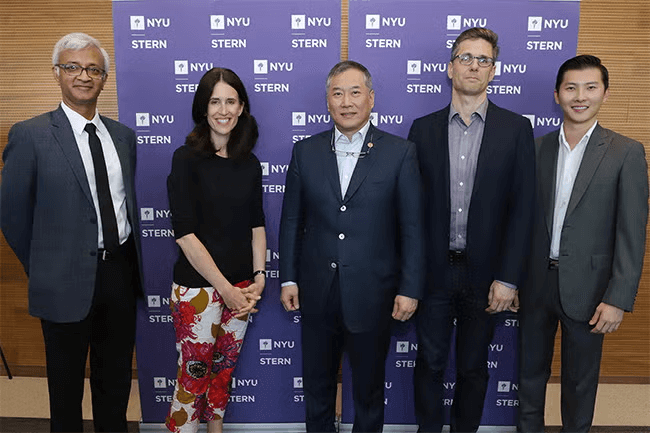
Image Source: NYU Stern

Building on a Financial Legacy

Andre Koo Jr. grew up in one of Taiwan’s most influential banking families, where scale and stability defined success. Today, that legacy spans a $16 billion family fortune and control of $480 billion in assets. But instead of staying within that system, he’s building something that looks very different.

K8 Capital, his new firm based in New York, is designed to be more flexible and forward-looking. It’s launching with a debut fund of at least $50 million, with a $500,000 minimum that signals who it’s built for. The focus is on US companies, along with early bets on AI and enterprise software, areas where growth is still taking shape.

Image Source: Sally Ride Science

A Dual Investment Approach

K8 is a fully integrated hybrid private credit and venture capital firm, combining short-duration, high-yield credit investments with long-term venture growth. Its dual strategy is designed to deliver both liquidity and capital appreciation, giving investors access to predictable income while still capturing venture upside.

What sets K8 apart is how it brings two distinct investment styles into one platform. It focuses on short-term credit deals that can generate returns relatively quickly, while also investing in startups that may take years to mature but offer strong long-term potential. This allows investors to earn steady income today while staying exposed to the companies shaping the future.

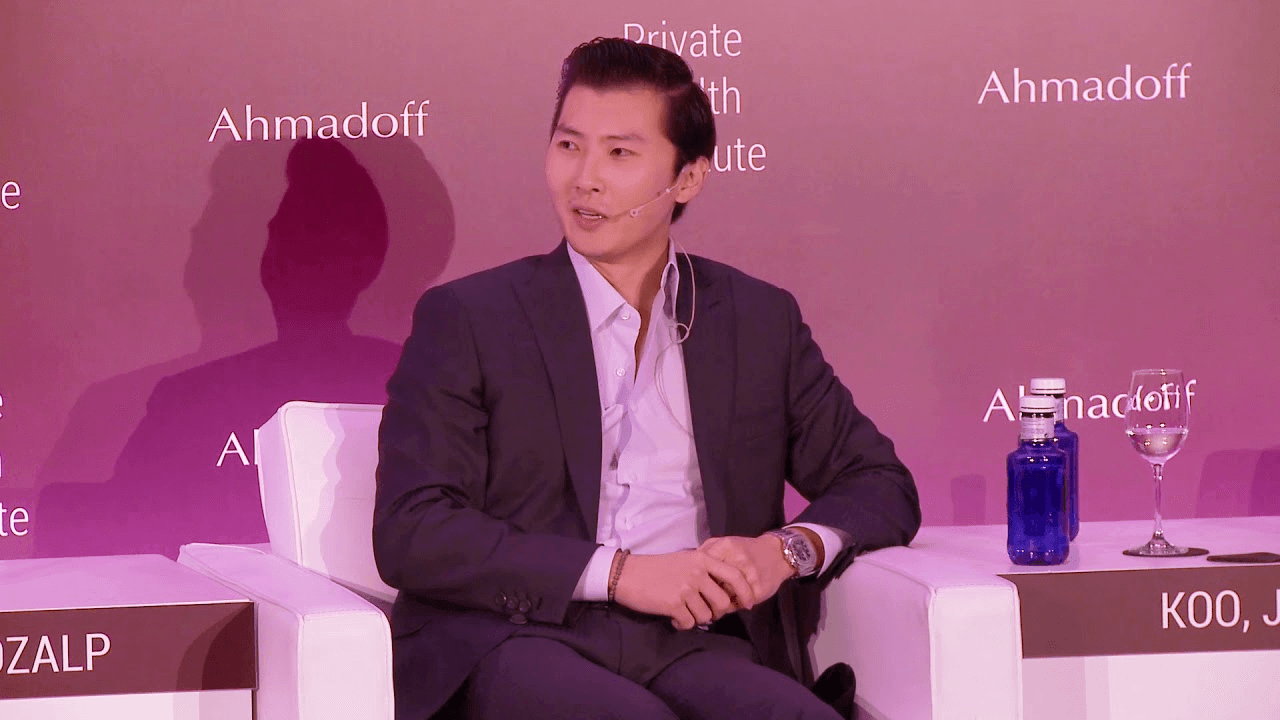
Image Source: @andrejrkoo (Instagram)

Entering a Rapidly Growing Market

Private credit has quietly grown into a market worth more than $1.5 trillion, as companies look beyond traditional banks for funding. Wealthy families like the Koos are moving in, seeing an opportunity to lend directly and capture higher returns.

K8 is already showing early signs of traction, with reported returns of at least 50 percent from short-term loans to US businesses. But for Andre, this isn’t just about performance. It’s also about carrying forward a legacy that began nearly 200 years ago with his ancestor Koh Lay Huan, while making sure it still matters in a very different financial world.

Learn more about K8 Capital here:

📍Website

IMG_0192-jpeg

Stories

8-Year-Old Lucas Ye Designed a Mascot That Travels to Space With NASA’s Artemis II Crew

An eight-year-old in California turned a simple drawing into something that will travel beyond Earth.

Lucas Ye entered a global NASA contest and watched his idea rise above thousands of entries from around the world.

Now, his creation is not just a sketch, but a real mascot preparing to float alongside astronauts in space.

Image Source: NewsBytes

From Sketchbook to Spacecraft

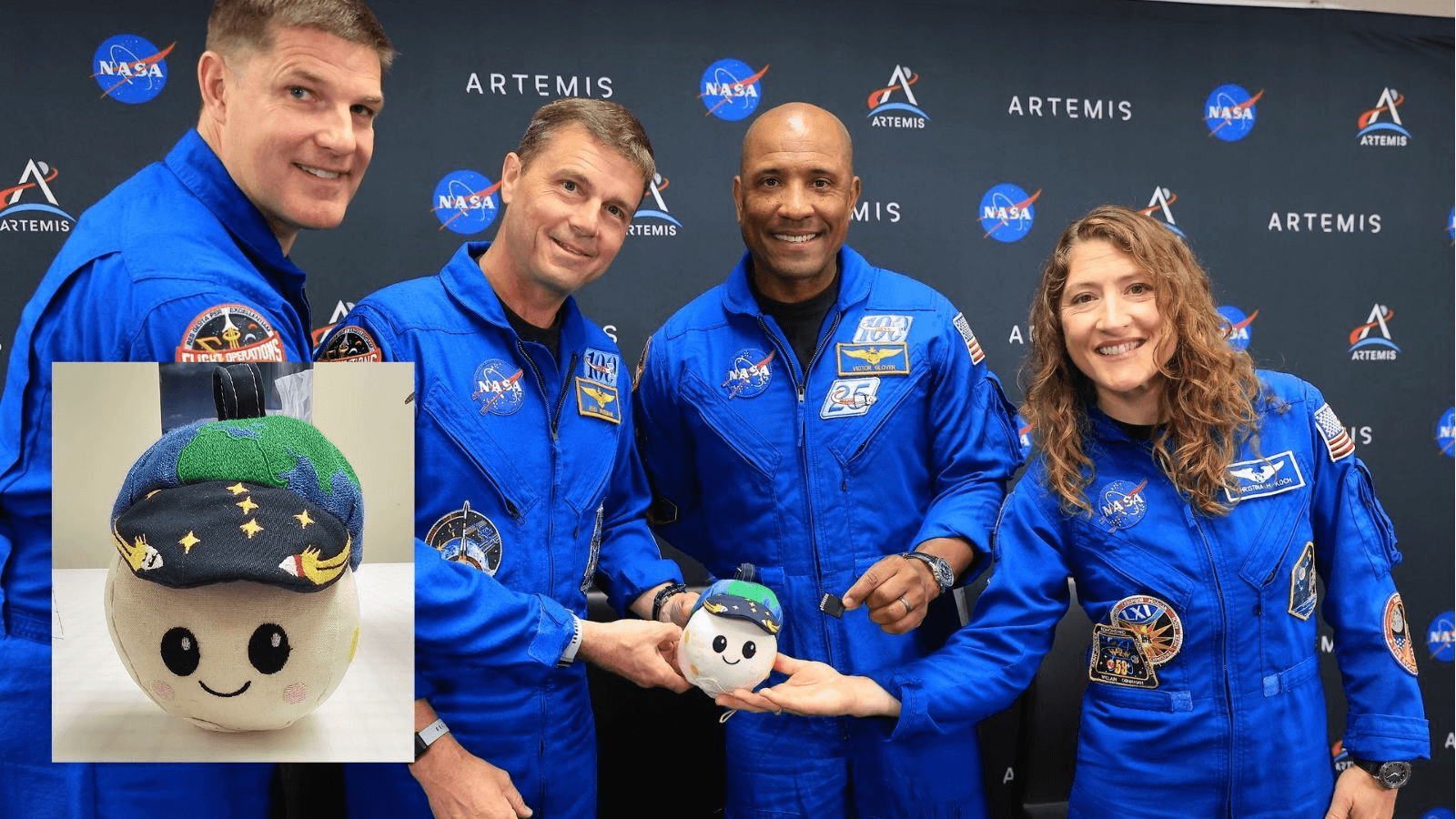
Lucas Ye was just eight years old when he decided to draw a mascot for the Artemis II mission, not knowing it would become something much bigger. His design stood out in a global competition, eventually winning and being transformed into a plush named Rise. What started as a simple idea on paper quickly earned a place inside a real spacecraft.

The journey from drawing to physical mascot shows how ideas can move fast when they resonate. NASA took Lucas’s concept and turned it into something tangible, something that could sit beside astronauts on a real mission. It is a reminder that creativity does not need years of experience to matter, it just needs a starting point.

Image Source: Sally Ride Science

A Small Toy With a Big Role

Rise is not just there for the ride, it plays a meaningful role inside the cabin. As the spacecraft reaches orbit, the plush will begin to float, signaling that the crew has entered zero gravity. It is a simple but powerful way to show a major moment in the mission.

NASA has a long tradition of using mascots like this, but this one carries a different kind of weight. It represents a child’s imagination becoming part of a real scientific journey, blending emotion with exploration. Lucas now joins a legacy of space mascots, showing that even the smallest ideas can make it all the way to space.