Awaken* newsletter

July 25, 2024

SHARE:

Wendy Wen, founder and CEO of pet CPG platform Antelope and co-founder of luxury handbag brand Senreve, shares insights on the early days of building the Senreve brand with her co-founder Coral Chung, creating their first iconic Maestra bag, and overcoming the challenges of scaling a startup. She reflects on the importance of focusing on vision, strategy, and hiring the right people, as well as maintaining resilience and equanimity as a CEO. Wendy also discusses her new venture, Antelope, her excitement for its potential, and the lessons learned from her Asian upbringing and entrepreneurial journey.

HanYue: Tell us a little bit about the early days of Senreve. And then what was the biggest challenge you had to overcome?

Wendy: You know, it was really just me and my co-founder Coral sitting across from each other in an empty conference room. We were borrowing an office space from one of our investors. And a lot of it was just kind of dreaming: thinking about what the brand could be. It was actually really, really fun. And I think because it’s before you have any metrics, any real product, anything. So anything is possible. In the early days of us, we were literally just trying to figure out what’s going to be our value proposition, positioning, and how we’re gonna get started. It was super fun. 

HanYue: That sounds fun. Tell us about your first “IT” bag, as you call it.

Wendy: Our first bag was the Maestra bag, which is a convertible bag that becomes a backpack. You can wear it in different ways: you can hold it over your hand on the handle, you can wear it as a crossbody, you can wear it as a shoulder bag, and then you can also wear it as a backpack. It fits a laptop, it’s water resistant, and it’s 100% made in Italy. It has all these nice compartments on the inside, so you can keep everything organized. It’s a beautiful bag that happens to be really functional, especially for the modern working woman who needs to carry a laptop. 

HanYue: Tell us a little bit about how you and your team created this popular bag.

Wendy: So I loved bags. Coral loved fashion. Personally, we just wanted something that was really beautiful and also worked with my busy professional life. So it kind of stemmed from a personal need. 

HanYue: Wow, that is amazing to hear. You really found a way to personally connect with the product that you’re building. Let’s switch gears a little bit, to what you’re currently building. Do you feel better prepared for a second go at entrepreneurship?

Wendy: Absolutely. Yes. There are always ups and downs in any startup journey, and I think I made a lot of mistakes with Senreve. 

I think, first of all, I didn’t necessarily focus on the important things. I was always kind of doing urgent things. Graham Weaver (a lecturer at GSB and founder of Alpine Investors) talks a lot about that matrix of important, not important, urgent, not urgent. As a founder, you really want to be operating in the non-urgent, important bucket. 

An example of what I didn’t focus on enough before would be our hiring culture. Instead, I was focusing on getting things done, which in retrospect, might not have been the best use of my time. For Antelope, I’m much more disciplined about how I spend my time. I really believe that the founder and CEO job should just be vision and strategy. Setting that vision, getting alignment across your team on that vision, helping your team truly understand how their work and their outcomes tie up to the grand vision, and what the dream outcome needs to look like. That’s one big rock for me. 

Another one is just hiring the right people. The people who are going to be better than you, at each division, at each function. Hire the best people who will help you dream up something better than what you can dream of, and then make it into a reality. So now I am always pushing for the dream candidate. After that, it’s about developing them, keeping them motivated, and building the culture so that they can thrive.

When I was at Senreve, I was younger, more junior, and much more just about blocking and tackling and getting things done. Now I try to think more about scalability. I think the third piece that I’ve learned, and just gotten a lot better over the years, is just being resilient. 

Part of being an entrepreneur and a CEO is maintaining a certain equanimity in the face of problems. I have to maintain an objective distance from the company. Because if you hold on to it too tightly, and it becomes life or death, then every problem can catch you off guard. Versus, if there’s a natural kind of distance, then you have space to treat everything as just a small problem or puzzle that you have to fix.

It makes you as a CEO think a lot more clearly, and a lot more strategically. Because at these higher levels, your main job is making decisions. It’s not fixing the problem. It’s about finding the right architecture, the right people, the right processes, and structures so that your team can fix the problem. And so having that equanimity as a muscle, to deal with the ups and downs, is a really important part of my job as CEO. 

HanYue: That’s really powerful. I love your learning about equanimity. Looking forward, what is your biggest challenge right now you want to solve?

Wendy: Our biggest challenge right now is to hire a chief supply chain officer. I have a big gap in operations and supply chain. So if anybody is really good at that kind of stuff, come to me! 1

I am also learning along the way, from 10 different colors to now 500 SKUs of pet treats, supplements, food, and dental treats with expiration dates. You have to get your planning and forecast super accurate. Every piece of the logistics needs to be precise and accurate in order to meet your demand. And it also has to be efficient from a cost perspective. We really need a C-level executive who has enough experience and lots of great attributes, so she/he can continue to learn and grow with us.

HanYue: Amazing. We hope someone in our subscriber base has this special talent! What are you most excited about next? 

Wendy: So many things excite me! I think Antelope is the next P&G/Honest Company of pet products. And we’re just getting started. And there’s just so much low-hanging fruit opportunity that we haven’t yet tapped. Every channel we are in can be grown by 10x. And I think that’s super, super, super exciting. It’s exciting to continue to educate pet parents. So many pet parents are not aware of the preservatives in their existing dog food, what the right content and makeup should be in their food, and what supplements they can give their dog to prevent cancer, arthritis, and joint pain. So I am super excited by this potential. 

HanYue: I think that there’s really nothing that compares to the potential as an early-stage founder. You can see this big dream just slowly unfolding in front of you. A lot of our new founders will be fundraising and thinking about working with their investors. I know you work very closely with Graham and Alpine Investors. Would love to hear a bit more about that partnership, and your advice on finding great mentors. 

Wendy: The relationship I have with Alpine and Graham has been just 20 out of 10 if I had to give it an NPS score. It’s beyond my wildest expectations what great partners they are. They provide the right level of support, but then they’re really hands-off. They’re empowering and trusting. And oftentimes, honestly, I think about how Alpine is treating and managing me, and how I should train and manage my executives and my direct reports, because they’re a really unique private equity fund that truly, truly has a heart of gold and focuses on people first. 

In terms of advice for how students can go out and build mentorship, and relationships with professors and people in their career. It’s simple –  just talk to them. Don’t be afraid to reach out. Make sure you follow up. That’s what I did to fundraise for Senreve. And those relationships have followed me through to Antelope.

I met Graham, in an MGE (Managing Growing Enterprise) class when he was practicing to become a lecturer at GSB. He was shadowing Dave Dodson back then. And I just had a conversation with him about what I wanted to do after school. That’s the most common question he gets nowadays, right? The students always go to a professor at Stanford and ask, what should I do with my life? Should I go back to private equity? Should I do this? And I remember, I think he actually offered me a job at Alpine as a CIT (CEO in Training), but I just didn’t want to move anywhere location-wise. So I politely declined.

Graham told the story about the genie goal in his class: if you have three wishes from the genie, what would your goals be? So when I was getting started with Senreve, I called him and I said, I think I’m gonna go pursue my genie goal – to cofound this handbag company. And he angel invested. It was really nice that he was willing to do that, and I think it came from the fact that I just asked and I had that prior relationship with him and reached out. 

After Senreve, when I was starting Antelope, I reached out again. So I think it’s just making sure you keep in touch with your professors. I remember going through every single person that I might have interacted with at the GSB. I was co-president of WIM (women in management), and I organized a ton of these speaker events. So I would email every one of the speakers I’d come into contact with. Many of them became mentors and some knew people in the handbag industry that could help. I was shocked that some of them remembered me. Most students don’t realize that all they need to do is a little bit of legwork and follow-up. Every time you go to a networking event, follow up. Even after a few months, send them an email, updating them on where you’re at. That’s how you build a relationship. It’s really not that hard. 

HanYue: That is really inspiring and empowering. The notion that a really good mentor relationship is just a few emails away is so powerful. 

Wendy: Definitely. Diane Von Furstenberg came to Stanford to speak once. After that, I was like, you know what, I’m just going to send her an email. And I said, “Hey, I loved your talk. I read your book, now I’m starting a handbag company. Would you mind talking to me?” And she replied, the same day, and said: “Here’s my number. Call me tomorrow at 9 am.” And that’s Diane Von Furstenberg. I think students overestimate how often these people get reached out to. I think you are probably thinking that – oh they get so many emails and pings. But the reality is that they probably don’t get that many. 

HanYue: Amazing. I want to switch gears a little bit again. If you don’t mind, we’d love to hear a little bit about your upbringing. How has being Asian impacted your entrepreneurship journey or maybe just the mentality of life? 

Wendy: I am Chinese, I grew up in Southern California to immigrant parents, who wanted me to be a doctor just like every other Chinese family. I remember doing like my freshman year summer internship in medicine and just being so bored. I was stuck in a lab all day. I think I was too extroverted to follow that path. I’m really dynamic. I love meeting people. I love talking, I love pitching. I get a high from pitching – probably why I enjoy entrepreneurship. And something just clicked. I realized that that medicine path wasn’t for me.

I think what my Asian upbringing helped with though was, that my parents were really good about rewarding effort and not outcomes. They always told me, “Hey, Wendy, it’s not about the grade that you get, if you get an A-minus, but you didn’t try, we will be disappointed in you. But if you got a B plus, and you tried your absolute best, we will be extremely proud of you.” They just wanted me to maximize my potential. And I think that notion really propelled me to just give it all to everything I do. If I’m going to put my mind to doing something, I want to knock it out of the park and do it really well. 

In terms of pursuing entrepreneurship, though, that is really not in my parents’ DNA, I think what happened is that they provided me with so many opportunities, by coming to the US and allowing me to have this American education, so that I just got so inspired and absorbed all these American thoughts. And I’m very American, obviously. But I still had the work ethic from my Asian upbringing. That, coupled with such family support, gave me the confidence to pursue what I really, really want to do, which is building companies. 

Mark Leslie, he’s another one of my angel investors and mentors, said, there are only three reasons why people want to start a company: one, it’s to make a lot of money. Two is to make a difference in the world. And then three is to build something of lasting value. He said usually people fall within one of these three camps. And I think for me, it’s definitely the last one like I just love building things. I love building culture. I love building a team, and I like building products. 

I also think being bilingual helped us expand into other regions for Senreve. We were in Singapore, Taiwan and Hong Kong. I think having multicultural blood and experiences in me, makes me more adaptable and flexible, and more resilient, potentially, because I know how to learn about a different culture. You know how to build a life somewhere else. That’s the entrepreneurial spirit. 

HanYue: So to sum it up, it’s like that notion of ‘give it your best’ that coupled with a little bit of risk-taking that allowed you to find out what you want to do and really go for it. On top of that, being open-minded and flexible when it comes to like, new obstacles, different experiences, and new regions. Those are amazing takeaways. You have accomplished a lot already. Do you have a few favorite moments from the past or favorite stories that you want to share?

Wendy: There was a time at my last company retreat for Antelope when I celebrated my birthday and the team surprised me with a birthday cake, a sash, and a crown. All 80 of our employees celebrated my birthday with me. And I thought that was really special. Because our team is so talented, they’re so smart. And for them to choose to contribute their talent, to Antelope’s vision – I take it very personally, I take it as a favor they’re doing for me. Seeing everybody in that room, working towards this Antelope vision was so inspiring. Running this company is the best job I could have asked for. 

HanYue: That is really heartwarming. You really build a great team and a great culture. And then you got to observe it taking on a life of its own! 

Wendy: Yeah, it did take on its own form. That’s the thing. I think seeing the moments when Antelope is taking on its own life just makes me so joyful. Our social media team is amazing. Last year, I remember seeing an Instagram post pop up on Bocce’s Bakery, which is one of our brands. The post was like PupChella – it was a play on Coachella. And they had a lineup of all these artists that were like, dog-named. Like Bark Pink, and Tailvin Harris. It was so cute. It was so funny. And I was so proud of my team. This team is so creative. And I was so proud to see their creativity come to life. 

HanYue: Wow. That sounds phenomenal. I think that is actually all my questions. Thank you so much. Wendy! 

Wendy Wen’s journey from Senreve to Antelope exemplifies the power of vision, resilience, and strategic focus in entrepreneurship. Her insights offer valuable lessons for aspiring founders on building successful and impactful companies.

  1. Since the time of this interview, Antelope was able to hire a great Chief Supply Chain Officer. ↩︎
Related Articles

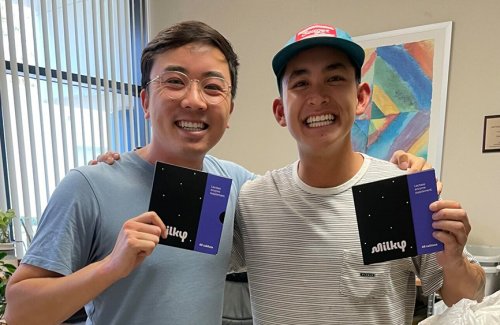
From Personal Struggle to Business Triumph- Khai Pham’s Journey with Milky-jpg

Stories

From Personal Struggle to Business Triumph: Khai Pham’s Journey with Milky

Meet Khai Pham, a visionary entrepreneur reshaping how we manage lactose intolerance.

Armed with a business degree from USC, Khai’s journey took an unexpected turn after an eye-opening internship experience. After leading strategy and operations at a tele-orthodontics startup, he took the big step to start his own venture: Milky.

Milky stems from Khai’s personal struggle as a lactose intolerant person. Collaborating with Dr. Michael Seidman, he created Milky, a revolutionary lactase supplement designed for convenience and portability.

The path to Milky’s creation was marked by challenges. Khai and his team encountered manufacturing hurdles and setbacks, but their unwavering dedication and problem-solving spirit prevailed. Join us as we delve deeper into Khai’s journey with Milky.

KHAI PHAM’S JOURNEY WITH VENTURE FOR AMERICA

Venture for America profoundly shaped Khai’s career. Khai revealed the exceptional prospects that startups offer compared to larger corporations. In bigger companies, promotion chances often hinge on the person above you advancing or departing. However, in startups experiencing rapid growth, the entire business expands, creating numerous opportunities.

As a result, Khai’s hard work earned him two well-deserved promotions in just one year, leading him to become an Associate Director, with his initial compensation increasing four times by the time he turned 23. More importantly, Khai was able to engage with more substantial challenges much earlier in his career.

LEADERSHIP LESSONS AS YOUNGEST DIRECTOR

Climbing the ranks at Candid and achieving the distinction of being the youngest Director brought both challenges and growth to Khai Pham. In his perspective, the most demanding aspect of this journey was the increasing gap between decision-making and its outcomes. During the earlier stages of one’s career, tasks are straightforward; you receive assignments like crafting financial models, and when you perform well, immediate feedback follows. That immediate validation is comforting for junior professionals.

However, as one advances into more senior roles, the time gap between decision and result widens significantly. Senior leaders must make weighty choices, such as shaping the market strategy for a new product. Yet, the effects of these decisions might remain concealed for months, even years. This adjustment, bridging the gap between choices and their eventual outcomes, is a formidable mental challenge that confronts most individuals, Khai included. This evolution in leadership style and responsibility marked Khai’s journey as he navigated the complexities of decision-making at Candid.

KHAI’S PERSONAL STRUGGLES THAT LED TO THE BUSINESS OPPORTUNITY

Khai Pham’s personal battle with lactose intolerance ignited the creation of Milky, a transformative lactase supplement.

Khai shared that aside from being lactose intolerant, he also coped with ADHD, which often led him to forget bringing a Lactaid, making casual outings for ice cream, boba, or pizza very hard. Though the idea of a more portable version of Lactaid had crossed his mind, Khai initially didn’t see it as a true business opportunity.

When Khai moved to New York and found his favorite boba shop, Machi Machi, in Koreatown, he kept running the same problem of forgetting his Lactaid. He also noted that the pharmacy in Koreatown always seemed to run out of Lactaids. “Lactaids fly off the shelves at their location,” one of the pharmacy’s employees said. Intrigued by this, Khai went to visit various drug stores across lower Manhattan, asking their employees about Lactaid sales.

Khai shared that the farther he ventured from Koreatown and Chinatown, the less frequently stores experienced Lactaid stock shortages. This was the moment that Khai recognized his idea of a super-thin lactase supplement as a viable business opportunity, setting in motion the Milky journey.

“What I slowly began to realize is that people can’t help you if they don’t know you need help.”

Khai Pham

THE EXPONENTIAL POWER OF NETWORKS

Khai Pham’s collaboration with Dr. Michael Seidman marked a turning point for Milky, their second joint venture. Many wonder how a board-certified surgeon like Dr. Seidman came to co-found a company with Khai. The answer is simple: asking for help.

“I used to play it close to the chest when I was starting a company because I didn’t want to be embarrassed if it didn’t work out. What I slowly began to realize is that people can’t help you if they don’t know you need help,” Khai shared.

With this profound realization, Khai began sharing his desire to start a dietary supplement business with his coworkers and his search for a scientific co-founder. One day, a coworker mentioned a friend whose father, Dr. Seidman, had both a medical background and a penchant for formulating ideas. And the rest was history.

How Khai and Dr. Seidman met illustrates the exponential power of networks, but only if you open up and tell people that you need their help.

KHAI’S INSIGHTS IN NAVIGATING ENTREPRENEURSHIP

When asked what advice he would offer to his younger entrepreneurial self, Khai Pham emphasizes that failure doesn’t equate to poor decision-making. He notes that while they are connected, making the right choice with the information at hand doesn’t guarantee success.

Khai’s experience has taught him that if a decision carries even a 10% chance of yielding a 1000x return, it’s worth taking that calculated risk. Even if it doesn’t pan out, it doesn’t make the decision wrong. He candidly shares that in his earlier career, he often focused on the immediate results of his actions, sticking to high-probability decisions, and missing out on better, higher-expected-value opportunities. For Khai, the key metric for decision-making is expected value, not just the probability of success, a lesson he holds close as he navigates the entrepreneurial landscape.

MILKY’S VISION TO REVOLUTIONIZE DIETARY ACCESSIBILITY

When contemplating the future of Milky, Khai envisions creating an entire ecosystem of dietary accessibility.

While Milky’s initial focus centers on lactose intolerance, Khai recognizes that many individuals face a variety of dietary restrictions, including issues like acid reflux. The prevailing frustration lies in the disconnect between scientific solutions and user experience. Drawing a parallel to Lactaid, Khai points out the impracticality of carrying around large plastic bottles of products like TUMS.

The Milky team aspires to create a world where your entire medicine cabinet can be conveniently carried in your pocket, offering a seamless solution to dietary challenges, thus transforming the lives of those managing lactose intolerance and other dietary issues.

CONNECT WITH KHAI / MILKY

Instagram: @shop__milky

TikTok: @milky

Linkedin: Khai Pham

Stories

How Sheldon Ho Created a Tool to Help Cantonese Speakers Learn Mandarin

For years, Cantonese Americans/Canadians like Sheldon Ho have struggled to learn Mandarin, feeling like existing language learning apps weren’t designed with them in mind.

Through the Canto to Mando Blueprint, there’s a solution that takes advantage of their existing Cantonese knowledge to help them master Mandarin in a fraction of the time.

The Canto to Mando Blueprint is the brainchild of Sheldon, who personally struggled for years with Mandarin learning. Not only has it helped countless Cantonese Americans reconnect with their Chinese culture, but it has also enabled them to learn more of their native tongue.

The success of this program speaks for itself – it has over 400 students and counting! It’s time for the world to take notice of this groundbreaking innovation in language learning. 

Read through as Sheldon shares more about his story and how the Canto to Mando Blueprint is changing the game for Cantonese Americans learning Mandarin.

FAILING TO LEARN CHINESE AS A KID

Growing up, I was really resentful of my culture.

I think having failed at learning Chinese as a kid made me detached from my Chinese culture and resent it. As a result, I grew up hating being Chinese and always felt it was uncool. It made me want to be “extra” Western. 

I would speak to my parents in English intentionally instead of Cantonese and as a result, my Cantonese became mediocre. I never realized this all came as a result of having failed Chinese as a kid but now that I’m older, I can see how things would have been different had I learned the language better when I was young. I would have learned more about my culture, and ancestors, and since the culture is naturally pretty cool, I would have definitely embraced it more.

AN ASIAN AMERICAN CHINESE LANGUAGE LEARNER’S PERSPECTIVE

The big thing plaguing the language learning industry is learning resources that are made for the mass market. I think that language learning businesses definitely cater to the mass market with good reason. ALL Americans Can benefit from one single Chinese learning resource made for English speakers. There’s a lot more money in that space because the market is a lot larger and they have the opportunity to help more people. Given that logic, there’s absolutely no incentive to make something for the Cantonese American market.

Another thing plaguing the language learning industry is having solely native speakers teaching the language. This is due to the curse of knowledge. It’s when you know too much in your brain and you can’t relate to your students as much anymore. They actually find it HARDER to learn from you. 

That’s why from an Asian American Chinese language learner’s perspective, I think representation is really important. I think having more Asian American teachers as opposed to pure Chinese teachers is really beneficial. 

When I was learning, all teachers were from China and while their Mandarin level was top-notch, there was a gap in their ability to relate to my struggles as a Chinese learner. This is because they have never been in my position as they grew up in a 100% Chinese environment. Employing techniques made for kids in China doesn’t work the same with us.

This is why most Asian Americans flunked out of Chinese school when they were kids. It’s made by native Chinese people who don’t understand the differences between the struggles of learning Chinese here in the West vs in China. In the same way, I also can’t relate to the struggles they may have faced learning English. I can confidently say that I’m probably not gonna be a good English teacher because I don’t understand the struggles ESL learners face. 

On the other hand, I understand very well what struggles Cantonese Americans may face when trying to learn Mandarin and improve their Cantonese. I literally went through all those struggles myself. I was the kid unable to write his own Chinese name.

THAT “YOU LOOK CHINESE BUT YOU CAN’T SPEAK CHINESE” MOMENT

I’ve tried countless times to learn Mandarin. I think I’ve had “I’m gonna learn Mandarin this year” as my new year’s resolution for like 10 years straight.

Each time I failed, I wasted MORE time but more importantly, it made me feel like more of a failure. I felt like maybe I was just too dumb to learn my language, maybe I was just too dumb overall. How many more tutors, apps, and university classes am I gonna waste time and money on?

I went through my lowest point when I was unable to talk to the family of the girl I was dating at the time. It was a really big “you look Chinese but you can’t speak Chinese” moment for me where I felt quite embarrassed.

It was a big mental hurdle that really messed with me. Things changed when I finally took time to think about how I could learn by leveraging my existing Cantonese. What if I just took my Cantonese and brought it over to Mandarin? Through an arduous process of figuring out how to do that, I finally learned Mandarin. 

Once I learned this, I realized how easy it is to learn this language for Cantonese speakers. I realized that we’ve been being taught wrong all our lives and that is the reason why we haven’t been able to learn. This motivated me to create this platform. I wanted to help Cantonese Americans finally get this Mandarin learning thing handled and hopefully through that, help them with embracing their culture.

CANTONESE AMERICANS ARE IN A WEIRD MIDDLE GROUND

I always felt that Mandarin was so hard to learn. It always baffled me that I was thrown into the same class as Craig, someone who had no Chinese background at all. 

I tried so many different learning apps and went to so many different Mandarin classes and tutors in college and it was ALWAYS the same. We always wasted WEEKS on basic stuff like “ni hao.” This felt stupid to me as a Cantonese person. I knew “ni hao.”

Cantonese Americans are in a weird middle ground. For the most part, we speak just enough Cantonese to have an advantage over people with no Chinese background – yet we can’t read Chinese, and aren’t good enough to take advantage of Mandarin resources meant for true native Canto people in Hong Kong which leverage your Cantonese. As a result, we have to stick with English resources made for white people.

So fundamentally, when setting up our program the only goal in mind was to create something for Cantonese Americans who can speak a little bit of Cantonese. We wanted to make something for the Cantonese American who spoke a little but couldn’t read or write Chinese. We’d teach them all the fundamentals while leveraging their existing Cantonese.

PLATFORMS MADE FOR PURE ENGLISH SPEAKERS CAN’T DO THIS

With our method, students improve their Cantonese while learning Mandarin. Most Cantonese speakers want to learn Mandarin but it’s also important to them that they improve in their heritage language. 

Because Mandarin and Cantonese have such similar structures – if you know how to leverage them, you can improve on both languages at the same time. This way, as your Cantonese gets better, so does your Mandarin, and vice versa.

Platforms made for pure English speakers can’t do this since they’re not made for Cantonese speakers. The next thing is the speed at which you learn. Our students start speaking literally from day 1 because we’re essentially just teaching you how to bring your Cantonese over to Mandarin in the beginning. 

There are a lot of tips and tricks that make things a lot faster. For example, the Cantonese ‘G’ becomes a Mandarin J about 80% of the time. This takes away a lot of the memorization work when it comes to learning Mandarin. 

So the main difference is just the speed of learning. It’s a lot faster. I don’t want to say the other apps or university courses don’t work because of course they do. But when you have to wait months for marginal results it’s really easy to get discouraged. That’s why we made it a PRIORITY to get people speaking from Day 1 so they see results right away.

SUCCESS STORIES

A large portion of our students happens to be in healthcare. There was this nurse who often felt ashamed at work. Chinese patients would reach out to her because she looked Chinese but when she couldn’t reply in Mandarin – she would feel sad for being unable to help her own people. This is what made her reach out to me and within the first couple weeks of doing the program, she shared with us how good it felt to be able to communicate with Chinese patients, and that was a big win. 

Another success story is about this girl who wanted to surprise her parents with her Mandarin. She started texting them on day one of the program, and it made them really happy.

But my favorite story is about one of our students who had been dating her Taiwanese boyfriend for 10 years. Each time she hung out with his family, it’d be in English. She would have very basic and shallow conversations with her boyfriend’s mom. Note that it’s been 10 years!

Recently, she told me that she had a full Mando conversation with her boyfriend’s mom and that she was so excited that she could finally speak Mandarin. If I could put it in her words, it was like the mom went from being almost mute to being the most talkative person in the world! Excitement grew on her face and she said “OMG I can take you to Taiwan now and show you everywhere!”

IT’S WHAT I WISH I HAD

What we have is a program and curriculum specifically designed for Cantonese Speakers to leverage their Cantonese (no matter what level) to learn Mandarin and improve their Cantonese. 

Along the way, we have tutors for support who are fluent in BOTH Cantonese, Mandarin, and English. From my experience, oftentimes, Mandarin tutors only speak one language. They speak Mandarin amazingly – but the lessons aren’t conveyed in the best way in English. They can’t convey certain concepts to English speakers. We make sure our tutors are able to do that, as well as in the Cantonese perspective. Lessons are all given with the Cantonese English Perspective in mind.

The truth is, in most cases, Mandarin tutors are overqualified in the wrong thing. Cantonese diaspora don’t need someone who studied classical chinese literature and classical chinese to teach them Mandarin. They just need someone who can speak good Mandarin, and understands how to convey that effectively in English to them.

We make sure our tutors have that. I took big a part in training our tutors on how to view things from a Cantonese-American perspective. 

I’ve been through the journey myself as a Cantonese Canadian who learned Mandarin. I pretty much know what each student will struggle with, where the pain points will be, and what type of questions everyone will have. I’ve poured that knowledge into the program and poured that knowledge into our tutors. 

An example is the simple understanding that Cantonese Americans can speak a little bit of Cantonese, but can’t read or write Chinese. How do you tailor-make something for that person? That’s what we sat down for months to figure out. It’s what I wish I had.

HOW THE COMMUNITY HAS RECEIVED THEM

The Cantonese American community has been really thankful to have something made for them.

A lot of people dealt with the same struggles I dealt with so I’ve received a lot of comments from people thanking our team for what we’re building as well. 

From the broader language learning community, there’s been a lot of intrigue about seeing a course that dives this deep into linguistics. We really dug into textbooks to find information like how Cantonese tones map to Mandarin and at what percentage. For instance, it’s really fascinating to know that you can map your Cantonese tones to Mandarin with about 80% accuracy. This means that Cantonese speakers can essentially skip memorizing Mandarin tones and still be right about 80% of the time. This is knowledge that takes YEARS off the Mandarin learning curve.

PROGRAM TAKEAWAYS

Three things that I hope users will take away from using our platform and learning Mandarin through our program:

  • How beautiful Chinese culture is and how great it feels to reconnect with it. If they can get a deeper sense of belonging and more interest in their roots, that’d be incredible.
  • A deeper love for Cantonese. Through our program, students will also improve their Cantonese. As they learn about the differences between Cantonese and Mandarin, they’ll see that Cantonese has its own writing system that makes it really unique. Through this, I hope they feel more pride as Cantonese speakers. I grew up resenting my Cantonese side because Mandarin is more popular – but ironically, as I learned more Mandarin, I grew to love Cantonese more and more.
  • A renewed sense of confidence in their ability to learn. A lot of people feel traumatized as kids because Chinese school was so ineffective. We feel that we’re failures because we couldn’t learn our native tongue and then make memes on subtle Asian traits to feel better about ourselves. I can confidently say that the way they teach Chinese in the West is not the best. I want to help people recover and feel better from that Chinese school trauma.

MANDO TO CANTO

I was surprised by how many Mandarin speakers are interested in learning Cantonese so I’m excited to share that the next big project we’re working on is Mando to Canto! We’re currently in the R&D phase.

CONNECT WITH SHELDON 

Instagram: @sheldonhoho

Stories

Linda Marigliano on Sharing Lessons of Love and Immigration Stories

Love – a universal language that transcends boundaries, cultures, and time.

It’s a force that can inspire, challenge, and ultimately transform our lives. And I’m not just talking about the heart-fluttering, romantic kind of love, but also the tough love, the kind of love that helps us grow, teaches us the hardest lessons, and makes us strong in the face of challenges. Linda Marigliano’s “Tough Love” podcast embarks on a mission to uncover these lessons hidden within the folds of love stories.

Linda is a creator, co-founder, author, and podcaster. She created Tough Love during the most difficult times of her life. It was in the middle of a rigid lockdown in Australia in 2021. After being in a long distance relationship for three years, Linda quit her high profile radio job planning to move overseas and begin a new life with her boyfriend who lived in LA, but the pandemic happened and the world stopped. She found herself stuck in Australia due to border closures and was forced to move back in with her strict parents in her mid-30s. 

Her podcasting journey began with the ambition to share her own story, inspire diversity, and share Australia’s proud immigration stories. Building the podcast from scratch was a challenge she embraced with passion.

Facing Challenges Head-On

Linda’s most significant challenge in this journey was launching, producing, and marketing the podcast as an independent creator. She had to master every facet of the podcasting industry, acquiring equipment to set up her home studio and venturing into the field as a roving reporter, capturing real-life scenes like a documentary. The hustle was relentless as she faced rolling deadlines and created a media campaign to promote the series.

As the podcast’s host, Linda also faced the personal challenge of sharing her vulnerable story. Linda had to let the listeners into her own uncertainty in modern life as she opened up her Italian Chinese family home. She addressed topics about how she froze her eggs during Season 1 and how she navigated her heartbreaking long distance relationship.

These stories, though challenging to share, created a devoted community of listeners who resonated with her journey through uncertain times.

Achievements and Milestones

The “Tough Love” podcast has been a remarkable success. In 2021, it earned the title of Best Lockdown Podcast at the Australian Podcast Awards and was a finalist in the Best New Podcast category. What makes this achievement even more impressive is that “Tough Love” is a completely independent project, with no financial backing from a production company.

In 2023, Linda achieved another milestone in her journey. Not only did she release her own book, “Love Language,” a deeply personal and true story that inspired the podcast, but she also performed a SOLD OUT live podcast show at the iconic Sydney Opera House.

This performance brought her Chinese mother, Janet, into the spotlight, sharing her experiences of growing up in a tiny village in Malaysia and how her unwavering loyalty to her family back home has shaped the way she lives her life. This narrative moved the audience, making them eager to learn more about Janet, her upbringing and her immigrant journey as a teenager who had a difficult time fitting in when she first moved to Australia.

Mission and Vision

Linda’s mission for the podcast is to share her compelling story using innovative documentary storytelling and music, offering practical lessons for modern life, while her vision involves expanding her audience to live shows, events, and exploring television and film opportunities. 

With Linda’s focus on her Chinese Malaysian culture, especially through her friends and her mother’s portrayal in it as a strong business woman even in her late 60s (and fan-favorite), amplifies diverse Asian perspectives, resonating with a dedicated community of listeners.

Message from Linda

If there is one episode of the Linda Marigliano’s Tough Love podcast you should listen to, make it the Season 2 ‘Help, My Parents Are Getting Older’ episode. This one showcases how we feel when we realize our parents are aging and what it means to remain loyal to family. We attend a salsa party with my Chinese mother, Janet, and she tells us about her Malaysian upbringing. It’s a moving, heartbreaking, but ultimately joyous scene.

I am incredibly proud to have inherited my mom’s deep Asian hustle spirit! There’s delight in hard work, and I love hearing the Asian hustle stories you share.

Now, I’m finally living in LA, reunited with my boyfriend, and the hustle continues. I’m open to exploring the city and connecting with the Asian community, so please reach out. And stay tuned for Linda Marigliano’s Tough Love Season 3!

CONNECT WITH LINDA

Instagram: @lindamarigliano

Linkedin: Linda Marigliano

Tiktok: @lindamarigliano

Facebook: Linda Marigliano

Stories

A Cancer Survivor’s Life-Changing Journey to Self-Discovery and Empowerment

Jeanny Chai is an entrepreneur, coach, and cancer survivor. She’s inspired hundreds of women to break free from unfulfilling jobs and relationships. But she wasn’t always this way. In this exclusive interview she talks about how she went from a scared loner kid to a powerful leadership coach. 

Childhood Pressures and Shaping of Mindset

Growing up, Jeanny was always under pressure to achieve. Sound familiar? In episode 3 of her podcast, Asians Breaking Ceilings, she shares the expectations her parents placed on her.  “Oh, you’re going to be a doctor.” 

She lived under constant pressure to be perfect. “I was called careless when I missed math problems and my parents were displeased. I got disapproval and felt like a burden whenever I made mistakes, like spilling milk or getting sick. I felt like I had to be perfect to avoid anyone getting mad at me.”

You don’t need anyone’s permission, apology, validation, or approval for you to make the transition from unfulfilled to living your leadership potential.

Jeanny Chai

Her Battle with Cancer and Path to Transformation

As an adult she was free from her parents but then cancer got her. Her doctor told her that she had 3 tumors, stress-induced. Her reaction? “ashamed, scared, angry and then finally hopeful.” Despite cancer being a shitty experience, she had HOPE. How? 

Hope came when she realized that she was allowed to ask for help. It wasn’t her job to suffer alone in silence. She had managed to handle all the other stressors in her life alone, but this one was too much for her – and that was okay. For the first time ever, Jeanny learned asking for help was not a sign of failure or weakness. This theme would return later on.

A Glimmer of Hope in Solitude

Cancer threw Jeanny’s life and routine out the window. Yet the hardest part wasn’t the physical pain – it was the overwhelming sense of loneliness she experienced. Unable to have visitors, she was profoundly isolated, physically and emotionally. She shares, “When you are under so much medication, your days and nights mesh together and you get lost in your own thoughts,”

But in that time of sadness, Jeanny felt a glimmer of hope. One day, she heard a loud voice that declared, “You are already good enough.” The unexpected declaration left her in a state of awe. 

Jeanny had never entertained such a notion about herself before; this was a pivotal moment.  She kept repeating this idea to herself for the next few years, and that’s when she started to feel stronger, more confident, and more in control of her life. This also marked the starting point of her business, Bamboo Myth.

A Journey of Self-Discovery

After casually beating cancer, Jeanny embarked on a five-year journey of self-discovery.

“When I got sick, I was no longer focused on becoming the next Elon Musk or landing a job at the next unicorn start-up in Silicon Valley. Instead, I bought myself an electric piano and an acoustic guitar.  Later I bought a saxophone and ukulele and I gave myself voice lessons. I bought myself a baby rabbit, who was my bedside companion during my chemotherapy treatment. I remembered that I loved music, singing, and animals and learned to create my own happiness,” she shared.

With cancer showing her that life was short, Jeanny decided to leave the corporate world and start her own business, pursuing purpose instead of promotions. 

“Asians Breaking Ceilings” Podcast

Fast forward a few years and her business is thriving. She speaks about the Bamboo Ceiling at Fortune 500 companies and major conferences. 

She also runs a 12-week coaching program called “Live Your Leadership Potential,” and has coached over 300 Asian women, bringing “life-changing” results. Her program centers on 2 core principles that help women regain confidence, energy, and agency.

She teaches that what’s needed isn’t communication strategies, but permission to speak without guilt or shame. Once women overcome this barrier, their natural leadership abilities and newfound confidence are allowed to shine.

The best part? Jeanny emphasizes that this mindshift set doesn’t require years of therapy or yoga; all it takes is a focused approach to transform from burnout to happiness.

Now she is making these cultural-specific leadership strategies available to everyone,  through her podcast. In it, she shares a powerful new definition of success. 

“Confidence, assertiveness, and happiness are an inside job. So my new definition of success is this: Being able to decide, create, and ask for what you want in your career and life. And my podcast is designed exactly to do just that,” Jeanny shared.

Advice for Those with Similar Struggles

Did you resonate with any of this? Jeanny has the the following advice for individuals who struggle with people-pleasing, fear, or lack of self-compassion:

First, you must stop stuffing your feelings and coping by working harder and harder. Realize that you don’t need anyone’s permission, apology, validation, or approval for you to make the transition from unfulfilled to living your leadership potential.  

Stop getting more certifications and degrees to fill that feeling of “not being enough.”

Listen to my podcast! Start with Episode 1 and let yourself feel again. Many of us have numbed out our emotions so we can handle and cope with all the stress but this is the opposite of what we need to do to begin the transformation. 

Find a safe person (therapist, coach) and tell them your story. As Brene Brown says, shame thrives in silence. That’s why I’m paving the way by speaking up so others can speak up and be transformed for good.

And take this FREE assessment that I’ve created just for Asian Americans. It helps you identify in just under 5 minutes what is your biggest roadblock to success:

https://quiz.tryinteract.com/#/5daf9bbeb77a6e0014e41210

There is personal advice emailed to you based on your quiz results. 

CONNECT WITH JEANNY CHAI

Instagram: @jeannychai

Linkedin: Jeanny Chai

Twitter: @bamboomyth

Facebook: Bamboo Myth

Website (Bamboo Myth): bamboomyth.com

Website (Podcast): asiansbreakingceilings.com