Awaken* newsletter

June 6, 2024

SHARE:

Venture capitalist Ann Lai is, by all measures, an absolute beast. From earning a PhD from Harvard at 25 to becoming Managing Director at her own firm–Skeleton Key, Ann has clearly achieved a great deal of success throughout her career. Ann is also notable for speaking up publicly about the misogyny she has faced in VC, despite it nearly forcing her out of the industry. I had the honor to chat with Ann about her career journey pre-VC, reflections on her identity, and also about her exciting new firm.

Journey to Venture Capital

Ann’s journey to Venture Capital is at least 50x cooler than mine. In fact, it’s one of the coolest there is. It all started when she read a biography of Marie Curie at the age of six. I asked Ann to explain what drew her to Marie Curie so much that it set her on a trajectory she is still on today:

The recognition of women in science has historically been insufficient, and I have consistently been attracted to narratives that feature an underdog. Marie Curie’s achievement as the first woman to win a Nobel Prize, and then winning it a second time, was profoundly significant to me as a young person. From a very young age, I had an affinity for science and engineering. My mother, a teacher of literature, encouraged me to read or listen to autobiographies of diverse individuals. My early fascination with NASA was spurred during the time my father worked there. Marie Curie significantly altered the landscape and methods of many scientific endeavors.

Marie Curie’s story inspired Ann to study science. By age 25, she had earned three STEM degrees from Harvard including a PhD in microfluidics. While studying, Ann was starting to notice things that would push her away from being a scientist towards investing:

I noticed that many significant scientific advancements were transitioning to privatization. There was a golden era of science in the United States during the 1970s, characterized by substantial government funding and innovative labs such as Xerox and Bell Labs, but it is now over. I hypothesized that the most groundbreaking scientific discoveries would increasingly be funded privately. The sectors that remained vibrant, like CRISPR and space exploration, were those receiving substantial private investment. And although I was satisfied in the laboratory, my broader interests and extroverted personality drew me toward the funding side of science.

However, that was not quite what the universe had in mind for Ann. Ann graduated right around the 2008 financial crisis, which had pretty much killed off all appetite for investments in science. Thus, she instead started her career at a firm pioneering big data analysis:

I joined a company on Wall Street that pioneered what is now commonly referred to as “alt data”. We acquired, scraped, and sourced new and proprietary datasets, transforming them into predictive models for public company earnings. This was a rigorous introduction to the underlying forces that influence corporate dynamics; we had to understand the key performance indicators driving stock market values. (It was like going through a condensed MBA program.) By modeling quarterly earnings, where data points were scarce, I applied methodologies from my graduate research, collapsing extensive data sets by normalizing or parameterizing the variables, allowing for a comprehensive, dynamic model. This approach was highly effective, blending scientific and business analytics.

After her stint working in finance, Ann went on to lead business intelligence for international territories at Riot Games and then worked in a few early-stage startups in preparation for a transition into Venture. One thing she said especially caught my attention:

There was noticeable skepticism towards PhDs and academics in venture capital. Despite my extensive scientific background, I was told to strategically minimize the emphasis on my PhD on my resume. It’s evident in the venture space that there is a prevailing belief that academics lack practical business acumen.

When asked whether this skepticism extended to PhD founders, Ann elaborated:

This skepticism is indeed still prevalent. However, many PhDs are exceptionally practical. For companies involved in iterative development, such as SaaS companies, the requirements are different. In these fields, the emphasis is more on user interaction and less on deep scientific knowledge. But, for science-driven enterprises, a thorough understanding of the fundamental sciences is crucial.

Hopefully, this gives some hope to the PhDs out there who are looking to start a company! In fact, VC has been trending more towards deep tech evidenced by an increased share of investments into the space.

Advice for Women in Venture

One aspect Ann has been noted for is her outspokenness on the misogyny she has faced in the Venture ecosystem. For more specifics about her experiences, you can check out this Elle article written about her. Given her experiences, I asked her what advice she would give to women who want to go into the VC or startup space, but are concerned about the misogyny and fraternity culture that is still rampant.

Establishing a close network of mentors and peers for support is essential. This has been invaluable to me. Unfortunately, the prevailing culture remains challenging, and the progress we’ve made has perhaps deteriorated in the past year due to decreased venture capital availability on the LP side. There’s still a lot of work to do. The solidarity of women supporting one another is crucial for fostering progress. Maintaining a commitment to support each other is critical. Although most days it may not seem particularly difficult, there are specific moments where you can just feel a very big demographic difference in terms of who’s empowered. Partners are partners, but managing partners are different categories of partners. Until more women are managing partners or running their own sizable firms as partners, there’s still not enough leverage in the space.

Being Asian

I asked Ann to reflect on how her identity as an Asian woman has affected her lived experience:

My mother is incredibly liberal for her generation of Taiwanese. She has always been supportive, telling me I don’t need to get married early or worry about having kids, which is rare for Asian moms of her generation. At the same time, my parents weren’t financially very well off when we came back to the States. I contributed to my family’s income from the age of 12. There was no safety net. If I didn’t make it, nobody could pay the bills. It taught me resilience and gave me a “no way back” approach to life.

My dad raised me with a strong sense of right and wrong (We watched a lot of Asian martial arts dramas and stories.) It’s not really about being visible–it’s about doing the right thing. This Asian heroism as defined by martial arts movies approach is quite different from American heroism, and it’s the reason why I stood up for myself even when it might have prevented me from working again.

Being an Asian woman in the US is difficult. I often get the assumption that I’m a lot younger, for example. So, you always have to go into a meeting fighting that. That’s something my cohort and I have talked about a lot, like, you learn how to dress and style yourself to appear older sometimes so that you will be taken more seriously.

For meetings in East Asia, I was coached to open meetings by stating my qualifications, the PhD from Harvard, etc.This way, they respect the degree and then they respect you. Male executives and men who attend meetings weren’t prepped in this way. But I’m starting to see more evolution, especially with the younger, successful Asian male founders and groups. They’re very supportive, which is great. The older generations still tend to have a more patriarchal mindset, but it’s getting better, especially in the US.

Anecdotally, children of first-generation immigrants often pursue more stable, high-paying careers (doctor, lawyer, etc.), yet Ann has clearly bucked this trend. I asked her why she thought she ended up doing so:

My parents have been very modern in their thinking. They’ve never said I had to do things in a certain way. They’ve always supported my decisions. It made me feel like I could do anything. I’ve never worried that I might not succeed. If you are fearless, you end up doing aggressive things, aggressive in a good way.

Having grown up in both the US and Taiwan, I think Western and Eastern education are quite different. The American system encourages exploration and aspirations, whereas there’s a lot more regimen in the Eastern education system. The way I was raised was very much a marriage of those two aspects in an unexpected way. I have a lot of friends who were told to be a doctor or a lawyer, but if you think you can do better at other things, why do you have to do that?

Skeleton Key

A Skeleton Key is a type of master key in which the serrated edge has been removed in such a way that it can open numerous locks. It is also the name of Ann’s new firm. While researching for this interview, I came across this article by Ann, where she lays out the argument for why Deep Tech is venture-backable. Towards the end of the article, she shifts the focus to ScienceTech (SciTech), which she defines as: the software, platforms, or tech-enabled services that accelerate scientific discovery or assist in bringing science to life. I asked Ann why she chose Skeleton Key’s focus to be on SciTech instead of Deep Tech:

Deep tech is definitely fundable, as I’ve talked about. But now with AI, I’m thinking about how to make deep tech happen faster. Instead of investing in a drug, I’m looking at the platforms helping people discover drugs faster. Those layers are interesting to me, and I think those are the layers where a lot of the accelerated computing power can come into fruition in an interesting way. The accelerated computing power means you can map out a lot of things that have historically been very difficult such as fatigued glass behavior or certain thermal dynamics, nonlinear dynamics, and anything that’s related to nonlinear systems. 

There’s even a lot of interesting stuff happening around the application layer of science. For instance, bringing chemicals to real-life applications usually takes a long time. You find a chemical and wonder where to use it and what it can be used for. Then, usually, you need a different type of manufacturing protocol or a different variation for each use case. But now,  you can find a lot of those variants much faster. The formulation or the tuning of that molecule, protein, etc. can be assisted on by AI and you accelerate that process of bringing it to a real-life application much faster.

As you may have gathered from her background, one of Ann’s specialties is data analysis. In her previous VC roles, Ann leveraged her background to evaluate companies based on their data in an apples-to-apples way. You can hear more about her approach in this podcast. Given that Skeleton Key is working with a type of company that isn’t what the typical VC invests in, I was curious to know if she had to adapt her process:

It’s definitely different for Skeleton Key. We deal with a lot more data around R&D and early applications because we’re focusing on a second or third institutional round for these folks–so it’s a post- R&D but before they actually hit ramping revenue. That means you still have time to work with them on exploring the business–is it a software platform approach, or is it a single molecule approach, or a single robot approach? 

I asked Ann what revenue the companies typically are at in their second or third institutional round:

I think the specific revenue number doesn’t really matter. It’s the mechanics of what the early performance looks like. If they have a couple of contracts which are scalable over time and show real adoption and real usage–that’s a lot more important than one marquee SaaS contract that you can get through relationships. It’s more around the usage, the actual day-to-day functionality or day-to-day use. 

Earlier in our chat, Ann touched on how Skeleton Key plans to help startups explore different business angles, I asked Ann to elaborate on this process:

Our approach is very collaborative. My philosophy has always been to provide as much help as the founder wants. The goal post-investing is to help them with monetization, go-to-market strategies, and thinking about how to scale from a scientific lab mindset into building a company. We also assist them in fundraising. There are a lot of resources post-investment, and whether a founder will leverage them is their choice, but we prefer that they are open to us being more involved. In this category, where there are no established revenue models and many founders are coming from academic backgrounds, this advisory capacity is helpful to give them the full lay of the land, let them explore, and let them test different monetization hypotheses quickly.  Inflexibility or lack of adaptability can be a problem down the line, especially in these categories that require a lot of money for ramping up and the revenue models aren’t so obvious. In fact, we’re planning on helping founders in this way before even investing, as part of our process.

I mentioned to Ann that this kind of help seems very valuable, especially since the only resources available online tend to be very reductive:

My biggest pet peeve is when VCs prescribe a framework without actually understanding the problem. When we help companies, we don’t do that. We workshop their unique situation and how to price best for their product, without capping future revenue. For example, a lot of people like to suggest ARR subscription SaaS, but that model doesn’t work for everyone. There’s a lot of possibilities around pricing and revenue that isn’t just about “getting ARR.” I think those are the interesting exercises to think through when you’re in these new categories.

Shoutouts

Ann is amazing  and I am super excited for the launch of Skeleton Key. If you’d like to hear more from Ann, you can sign up for her Science Fair newsletter here, where she writes about science and venture. Thank you Ann for the great interview!

Related Articles

Avenue of Stars, Hong Kong

News

The Rise of Asian Representation in Food Shows: A Lunar New Year Celebration

Credits: Patricia Ratulangi Vice President, Global Communications Nielsen

In recent years, food shows featuring Asian chefs and cuisines have seen a surge in popularity, capturing the attention of diverse audiences around the globe. This trend highlights the growing appetite for cultural representation and inclusivity in entertainment. As we celebrate Lunar New Year—a holiday deeply rooted in food traditions—it’s the perfect time to reflect on how Asian representation in food media resonates with viewers and drives mass viewership.

Food shows featuring Asian chefs and cuisines highlight cultural diversity, resonating with audiences and driving viewership, especially during Lunar New Year celebrations.

Food shows stand out as a medium where culture, tradition, and storytelling intersect seamlessly. Programs like Top Chef, which has featured contestants such as Melissa King and Hung Huynh, and The Great American Recipe, where home cooks celebrate diverse culinary heritages, showcase the rich variety of Asian cuisines and the personal narratives behind them. These stories invite viewers to connect with the cultural roots and contemporary adaptations of dishes they may have never experienced before.

2024 Viewing MinutesAsianTotal U.S.
Top Chef‎‎  ‎ 458.0 million5.7 billion
The Great American Recipe‎ ‎ ‎ 9.8 million84.5 million
Chrissy & Dave Dine Out‎‎  ‎ 9.2 million61.4 million
Dinner Time Live with David Chang‎ ‎ ‎ 67.4 million430.1 million
Source: Nielsen audience measurement: Jan 1 – Nov 30, 2024

Lunar New Year exemplifies the central role food plays in cultural celebration. From dumplings symbolizing wealth to fish representing prosperity, the holiday is a sensory feast steeped in meaning. By spotlighting Asian chefs and their innovative approaches to dishes that represent their heritage, food shows bridge the gap between cultural nuance and modern audiences. 

A Tết (Vietnamese Lunar New Year) tray filled with traditional Vietnamese dishes for Lunar New Year, symbolizing happiness and peace.

The success of Asian-centered food programming aligns with broader audience preferences for authenticity. Nielsen data reveals that 63% of viewers are more likely to support brands and content creators that authentically represent diverse communities. For mass audiences, this means a greater willingness to engage with shows that go beyond superficial portrayals and offer genuine insights into Asian culinary arts.

The viewership data highlights the significant appeal of food shows among both Asian audiences and the broader U.S. audience, underscroring the growing đemand for authentic, inclusive food shows that celebrate diverse cultures.

Nielsen Chart A
Nielsen Chart B

As Lunar New Year festivities fill homes with the aroma of traditional dishes, the increasing visibility of Asian representation in food shows reminds us of the universal power of food to connect people across cultures—one dish, one story at a time.

Elegant Cinematic Wedding Thumbnail HD 169 (4)-png

Stories

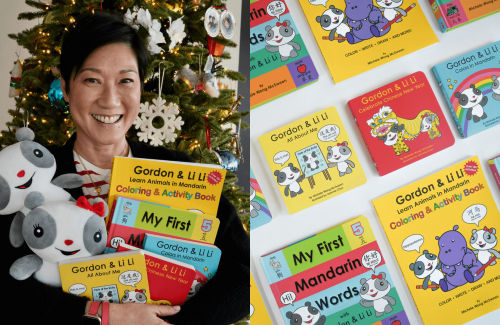
Michele Wong McSween Brings Chinese Culture to Life Through Gordon & Li Li

Navigating one’s cultural identity is confusing, especially in a diverse nation like the United States (US). One minute, you proudly claim that heritage of yours, and two seconds later, you feel as if your identity were the main character of a roast party. That carries on to the parents, who face the challenges of keeping their children connected to their roots amidst the complexities of a multicultural society. 

As a Chinese parent, Michele Wong McSween knows this all too well. By the time Michele became a mother, the pressure of teaching her children Mandarin had only grown stronger. That gave birth to “Gordon & Li Li,” a series of books designed to make learning Mandarin and connecting with Chinese culture fun and approachable for kids.

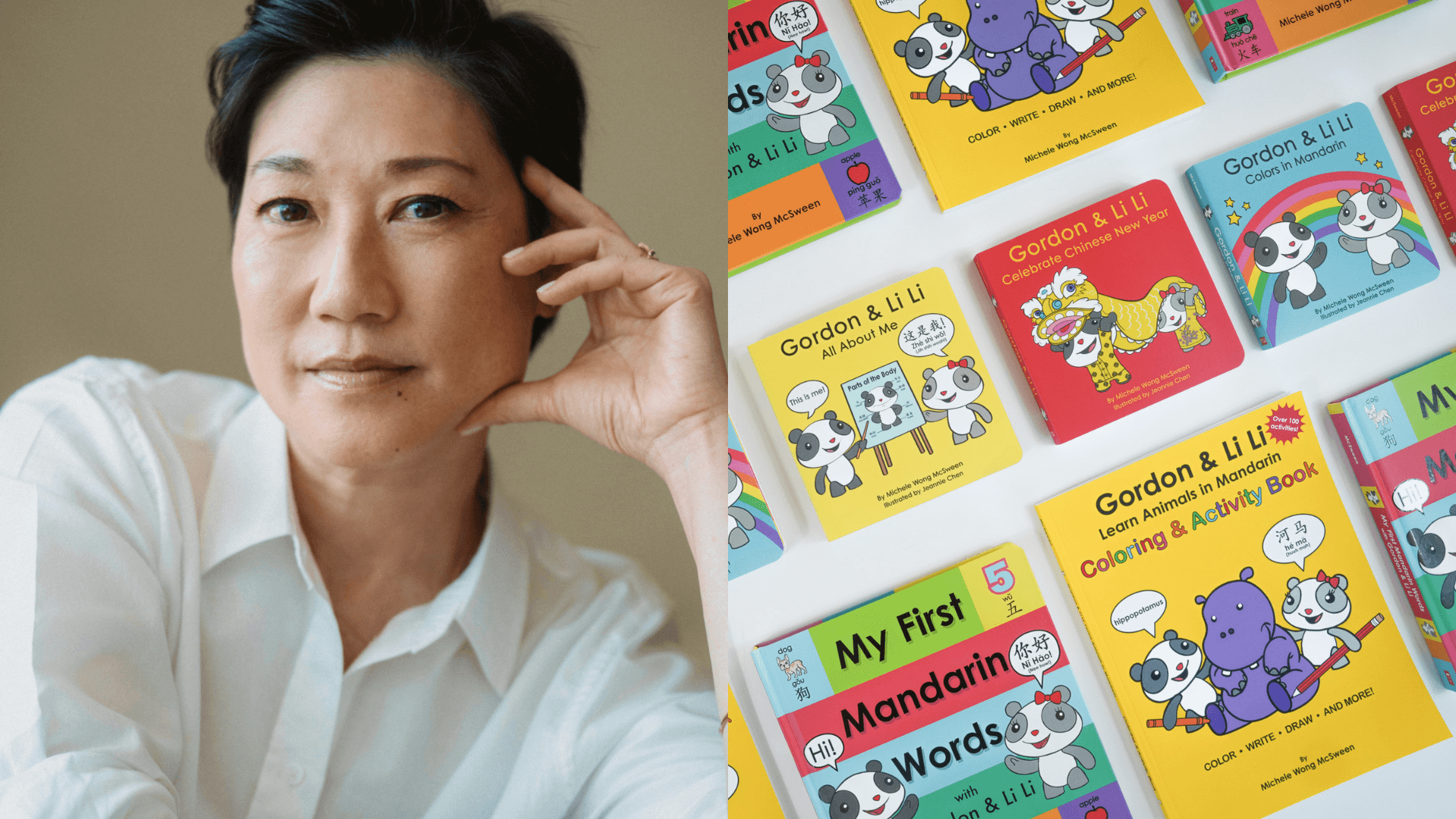
Michele Wong McSween cleverly dilutes the weight of this language in her new upcoming books, Gordon & Li Li: Celebrate Chinese New Year Coloring & Activity Book and All About Me, inspiring families to embrace their heritage, one book at a time.

Throwback New Year

Back in her early Lunar New Year days, Michele would help her mother decorate the house with blossoms, prepare lucky foods, and then gather at her grandparent’s home for a joyful dinner celebration. And what’s Lunar New Year without the iconic Hong Bao (red envelopes) and the sounds of familial peals of laughter? It was these little moments with her family that developed a lifelong passion for Chinese culture and language.

But the mounting pressure of growing up and starting a family soon dawned on her the challenges of instilling that same cultural pride in her children. “As a fourth-generation Chinese American, I didn’t grow up with the gift of language, and I found the books that existed to be intimidating, old-fashioned, and uninspiring,” she says. “How could I expect my children to get excited about learning a language when I wasn’t even inspired to?”

The Birth of Gordon & Li Li

The struggles to find suitable and engaging resources for her kids to learn Mandarin inspired Gordon & Li Li, a children’s book series that takes readers on the journey of two main characters, Gordon and Li Li. Mandarin Chinese is already a tough language, let alone studying it like a daily chore. So, she created her own educational books that blend entertainment and cultural values while adapting to modern technology, making these lessons more engaging and accessible.

The initial concept was to become the “go-to” board book series for families eager to introduce their little ones to Mandarin and Chinese culture. Within three years, I self-published three books, but as my children grew older and their learning needs changed, I knew I had to create something that could grow and engage with them in this next phase. Seeing how much they loved learning on an iPad, I entered the technology world and created and launched the Gordon & Li Li: Learn Animals in Mandarin app on iTunes in 2012.

Recognizing the challenges she faced while teaching her children Mandarin, she came up with the idea for "Gordon & Li Li" - a fun and engaging book series to help children learn Mandarin.
Recognizing the challenges she faced while teaching her children Mandarin, she came up with the idea for “Gordon & Li Li” – a fun and engaging book series to help children learn Mandarin.

For all the grand visions, there lie the grappling challenges Michele must balance: being both a full-time mother and a founder. Her working hours began when her children went to bed, often ending late into the night, only for her to start the day all over again. Not coincidentally, these burdens are further intensified by her lack of experience in publishing, marketing, or business management.

As a mom of three boys, the hardest part was trying to find the time and energy to spend on G&L while balancing the demands of motherhood. My work day wouldn’t begin until the boys were in bed. I’d clean the house, spend a few hours on G&L, go to bed by 1 a.m. or 2 a.m., then start the day all over again. On top of that, with no training in publishing, marketing, or running a small business, I often felt like I’d take one step forward and 100 steps back.

In those moments, the fleeting thoughts of giving up are already tempting enough. Despite this, her commitment and perseverance led her on a fortress path. Better still, the “heartfelt” feedback she received along the way has proven to be highly worthy and rewarding. After all, trees will bear fruits—and her fruits can help sustain many following generations on the heritage tree.   

Sixteen years in, and I’m finally learning to embrace the challenges as opportunities to grow instead of seeing them as failures. I’ve surrounded myself with a supportive network and a strong community, and I’ve become more patient with myself as I learn new skills. I’ve also learned to practice self-care because self-care isn’t selfish—it’s essential!

Michele Wong McSween continues growing this age-old tree of Chinese heritage through her two upcoming books, each offering a unique and engaging way for children to learn Mandarin.

Gordon & Li Li: Celebrate Chinese New Year Coloring & Activity Book and the Impact of Lunar New Year and Family

Michele’s work shows an emphasis on family, which is placed at the forefront in many Asian households. Her upcoming book Celebrate Chinese New Year Coloring & Activity Book is a reflective extension of that value, whereas Lunar New Year has always been traditionally associated with family gatherings. “My favorite childhood memories of Lunar New Year were the source of inspiration for Gordon & Li Li: Celebrate Chinese New Year,” she says. “These core memories have inspired me to continue the traditions with my own children and through my book. I hope that families everywhere can enjoy celebrating Lunar New Year, whether they’re reconnecting with their heritage like me, or learning about it for the first time.”

With the Celebrate Chinese New Year Activity Book, I hope to bring the fun and festive traditions of the Lunar New Year to children through interactive, hands-on activities. I specifically designed it to engage with kids as they grow. From simple coloring and matching activities to more challenging ones like Chinese Character Search, Crosswords, and Find the Differences. This book has something for everyone and helps connect children of all ages to the excitement and significance of the New Year.

Michele's upcoming book, Celebrate Chinese New Year Coloring & Activity Book, reflects her childhood memories of Lunar New Year and aims to engage children of all ages with interactive activities.
Michele’s upcoming book, Celebrate Chinese New Year Coloring & Activity Book, reflects her childhood memories of Lunar New Year and aims to engage children of all ages with interactive activities.

Exploring Body Awareness With Gordon & Li Li: All About Me

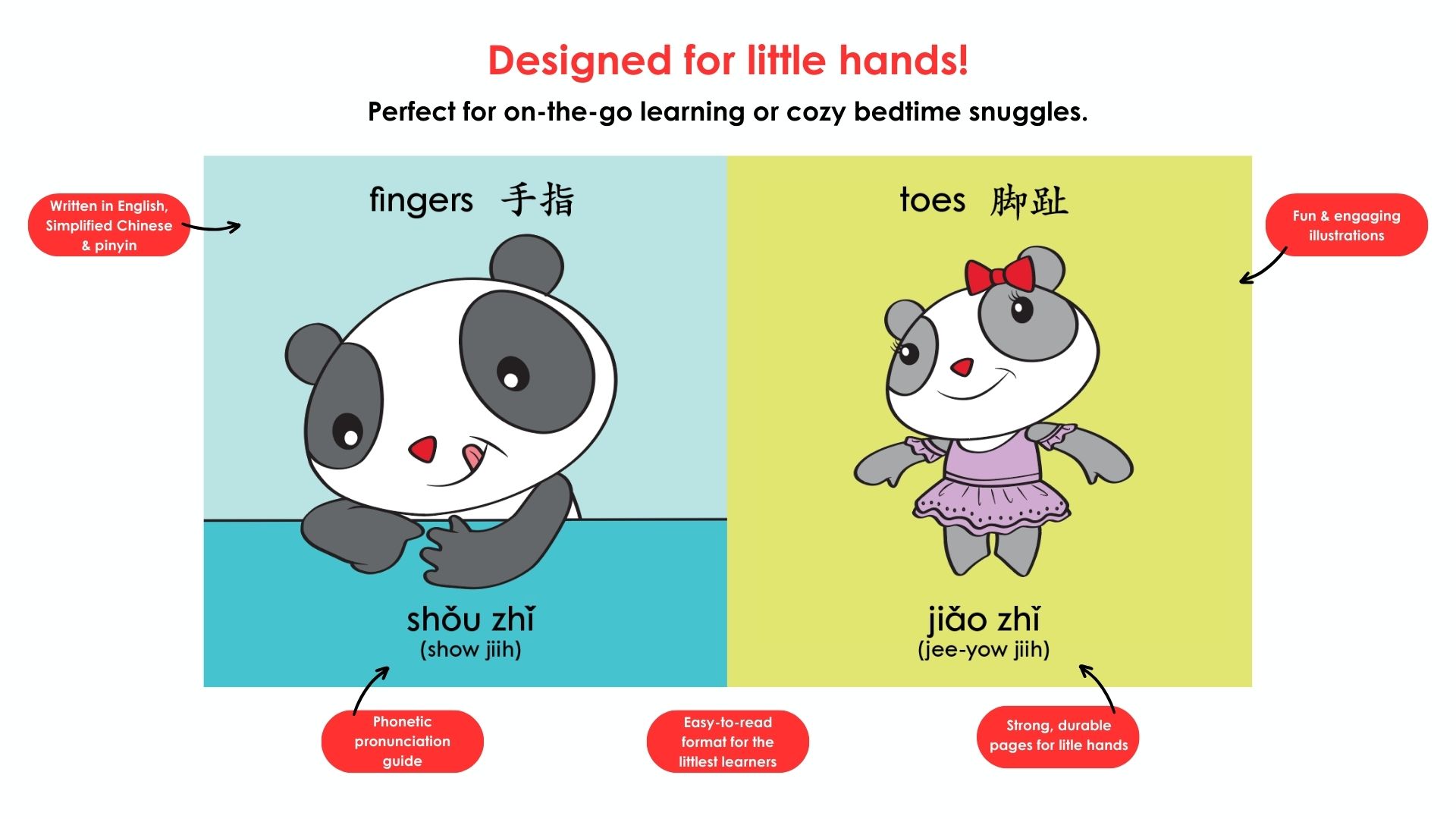
Gordon & Li Li: All About Me, on the other hand, tackles something closer and more physical, introducing young readers to parts of the body through Mandarin. Illustrated with playful and colorful artwork, each page opens a world of body parts such as fingers, toes, and shoulders. Basic words like “fingers” (手指, shǒu zhǐ) and “toes” (脚趾, jiǎo zhǐ) are demonstrated in fun and engaging ways with real-life examples to help children apply the words to their everyday activities. For example, “I am counting my ‘shǒu zhǐ’” or “Li Li is dancing ballet on her ‘jiǎo zhǐ.’”

Gordon & Li Li: All About Me introduces young readers to body parts in Mandarin, using playful illustrations and real-life examples to teach words.

This thoughtful approach allows children not only to learn new words but also to develop an early connection to body awareness and confidence. The simple, portable layout makes it perfect for children to carry wherever they go. And that’s not all! As the book comes to the last page, children can also practice singing along to the childhood anthem “Head, Shoulders, Knees, and Toes” in Mandarin, creating a fun and memorable activity for young readers.

Children reading a book from Gordon & Lili

Celebrate With Special Giveaways and Events

The journey is long, yet, the fruits are arriving. Landing a deal with Scholastic and building connections with talented individuals within the AAPI community has been inspiring and defining in her growth, professionally and culturally. 

What I’m most proud of is seeing the pride in my sons’ faces and the deeper cultural connection we’ve built as a family through this shared experience. It fills my heart with pride knowing that Gordon & Li Li connects us as a family and it inspires me to continue creating something meaningful for my boys—and for families everywhere.

In celebration of her new book’s release, Michele Wong McSween is hosting exciting Lunar New Year events and giveaways! These events are perfect opportunities for families to explore the books in-depth, enjoy a range of interactive activities, and learn more about Chinese culture and language. Stay tuned to AHN or Michele’s social media (mentioned below) for more updates on the giveaway!

Yet, Michele’s vision does not stop there. She shares that another book is already in the works, called Gordon & Li Li: ABC’s in NYC, set to launch in time for AAPI Heritage Month! This exciting new book will introduce children to learning their ABCs while exploring Gordon’s hometown, New York City.

Connect With Michele Wong McSween

Facebook: Gordon & Li Li 

Instagram: @gordonandlili

Website: Gordon & Li Li

IMG_4718-jpeg

Stories

Empowering the Future: Jason Chan on Uplifting Communities

“Hustle is more than just work, it is a movement that can change the world,” Jason Chan, Chief of Staff to AT&T President of the West Region and Director of External Affairs. 

Inspired by the hustle, sacrifice, and unwavering determination of his family and the first generation of Asian American immigrants, Jason felt a profound calling to make a difference for his community. This passion led him to a career in government affairs and advocacy, where he focuses on fostering collaboration between government entities, corporations, and organizations to create policies that truly support and uplift the communities they serve.

A Tale of Challenge and Inspiration

“I’ve been inspired by the countless stories of resilience and perseverance within our community,” states Jason. As a member of the Asian American, Native Hawaiian, and Pacific Islander (AANHPI) community, he is driven by a deep sense of responsibility to honor the legacy of those who paved the way before him—laying the groundwork for future generations.

Jason emphasizes that success is rarely a linear journey, and challenges are an inevitable part of the process. One of the most significant obstacles in his career has been navigating roles where AANHPIs are underrepresented, particularly in decision-making positions. This lack of representation has required Jason to work even harder to demonstrate his value, advocate for diversity, and ensure that the AANHPI community receives the recognition it deserves. 

What helped Jason overcome these challenges was leaning on a strong network of allies and mentors who believed in his vision and capabilities. He came to see setbacks not as failures but as opportunities for learning, growth, and redefining what’s possible. Jason firmly believes that the key to overcoming hardships lies in surrounding yourself with people who inspire, uplift, and challenge you to reach your fullest potential.

“During my time as Appointments Secretary for then-Mayor Gavin Newsom, it wasn’t always easy to challenge existing systems and push for diverse appointments. But I stayed committed to my belief that representation matters, and over time, those efforts led to tangible changes in the city’s leadership.” Jason exclaims.

The experience further solidified Jason’s conviction in the power of creating spaces for diverse voices and perspectives. It served as a powerful reminder that meaningful change becomes achievable when people unite and collaborate. With this belief at heart, Jason remains dedicated to his mission of uplifting others and dismantling the barriers that hinder progress.

Jason believes that overcoming hardships lies in surrounding yourself with people who inspire, uplift, and challenge you to reach your fullest potential.

Jason believes that overcoming hardships lies in surrounding yourself with people who inspire, uplift, and challenge you to reach your fullest potential.

From Dreams to Success

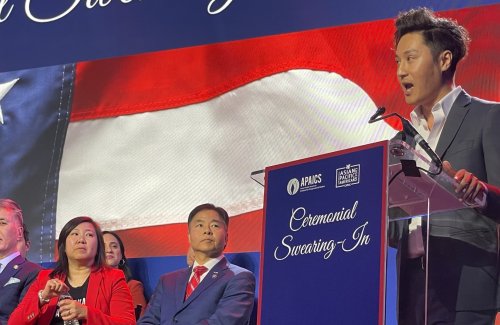
Jason has achieved numerous milestones, including being named Chairman of both the Asian Pacific American Institute for Congressional Studies (APAICS) and the California Asian Pacific Islander Legislative Caucus Institute (CAPILCI). These prestigious positions highlight his dedication to advocating for the representation and equity of the AANHPI community. Through these roles, Jason has been able to directly influence policies at both the national and state levels while fostering leadership development for the next generation.

In his current role at AT&T, Jason has demonstrated his commitment to supporting the AANHPI and LGBTQ+ communities through strategic partnerships, building strong relationships with stakeholders, and advocating for initiatives and policies that promote diversity and inclusion. His efforts have resulted in stronger connections, increased visibility for underrepresented groups, and meaningful investments in fostering equity and inclusion. However, Jason’s proudest accomplishment lies in the mentorship and guidance he has provided to emerging leaders, helping to shape the next generation of changemakers.

Jason shares with Asian Hustle Network, “Never underestimate the power of your story and the impact you can make. Our journeys, no matter how humble or challenging, hold immense value. They shape who we are and inspire others to dream bigger and aim higher.”

For Jason, the most rewarding achievement of his journey is witnessing the leaders he has mentored make meaningful contributions to their communities and careers. To him, success is not measured by personal accolades but by the impact one has on others and the legacy of opportunities created for future generations.

Success and the Journey Ahead

Jason’s vision is to create pathways that empower individuals to reach their full potential and, in turn, give back to their communities. He is dedicated to uplifting the Asian community by ensuring policies and decisions reflect our stories, perspectives, and needs. Through his work, he hopes to inspire others to take bold steps toward achieving greater representation and making their voices heard.

Jason affirms, “Let’s continue to hustle—not just for our personal ambitions, but for the collective success of our community. Together, we can create a future where every voice is heard, every dream is supported, and every barrier is broken.”

Connect With Jason

Facebook: Jason Chan

Linkedin: Jason C.

Twitter: Jason Chan

Instagram: @jayson326

Elegant Cinematic Wedding Thumbnail HD 169 (4)-png

News

Việt Nam Vô Địch: The Phenomenon of “Đi Bão”

“Đi bão! Đi bão!” “Việt Nam vô địch, Việt Nam vô địch!” Chanted the brewing crowd filling Vietnam’s streets after the nation won the AFF Cup.

As the world witnessed the triumph of Vietnam’s soccer team, foreigners and tourists coming to Vietnam were captivated by something else, đi bão. 

The term đi bão is an Internet term that the Vietnamese people coined to describe a parade-like occasion to express national pride, the latest example being the AFF Cup celebration. Through the victory, the term has risen into international popularity as a cultural phenomenon in Vietnam. 

On the surface level, foreigners would witness Vietnamese people flooding the street on their motorcycles, cheering, and raising flags. Yet, in a deeper investigation, the term đi bão defies translation. To a Vietnamese, the definition of the term is as foreign to any expat, yet it invokes a meaning, a feeling, a glorious aspect of Vietnamese culture that anyone on this earth can understand as if it were their mother tongue. Pride. 

People flooded the streets at 1 A.M. to celebrate Vietnam winning the AFF Cup (Image Source: Báo Phụ Nữ)

As the Vietnam soccer team won over Thailand in the AFF Cup, everyone knew what was going down. Silence. Then horns blared, motorbike engines revved, and metal clanged as thousands of flags were raised. Was it the spirit of football? Unlikely. What Vietnamese people love the most is a chance to gather and celebrate, cheering for their national flag. 

Pots and pans were used during ‘đi bão’ to support the cheering effort (Image source: Lao Động)
Thousands of Vietnamese rejoice as the match ends, signifying Vietnam’s triumph (Image Source: Hải Long, Dân Trí)

Đi bão is a one-night chance for the Vietnamese people to parade, to party, and to celebrate a collective victory of the nation. The people dressed in red with a smear of yellow makeup, the color of the Vietnamese flag, as bikers violated every traffic rule imagined. It didn’t matter, as everyone was in a sense of euphoria. Cheeky cardboard signs went up, shirts went off, and occasionally, a person too hyped for the occasion would lead the crowd’s chant.

The people of Hanoi raise their glasses and celebrate (Image source: Mạnh Quân, Dân Trí)
A son and dad celebrating Vietnam’s victory (Image source: Nam Anh, Dân Trí)
A man in a costume leads the crowd (Image source: VOV)

Đi bão beautifully reflects an element of Vietnam’s culture, the Vietnamese identity. The emotions and the experience transcend beyond any boundaries, borders, and football team. It was the loud sounds filled with excitement and pride that made the term đi bão so understandable and relatable. It was the collective joy that made even foreigners experience what it is like to be a Vietnamese for a night.

Tiến Linh [left], Duy Mạnh [middle], Xuân Son [right] in AFF Cup 2024 (Image source: Mạnh Quân, Dân Trí)