Awaken* newsletter

April 4, 2024

SHARE:

On November 10th, I had the honor of chatting with Bryant Chou. Bryant is the co-founder of Webflow, one of the leading website-building platforms in the world with a valuation of $4 billion. Within startup-land, Webflow is especially notable for being mostly bootstrapped, waiting five years before raising an additional round after their seed round in 2014.

In our conversation, we touched on a variety of topics ranging from being Asian American to working at startups vs. big tech. 

Note: Quotes were lightly edited for brevity and clarity.

EARLY CAREER

I started our conversation by asking Bryant if he had any entrepreneurial endeavors before his first official company. While he never directly started a business, Bryant did display early signs of his scrappiness.

My mom gave me twenty dollars a week for all of my lunches and whatever discretionary income. So, of course I spent most of it on food, but that essentially meant that I had nothing really left over. But I also really wanted to be a normal high school student and go to prom and go to dances and stuff like that. So I made money in high school by entering Counter-Strike tournaments. I would earn, I don’t know, a few hundred bucks in these local LAN parties. And that’s how I paid for dances. So I always kind of adapted and tried to apply myself in different ways, with whatever skill sets I had.

He continued on to talk about his motivation for getting into startups:

To be honest, I don’t know if I would have done startups if I was at Facebook or Google. You know, I didn’t land those jobs coming out of school. I wasn’t smart enough. Didn’t pass those interviews… I think because I was at a mid-tier tech company, it kind of gave me more hunger to do something on my own. I wanted a change and believed software startups were the future. I took the plunge in 2011, driven by the belief that startups would be significant, 

However, he also cautioned about rushing into startups: 

You need to think about the things that really need to be true in order to be a founder and do it successfully. One of those things is working in a space that you really want to affect and make a difference in. You just want to make sure that you’re working on something that’s worthy of 16 hour days, you know?

BRYANT’S ROLE AT WEBFLOW

Although Bryant is perhaps best known as being the co-founder and CTO of Webflow, I saw that Bryant had recently shifted his focus away from technology to growth and marketing for Webflow, so I asked him about that:

Because we were bootstrapped, we never really invested in growth and marketing. So what started as an impatient maneuver on my end, like, ‘hey, I think we need to start doing these things’ turned into, ‘hey, this is actually something that is ROI positive.’ Who would have thunk? I suppose even though I’m an engineer and builder and product person at heart, I’m also a company builder in that sense. So I’ve–for example, started our marketing, started sales, started data, started security, so all these things are just things that are just like, ‘hey, we need to do these things. Let’s figure out how to do it.’ And I think that’s something that most entrepreneurs are going to have to do. I don’t think you’d necessarily have an option to not do it.

Coincidentally, I had talked to the new CTO of Webflow, Allan, a few months prior. Alan was super nice and very sharp–a great backfill for Bryant.

NAVIGATING ASIAN IDENTITY

As the Asian Hustle Network, I naturally had to ask Bryant about how he felt being Asian qualified his experience as a founder, he started out by acknowledging the position of Asian men:

It’s a well-known fact that Asian men in Western societies have a different bar to hurdle than other people. One of the reasons why I was so keen to help produce the 38 in the Garden movie with Jeremy Lin is because he articulated this so well. Have you seen that documentary? 

I had not, in fact, seen the documentary. Oops. I watched it after the interview on his recommendation and it was very, very good. Please give it a watch! Bryant continued:

It’s my one and only film and probably the last one that I’ll ever be involved in. I’m totally okay with this because I believe this cause is important. Part of the reason why I agreed to chat with you is because we obviously have a chip on our shoulder. We are seen differently in society. I’ve dealt with it in various ways myself. I’ve taken a colorblind approach to business interactions and never thought about my race or ethnicity in certain environments. I think that’s ultimately what you have to do. As Asian people in Western society, you’re supposed to be heads down, let your actions speak for themselves. I still very much have that approach. Who knows if it’s the most optimal thing to do.

Despite his colorblind approach, Bryant was clearly very cognizant of the fact that people perceive Asians differently, and had a suggestion for our readers:

To just walk amongst people of the same race and they speak your language, I think that’s like a worthy thing to do and to dive into. I identify as Taiwanese, at least as much as I identify as an American. When I go there, I literally feel different. I feel like I’m one of the same, like I’m among my people, I’m not viewed as a minority, I’m just viewed as a normal person. I think every Asian-American should have that sensation at some point in their life that they feel like they’re seen as someone just like everyone else, and the only place where I felt that has been Taiwan.

I knew Bryant grew up in the Bay where there were a lot of Asians, so I asked him if he felt the same sensation in those areas, he suggested:

The broader construct of society that we live in is still the US, which is still 85% non-Asian. I think Asian Americans make up about 12% of the population, maybe even less. I don’t think it’s so much about not being in the majority. It’s more about the sensation that you get that you are biologically or ethnically more similar to the people that you’re walking around with in Asia.

NAVIGATING ENTREPRENEURIAL CHALLENGES

Moving onto the next topic, I asked Bryant about his emotional experience as I had heard a lot of founders talk about how difficult this aspect of running a startup was:

I thought it would be harder technically than it would be emotionally. But I would say the social emotional components of building a company are 100 times harder than the technology itself.

I followed up by asking if there were any specific experiences that stood out to him:

They’ll come up in different forms. In 2020, there were a lot of social justice issues that made running a company very challenging. Ultimately, when you’re at a company, you need to be hyper-rational. You’re faced with a conundrum between being a good steward of the company’s mission and vision and maybe what people inside your company believe, and sometimes those things clash.

It was clear that this level of situation took an emotional toll on Bryant, so I asked him how he copes with it and prevents it from seeping into his personal life:

You compartmentalize most of it. It helps to have a supporting spouse and partner. It’s great to have kids that can distract you from this.

ADVICE FOR YOUNG PROFESSIONALS

Adding on his comments about entrepreneurial pain, Bryant offered:

I think like if you’re in your 20s, I would actually be chasing that kind of pain. It’s the best time to chase pain and suffering. If it means that will lead to a certain level of intellectual expansion, social emotional awareness. There’s no better time to find the limits of what you’re capable of than when you’ve graduated, when you’ve got a whole life in front of you. Like, it’s time to see what you’re made of. So I’d be a huge proponent of young folks going to startups that are hectic and crazy, working in environments where they can learn, dedicating time and energy to perfecting a craft. Those are things that you don’t learn in school. And those are only things that you can chase on your own accord.

This made me think about how I have a lot of friends who go into Big Tech. A good number of them say that they want to pursue their own company eventually, but want to get their start at a big company to build up their skills. I asked Bryant what he thought about this approach:

There’s two kinds of learning that you can do at a big tech company. One is technology related. So you can go and immerse yourself in a technology, and be surrounded by technologists that can help you. That’s something very valuable for sure, but learning how to do things the way Meta or Google does things is not transferable at all to startups. None of their processes matter. None of their ways of thinking about building products matter. It’s just a whole ‘nother ball game. There are maybe some professional skills that you get to pick up. Communication, the ergonomics around the work–such as just documenting your work, making your work transparent, and just picking up good habits–that’s for sure. But there’s nothing like working in an early stage startup where you’re building something from nothing. You know, you’re almost never doing that at a big company.

I was somewhat surprised that Bryant felt that the Meta or Google way of thinking about products was applicable, so I pressed him to elaborate:

So actually, that’s a great example of something that I did retain. It’s more so the principles at which you approach building a product, right? Developing customer empathy, ensuring you’re not over-engineering things really matters. Facebook and Meta have an abundance of resources. Engineers at large companies are very good at building incredible things that are well-defined in a narrow spectrum. However, in a startup, you’re trying to go as wide as possible with what an engineer could potentially contribute to and build 60 to 80% of it. It doesn’t need to be perfect.

Bryant’s comment about over-resourced companies made me think about the opposite, under-resourced companies, and how I often hear about employees at those companies working weekends and long nights. I asked Bryant if he thought that was necessary in a startup:

There’s a time and place for it. I don’t believe nights and weekends are required. It’s important for people in their 20s to find their limits professionally and personally. This means making time for personal things like dating, hanging out with friends, and attending events. It’s about striking the right balance. For instance, I encourage my team members to take vacations when needed. It’s crucial for startup leaders to have a good pulse on their employees, understanding their strengths and weaknesses, and checking in on their well-being. I don’t believe anyone at SpaceX or elsewhere can stare at a problem for 100 hours a week and feel productive. It’s important to step out of your zone, draw inspiration from different things, and take breaks. To live a balanced life. When I say that people should find their limits professionally and personally, it’s like that limit is different for each person. But you have to feel like you’re able to stretch, build the muscle for your mental and physical strength to stretch when you need it. I think that’s really important to do.

SHOUTOUTS  

Webflow is hiring across multiple functions! Please visit this link to find and apply for open roles, or feel free to get in touch with Bryant at bryant@webflow.com if you would like to reach out personally for opportunities.

38 at the Garden, the short film about Jeremey Lin which Bryant helped produce is available to watch on HBO Max. The film is 38 minutes short and is a must-watch for all Asian Americans.

Thank you Bryant for speaking with us!
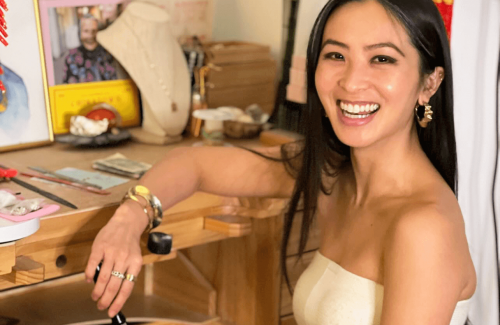
Related Articles

kelly-bit-sublima-jewelry-headshot-png

Stories

This Former Journalist Pursued Her Passion of Creating Wearable Art Through SUBLIMA Jewelry

In a world that often values practicality over creativity, it can be challenging to pursue our passions and follow our hearts. But for Kelly Bit, the founder of SUBLIMA, it was a calling that she couldn’t ignore.

After years of working as a financial news journalist, Kelly realized that she missed the creative arts as a major part of her life. She started spending her free time making jewelry, and the intentional lifestyle switch brought her a lot of fulfillment.

SUBLIMA is a sustainable, handmade jewelry brand, referencing subliminal messages that produce hidden feelings in our everyday lives. Art imitating life.

In this article, we will explore Kelly’s journey of following her passions, the artistry and intentionality behind her jewelry, and how she is bringing her love of art and design to the world through SUBLIMA.

HOW IT ALL STARTED

I’ve always loved crafting. I’m an only child, and when I was very young, I spent a lot of my time drawing or creating cardboard models of things that I found delightful. I’ve always been captivated by beautiful forms and well-loved objects in our every day and creating artful homages to them.

During my career as a journalist, I missed crafting and the creative arts, so I started spending my free time making—drawing, painting, sewing, and creating jewelry. I wanted to invest in one of those hobbies in a more disciplined way, and I saw jewelry as having commercial prospects. I enrolled in metal smithing and wax carving classes after work, and that’s what gave me the skills and confidence to start a jewelry brand.

THE CREATIVE PROCESS

I love commemorating ordinary moments of delight by capturing something of their essence through elevated and artful jewelry that I make by hand.

I have many delightful memories centered around food and the people I enjoy it with, so that’s one reason why many of the pieces are Asian food inspired. I also tend to notice beautiful and aesthetic aspects of food all the time—like the way milk tea splashes with movement, or the mesmerizing repeating folds of dumplings—so those types of details make me want to highlight how interesting they look through an unexpected art medium.

The way that I make my pieces is by carving wax by hand to create wax prototypes. The prototypes are then molded, and from the molds, the pieces are cast in recycled brass or sterling silver and polished and assembled by hand.

HER APPROACH TO SUSTAINABILITY IN MAKING JEWELRY

The casting company I work with, which is based in midtown Manhattan and family-run, uses a New York-based company called United Precious Metals to recycle their metal and for purchasing refined recycled metal to use in new castings.

In choosing to partner with my casting company, their ability to source recycled metals was important, and I love how I’ve been able to offer sustainable jewelry since day one. It’s important to me because using recycled metals compared to newly mined metals reduces greenhouse gas emissions and conserves natural resources. And I’m thrilled with the quality of the pieces—the recycled brass and sterling silver are both beautiful bright colors, and I provide a polishing cloth to keep the pieces shiny forever since none of the casted pieces are plated.

WHAT SHE HOPES TO COMMUNICATE WITH HER DESIGNS

I love seeing how different people style the jewelry and how they implement their vision of themselves—what they want to project into the world through their self-expression—using the jewelry as part of their toolkit.

My general hope is that the pieces can be marveled at as wearable works of art and that conceptually they serve as a reminder to see an elevated beauty in everyday moments. For some styles, like those based on Asian food or other cultural motifs, I’d love for people to wear them with a sense of pride or appreciation of Asian culture.

WHAT SETS SUBLIMA APART FROM OTHER BRANDS

Aesthetically, I aim to make jewelry that looks unlike anything else in the market, at once striking and timeless, with quality that lasts a lifetime. My designs are unusual and eye-catching, somewhat abstract, and can be styled as edgy or classic. Executing these concepts while drawing inspiration from my Chinese American heritage and Asian culture helps set SUBLIMA even further apart from the rest.

The rise in anti-Asian hate after the pandemic made me turn specifically to Asian culinary delicacies as a source of inspiration, to create symbols of cultural pride by elevating the beauty of Asian food through the art of jewelry in a highbrow way, and it’s not something that I’ve seen done by other artists.

Since the pandemic, and even before, there’s been a growing and palpable demand for Asian products and stories. There’s an appetite for consumer brands to create products that help reinforce the emotional connection to identity and culture. The way that I’ve been doing that with SUBLIMA is a two-pronged approach: first through visual representation, and more meaningfully, I’ve pursued partnerships with local nonprofits serving the Asian American and Chinatown communities here in New York. Since 2020, SUBLIMA has donated $65,000 to nonprofits supporting NYC’s Chinatowns, after-school programming, affordable housing, and food security.

KELLY’S VISION FOR SUBLIMA

My long-term vision is to be the premiere jewelry brand for Asians and Asian Americans and to have the jewelry represent not only high art but humanism and community impact.

One of my biggest desires and goals is for my work to gain more exposure so that its inspiration and aesthetic beauty reach more people. That means collaborating with more organizations and people who share SUBLIMA’s values, being part of events where I can meet people and build connections, getting my jewelry into more stores, and working with more cultural gatekeepers, such as editors or stylists, to spread the word.

CONNECT WITH KELLY

Website: sublimajewelry.com

Facebook: @sublimajewelry

Instagram: @sublimajewelry

Tiktok: @sublimajewelry

320723654_842347016993817_2387408927084427642_n-jpg

Stories

A Life-Changing Decision to Leave Home in Vietnam 8 Years Ago Found Success as an Amazon FBA Seller

Nhut Cao is living proof that with consistency and the right plan, you will get there.

Despite facing numerous challenges while chasing his true calling, Nhut “Justin” Cao refused to be defeated by setbacks and never lost sight of his goals. His story is not simply about winning, but also about not letting the failures hold him back. You may want to grind harder after reading about his life. 

In 2014, Nhut Cao made a life-changing decision to leave his home in Vietnam and move to the United States. Despite being deeply familiar with and accustomed to his old life, he made the difficult decision to leave everything behind and start a brand new life from scratch. He got into a decent college, and earned scholarships, hoping to follow the traditional American dream of getting a stable 9-5 job and settling down. But that kind of path didn’t make him happy.

So he dropped out of school and decided to pursue entrepreneurship full-time. He tried many different businesses – from garage sale hunts, reselling and flipping items, tutoring, nail tech, and selling goods from America to Vietnam.

One day, he decided to take a leap of faith and entered into Amazon FBA. Despite all the negativities circulating on the internet about Amazon FBA that time and his fear of failing, he still risked everything to go for it.

Follow along as we delve into Nhut Cao’s journey towards pursuing his dreams.

I SAW MANY PEOPLE BUILDING AN EMPIRE ONLINE BACK THEN WITH A HIGH 5 TO 6 FIGURES MONTHLY — AM I BEING TOO LATE TO THE PARTY?

I learned about Amazon FBA through a stranger in an online forum, the BrickSeek Deals Group for resellers. I always wondered how he could make money flow into his wallet so easily.

It didn’t take me long before I searched “How to sell on Amazon” on Google and Instagram. I saw many people building an empire online back then with a high 5 to 6 figures monthly. The first thing that came to my mind at that time was “Am I being too late to the party?”

I fell deeper into the rabbit hole and found myself searching Youtube on how to get started. But the more I looked, the more I stumbled upon negative opinions, including:

“Amazon is overly saturated,”

“It’s impossible to make money with Amazon FBA in 2015”

“Don’t try or you’ll dive straight into failure!”

As a young entrepreneur, I was too scared to fail at that time, so I blindly believed them.

I delayed my plan until two years later, after the burnout of being constantly on-the-run sourcing for products through garage sales, going to Walmart at 1 am trying to snatch some discounted laptop BrickSeek deals to only make an insignificant amount of profit, I was mentally and physically exhausted from the reseller hustle and being the one-man team from sourcing to listing, fulfilling orders to customer services. I escaped the rat race with the hope of earning my time back for my family and loved ones, but this life is draining me even more. 

I finally gave in to the idea of risking it all to Amazon FBA. I remembered telling told myself:

“After all, what do I have left to lose as an immigrant? Nothing.”

“I don’t want to keep trading my time for money as a reseller.”

“I don’t want to continue being a one-man team doing all the work myself. If I ever fail, I still have time to make it back with more experience rather than regret not doing it”

Then I scooped up all of my savings and liquidated everything I had to start my Amazon FBA. And the rest was history.  

BUT YOU KNOW WHAT IS THE BEAUTIFUL THING ABOUT BEING AN IMMIGRANT? WE DON’T GIVE UP EASILY.

It was not as easy and beautiful as many other Amazon gurus portrayed it to be on social media. I was constantly making a bunch of mistakes as a new seller and sometimes fell into the trap of self-doubting for not being able to make it drift in.

I learned everything I could from Youtube. I bought courses. I signed up for classes. But after all the hard work, there was still no sign of payoff. But you know what is the beautiful thing about being an immigrant? We don’t give up easily.

I paused to rethink all of my problems and tried to seek credible information from books and the internet to solve them. Then it finally hit home to me that maybe I was too invested in the ‘how’ when instead I could start with the ‘who’.

So I started to widen my circle, find more people who were truly making money on Amazon FBA and work for them for free. In exchange, I could build a long-term, win-win relationship with them. I could ask them for help and be always surrounded by experienced sellers.

But certainly, success won’t come overnight. There were days, weeks, and even months of not seeing any progress or result. I couldn’t find a product. I couldn’t make a sale. Being overwhelmed with bad reviews no matter how much I tried to improve the quality.

I applied many methods to overcome the challenges, such as celebrating even the smallest wins every day; or breaking my biggest goal into smaller, more manageable ones. However, the principle that helped me the most during this trying time was the 1% each day approach. 

Even on the most exhausting days, I am committed to spending at least 15 minutes on my business. By consistently dedicating time to my store, I developed a habit of working towards my goals, which can help me stay motivated and focused even during challenging times. And as I made progress, I found that my motivation and momentum increased, making it easier to stay on track and achieve even more.

Finally, in 2019, I was able to bring in close to $500k in revenues by 2019, thankful that I didn’t give up on myself.

STRATEGIES TO STAY COMPETITIVE IN THE CONSTANTLY EVOLVING AMAZON, ACCORDING TO NHUT

  • Put data over emotions: When making business decisions, it’s important to rely on data and facts rather than emotions or assumptions. 
  • Surround yourself with experienced sellers: Building a network of experienced sellers can provide you with valuable insights and knowledge that can help you make informed decisions and stay ahead of the competition.
  • Enhance your social presence: Building a strong social identity can help you connect with your customers, build brand awareness, and enhance trust. 
  • Stay away from selling me-too products: Selling unique or innovative products can help you stand out in the crowded Amazon marketplace. Focus on offering something new and different that solves a problem or fulfills a need for your customers.
  • Do not rush into the game without researching: Never think that you have known it all. There’s always something to learn, especially in the ever-changing environment of e-commerce like Amazon.

MAKING MONEY IS NO LONGER MY PRIORITY

As a seasoned Amazon FBA seller, making money is no longer my priority. Instead, I’m driven to give back to my community. As the saying goes, we attract what we want, and I have been fortunate enough to connect with like-minded individuals who share my passion for helping others.

My team in Vietnam connected me with local authorities to aid those in need and support me in every step of this ‘paying it forward’ journey. I am also proud to say that my mentees have used the financial power they earned by learning from my secrets, to donate to many less fortunate lives. Isn’t it incredible how we can use our skills and resources to make a positive impact on the world around us? 

TAKE A CHANCE

If I could go back in time, I would tell my younger self to trust in his abilities more. When I was starting, I got scared by all the negative things people were saying about Amazon and ran away in fear of failure. But once I learned to trust in myself, even when things were tough and I wasn’t making money right away, I was able to stay focused and keep pushing forward.

And that’s also what I want to say to anyone who’s still scared to take a chance. The hardest thing to overcome usually isn’t a lack of money or support from others – it’s the doubts and fears in your head. But you have to step outside of your comfort zone to make progress and grow.

So take that chance – believe in yourself, and remember, life starts outside your comfort zone!

CONNECT WITH NHUT

Find more about Nhut’s story at:

Instagram: @justinthehuncho @nhutcao

Website: amzshifu.com

V2 2023 AHN News & Stories Cards (8)-png

News

How the Covid-19 Pandemic Impacts AAPI Women Entrepreneurs

The ongoing Covid-19 pandemic has increased the obstacles facing Asian American, Native Hawaiian, and Pacific Islander (AAPI) women-owned enterprises.

Despite being a fast-growing group of business owners, AAPI women confront structural challenges and have limited access to capital, which is made worse by the pandemic’s effects on sectors like dining, retail, and personal care services. According to Hello Alice, their access to financial resources is further hampered by language problems and a lack of banking connections.

AAPI women have borne the harshest economic consequences of the Covid-19 crisis, including business closures, job losses, and increased caregiving responsibilities. However, data on their experiences remains limited and fragmented. AAPI Women’s Equal Pay Day highlights the persistent wage gap, with AAPI women earning $0.92 for every dollar earned by white men, according to the National Women’s Law Center. This wage gap, if unaddressed, could result in AAPI women losing around $267,000 over a 40-year career.

AAPI women also face significant challenges in accessing grants, loans, and capital, despite their entrepreneurial potential. Only a small fraction of federal funding provided through programs like the Paycheck Protection Program reaches AAPI-owned businesses.

FoundHer, a small business accelerator founded by Gloria Lau and Bella Hughes, aims to bridge this funding gap. It focuses on Native Hawaiian, Pacific Islander, and Asian women entrepreneurs in Hawaii, providing non-dilutive grant funds and resources to support their businesses.

Historical patterns indicate that women of color, including AAPI women, are often the first to feel the negative effects of economic downturns and the last to recover, but despite all the obstacles, AAPI women entrepreneurs exhibit resilience and resourcefulness.

heritage kulfi-jpg

News

Premium Ice Cream Brand Brings the Taste of South Asia Across America

Heritage Kulfi, a premium ice cream manufacturer known for its South Asian-inspired flavors, has been selected to participate in KeHE elevate, a program by KeHE Distributors that connects emerging brands with retailers across the country. 

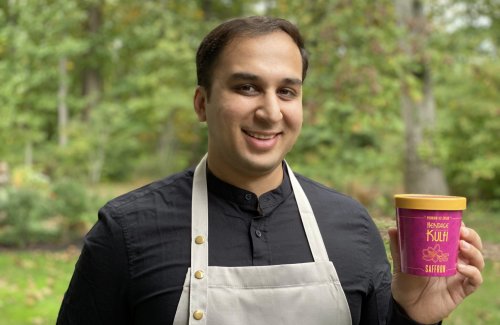
Founder and CEO of Heritage Kulfi, Mansoor Ahmed, explained that the brand was created to address a gap in the mainstream market by offering classic South Asian flavors and a creamy, traditional kulfi.

Mr. Ahmed emphasized the use of high-quality, authentic ingredients and traditional methods in crafting each flavor. Drawing from his personal nostalgia for the South Asian cuisine and desserts of his childhood in New York, he confidently developed a product that he knew others would enjoy as well.

Kelly Stockdale, KeHE’s senior category manager, stated that for a brand to be selected for the emerging brand program, it must offer something new and unique. Heritage Kulfi stood out due to its distinctive flavors, attractive packaging, and the growing consumer demand for experiencing diverse tastes. KeHE’s sales team and retail partners voted to include the premium ice cream brand in the program.

Heritage Kulfi takes pride in its handcrafted production process. According to Food Business News, the company simmers locally sourced ingredients overnight, caramelizes and browns the cream’s milk proteins before freezing, resulting in a dense, creamy texture with rich dairy notes. 

Their range of flavors includes Alphonso Mango, Cardamom Chai, Coconut, Earl Grey, Pistachio, Rosewater, Saffron, Vanilla Bean, Malai Sweet Cream, and Almond Blossom. Additionally, Heritage Kulfi is actively developing vegan and dairy alternative options.

The company aims to leverage this opportunity of being selected by KeHE to expand its distribution from the Northeast and Midwest regions to nationwide coverage within the next two years.

Featured Image Source: Heritage Kulfi