Awaken* newsletter

April 4, 2024

SHARE:

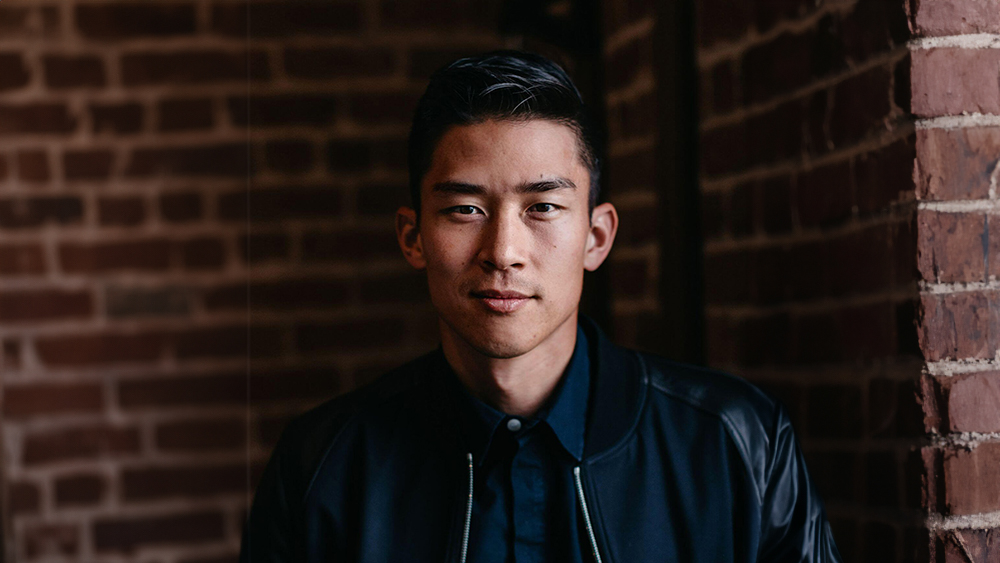
On November 10th, I had the honor of chatting with Bryant Chou. Bryant is the co-founder of Webflow, one of the leading website-building platforms in the world with a valuation of $4 billion. Within startup-land, Webflow is especially notable for being mostly bootstrapped, waiting five years before raising an additional round after their seed round in 2014.

In our conversation, we touched on a variety of topics ranging from being Asian American to working at startups vs. big tech. 

Note: Quotes were lightly edited for brevity and clarity.

EARLY CAREER

I started our conversation by asking Bryant if he had any entrepreneurial endeavors before his first official company. While he never directly started a business, Bryant did display early signs of his scrappiness.

My mom gave me twenty dollars a week for all of my lunches and whatever discretionary income. So, of course I spent most of it on food, but that essentially meant that I had nothing really left over. But I also really wanted to be a normal high school student and go to prom and go to dances and stuff like that. So I made money in high school by entering Counter-Strike tournaments. I would earn, I don’t know, a few hundred bucks in these local LAN parties. And that’s how I paid for dances. So I always kind of adapted and tried to apply myself in different ways, with whatever skill sets I had.

He continued on to talk about his motivation for getting into startups:

To be honest, I don’t know if I would have done startups if I was at Facebook or Google. You know, I didn’t land those jobs coming out of school. I wasn’t smart enough. Didn’t pass those interviews… I think because I was at a mid-tier tech company, it kind of gave me more hunger to do something on my own. I wanted a change and believed software startups were the future. I took the plunge in 2011, driven by the belief that startups would be significant, 

However, he also cautioned about rushing into startups: 

You need to think about the things that really need to be true in order to be a founder and do it successfully. One of those things is working in a space that you really want to affect and make a difference in. You just want to make sure that you’re working on something that’s worthy of 16 hour days, you know?

BRYANT’S ROLE AT WEBFLOW

Although Bryant is perhaps best known as being the co-founder and CTO of Webflow, I saw that Bryant had recently shifted his focus away from technology to growth and marketing for Webflow, so I asked him about that:

Because we were bootstrapped, we never really invested in growth and marketing. So what started as an impatient maneuver on my end, like, ‘hey, I think we need to start doing these things’ turned into, ‘hey, this is actually something that is ROI positive.’ Who would have thunk? I suppose even though I’m an engineer and builder and product person at heart, I’m also a company builder in that sense. So I’ve–for example, started our marketing, started sales, started data, started security, so all these things are just things that are just like, ‘hey, we need to do these things. Let’s figure out how to do it.’ And I think that’s something that most entrepreneurs are going to have to do. I don’t think you’d necessarily have an option to not do it.

Coincidentally, I had talked to the new CTO of Webflow, Allan, a few months prior. Alan was super nice and very sharp–a great backfill for Bryant.

NAVIGATING ASIAN IDENTITY

As the Asian Hustle Network, I naturally had to ask Bryant about how he felt being Asian qualified his experience as a founder, he started out by acknowledging the position of Asian men:

It’s a well-known fact that Asian men in Western societies have a different bar to hurdle than other people. One of the reasons why I was so keen to help produce the 38 in the Garden movie with Jeremy Lin is because he articulated this so well. Have you seen that documentary? 

I had not, in fact, seen the documentary. Oops. I watched it after the interview on his recommendation and it was very, very good. Please give it a watch! Bryant continued:

It’s my one and only film and probably the last one that I’ll ever be involved in. I’m totally okay with this because I believe this cause is important. Part of the reason why I agreed to chat with you is because we obviously have a chip on our shoulder. We are seen differently in society. I’ve dealt with it in various ways myself. I’ve taken a colorblind approach to business interactions and never thought about my race or ethnicity in certain environments. I think that’s ultimately what you have to do. As Asian people in Western society, you’re supposed to be heads down, let your actions speak for themselves. I still very much have that approach. Who knows if it’s the most optimal thing to do.

Despite his colorblind approach, Bryant was clearly very cognizant of the fact that people perceive Asians differently, and had a suggestion for our readers:

To just walk amongst people of the same race and they speak your language, I think that’s like a worthy thing to do and to dive into. I identify as Taiwanese, at least as much as I identify as an American. When I go there, I literally feel different. I feel like I’m one of the same, like I’m among my people, I’m not viewed as a minority, I’m just viewed as a normal person. I think every Asian-American should have that sensation at some point in their life that they feel like they’re seen as someone just like everyone else, and the only place where I felt that has been Taiwan.

I knew Bryant grew up in the Bay where there were a lot of Asians, so I asked him if he felt the same sensation in those areas, he suggested:

The broader construct of society that we live in is still the US, which is still 85% non-Asian. I think Asian Americans make up about 12% of the population, maybe even less. I don’t think it’s so much about not being in the majority. It’s more about the sensation that you get that you are biologically or ethnically more similar to the people that you’re walking around with in Asia.

NAVIGATING ENTREPRENEURIAL CHALLENGES

Moving onto the next topic, I asked Bryant about his emotional experience as I had heard a lot of founders talk about how difficult this aspect of running a startup was:

I thought it would be harder technically than it would be emotionally. But I would say the social emotional components of building a company are 100 times harder than the technology itself.

I followed up by asking if there were any specific experiences that stood out to him:

They’ll come up in different forms. In 2020, there were a lot of social justice issues that made running a company very challenging. Ultimately, when you’re at a company, you need to be hyper-rational. You’re faced with a conundrum between being a good steward of the company’s mission and vision and maybe what people inside your company believe, and sometimes those things clash.

It was clear that this level of situation took an emotional toll on Bryant, so I asked him how he copes with it and prevents it from seeping into his personal life:

You compartmentalize most of it. It helps to have a supporting spouse and partner. It’s great to have kids that can distract you from this.

ADVICE FOR YOUNG PROFESSIONALS

Adding on his comments about entrepreneurial pain, Bryant offered:

I think like if you’re in your 20s, I would actually be chasing that kind of pain. It’s the best time to chase pain and suffering. If it means that will lead to a certain level of intellectual expansion, social emotional awareness. There’s no better time to find the limits of what you’re capable of than when you’ve graduated, when you’ve got a whole life in front of you. Like, it’s time to see what you’re made of. So I’d be a huge proponent of young folks going to startups that are hectic and crazy, working in environments where they can learn, dedicating time and energy to perfecting a craft. Those are things that you don’t learn in school. And those are only things that you can chase on your own accord.

This made me think about how I have a lot of friends who go into Big Tech. A good number of them say that they want to pursue their own company eventually, but want to get their start at a big company to build up their skills. I asked Bryant what he thought about this approach:

There’s two kinds of learning that you can do at a big tech company. One is technology related. So you can go and immerse yourself in a technology, and be surrounded by technologists that can help you. That’s something very valuable for sure, but learning how to do things the way Meta or Google does things is not transferable at all to startups. None of their processes matter. None of their ways of thinking about building products matter. It’s just a whole ‘nother ball game. There are maybe some professional skills that you get to pick up. Communication, the ergonomics around the work–such as just documenting your work, making your work transparent, and just picking up good habits–that’s for sure. But there’s nothing like working in an early stage startup where you’re building something from nothing. You know, you’re almost never doing that at a big company.

I was somewhat surprised that Bryant felt that the Meta or Google way of thinking about products was applicable, so I pressed him to elaborate:

So actually, that’s a great example of something that I did retain. It’s more so the principles at which you approach building a product, right? Developing customer empathy, ensuring you’re not over-engineering things really matters. Facebook and Meta have an abundance of resources. Engineers at large companies are very good at building incredible things that are well-defined in a narrow spectrum. However, in a startup, you’re trying to go as wide as possible with what an engineer could potentially contribute to and build 60 to 80% of it. It doesn’t need to be perfect.

Bryant’s comment about over-resourced companies made me think about the opposite, under-resourced companies, and how I often hear about employees at those companies working weekends and long nights. I asked Bryant if he thought that was necessary in a startup:

There’s a time and place for it. I don’t believe nights and weekends are required. It’s important for people in their 20s to find their limits professionally and personally. This means making time for personal things like dating, hanging out with friends, and attending events. It’s about striking the right balance. For instance, I encourage my team members to take vacations when needed. It’s crucial for startup leaders to have a good pulse on their employees, understanding their strengths and weaknesses, and checking in on their well-being. I don’t believe anyone at SpaceX or elsewhere can stare at a problem for 100 hours a week and feel productive. It’s important to step out of your zone, draw inspiration from different things, and take breaks. To live a balanced life. When I say that people should find their limits professionally and personally, it’s like that limit is different for each person. But you have to feel like you’re able to stretch, build the muscle for your mental and physical strength to stretch when you need it. I think that’s really important to do.

SHOUTOUTS  

Webflow is hiring across multiple functions! Please visit this link to find and apply for open roles, or feel free to get in touch with Bryant at bryant@webflow.com if you would like to reach out personally for opportunities.

38 at the Garden, the short film about Jeremey Lin which Bryant helped produce is available to watch on HBO Max. The film is 38 minutes short and is a must-watch for all Asian Americans.

Thank you Bryant for speaking with us!

Related Articles

Sporting News-jpeg

News

The Inspiring Journey of a 17-Year-Old Indian American Baseball Prodigy

Arjun Nimmala’s journey serves as an inspirational story for Indian Americans across the nation.

Born to parents who migrated from Andhra Pradesh, India, Arjun shares a similar background with many first-generation Indian Americans. Arjun grew up in Dover, Florida, where he discovered his passion for baseball and dedicated himself to pursuing his dream of playing in the Major Leagues.

Arjun’s parents, Balu and Neeru Nimmala, brought with them a love for sports from their native country. Both competed in various sports, including track and field, cricket, basketball, and volleyball. Arjun and his younger brother, Akhil, inherited their parents’ athletic abilities and developed a deep passion for baseball.

At the age of 12, Arjun made the decision to focus solely on baseball, leaving behind soccer and basketball. He began to demonstrate his potential as he honed his skills in the sport. 

Arjun’s dedication and hard work paid off during his senior year at Strawberry Crest High School, where he garnered numerous accolades. With an impressive batting average of .479, six home runs, 29 RBIs, and 30 runs scored, Arjun’s exceptional performance earned him the title of Player of the Year.

Arjun’s selection by the Toronto Blue Jays in the first round of the MLB Draft marks a significant milestone in his career. As the first first-generation Indian American to be drafted at such a high position across the four major sports, Arjun has shattered barriers and become a trailblazer in his community. According to MLB, his remarkable achievement follows in the footsteps of other notable Indian American athletes, such as left-handed pitcher Rohan Handa and basketball player Satnam Singh.

At the age of 17, Arjun’s success not only represents the realization of his own dreams but also serves as an inspiration for young Indian Americans aspiring to make their mark in the world of sports.

Featured Image Source: Sporting News

IMG_7365

Stories

She Has Built A Community of Over 150k Parents Through Her Social Media Platform to Share Knowledge and Amplify the Marginalized

In a world where racial divisions persist and human dignity is often overlooked, Esther Park, a Korean American, has chosen to raise her voice and make a positive impact. Growing up as an immigrant child, she witnessed the struggles faced by her parents and the marginalized communities around her.

Esther’s journey led her to work with Liberty in North Korea, a non-profit organization that rescues refugees and advocates for their rights. She passionately believes in the inherent value of every human being, regardless of their background. Esther’s commitment to social justice extends beyond her work at Liberty in North Korea.

As a content creator, she has built a community of over 150,000 parents, using her platform to share knowledge and inspire others. Despite the challenges of balancing her various roles, Esther’s dedication to her daughter, her faith, and her mission remains unwavering. She aims to harness the power of social media to drive positive change, advocating for dignity, equality, and the betterment of society.

Through her journey and her inspiring message, Esther encourages everyone to embrace their influence and use it to uplift others, spreading love and serving those in need. Read through as Esther shares with us her experiences growing up as a Korean American, her work at Liberty in North Korea, her role in the church, and her journey as a social media influencer advocating for marginalized communities and give a voice to the voiceless. 

GROWING UP AS A KOREAN AMERICAN

Growing up in Seattle, Washington, a predominately majority culture city, I was the “popular Asian kid.” My friends would say things like “Oh but you’re the cool Asian.” There were some ways I clung to that. But it also unsettled me. A lot. It bothered me that certain people were determined as “in” and accepted or not by the color of their skin. But I never spoke up. Since then, I’ve witnessed many horrors of racism. And I truly believe in the need for racial reconciliation. Especially now, living as an Asian American through Covid-19, I’ve realized that I need to raise my voice.

MANY ASK IF I GOT INVOLVED BECAUSE I’M KOREAN, BUT MY ANSWER HAS AND ALWAYS WILL BE: “NO, I’M INVOLVED BECAUSE I’M HUMAN”. 

Growing up our family didn’t have much but I know that my mom always worked hard and tirelessly to make sure we had the best childhood growing up. We were fortunate enough that our hard working immigrant parents could make just enough, but I knew early on that it wasn’t the case for everyone. I went to school with friends who simply couldn’t get good grades or make it to all of their classes because they were busy working part time jobs while going to school to support their families from an early age. It was so heartbreaking for me. The experience as an immigrant child is unique yet unsettling. We see our parents working harder than most yet they struggle to even reach the middle class because of language barriers and learning to assimilate to a new culture. I always knew growing up that I’d want to make sure that I could do everything in my power to help minorities and to help those that didn’t have a voice.  

I’ve also spent almost my whole life in the church during ministry and mostly my focus has been on local outreach and missions. I currently oversee our City Partnerships ministry which is where me and my team are able to give our church members an opportunity to serve the city of Los Angeles that may be living under the poverty line. A few of the organizations that we work with is LA Mission, which is a non profit that works with the houseless population in Los Angeles to empower them to get back up on their feet and also with a non profit called Lincoln Heights Tutorial program that is a non profit with a mission to serve underserved and overlooked youth of East Los Angeles. They focus on making a local and significant community impact. They do this through a combination of tutoring services to close the academic gap, and youth programs to prepare teens for life after high school.

THE ROLE MY FAMILY PLAY IN SHAPING MY VALUES, PASSIONS, AND WORK

My mom immigrated to the States when she was in High School, as the eldest she was busy helping my grandparents with language barriers and her and my aunts and uncles all helped with their gas station. My dad came sometime after College, he started off as a dishwasher at a Sushi restaurant and eventually made his way up and now is a Sushi Chef and restaurant owner that is well known for some of his rolls in menus at different Sushi restaurants. He is also known for making Sushi for some of the top Major League Baseball players and South Korea baseball teams. My family came with absolutely nothing besides the thought of raising their families to achieve the “American dream”. I’m sure their eyes were opened to the brokenness of this country, but they worked hard to give their children everything. 

In many ways, my family and a lot of immigrant families were looked down on, this from an early age made me realize that I would never look down on someone for being different. I believe that we are all thread together as humanity and that we all must work together in helping this world become a better and brighter place.

Processed with VSCO with a6 preset

WORK AT LIBERTY IN NORTH KOREA

I’ve spent most of my late 20s working with Liberty in North Korea – a non-profit that rescues North Korean refugees hiding in China. Many ask if I got involved because I’m Korean, but my answer has and always will be: “No, I’m involved because I’m human”. What first sparked my interest in this issue was because I saw other human beings being treated less than just based on the circumstance or situation they were placed in. I hope that helping people dwelling in the margins, living every day in fear and helplessness, will never come with a condition. That we’ll continue to feel the tug to love and serve those in need. After all, we’re all human. 

Liberty in North Korea is a non-profit organization that believes that one day every North Korean man, woman and child will be free. We believe that every human being believes to have their basic human rights and dignities. We’re helping North Koreans escape a brutal regime through a 3,000-mile secret rescue route to freedom. It’s illegal for North Koreans to leave their country yet thousands of North Koreans risk their lives to reach freedom. Once they get into China, they are still not free. Because of the relationship that China has with North Korea, if North Koreans are caught by Chinese authorities they can be sent back to North Korea where they can face harsh punishments and imprisonment. 70% of women that are hiding in China are trafficked or sold as sex brides because of their difficult situations. This is where we come in to help them reach freedom through our rescue routes.

Once they have been rescued and resettled in South Korea and America, we also work with them in their resettlement journey to help them build self efficacy and reach success in their new lives. We also have a program called “Changing the Narrative”, unfortunately most of the world knows and sees North Korea based on what we see on the news which is about the Kim Regime or their nuclear missiles but we want to shift the focus to the 25 million innocent and real lives of the North Korean people, people who are just like you and I. 

I got involved with Liberty in North Korea when I went to UCLA, I helped start the chapter there and started having fundraisers very regularly and got involved with our headquarters that way. The summer of my senior year of college I went on a Christian mission trip to the border of China and North Korea that was life changing. I was able to hear from and befriend many North Koreans that were hiding in China and hear their stories. We would have to go to their homes at 3AM and turn off the lights and whisper to hear their stories. Right after that I interned with Liberty in North Korea where I traveled around the East Coast for 3 months sharing the stories of the North Korean people for hundreds of people. During that internship the HR manager called me and asked if I wanted to apply for a position and working at Liberty in North Korea was my first full time job after graduating at UCLA. 

BUILDING A COMMUNITY OF OVER 150K PARENTS AND PARENTS-TO-BE

During my maternity leave when I was able to step away from my day jobs to recover and to take care of my newborn, I was able to find a way to do something fun and meaningful. I spent a lot of time when my newborn was napping to learn about parenting and different methods and ways to ensure that my daughter was getting the best rest and care possible. I started posting my journey on Instagram and was able to build a following on Instagram and Tiktok of over 150,000 parents and parents-to-be in a matter of 3 months. It was an innovative way of creating value based on my circumstance. I’ve always believed that people come first, so this new venture I’ve entered into has always been about my community. I love being able to engage with them and share what I’ve experienced and learned so that they can learn from my mistakes and so that I can learn from them as well. 

BALANCING WORK AT LIBERTY IN NORTH KOREA,CHURCH, AND SOCIAL MEDIA

To be honest, it’s been hard. But I try to focus on my work at Liberty in North Korea from 9-5 and focus on Church ministry and content creation during the evenings or on weekends when Shiloh is asleep. But when Shiloh is awake I try to interact with her and spend as much time with her as possible. It’s important to me that she sees a mom that isn’t always working and on her screen but that is interacting with her and always putting her first. To be honest, a lot of this is of course because I am passionate about the work that I do but it’s also a means to a way to provide a life to Shiloh where she can flourish and grow in some ways that I may not have been able to. She is my ultimate motivation. 

CHALLENGES FACED IN VARIOUS ROLES, AND HOW I’VE WORKED TO OVERCOME THEM

I think the work I’ve done at non-profits isn’t very “cool” or “flashy”, it’s hard to get people to care about these issues, so that has always been very difficult. I love that there has been a huge movement of young individuals that have risen up to use their voices. For example, there was so much attention around the Black Lives Matters movement and the Stop AAPI Hate movement, which is so encouraging to me. It made me so happy to know that this type of awareness could be made. But it’s been heartbreaking to see that so few people in the world know about what’s going on in North Korea. The UN has deemed that North Korea has one of the greatest human rights crises in the world, yet I feel that there is little to almost no focus in the media on North Korea.

I know that it’s a complicated issue but they need our help. I oversee the grassroots movements of students and supporters at Liberty in North Korea and although it’s been discouraging at times, I am so grateful for the consistent supporters that we have all over the world. We have over 100 student and community led LiNK Teams all over the world that I have the privilege to lead and oversee. They are the ones that are showing up and helping to change the narrative to focus on the North Korean people. 

HARNESSING SOCIAL MEDIA TO DRIVE POSITIVE CHANGE TO ADVOCATE FOR DIGNITY AND EQUALITY

I think what I’m passionate about is two fold:

  1. When people are not treated with dignity and care, I believe that all human beings deserve this. 
  1. When people are suffering because of the lack of resources that they have, when there is an abundance in the world that ought to be shared.

So when it comes to these two areas, I want to be able to use my platform to share about what’s going on in the world and how we can help. For example, sharing different go fund me’s and fundraisers, sharing opportunities to help a specific person or community in need, starting my own fundraiser, sharing ways to contact your congressman or senator to push for change, etc. I have been able to raise over $40,000 holding fundraisers for Liberty in North Korea and other charities that I’ve mostly been able to leverage through my social media channels. 

ADVICE TO MOM CONTENT CREATORS  LOOKING TO MAKE A POSITIVE IMPACT THROUGH SOCIAL MEDIA 

I really don’t like the word “influencer”, but what I do want to share is that we indeed are all influencers whether small or big your following. There will always be someone that is influenced by you. You may be influencing your child everyday because they look up to you and learn from you just by watching you. You may have watched a good Netflix show that you’ve told all of your friends about. You may have taught your mom and dad how to use the latest app on their smartphones. We are all influencing others in some way or another, but whether we are influencing people to do good or to do bad, is the choice that we get to make everyday. My faith is very important to me and something that I have always lived by is to love God and to love others.

I know that God has placed me on this earth to love others and to always put others before myself. But whether you believe in God or not, I’d want to encourage other moms that want to make a positive impact in the world to always think of the other and to always look at everything you do (including social media and content creation) with the lens of “how can I love or serve the other today”. I know that everyone is fighting their own battles and struggling so I try to find ways to make people smile through my content and if that’s the way that God is using me as a channel of His love and blessing, then I’m grateful for that opportunity. 

CONNECT WITH ESTHER

Instagram: @estheryunpark  

Tiktok: @esthersoyunpark 

Youtube: Esther Soyun Park

fb-jpeg

News

Henderson Welcomes New Asian-Owned Coffee Shop Inspiring the Asian Community

Henderson, Nevada has recently welcomed a new coffee shop that not only offers a unique Asian twist but also serves as a place of representation and empowerment for the community.

In the spirit of celebrating Asian American and Pacific Islander Heritage Month, local business owner Abel Garcia introduces Lovely Mempin to KTNV, the proud owner of Evergreen Coffee, who aims to inspire and empower fellow entrepreneurs from similar backgrounds.

Owning a business has always been a cherished dream for Lovely, driven by her desire to succeed in a society that often limits opportunities for minorities.

“Growing up I felt like there was a very defined narrative of what it meant to be Asian and I struggled with that because I felt like I was never good enough to be Asian or good enough to be American,” Lovely said to KTNV. She was originally from Manila, Philippines, moved to California, and eventually to Las Vegas.

Image Source: Linkedin / Lovely Mempin

Evergreen Coffee showcases a diverse range of Asian delicacies, including the peach mango pie from Lovely’s childhood and Indian-style toast, which breathe life into her cultural heritage.

Customers like Kyle Wong find solace in businesses like Evergreen Coffee, as they provide a sense of belonging and allow genuine representation of Asian culture. Wong appreciates establishments that bring forth authentic Asian experiences, such as tea businesses that evoke a nostalgic sense of home.

Aside from providing a delightful Asian-inspired coffee experience, Evergreen Coffee also symbolizes the strength and resilience of the Asian community in Las Vegas. Through her business, Lovely seeks to inspire others in the Asian community and to set an example for them to be bold and to take risks.

Featured Image Source: FB (Evergreen Coffee)

341742102_699791085234766_8776330555256744004_n-jpg

Stories

She Started A Sushi Side Hustle After Getting Engaged, Generated $100K One Year Later For Her Wedding

Whether you’re planning a wedding, considering starting a side hustle, or simply looking for some inspiration to pursue your passions, this story is one you won’t want to miss.

Weddings are supposed to be one of the most memorable moments in a couple’s life, but the reality is that the cost of making that dream a reality can be overwhelming, especially for Asian weddings – with the elaborate customs and traditions, and the pressure of inviting every distant relative, including aunts you may not even know.

This is why last year, Lavinia Doan (Bao Nhu) decided to start LAV SUSHI, shortly after getting engaged. She wasn’t sure how to come up with funds for her wedding, and as a daughter of refugees, she had to start from scratch.

In a year of engagement, Lav achieved a milestone: she was able to save up $100K from this side hustle that she used to pay for her wedding. From being a one-woman team, her husband has now joined her in her sushi journey.

FOR THE LAV OF SUSHI

Lav is originally from DC, but she moved to Texas about 5 years ago for a job in oil and gas. She was supposed to work off-shore as an engineer in South America, but due to COVID, she was sent to various places like Midland, Carlsbad, and West Virginia. Although not the most exciting places, she tried to make the most of it by expensing meals, specifically sushi, which she loved. However, she found that the sushi in those places was terrible, so she started making her own.

Lav enjoyed making sushi, but there was a lot of prep work involved, so she started inviting friends over for sushi-making parties to share her passion with them. For her, having friends and family over for a meal was a way to show that she cared for them. Eventually, she left her job in oil and gas and started working in tech, where she was fully remote. Missing the human interaction from her previous job, she began seeking out ways to meet new people.

Being an extroverted person, Lav decided to list sushi classes on Airbnb Experiences as a way to meet people and share her passion with them. What started as a passion project soon turned into a side hustle when she got engaged and needed to find a way to pay for her wedding.

They started with sushi classes which are still their bread and butter, but have since expanded into catering, and homakases (omakase at home).

CHALLENGES OF STARTING HER BUSINESS

It was only two months after the first few classes when Lav got engaged.

Lav and her partner, Dan, started the wedding planning process and quickly realized that the cost of their dream wedding was almost triple what they had planned for. Post-COVID backups and inflation made for an expensive wedding. She knew that they had to either sacrifice their vision for the wedding or find another way to save up.

For them, the wedding was more than just a party to celebrate their marriage; it was an opportunity to give back to their friends, family, and colleagues and treat them to a fun weekend. They felt positively impacted by the people around them and wanted to return the favor at their wedding.

Starting her own business posed the biggest challenge for Lav as she struggled to manage and prioritize her time. In addition to working full time and planning their wedding in the US and Vietnam, she also wanted to maintain a semi-normal social life. She enjoyed spending time with friends, family, her partner, and even alone time. The business was a one-woman show for a long time until she realized that it wasn’t sustainable.

“I would joke with my partner that we would be able to afford the wedding we wanted but wouldn’t have anyone to invite because I hadn’t been able to find time to spend time with friends and colleagues, even my dog and partner were feeling the neglect!” Lav shared. She sacrificed sleep, workouts, and nutrition.

Many nights, after a long day of work and sushi-making, she questioned if it would all be worth it.

EFFECTIVE TIME MANAGEMENT WHILE RUNNING A BUSINESS AND PLANNING A WEDDING

In terms of time management, Lav admits that she is still learning how to do it well.

“I am a normal person and sometimes find myself spending too much time on my phone mindlessly scrolling, forgetting tasks that need to be done, and inefficiently bouncing from one task to the other. But I think it’s okay!” Lav said, and shared a few strategies that have helped her become more productive:

  • Waking up early – She wakes up early every morning at 6 am to work out at a pilates studio that charges her if she misses a class. This incentivizes her to start the day early and avoid the temptation to stay in bed and scroll through her phone.
  • Blocking off hours – She blocks off hours in her schedule to focus on specific tasks, which helps her prioritize and manage her time more effectively.
  • Outsourcing – She has learned to outsource tasks that don’t bring her joy or are too time-consuming. This includes hiring people to help with her sushi business and outsourcing tasks in her personal life.
  • Knowing your worth and what your time is worth – This helps her weed out opportunities that aren’t worth pursuing from a time, profitability, and brand standpoint.
  • Never compromising the mission – Her mission is to bring the joy of sushi into people’s homes and educate them along the way. She refuses to sacrifice the quality of ingredients or cut costs to increase profitability because the joy and fulfillment of bringing this experience to people’s homes are more important to her than money.

MEMORABLE MOMENTS AND EXPERIENCES

Most of Lav’s friends know that she really likes a challenge, so much so that she feels like being purposefully unprepared presents its own challenge.

Lav signed up for the Houston Marathon, her second marathon ever at that point in time, which she had not trained at all for. She also accidentally overbooked a public sushi class for that same evening in her home. It was her biggest class so far.

So she ran the Houston Marathon, walked to a bar to get some drinks with friends, and then went home to start prepping for her sushi class. LAV SUSHI was still very young at this point, so procedures weren’t very optimized at that point. “The class went well, but there were definitely moments where I thought I would drop the rice pot because my legs were quivering, and I could definitely tell that some guests were uncomfortable by how full the class was. Let me tell you, I never overbooked a class again,” she shared.

That’s not the end of it. After class, Lav cleaned up and started packing for a 2-month ski trip in Colorado. She couldn’t remember if she slept or not, but she did manage to catch her 5 am redeye the following morning.

“Sometimes I think about that day, and get tired just thinking about it. But I really did show myself what I can get done in a day. There are countless amazing experiences I have had with clients that I could write a novel. I have made so many friends and connections through the business, and am thankful to have gotten to know these people!” she adds.

EXCITING NEWS FOR LAV SUSHI

Despite all the challenges that Lav faced in running her business, she was able to generate $100K in one year for her wedding.

Lav and Dan got married just a month ago and they are now taking a break from their Houston-based business to focus on personal matters and other projects. They will soon embark on a six-week expedition to Asia to celebrate their second wedding and honeymoon adventure.

Their dedicated team will be taking care of LAV SUSHI in their absence, ensuring the city continues to enjoy the sushi experiences they offer.

In the meantime, they have some exciting news to share:

“We have been working on launching LAV SUSHI in Atlanta and it is fully operating and ramping up. We would LOVE some AHN support in ATL!”

WHAT MAKES LAV SUSHI UNIQUE AND WELL-LOVED

Lav thinks that the reason why clients of 2000+ love LAV SUSHI could be due to the personalized experience that is tailored to their taste preferences, with each menu being curated to suit their needs.

LAV SUSHI also offers unique catering menus that include a live chef and unlimited sushi, which always brings a “wow” factor to the guests. “People love that they can watch the chef’s roll the sushi right in front of them, and that they can make any requests on demand,” Lav said.

Another highlight of LAV SUSHI is their omakase concept, where they curate a surprise menu within the clients’ budget, which they can enjoy in the comforts of their own home.

CONNECT WITH LAV

Instagram: @lavsushi

Facebook: @lavsushi

Tiktok: @lavsushimaking