Awaken* newsletter

April 4, 2024

SHARE:

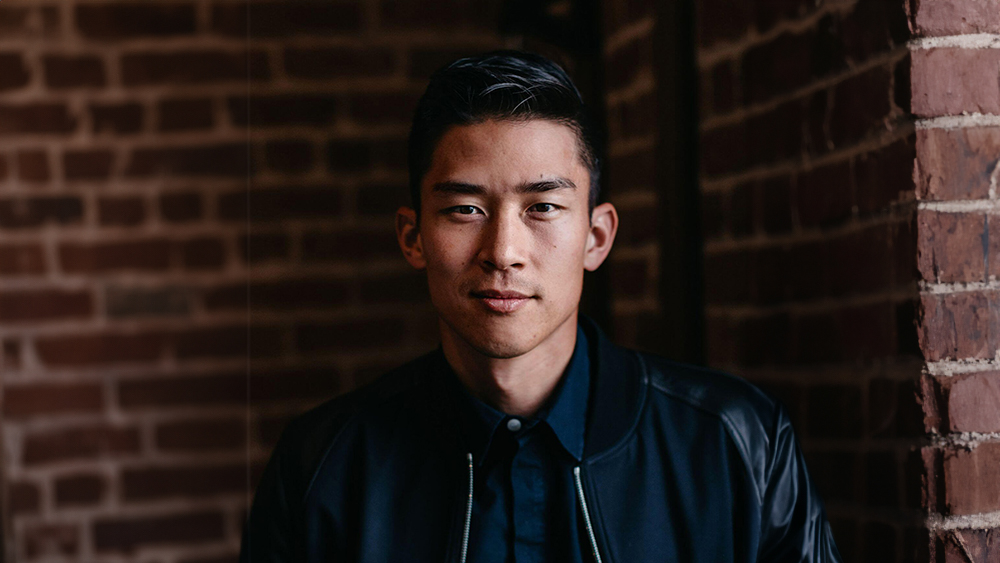
On November 10th, I had the honor of chatting with Bryant Chou. Bryant is the co-founder of Webflow, one of the leading website-building platforms in the world with a valuation of $4 billion. Within startup-land, Webflow is especially notable for being mostly bootstrapped, waiting five years before raising an additional round after their seed round in 2014.

In our conversation, we touched on a variety of topics ranging from being Asian American to working at startups vs. big tech. 

Note: Quotes were lightly edited for brevity and clarity.

EARLY CAREER

I started our conversation by asking Bryant if he had any entrepreneurial endeavors before his first official company. While he never directly started a business, Bryant did display early signs of his scrappiness.

My mom gave me twenty dollars a week for all of my lunches and whatever discretionary income. So, of course I spent most of it on food, but that essentially meant that I had nothing really left over. But I also really wanted to be a normal high school student and go to prom and go to dances and stuff like that. So I made money in high school by entering Counter-Strike tournaments. I would earn, I don’t know, a few hundred bucks in these local LAN parties. And that’s how I paid for dances. So I always kind of adapted and tried to apply myself in different ways, with whatever skill sets I had.

He continued on to talk about his motivation for getting into startups:

To be honest, I don’t know if I would have done startups if I was at Facebook or Google. You know, I didn’t land those jobs coming out of school. I wasn’t smart enough. Didn’t pass those interviews… I think because I was at a mid-tier tech company, it kind of gave me more hunger to do something on my own. I wanted a change and believed software startups were the future. I took the plunge in 2011, driven by the belief that startups would be significant, 

However, he also cautioned about rushing into startups: 

You need to think about the things that really need to be true in order to be a founder and do it successfully. One of those things is working in a space that you really want to affect and make a difference in. You just want to make sure that you’re working on something that’s worthy of 16 hour days, you know?

BRYANT’S ROLE AT WEBFLOW

Although Bryant is perhaps best known as being the co-founder and CTO of Webflow, I saw that Bryant had recently shifted his focus away from technology to growth and marketing for Webflow, so I asked him about that:

Because we were bootstrapped, we never really invested in growth and marketing. So what started as an impatient maneuver on my end, like, ‘hey, I think we need to start doing these things’ turned into, ‘hey, this is actually something that is ROI positive.’ Who would have thunk? I suppose even though I’m an engineer and builder and product person at heart, I’m also a company builder in that sense. So I’ve–for example, started our marketing, started sales, started data, started security, so all these things are just things that are just like, ‘hey, we need to do these things. Let’s figure out how to do it.’ And I think that’s something that most entrepreneurs are going to have to do. I don’t think you’d necessarily have an option to not do it.

Coincidentally, I had talked to the new CTO of Webflow, Allan, a few months prior. Alan was super nice and very sharp–a great backfill for Bryant.

NAVIGATING ASIAN IDENTITY

As the Asian Hustle Network, I naturally had to ask Bryant about how he felt being Asian qualified his experience as a founder, he started out by acknowledging the position of Asian men:

It’s a well-known fact that Asian men in Western societies have a different bar to hurdle than other people. One of the reasons why I was so keen to help produce the 38 in the Garden movie with Jeremy Lin is because he articulated this so well. Have you seen that documentary? 

I had not, in fact, seen the documentary. Oops. I watched it after the interview on his recommendation and it was very, very good. Please give it a watch! Bryant continued:

It’s my one and only film and probably the last one that I’ll ever be involved in. I’m totally okay with this because I believe this cause is important. Part of the reason why I agreed to chat with you is because we obviously have a chip on our shoulder. We are seen differently in society. I’ve dealt with it in various ways myself. I’ve taken a colorblind approach to business interactions and never thought about my race or ethnicity in certain environments. I think that’s ultimately what you have to do. As Asian people in Western society, you’re supposed to be heads down, let your actions speak for themselves. I still very much have that approach. Who knows if it’s the most optimal thing to do.

Despite his colorblind approach, Bryant was clearly very cognizant of the fact that people perceive Asians differently, and had a suggestion for our readers:

To just walk amongst people of the same race and they speak your language, I think that’s like a worthy thing to do and to dive into. I identify as Taiwanese, at least as much as I identify as an American. When I go there, I literally feel different. I feel like I’m one of the same, like I’m among my people, I’m not viewed as a minority, I’m just viewed as a normal person. I think every Asian-American should have that sensation at some point in their life that they feel like they’re seen as someone just like everyone else, and the only place where I felt that has been Taiwan.

I knew Bryant grew up in the Bay where there were a lot of Asians, so I asked him if he felt the same sensation in those areas, he suggested:

The broader construct of society that we live in is still the US, which is still 85% non-Asian. I think Asian Americans make up about 12% of the population, maybe even less. I don’t think it’s so much about not being in the majority. It’s more about the sensation that you get that you are biologically or ethnically more similar to the people that you’re walking around with in Asia.

NAVIGATING ENTREPRENEURIAL CHALLENGES

Moving onto the next topic, I asked Bryant about his emotional experience as I had heard a lot of founders talk about how difficult this aspect of running a startup was:

I thought it would be harder technically than it would be emotionally. But I would say the social emotional components of building a company are 100 times harder than the technology itself.

I followed up by asking if there were any specific experiences that stood out to him:

They’ll come up in different forms. In 2020, there were a lot of social justice issues that made running a company very challenging. Ultimately, when you’re at a company, you need to be hyper-rational. You’re faced with a conundrum between being a good steward of the company’s mission and vision and maybe what people inside your company believe, and sometimes those things clash.

It was clear that this level of situation took an emotional toll on Bryant, so I asked him how he copes with it and prevents it from seeping into his personal life:

You compartmentalize most of it. It helps to have a supporting spouse and partner. It’s great to have kids that can distract you from this.

ADVICE FOR YOUNG PROFESSIONALS

Adding on his comments about entrepreneurial pain, Bryant offered:

I think like if you’re in your 20s, I would actually be chasing that kind of pain. It’s the best time to chase pain and suffering. If it means that will lead to a certain level of intellectual expansion, social emotional awareness. There’s no better time to find the limits of what you’re capable of than when you’ve graduated, when you’ve got a whole life in front of you. Like, it’s time to see what you’re made of. So I’d be a huge proponent of young folks going to startups that are hectic and crazy, working in environments where they can learn, dedicating time and energy to perfecting a craft. Those are things that you don’t learn in school. And those are only things that you can chase on your own accord.

This made me think about how I have a lot of friends who go into Big Tech. A good number of them say that they want to pursue their own company eventually, but want to get their start at a big company to build up their skills. I asked Bryant what he thought about this approach:

There’s two kinds of learning that you can do at a big tech company. One is technology related. So you can go and immerse yourself in a technology, and be surrounded by technologists that can help you. That’s something very valuable for sure, but learning how to do things the way Meta or Google does things is not transferable at all to startups. None of their processes matter. None of their ways of thinking about building products matter. It’s just a whole ‘nother ball game. There are maybe some professional skills that you get to pick up. Communication, the ergonomics around the work–such as just documenting your work, making your work transparent, and just picking up good habits–that’s for sure. But there’s nothing like working in an early stage startup where you’re building something from nothing. You know, you’re almost never doing that at a big company.

I was somewhat surprised that Bryant felt that the Meta or Google way of thinking about products was applicable, so I pressed him to elaborate:

So actually, that’s a great example of something that I did retain. It’s more so the principles at which you approach building a product, right? Developing customer empathy, ensuring you’re not over-engineering things really matters. Facebook and Meta have an abundance of resources. Engineers at large companies are very good at building incredible things that are well-defined in a narrow spectrum. However, in a startup, you’re trying to go as wide as possible with what an engineer could potentially contribute to and build 60 to 80% of it. It doesn’t need to be perfect.

Bryant’s comment about over-resourced companies made me think about the opposite, under-resourced companies, and how I often hear about employees at those companies working weekends and long nights. I asked Bryant if he thought that was necessary in a startup:

There’s a time and place for it. I don’t believe nights and weekends are required. It’s important for people in their 20s to find their limits professionally and personally. This means making time for personal things like dating, hanging out with friends, and attending events. It’s about striking the right balance. For instance, I encourage my team members to take vacations when needed. It’s crucial for startup leaders to have a good pulse on their employees, understanding their strengths and weaknesses, and checking in on their well-being. I don’t believe anyone at SpaceX or elsewhere can stare at a problem for 100 hours a week and feel productive. It’s important to step out of your zone, draw inspiration from different things, and take breaks. To live a balanced life. When I say that people should find their limits professionally and personally, it’s like that limit is different for each person. But you have to feel like you’re able to stretch, build the muscle for your mental and physical strength to stretch when you need it. I think that’s really important to do.

SHOUTOUTS  

Webflow is hiring across multiple functions! Please visit this link to find and apply for open roles, or feel free to get in touch with Bryant at bryant@webflow.com if you would like to reach out personally for opportunities.

38 at the Garden, the short film about Jeremey Lin which Bryant helped produce is available to watch on HBO Max. The film is 38 minutes short and is a must-watch for all Asian Americans.

Thank you Bryant for speaking with us!
Related Articles

82EF93C1-0E09-4458-B3F1-EE5FF945AC38

Stories

Meet the CrossFit Athlete Breaking Records and Stereotypes in a Field We All Thought We Knew

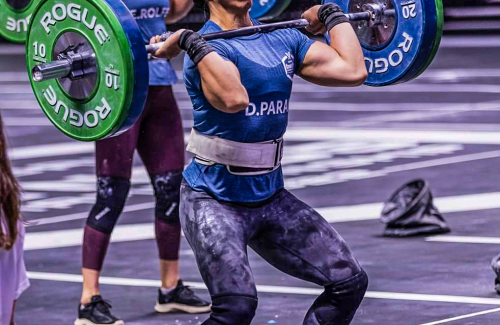
Meet Dana Paran, a Filipino-American athlete who has broken down stereotypes and redefined what it means to be a CrossFit champion. Dana’s path, as one of the first people from her background to make her imprint on the global scene, is a powerful symbol of dedication and diversity.

Dana’s path to success is paved with sacrifices that reflect her unwavering commitment, including a daily routine that revolves around rigorous training, meticulous nutrition, and forsaking ordinary celebrations in pursuit of greatness.

Through an exclusive AHN interview with Dana, we witness not just a remarkable athlete, but a true advocate for change and a trailblazer for a more diverse and inclusive future in sports.

Join us as we discover more about her journey in the world of CrossFit.

HOW DOES IT FEEL TO REPRESENT THE PHILIPPINES AND ASIAN ATHLETES IN THE WORLD OF CROSSFIT?

Mixed emotions. I feel very privileged and extremely proud to represent the Philippines as one of the first Fil-American athletes – the fact that I am one of the first points out the lack of DEI (diversity – equity – inclusion) in the sport.

Representation matters. Seeing professional athletes that represent minorities is crucial for aspiring athletes. I hope that I can inspire Filipino/AAPI/Asian athletes to continue to break stereotypes.

COULD YOU SHARE A SPECIFIC INSTANCE WHERE YOU HAD TO MAKE A SIGNIFICANT SACRIFICE TO PURSUE YOUR GOALS?

Honestly, from the outside looking in, my entire career is one overarching ‘sacrifice.’ My daily activities are all dictated by the fact that I need to be able to train for 5-8 hours, fuel my body to sustain my training, and get enough rest and recovery to do it all again when I wake up.

For now, I miss out on celebrating weddings, date nights, vacations, and holidays all in the pursuit of greatness. On the days that my motivation battery is at 0, I am able to lean on the fact that all of the elements of my training are not actually a ‘sacrifice,’ but a temporary expenditure for tomorrow’s success. 

AS AN ATHLETE WHO HAS COMPETED IN VARIOUS INTERNATIONAL CHAMPIONSHIPS, HOW DO YOU APPROACH THE MENTAL AND EMOTIONAL ASPECTS OF COMPETITION?

“Have courage” is a mantra I repeat to myself in moments of doubt – whether I am training or before the 3-2-1 countdown in competition. To me, having courage means having strength in the face of something that frightens me, hardships, or adversity.

It’s an affirmation to myself that “I belong here & I believe in myself.”

WHAT ARE SOME OF THE CHALLENGES YOU HAVE FACED IN FINDING SUPPORT IN A SPORT WITH LIMITED SPONSORSHIP OPPORTUNITIES FOR ATHLETES LIKE YOU?

CrossFit is a niche sport and Asian brands actively marketing in the CrossFit space seem close to non-existent. I have tried to branch out to brands that market to the general ‘fitness’ industry but have been met with little interest on their end for partnerships. 

While it is discouraging to be rejected, I am hopeful that a “no” today will become a “yes” tomorrow. The reality is every competition I go to I have Asian spectators approach me to say how special it is to see themselves in an Elite athlete. I am hopeful that, as we show that we belong in CrossFit, Asian athletes will have many opportunities to align with brands that mirror who they are.

AS YOU AIM TO ELEVATE YOUR ATHLETIC CAREER TO NEW HEIGHTS, WHAT ARE SOME OF THE GOALS YOU HAVE SET FOR YOURSELF?

The CrossFit Games is the biggest and final stage in our sport.

Only the fittest of the fittest in the world qualify and it is an amazing opportunity to showcase what got you there in the first place. As I work towards that opportunity, I have been sure to ‘stay in my lane,’ recognizing the aspects of my training that are conducive to success and tailoring my training, recovery, and the people around me to ensure that I’m moving forward. 

While competing at the Games (and other Elite level competitions, such as the Rogue Invitational) is an athletic goal, another of my goals will always be encouraging diversity in the sport & making fitness inclusive to those who have historically felt unwelcome. I am actively networking with individuals and brands that align with my purpose to amplify that message. 

WHAT IS THE MOST IMPORTANT PIECE OF ADVICE YOU WOULD GIVE TO ANYONE PURSUING THEIR PASSIONS, WHETHER IT BE IN SPORTS OR ANY OTHER FIELD?

Being successful doesn’t have to come at the expense of your well-being. As a society, we have accepted that drops in physical health should be attended to, but mental health is overlooked or ignored.

I’ve realized that protecting your peace & knowing when to take a step back to “refill your own cup” is incredibly important. You cannot push through with an empty cup & it’s okay to acknowledge that you need to rest and recover in order to keep moving forward.

CONNECT WITH DANA

Instagram: @dvnveverest

Facebook: Dana Paran

© Jordan Katz 2019

Stories

This Ai-Powered Coaching Platform Helps Managers and Teams Improve Effectiveness and Relationships in The Workplace

Pianpian’s own experience struggling with leadership and relationships in her professional life inspired her to create a solution that would help others facing similar challenges.

Amotions, founded by Pianpian Xu Guthrie, is a platform that aims to improve managers and hybrid teams’ productivity and connection by upskilling their soft skills such as emotional intelligence with AI-powered coaching.

Recognizing that not everyone can afford an executive coach or passively consume content to learn skills like emotional intelligence, interpersonal skills, and leadership skills, she set out to create an accessible and affordable platform that could provide people across various social-economic circumstances with the tools and support network they need to reach their potential.

At Amotions, they believe that each person has unlimited potential and can grow with the right support and encouragement, and with the right tools and support, anyone can achieve greatness.

COMING UP WITH THE IDEA OF AN AI VIRTUAL COACH

Growing up in a rural village house in Taishan, China, Pianpian’s parents worked tirelessly to provide her with education and opportunities. When she discovered the internet in high school, it opened up a world of possibilities for her, allowing her to connect with mentors and educators from around the world.

Pianpian received her master’s degrees in sociology from Yale University with a thesis on social mobility and psychological well-being. She was a teaching and research fellow in social science at Yale and Hong Kong University of Science and Technology. She then led product management and growth at multiple tech companies in hybrid and remote settings before founding Amotions, Inc.

Inspired by her own struggles with managing teams and relationships in the tech industry, Pianpian came up with the idea of building an AI virtual coach that could help people regulate their emotions in high-pressure situations, build better connection with their colleagues and people around them, and reach their full potential.

“I had the idea of building an AI virtual coach which can listen to me and give me tips when I am raising my voice and say “Seems like you are getting upset, take a deep breath, calm down first, so you are not getting into an argument with your coworkers and destroy your relationships.” Then as I discussed the idea with the team members and potential users and customers, I realized that we can also utilize the power of a human support system,” Pianpian shares.

Amotions uses technology to connect users with knowledgeable peers, coaches, advisors, and mentors, providing a powerful network of support for those looking to advance their careers and personal development. Amotions is poised to transform the way people learn and grow, empowering individuals to reach their full potential with the help of technology and human kindness.

WHERE AMOTIONS COMES IN

Millions of people struggle with emotion management and relationship issues in their personal and professional lives, but there are no accessible and affordable solutions. Executive coaches are expensive, and passive learning methods like books and videos are often ineffective in learning important skills like emotional intelligence and leadership.

As teamwork and collaboration become increasingly important in the modern workplace, there is a growing need for individuals to improve their interpersonal skills and develop emotional intelligence. This is where Amotions comes in.

Amotions aims to provide a platform and support network for everyone to continue to grow themselves both professionally and personally. Their solutions are designed to be accessible and affordable for people of all social-economic circumstances around the world.

“As a mother, I want my children to have the self-motivation and support network to grow themselves, and have great relationships in their professional and personal lives. I hope to create the kind of environment needed for them and many others. The world will be a better place when a lot of people are happy with their lives and care about each other,” Pianpian said.

IMPROVING THE PERFORMANCE OF MANAGERS AND HYBRID TEAMS

Amotions leverages AI-powered coaching to enhance the connection and performance of managers and hybrid teams.

Through daily practices, real-time insights, communities, and AI-powered coaching conversations, Amotions helps upskill people-facing roles, leading to improved employee efficiency and engagement.

With sentiment analysis and recommendations, powered by AI, and integration with calendars, Slack, and Zoom for context, Amotions provides a platform approach that allows companies, experts, and coaches to upload content. Users can also converse with an AI coach and participate in peer communities for support and practice. 

AMOTION-AL CHALLENGES

One of the biggest challenges that Pianpian faced in building Amotions was determining the best products and experience to address these challenges and acquire customers and users.

“We have been reaching out to people in our network, as well as reaching out to potential users and customers, and having lots of conversations with them. Support from people like the Asian Hustle Network founder Bryan Pham and members like Jenny He, Kerry Wei, Jane Lee and others helps too, as well from other founders, mentors, friends, alumni from Yale, Sun Yat-sen University, and other universities I attended, former colleagues, and kind people I encountered,” Pianpian shared.

THE FOUNDING TEAM

The founding team of Amotions is comprised of Pianpian Xu Guthrie, Jerry Hong, and a few other engineers and designers.

Pianpian has over ten years of experience as a product lead at various companies, including GoDaddy, Ticketmaster, Priceline, and several startups. She also earned a Master’s degree in Sociology from Yale University, providing her with a deep understanding of social science.

Jerry, on the other hand, has over 20 years of experience as a senior software engineer and manager, working for companies such as Ticketmaster and several startups.

With their extensive backgrounds in software product development and social science, the founding team brings a unique perspective to creating effective solutions for emotion management and relationship issues in professional and personal lives.

NOT YOUR ORDINARY WORKPLACE TRAINING SOLUTIONS

Amotions differentiates itself from other workplace training solutions in the market by offering an AI-powered coaching platform that provides quick solutions for users’ problems, available 24/7.

Unlike traditional corporate trainings, which are not effective for long-term learning, Amotions’ platform allows users to learn by doing, reflecting, interacting with others, and getting real-time feedback. Additionally, the platform is affordable and accessible for people from various socio-economic backgrounds, offering daily practices, peer communities, sentiment analysis, and recommendations powered by AI.

Amotions’ approach focuses on developing soft skills, such as emotional intelligence, interpersonal skills, and leadership skills, that are essential for success in the modern workplace, providing a comprehensive solution that goes beyond one-off training sessions.

THE FUTURE FOR AMOTIONS

Pianpian envisions the company as a tool to empower millions of individuals worldwide to reach their full potential and transform organizations through high-performing teams and next-generation leaders.

“We start with helping managers and teams develop soft skills and solve problems they face, and I can see that we expand to help employees upskills and reskills also technical skills and functional skills, and to be the biggest player in the professional development and personal development space,” she said.

As the company grows, it plans to continue leveraging technology to personalize the experience and provide real-time insights and recommendations to users.

We are looking to connect with founders and company leaders and angel/pre-seed/seed investors interested in innovation and building high-performing teams to get feedback on what we are building and learn more about their needs. Please let me know if you are interested in connecting with me for a 15-minute conversation, or if you know if anyone I should connect with.

What can you offer to this community?

Happy to help with manager training and leadership development, soft skills development, product management, emotional wellness, Chinese and Japanese cultures and markets, or any way I can. We also offer free trials and discounted access to our product.  

CONNECT WITH PIANPIAN

Website: amotionsinc.com

Linkedin: Pianpian Xu Guthrie

Twitter: @PianpianCarolyn

ig-png

News

Indian Teen Entrepreneur Aaman Shah Makes Waves in the Sneaker Industry

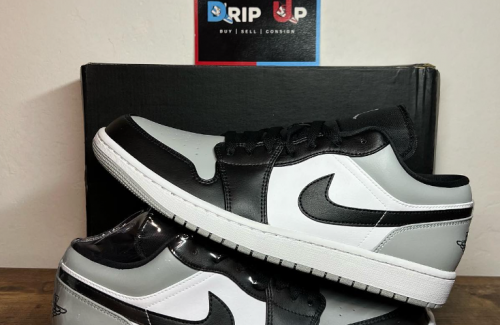
Aaman Shah’s inspiring entrepreneurial journey started when he was just 16 years old. Aaman comes from India and started a company called DripUp – a global enterprise reaching the USA, India, and Canada, with a specific focus on engaging the youth.

Aaman Shah’s story started with his curiosity about sneakers, wondering why people are willing to spend lots of money on sneakers like Nike and Jordan. He went to other places outside his hometown and noticed lots of people loving sneakers. Collaborating with his friends Dhruv Seth and Mufi Dharani, Aaman delved into the latest sneaker trends, discovering their potential for substantial profit.

Aaman went from being a sneaker fan to someone who sells them. In 2020, he saw people spending $20,000 on sneakers that used to cost just $200. That’s when he got the idea to start DripUp.

DripUp has carved a niche in the sneaker market by leveraging online platforms such as Instagram, WhatsApp, and Facebook. Aaman’s ingenious approach to the business, centered around fostering a strong sneaker culture while ensuring customer satisfaction, has earned DripUp a reputation as a trusted source for premium sneakers and watches. Through the challenges of the ever-evolving market and the complexities of running a business as a student, DripUp has not only survived but thrived.

When people ask why customers spend a lot on sneakers, Aaman Shah says it’s because they’re special and not everyone can get them. He thinks people buy from him because they know he’s trustworthy, according to his interview with Startup Story Media.

Aside from just making money, Aaman aims to have good relationships with his customers. He sells special sneakers like Yeezy and Jordans, and he’s honest about how much he makes from it.

Even though the sneaker business has some tough parts, Aaman Shah’s dedication to the sneaker world and his ability to handle tough situations show that he’s a strong and determined young businessperson.

Featured Image Source: Instagram

V2 2023 AHN News & Stories Cards-png

News

Kylie Chang and Erin Kwon Triumph as Miss Asian Global and Miss Asian America 2023

In a big event celebrating Asian American beauty and success, the Miss Asian Global and Miss Asian America Pageant, known for being the longest-running beauty contest for Asian Americans in the US, has picked its winners for this year: Kylie Chang and Erin Kwon. This event is really important as it shows how Asian Americans can be confident leaders.

According to NextShark, Kylie Chang, who is 18 years old, won the 38th Miss Asian Global title at a special place called the Herbst Theatre in San Francisco. She shared with KRON4 that she was really happy and said all her hard work paid off.

She loves dancing and shares that joy with kids who might not have the same chances. She volunteers as a dance teacher at Friends of Children with Special Needs, which helps them feel good about themselves. Kylie also does good things with fashion – she’s a part of an organization called Catwalk for Charitable Causes that uses fashion to help charities.

Erin Kwon is 24 years old and is studying to become a doctor in Irvine, California. She’s also this year’s Miss Asian America. Erin really cares about older Asian Americans and wants them to know more about staying healthy. She helps people in hospices, which are places where very sick people get special care, as an advocate for better healthcare education in the Asian American elderly community.

“I didn’t even expect to place. I just wanted to have an experience where I meet other women and just do something outside of my comfort zone, but I got way more than I ever expected so I’m very, very pleased,” Kwon told KRON4.

The contest has been around since 1985 when Rose Chung started it at an event called the Asian Arts Festival. It’s all about helping young Asian women grow and become strong leaders.

Featured Image Source: Miss Asian Global