Awaken* newsletter

April 4, 2024

SHARE:

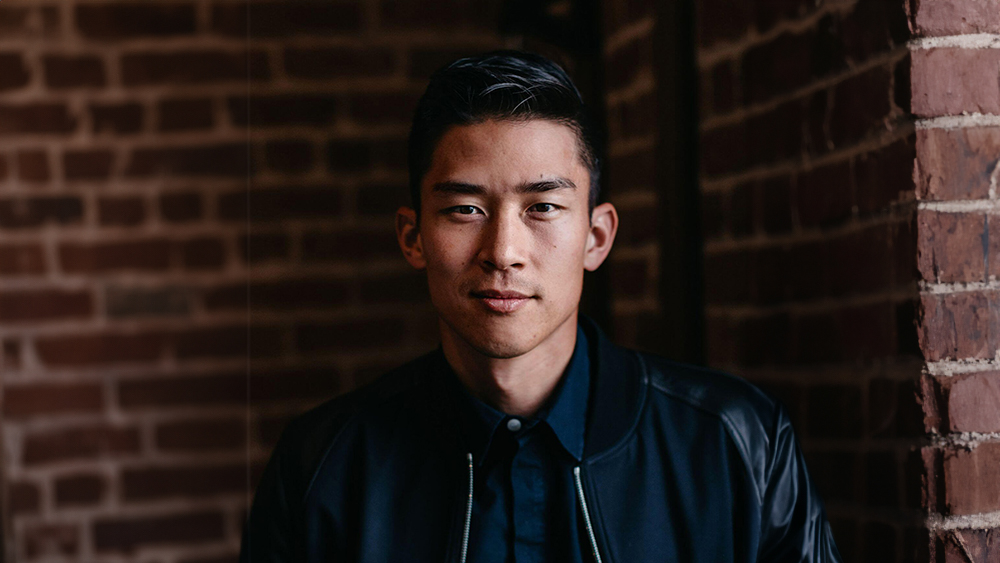
On November 10th, I had the honor of chatting with Bryant Chou. Bryant is the co-founder of Webflow, one of the leading website-building platforms in the world with a valuation of $4 billion. Within startup-land, Webflow is especially notable for being mostly bootstrapped, waiting five years before raising an additional round after their seed round in 2014.

In our conversation, we touched on a variety of topics ranging from being Asian American to working at startups vs. big tech. 

Note: Quotes were lightly edited for brevity and clarity.

EARLY CAREER

I started our conversation by asking Bryant if he had any entrepreneurial endeavors before his first official company. While he never directly started a business, Bryant did display early signs of his scrappiness.

My mom gave me twenty dollars a week for all of my lunches and whatever discretionary income. So, of course I spent most of it on food, but that essentially meant that I had nothing really left over. But I also really wanted to be a normal high school student and go to prom and go to dances and stuff like that. So I made money in high school by entering Counter-Strike tournaments. I would earn, I don’t know, a few hundred bucks in these local LAN parties. And that’s how I paid for dances. So I always kind of adapted and tried to apply myself in different ways, with whatever skill sets I had.

He continued on to talk about his motivation for getting into startups:

To be honest, I don’t know if I would have done startups if I was at Facebook or Google. You know, I didn’t land those jobs coming out of school. I wasn’t smart enough. Didn’t pass those interviews… I think because I was at a mid-tier tech company, it kind of gave me more hunger to do something on my own. I wanted a change and believed software startups were the future. I took the plunge in 2011, driven by the belief that startups would be significant, 

However, he also cautioned about rushing into startups: 

You need to think about the things that really need to be true in order to be a founder and do it successfully. One of those things is working in a space that you really want to affect and make a difference in. You just want to make sure that you’re working on something that’s worthy of 16 hour days, you know?

BRYANT’S ROLE AT WEBFLOW

Although Bryant is perhaps best known as being the co-founder and CTO of Webflow, I saw that Bryant had recently shifted his focus away from technology to growth and marketing for Webflow, so I asked him about that:

Because we were bootstrapped, we never really invested in growth and marketing. So what started as an impatient maneuver on my end, like, ‘hey, I think we need to start doing these things’ turned into, ‘hey, this is actually something that is ROI positive.’ Who would have thunk? I suppose even though I’m an engineer and builder and product person at heart, I’m also a company builder in that sense. So I’ve–for example, started our marketing, started sales, started data, started security, so all these things are just things that are just like, ‘hey, we need to do these things. Let’s figure out how to do it.’ And I think that’s something that most entrepreneurs are going to have to do. I don’t think you’d necessarily have an option to not do it.

Coincidentally, I had talked to the new CTO of Webflow, Allan, a few months prior. Alan was super nice and very sharp–a great backfill for Bryant.

NAVIGATING ASIAN IDENTITY

As the Asian Hustle Network, I naturally had to ask Bryant about how he felt being Asian qualified his experience as a founder, he started out by acknowledging the position of Asian men:

It’s a well-known fact that Asian men in Western societies have a different bar to hurdle than other people. One of the reasons why I was so keen to help produce the 38 in the Garden movie with Jeremy Lin is because he articulated this so well. Have you seen that documentary? 

I had not, in fact, seen the documentary. Oops. I watched it after the interview on his recommendation and it was very, very good. Please give it a watch! Bryant continued:

It’s my one and only film and probably the last one that I’ll ever be involved in. I’m totally okay with this because I believe this cause is important. Part of the reason why I agreed to chat with you is because we obviously have a chip on our shoulder. We are seen differently in society. I’ve dealt with it in various ways myself. I’ve taken a colorblind approach to business interactions and never thought about my race or ethnicity in certain environments. I think that’s ultimately what you have to do. As Asian people in Western society, you’re supposed to be heads down, let your actions speak for themselves. I still very much have that approach. Who knows if it’s the most optimal thing to do.

Despite his colorblind approach, Bryant was clearly very cognizant of the fact that people perceive Asians differently, and had a suggestion for our readers:

To just walk amongst people of the same race and they speak your language, I think that’s like a worthy thing to do and to dive into. I identify as Taiwanese, at least as much as I identify as an American. When I go there, I literally feel different. I feel like I’m one of the same, like I’m among my people, I’m not viewed as a minority, I’m just viewed as a normal person. I think every Asian-American should have that sensation at some point in their life that they feel like they’re seen as someone just like everyone else, and the only place where I felt that has been Taiwan.

I knew Bryant grew up in the Bay where there were a lot of Asians, so I asked him if he felt the same sensation in those areas, he suggested:

The broader construct of society that we live in is still the US, which is still 85% non-Asian. I think Asian Americans make up about 12% of the population, maybe even less. I don’t think it’s so much about not being in the majority. It’s more about the sensation that you get that you are biologically or ethnically more similar to the people that you’re walking around with in Asia.

NAVIGATING ENTREPRENEURIAL CHALLENGES

Moving onto the next topic, I asked Bryant about his emotional experience as I had heard a lot of founders talk about how difficult this aspect of running a startup was:

I thought it would be harder technically than it would be emotionally. But I would say the social emotional components of building a company are 100 times harder than the technology itself.

I followed up by asking if there were any specific experiences that stood out to him:

They’ll come up in different forms. In 2020, there were a lot of social justice issues that made running a company very challenging. Ultimately, when you’re at a company, you need to be hyper-rational. You’re faced with a conundrum between being a good steward of the company’s mission and vision and maybe what people inside your company believe, and sometimes those things clash.

It was clear that this level of situation took an emotional toll on Bryant, so I asked him how he copes with it and prevents it from seeping into his personal life:

You compartmentalize most of it. It helps to have a supporting spouse and partner. It’s great to have kids that can distract you from this.

ADVICE FOR YOUNG PROFESSIONALS

Adding on his comments about entrepreneurial pain, Bryant offered:

I think like if you’re in your 20s, I would actually be chasing that kind of pain. It’s the best time to chase pain and suffering. If it means that will lead to a certain level of intellectual expansion, social emotional awareness. There’s no better time to find the limits of what you’re capable of than when you’ve graduated, when you’ve got a whole life in front of you. Like, it’s time to see what you’re made of. So I’d be a huge proponent of young folks going to startups that are hectic and crazy, working in environments where they can learn, dedicating time and energy to perfecting a craft. Those are things that you don’t learn in school. And those are only things that you can chase on your own accord.

This made me think about how I have a lot of friends who go into Big Tech. A good number of them say that they want to pursue their own company eventually, but want to get their start at a big company to build up their skills. I asked Bryant what he thought about this approach:

There’s two kinds of learning that you can do at a big tech company. One is technology related. So you can go and immerse yourself in a technology, and be surrounded by technologists that can help you. That’s something very valuable for sure, but learning how to do things the way Meta or Google does things is not transferable at all to startups. None of their processes matter. None of their ways of thinking about building products matter. It’s just a whole ‘nother ball game. There are maybe some professional skills that you get to pick up. Communication, the ergonomics around the work–such as just documenting your work, making your work transparent, and just picking up good habits–that’s for sure. But there’s nothing like working in an early stage startup where you’re building something from nothing. You know, you’re almost never doing that at a big company.

I was somewhat surprised that Bryant felt that the Meta or Google way of thinking about products was applicable, so I pressed him to elaborate:

So actually, that’s a great example of something that I did retain. It’s more so the principles at which you approach building a product, right? Developing customer empathy, ensuring you’re not over-engineering things really matters. Facebook and Meta have an abundance of resources. Engineers at large companies are very good at building incredible things that are well-defined in a narrow spectrum. However, in a startup, you’re trying to go as wide as possible with what an engineer could potentially contribute to and build 60 to 80% of it. It doesn’t need to be perfect.

Bryant’s comment about over-resourced companies made me think about the opposite, under-resourced companies, and how I often hear about employees at those companies working weekends and long nights. I asked Bryant if he thought that was necessary in a startup:

There’s a time and place for it. I don’t believe nights and weekends are required. It’s important for people in their 20s to find their limits professionally and personally. This means making time for personal things like dating, hanging out with friends, and attending events. It’s about striking the right balance. For instance, I encourage my team members to take vacations when needed. It’s crucial for startup leaders to have a good pulse on their employees, understanding their strengths and weaknesses, and checking in on their well-being. I don’t believe anyone at SpaceX or elsewhere can stare at a problem for 100 hours a week and feel productive. It’s important to step out of your zone, draw inspiration from different things, and take breaks. To live a balanced life. When I say that people should find their limits professionally and personally, it’s like that limit is different for each person. But you have to feel like you’re able to stretch, build the muscle for your mental and physical strength to stretch when you need it. I think that’s really important to do.

SHOUTOUTS  

Webflow is hiring across multiple functions! Please visit this link to find and apply for open roles, or feel free to get in touch with Bryant at bryant@webflow.com if you would like to reach out personally for opportunities.

38 at the Garden, the short film about Jeremey Lin which Bryant helped produce is available to watch on HBO Max. The film is 38 minutes short and is a must-watch for all Asian Americans.

Thank you Bryant for speaking with us!

Related Articles

the business journals-jpg

News

Immigrant Entrepreneur JJ Xu Empowers Communication and Entrepreneurship

This series shines a light on accomplished immigrant entrepreneurs who have made significant contributions to the business landscape in the United States. Hailing from China, Xu’s journey from her homeland to becoming the founder and CEO of the award-winning tech startup TalkMeUp is a testament to the potential immigrants bring to the world of entrepreneurship.

EIG is a Washington, DC-based, bipartisan public policy organization that advocates for a diverse and innovative American economy. Since immigrants make up 14% of the US population, over 30% of US innovators, and 38% of Americans who have won the Nobel Prizes in physics, chemistry, and medicine since 2000, Xu’s story serves as a prime example of the importance of fostering an atmosphere that encourages immigrant talent and achievements.

According to Yahoo! Finance, Xu’s experiences in diverse roles, including positions at Groupon and Huawei, provided Xu with invaluable insights into effective communication and cross-cultural dynamics. Recognizing the gap in accessible communication training resources, she embarked on a mission to democratize communication skills through TalkMeUp.

TalkMeUp, Inc. is based in Pittsburgh with deep roots in Carnegie Mellon University. It has pioneered solutions that propel business success through the art of effective communication.

Driven by a mission to empower individuals and organizations worldwide, TalkMeUp’s AI-powered platform allows professionals to gauge their communication effectiveness and audience engagement during video interactions. Through personalized practice and training, TalkMeUp equips users with the essential communication attributes required for career advancement and seamless transitions.

Featured Image Source: The Business Journals

Luxe Du Jour-jpg

Stories

Luxe Du Jour is Making Luxury Fashion More Sustainable and Accessible and This is How

Luxury fashion gets a new face with Luxe Du Jour, a brand driven by innovation and purpose. Tammy Phan, the visionary behind the brand, embarked on this journey to bridge a gap in the market for selling high-end designer handbags. Her pursuit of accessible luxury has reshaped the industry.

Beyond fashion, Luxe Du Jour has redefined the concept of luxury itself. Through Luxe Bag Rental, they’ve unlocked a unique way to experience elegance without the hefty price tag. With a commitment to Recycle, Reuse, and Restore, they’re championing sustainability. Each pre-owned item holds a story of responsible consumption.

Luxe Du Jour’s journey has been marked by challenges, but their ethos remains unwavering. With education and community at the core, they’re leading the charge toward a future where luxury is synonymous with accessibility, ethics, and sustainability.

Join us as we delve deeper into their story.

HOW IT WAS FOUNDED

Luxe Du Jour all started with solving a problem for the founder, Tammy Phan, where she struggled to find a trustworthy place to sell high-end designer handbags. Back then, it was only eBay or your local clothing consignment shop. But eBay was a nightmare of dealing with lowballers, scam payments, and tie wasters and the local clothing consignment shops took 50-60% in commission.

Phan knew there had to be a better way so she started to sell her items on Instagram when the platform was peaking which was the start of the company. Luxe Du Jour ended up building a community on social media and the rest is history!

ABOUT THE FOUNDER

Phan grew up poor to immigrant parents. The typical expectations of her being a doctor or engineer were the only means of success in her parents’ eyes. However, life did not pan out that way for Phan, and she had to drop out of high school to get a job to help support herself, because she thought by doing this—it would be one less child for her parents to worry about financially. 

Phan’s strong desire for luxury stemmed from not growing up around it, and she made it her goal to one day be able to afford a designer handbag. She worked hard, saved enough money and did just that.

Discovering her one Chanel bag increased in value over time and being able to profit on it after she sold it years down the road sparked a joy that she knew she wanted others to experience. Thus beginning an interest in the value of the luxury designer resale market!

Her mission is to make designer luxury more affordable, accessible, and sustainable.

LUXE BAG RENTAL

Shopping for pre owned designer luxury has not changed in the last decade and the prices of designer luxury constantly keep increasing but the shopping experience in store hasn’t changed or evolved to make the price hikes worth it. 

Why are we able to test drive cars before committing thousands of dollars to it and not be able to do that with expensive designer handbags that also cost thousands of dollars even $10,000+?

Luxe Bag Rental saw a huge hole in the market that women wanted to constantly switch up their styles more often, try it before they buy it, or just wear an item once for a special event or photoshoot without the hassle of trying to sell it after. Luxe Bag Rental clients now get to experience a completely new way of shopping and trying out designer fashion. If they love the bag, they can opt for rent-to-own. It gives consumers a chance to really experience the items first-hand providing a smarter and more approachable way to shop. 

REDUCE, REUSE, RECYCLE

Everything done at Luxe Du Jour integrates the 3 R’s.

When you shop or sell preowned, you are RECYCLING that designer handbag. When you rent with Luxe Bag Rental you are REUSING that designer handbag and when you restore a bag back to life with Luxe Bag Spa you are REDUCING waste because a bag you were not going to wear anymore due to its damage now has a second chance at being worn and loved again!

It takes up approximately 629 kg of CO2 to produce one leather handbag so we are reducing a lot of carbon emissions every time a designer handbag is sold, rented, or restored! The fashion industry is so wrapped up in having everything brand new, Luxe Du Jour wants to focus on how to normalize pre-owned and continue to find ways to push for positive environmental impact. 

AUTHENTICITY AND SUSTAINABILITY

Authenticity is the core of Luxe Du Jour’s business. A 3-step authentication process is done to ensure authenticity for every item sold or rented out hence why Luxe Du Jour offers a lifetime guarantee or you get your money back.

A rise of counterfeits and fast fashion has flooded the market and Luxe Du Jour focuses on educating our community on the negative impacts of buying counterfeit and fast fashion by building a community and nurturing that community to  fulfill their needs.

LOOKING FORWARD

We aspire for Luxe Du Jour to be a huge disrupter in designer luxury fashion and want to lead the path so that the luxury giants follow and want to be a part of the positive impact we are making for those who love authentic designer luxury.

Luxe Du Jour will continue to be innovative and bring a new look to preowned.

CONNECT WITH LUXE DU JOUR

Website: luxedujour.ca

Instagram: @luxedujour

Tiktok: @shopluxedujour

Facebook: Luxe Du Jour

YouTube: Luxe Du Jour

Pinterest: Luxe Du Jour

Twitter: @luxe_dujour

ezgif.com-webp-to-jpg (4)-jpg

News

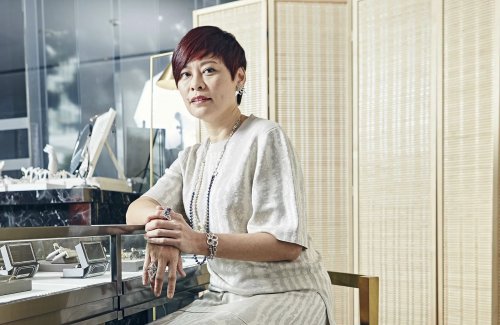
Carolyn Kan’s Impactful Journey in Crafting Stories through Jewelry Design

Carolyn Kan, the visionary behind Carrie K Jewellery, has left an indelible mark on Singapore’s creative landscape.

Known for her intricate fine jewelry reflecting Southeast Asian heritage, wit, and emotion, Carolyn’s influence transcends mere craftsmanship. Her unwavering commitment to the local creative community adds depth to her legacy.

To Carolyn, that means trying new things to make special jewelry. It’s not just about looking nice; it’s about making jewelry that has feelings and meaning, like a piece of art you can wear.

The pandemic made her think about why her jewelry matters. She realized her designs show love and comfort even when times are tough. “Our designs share messages of love,” she explains, showing how important her work is.

From fun accessories to really well-made jewelry with special metals and gems, Carrie K Jewellery shows how much Carolyn cares about celebrating life and love. She also focuses on being creative and making jewelry that fits different styles and moods.

Aside from the beautiful design, Carolyn’s jewelry is also good for the Earth. She makes pieces that you can use in lots of different ways, so you don’t need too many things. She also has a special service where she takes old family jewelry and makes it new again. This helps keep special memories alive.

Now that the pandemic is over, Carolyn wants to share her jewelry with more people and make different kinds of engagement and wedding pieces. She’s found new ways to work with people from far away, making special jewelry that tells their stories.

Featured Image Source: Her World SG

Mike Yam poses in the studio on Thursday, July 14, 2022 in Inglewood, California

Stories

Michael Yam’s Mission to Empower Readers with His Children’s Book ‘Fried Rice and Marinara’

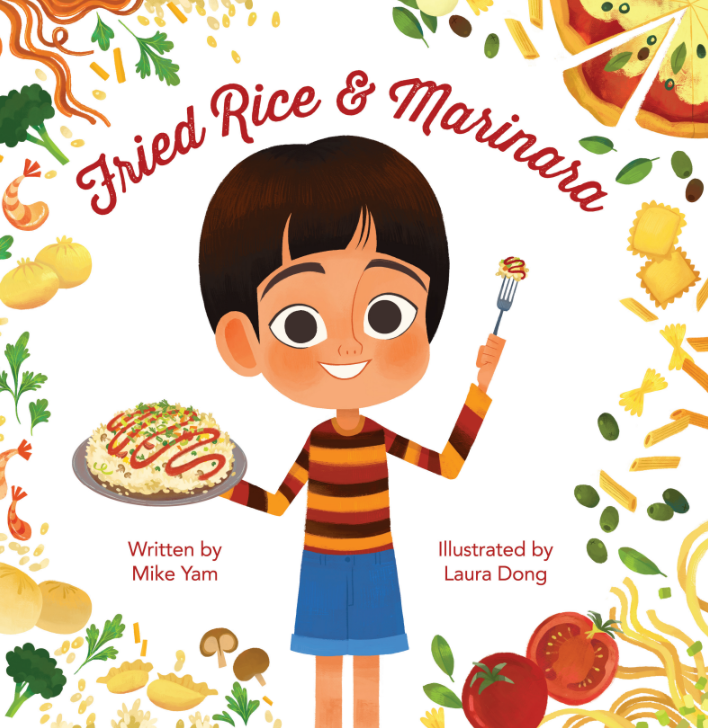
Michael Yam, the host of NFL Total Access on NFL Network, has now ventured into the world of children’s books with his first-ever creation, “Fried Rice and Marinara.”

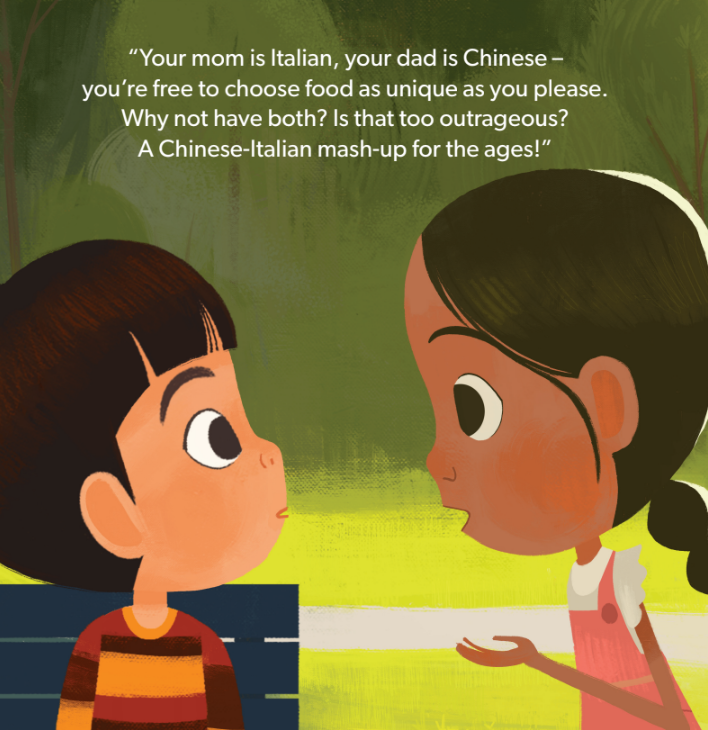
This heartwarming tale revolves around Mikey Yam, a character just like Michael, who cherishes both his Chinese and Italian heritage. Michael wrote this story to show young readers that it’s okay to have a diverse background and to be proud of who they are.

Drawing inspiration from his own life, Michael wanted to share the joy of embracing different cultures with children. In “Fried Rice and Marinara”, he uses the magic of food to bring the story to life and spark curiosity about diverse backgrounds. Through this delightful book, Michael hopes to encourage kids to learn about their own heritage and appreciate the uniqueness of others.

As a first-time children’s book author and illustrator, Michael faced some challenges, but his passion for storytelling and connecting with young readers drove him forward.

Read through as we learn more about Michael and how he aims to inspire all children to feel confident in their identities with his book “Fried Rice and Marinara”, through an interview with Asian Hustle Network.

BREAKING BARRIERS WITH “FRIED RICE AND MARINARA”

During the course of my career, I have been fortunate enough to speak to students about a path in broadcasting. I have always been disheartened by the lack of Asian representation in media classes. Aside from cultural factors, I believe the lack of widespread representation at high levels of sportscasting is a major reason why Asian American students are picking other career paths.

Strengthening the pipeline is one of the ways I think this changes. If young kids can see themselves in stories, I think it can spark an interest in storytelling. 

MIKEY YAM AS A MULTIETHNIC LEAD CHARACTER

As a kid, I didn’t think anything of the different cultures. I always knew I was Chinese and Italian, but as I got older, I realized that my friends didn’t have to think about or balance multiple cultural experiences that were very different.

Part of the reason I wanted to write “Fried Rice and Marinara” was to have young readers see a multiethnic character in a lead role. I also wanted to spark the thought that families with diverse backgrounds are normal.

At times in my childhood, I thought I had to “pick a side”, which is weird to think about now. I really want young kids to be able to embrace their heritage and be proud of their background. I know for my family, food was a backdrop to everything we did. I wanted to use cuisine as a vehicle to bring the story to life.

NAVIGATING BOTH SIDES OF HIS HERITAGE

First and foremost, it’s about embracing both cultures. I think many people focus on the differences between ethnicities, but we would all be in a better place if we gravitated to what’s the same.

Both my Chinese and Italian sides value family and the joy that comes from spending time with each other. I have fond memories of BBQs as a kid and my birthday parties having both Italian and Chinese food. 

CHALLENGES HE FACED IN THE WRITING PROCESS

I’ve spent my career telling the stories of athletes. I’m comfortable in that realm, but with “Fried Rice and Mariana”, it’s the first time I tried to connect with a young audience in a medium I’ve never worked in.

I have always loved having fun with my nieces and nephews, telling them crazy stories at home. I tried to imagine telling them this story as if we were in person. No, I can’t rhyme on the fly like in the book, but it’s about the tone.

I always love asking kids questions to see where their mind goes. If you notice at the back of the book, there is a page that gives kids an opportunity to write their funky food combinations with the ability to draw them, too. It’s really important to me that the experience with the book doesn’t end when they’re finished reading it. 

WHAT HE HOPES FOR READERS TO TAKE FROM HIS BOOK

I want young Asian readers to be able to see themselves as a main character in a story.

According to a study conducted by the University of Wisconsin (2022) you are nearly as likely (39% BIPOC/37% Animal/Object) to see a children’s story about an animal or object than you are to see a story depicting a character from a diverse background. I see that as a problem. 

I want all children to be exposed to various cultures. The child who doesn’t often get to see characters who look like them will hopefully feel confident and have more self-worth. My hope is other children will be exposed to other cultures and develop an appreciation for experiences different from their own.  

CONNECT WITH MIKE YAM

Instagram: @Mike_Yam

Twitter: @Mike_Yam

Threads: @Mike_Yam