Awaken* newsletter

March 21, 2024

SHARE:

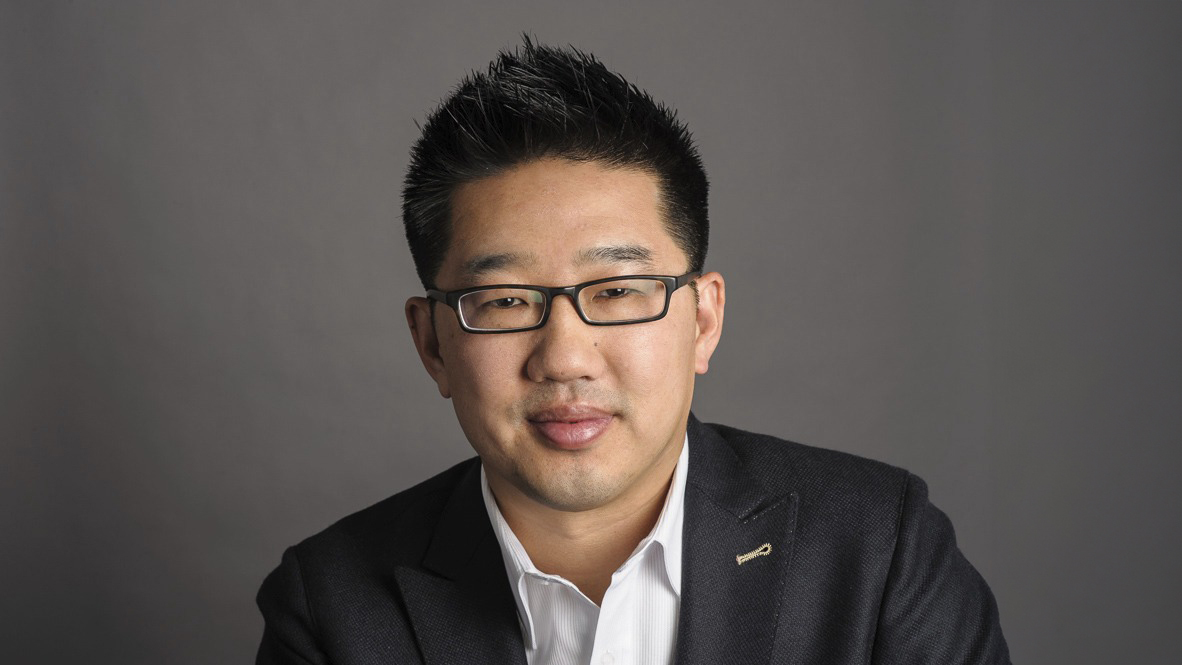
On December 15th, I had the honor to chat with Kevin Chou. Kevin is one of the foremost Asian American founders, having founded a number of gaming and web3 companies (Rally, Forte, Blocto, Gen.G, and Kabam) and currently spends his time working on Superlayer, a crypto venture studio he co-founded two years ago. Kevin also serves on the board of trustees at his alma mater UC Berkeley and notably made the largest donation to the school from an alumni under 40 years old. Without further ado:

FINDING YOUR OWN VOICE

In my research for this interview, I came across an article where Kevin said “Not working has helped me realize that by far the most important thing is finding that voice in your head that’s truly, authentically you”, but he never got around to sharing how to find your own voice, so that’s what I asked him:

One way to think about it is to try to meet as many people as possible, people that seem to inspire you–could be from all walks of life. It could be somebody in the government, the political field, someone doing nonprofit work, or even a church figure. Reach out to as many senior people, people that you admire, people whose work seems really cool. Reach out exactly like how you did. Say, “I’m a new graduate. I’m still trying to figure out what I want to do with my career. I’m really inspired by what you’ve done. Can I set up 30 minutes with you to talk about what you do, what you like about it, what advice you have, etc.?” It’s shocking how few people do this. I know it’s potentially a little scary. You’re reaching out to people who you don’t even know. 

Personalize a note, find them on LinkedIn, or social media, or email, and just send them a note. It’s actually surprising. I took a look at your note. And I was like, “You know what, it’s half an hour of my time. If I could help somebody, I think about it as just paying it forward.” I think a lot of people who’ve had some success in their life are very happy to pay it forward and try to help young people figure out what they want to do, because I think we were all there when we graduated.

On a personal note: I’ll add that my success rate with my cold emails to these founders is about 5-10%, which Kevin noted was within expectations. That’s not to discourage anyone from emailing, but to set realistic expectations as to the response rate. If your response rate is better than mine, I’d love to hear what you’re doing so I can copy you!

ON BEING ASIAN

At Asian Hustle Network, our one recurring question is: “how has being Asian qualified your experience as a founder?”, here is Kevin’s response:

I think about it all the time. I didn’t grow up in an Asian community. I grew up in a very small, rural community. So it was a lot of white and Hispanic folks, and I didn’t really have any Asian restaurants in my town. There were only two other Asian kids in my high school. When I was a kid, I thought it was weird that I was Asian. I looked different from people, ate different food than other people, and my parents didn’t speak English as fluently. I tried to blend in and not really focus on it. Then I went to college at Berkeley. There, I found a lot of friends and felt like I fit in a lot more. As a founder, it’s again, thrust into an environment with very few Asians as CEOs. There are a lot of Asians in technical roles. I think I’ve been incredibly successful. Lately, there have been more and more Asian founders, but there’s not as much of a cohesiveness around it as much as, for example, the Indian founder community is very tight. The Pakistani community is very tight. There are a lot of other ethnic communities that are founders that I think are tighter.

I had recently talked to Bryant Chou from Webflow, and his method of approaching this was to take a colorblind approach when it came to business. I mentioned to Kevin that his approach seemed the opposite of Bryant’s:

I definitely feel differently about it. I’m doing business with a lot of people. In general, when I’m doing business, I’m working with all different types of people. But in terms of people that I want to help out, it’s very natural that I’m more likely to say yes to an interview or try to help somebody else out if I see a little bit of myself in them. Ethnicity helps. I’ve done a lot of business in Asia, including having a 300 person office in China and starting an esports company called Gen.G, which is based in Seoul, Korea. 

Going to Asia, it’s a huge advantage to speak the language and understand some of the cultural aspects. I think about how I can take advantage of the good parts of being an Asian founder and entrepreneur, and then there are probably times where it’s a net negative, and I try to mitigate those as much as possible. 

For example, during COVID, there was a big group of Taiwanese American entrepreneurs, like Steve Chen from YouTube, and Kevin Lin from Twitch, and Jameson Hsu. We decided to go to Taiwan during COVID. There are lots of times where we’re celebrating Chinese New Year together, and just like Chinese New Year events that you go to, and you meet a bunch of other founders. Having kids and a family, I spend a lot of time just enjoying meeting people from those cultural events. 

Pulling on this thread, I asked Kevin what kinds of detriments he felt Asians faced:

I don’t think there’s as much of a detriment anymore. I would say in 2006, I was incredibly lucky that I was a VC. When I joined investment banking, there were like two other Asians in my hundred person office. And in all of the venture industry, there were maybe 10 Asians (circa 2005). How many CEOs were successful, CEOs of companies that were Asian, you had Jensen who ran Nvidia and that’s about it. There were just not many Asians. You think about all the .com companies, all of the e-commerce companies that were started in the late nineties and in that era of the technology world. It’s hard to think of many Asians. I would say Jerry Yang comes to mind.

Although he wasn’t the CEO initially, back then it was really hard to be a CEO who was Asian and trying to pitch to someone who’s generally not Asian. The investors do a lot of pattern matching. For example, they might think, “These kids are from MIT. That’s a good pattern match. I’m interested.” While nobody’s explicitly saying, “I don’t want to fund a woman or someone of a certain ethnicity,” they’re just pattern matching. They’re taking lots of meetings and they might think, “Something’s a little off about this one.” Think about it, how many CEOs have been Asian? It was a lot harder, but today there are a lot more, which is good. I think it’s less of an issue today. On the positive side, a lot of Asian founders get credit for being smart, being technologists, and for hustling. I don’t think it’s much of a detriment anymore the way it was 20 years ago. That’s good for the better in that regard. 

Going off his comment on the lack of Asian CEOs, I asked him what kinds of things he practiced or studied to overcome the additional headwinds he faced:

If you want to be a CEO, everyone has different perspectives on this. My perspective, especially in the context of the Asian Hustle Network, is that one of the Asian stereotypes is that they’re quiet, smart, and they work really hard, but they don’t know how to get out there. They don’t know how to sell or get deals done. So, I think being a good communicator and developing your own leadership style in a way that is authoritative, compelling, and authentic is important. Everyone has their own way of doing this, but there is a certain projection or pattern match of somebody who is going to be a good CEO. As a founder, you’ve got to be someone who can overcome obstacles, regardless of your ethnicity or gender. You have to be good at running through walls. Being good at sales, being able to get your ideas across in a compelling way, these are all incredibly important. These days you can do that via a variety of means. It doesn’t have to all be in person. 

FUNDRAISING 

I have some friends who are looking to raise a pre-seed round for their startup. But they were having some difficulty as they weren’t located in the Bay Area and didn’t have existing connections to angel investors. I wanted to see if Kevin had any advice for people in their position:

It’s definitely a lot easier if you’re from Stanford, MIT, Cal, or other top programs with a technical background. If you’re not from that, my biggest advice is to move to San Francisco or New York. If this is what you want to do, you have to do it right. If you wanted to be an actor or be in show business, you would go to New York or Los Angeles. That’s where everything is. The various angel investors, seed investors, and larger institutional investors are primarily in these two markets. I would say the Bay area still tops, but New York is a very close second these days. It’s much easier if you go out, attend some of the easier events, meet some people, spend some time networking, and then get invited to other events. You start meeting investors, figure out what events they are going to, go there and meet them, and talk to them about your ideas. There’s no substitute for meeting somebody face to face and talking.

Kevin later added a few additional thoughts:

As a young entrepreneur, there are two ways to build a company. The way I did it was through luck. I raised half a million dollars for my first round in 2006, which wasn’t a lot of money. We were incredibly frugal and had enough money to pivot a few times. This is a harder way to do it because it involves a lot of networking to find investors. I was fortunate to have spent two and a half years as a VC in the industry, so I knew a lot of VCs. My own firm and a few others were willing to write me a check, but I chose the firm I used to work with because they offered better terms. However, the best way to build a startup is raising a few hundred thousand dollars, around $200,000. Those types of deals are easier to get. Ideally, you can even avoid raising anything because what you can do is get a few friends together who are technical and build the thing, launch it, and get some success. Then raise money. It’s much easier raising money once you’ve built something than when it’s just a story.

When I say I’ve been pitched hundreds of Gen AI startups, I would say 80% of those pitches did not build anything yet. A lot of those emails start with, “I’m looking for pre-seed funding and here’s what I’m looking to try to do.” I generally don’t even read those emails. And I think a lot of other investors don’t either at this point. So if you haven’t met the team, if the team doesn’t have a really good background in exactly the area that they’re tackling, it’s an easy archive email. 

Whenever somebody built something and emailed me, “Here’s a link to the thing I built,” or “Here’s a video of the thing working,” I generally take the time to go take a look at it because I’m always interested in what’s new. I’ll take way more meetings with somebody who’s built something. 

And there you have it! Just building something and getting a few users will put you ahead of most pitches.

TAKING CARE OF YOURSELF AS A FOUNDER

The last question I asked Kevin was how he dealt with the emotional toll that being a CEO takes.

You have to have either a community or a relationship. Besides parental relationship, some meaningful relationship in your life that is going to ground you through the tough times, because without that, it’s just so easy to slip into that place. These days, it’s much more normal to talk about the importance of mental health. Mental health, emotional health is incredibly important. I think it’s all rooted in physical health, too. It’s really hard to run a startup if you’re not physically healthy. If you’re not physically healthy, that also drags down your emotional and mental health. So I think physical health is actually the very base of the pyramid.

From SoulCycles to sports, for example, I highly recommend a book that has been really helpful for me. It’s a book called Younger Next Year. This book came out, I think, over two decades ago. I recommend it to everyone. You don’t even have to read the book. The very basic thing to do is strength training two times a week, and then try to do some cardio exercises, another three to four days a week. So basically spend five or six days a week being physically active, with two of those days being strength. Exercise and eat reasonably okay. That is my number one advice to people with a stressful lifestyle. Having a grounding of physical health is super important. 

Then we get to the question that you started with, which is emotional health. Emotionally, mentally, it is incredibly important to have a community and to have a relationship that you care about. I know all this sounds like, “How am I going to do all this stressful stuff in your life?” But the whole point is, if you’re going to run a marathon, you have to pace yourself. The number one thing that I find is, if time permits, have something that you like doing. Ideally, that’s something that ties into physical health, because that way, you kill two birds with one stone. Whether it’s hiking, or a sport or something else, do things that you enjoy a few hours a week, because otherwise, you’ll just burn yourself out. So physical health, relationships for mental health, and then do some play every week.

I asked Kevin what exercises he tends to do and mentioned that I do mostly cardio:

Strength training is the number one thing that I recommend for everyone. That can come with all sorts of different things like circuit training, some sort of boot camps. It doesn’t have to be super intense, you’re not looking to necessarily get ripped and get a six pack. It’s just strength training, kind of a total body core strength training. Find something that you like that gives you energy, it could be a class, it could be one on one, it could be doing videos, something that you enjoy. Strength training doesn’t have to be a chore, it should be reasonably fun. On the cardio side, I love playing tennis, and lately pickleball. That’s what I do most of the time. On the weekends, I’m generally hiking, because I like spending time in nature with my family. 

There’s a website called Bay Area Hiker, or BA Hiker, I think. It has all sorts of great hikes that are all ranked by community. You can search by area and city. We like driving out to Half Moon Bay. Near the ocean, there’s a ton of great hikes along the one freeway. If you drive south from San Francisco, as you get towards Pacifica, there’s a lot of great hiking trails that take you above the one freeway. You get a gorgeous view of the ocean and the waves coming in. It’s just beautiful.

SHOUTOUTS 

If you like mobile games, check out Bored Button, a free mobile game where you can earn valuable loyalty points–made by one of Kevin’s companies. Bored Button is available to download on the Apple App Store, Google Play Store, and the Amazon App Store.

Thank you Kevin for speaking with us!
Related Articles

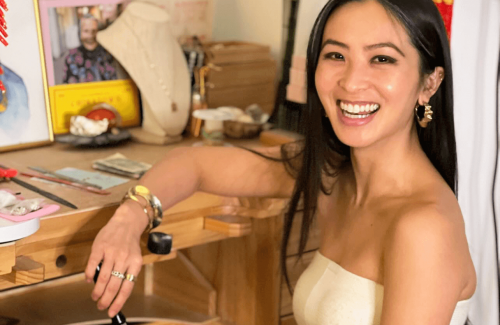
kelly-bit-sublima-jewelry-headshot-png

Stories

This Former Journalist Pursued Her Passion of Creating Wearable Art Through SUBLIMA Jewelry

In a world that often values practicality over creativity, it can be challenging to pursue our passions and follow our hearts. But for Kelly Bit, the founder of SUBLIMA, it was a calling that she couldn’t ignore.

After years of working as a financial news journalist, Kelly realized that she missed the creative arts as a major part of her life. She started spending her free time making jewelry, and the intentional lifestyle switch brought her a lot of fulfillment.

SUBLIMA is a sustainable, handmade jewelry brand, referencing subliminal messages that produce hidden feelings in our everyday lives. Art imitating life.

In this article, we will explore Kelly’s journey of following her passions, the artistry and intentionality behind her jewelry, and how she is bringing her love of art and design to the world through SUBLIMA.

HOW IT ALL STARTED

I’ve always loved crafting. I’m an only child, and when I was very young, I spent a lot of my time drawing or creating cardboard models of things that I found delightful. I’ve always been captivated by beautiful forms and well-loved objects in our every day and creating artful homages to them.

During my career as a journalist, I missed crafting and the creative arts, so I started spending my free time making—drawing, painting, sewing, and creating jewelry. I wanted to invest in one of those hobbies in a more disciplined way, and I saw jewelry as having commercial prospects. I enrolled in metal smithing and wax carving classes after work, and that’s what gave me the skills and confidence to start a jewelry brand.

THE CREATIVE PROCESS

I love commemorating ordinary moments of delight by capturing something of their essence through elevated and artful jewelry that I make by hand.

I have many delightful memories centered around food and the people I enjoy it with, so that’s one reason why many of the pieces are Asian food inspired. I also tend to notice beautiful and aesthetic aspects of food all the time—like the way milk tea splashes with movement, or the mesmerizing repeating folds of dumplings—so those types of details make me want to highlight how interesting they look through an unexpected art medium.

The way that I make my pieces is by carving wax by hand to create wax prototypes. The prototypes are then molded, and from the molds, the pieces are cast in recycled brass or sterling silver and polished and assembled by hand.

HER APPROACH TO SUSTAINABILITY IN MAKING JEWELRY

The casting company I work with, which is based in midtown Manhattan and family-run, uses a New York-based company called United Precious Metals to recycle their metal and for purchasing refined recycled metal to use in new castings.

In choosing to partner with my casting company, their ability to source recycled metals was important, and I love how I’ve been able to offer sustainable jewelry since day one. It’s important to me because using recycled metals compared to newly mined metals reduces greenhouse gas emissions and conserves natural resources. And I’m thrilled with the quality of the pieces—the recycled brass and sterling silver are both beautiful bright colors, and I provide a polishing cloth to keep the pieces shiny forever since none of the casted pieces are plated.

WHAT SHE HOPES TO COMMUNICATE WITH HER DESIGNS

I love seeing how different people style the jewelry and how they implement their vision of themselves—what they want to project into the world through their self-expression—using the jewelry as part of their toolkit.

My general hope is that the pieces can be marveled at as wearable works of art and that conceptually they serve as a reminder to see an elevated beauty in everyday moments. For some styles, like those based on Asian food or other cultural motifs, I’d love for people to wear them with a sense of pride or appreciation of Asian culture.

WHAT SETS SUBLIMA APART FROM OTHER BRANDS

Aesthetically, I aim to make jewelry that looks unlike anything else in the market, at once striking and timeless, with quality that lasts a lifetime. My designs are unusual and eye-catching, somewhat abstract, and can be styled as edgy or classic. Executing these concepts while drawing inspiration from my Chinese American heritage and Asian culture helps set SUBLIMA even further apart from the rest.

The rise in anti-Asian hate after the pandemic made me turn specifically to Asian culinary delicacies as a source of inspiration, to create symbols of cultural pride by elevating the beauty of Asian food through the art of jewelry in a highbrow way, and it’s not something that I’ve seen done by other artists.

Since the pandemic, and even before, there’s been a growing and palpable demand for Asian products and stories. There’s an appetite for consumer brands to create products that help reinforce the emotional connection to identity and culture. The way that I’ve been doing that with SUBLIMA is a two-pronged approach: first through visual representation, and more meaningfully, I’ve pursued partnerships with local nonprofits serving the Asian American and Chinatown communities here in New York. Since 2020, SUBLIMA has donated $65,000 to nonprofits supporting NYC’s Chinatowns, after-school programming, affordable housing, and food security.

KELLY’S VISION FOR SUBLIMA

My long-term vision is to be the premiere jewelry brand for Asians and Asian Americans and to have the jewelry represent not only high art but humanism and community impact.

One of my biggest desires and goals is for my work to gain more exposure so that its inspiration and aesthetic beauty reach more people. That means collaborating with more organizations and people who share SUBLIMA’s values, being part of events where I can meet people and build connections, getting my jewelry into more stores, and working with more cultural gatekeepers, such as editors or stylists, to spread the word.

CONNECT WITH KELLY

Website: sublimajewelry.com

Facebook: @sublimajewelry

Instagram: @sublimajewelry

Tiktok: @sublimajewelry

320723654_842347016993817_2387408927084427642_n-jpg

Stories

A Life-Changing Decision to Leave Home in Vietnam 8 Years Ago Found Success as an Amazon FBA Seller

Nhut Cao is living proof that with consistency and the right plan, you will get there.

Despite facing numerous challenges while chasing his true calling, Nhut “Justin” Cao refused to be defeated by setbacks and never lost sight of his goals. His story is not simply about winning, but also about not letting the failures hold him back. You may want to grind harder after reading about his life. 

In 2014, Nhut Cao made a life-changing decision to leave his home in Vietnam and move to the United States. Despite being deeply familiar with and accustomed to his old life, he made the difficult decision to leave everything behind and start a brand new life from scratch. He got into a decent college, and earned scholarships, hoping to follow the traditional American dream of getting a stable 9-5 job and settling down. But that kind of path didn’t make him happy.

So he dropped out of school and decided to pursue entrepreneurship full-time. He tried many different businesses – from garage sale hunts, reselling and flipping items, tutoring, nail tech, and selling goods from America to Vietnam.

One day, he decided to take a leap of faith and entered into Amazon FBA. Despite all the negativities circulating on the internet about Amazon FBA that time and his fear of failing, he still risked everything to go for it.

Follow along as we delve into Nhut Cao’s journey towards pursuing his dreams.

I SAW MANY PEOPLE BUILDING AN EMPIRE ONLINE BACK THEN WITH A HIGH 5 TO 6 FIGURES MONTHLY — AM I BEING TOO LATE TO THE PARTY?

I learned about Amazon FBA through a stranger in an online forum, the BrickSeek Deals Group for resellers. I always wondered how he could make money flow into his wallet so easily.

It didn’t take me long before I searched “How to sell on Amazon” on Google and Instagram. I saw many people building an empire online back then with a high 5 to 6 figures monthly. The first thing that came to my mind at that time was “Am I being too late to the party?”

I fell deeper into the rabbit hole and found myself searching Youtube on how to get started. But the more I looked, the more I stumbled upon negative opinions, including:

“Amazon is overly saturated,”

“It’s impossible to make money with Amazon FBA in 2015”

“Don’t try or you’ll dive straight into failure!”

As a young entrepreneur, I was too scared to fail at that time, so I blindly believed them.

I delayed my plan until two years later, after the burnout of being constantly on-the-run sourcing for products through garage sales, going to Walmart at 1 am trying to snatch some discounted laptop BrickSeek deals to only make an insignificant amount of profit, I was mentally and physically exhausted from the reseller hustle and being the one-man team from sourcing to listing, fulfilling orders to customer services. I escaped the rat race with the hope of earning my time back for my family and loved ones, but this life is draining me even more. 

I finally gave in to the idea of risking it all to Amazon FBA. I remembered telling told myself:

“After all, what do I have left to lose as an immigrant? Nothing.”

“I don’t want to keep trading my time for money as a reseller.”

“I don’t want to continue being a one-man team doing all the work myself. If I ever fail, I still have time to make it back with more experience rather than regret not doing it”

Then I scooped up all of my savings and liquidated everything I had to start my Amazon FBA. And the rest was history.  

BUT YOU KNOW WHAT IS THE BEAUTIFUL THING ABOUT BEING AN IMMIGRANT? WE DON’T GIVE UP EASILY.

It was not as easy and beautiful as many other Amazon gurus portrayed it to be on social media. I was constantly making a bunch of mistakes as a new seller and sometimes fell into the trap of self-doubting for not being able to make it drift in.

I learned everything I could from Youtube. I bought courses. I signed up for classes. But after all the hard work, there was still no sign of payoff. But you know what is the beautiful thing about being an immigrant? We don’t give up easily.

I paused to rethink all of my problems and tried to seek credible information from books and the internet to solve them. Then it finally hit home to me that maybe I was too invested in the ‘how’ when instead I could start with the ‘who’.

So I started to widen my circle, find more people who were truly making money on Amazon FBA and work for them for free. In exchange, I could build a long-term, win-win relationship with them. I could ask them for help and be always surrounded by experienced sellers.

But certainly, success won’t come overnight. There were days, weeks, and even months of not seeing any progress or result. I couldn’t find a product. I couldn’t make a sale. Being overwhelmed with bad reviews no matter how much I tried to improve the quality.

I applied many methods to overcome the challenges, such as celebrating even the smallest wins every day; or breaking my biggest goal into smaller, more manageable ones. However, the principle that helped me the most during this trying time was the 1% each day approach. 

Even on the most exhausting days, I am committed to spending at least 15 minutes on my business. By consistently dedicating time to my store, I developed a habit of working towards my goals, which can help me stay motivated and focused even during challenging times. And as I made progress, I found that my motivation and momentum increased, making it easier to stay on track and achieve even more.

Finally, in 2019, I was able to bring in close to $500k in revenues by 2019, thankful that I didn’t give up on myself.

STRATEGIES TO STAY COMPETITIVE IN THE CONSTANTLY EVOLVING AMAZON, ACCORDING TO NHUT

  • Put data over emotions: When making business decisions, it’s important to rely on data and facts rather than emotions or assumptions. 
  • Surround yourself with experienced sellers: Building a network of experienced sellers can provide you with valuable insights and knowledge that can help you make informed decisions and stay ahead of the competition.
  • Enhance your social presence: Building a strong social identity can help you connect with your customers, build brand awareness, and enhance trust. 
  • Stay away from selling me-too products: Selling unique or innovative products can help you stand out in the crowded Amazon marketplace. Focus on offering something new and different that solves a problem or fulfills a need for your customers.
  • Do not rush into the game without researching: Never think that you have known it all. There’s always something to learn, especially in the ever-changing environment of e-commerce like Amazon.

MAKING MONEY IS NO LONGER MY PRIORITY

As a seasoned Amazon FBA seller, making money is no longer my priority. Instead, I’m driven to give back to my community. As the saying goes, we attract what we want, and I have been fortunate enough to connect with like-minded individuals who share my passion for helping others.

My team in Vietnam connected me with local authorities to aid those in need and support me in every step of this ‘paying it forward’ journey. I am also proud to say that my mentees have used the financial power they earned by learning from my secrets, to donate to many less fortunate lives. Isn’t it incredible how we can use our skills and resources to make a positive impact on the world around us? 

TAKE A CHANCE

If I could go back in time, I would tell my younger self to trust in his abilities more. When I was starting, I got scared by all the negative things people were saying about Amazon and ran away in fear of failure. But once I learned to trust in myself, even when things were tough and I wasn’t making money right away, I was able to stay focused and keep pushing forward.

And that’s also what I want to say to anyone who’s still scared to take a chance. The hardest thing to overcome usually isn’t a lack of money or support from others – it’s the doubts and fears in your head. But you have to step outside of your comfort zone to make progress and grow.

So take that chance – believe in yourself, and remember, life starts outside your comfort zone!

CONNECT WITH NHUT

Find more about Nhut’s story at:

Instagram: @justinthehuncho @nhutcao

Website: amzshifu.com

V2 2023 AHN News & Stories Cards (8)-png

News

How the Covid-19 Pandemic Impacts AAPI Women Entrepreneurs

The ongoing Covid-19 pandemic has increased the obstacles facing Asian American, Native Hawaiian, and Pacific Islander (AAPI) women-owned enterprises.

Despite being a fast-growing group of business owners, AAPI women confront structural challenges and have limited access to capital, which is made worse by the pandemic’s effects on sectors like dining, retail, and personal care services. According to Hello Alice, their access to financial resources is further hampered by language problems and a lack of banking connections.

AAPI women have borne the harshest economic consequences of the Covid-19 crisis, including business closures, job losses, and increased caregiving responsibilities. However, data on their experiences remains limited and fragmented. AAPI Women’s Equal Pay Day highlights the persistent wage gap, with AAPI women earning $0.92 for every dollar earned by white men, according to the National Women’s Law Center. This wage gap, if unaddressed, could result in AAPI women losing around $267,000 over a 40-year career.

AAPI women also face significant challenges in accessing grants, loans, and capital, despite their entrepreneurial potential. Only a small fraction of federal funding provided through programs like the Paycheck Protection Program reaches AAPI-owned businesses.

FoundHer, a small business accelerator founded by Gloria Lau and Bella Hughes, aims to bridge this funding gap. It focuses on Native Hawaiian, Pacific Islander, and Asian women entrepreneurs in Hawaii, providing non-dilutive grant funds and resources to support their businesses.

Historical patterns indicate that women of color, including AAPI women, are often the first to feel the negative effects of economic downturns and the last to recover, but despite all the obstacles, AAPI women entrepreneurs exhibit resilience and resourcefulness.

heritage kulfi-jpg

News

Premium Ice Cream Brand Brings the Taste of South Asia Across America

Heritage Kulfi, a premium ice cream manufacturer known for its South Asian-inspired flavors, has been selected to participate in KeHE elevate, a program by KeHE Distributors that connects emerging brands with retailers across the country. 

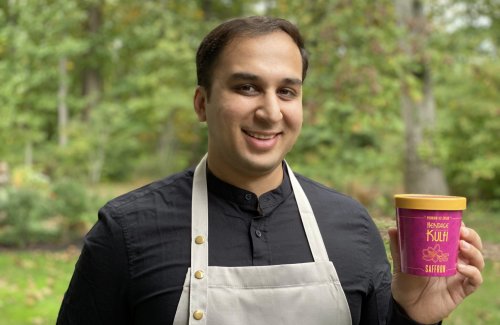
Founder and CEO of Heritage Kulfi, Mansoor Ahmed, explained that the brand was created to address a gap in the mainstream market by offering classic South Asian flavors and a creamy, traditional kulfi.

Mr. Ahmed emphasized the use of high-quality, authentic ingredients and traditional methods in crafting each flavor. Drawing from his personal nostalgia for the South Asian cuisine and desserts of his childhood in New York, he confidently developed a product that he knew others would enjoy as well.

Kelly Stockdale, KeHE’s senior category manager, stated that for a brand to be selected for the emerging brand program, it must offer something new and unique. Heritage Kulfi stood out due to its distinctive flavors, attractive packaging, and the growing consumer demand for experiencing diverse tastes. KeHE’s sales team and retail partners voted to include the premium ice cream brand in the program.

Heritage Kulfi takes pride in its handcrafted production process. According to Food Business News, the company simmers locally sourced ingredients overnight, caramelizes and browns the cream’s milk proteins before freezing, resulting in a dense, creamy texture with rich dairy notes. 

Their range of flavors includes Alphonso Mango, Cardamom Chai, Coconut, Earl Grey, Pistachio, Rosewater, Saffron, Vanilla Bean, Malai Sweet Cream, and Almond Blossom. Additionally, Heritage Kulfi is actively developing vegan and dairy alternative options.

The company aims to leverage this opportunity of being selected by KeHE to expand its distribution from the Northeast and Midwest regions to nationwide coverage within the next two years.

Featured Image Source: Heritage Kulfi