Awaken* newsletter

March 21, 2024

SHARE:

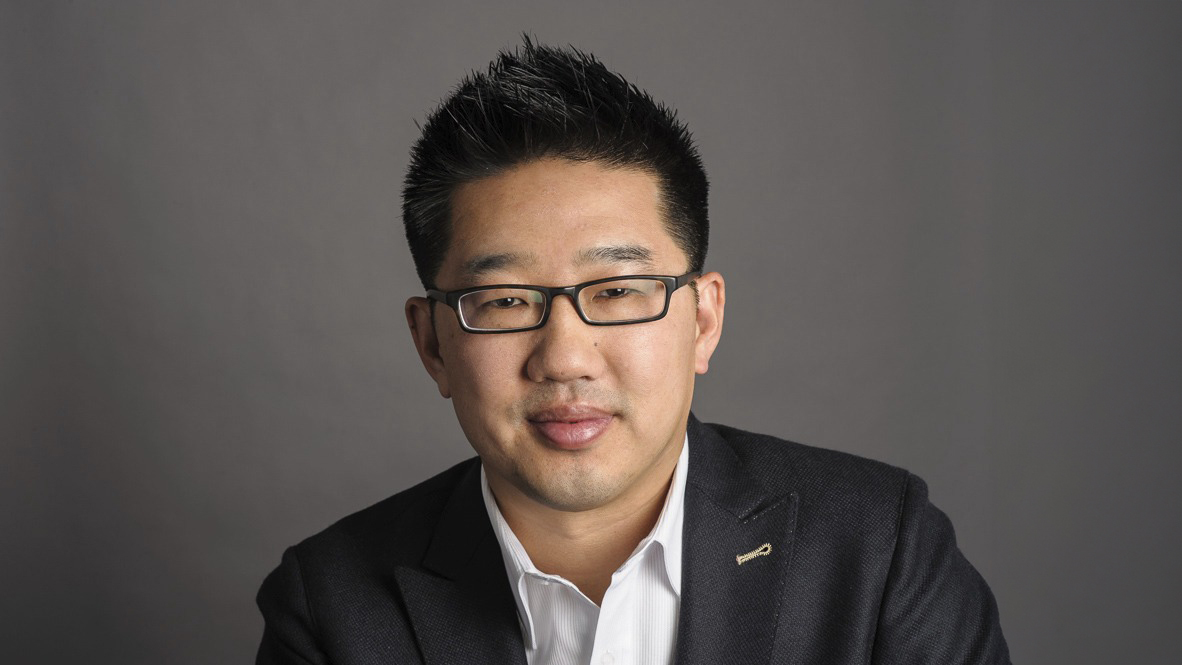
On December 15th, I had the honor to chat with Kevin Chou. Kevin is one of the foremost Asian American founders, having founded a number of gaming and web3 companies (Rally, Forte, Blocto, Gen.G, and Kabam) and currently spends his time working on Superlayer, a crypto venture studio he co-founded two years ago. Kevin also serves on the board of trustees at his alma mater UC Berkeley and notably made the largest donation to the school from an alumni under 40 years old. Without further ado:

FINDING YOUR OWN VOICE

In my research for this interview, I came across an article where Kevin said “Not working has helped me realize that by far the most important thing is finding that voice in your head that’s truly, authentically you”, but he never got around to sharing how to find your own voice, so that’s what I asked him:

One way to think about it is to try to meet as many people as possible, people that seem to inspire you–could be from all walks of life. It could be somebody in the government, the political field, someone doing nonprofit work, or even a church figure. Reach out to as many senior people, people that you admire, people whose work seems really cool. Reach out exactly like how you did. Say, “I’m a new graduate. I’m still trying to figure out what I want to do with my career. I’m really inspired by what you’ve done. Can I set up 30 minutes with you to talk about what you do, what you like about it, what advice you have, etc.?” It’s shocking how few people do this. I know it’s potentially a little scary. You’re reaching out to people who you don’t even know. 

Personalize a note, find them on LinkedIn, or social media, or email, and just send them a note. It’s actually surprising. I took a look at your note. And I was like, “You know what, it’s half an hour of my time. If I could help somebody, I think about it as just paying it forward.” I think a lot of people who’ve had some success in their life are very happy to pay it forward and try to help young people figure out what they want to do, because I think we were all there when we graduated.

On a personal note: I’ll add that my success rate with my cold emails to these founders is about 5-10%, which Kevin noted was within expectations. That’s not to discourage anyone from emailing, but to set realistic expectations as to the response rate. If your response rate is better than mine, I’d love to hear what you’re doing so I can copy you!

ON BEING ASIAN

At Asian Hustle Network, our one recurring question is: “how has being Asian qualified your experience as a founder?”, here is Kevin’s response:

I think about it all the time. I didn’t grow up in an Asian community. I grew up in a very small, rural community. So it was a lot of white and Hispanic folks, and I didn’t really have any Asian restaurants in my town. There were only two other Asian kids in my high school. When I was a kid, I thought it was weird that I was Asian. I looked different from people, ate different food than other people, and my parents didn’t speak English as fluently. I tried to blend in and not really focus on it. Then I went to college at Berkeley. There, I found a lot of friends and felt like I fit in a lot more. As a founder, it’s again, thrust into an environment with very few Asians as CEOs. There are a lot of Asians in technical roles. I think I’ve been incredibly successful. Lately, there have been more and more Asian founders, but there’s not as much of a cohesiveness around it as much as, for example, the Indian founder community is very tight. The Pakistani community is very tight. There are a lot of other ethnic communities that are founders that I think are tighter.

I had recently talked to Bryant Chou from Webflow, and his method of approaching this was to take a colorblind approach when it came to business. I mentioned to Kevin that his approach seemed the opposite of Bryant’s:

I definitely feel differently about it. I’m doing business with a lot of people. In general, when I’m doing business, I’m working with all different types of people. But in terms of people that I want to help out, it’s very natural that I’m more likely to say yes to an interview or try to help somebody else out if I see a little bit of myself in them. Ethnicity helps. I’ve done a lot of business in Asia, including having a 300 person office in China and starting an esports company called Gen.G, which is based in Seoul, Korea. 

Going to Asia, it’s a huge advantage to speak the language and understand some of the cultural aspects. I think about how I can take advantage of the good parts of being an Asian founder and entrepreneur, and then there are probably times where it’s a net negative, and I try to mitigate those as much as possible. 

For example, during COVID, there was a big group of Taiwanese American entrepreneurs, like Steve Chen from YouTube, and Kevin Lin from Twitch, and Jameson Hsu. We decided to go to Taiwan during COVID. There are lots of times where we’re celebrating Chinese New Year together, and just like Chinese New Year events that you go to, and you meet a bunch of other founders. Having kids and a family, I spend a lot of time just enjoying meeting people from those cultural events. 

Pulling on this thread, I asked Kevin what kinds of detriments he felt Asians faced:

I don’t think there’s as much of a detriment anymore. I would say in 2006, I was incredibly lucky that I was a VC. When I joined investment banking, there were like two other Asians in my hundred person office. And in all of the venture industry, there were maybe 10 Asians (circa 2005). How many CEOs were successful, CEOs of companies that were Asian, you had Jensen who ran Nvidia and that’s about it. There were just not many Asians. You think about all the .com companies, all of the e-commerce companies that were started in the late nineties and in that era of the technology world. It’s hard to think of many Asians. I would say Jerry Yang comes to mind.

Although he wasn’t the CEO initially, back then it was really hard to be a CEO who was Asian and trying to pitch to someone who’s generally not Asian. The investors do a lot of pattern matching. For example, they might think, “These kids are from MIT. That’s a good pattern match. I’m interested.” While nobody’s explicitly saying, “I don’t want to fund a woman or someone of a certain ethnicity,” they’re just pattern matching. They’re taking lots of meetings and they might think, “Something’s a little off about this one.” Think about it, how many CEOs have been Asian? It was a lot harder, but today there are a lot more, which is good. I think it’s less of an issue today. On the positive side, a lot of Asian founders get credit for being smart, being technologists, and for hustling. I don’t think it’s much of a detriment anymore the way it was 20 years ago. That’s good for the better in that regard. 

Going off his comment on the lack of Asian CEOs, I asked him what kinds of things he practiced or studied to overcome the additional headwinds he faced:

If you want to be a CEO, everyone has different perspectives on this. My perspective, especially in the context of the Asian Hustle Network, is that one of the Asian stereotypes is that they’re quiet, smart, and they work really hard, but they don’t know how to get out there. They don’t know how to sell or get deals done. So, I think being a good communicator and developing your own leadership style in a way that is authoritative, compelling, and authentic is important. Everyone has their own way of doing this, but there is a certain projection or pattern match of somebody who is going to be a good CEO. As a founder, you’ve got to be someone who can overcome obstacles, regardless of your ethnicity or gender. You have to be good at running through walls. Being good at sales, being able to get your ideas across in a compelling way, these are all incredibly important. These days you can do that via a variety of means. It doesn’t have to all be in person. 

FUNDRAISING 

I have some friends who are looking to raise a pre-seed round for their startup. But they were having some difficulty as they weren’t located in the Bay Area and didn’t have existing connections to angel investors. I wanted to see if Kevin had any advice for people in their position:

It’s definitely a lot easier if you’re from Stanford, MIT, Cal, or other top programs with a technical background. If you’re not from that, my biggest advice is to move to San Francisco or New York. If this is what you want to do, you have to do it right. If you wanted to be an actor or be in show business, you would go to New York or Los Angeles. That’s where everything is. The various angel investors, seed investors, and larger institutional investors are primarily in these two markets. I would say the Bay area still tops, but New York is a very close second these days. It’s much easier if you go out, attend some of the easier events, meet some people, spend some time networking, and then get invited to other events. You start meeting investors, figure out what events they are going to, go there and meet them, and talk to them about your ideas. There’s no substitute for meeting somebody face to face and talking.

Kevin later added a few additional thoughts:

As a young entrepreneur, there are two ways to build a company. The way I did it was through luck. I raised half a million dollars for my first round in 2006, which wasn’t a lot of money. We were incredibly frugal and had enough money to pivot a few times. This is a harder way to do it because it involves a lot of networking to find investors. I was fortunate to have spent two and a half years as a VC in the industry, so I knew a lot of VCs. My own firm and a few others were willing to write me a check, but I chose the firm I used to work with because they offered better terms. However, the best way to build a startup is raising a few hundred thousand dollars, around $200,000. Those types of deals are easier to get. Ideally, you can even avoid raising anything because what you can do is get a few friends together who are technical and build the thing, launch it, and get some success. Then raise money. It’s much easier raising money once you’ve built something than when it’s just a story.

When I say I’ve been pitched hundreds of Gen AI startups, I would say 80% of those pitches did not build anything yet. A lot of those emails start with, “I’m looking for pre-seed funding and here’s what I’m looking to try to do.” I generally don’t even read those emails. And I think a lot of other investors don’t either at this point. So if you haven’t met the team, if the team doesn’t have a really good background in exactly the area that they’re tackling, it’s an easy archive email. 

Whenever somebody built something and emailed me, “Here’s a link to the thing I built,” or “Here’s a video of the thing working,” I generally take the time to go take a look at it because I’m always interested in what’s new. I’ll take way more meetings with somebody who’s built something. 

And there you have it! Just building something and getting a few users will put you ahead of most pitches.

TAKING CARE OF YOURSELF AS A FOUNDER

The last question I asked Kevin was how he dealt with the emotional toll that being a CEO takes.

You have to have either a community or a relationship. Besides parental relationship, some meaningful relationship in your life that is going to ground you through the tough times, because without that, it’s just so easy to slip into that place. These days, it’s much more normal to talk about the importance of mental health. Mental health, emotional health is incredibly important. I think it’s all rooted in physical health, too. It’s really hard to run a startup if you’re not physically healthy. If you’re not physically healthy, that also drags down your emotional and mental health. So I think physical health is actually the very base of the pyramid.

From SoulCycles to sports, for example, I highly recommend a book that has been really helpful for me. It’s a book called Younger Next Year. This book came out, I think, over two decades ago. I recommend it to everyone. You don’t even have to read the book. The very basic thing to do is strength training two times a week, and then try to do some cardio exercises, another three to four days a week. So basically spend five or six days a week being physically active, with two of those days being strength. Exercise and eat reasonably okay. That is my number one advice to people with a stressful lifestyle. Having a grounding of physical health is super important. 

Then we get to the question that you started with, which is emotional health. Emotionally, mentally, it is incredibly important to have a community and to have a relationship that you care about. I know all this sounds like, “How am I going to do all this stressful stuff in your life?” But the whole point is, if you’re going to run a marathon, you have to pace yourself. The number one thing that I find is, if time permits, have something that you like doing. Ideally, that’s something that ties into physical health, because that way, you kill two birds with one stone. Whether it’s hiking, or a sport or something else, do things that you enjoy a few hours a week, because otherwise, you’ll just burn yourself out. So physical health, relationships for mental health, and then do some play every week.

I asked Kevin what exercises he tends to do and mentioned that I do mostly cardio:

Strength training is the number one thing that I recommend for everyone. That can come with all sorts of different things like circuit training, some sort of boot camps. It doesn’t have to be super intense, you’re not looking to necessarily get ripped and get a six pack. It’s just strength training, kind of a total body core strength training. Find something that you like that gives you energy, it could be a class, it could be one on one, it could be doing videos, something that you enjoy. Strength training doesn’t have to be a chore, it should be reasonably fun. On the cardio side, I love playing tennis, and lately pickleball. That’s what I do most of the time. On the weekends, I’m generally hiking, because I like spending time in nature with my family. 

There’s a website called Bay Area Hiker, or BA Hiker, I think. It has all sorts of great hikes that are all ranked by community. You can search by area and city. We like driving out to Half Moon Bay. Near the ocean, there’s a ton of great hikes along the one freeway. If you drive south from San Francisco, as you get towards Pacifica, there’s a lot of great hiking trails that take you above the one freeway. You get a gorgeous view of the ocean and the waves coming in. It’s just beautiful.

SHOUTOUTS 

If you like mobile games, check out Bored Button, a free mobile game where you can earn valuable loyalty points–made by one of Kevin’s companies. Bored Button is available to download on the Apple App Store, Google Play Store, and the Amazon App Store.

Thank you Kevin for speaking with us!

Related Articles

Sporting News-jpeg

News

The Inspiring Journey of a 17-Year-Old Indian American Baseball Prodigy

Arjun Nimmala’s journey serves as an inspirational story for Indian Americans across the nation.

Born to parents who migrated from Andhra Pradesh, India, Arjun shares a similar background with many first-generation Indian Americans. Arjun grew up in Dover, Florida, where he discovered his passion for baseball and dedicated himself to pursuing his dream of playing in the Major Leagues.

Arjun’s parents, Balu and Neeru Nimmala, brought with them a love for sports from their native country. Both competed in various sports, including track and field, cricket, basketball, and volleyball. Arjun and his younger brother, Akhil, inherited their parents’ athletic abilities and developed a deep passion for baseball.

At the age of 12, Arjun made the decision to focus solely on baseball, leaving behind soccer and basketball. He began to demonstrate his potential as he honed his skills in the sport. 

Arjun’s dedication and hard work paid off during his senior year at Strawberry Crest High School, where he garnered numerous accolades. With an impressive batting average of .479, six home runs, 29 RBIs, and 30 runs scored, Arjun’s exceptional performance earned him the title of Player of the Year.

Arjun’s selection by the Toronto Blue Jays in the first round of the MLB Draft marks a significant milestone in his career. As the first first-generation Indian American to be drafted at such a high position across the four major sports, Arjun has shattered barriers and become a trailblazer in his community. According to MLB, his remarkable achievement follows in the footsteps of other notable Indian American athletes, such as left-handed pitcher Rohan Handa and basketball player Satnam Singh.

At the age of 17, Arjun’s success not only represents the realization of his own dreams but also serves as an inspiration for young Indian Americans aspiring to make their mark in the world of sports.

Featured Image Source: Sporting News

IMG_7365

Stories

She Has Built A Community of Over 150k Parents Through Her Social Media Platform to Share Knowledge and Amplify the Marginalized

In a world where racial divisions persist and human dignity is often overlooked, Esther Park, a Korean American, has chosen to raise her voice and make a positive impact. Growing up as an immigrant child, she witnessed the struggles faced by her parents and the marginalized communities around her.

Esther’s journey led her to work with Liberty in North Korea, a non-profit organization that rescues refugees and advocates for their rights. She passionately believes in the inherent value of every human being, regardless of their background. Esther’s commitment to social justice extends beyond her work at Liberty in North Korea.

As a content creator, she has built a community of over 150,000 parents, using her platform to share knowledge and inspire others. Despite the challenges of balancing her various roles, Esther’s dedication to her daughter, her faith, and her mission remains unwavering. She aims to harness the power of social media to drive positive change, advocating for dignity, equality, and the betterment of society.

Through her journey and her inspiring message, Esther encourages everyone to embrace their influence and use it to uplift others, spreading love and serving those in need. Read through as Esther shares with us her experiences growing up as a Korean American, her work at Liberty in North Korea, her role in the church, and her journey as a social media influencer advocating for marginalized communities and give a voice to the voiceless. 

GROWING UP AS A KOREAN AMERICAN

Growing up in Seattle, Washington, a predominately majority culture city, I was the “popular Asian kid.” My friends would say things like “Oh but you’re the cool Asian.” There were some ways I clung to that. But it also unsettled me. A lot. It bothered me that certain people were determined as “in” and accepted or not by the color of their skin. But I never spoke up. Since then, I’ve witnessed many horrors of racism. And I truly believe in the need for racial reconciliation. Especially now, living as an Asian American through Covid-19, I’ve realized that I need to raise my voice.

MANY ASK IF I GOT INVOLVED BECAUSE I’M KOREAN, BUT MY ANSWER HAS AND ALWAYS WILL BE: “NO, I’M INVOLVED BECAUSE I’M HUMAN”. 

Growing up our family didn’t have much but I know that my mom always worked hard and tirelessly to make sure we had the best childhood growing up. We were fortunate enough that our hard working immigrant parents could make just enough, but I knew early on that it wasn’t the case for everyone. I went to school with friends who simply couldn’t get good grades or make it to all of their classes because they were busy working part time jobs while going to school to support their families from an early age. It was so heartbreaking for me. The experience as an immigrant child is unique yet unsettling. We see our parents working harder than most yet they struggle to even reach the middle class because of language barriers and learning to assimilate to a new culture. I always knew growing up that I’d want to make sure that I could do everything in my power to help minorities and to help those that didn’t have a voice.  

I’ve also spent almost my whole life in the church during ministry and mostly my focus has been on local outreach and missions. I currently oversee our City Partnerships ministry which is where me and my team are able to give our church members an opportunity to serve the city of Los Angeles that may be living under the poverty line. A few of the organizations that we work with is LA Mission, which is a non profit that works with the houseless population in Los Angeles to empower them to get back up on their feet and also with a non profit called Lincoln Heights Tutorial program that is a non profit with a mission to serve underserved and overlooked youth of East Los Angeles. They focus on making a local and significant community impact. They do this through a combination of tutoring services to close the academic gap, and youth programs to prepare teens for life after high school.

THE ROLE MY FAMILY PLAY IN SHAPING MY VALUES, PASSIONS, AND WORK

My mom immigrated to the States when she was in High School, as the eldest she was busy helping my grandparents with language barriers and her and my aunts and uncles all helped with their gas station. My dad came sometime after College, he started off as a dishwasher at a Sushi restaurant and eventually made his way up and now is a Sushi Chef and restaurant owner that is well known for some of his rolls in menus at different Sushi restaurants. He is also known for making Sushi for some of the top Major League Baseball players and South Korea baseball teams. My family came with absolutely nothing besides the thought of raising their families to achieve the “American dream”. I’m sure their eyes were opened to the brokenness of this country, but they worked hard to give their children everything. 

In many ways, my family and a lot of immigrant families were looked down on, this from an early age made me realize that I would never look down on someone for being different. I believe that we are all thread together as humanity and that we all must work together in helping this world become a better and brighter place.

Processed with VSCO with a6 preset

WORK AT LIBERTY IN NORTH KOREA

I’ve spent most of my late 20s working with Liberty in North Korea – a non-profit that rescues North Korean refugees hiding in China. Many ask if I got involved because I’m Korean, but my answer has and always will be: “No, I’m involved because I’m human”. What first sparked my interest in this issue was because I saw other human beings being treated less than just based on the circumstance or situation they were placed in. I hope that helping people dwelling in the margins, living every day in fear and helplessness, will never come with a condition. That we’ll continue to feel the tug to love and serve those in need. After all, we’re all human. 

Liberty in North Korea is a non-profit organization that believes that one day every North Korean man, woman and child will be free. We believe that every human being believes to have their basic human rights and dignities. We’re helping North Koreans escape a brutal regime through a 3,000-mile secret rescue route to freedom. It’s illegal for North Koreans to leave their country yet thousands of North Koreans risk their lives to reach freedom. Once they get into China, they are still not free. Because of the relationship that China has with North Korea, if North Koreans are caught by Chinese authorities they can be sent back to North Korea where they can face harsh punishments and imprisonment. 70% of women that are hiding in China are trafficked or sold as sex brides because of their difficult situations. This is where we come in to help them reach freedom through our rescue routes.

Once they have been rescued and resettled in South Korea and America, we also work with them in their resettlement journey to help them build self efficacy and reach success in their new lives. We also have a program called “Changing the Narrative”, unfortunately most of the world knows and sees North Korea based on what we see on the news which is about the Kim Regime or their nuclear missiles but we want to shift the focus to the 25 million innocent and real lives of the North Korean people, people who are just like you and I. 

I got involved with Liberty in North Korea when I went to UCLA, I helped start the chapter there and started having fundraisers very regularly and got involved with our headquarters that way. The summer of my senior year of college I went on a Christian mission trip to the border of China and North Korea that was life changing. I was able to hear from and befriend many North Koreans that were hiding in China and hear their stories. We would have to go to their homes at 3AM and turn off the lights and whisper to hear their stories. Right after that I interned with Liberty in North Korea where I traveled around the East Coast for 3 months sharing the stories of the North Korean people for hundreds of people. During that internship the HR manager called me and asked if I wanted to apply for a position and working at Liberty in North Korea was my first full time job after graduating at UCLA. 

BUILDING A COMMUNITY OF OVER 150K PARENTS AND PARENTS-TO-BE

During my maternity leave when I was able to step away from my day jobs to recover and to take care of my newborn, I was able to find a way to do something fun and meaningful. I spent a lot of time when my newborn was napping to learn about parenting and different methods and ways to ensure that my daughter was getting the best rest and care possible. I started posting my journey on Instagram and was able to build a following on Instagram and Tiktok of over 150,000 parents and parents-to-be in a matter of 3 months. It was an innovative way of creating value based on my circumstance. I’ve always believed that people come first, so this new venture I’ve entered into has always been about my community. I love being able to engage with them and share what I’ve experienced and learned so that they can learn from my mistakes and so that I can learn from them as well. 

BALANCING WORK AT LIBERTY IN NORTH KOREA,CHURCH, AND SOCIAL MEDIA

To be honest, it’s been hard. But I try to focus on my work at Liberty in North Korea from 9-5 and focus on Church ministry and content creation during the evenings or on weekends when Shiloh is asleep. But when Shiloh is awake I try to interact with her and spend as much time with her as possible. It’s important to me that she sees a mom that isn’t always working and on her screen but that is interacting with her and always putting her first. To be honest, a lot of this is of course because I am passionate about the work that I do but it’s also a means to a way to provide a life to Shiloh where she can flourish and grow in some ways that I may not have been able to. She is my ultimate motivation. 

CHALLENGES FACED IN VARIOUS ROLES, AND HOW I’VE WORKED TO OVERCOME THEM

I think the work I’ve done at non-profits isn’t very “cool” or “flashy”, it’s hard to get people to care about these issues, so that has always been very difficult. I love that there has been a huge movement of young individuals that have risen up to use their voices. For example, there was so much attention around the Black Lives Matters movement and the Stop AAPI Hate movement, which is so encouraging to me. It made me so happy to know that this type of awareness could be made. But it’s been heartbreaking to see that so few people in the world know about what’s going on in North Korea. The UN has deemed that North Korea has one of the greatest human rights crises in the world, yet I feel that there is little to almost no focus in the media on North Korea.

I know that it’s a complicated issue but they need our help. I oversee the grassroots movements of students and supporters at Liberty in North Korea and although it’s been discouraging at times, I am so grateful for the consistent supporters that we have all over the world. We have over 100 student and community led LiNK Teams all over the world that I have the privilege to lead and oversee. They are the ones that are showing up and helping to change the narrative to focus on the North Korean people. 

HARNESSING SOCIAL MEDIA TO DRIVE POSITIVE CHANGE TO ADVOCATE FOR DIGNITY AND EQUALITY

I think what I’m passionate about is two fold:

  1. When people are not treated with dignity and care, I believe that all human beings deserve this. 
  1. When people are suffering because of the lack of resources that they have, when there is an abundance in the world that ought to be shared.

So when it comes to these two areas, I want to be able to use my platform to share about what’s going on in the world and how we can help. For example, sharing different go fund me’s and fundraisers, sharing opportunities to help a specific person or community in need, starting my own fundraiser, sharing ways to contact your congressman or senator to push for change, etc. I have been able to raise over $40,000 holding fundraisers for Liberty in North Korea and other charities that I’ve mostly been able to leverage through my social media channels. 

ADVICE TO MOM CONTENT CREATORS  LOOKING TO MAKE A POSITIVE IMPACT THROUGH SOCIAL MEDIA 

I really don’t like the word “influencer”, but what I do want to share is that we indeed are all influencers whether small or big your following. There will always be someone that is influenced by you. You may be influencing your child everyday because they look up to you and learn from you just by watching you. You may have watched a good Netflix show that you’ve told all of your friends about. You may have taught your mom and dad how to use the latest app on their smartphones. We are all influencing others in some way or another, but whether we are influencing people to do good or to do bad, is the choice that we get to make everyday. My faith is very important to me and something that I have always lived by is to love God and to love others.

I know that God has placed me on this earth to love others and to always put others before myself. But whether you believe in God or not, I’d want to encourage other moms that want to make a positive impact in the world to always think of the other and to always look at everything you do (including social media and content creation) with the lens of “how can I love or serve the other today”. I know that everyone is fighting their own battles and struggling so I try to find ways to make people smile through my content and if that’s the way that God is using me as a channel of His love and blessing, then I’m grateful for that opportunity. 

CONNECT WITH ESTHER

Instagram: @estheryunpark  

Tiktok: @esthersoyunpark 

Youtube: Esther Soyun Park

fb-jpeg

News

Henderson Welcomes New Asian-Owned Coffee Shop Inspiring the Asian Community

Henderson, Nevada has recently welcomed a new coffee shop that not only offers a unique Asian twist but also serves as a place of representation and empowerment for the community.

In the spirit of celebrating Asian American and Pacific Islander Heritage Month, local business owner Abel Garcia introduces Lovely Mempin to KTNV, the proud owner of Evergreen Coffee, who aims to inspire and empower fellow entrepreneurs from similar backgrounds.

Owning a business has always been a cherished dream for Lovely, driven by her desire to succeed in a society that often limits opportunities for minorities.

“Growing up I felt like there was a very defined narrative of what it meant to be Asian and I struggled with that because I felt like I was never good enough to be Asian or good enough to be American,” Lovely said to KTNV. She was originally from Manila, Philippines, moved to California, and eventually to Las Vegas.

Image Source: Linkedin / Lovely Mempin

Evergreen Coffee showcases a diverse range of Asian delicacies, including the peach mango pie from Lovely’s childhood and Indian-style toast, which breathe life into her cultural heritage.

Customers like Kyle Wong find solace in businesses like Evergreen Coffee, as they provide a sense of belonging and allow genuine representation of Asian culture. Wong appreciates establishments that bring forth authentic Asian experiences, such as tea businesses that evoke a nostalgic sense of home.

Aside from providing a delightful Asian-inspired coffee experience, Evergreen Coffee also symbolizes the strength and resilience of the Asian community in Las Vegas. Through her business, Lovely seeks to inspire others in the Asian community and to set an example for them to be bold and to take risks.

Featured Image Source: FB (Evergreen Coffee)

341742102_699791085234766_8776330555256744004_n-jpg

Stories

She Started A Sushi Side Hustle After Getting Engaged, Generated $100K One Year Later For Her Wedding

Whether you’re planning a wedding, considering starting a side hustle, or simply looking for some inspiration to pursue your passions, this story is one you won’t want to miss.

Weddings are supposed to be one of the most memorable moments in a couple’s life, but the reality is that the cost of making that dream a reality can be overwhelming, especially for Asian weddings – with the elaborate customs and traditions, and the pressure of inviting every distant relative, including aunts you may not even know.

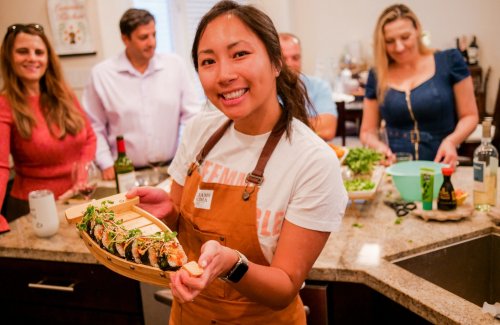
This is why last year, Lavinia Doan (Bao Nhu) decided to start LAV SUSHI, shortly after getting engaged. She wasn’t sure how to come up with funds for her wedding, and as a daughter of refugees, she had to start from scratch.

In a year of engagement, Lav achieved a milestone: she was able to save up $100K from this side hustle that she used to pay for her wedding. From being a one-woman team, her husband has now joined her in her sushi journey.

FOR THE LAV OF SUSHI

Lav is originally from DC, but she moved to Texas about 5 years ago for a job in oil and gas. She was supposed to work off-shore as an engineer in South America, but due to COVID, she was sent to various places like Midland, Carlsbad, and West Virginia. Although not the most exciting places, she tried to make the most of it by expensing meals, specifically sushi, which she loved. However, she found that the sushi in those places was terrible, so she started making her own.

Lav enjoyed making sushi, but there was a lot of prep work involved, so she started inviting friends over for sushi-making parties to share her passion with them. For her, having friends and family over for a meal was a way to show that she cared for them. Eventually, she left her job in oil and gas and started working in tech, where she was fully remote. Missing the human interaction from her previous job, she began seeking out ways to meet new people.

Being an extroverted person, Lav decided to list sushi classes on Airbnb Experiences as a way to meet people and share her passion with them. What started as a passion project soon turned into a side hustle when she got engaged and needed to find a way to pay for her wedding.

They started with sushi classes which are still their bread and butter, but have since expanded into catering, and homakases (omakase at home).

CHALLENGES OF STARTING HER BUSINESS

It was only two months after the first few classes when Lav got engaged.

Lav and her partner, Dan, started the wedding planning process and quickly realized that the cost of their dream wedding was almost triple what they had planned for. Post-COVID backups and inflation made for an expensive wedding. She knew that they had to either sacrifice their vision for the wedding or find another way to save up.

For them, the wedding was more than just a party to celebrate their marriage; it was an opportunity to give back to their friends, family, and colleagues and treat them to a fun weekend. They felt positively impacted by the people around them and wanted to return the favor at their wedding.

Starting her own business posed the biggest challenge for Lav as she struggled to manage and prioritize her time. In addition to working full time and planning their wedding in the US and Vietnam, she also wanted to maintain a semi-normal social life. She enjoyed spending time with friends, family, her partner, and even alone time. The business was a one-woman show for a long time until she realized that it wasn’t sustainable.

“I would joke with my partner that we would be able to afford the wedding we wanted but wouldn’t have anyone to invite because I hadn’t been able to find time to spend time with friends and colleagues, even my dog and partner were feeling the neglect!” Lav shared. She sacrificed sleep, workouts, and nutrition.

Many nights, after a long day of work and sushi-making, she questioned if it would all be worth it.

EFFECTIVE TIME MANAGEMENT WHILE RUNNING A BUSINESS AND PLANNING A WEDDING

In terms of time management, Lav admits that she is still learning how to do it well.

“I am a normal person and sometimes find myself spending too much time on my phone mindlessly scrolling, forgetting tasks that need to be done, and inefficiently bouncing from one task to the other. But I think it’s okay!” Lav said, and shared a few strategies that have helped her become more productive:

  • Waking up early – She wakes up early every morning at 6 am to work out at a pilates studio that charges her if she misses a class. This incentivizes her to start the day early and avoid the temptation to stay in bed and scroll through her phone.
  • Blocking off hours – She blocks off hours in her schedule to focus on specific tasks, which helps her prioritize and manage her time more effectively.
  • Outsourcing – She has learned to outsource tasks that don’t bring her joy or are too time-consuming. This includes hiring people to help with her sushi business and outsourcing tasks in her personal life.
  • Knowing your worth and what your time is worth – This helps her weed out opportunities that aren’t worth pursuing from a time, profitability, and brand standpoint.
  • Never compromising the mission – Her mission is to bring the joy of sushi into people’s homes and educate them along the way. She refuses to sacrifice the quality of ingredients or cut costs to increase profitability because the joy and fulfillment of bringing this experience to people’s homes are more important to her than money.

MEMORABLE MOMENTS AND EXPERIENCES

Most of Lav’s friends know that she really likes a challenge, so much so that she feels like being purposefully unprepared presents its own challenge.

Lav signed up for the Houston Marathon, her second marathon ever at that point in time, which she had not trained at all for. She also accidentally overbooked a public sushi class for that same evening in her home. It was her biggest class so far.

So she ran the Houston Marathon, walked to a bar to get some drinks with friends, and then went home to start prepping for her sushi class. LAV SUSHI was still very young at this point, so procedures weren’t very optimized at that point. “The class went well, but there were definitely moments where I thought I would drop the rice pot because my legs were quivering, and I could definitely tell that some guests were uncomfortable by how full the class was. Let me tell you, I never overbooked a class again,” she shared.

That’s not the end of it. After class, Lav cleaned up and started packing for a 2-month ski trip in Colorado. She couldn’t remember if she slept or not, but she did manage to catch her 5 am redeye the following morning.

“Sometimes I think about that day, and get tired just thinking about it. But I really did show myself what I can get done in a day. There are countless amazing experiences I have had with clients that I could write a novel. I have made so many friends and connections through the business, and am thankful to have gotten to know these people!” she adds.

EXCITING NEWS FOR LAV SUSHI

Despite all the challenges that Lav faced in running her business, she was able to generate $100K in one year for her wedding.

Lav and Dan got married just a month ago and they are now taking a break from their Houston-based business to focus on personal matters and other projects. They will soon embark on a six-week expedition to Asia to celebrate their second wedding and honeymoon adventure.

Their dedicated team will be taking care of LAV SUSHI in their absence, ensuring the city continues to enjoy the sushi experiences they offer.

In the meantime, they have some exciting news to share:

“We have been working on launching LAV SUSHI in Atlanta and it is fully operating and ramping up. We would LOVE some AHN support in ATL!”

WHAT MAKES LAV SUSHI UNIQUE AND WELL-LOVED

Lav thinks that the reason why clients of 2000+ love LAV SUSHI could be due to the personalized experience that is tailored to their taste preferences, with each menu being curated to suit their needs.

LAV SUSHI also offers unique catering menus that include a live chef and unlimited sushi, which always brings a “wow” factor to the guests. “People love that they can watch the chef’s roll the sushi right in front of them, and that they can make any requests on demand,” Lav said.

Another highlight of LAV SUSHI is their omakase concept, where they curate a surprise menu within the clients’ budget, which they can enjoy in the comforts of their own home.

CONNECT WITH LAV

Instagram: @lavsushi

Facebook: @lavsushi

Tiktok: @lavsushimaking