Awaken* newsletter

June 6, 2024

SHARE:

Venture capitalist Ann Lai is, by all measures, an absolute beast. From earning a PhD from Harvard at 25 to becoming Managing Director at her own firm–Skeleton Key, Ann has clearly achieved a great deal of success throughout her career. Ann is also notable for speaking up publicly about the misogyny she has faced in VC, despite it nearly forcing her out of the industry. I had the honor to chat with Ann about her career journey pre-VC, reflections on her identity, and also about her exciting new firm.

Journey to Venture Capital

Ann’s journey to Venture Capital is at least 50x cooler than mine. In fact, it’s one of the coolest there is. It all started when she read a biography of Marie Curie at the age of six. I asked Ann to explain what drew her to Marie Curie so much that it set her on a trajectory she is still on today:

The recognition of women in science has historically been insufficient, and I have consistently been attracted to narratives that feature an underdog. Marie Curie’s achievement as the first woman to win a Nobel Prize, and then winning it a second time, was profoundly significant to me as a young person. From a very young age, I had an affinity for science and engineering. My mother, a teacher of literature, encouraged me to read or listen to autobiographies of diverse individuals. My early fascination with NASA was spurred during the time my father worked there. Marie Curie significantly altered the landscape and methods of many scientific endeavors.

Marie Curie’s story inspired Ann to study science. By age 25, she had earned three STEM degrees from Harvard including a PhD in microfluidics. While studying, Ann was starting to notice things that would push her away from being a scientist towards investing:

I noticed that many significant scientific advancements were transitioning to privatization. There was a golden era of science in the United States during the 1970s, characterized by substantial government funding and innovative labs such as Xerox and Bell Labs, but it is now over. I hypothesized that the most groundbreaking scientific discoveries would increasingly be funded privately. The sectors that remained vibrant, like CRISPR and space exploration, were those receiving substantial private investment. And although I was satisfied in the laboratory, my broader interests and extroverted personality drew me toward the funding side of science.

However, that was not quite what the universe had in mind for Ann. Ann graduated right around the 2008 financial crisis, which had pretty much killed off all appetite for investments in science. Thus, she instead started her career at a firm pioneering big data analysis:

I joined a company on Wall Street that pioneered what is now commonly referred to as “alt data”. We acquired, scraped, and sourced new and proprietary datasets, transforming them into predictive models for public company earnings. This was a rigorous introduction to the underlying forces that influence corporate dynamics; we had to understand the key performance indicators driving stock market values. (It was like going through a condensed MBA program.) By modeling quarterly earnings, where data points were scarce, I applied methodologies from my graduate research, collapsing extensive data sets by normalizing or parameterizing the variables, allowing for a comprehensive, dynamic model. This approach was highly effective, blending scientific and business analytics.

After her stint working in finance, Ann went on to lead business intelligence for international territories at Riot Games and then worked in a few early-stage startups in preparation for a transition into Venture. One thing she said especially caught my attention:

There was noticeable skepticism towards PhDs and academics in venture capital. Despite my extensive scientific background, I was told to strategically minimize the emphasis on my PhD on my resume. It’s evident in the venture space that there is a prevailing belief that academics lack practical business acumen.

When asked whether this skepticism extended to PhD founders, Ann elaborated:

This skepticism is indeed still prevalent. However, many PhDs are exceptionally practical. For companies involved in iterative development, such as SaaS companies, the requirements are different. In these fields, the emphasis is more on user interaction and less on deep scientific knowledge. But, for science-driven enterprises, a thorough understanding of the fundamental sciences is crucial.

Hopefully, this gives some hope to the PhDs out there who are looking to start a company! In fact, VC has been trending more towards deep tech evidenced by an increased share of investments into the space.

Advice for Women in Venture

One aspect Ann has been noted for is her outspokenness on the misogyny she has faced in the Venture ecosystem. For more specifics about her experiences, you can check out this Elle article written about her. Given her experiences, I asked her what advice she would give to women who want to go into the VC or startup space, but are concerned about the misogyny and fraternity culture that is still rampant.

Establishing a close network of mentors and peers for support is essential. This has been invaluable to me. Unfortunately, the prevailing culture remains challenging, and the progress we’ve made has perhaps deteriorated in the past year due to decreased venture capital availability on the LP side. There’s still a lot of work to do. The solidarity of women supporting one another is crucial for fostering progress. Maintaining a commitment to support each other is critical. Although most days it may not seem particularly difficult, there are specific moments where you can just feel a very big demographic difference in terms of who’s empowered. Partners are partners, but managing partners are different categories of partners. Until more women are managing partners or running their own sizable firms as partners, there’s still not enough leverage in the space.

Being Asian

I asked Ann to reflect on how her identity as an Asian woman has affected her lived experience:

My mother is incredibly liberal for her generation of Taiwanese. She has always been supportive, telling me I don’t need to get married early or worry about having kids, which is rare for Asian moms of her generation. At the same time, my parents weren’t financially very well off when we came back to the States. I contributed to my family’s income from the age of 12. There was no safety net. If I didn’t make it, nobody could pay the bills. It taught me resilience and gave me a “no way back” approach to life.

My dad raised me with a strong sense of right and wrong (We watched a lot of Asian martial arts dramas and stories.) It’s not really about being visible–it’s about doing the right thing. This Asian heroism as defined by martial arts movies approach is quite different from American heroism, and it’s the reason why I stood up for myself even when it might have prevented me from working again.

Being an Asian woman in the US is difficult. I often get the assumption that I’m a lot younger, for example. So, you always have to go into a meeting fighting that. That’s something my cohort and I have talked about a lot, like, you learn how to dress and style yourself to appear older sometimes so that you will be taken more seriously.

For meetings in East Asia, I was coached to open meetings by stating my qualifications, the PhD from Harvard, etc.This way, they respect the degree and then they respect you. Male executives and men who attend meetings weren’t prepped in this way. But I’m starting to see more evolution, especially with the younger, successful Asian male founders and groups. They’re very supportive, which is great. The older generations still tend to have a more patriarchal mindset, but it’s getting better, especially in the US.

Anecdotally, children of first-generation immigrants often pursue more stable, high-paying careers (doctor, lawyer, etc.), yet Ann has clearly bucked this trend. I asked her why she thought she ended up doing so:

My parents have been very modern in their thinking. They’ve never said I had to do things in a certain way. They’ve always supported my decisions. It made me feel like I could do anything. I’ve never worried that I might not succeed. If you are fearless, you end up doing aggressive things, aggressive in a good way.

Having grown up in both the US and Taiwan, I think Western and Eastern education are quite different. The American system encourages exploration and aspirations, whereas there’s a lot more regimen in the Eastern education system. The way I was raised was very much a marriage of those two aspects in an unexpected way. I have a lot of friends who were told to be a doctor or a lawyer, but if you think you can do better at other things, why do you have to do that?

Skeleton Key

A Skeleton Key is a type of master key in which the serrated edge has been removed in such a way that it can open numerous locks. It is also the name of Ann’s new firm. While researching for this interview, I came across this article by Ann, where she lays out the argument for why Deep Tech is venture-backable. Towards the end of the article, she shifts the focus to ScienceTech (SciTech), which she defines as: the software, platforms, or tech-enabled services that accelerate scientific discovery or assist in bringing science to life. I asked Ann why she chose Skeleton Key’s focus to be on SciTech instead of Deep Tech:

Deep tech is definitely fundable, as I’ve talked about. But now with AI, I’m thinking about how to make deep tech happen faster. Instead of investing in a drug, I’m looking at the platforms helping people discover drugs faster. Those layers are interesting to me, and I think those are the layers where a lot of the accelerated computing power can come into fruition in an interesting way. The accelerated computing power means you can map out a lot of things that have historically been very difficult such as fatigued glass behavior or certain thermal dynamics, nonlinear dynamics, and anything that’s related to nonlinear systems. 

There’s even a lot of interesting stuff happening around the application layer of science. For instance, bringing chemicals to real-life applications usually takes a long time. You find a chemical and wonder where to use it and what it can be used for. Then, usually, you need a different type of manufacturing protocol or a different variation for each use case. But now,  you can find a lot of those variants much faster. The formulation or the tuning of that molecule, protein, etc. can be assisted on by AI and you accelerate that process of bringing it to a real-life application much faster.

As you may have gathered from her background, one of Ann’s specialties is data analysis. In her previous VC roles, Ann leveraged her background to evaluate companies based on their data in an apples-to-apples way. You can hear more about her approach in this podcast. Given that Skeleton Key is working with a type of company that isn’t what the typical VC invests in, I was curious to know if she had to adapt her process:

It’s definitely different for Skeleton Key. We deal with a lot more data around R&D and early applications because we’re focusing on a second or third institutional round for these folks–so it’s a post- R&D but before they actually hit ramping revenue. That means you still have time to work with them on exploring the business–is it a software platform approach, or is it a single molecule approach, or a single robot approach? 

I asked Ann what revenue the companies typically are at in their second or third institutional round:

I think the specific revenue number doesn’t really matter. It’s the mechanics of what the early performance looks like. If they have a couple of contracts which are scalable over time and show real adoption and real usage–that’s a lot more important than one marquee SaaS contract that you can get through relationships. It’s more around the usage, the actual day-to-day functionality or day-to-day use. 

Earlier in our chat, Ann touched on how Skeleton Key plans to help startups explore different business angles, I asked Ann to elaborate on this process:

Our approach is very collaborative. My philosophy has always been to provide as much help as the founder wants. The goal post-investing is to help them with monetization, go-to-market strategies, and thinking about how to scale from a scientific lab mindset into building a company. We also assist them in fundraising. There are a lot of resources post-investment, and whether a founder will leverage them is their choice, but we prefer that they are open to us being more involved. In this category, where there are no established revenue models and many founders are coming from academic backgrounds, this advisory capacity is helpful to give them the full lay of the land, let them explore, and let them test different monetization hypotheses quickly.  Inflexibility or lack of adaptability can be a problem down the line, especially in these categories that require a lot of money for ramping up and the revenue models aren’t so obvious. In fact, we’re planning on helping founders in this way before even investing, as part of our process.

I mentioned to Ann that this kind of help seems very valuable, especially since the only resources available online tend to be very reductive:

My biggest pet peeve is when VCs prescribe a framework without actually understanding the problem. When we help companies, we don’t do that. We workshop their unique situation and how to price best for their product, without capping future revenue. For example, a lot of people like to suggest ARR subscription SaaS, but that model doesn’t work for everyone. There’s a lot of possibilities around pricing and revenue that isn’t just about “getting ARR.” I think those are the interesting exercises to think through when you’re in these new categories.

Shoutouts

Ann is amazing  and I am super excited for the launch of Skeleton Key. If you’d like to hear more from Ann, you can sign up for her Science Fair newsletter here, where she writes about science and venture. Thank you Ann for the great interview!
Related Articles

Uncategorized

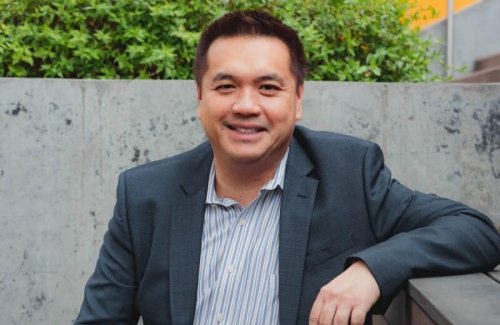
From Refugee To Legendary: The Roller Coaster Hustling of Serial Entrepreneur Tony Lam

“I want to tell everyone it is NOT EASY. For all the folks in the restaurant/food business, I respect you and take my hat off to you.”

Tony’s current passion projects include helping to bring popularity to Vietnamese coffee in the United States and guiding the next generation of young, ambitious entrepreneurs to realize their full potential. 

He is married to his lovely wife Van Lam and has two sons named Damon and Andy. His son Andy is on the spectrum (ASD), “Raising an autistic child has many challenges and requires a lot of patience. These kids have a special place in my heart.” Because of this, he is currently working closely with Linda Nguyen, founder Laugh Out Loud with Autism Foundation (LOLA) whom he got connected through the Asian Hustle Network (AHN), “Much respect for this beautiful human being for having a BIG heart. We need more compassionate leaders like her in this world.” he said. 

Known for being a successful serial entrepreneur, Tony shared his successes and his humble beginnings and challenges that made him the hustler he is today. 

Escaping Vietnam

My story began 45 years ago from today. During the Fall of Saigon (April 30th, 1975), I was only 3 months old when my family fled on a tiny boat to the US. My father was one of the Naval captains of the South Vietnam government. 

My mother had just given birth to me and they had to make the difficult decision: Should they stay, or should they go with a 3-month-old baby and risk death by the communist government? They made the decision to drop everything they had and took a chance on a better life into the unknown. 

My grandma, aunts, uncles, and cousins left everything behind and boarded the boat. My father to this day still has nightmares of the harrowing escape.

My mother had just given birth to me and they had to make the difficult decision: Should they stay, or should they go with a 3-month-old baby and risk death by the communist government?

-Tony Lam
3 year-old Tony

A Fresh Start

My family was refugees in the Philippines for about 6 months. Not knowing what would happen, my family prayed hard and God answered our prayers. We were sponsored by an American family through Catholic Charities.

This American family took in a total of 6 of us, gave us a roof over our heads, put food on the table, and gave my family support for a couple of years to survive. My “sponsored grandparents” are now angels in heaven, but their kids whom I called Aunt Kim and Uncle John still live in southern California and we still communicate every so often. My family is grateful to their parents’ kindness and open heart to take in complete strangers into their homes.

My family would move to the Bay Area a few years later for a fresh start. My brother and sister were born, and we quickly became a family of 5. My father got his AA degree from San Jose City College and his trade was being a technician fixing medical devices for hospitals while my mother worked as an assembly worker.

Building Blocks That Lead To Success

I remember growing up in a poor neighborhood, teased by classmates for being Asian. Racism did exist at an early age for me but I did not let it bother me.

I remember my parents giving me a $100 allowance to buy enough clothes every year during my middle and high school years. So no, I did not grow up with a silver spoon in my mouth, but I was grateful for what I had. I got decent grades but was not smart by all means in high school.

I attended California Polytechnic State University (Cal Poly) where I got my business degree. My dream was to open a business one day but I didn’t know at the time what it would be. My first job out of college was at Cisco Systems (’97). I worked for corporate for way too long (14 years). I was a workaholic working 60-70 hr. weeks to save up money to start a family one day.

I should mention that this all would not have been possible without the love and support of my wife. I met my beautiful wife Van Lam through a college friend. We chatted for 3 months via Yahoo Messenger, fell in love, and married her one year later in Vietnam. We have two boys (Damon – 10 yrs. old and Andy – 7 yrs. old)

While I was working at Cisco, I discovered my first hustle (Wingstop) and the many more that would follow after leaving the company.

I was a workaholic working 60-70 hr. weeks to save up money to start a family one day.

-TONY LAM

The Serial Entrepreneur

Wingstop Franchisee — for 5 Locations (San Jose, Milpitas, Fremont, Union City) in the Bay Area for over 3 decades.

COOP Marketing President — for 50 Wingstop in the Bay Area instrumental in inking the deal with the GS Warriors and becoming “The Official Wings of the Golden State Warriors” since 2015

Omni Bev Co-founder — the first company to have an RTD (Ready to Drink) Vietnamese cold brew with condensed milk on the market with a shelf life of over 6 months. Its coffee beans are imported directly from Da Lat. They also serve nitro cold brew!

Omni Bev Co-Founders Tony Lam and Tammy Huynh

Mavens Creamery Shark Tank Winner — a macaron ice cream place that started in a 400 sq. ft. garage, expanded to 300 venues, and 4 years later struck a Shark Tank deal on TV with Barbara Corcoran. 

alaMar Kitchen & Bar Co-Owner — voted the Best Seafood Restaurant in Oakland by Oakland Magazine in 2020, was also featured in the Michelin Guide for 3 years, and on KQED

Okashi Fusion Co-Owner — with a 4.8/5 star rating on Yelp reviewed by 710 customers, is the  “BEST POKE in town with the BEST desserts” as Tony describes.

VitaBowl Board Advisor & Investor — a premium on-demand delivery brand that serves locally sourced, vegetarian, superfood meals and beverages. Tony teamed up with Charles Michael Yim through Asian Hustle Network, who also struck a deal on Shark Tank. Charles has assembled an A-team of talent, “I am honored to be working with these guys. Together, we have started a new company VitaBowl.” he expressed.

Enterprise Purchasing Group Co-Owner — a group purchasing organization that leverages the combined volume of many e-commerce businesses to secure exclusive programs with major shipping carriers (USPS, UPS, DHL, FEDEX) for both domestic and international destinations. “Our team has saved 10’s of millions for many customers spending in the range of $10K to $70M+ to date,” Tony added, “If you ship at least 50 orders a day domestically, we can surely help you with saving with our program.”

A Few Hurdles That Turned Into Bigger Opportunities

When IOS apps were just coming out in 2011, my partner and I created a booking app called Chimpped, which allows users to book with all your service providers (e.g. your dentist, doctor, kid’s activities, restaurant, etc.). One and a half years later, we closed down our business because we ran out of money and did not get enough traction. The “high tuition” I had to pay through this failure allowed me to consult with other app companies.

The apps KEA, Nextforce, and WorkStream have gone through Series-A funding and 1 Seed round. The seeds have been planted, just waiting on fruits to grow.

The “high tuition” I had to pay through this failure allowed me to consult with other app companies.

-Tony Lam

What Is Next For Tony Lam? 

Tony wants to dedicate his time to the special needs / autistic community and provide resources such as jobs and career-building services.

He is also planning on launching Andy’s cafe where a large portion of the staff hires will be from the special needs community. The plan is to launch this in 2023 in California. If successful, he would like to open 100 of these in the next 5 years to give the special needs community a safe place to work and be able to socialize with people

Lastly, Tony is planning on starting up a PE fund to invest in startup CPG companies.

Advice To Aspiring Entrepreneurs

  • Surround yourself with mentors and successful entrepreneurs. Join a support network of folks that bring positive energy
  • Write up a business plan so that you have done the research before venturing out
  • Have 18 months of the runway of savings to cover your expenses while you launch your company

You can reach Tony at tony@launchyourfirst.com

295546115_608626004055198_2005064705537423309_n

Uncategorized

“Life as an entrepreneur is tough” Is An Understatement For Vanessa Techapichetvanich

Some business owners spend years building a company only to see it fail before it even takes off. How are you going to survive and cope? Will you just give up that dream business?

We all know that life as an entrepreneur is complex, but once you hit it, everything falls into place. Following the example of 27-year-old Thai entrepreneur Vanessa Techapichetvanich as she trusted the process and waited for the right moment to reap the benefits of her efforts.

Read through as Vanessa shares her story with the AHN community about building her passion-driven business Jamulogy, a 100% plant-based Indonesian herbal tonic. She discusses her struggles that almost made her give up, and what kept her going in order to reach her successes today.

Hitting Rock Bottom At The Very Start

2 years ago, I poured all my life’s savings into building Jamulogy. I raised quite a significant amount of funding through families and angel investors, built my first factory from scratch, and lost over $1M, due to the pandemic and an over-prioritization of FoodTech R&D.

I was devastated. This tremendous loss was beyond tragic. I was at the point where I wondered whether it was stupid for me to leave my high pay corporate job only to lose all my savings along with a sum of money from my investors.

What am I going to feed myself tomorrow? What will my employees do when they lose their job? How will I regain all the money I’ve lost? How will it affect women founders’ reputation in the startup ecosystem?

These questions and my desperation kept me wide awake at night for months. I was distressed, depressed, and hopeless. It was one of the lowest moments of my life.  

It also made me realize that when someone says “life as an entrepreneur is tough”, it is very much an understatement. You’re pretty much living on the edge 24/7, giving your 10000% best while success isn’t guaranteed.

What am I going to feed myself tomorrow? What will my employees do when they lose their job? How will I regain all the money I’ve lost? How will it affect women founders’ reputation in the startup ecosystem?

-Vanessa Techapichetvanich

Shedding Some Light On Untapped Opportunities

I almost gave up. I would have.. had I not coincidentally connected with someone from AHN who is in the import and export business. One really good thing about this group is you have people from everywhere around the globe, and they are able to share insightful expertise on some stuff you’re not familiar with. 

I joined AHN more than a year ago when Facebook suggested the group to me. One day, I saw some people posted about expanding their food products to big retailers like Walmart, Wholefoods, and Costco, and from there, I got to connect with someone from San Francisco who works for a national distributor company in the US, and that’s how Jamulogy’s products entered the US market. 

This encounter shed some light on untapped opportunities and calls for a pivot in our business model. And I have been rebuilding since January. Despite the adversity I have been put through, this journey has been my greatest teacher yet.

I’m proud to share that Jamulogy is now available in 5 countries worldwide, including the US, Australia, Singapore, Hong Kong, and Thailand. Jamulogy has also recently “graduated” from Southeast Asia’s biggest FoodTech accelerator program. 

Despite the adversity I have been put through, this journey has been my greatest teacher yet.

-Vanessa Techapichetvanich

Transforming Traditional And Holistic Drinks Into Recipes Of Yummy 

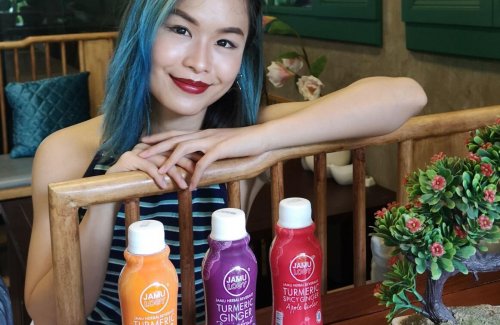
Jamulogy was born out of my passion for a healthy lifestyle and my dream to bring Asian pride to the global stage. My mother is Indonesian, and I was introduced to Jamu when I was 5. The word “Jamu” itself means herbs in Indonesian. Sadly, our generation in Asia has overlooked these Indonesian herbal drinks that have over 1,300 years of history as they often associate herbal blends with older people.

Vanessa and her mother

Using modern food tech and all-natural non-GMO ingredients, we aim to recreate traditional Indonesian Jamu as a way to restore health to modern consumers. We are also committed to debunking the myth that healthy food tastes terrible.

Our concept is “From farm to bottle,” and we take every opportunity to support local farmers & growers around Asia. Each bottle contains only 40-80 calories without cane sugar or highly processed ingredients.

Going forward, we are also diverging our product offerings into herbal powder mix to cater to different consumer lifestyles across the world. 

Inspiration To Keep Going and Work Harder

What inspires me the most are our customers. I received all sorts of feedback from customers, both positive and negative. Whenever I hear our customers telling us how our products have created a value-adding impact on their health and life, I can’t help but smile to myself. 

But of course, we also received negative feedback and complaints, which I got a lot of value from as those have helped us improve, adjust, and create even better products for our customers. Truth be told, we have experimented with over 150 recipes. It was a struggle at the start, but “fall seven times, get up eight.” 

It’s the joy of being able to create a positive impact in society that keeps me going. 

It’s the joy of being able to create a positive impact in society that keeps me going. 

-Vanessa Techapichetvanich

Advice To Aspiring Entrepreneurs

  1. Don’t be afraid to ask for help when you need it. 
  2. Do not let your failures define who you are, but do learn from them. Every successful person I know has gone through several major failures before they get to where they are today.
  3. Surround yourself with like-minded people. I can’t stress enough the importance of this. 

For me, the most important traits of being an entrepreneur are a growth mindset and adaptability. It’s not about who has the most brilliant ideas or who has the highest IQ, but more so who adapts the quickest to fit the market’s needs and customers’ expectations. 

Connect With Vanessa

You may check out our IG/FB at @drinkjamulogy.

If you’re just starting an F&B business or planning on exporting to Asia and want some advice, feel free to reach out as well. I’ll try my best to answer ⭐

Image Source: Reuters / IANS

Uncategorized

Starbucks Reveals Newest CEO Reckitt’s Laxman Narasimhan

Laxman Narasimhan, a seasoned executive with extensive experience in the consumer products industry, will succeed Howard Schultz as CEO of Starbucks.

Over the course of over 30 years, Narasimhan has led and advised several international consumer-facing companies. 

When he joined the consumer goods company Reckitt, it dealt with a cyber attack, a botched product launch, production problems, and a lackluster performance from its core brands. The company’s shareholders were very appreciative of Narasimhan’s three years as CEO, during which the company’s performance returned to levels that were considered to be sustainable.

Mellody Hobson, who chairs the board at Starbucks, also lauded Narasimhan as an “inspiring leader” who will contribute to the company’s expansion. Schultz also said that Narasimhan’s ideas would be fundamental to Starbucks as it builds on its past in this new era of greater well-being.

In the past, Narasimhan has also held executive positions at PepsiCo and McKinsey, in addition to his current role as a trustee at the Brookings Institute in Washington, District of Columbia. 

Narasimhan spent her younger years in India, but he came to the United States to earn a master’s degree and an MBA from the University of Pennsylvania (MBA). He is also proficient in three Indian languages English, Spanish, and German. The Indian languages of Hindi, Tamil, and Malayalam.

He will now be fully immersed in Starbucks over the next few months as he works and learns the plan that former CEO Schultz put in place during his brief third tenure at Starbucks. During this transitional period, Narasimhan will travel to various stores and factories to monitor the expansion and performance.

In a statement, Narasimhan remarked on how the company’s recent “reinvention” and investments in its partner and customer experiences had positioned it to meet the shifting demands of the present and prepare it for an even brighter future.

Image Source: Thuc Doan Nguyen

Uncategorized

Vietnamese-American Writer Turned Down $5M To Shoot Her Own Story In New Orleans

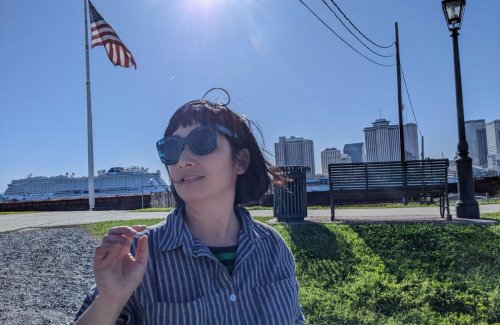
“Everyone has tried to tell our stories on film and television, but they are inaccurate because the producers, directors, and storytellers haven’t lived it.”  — Thuc Doan Nguyen described the other filmmakers who wanted to finance her upcoming film but were never satisfied with what they could do for her story.

Nguyen was eager to continue working on her script “Scent of the Delta,” a semifinalist at the 2020 film festival that will shortly be filmed. Carrie, a multiracial lady in New Orleans, is caught between two cultures. The narrative discusses anti-Asian prejudice, Asian sex workers’ misery, human trafficking victims, and Vietnamese patriarchal standards.

This gave Nguyen focus and purpose, and she became a screenwriter. Her first assignment in New Orleans showed her how misunderstood the Vietnamese population was. She cited her family’s terrifying refugee experiences and which fueled her desire and determination to do more.

Nguyen’s initial career path never involved writing. As a 3-year-old, she was entrusted to churchwomen, whom she refers to as her American grandmothers, because her family did not speak English when they immigrated to the United States. Her family relocated to southern Maryland with new employment opportunities awaiting her parents.

Since Nguyen had already made it to the semi-finals of the 2022 festival and Sundance Film Institute had expressed interest in the script, she decided to push forward with the project. She anticipated additional difficulties and major setbacks while adapting the screenplay into a film. Vietnamese-American producers had expressed interest in funding the film, but she knew they were missing the mark. 

She believes that the production team and actors cast by the producers will not complement her story. Because of this, she has made a life-changing choice. She declined a $5 million sponsorship offer for her film and decided to make it herself. As a result of her discernment, she was able to meticulously plan out the production of the film version of the story that she envisioned. 

Her film will be developed and directed by her team and a well-known production. She chose Le Ly Haslip, who wrote Oliver Stone’s “Heaven and Earth,” and Maria Judice, a science-fiction film producer. 

Nguyen wants the audience to comprehend the genuine narrative behind her writing, as shared by people who experienced it. The film’s shooting is set to get underway in Louisiana in 2023.

This upcoming fall, she was also nominated for the 2022 Gold Fellowship Award from the Academy of Motion Picture Arts and Sciences due to her continued perseverance and incredible creative work.