News

January 24, 2025

SHARE:

Credits: Patricia Ratulangi Vice President, Global Communications Nielsen

In recent years, food shows featuring Asian chefs and cuisines have seen a surge in popularity, capturing the attention of diverse audiences around the globe. This trend highlights the growing appetite for cultural representation and inclusivity in entertainment. As we celebrate Lunar New Year—a holiday deeply rooted in food traditions—it’s the perfect time to reflect on how Asian representation in food media resonates with viewers and drives mass viewership.

Food shows featuring Asian chefs and cuisines highlight cultural diversity, resonating with audiences and driving viewership, especially during Lunar New Year celebrations.

Food shows stand out as a medium where culture, tradition, and storytelling intersect seamlessly. Programs like Top Chef, which has featured contestants such as Melissa King and Hung Huynh, and The Great American Recipe, where home cooks celebrate diverse culinary heritages, showcase the rich variety of Asian cuisines and the personal narratives behind them. These stories invite viewers to connect with the cultural roots and contemporary adaptations of dishes they may have never experienced before.

2024 Viewing MinutesAsianTotal U.S.
Top Chef‎‎  ‎ 458.0 million5.7 billion
The Great American Recipe‎ ‎ ‎ 9.8 million84.5 million
Chrissy & Dave Dine Out‎‎  ‎ 9.2 million61.4 million
Dinner Time Live with David Chang‎ ‎ ‎ 67.4 million430.1 million
Source: Nielsen audience measurement: Jan 1 – Nov 30, 2024

Lunar New Year exemplifies the central role food plays in cultural celebration. From dumplings symbolizing wealth to fish representing prosperity, the holiday is a sensory feast steeped in meaning. By spotlighting Asian chefs and their innovative approaches to dishes that represent their heritage, food shows bridge the gap between cultural nuance and modern audiences. 

A Tết (Vietnamese Lunar New Year) tray filled with traditional Vietnamese dishes for Lunar New Year, symbolizing happiness and peace.

The success of Asian-centered food programming aligns with broader audience preferences for authenticity. Nielsen data reveals that 63% of viewers are more likely to support brands and content creators that authentically represent diverse communities. For mass audiences, this means a greater willingness to engage with shows that go beyond superficial portrayals and offer genuine insights into Asian culinary arts.

The viewership data highlights the significant appeal of food shows among both Asian audiences and the broader U.S. audience, underscroring the growing đemand for authentic, inclusive food shows that celebrate diverse cultures.

Nielsen Chart A
Nielsen Chart B

As Lunar New Year festivities fill homes with the aroma of traditional dishes, the increasing visibility of Asian representation in food shows reminds us of the universal power of food to connect people across cultures—one dish, one story at a time.

Related Articles

Image Source: Taho Klasiko

Stories

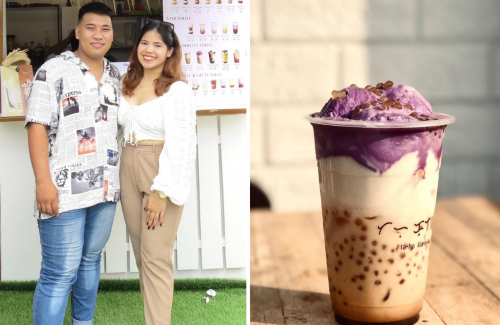
Former Teachers Went Outside of Their Comfort Zones, Found Success in MilkTea-Inspired Taho Shop

Both Filipino educators, Camille Ona and Marvin Paclibare found a different world and passion out of their classrooms during the pandemic as teachers-turned-entrepreneurs and founders of Taho Klasiko, a special milk tea-inspired taho shop.

Breaking free from their first-loved profession, the two sculpt their name as entrepreneurs who choose to walk into another path.

Marvin said that if not for the pandemic, he might still be teaching now just as he thought that he would forever be a teacher. He also added how he realized that there is a bigger world waiting outside teaching.

With people becoming more mindful of their health, especially during the onslaught of the pandemic, Marvin said that they eyed tendering a healthier version of milk tea.

The shop attained a grand slam as the two now earn 6-digit figures per month, an amount far way better than their incomes as teachers in the Philippines.

Camille mentioned in an interview that although they are still passionate about teaching, they just chose to be practical.

Despite entering the world of business, the owners are still having the vibe of teaching as entrepreneurs who are open to learning and improving their craft just like when they were still teaching.

They also shared that they hired working students to extend help to them. 

As a piece of advice, the former teachers said that would-be entrepreneurs should go outside of their comfort zones and open their ways to many opportunities.

“It’s not enough that you have a dream; you need to work hard to make it a reality,” Camille added.

Image Source: Shark Tank

Stories

Slime Company Started By High School Student In His Garage Made $1.2 Million Sales After Joining “Shark Tank”

Mark Lin was only 17 when he started selling food-scented slime out of his Burbank, California garage in 2020. 

He then won over venture capitalists on an episode of ABC’s “Shark Tank,” with his zeal for pitching and the amazing yield his company was generating, where $300,000 was a net profit out of the $540,000 in sales he obtained at the time.

With the assistance of a couple of his buddies, whom he employed for packaging and shipping, Lin, a high school freshman and novice in the industry, developed the slime successfully, enabling him to make $50,000 in sales in his first year of operation.

CNBC reports that Lin’s sales increased to $580,000 the following year.

Sliimeyhoney now sells edible and food-scented slimes with flavors like banana milk, hot cocoa, and birthday cake batter for between $10 and $16 per six-ounce jar utilizing Tiktok as his marketing platform.

The company consistently achieves sold-out sales for its weekly introduction of new products to its almost one million followers.

After a thorough negotiation with Kevin O’Leary and Daymond John, Lin secured $150,000 for 20% share from the two.

This, according to Lin, will be beneficial in moving his company from his garage into a warehouse and gaining mentorship while he still pursues his studies.

John was quoted saying “I believe in you, and we’re going to make sure you go to school, and I will help you with this business.”

Lin is now a first-year college student at UCLA with his company continuously rising.

Image Source: InvisaWear

Stories

Capitalizing On Her Advocacy For Women’s Protection, Young CEO Now Leading Safety Device Company Invisawear

Taking it from her unforgettable and scary experience involving safety and security, Rajia Abdelaziz realized the importance of women’s self-protection which made her put up Invisawear, now a leading safety device manufacturer.

Together with her best friend and now business partner Ray Hamilton, they designed a piece of wearable tech that allows the user to call for help and alert emergency contacts at a double-press.

InvisaWear is jewelry that can save lives. Although their components resemble ordinary accessories, they are actually safety devices supported by America’s top security supplier (ADT).

The devices have a secret panic button that can be set to dial 911, send a pre-programmed text message to five emergency contacts, and send a GPS location to the emergency services. They are worn on the body so they are nearly always available.

The co-owner was quoted saying “InvisaWear also partnered with ADT to provide access to video streaming, voice activation, and self-defense classes as a way of “equipping people to protect themselves,” 

Compared to a cellular phone, it is a more accessible safety device which comes in the form of a charm necklace.

Considering women’s safety as a very important issue, Abdelaziz rejected high-paying job offerings related to her electrical engineering training just to prioritize her advocacy even if she struggled with many challenges in starting it up.

Though laborious, Invisawear was able to raise millions of funds for the safety device.

Five years after its founding, the business has grown to produce more than just gold and rhodium-plated jewelry. It now makes fitness bands, hair accessories, and keychains, all of which have timeless appeal and fashionable, practical designs.

According to Abdelaziz in Forbes, several of their items are now also available in unisex versions since they discovered that safety wasn’t just important for women but also for some guys.

The business intends to grow in Europe and the Middle East and just announced a new cooperation with a Canadian security company.

Invisawear is a technical advancement that has significantly improved people’s lives.

Abdelaziz emphasized “One of the best moments of my life was the first time one of our devices saved someone’s life,” she says, “a young woman had been badly injured in a car accident and her keychain saved her life. Her dad was able to get to her and be with her while they waited for an ambulance, who knows how long it would have taken to find her otherwise.”

Image Source: Ben Marcum Photography

News

Christmas is Merrier at Mall of America With 6 Diverse St. Nicholas Including the First Asian Santa

After three long years of not celebrating Christmas the ‘usual’ way, children at the Mall of America (MOA) were finally sitting again in amusement and happiness on Santa’s lap. 

What makes the experience even happier and better is to have six different Santas whom children and parents can choose from in making The Santa Experience happen.

In 2016, Larry Jefferson became the first African American Santa Claus in MOA. 

Now, Jefferson will not be alone in completing the Christmas vibe as a diverse group of Santas will be working together to do the task. Among them are two African Americans and the first-ever Asian Santa Allan Siu, named “Santa Allan” in MOA’s record.

All of them are ready to listen to the Christmas wishes from young and young-at-heart people.

With two of the Santas able to speak both Spanish and Cantonese, it adds color in telling the children if they were naughty or nice.

“To run across someone who speaks your language, there’s kind of a bond there. Not only is the language a bond but there is also some sort of psychological bond,” Allan told Fox.