

The Rise of Asian Representation in Food Shows: A Lunar New Year Celebration - AHN Media Group

News

January 24, 2025

SHARE:

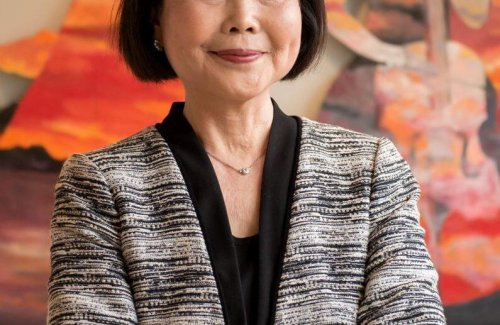
Credits: Patricia Ratulangi Vice President, Global Communications Nielsen

In recent years, food shows featuring Asian chefs and cuisines have seen a surge in popularity, capturing the attention of diverse audiences around the globe. This trend highlights the growing appetite for cultural representation and inclusivity in entertainment. As we celebrate Lunar New Year—a holiday deeply rooted in food traditions—it’s the perfect time to reflect on how Asian representation in food media resonates with viewers and drives mass viewership.

Food shows featuring Asian chefs and cuisines highlight cultural diversity, resonating with audiences and driving viewership, especially during Lunar New Year celebrations.

Food shows stand out as a medium where culture, tradition, and storytelling intersect seamlessly. Programs like Top Chef, which has featured contestants such as Melissa King and Hung Huynh, and The Great American Recipe, where home cooks celebrate diverse culinary heritages, showcase the rich variety of Asian cuisines and the personal narratives behind them. These stories invite viewers to connect with the cultural roots and contemporary adaptations of dishes they may have never experienced before.

2024 Viewing MinutesAsianTotal U.S.
Top Chef‎‎  ‎ 458.0 million5.7 billion
The Great American Recipe‎ ‎ ‎ 9.8 million84.5 million
Chrissy & Dave Dine Out‎‎  ‎ 9.2 million61.4 million
Dinner Time Live with David Chang‎ ‎ ‎ 67.4 million430.1 million
Source: Nielsen audience measurement: Jan 1 – Nov 30, 2024

Lunar New Year exemplifies the central role food plays in cultural celebration. From dumplings symbolizing wealth to fish representing prosperity, the holiday is a sensory feast steeped in meaning. By spotlighting Asian chefs and their innovative approaches to dishes that represent their heritage, food shows bridge the gap between cultural nuance and modern audiences. 

A Tết (Vietnamese Lunar New Year) tray filled with traditional Vietnamese dishes for Lunar New Year, symbolizing happiness and peace.

The success of Asian-centered food programming aligns with broader audience preferences for authenticity. Nielsen data reveals that 63% of viewers are more likely to support brands and content creators that authentically represent diverse communities. For mass audiences, this means a greater willingness to engage with shows that go beyond superficial portrayals and offer genuine insights into Asian culinary arts.

The viewership data highlights the significant appeal of food shows among both Asian audiences and the broader U.S. audience, underscroring the growing đemand for authentic, inclusive food shows that celebrate diverse cultures.

Nielsen Chart A
Nielsen Chart B

As Lunar New Year festivities fill homes with the aroma of traditional dishes, the increasing visibility of Asian representation in food shows reminds us of the universal power of food to connect people across cultures—one dish, one story at a time.

Related Articles

Image Source istock

Uncategorized

New Report Says There Is Still A Talent Crunch In Southeast Asia Amidst The Layoffs

One of Southeast Asia’s biggest job platforms, Glints, just put out a report that shows the situation may not be as severe as they seem.

Glints co-founder and CEO Oswald Yeo told TechCrunch that there has been a lot of funding injected into the IT business. This is a response to the two-to-three-year bull run, and as a result, several firms grew swiftly. 

Yeo said that Singaporean firms seemed to adapt fastest to macroeconomic changes and that this wasn’t a terrible thing because other firms wanted to move swiftly, too. 

Operations, finance, HR, and certain sales and marketing teams have been hit hard, while businesses turned to Vietnam and Indonesia, which have fewer layoffs, for top-tier technical personnel. Moreover, the pandemic has created a decentralized-minded workforce.

Yeo observed that the pandemic had made remote work more convenient, necessitating cost-cutting measures. Many firms turn to remote employment to optimize their human and financial capitals. 

They have seen that remote work prospects on Glints have expanded tenfold in a year. Some regional firms in Malaysia continue to hire foreigners, while others only hire Malaysians. According to Glints, mid-to senior-level employees’ compensation won’t diminish, but junior talent may.

One-year fixed-term contracts are another trend that helps firms predict their financial destiny, as employers are wary about signing long-term contracts. 

He believes that not everything was awful — the need for technological and product skills on Glints favored job seekers.

Layoffs help startups build core teams. Yeo said that because there is less rivalry for talent, it’s a fantastic moment for organizations in a strong position to hire top managerial talent.

Image Source generocity.org

Uncategorized

Founder of Penn Asian Senior Services Im Ja Choi Passed Away At 73

A well-known supporter of Asian American seniors and the founder and emeritus CEO of the nonprofit Penn Asian Senior Services, Im Ja Choi,  passed away on Wednesday, June 22, from lung cancer in a South Korean hospital, she was 73. 

A memorial service will be conducted on July 16 at 3:00 pm at the Evergreen Center in Philadelphia. Contributions in her name will be appreciated.

Ms. Choi was born in Seoul, South Korea in 1948, majored in literature, and graduated from Korea University. She moved to Philadelphia after marrying her childhood friend Jung Choi in 1971, where she studied organizational dynamics at the University of Pennsylvania. She was a top-producing real estate agent in the 1980s and 1990s. 

She started Penn Asian Senior Services in 2004 to help Asian American elders with linguistic and cultural obstacles. Because she couldn’t get home care for her mother, and after hearing horrible experiences from other caregivers, she founded the charity that provides in-home care and homemaking services in over two dozen languages.

She undertook the fundraising efforts and strategic planning of the nonprofit, for which the charity received grants from the U.S. Department of Health and Human Services and numerous organizations. 

Moreover, she has also opened an adult day care for immigrants with language and cultural barriers, a state-licensed vocational school for entry-level Asian health-care workers, and a seniors community center. 

In 2013, she received the Ellis Island Medal of Honor from the National Ethnic Coalition of Organizations. The Independence Blue Cross Foundation president Lorina Marshall-Blake wrote that the region needed more health visionaries like Im Ja Choi. Ken Yang, CEO of Penn Asian Senior Services, said Ms. Choi’s care, generosity, and love for her family and community matched her innovative leadership.

She was also recognized by the governor as a 2014 Distinguished Daughter of Pennsylvania for her “extraordinary service and achievements to the Commonwealth.” In the same year, she gave the commencement address at Penn State Abington where she quoted “Where there’s a will, there’s a way.”