Stories

November 4, 2025

SHARE:

When Nisha Desai and Alice Zhang met at Harvard Business School, neither of them expected that a casual conversation about their frustrations with therapy would spark the idea for something much bigger.

As they juggled graduate school and their own mental health, they often felt therapy wasn’t built for people like them – they spent more time explaining their background to their therapists than actually healing. 

They realized it wasn’t just them – there’s a gap in mental healthcare that left many in the Asian and multicultural community feeling unseen and misunderstood.

That shared realization became the seed for Anise Health: a platform built to make therapy culturally attuned, accessible, and truly effective for the AAPI community.

A Problem They Both Knew Too Well

Before their paths crossed, both founders had already seen the same issue from different directions.

Nisha, who grew up in Florida in a family of healthcare entrepreneurs, had always been drawn to questions of access and equity in care. After studying finance and marketing at the University of Pennsylvania’s Wharton School and earning her MBA from Harvard, she worked in healthcare investing and later in digital product management at Humana. It was there, while helping build a mental health app, that she started hearing a troubling pattern from thousands of users – the same barriers she had personally faced.

Nisha recalls that people weren’t saying therapy didn’t work. They were saying it didn’t fit, that they didn’t feel understood.

Alice, meanwhile, came to the same conclusion through her own deeply personal experiences. Born in China, raised across Japan and Canada, and now based in New York, she calls herself a “third culture kid.” Her multicultural background gave her adaptability, but also a sense of never fully belonging anywhere.

That feeling resurfaced when she sought therapy during business school. Despite being fluent in English, she found herself translating her own emotions for her therapist – explaining why criticism from parents felt like love, or why pursuing excellence felt non-negotiable.

Alice remembers feeling exhausted after each session, explaining her background again and again, and leaving each time feeling unseen.

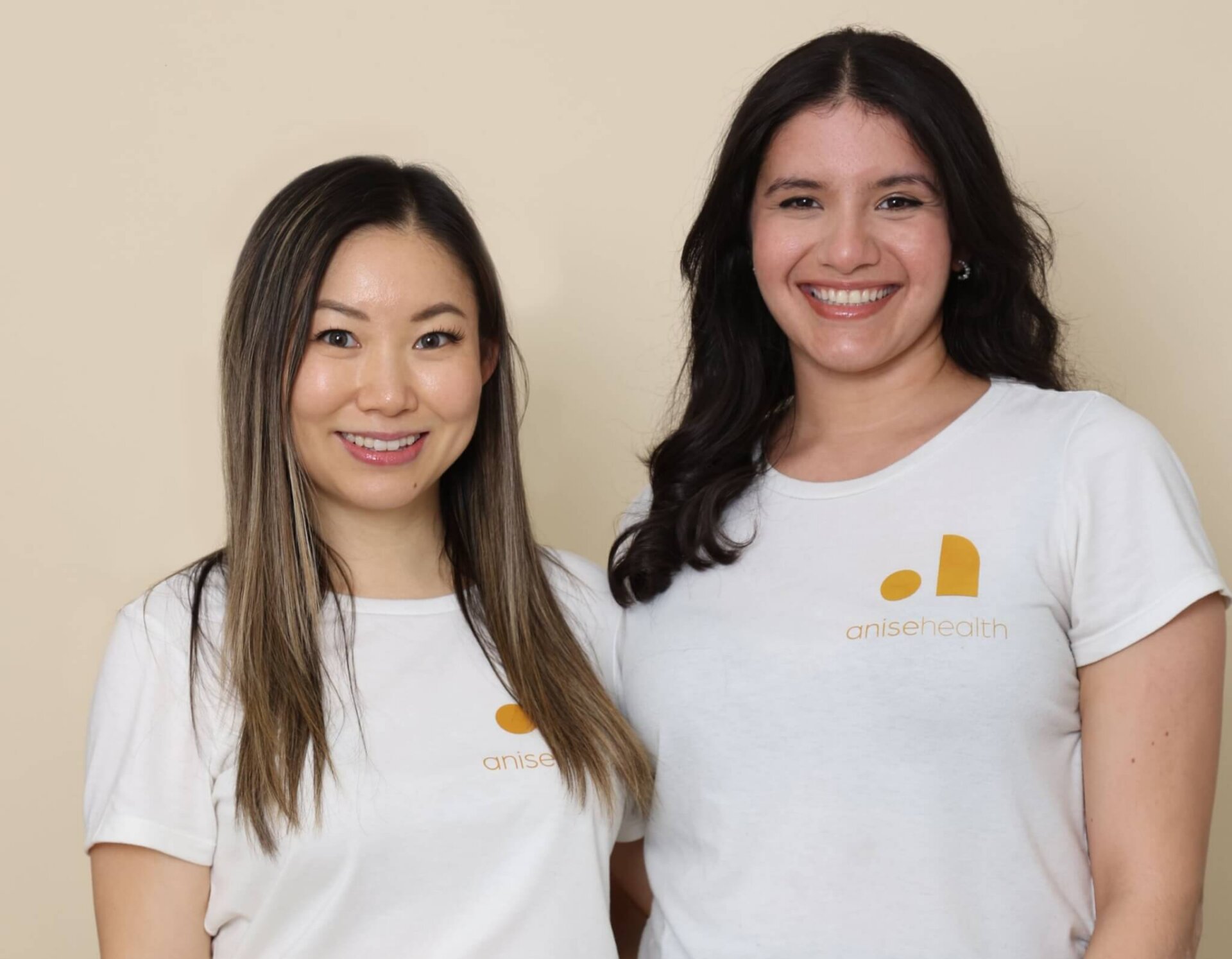
Alice Zhang (left) and Nisha Desai (right)

Building a Culturally Grounded Model of Care

After that pivotal conversation at Harvard, the two women began mapping out what culturally attuned mental health care could look like. They spoke to clinicians, patients, payors and community leaders, testing how cultural nuance could be integrated into evidence-based therapy and coaching.

They envisioned a new kind of care model: one that didn’t require clients to educate their therapists or set aside their cultural identity at the door. Instead, therapy would start from a place of understanding.

“Alice and I really built Anise to be what we believe our community has needed during our upbringing. What we kind of wished for ourselves through our own personal journeys with therapy.”

But building what didn’t yet exist came with challenges. They had to prove — to investors, clinicians, and even the broader healthcare system — that cultural context wasn’t just a “nice to have,” but essential to effective care. Many mental health professionals hadn’t been trained to deliver culturally adaptive therapy, so Anise Health had to design that framework from the ground up: provider training programs, accurate diagnostic tools, tailored care plans, curated resources and a scalable model for personalized, culturally attuned care.

Their persistence paid off. What started as late-night brainstorming sessions between classes evolved into a fully fledged mental health platform that blends clinical rigor with cultural empathy.

Growing the Movement

Since its founding, Anise Health has facilitated over 10,000 paid appointments and built a network of 60+ licensed providers across multiple states. The company is now expanding through insurance partnerships that make culturally attuned care more affordable and accessible.

Behind the scenes, Nisha leads operations and product design, while Alice drives partnerships and provider training.

Their complementary strengths, coupled with a shared sense of purpose, have helped Anise Health raise $6.4 million in funding and gain recognition as one of the top 10 most innovative Asian Pacific-led companies to watch by NYSE, Y Combinator, and Gold House.

Redefining the Future of Mental Health for Asian Communities

For both founders, Anise Health’s success goes beyond numbers. It’s about shifting how mental health is understood and delivered, starting with a community that has long been underserved and stigmatized.

“Our goal isn’t just to make care available,” Nisha says. “It’s to make it effective, culturally relevant, and sustainable within the healthcare system.”

By creating a new gold standard of culturally attuned care, Nisha and Alice aren’t just helping Asian Americans access therapy that finally feels like it speaks their language – they’re reimagining what inclusive mental health care can look like for everyone.

Learn more about Anise Health at anisehealth.co
Related Articles

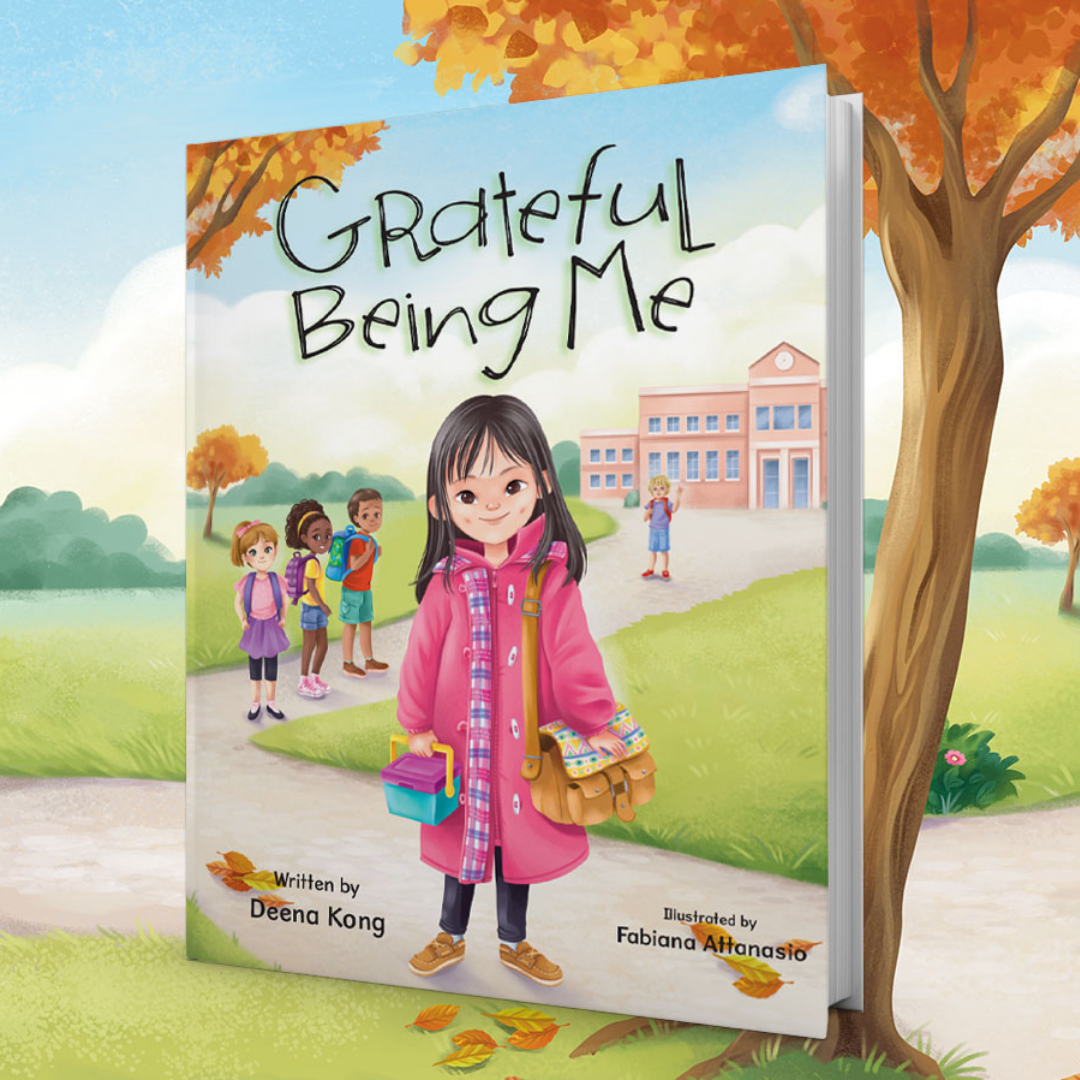
grateful-being-me-cover-jpg

Stories

How Deena Kong Is Rewriting Representation in Children’s Literature

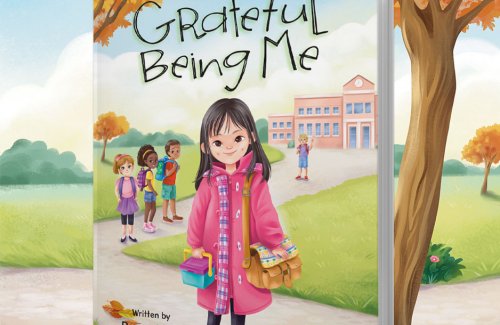
Growing up Cambodian in North America, Deena Kong often felt invisible—a feeling that followed her from Canada to the U.S. and ultimately inspired her to write Grateful Being Me, a book to help children understand representation matters.

Deena Kong with her book Grateful Being Me (Photographed By: Jamie Sutera)

Seeing Herself in Stories

Growing up Cambodian in North America, Deena often felt invisible. 

“I truly believed as a child that no one else could relate to these feelings I was experiencing,” she shares. “That’s why I wanted to share my story with others.” 

Raised by supportive parents, Deena became a passionate reader, ultimately leading her to create a book that would help children from similar backgrounds see themselves represented.

“Representation matters,” Deena explains. “When a child wanders through a library or bookstore, they should be able to find themselves in the stories and pictures. I hope Grateful Being Me encourages self-acceptance, celebrates diversity, and promotes inclusion by empowering children to connect with one another.”

Grateful Being Me (Photographed By: Jamie Sutera)

The Making of Grateful Being Me

Finding time to write proved challenging while working full-time as a Government Contractor in Ethics & Compliance and raising a family. Yet Deena’s determination to promote diversity and inclusion kept her going until her book was ready for publication.

“Modeled after my real-life experiences, this book follows a young girl named Rosila on her adventure in an unfamiliar place,” Deena says proudly. 

The story chronicles Rosila’s first day at a new school in a new country, where she discovers what makes her unique and learns the power of self-love.

“Rosila’s first language isn’t English, so her vocabulary stands out,” Deena notes. “She brings ethnic foods that seem unusual compared to typical American cafeteria lunches. The story captures her nervousness about how classmates will react as she navigates this new environment and makes friends.”

Through Grateful Being Me, Deena offers a powerful tool to help children understand they belong anywhere. The book thoughtfully explores the complex emotions children face when encountering unfamiliar situations, ultimately showing them that their uniqueness is something to be celebrated.

Connect

Instagram: @bydeenakong

Website: Deena Kong

Purchase your copy of Grateful Being Me on Amazon, Barnes & Noble, Walmart, or Books-A-Million.

Vietnamese American Girls

News

‘This Moment Doesn’t Happen for Vietnamese American Girls Like Me’: Thuy’s Words Hit Home for Generations of Asians

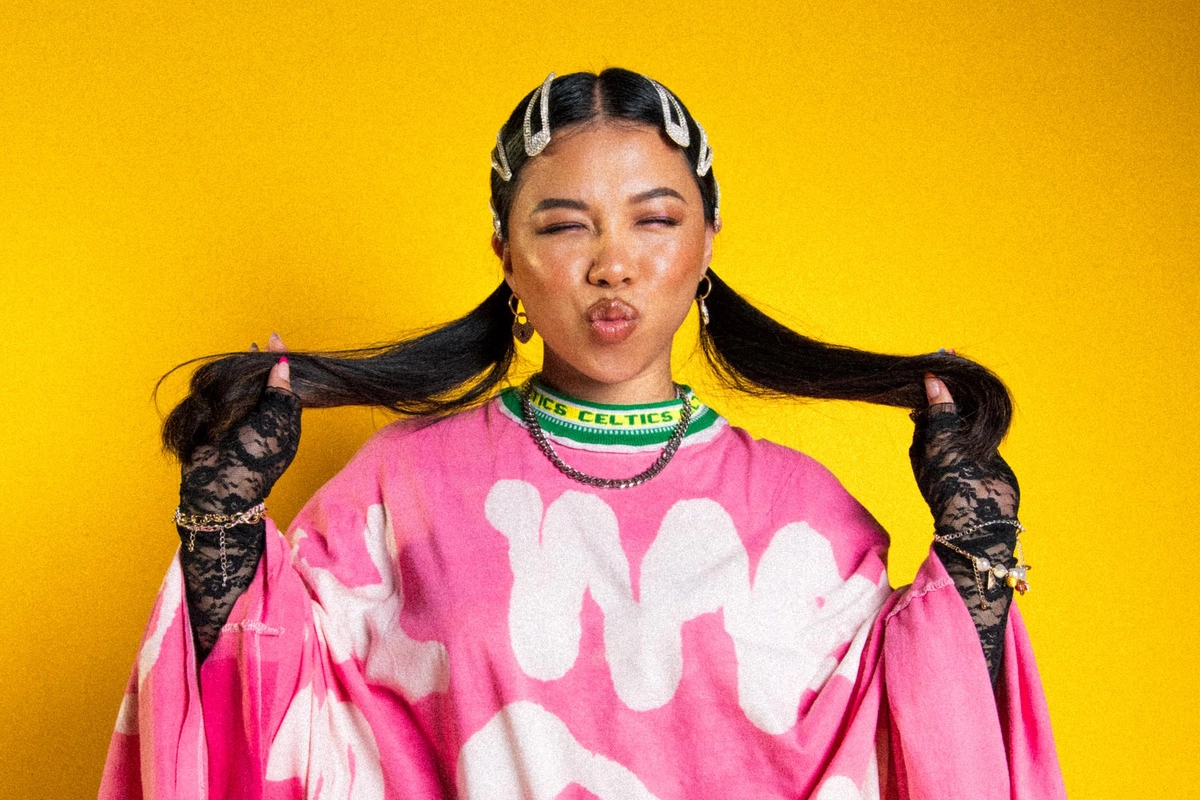
Thuy has always been a proud Vietnamese at heart. In April 2024, Vietnamese American R&B artist Thuy made history at Coachella as the first official solo Vietnamese American artist to grace the well-known music festival. This year, a video clip of her Coachella speech has become widespread, sending out a powerful message to young Asian girls out there.

Thuy, a Vietnamese American R&B artist, shares empowering words for Vietnamese American girls. (Image source: PAPER Magazine)

Originally from the Bay Area, Thuy revealed that she grew up in a traditional family, hence, shaping her as a former optometric technician. However, weekend karaoke sessions with her family have brought her musicianship to life, sparking an interest that soon flourished. Taking a leap of faith and moving to Los Angeles (LA) for a music career, Thuy has proven to herself that the leap was a must, especially with the well-liked hit “girls like me don’t cry.”

Beyond her musical talent and captivating stage presence, Thuy’s performance at Coachella stands for something way greater—the well-deserved representation of Vietnamese Americans and Asian Americans in general. Her success challenges traditional expectations within Asian American households, where creative careers are discouraged due to the fear of instability associated with the jobs. Moreover, this is also a significant step forward in diversifying the music industry and amplifying underrepresented voices. 

‘This moment doesn’t happen for Vietnamese American girls like me,” Thuy reflected during her Coachella performance. “I am so honored to be here today to be the first official solo Vietnamese American.”

https://www.tiktok.com/@thuyuniverse/video/7492153731891399978

Blogs, Development

Is Your Homepage Welcoming or Driving Visitors Away?

Your homepage is like a party host—it either welcomes guests with open arms or sends them running for the exit. So, how can you ensure your homepage draws in visitors? Here are some tips:

Prioritize Essential Information

Modern users have short attention spans, so your homepage must prioritize essential information. Clearly state what you do, why visitors should care, and how you solve their pain points. The more straightforward this is, the less likely users will leave confused or frustrated.

Prioritize Essential Information

Keep It Simple

Simplicity is key in navigation, layout, and messaging. While visitors may not convert immediately, an intuitive and engaging experience encourages them to explore further and return later. Avoid clutter, streamline choices, and guide users effortlessly to what matters most.

Build Confidence

Most importantly, your homepage must build confidence. People dislike feeling lost or unsure, so eliminate complexity. Use clear descriptions, trusted testimonials, and logical organization to make visitors feel comfortable and informed from the first click. A confident user is far more likely to stay, engage, and eventually convert.

Build Confidence

Why AHN Solutions?

A homepage carries a lot of significance and can make or break your website. Let AHN Solutions be your ultimate wingman, transforming your digital front door into an experience visitors will love to stay for.

If you want to learn more about our services, visit the AHN Solutions website at asianhustlenetwork.com/services/

e.l.f.-Amanda-Nguyen-021125-tout-102e19ddde834ae08a8fdc22ff6e7220

News

Breaking Barriers: Amanda Nguyen to Become the First Vietnamese Woman in Space

Amanda Nguyen is set to become the first Vietnamese woman to fly into space—a historic achievement on its own. But what makes this moment truly extraordinary is the powerful story behind it: a journey of resilience, justice, and unshakable advocacy for Asian American and survivor rights.

Amanda’s life changed forever in 2013 when she was sexually assaulted while attending Harvard. Frustrated by a legal system that failed to protect her, she fought back—not just for herself, but for countless others. Filing lawsuits as “Jane Doe,” she refused to accept a law that denied her justice. Instead, she turned her pain into purpose, founding Rise, a nonprofit organization dedicated to advancing civil rights protections for survivors of sexual violence.

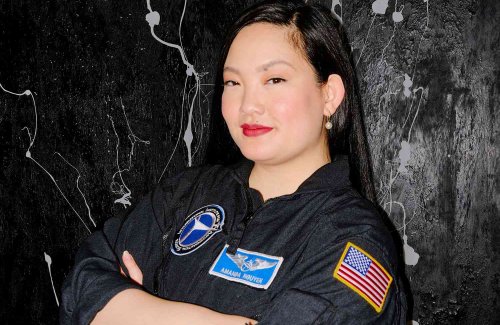
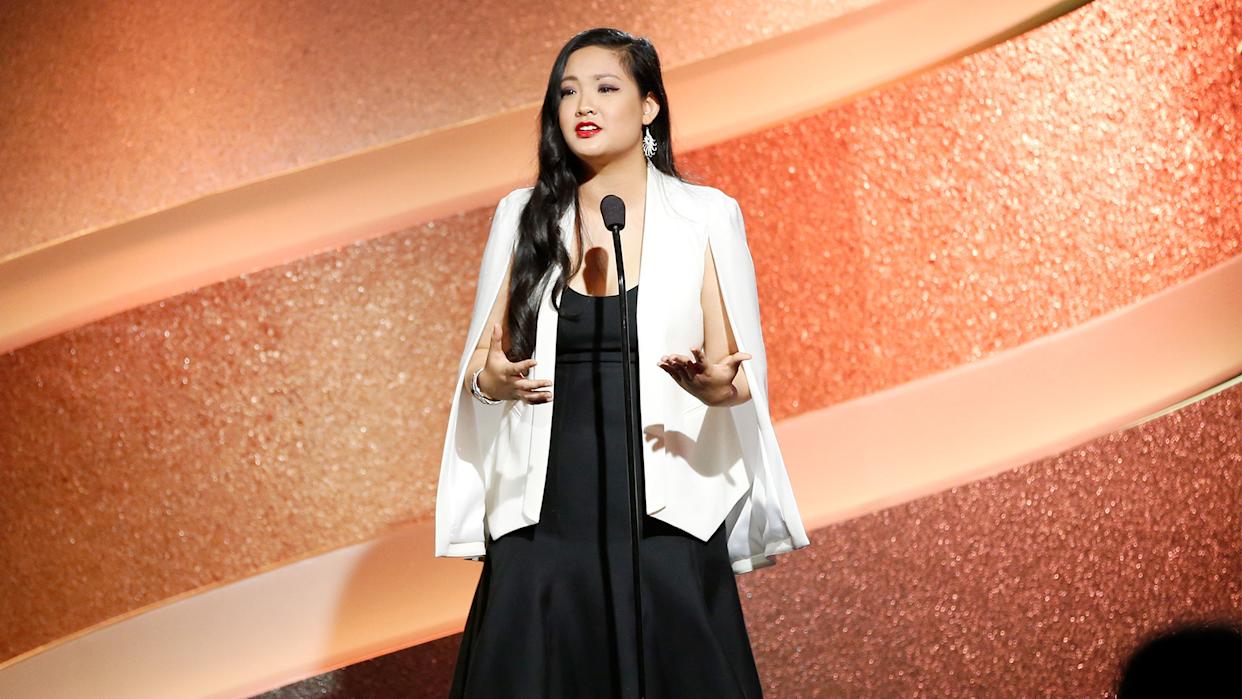
Amanda Nguyen nominated for the Nobel Peace Prize (Image source: Yahoo)

Through Rise, Amanda played a key role in passing the Sexual Assault Survivors’ Rights Act, and her tireless advocacy work for both survivors and Asian American communities earned her global recognition. She was nominated for the Nobel Peace Prize in 2019 and named Time Woman of the Year in 2022.

Despite the trauma she endured, Amanda never let go of her childhood dream of becoming an astronaut. Now, at 32, she will finally see that dream take flight as she joins Space for Humanity’s Citizen Astronaut Program, making her the first Vietnamese American woman to fly into space.

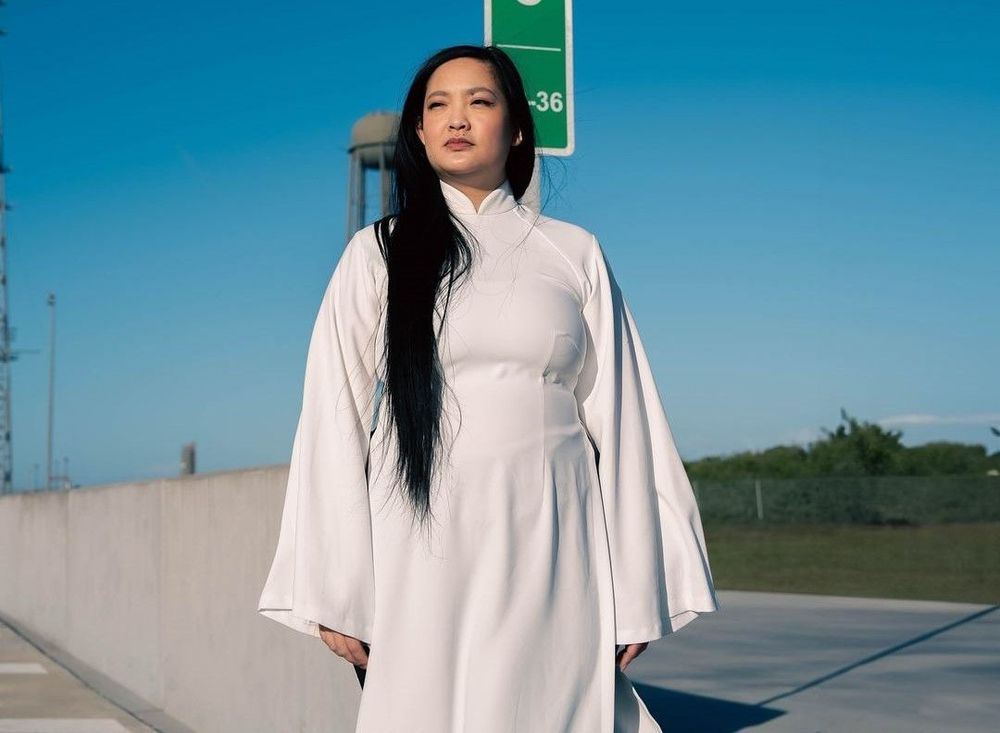
Amanda Nguyen (Image source: Her.vn)

According to Space for Humanity, the mission aims to “empower each citizen astronaut to address global challenges with a broader outlook.” Amanda will launch aboard a New Shepard rocket by Blue Origin, a U.S.-based aerospace company and spaceflight provider.

In a heartfelt video shared by the U.S. Embassy in Vietnam, Amanda spoke in Vietnamese:

“I am Vietnamese. I’m flying to space so that young Vietnamese women can see themselves among the stars. What’s important for me is that I can carry my community by my side. I might be the first, but I will not be the last.”