Stories

November 4, 2025

SHARE:

When Nisha Desai and Alice Zhang met at Harvard Business School, neither of them expected that a casual conversation about their frustrations with therapy would spark the idea for something much bigger.

As they juggled graduate school and their own mental health, they often felt therapy wasn’t built for people like them – they spent more time explaining their background to their therapists than actually healing. 

They realized it wasn’t just them – there’s a gap in mental healthcare that left many in the Asian and multicultural community feeling unseen and misunderstood.

That shared realization became the seed for Anise Health: a platform built to make therapy culturally attuned, accessible, and truly effective for the AAPI community.

A Problem They Both Knew Too Well

Before their paths crossed, both founders had already seen the same issue from different directions.

Nisha, who grew up in Florida in a family of healthcare entrepreneurs, had always been drawn to questions of access and equity in care. After studying finance and marketing at the University of Pennsylvania’s Wharton School and earning her MBA from Harvard, she worked in healthcare investing and later in digital product management at Humana. It was there, while helping build a mental health app, that she started hearing a troubling pattern from thousands of users – the same barriers she had personally faced.

Nisha recalls that people weren’t saying therapy didn’t work. They were saying it didn’t fit, that they didn’t feel understood.

Alice, meanwhile, came to the same conclusion through her own deeply personal experiences. Born in China, raised across Japan and Canada, and now based in New York, she calls herself a “third culture kid.” Her multicultural background gave her adaptability, but also a sense of never fully belonging anywhere.

That feeling resurfaced when she sought therapy during business school. Despite being fluent in English, she found herself translating her own emotions for her therapist – explaining why criticism from parents felt like love, or why pursuing excellence felt non-negotiable.

Alice remembers feeling exhausted after each session, explaining her background again and again, and leaving each time feeling unseen.

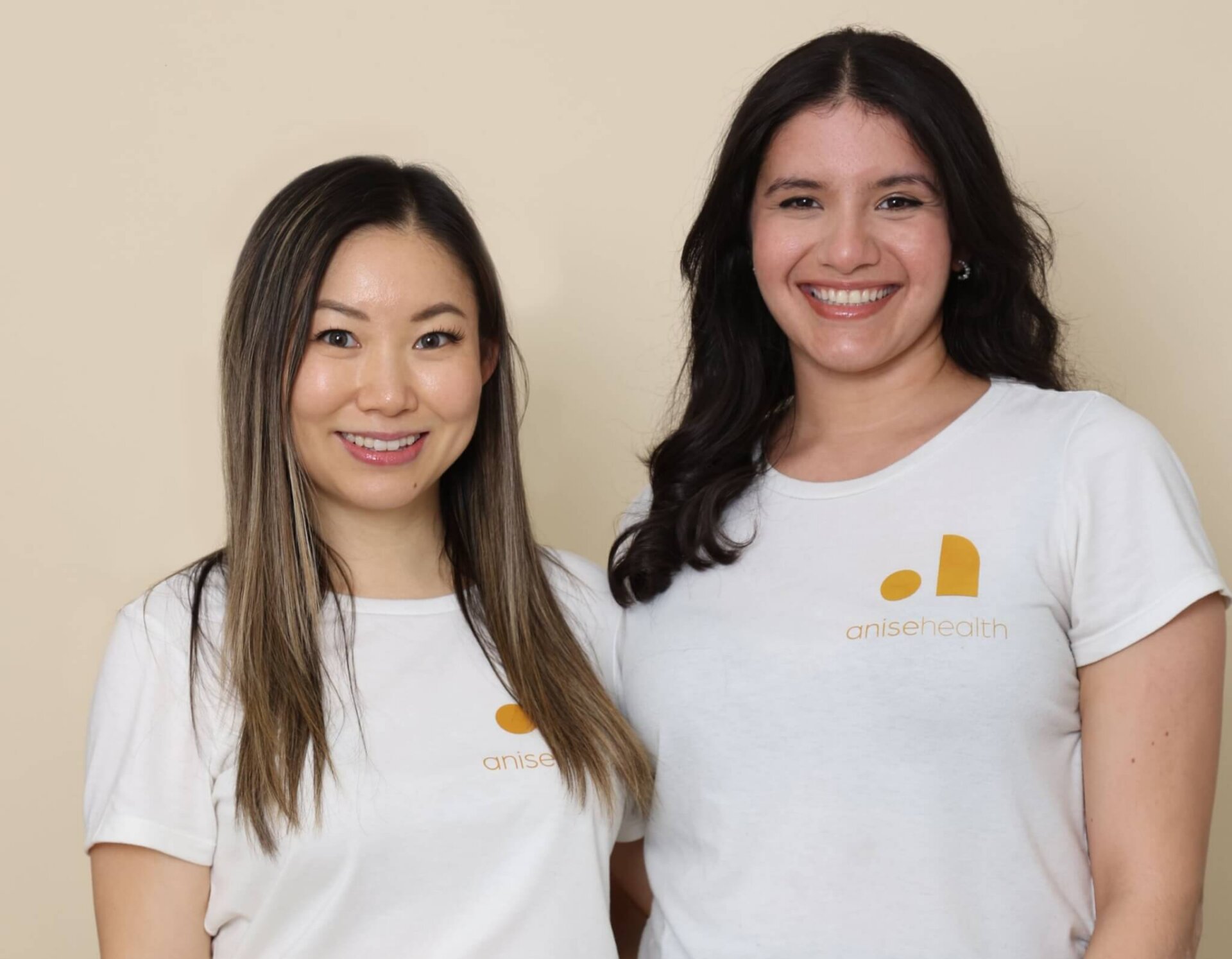
Alice Zhang (left) and Nisha Desai (right)

Building a Culturally Grounded Model of Care

After that pivotal conversation at Harvard, the two women began mapping out what culturally attuned mental health care could look like. They spoke to clinicians, patients, payors and community leaders, testing how cultural nuance could be integrated into evidence-based therapy and coaching.

They envisioned a new kind of care model: one that didn’t require clients to educate their therapists or set aside their cultural identity at the door. Instead, therapy would start from a place of understanding.

“Alice and I really built Anise to be what we believe our community has needed during our upbringing. What we kind of wished for ourselves through our own personal journeys with therapy.”

But building what didn’t yet exist came with challenges. They had to prove — to investors, clinicians, and even the broader healthcare system — that cultural context wasn’t just a “nice to have,” but essential to effective care. Many mental health professionals hadn’t been trained to deliver culturally adaptive therapy, so Anise Health had to design that framework from the ground up: provider training programs, accurate diagnostic tools, tailored care plans, curated resources and a scalable model for personalized, culturally attuned care.

Their persistence paid off. What started as late-night brainstorming sessions between classes evolved into a fully fledged mental health platform that blends clinical rigor with cultural empathy.

Growing the Movement

Since its founding, Anise Health has facilitated over 10,000 paid appointments and built a network of 60+ licensed providers across multiple states. The company is now expanding through insurance partnerships that make culturally attuned care more affordable and accessible.

Behind the scenes, Nisha leads operations and product design, while Alice drives partnerships and provider training.

Their complementary strengths, coupled with a shared sense of purpose, have helped Anise Health raise $6.4 million in funding and gain recognition as one of the top 10 most innovative Asian Pacific-led companies to watch by NYSE, Y Combinator, and Gold House.

Redefining the Future of Mental Health for Asian Communities

For both founders, Anise Health’s success goes beyond numbers. It’s about shifting how mental health is understood and delivered, starting with a community that has long been underserved and stigmatized.

“Our goal isn’t just to make care available,” Nisha says. “It’s to make it effective, culturally relevant, and sustainable within the healthcare system.”

By creating a new gold standard of culturally attuned care, Nisha and Alice aren’t just helping Asian Americans access therapy that finally feels like it speaks their language – they’re reimagining what inclusive mental health care can look like for everyone.

Learn more about Anise Health at anisehealth.co

Related Articles

250506_AHS-EMAIL-MKT-jpg

Blogs, Technologies

Zero-Click Content: The Secret to Boosting Your Brand Visibility

Not every SEO win needs a click. With zero-click content, you can build visibility, authority, and trust—right from the search results. Here are 3 ways to make it work for you:

Answer Questions Directly

Create concise, clear answers to common search queries to increase your chances of landing in featured snippets.

Answer Questions Directly

Use Structured Data

Implement schema, a special code to help search engines understand your content better.

Prioritize Value Over Clicks

It’s not always about Google and clicks. Utilize your social content that gives immediate value to build authority and encourage users to seek you out.

Why Asian Hustle Solutions?

Want your brand to show up, stand out, and stick—even without the click? At Asian Hustle Solutions, we create zero-click content that builds trust fast and keeps you top of mind. Let’s make your digital presence work smarter.

If you want to learn more about our services, visit the Asian Hustle Solutions website at asianhustlenetwork.com/services/

250428 (2)-jpg

Blogs, Ideas

Turn Clicks Into Customers: 3 Essential Tips With Asian Hustle Solutions

Creating a website is an easy task, but turning the visitors into loyal customers may take more than that. Here are three tips to help you bring in more customers.

Build Trust Fast

“Show, don’t tell.” People are not going to believe you just because you say big words. Actions matter. Include your portfolios, testimonials, or reviews. People buy from brands they trust.

Build your brand symbol.

Capture Leads Immediately

“Seize the moment.” When leads show any initial interest, don’t just sit still and do nothing. Offer them a freebie (discount or resource) in exchange for their email. Stay in touch and build a fun process to guide them towards a purchase.

Capture Leads Immediately

Make Buying Easy

Simplicity is key. Clear calls-to-action, smooth checkout processes, and multiple payment options make it easy for visitors to say “yes.” Don’t expect leads to commit if the purchase process lasts over three working days.

Why Asian Hustle Solutions?

Getting traffic is just the start—we help you turn visitors into loyal customers. With smart strategies, optimized designs, and proven tools, Asian Hustle Solutions empowers your business to grow faster and stronger online.

If you want to learn more about our services, visit the Asian Hustle Solutions website at asianhustlenetwork.com/services/

250423-jpg

Blogs, Development

Search Intent: The Overlooked SEO Metric That Beats Algorithm Updates

Before choosing SEO keywords, you’ve likely considered high-volume terms and difficulty metrics. But to weather never-ending algorithm updates, search intent might be your golden ticket. Here’s why:

Customer Intention

The most critical factor in keyword selection—it ensures your content aligns with what customers actually need (not just what they search).

customer_intention

Relevance

A keyword may be popular but irrelevant to your brand. Focus on phrases that mirror your customers’ pain points and your solution.

relevance

Existing Ranking

Overlapping words can lead to cannibalization. For every new content, use fresh keyword sets to re-optimize existing assets and further align with customer needs.

existing_ranking

Why AHN Solutions?

Matching keywords to customer search intent requires strategy. We craft bulletproof SEO plans to ensure your success.

If you want to learn more about our services, visit the Asian Hustle Solutions website at asianhustlenetwork.com/services/

Luxury Goods

News

The Price of Perception: What You’re Paying for in Luxury Goods

What makes a luxury product cost so much? The short answer is perceived value. But perception is a fragile thing: it shifts, it evolves, and when it does, things begin to get complicated.

Take a luxury handbag, for example. Whether it’s Gucci, Prada, Louis Vuitton, or Hérmes, many of us are willing to spend thousands for that one beautifully crafted accessory. Why? Because we associate these brands with European sophistication, centuries of artisanal craftsmanship, and impeccable quality. We buy more than a bag; we buy into a story.

Now, imagine buying a bag labeled Made in China. If it’s affordable, you might not care. But if it has a luxury price tag? You might pause. The label alone could influence how you value the item.

The kicker is: Remember the bag you treasure from your favorite luxury brand? Based on the claims of factory workers and viral TikTokers, many high-end luxury products are manufactured in China, then shipped to Europe, to be relabeled and sold as European-made.

This controversial debate has sent the internet into a tailspin, asking: Are we paying for craftsmanship or the illusion of origin?

This is where soft power comes into play. It shapes how we see the world. We look at Hollywood movies and see the U.S. as a place filled with great dreams. We see the beautiful K-pop stars and K-drama idols, and we want Korean beauty products to fulfill our desire to be pretty like them. Customers don’t crave an expensive handbag because it’s objectively better; they buy it because of what luxury products emotionally and symbolically mean to them.  

But in the wake of trade wars and rising consumer awareness, people are beginning to question the true value behind the price tag. Is it about where the product is made, or where we believe it’s made?

Whether this TikTok trend is a fleeting controversy or a wake-up call, one thing is certain: when perception changes, so do buying habits. And that could reshape the entire future of an industry.

https://www.tiktok.com/@sen.bags_/video/7494196205917097262?q=made%20in%20china&t=1745296877126