Stories

July 11, 2023

SHARE:

In a world that often values practicality over creativity, it can be challenging to pursue our passions and follow our hearts. But for Kelly Bit, the founder of SUBLIMA, it was a calling that she couldn’t ignore.

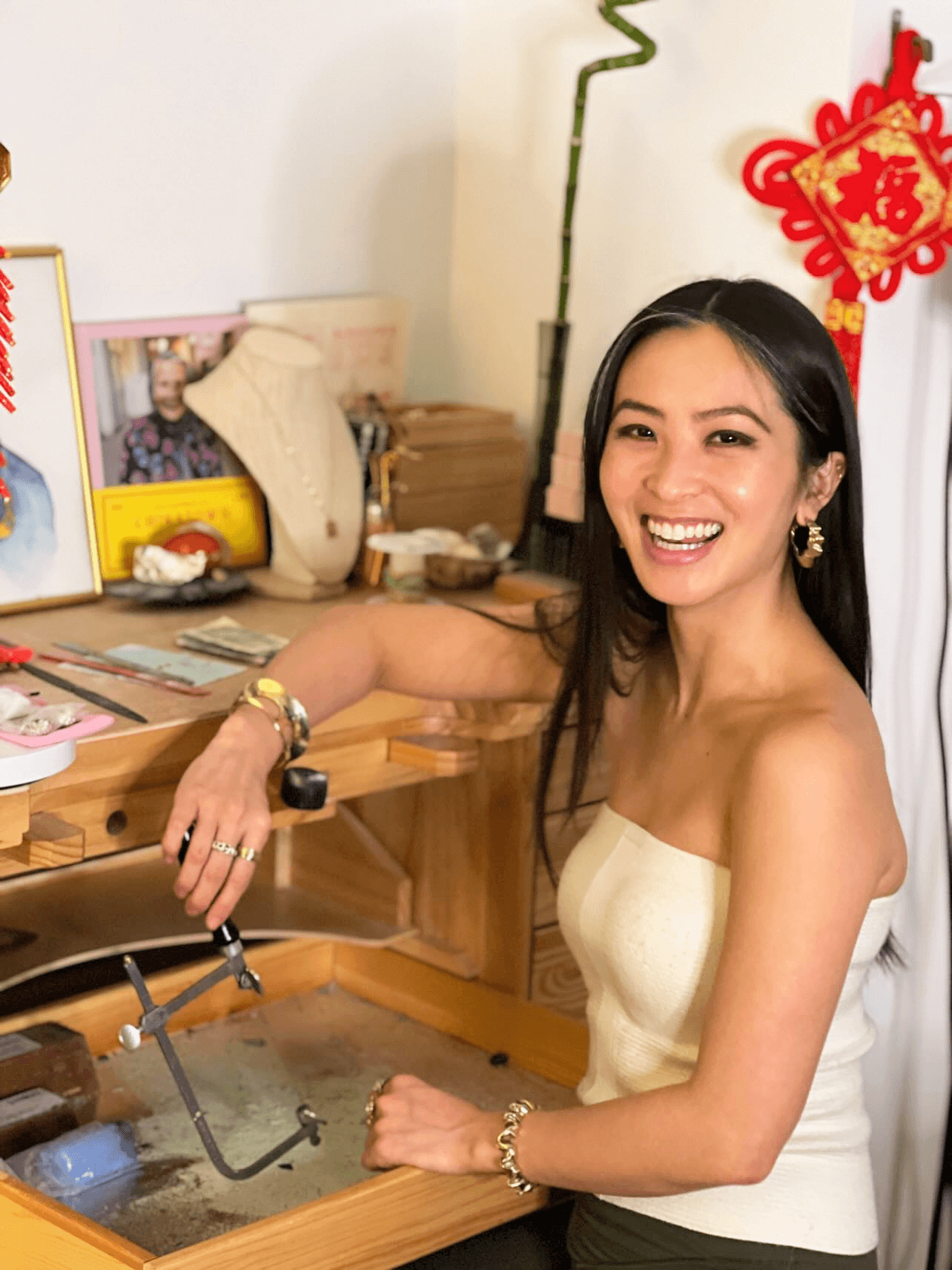
After years of working as a financial news journalist, Kelly realized that she missed the creative arts as a major part of her life. She started spending her free time making jewelry, and the intentional lifestyle switch brought her a lot of fulfillment.

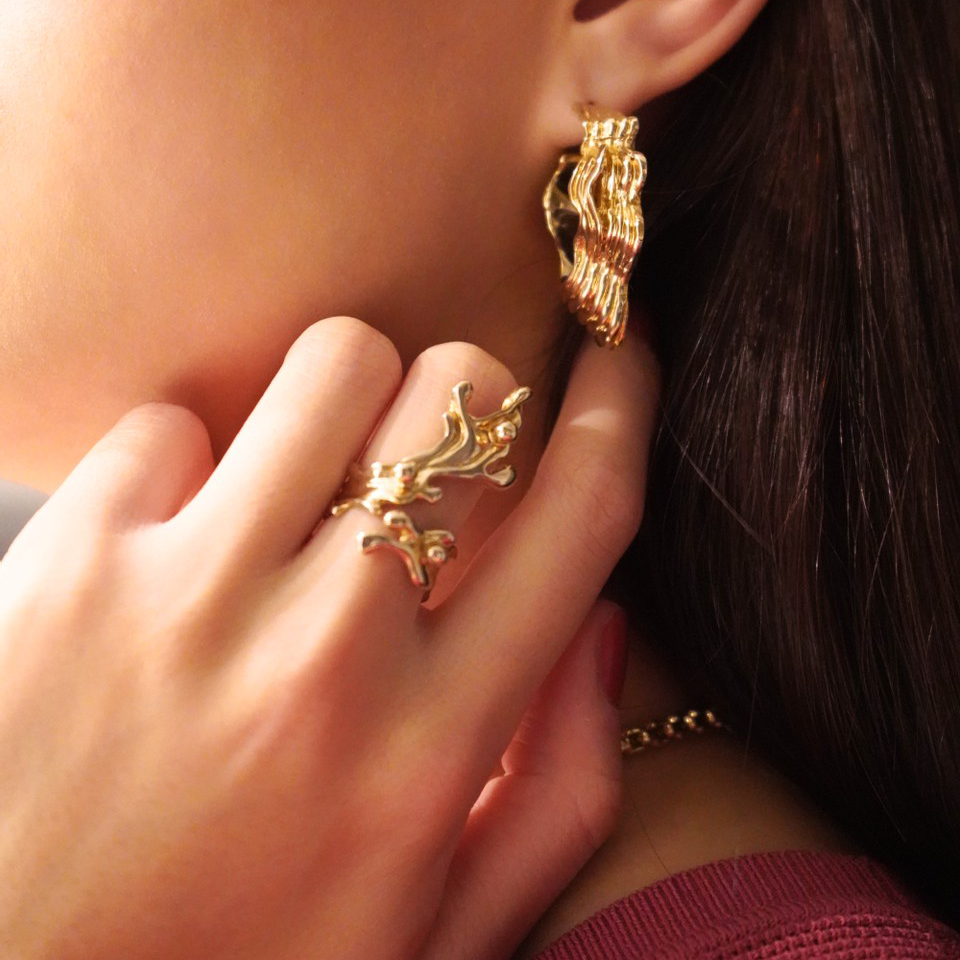
SUBLIMA is a sustainable, handmade jewelry brand, referencing subliminal messages that produce hidden feelings in our everyday lives. Art imitating life.

In this article, we will explore Kelly’s journey of following her passions, the artistry and intentionality behind her jewelry, and how she is bringing her love of art and design to the world through SUBLIMA.

HOW IT ALL STARTED

I’ve always loved crafting. I’m an only child, and when I was very young, I spent a lot of my time drawing or creating cardboard models of things that I found delightful. I’ve always been captivated by beautiful forms and well-loved objects in our every day and creating artful homages to them.

During my career as a journalist, I missed crafting and the creative arts, so I started spending my free time making—drawing, painting, sewing, and creating jewelry. I wanted to invest in one of those hobbies in a more disciplined way, and I saw jewelry as having commercial prospects. I enrolled in metal smithing and wax carving classes after work, and that’s what gave me the skills and confidence to start a jewelry brand.

THE CREATIVE PROCESS

I love commemorating ordinary moments of delight by capturing something of their essence through elevated and artful jewelry that I make by hand.

I have many delightful memories centered around food and the people I enjoy it with, so that’s one reason why many of the pieces are Asian food inspired. I also tend to notice beautiful and aesthetic aspects of food all the time—like the way milk tea splashes with movement, or the mesmerizing repeating folds of dumplings—so those types of details make me want to highlight how interesting they look through an unexpected art medium.

The way that I make my pieces is by carving wax by hand to create wax prototypes. The prototypes are then molded, and from the molds, the pieces are cast in recycled brass or sterling silver and polished and assembled by hand.

HER APPROACH TO SUSTAINABILITY IN MAKING JEWELRY

The casting company I work with, which is based in midtown Manhattan and family-run, uses a New York-based company called United Precious Metals to recycle their metal and for purchasing refined recycled metal to use in new castings.

In choosing to partner with my casting company, their ability to source recycled metals was important, and I love how I’ve been able to offer sustainable jewelry since day one. It’s important to me because using recycled metals compared to newly mined metals reduces greenhouse gas emissions and conserves natural resources. And I’m thrilled with the quality of the pieces—the recycled brass and sterling silver are both beautiful bright colors, and I provide a polishing cloth to keep the pieces shiny forever since none of the casted pieces are plated.

WHAT SHE HOPES TO COMMUNICATE WITH HER DESIGNS

I love seeing how different people style the jewelry and how they implement their vision of themselves—what they want to project into the world through their self-expression—using the jewelry as part of their toolkit.

My general hope is that the pieces can be marveled at as wearable works of art and that conceptually they serve as a reminder to see an elevated beauty in everyday moments. For some styles, like those based on Asian food or other cultural motifs, I’d love for people to wear them with a sense of pride or appreciation of Asian culture.

WHAT SETS SUBLIMA APART FROM OTHER BRANDS

Aesthetically, I aim to make jewelry that looks unlike anything else in the market, at once striking and timeless, with quality that lasts a lifetime. My designs are unusual and eye-catching, somewhat abstract, and can be styled as edgy or classic. Executing these concepts while drawing inspiration from my Chinese American heritage and Asian culture helps set SUBLIMA even further apart from the rest.

The rise in anti-Asian hate after the pandemic made me turn specifically to Asian culinary delicacies as a source of inspiration, to create symbols of cultural pride by elevating the beauty of Asian food through the art of jewelry in a highbrow way, and it’s not something that I’ve seen done by other artists.

Since the pandemic, and even before, there’s been a growing and palpable demand for Asian products and stories. There’s an appetite for consumer brands to create products that help reinforce the emotional connection to identity and culture. The way that I’ve been doing that with SUBLIMA is a two-pronged approach: first through visual representation, and more meaningfully, I’ve pursued partnerships with local nonprofits serving the Asian American and Chinatown communities here in New York. Since 2020, SUBLIMA has donated $65,000 to nonprofits supporting NYC’s Chinatowns, after-school programming, affordable housing, and food security.
KELLY’S VISION FOR SUBLIMA

My long-term vision is to be the premiere jewelry brand for Asians and Asian Americans and to have the jewelry represent not only high art but humanism and community impact.

One of my biggest desires and goals is for my work to gain more exposure so that its inspiration and aesthetic beauty reach more people. That means collaborating with more organizations and people who share SUBLIMA’s values, being part of events where I can meet people and build connections, getting my jewelry into more stores, and working with more cultural gatekeepers, such as editors or stylists, to spread the word.

CONNECT WITH KELLY

Website: sublimajewelry.com

Facebook: @sublimajewelry

Instagram: @sublimajewelry

Tiktok: @sublimajewelry
Related Articles

Image Source: Dominic Lorrimer/ Australian Financial Review

News

Australian Logistics Tech Firm Shippit Procures Singapore Startup Luwjistik for $11M

Shippit has announced that it will pay $18 million to buy the logistics SaaS platform Luwjistik, based in Singapore. 

Founded by longtime friends William On and Rob Hango-Zada in 2014, with a mission to improve shipping for small businesses, as they have personally experienced the drawbacks of online shopping.

After two years of operations in the region for the Sydney-based company, the Australian logistics tech company co-founder and co-CEO William On has relocated to Singapore to lead the new expansion and manage the existing 50-person Luwjistik team.

This comes after the company raised $65 million in Series B2 funding, which helped operations in Southeast Asia, and almost seven months after it bought the last mile logistics tech platform Premonition.

Shippit’s inclusion of Luwjistik’s co-founders, who bring extensive industry experience and connections to the table, is expected to revolutionize the company’s approach. The acquisition of Luwjistik will also enable the company to provide tailored solutions for the Southeast Asian market. Therefore, Shippit can be the best option for many who manage their warehouse or search for a logistics partner.

The startup works with carriers such as Ninja Van, J&T Express, and JNE Express, as well as logistics companies such as Maersk, POS Malaysia, Lion Parcel, and Summer International.

Within a month of launching Luwjistik, the duo raised US$1.1 million (AUD$1.7 million) in a seed round led by East Ventures, including MDI-Arise Finches and Global Founders Capital.

William anticipated a significant increase in e-commerce in Southeastern Asia, which will continue if Shippit and Luwjistik join forces. Currently, they can provide a one-stop platform for enterprises and the expanding SME segment, particularly in Indonesia, Malaysia, the Philippines, and Thailand.

More than 40 million deliveries were booked via the Shippit platform in the fiscal year 2022. Since its inception in 2014, Sydney-based Shippit has fulfilled e-commerce orders worth $5.5 billion for more than 3,500 retailers.

“I strongly believe that by combining our strengths, we can continuously innovate and offer the most impactful, reliable, and relevant solutions to a fast-changing, dynamic market.” – William shared with Business News Australia.

Image Source: Social Bella

News

A Millennial’s Gamble Pays Off As Her New Beauty Product Line Has Just Raised Over $225M

When the pandemic struck, all Chrisanti Indiana wanted to do was help her family and create jobs in her community.

Nonetheless, as the pandemic worsened, each day appeared to be a gamble. She gambled on her dreams, created her employment opportunity, and risked everything for her family because she had no safety or security options.

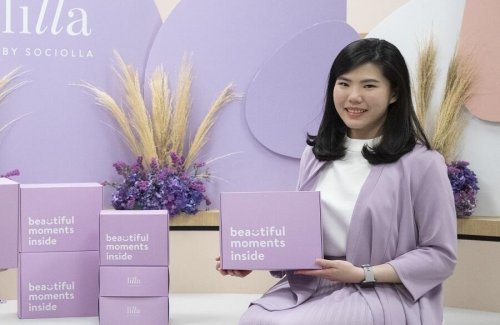
The Indonesian co-founder, and chief marketing officer of Social Bella, surprised everyone by taking her successful online store offline. In 2019, her online beauty and personal care store, Sociolla, already had two physical locations in Indonesia. It currently operates 47 outlets in Indonesia and 16 in Vietnam, making its earnings multiplied by ten by the end of 2021.

It started after Indiana had finished her studies in Australia in 2015 when she moved back to Jakarta, where she conceived the idea for Sociolla.

Chrisanti found that Australia was a great place to stock up on her favorite cosmetics because of the abundance of international brands. There couldn’t have been a bigger contrast with Indonesia.

With a combined $13,000, Indiana, her brother, and a close friend founded Social Bella to provide customers with access to legitimate goods and services.

“Since we started, we ensure that we only work with authorized distributors or brand owners,” Indiana said. 

The three founders of Sociolla had bigger plans than just building an online store. They have expanded beyond offline stores to become a global beauty and personal care product distributor. In Indonesia, they also became an associate partner for numerous international brands.

‘We want to ensure that we are scaling up and reaching more and more consumers. If Social Bella becomes a unicorn, it’s a bonus.” – Chrisanti Indiana shared with CNBC.

Image Source: DoorDash

Blogs, Development, Ideas, Stories

What Separates DoorDash Founder Tony Xu From The Rest Of The Tech Billionaire

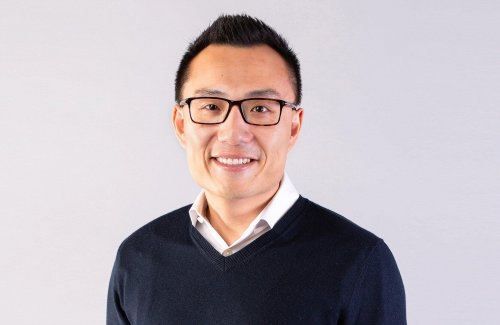
Learn more about Tony Xu, the co-founder, and CEO of DoorDash, the most extensive service in the US for delivering food. Xu is a Chinese-American tech billionaire who has worked for eBay and PayPal in the past, but he attributes his current success to the experience he gained working as a dishwasher.

DoorDash went public in December 2020 after being co-founded in 2012 by a group of excellent Stanford University students, including Xu. Today, the platform has more than 6,000 employees and more than half the market share in the food ordering and delivery industry. Company earnings for 2021 were reported to be over US$4.8 billion.

Xu shared that he once felt discriminated against when surrounded by other entrepreneurs who were different from him. As the sole Asian-American cofounder of the company, he proudly and responsibly accepted the challenge. He is aware that there are not nearly as many Asian-American CEOs or other types of founders, so he remains a minority throughout this setting. He believes it serves as a gentle reminder always to recognize that and to maintain a lowly but humble attitude.

Not only has Xu found success with DoorDash, but he also serves on the board of directors for Meta, the parent company of Facebook, and was named to Fortune’s 40. He is also a huge NBA fan, leading to DoorDash becoming the league’s first official food delivery partner.

As of 2022, Xu’s net worth was estimated at US$1.3 billion, placing him at #2,190 on Forbes’ list of billionaires.

Image Source: Paulo Chun / NBC News

Stories

Fifth-generation Entrepreneur Reimagines NYC Chinatown Landmark While Preserving Cultural Traditions

Even though times are tough and New York’s Chinatown is on the verge of dying, there is one place where things appear to be mostly the same as they have always been.

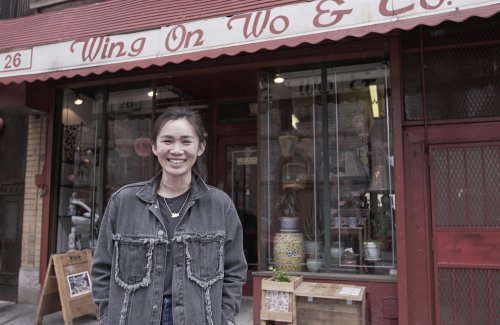
Since Mei Lum started volunteering as a child, Wing on Wo & Co has been run by her family. Brilliant and creative heritage enterprises have withstood generations of economic ups and downs. Mei represents her family’s legacy and New Yorkers and future generations of Chinatown residents.

The 32-year-old fifth-generation owner has bigger plans. Mei revived Wing on Wo’s late-19th-century ambiance. The store was a meeting place, credit union, and informal post office for low-income Chinese employees during the Chinese Exclusion Act.

She wants to run things because she has always wanted to expand the store’s conceptual boundaries. “A business doesn’t have to be so economically driven. There can still be genuine connections, which sustain a community,” she told The Guardian.

Wing on Wo is still primarily run by the original family for over a century. For 30 years, Mei’s father Gary has chatted with clients at the counter. Lorraine, her mother, handles the website and order processing. Her 105-year-old grandmother, Nancy, promotes the store’s hand-painted wine cups, fish-shaped glazed vases, and elegant dinner plates on Instagram.

In 2016, her grandmother intended to sell the family-owned porcelain specialty shop, which was worth close to $10 million. Mei took over the business to preserve it and create a community hub. She was planning to study international relations at Columbia University, but she now wants to run the family business. She wanted the store to be a hub for activists and artists to fight gentrification and displacement.

As a result of the pandemic, Mei decided to focus her efforts on online sales, digital advertising, and social media. To ensure that the business is preserving tradition and shaping the future of Chinatown, she has added several new initiatives, such as youth programs, an artist residency, and a ceramicist fair.