Stories

November 8, 2023

SHARE:

Postpartum care is a critical period for new mothers, yet it is often overlooked in our society.

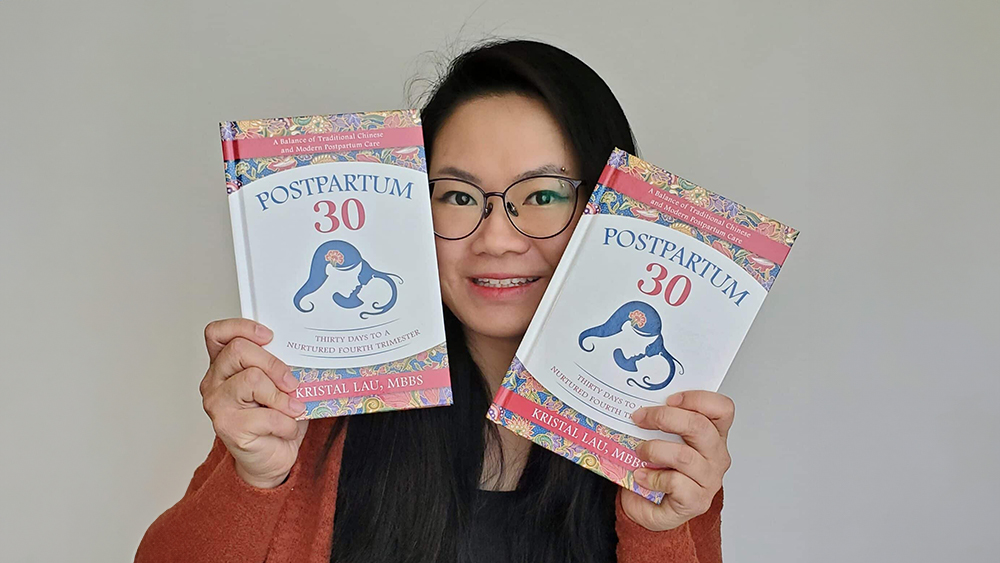
Many women struggle with physical and emotional changes after giving birth, and the lack of support and attention to their needs can lead to postpartum depression and other health issues. This is why Dr. Kristal Lau’s book on postpartum care is a crucial addition to the conversation.

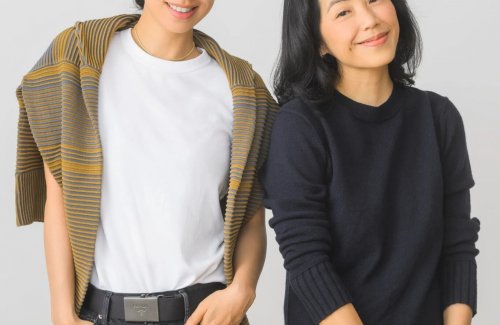
When Kristal joined the AHN community two years ago, she was still pivoting out of her medical career. She shared that her mom has been encouraging her to pursue her idea of writing a book on Malaysian Chinese postpartum confinement practices and include notes from her medical background.

During her confinement month after birthing her first child, Kristal compromised with her mother to modernize some of the confinement practices by medical logic. With a balance of traditional Chinese and modern postpartum care, her book provides a comprehensive guide for modern moms to take care of themselves during this important time while feeling connected to their Chinese roots.

In this article, we will dive into Kristal’s journey as an author. We will also explore why postpartum care should be a mainstream topic and why it is important to prioritize the health and well-being of new mothers.

BECOMING A MOTHER OF TWO

I practiced medicine in Australia as a Basic Physician Trainee before moving to the USA and would’ve chosen to specialize in geriatrics medicine if I hadn’t met my husband.

Ironically, I’ve chosen to work in the perinatal world now, because I used to actively avoid seeing pregnant women patients when I was a junior doctor. I felt intimidated by the responsibility of two lives and potentially more if the patient already had children.

Becoming a mother of 2 while facing the challenges of a modern immigrant from South East Asia to the West (and being a US military spouse) opened my eyes to the importance of postpartum care in setting mothers up to thrive in the postpartum year and beyond. Especially when I was planning for my first confinement practice and had to adapt things to where we were living in rural Alabama. From this experience, I decided that contributing to a small part of the perinatal industry was fitting.

POSTPARTUM 30: THIRTY DAYS TO A NURTURED FOURTH TRIMESTER

The core message of my book entitled “Postpartum 30: Thirty Days to a Nurtured Fourth Trimester” is about preserving a traditional and cultural practice so that it remains relevant to current and future generations. Otherwise, we’d forget!

So, the key components of my book showcase the best of both worlds. I discuss postpartum physiology (what we know today about how the birthing body recovers after birth) and basic Traditional Chinese Medicine (TCM) principles around the postpartum body. 

I have chapters dedicated to adapting confinement practices to fit a modern mom and her family’s needs and lifestyle. I also guide readers on how to respectfully tell their mothers or mothers-in-law that they’d like to practice a modern version of confinement and include them in the picture.

MODERN MOMS WITH CHINESE ROOTS CAN EASILY BENEFIT FROM THIS BOOK

Firstly, it’s written in English! Readers don’t have to know any Mandarin or Chinese dialects (just like me!) to understand the TCM and confinement concepts I discuss in the book.

Secondly, I include historical references about the confinement practice and discuss why certain practices made sense to our ancestors. Finally, I challenge two aspects of the traditional confinement practice head-on. I encourage readers to embrace all the emotions that come with the chaos of the postpartum period instead of pushing them away. And I encourage spouses and partners to be the main confinement support person rather than another family member.

PUBLISHING MY BOOK HAS BEEN VERY SURREAL

I fully invested in writing this book after the overwhelming support from Asian Hustle Network group members when this book was just an idea. I also appreciated the nuances brought up by the AHN members in that defining post which added more to developing my book’s content. My first beta readers were also from the AHN community!

I’ve always wanted to be an author ever since I was a teen, so I can’t believe that I’ve done it! The book has also allowed me to represent a small part of Malaysian and Chinese culture to the world. Plus, it’s my biggest ticket away from medicine and into carving out an unconventional career that works for me!

Making time to write my book was the biggest challenge because I got pregnant with my second baby just after starting a 6-month book coaching program to develop my book. I’ve also been living in Germany since 2020 due to my husband being stationed here at a military base. So, I was writing on and off throughout my pregnancy and postpartum year while juggling our newborn, toddler, deployments, 2 dogs, and trying to thrive in a foreign country. The next biggest challenge was believing in myself, and that I have what it takes to write on this topic.

BALANCE AND EVOLUTION FOR POSTPARTUM CARE

To balance traditional Chinese practices of postpartum care with modern medical logic, I drew from my professional background as a medical doctor and a public health graduate, and my personal background as a Malaysian who grew up with both TCM and modern medicine. I also consulted with my medical peers and a TCM doctor (a connection I made through AHN too!) about how postpartum care from the East and West can meet in the middle.

An example of this balance is compromising on the hair-washing practice. Personal hygiene is a big part of the confinement practice. The strict traditional way is no hair washing for the entire confinement month. A modern compromise is to not wash the hair for the first 2 weeks and once you start washing your hair, make sure to dry it completely while in the warm bathroom before stepping out into a more chilly environment.

As more attention is given to the concept of matrescence, the transition a woman goes through to become a mother, it’s important to recognize the need for nurturing and support during this time.

Physical therapy should be a standard part of postpartum care, as many women suffer from pelvic floor and back pain issues after giving birth. Unfortunately, too many women are told that these issues are “normal” and should be lived with. Pain and discomfort should not be considered normal, and pelvic floor rehabilitation should be a global standard of care for all new mothers, rather than being limited to a few countries or requiring out-of-pocket expenses. The rest of us have to learn how to ask for pelvic floor rehabilitation referrals and likely pay out of pocket for it.

CARING FOR NEW MOTHERS

Two big areas where family members can help a new mother in the postpartum period are to help her feel seen and alleviate her mental load.

Unfortunately, new mothers frequently fade into the background as the newborn baby takes the spotlight. So, holding space for the new mother to grow into her new identity and showering her with attention reminds her that she’s still her own person and that she’s equally important as the baby!

Women and mothers are also commonly the main household manager in many families who do all the planning, troubleshooting, and preempting of troubles. This is the mental load of women and mothers. Alleviating this during the postpartum period isn’t just asking her what help she needs, it’s becoming the Project Manager at home while she recovers.

Asking her what she needs still requires her to plan and troubleshoot, and that doesn’t help lighten her mental load when she needs all the energy to recover from birth and care for the newborn.

MODERN MOTHERS HAVE DIFFERENT NEEDS THAN THE GENERATIONS BEFORE

First, society needs to accept that this generation and the upcoming generation of modern mothers have very different needs and challenges compared to the generation before us and not shame us for it. 

For example, many women in my generation (especially us Millennials in developing countries like Malaysia) have been conditioned to “do-it-all” i.e. excel at our careers and in being a mother. It’s ingrained in us to “mother like we didn’t have jobs and achieve in our career like we didn’t have children”. Why do moms today carry this burden? It’s likely because we were exposed to conflicting messages about womanhood and motherhood while growing up. We were empowered to be anything we wanted and that we could achieve anything we put our minds and hard work to i.e. embrace the modern woman identity. Yet, we’re still pressured to marry before 30 and start having kids while constantly reminded, “Don’t waste your education by becoming a stay-at-home mom!”. Balancing the identities of an empowered modern woman with the traditional (and biological) roles within motherhood is a unique challenge for many moms of our generation.

So, only when society is willing to empathize with this struggle, then they can provide the social, emotional, and mental support to help modern moms thrive as they go through matrescence.

My book normalizes the notion of nurturing mothers from the beginning of their motherhood journey; the postpartum year. I encourage mothers to prioritize themselves and not feel completely guilty about it. And to get comfortable with asking for help and accepting help before things get too overwhelming. It’s nice to be recognized as a SuperMom but it’s also nice to not have to live up to that image.

CONNECT WITH KRISTAL

Instagram: @mamaswingwoman

Facebook: @mamaswingwoman

Twitter: @drkristallau

LinkedIn: Kristal L.

Website: mamaswingwoman.com

Book webpage: tinyurl.com/pp30book

Author webpage: Kristal Lau – Mandala Tree Press
Related Articles

Screen Shot 2023-07-07 at 11.30.52 AM-png

News

Former Pharmacist Opens Cafe While Competing on Gordon Ramsay’s Show

While preparing to open a new cafe in Chicago’s vibrant Uptown neighborhood, pharmacist-turned-entrepreneur Lan Ho is also competing on Gordon Ramsay’s Food Stars, a reality show featuring aspiring chefs and culinary innovators.

The cafe will showcase her own brand Fat Miilk and will pay homage to Vietnamese culture through its space and food offerings.

Image Source: Fat Miilk

Vietnamese coffee holds a significant place in Vietnamese culture, and Lan Ho is determined to offer an elevated coffee experience that truly captures the essence of this rich tradition. By working closely with local farmers throughout Vietnam, Fat Miilk ensures that only the highest quality Robusta beans are sourced for their coffee. 

According to TimeOut, these organic green beans, renowned for their sweet and fruity flavor, are cultivated at different elevations and roasted using the traditional Vietnamese slow drip method. By focusing on Robusta beans, Fat Miilk stands out from other coffee brands, striving to serve the most authentic and flavorsome Vietnamese coffee.

Ho’s Vietnamese heritage and her family’s entrepreneurial spirit have been influential in her journey. As the child of Vietnamese refugees, she witnessed the determination and resilience of her family members who started businesses to provide for their loved ones. This upbringing instilled in Ho a strong sense of purpose and resilience, which helped her in starting her own business.

Participating in Gordon Ramsay’s Food Stars has been a transformative experience for Ho, teaching her valuable lessons in self-advocacy and self-care. 

As the opening of Fat Miilk’s flagship cafe approaches, Lan Ho remains committed to creating a space that authentically represents Vietnamese coffee culture. The cafe will not only serve an array of Vietnamese coffee options but will also feature Vietnamese meat pies and other delicacies.

Featured Image Source: @iamlanho

forbes-jpg

News

Hong Kong-Based and Women-Led VC Firm Invests in Food Security Solutions

CGV Ventures, a Hong Kong-based venture capital firm led by women and backed by fashion billionaire Michael Ying, is actively seeking investments in the food technology sector.

Co-founders Claudine Ying and Mimi Lau are focused on supporting innovative startups that address food security concerns, ranging from fermented oil to AI weeding technology. CGV has already invested in ten companies, with nine based in the United States and one in Hong Kong.

CGV’s portfolio includes notable investments such as Brightseed, a San Francisco-based company recognized in Forbes’ AI 50 list, and Zero Acre Farms, a startup backed by Richard Branson’s Virgin Group and actor Robert Downey Jr.’s Footprint Coalition.

According to Forbes, CGV takes a meticulous approach to selecting investments, evaluating the scientific validity and market potential of startup products, as well as the founder’s experience and execution capabilities. To assess market readiness, Ying and Lau even personally tested products from prospective portfolio companies.

Looking ahead, CGV plans to expand its investments in Asia, beginning with Hong Kong. Good Food Technologies, a plant-based meat startup, received CGV’s sole investment in Hong Kong, securing $1.5 million in seed funding. The duo believes that Asia’s booming countries, such as Singapore and China, face severe food security risks that drive interest in alternative proteins.

For Ying and Lau, investing in FoodTech and AgTech is a matter of survival. They see agriculture and food security as fundamental principles for the future, driven by the belief that farming can be meaningful, economically viable, and free from laborious stereotypes. Ultimately, CGV Ventures aims to contribute to a more secure, sustainable, and just food system.

Featured Image Source: Forbes

20210226_175427 (1)-jpg

Stories

She Wrote a Book to Help Mixed Asian Children Navigate Through Their Cultural Identities in a Way She Never Did When She Was a Kid

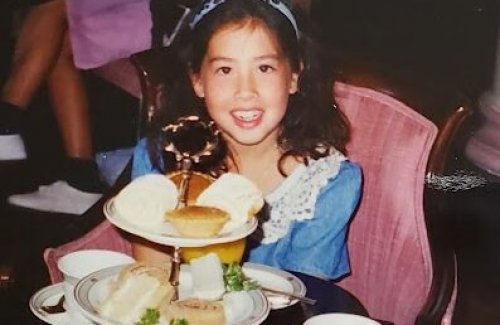
Christine Holmes grew up feeling different from her peers due to being a bi-racial Taiwanese-American.

Christine was often referred to as either the “Asian girl” by her non-Asian friends and the “White girl” by her Asian peers until eventually, they referred to her as “Whasian girl,” which she liked because it represented both of her ethnicities.

She struggled to embrace her cultural background and wished to be fully White. It took her long before she learned to love her identity and cultural heritage, but she did.

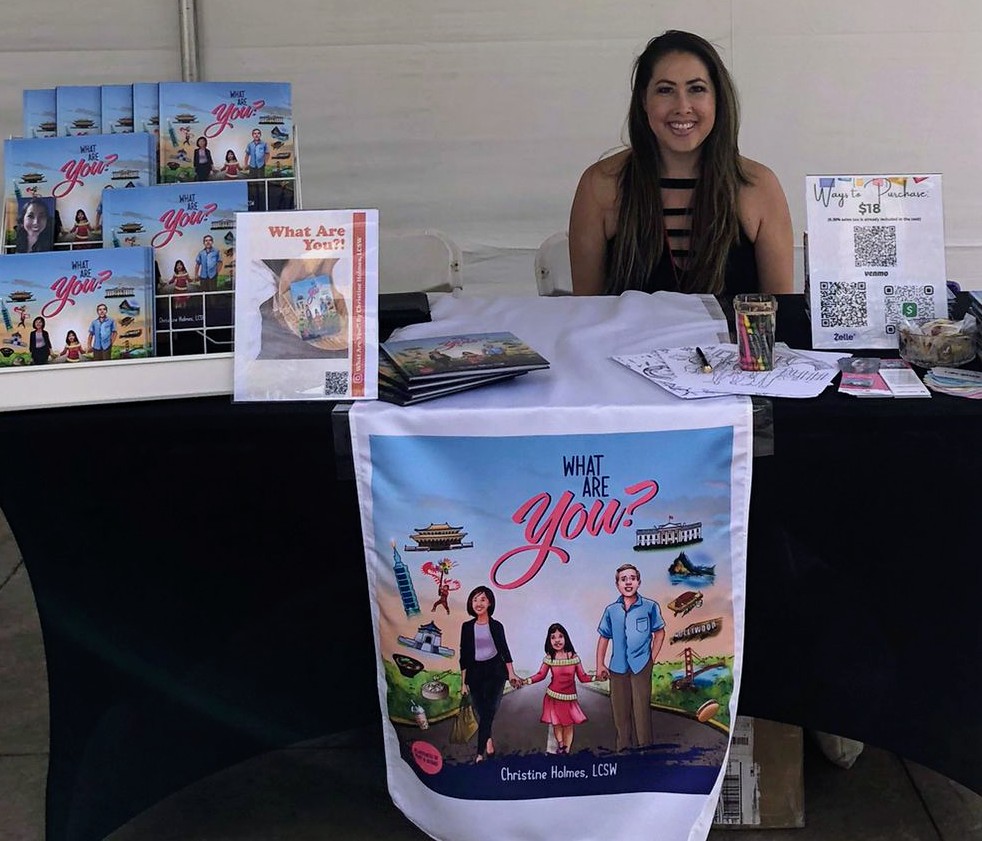
Inspired by her personal experiences, she wrote the book “What Are You?” to provide representation in children’s literature for mixed Asian children.

The book touches on her personal struggles with food and language, among other things, and highlights the importance of representation in literature for children who come from mixed cultural backgrounds.

GROWING UP WITH A TAIWANESE MOTHER AND AN AMERICAN FATHER

Christine grew up in Irvine, CA, where the population was predominantly white and Asian. However, there were very few mixed children, which made Christine feel very different from her peers, who were either fully White or fully Asian.

As a child, Christine was immersed in Chinese School, Chinese Choir, piano, and tennis, which made her feel even more different from her peers because most of them were fully Asian.

Christine’s dad, who is White but very much into Asian culture and a world-renowned Master of martial arts, made it very important for them that Christine knew her Taiwanese/Chinese culture. Christine’s mother cooked Chinese food for most dinners, and her first language was Mandarin.

Their home is filled with beautiful Chinese/Taiwanese antiques, and they used to visit Taiwan every year until Christine was in junior high/high school.

CHALLENGES OF BEING THE “WHASIAN” GIRL

“To my White friends, I was the Asian girl but to my Asian friends, I was the White girl until I got into high school and my friends decided to call me the “Whasian” girl which I preferred since it represented both of my ethnicities.”

Christine felt different from everybody growing up, which bothered her internally. In fact, she had a teacher in her Chinese school that wasn’t very nice to her because even though she can speak Chinese, she couldn’t write Chinese like the other children. This treatment left Christine feeling isolated and alone, until she eventually quit Chinese school altogether.

Her non-Asian friends also often made comments about the food her mom would bring to potlucks or the bags she would use to pack her lunch, making her feel ashamed of her culture. When her mom spoke Mandarin, her non-Asian friends would be offended and ask why she had to speak Mandarin in front of them. She would have to explain that it was sometimes easier for her mom to speak in her native language than speak English. This made her feel uncomfortable, and she would get angry at her mom for it.

At this point, she wished that she was fully White, perhaps because being White and blonde was considered the most beautiful when she was growing up. Her mom used to pinch her nose to make it look “taller” and less stubby like a typical Asian nose. Some of her Asian peers even told her that she was lucky to be at least half White compared to them being fully Asian.

THE TURNING POINT

It wasn’t until college that she fully embraced being mixed and started to love her identity. Christine found herself surrounded by a diverse group of friends who not only accepted her but celebrated her mixed heritage.

“In college, most of my friends were either mixed or of different ethnicities other than White or full Asian. And, they embraced me,” she said.

They appreciated the unique perspective she brought to the table and encouraged her to embrace her identity. For the first time in her life, Christine felt truly proud of her background and of who she is.

WRITING THE BOOK

Christine’s personal experiences served as the inspiration behind her book, “What Are You?” which is a story about her life growing up as a mixed-race individual in a predominantly white and Asian community.

Christine wrote the book when she realized there were no books that represented mixed Asian children. Despite being able to find books for her own children who are half Black, she couldn’t find any for children who were mixed Asian. So, she decided to create something that represented kids like herself.

“I think the part of the book that was most emotionally challenging was writing about the food and how embarrassed I was about my mom packing me Asian food even though I secretly loved it.” Christine admits to feeling a lot of guilt now as an adult for all the times she blamed and got mad at her mom as a child.

REPRESENTATION IN CHILDREN’S LITERATURE

Christine strongly believes in the power of representation and the need for diverse books that accurately reflect the experiences of mixed-race individuals. Having grown up without any books that reflected her own identity, she recognizes the importance of seeing oneself represented in literature.

She saw firsthand how much her own children appreciated books with characters that looked like them and had similar cultural backgrounds. Writing her book, “What Are You?”, she received overwhelming positive feedback from other mixed Asian individuals who wished they had a book like this when they were children.

Despite increased awareness and acceptance of mixed-race identities in modern times, Christine recognizes that children may still struggle with their identity and the pressure to choose one ethnicity over the other. Her book seeks to empower mixed-race children to embrace and celebrate all aspects of their identity.

OVERJOYED BY THE POSITIVE FEEDBACK

Christine initially had doubts about the book’s reception due to her own insecurities about putting herself out there. However, the encouraging and uplifting words from her readers have exceeded her expectations.

“I was featured on a TikTok page, twice, by someone with 1 million followers, who’s sister bought the book for her. She shared that my book had emotionally resonated with her in many ways. It was then that I realized the impact that my book has had on some people.”

HOPE FOR THE FUTURE

Christine hopes that her book will inspire readers to embrace their identity, no matter where they come from. She wants readers to know that they don’t have to choose between different cultural backgrounds and can be proud of their unique mix.

“I hope they embrace their cultural background, and they are proud of their roots.”

By highlighting her personal experiences, Christine hopes her book will contribute to a larger conversation about identity and belonging in our society today, and ultimately help break down barriers and build more inclusive communities.

CONNECT WITH CHRISTINE

Website: publishyourgift.lpages.co/christine/

Instagram: @whatareyoubook  

Facebook:  What Are You? Book

TikTok: @whatareyoubook 

20221203_083614-jpg

Stories

How This Woman Overcame Her Parents’ Doubts and Started Her Own Medical Aesthetic Business

Growing up with stereotypical Asian tiger parents, Angie had always been interested in entrepreneurship but was constantly discouraged.

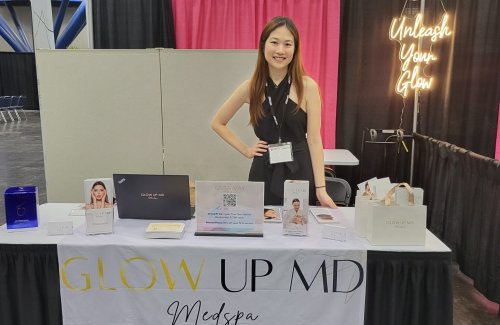
Angie Kim is the physician and CEO of Glow Up MD Medical Aesthetics and Wellness Practice. Her journey to success was far from easy. Angie grew up with traditional Asian immigrant parents who believed that taking risks in business was foolish.

She did all the stereotypical Asian things such as playing piano, being good at math, and going to a good college. She studied engineering and went on to complete medical school. And like most Asian women are expected to be, Angie was very quiet and had low self confidence.

But after completing her medical training, Angie realized that working for someone else was not what she wanted for her life. She refused to work for people without medical education and decided to take a chance on herself.

Starting her own business was an intimidating prospect for her. She had no background in business and had to navigate legal regulations, insurance requirements, and financial planning on her own. But with determination and persistence, she and her husband were able to set up a successful brick and mortar practice within just a few months.

Angie’s journey serves as a reminder that there is never a perfect time to start a business and that sometimes the best way to learn is by doing.

I DID IT ANYWAY

Even in middle school and high school, starting a business always piqued Angie’s interest. She had even presented a few ideas, such as a t-shirt business, to her parents when she was in middle school. Unfortunately, her parents always shot her ideas down, telling her they were stupid.

Angie’s parents have always been extremely risk averse and were against anything that required any type of investment with uncertain return. They wouldn’t even let her spend money to create a website.

Despite the discouragement, Angie was still very interested in entrepreneurship. She would constantly read articles about people who developed new apps or websites that became very popular. However, she had to put those aspirations on the backburner and focus on her education as her parents placed a high emphasis on education.

Even still, she would come up with ideas every so often and kept a list of these on her computer, hoping to return to them one day to get them started. “One thing that’s been constant since my childhood has been that whenever they told me I wouldn’t be able to accomplish something, I did it anyway,” she said.

BIGGEST CHALLENGES

Initially, one of their biggest challenges was trying to figure out the laws surrounding opening a medical practice. They looked at so many sources but kept finding contradicting or incomplete information.

The actual legalese was difficult to understand and they didn’t trust their interpretation of it. They finally spoke to a lawyer who confirmed what they understood. This allowed them to feel comfortable enough to continue on.

As of right now, the biggest challenge they’re facing is marketing and getting the word out. They are still trying to figure out the best way to do this. It has been mostly through trial and error. They are constantly trying different strategies, such as Facebook ads, in-person events, local SEO, local media and print, and direct mailing.

THE TURNING POINT

While working in the hospital, Angie began noticing little things over time that pointed towards the toxicity of the working environment, such as how little control and autonomy physicians have in taking care of their own patients, the backstabbing from other healthcare workers, and how physicians from other healthcare systems all had similar stories.

“I came to the realization that this would not change if I just changed jobs. The only solution was to start my own practice,” she said.

LOOKING BACK ON HER JOURNEY

The most rewarding aspect for Angie is the freedom to practice medicine the way it should be practiced. “I can spend as much time as I need to with patients. I don’t need to spend extra time trying to fight insurance companies. And my patients have been happy with their results,” she said.

She is hoping to grow her practice enough that she can open a second location and eventually franchise it, which would allow her to help even more patients and improve the healthcare system in her own small way.

“If I were to do it all over again, I would document my journey. I thought about it this time, but I felt like I didn’t know what I was doing the whole time.”

ANGIE’S ADVICE FOR OTHERS FACING SIMILAR CHALLENGES FROM THEIR FAMILIES

“People are always going to doubt you when you start, especially those closest to you. You can’t let that get to you. If it’s what you really want and you can’t stop thinking about it, then you should go for it. It’s going to be lonely and somewhat isolating when you start, but it’ll be worth it,” Angie said. 

She believes that there’s always a way to solve a problem. If you feel like you’ve hit a roadblock, you can try looking at the problem from a different perspective.

Right now, Angie still hasn’t told her parents about her business and she’s waiting for the right time when she can finally tell them.

CONNECT WITH ANGIE

Instagram: @glowupmdspa

Facebook: Glow Up MD Medspa