Stories

November 8, 2023

SHARE:

Postpartum care is a critical period for new mothers, yet it is often overlooked in our society.

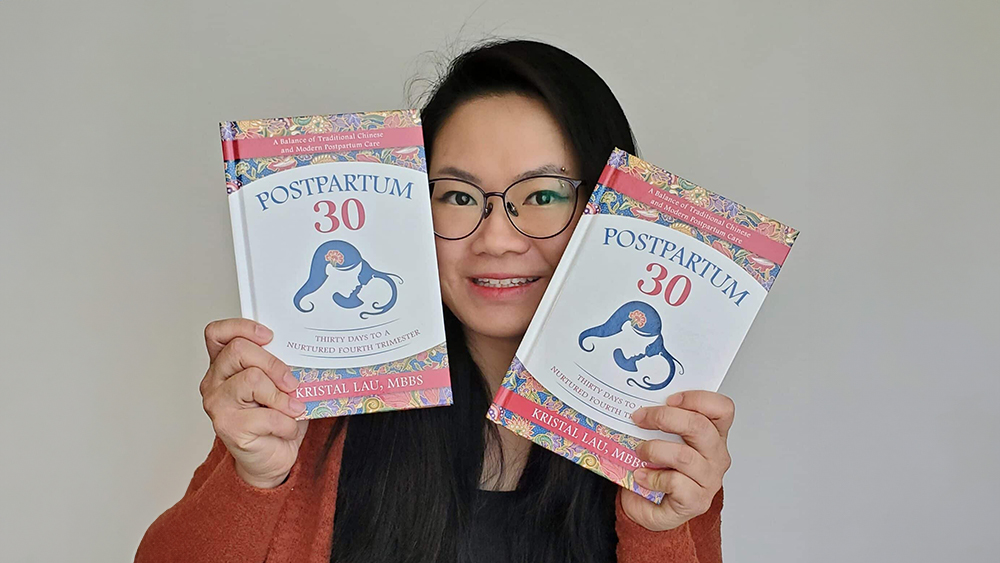
Many women struggle with physical and emotional changes after giving birth, and the lack of support and attention to their needs can lead to postpartum depression and other health issues. This is why Dr. Kristal Lau’s book on postpartum care is a crucial addition to the conversation.

When Kristal joined the AHN community two years ago, she was still pivoting out of her medical career. She shared that her mom has been encouraging her to pursue her idea of writing a book on Malaysian Chinese postpartum confinement practices and include notes from her medical background.

During her confinement month after birthing her first child, Kristal compromised with her mother to modernize some of the confinement practices by medical logic. With a balance of traditional Chinese and modern postpartum care, her book provides a comprehensive guide for modern moms to take care of themselves during this important time while feeling connected to their Chinese roots.

In this article, we will dive into Kristal’s journey as an author. We will also explore why postpartum care should be a mainstream topic and why it is important to prioritize the health and well-being of new mothers.

BECOMING A MOTHER OF TWO

I practiced medicine in Australia as a Basic Physician Trainee before moving to the USA and would’ve chosen to specialize in geriatrics medicine if I hadn’t met my husband.

Ironically, I’ve chosen to work in the perinatal world now, because I used to actively avoid seeing pregnant women patients when I was a junior doctor. I felt intimidated by the responsibility of two lives and potentially more if the patient already had children.

Becoming a mother of 2 while facing the challenges of a modern immigrant from South East Asia to the West (and being a US military spouse) opened my eyes to the importance of postpartum care in setting mothers up to thrive in the postpartum year and beyond. Especially when I was planning for my first confinement practice and had to adapt things to where we were living in rural Alabama. From this experience, I decided that contributing to a small part of the perinatal industry was fitting.

POSTPARTUM 30: THIRTY DAYS TO A NURTURED FOURTH TRIMESTER

The core message of my book entitled “Postpartum 30: Thirty Days to a Nurtured Fourth Trimester” is about preserving a traditional and cultural practice so that it remains relevant to current and future generations. Otherwise, we’d forget!

So, the key components of my book showcase the best of both worlds. I discuss postpartum physiology (what we know today about how the birthing body recovers after birth) and basic Traditional Chinese Medicine (TCM) principles around the postpartum body. 

I have chapters dedicated to adapting confinement practices to fit a modern mom and her family’s needs and lifestyle. I also guide readers on how to respectfully tell their mothers or mothers-in-law that they’d like to practice a modern version of confinement and include them in the picture.

MODERN MOMS WITH CHINESE ROOTS CAN EASILY BENEFIT FROM THIS BOOK

Firstly, it’s written in English! Readers don’t have to know any Mandarin or Chinese dialects (just like me!) to understand the TCM and confinement concepts I discuss in the book.

Secondly, I include historical references about the confinement practice and discuss why certain practices made sense to our ancestors. Finally, I challenge two aspects of the traditional confinement practice head-on. I encourage readers to embrace all the emotions that come with the chaos of the postpartum period instead of pushing them away. And I encourage spouses and partners to be the main confinement support person rather than another family member.

PUBLISHING MY BOOK HAS BEEN VERY SURREAL

I fully invested in writing this book after the overwhelming support from Asian Hustle Network group members when this book was just an idea. I also appreciated the nuances brought up by the AHN members in that defining post which added more to developing my book’s content. My first beta readers were also from the AHN community!

I’ve always wanted to be an author ever since I was a teen, so I can’t believe that I’ve done it! The book has also allowed me to represent a small part of Malaysian and Chinese culture to the world. Plus, it’s my biggest ticket away from medicine and into carving out an unconventional career that works for me!

Making time to write my book was the biggest challenge because I got pregnant with my second baby just after starting a 6-month book coaching program to develop my book. I’ve also been living in Germany since 2020 due to my husband being stationed here at a military base. So, I was writing on and off throughout my pregnancy and postpartum year while juggling our newborn, toddler, deployments, 2 dogs, and trying to thrive in a foreign country. The next biggest challenge was believing in myself, and that I have what it takes to write on this topic.

BALANCE AND EVOLUTION FOR POSTPARTUM CARE

To balance traditional Chinese practices of postpartum care with modern medical logic, I drew from my professional background as a medical doctor and a public health graduate, and my personal background as a Malaysian who grew up with both TCM and modern medicine. I also consulted with my medical peers and a TCM doctor (a connection I made through AHN too!) about how postpartum care from the East and West can meet in the middle.

An example of this balance is compromising on the hair-washing practice. Personal hygiene is a big part of the confinement practice. The strict traditional way is no hair washing for the entire confinement month. A modern compromise is to not wash the hair for the first 2 weeks and once you start washing your hair, make sure to dry it completely while in the warm bathroom before stepping out into a more chilly environment.

As more attention is given to the concept of matrescence, the transition a woman goes through to become a mother, it’s important to recognize the need for nurturing and support during this time.

Physical therapy should be a standard part of postpartum care, as many women suffer from pelvic floor and back pain issues after giving birth. Unfortunately, too many women are told that these issues are “normal” and should be lived with. Pain and discomfort should not be considered normal, and pelvic floor rehabilitation should be a global standard of care for all new mothers, rather than being limited to a few countries or requiring out-of-pocket expenses. The rest of us have to learn how to ask for pelvic floor rehabilitation referrals and likely pay out of pocket for it.

CARING FOR NEW MOTHERS

Two big areas where family members can help a new mother in the postpartum period are to help her feel seen and alleviate her mental load.

Unfortunately, new mothers frequently fade into the background as the newborn baby takes the spotlight. So, holding space for the new mother to grow into her new identity and showering her with attention reminds her that she’s still her own person and that she’s equally important as the baby!

Women and mothers are also commonly the main household manager in many families who do all the planning, troubleshooting, and preempting of troubles. This is the mental load of women and mothers. Alleviating this during the postpartum period isn’t just asking her what help she needs, it’s becoming the Project Manager at home while she recovers.

Asking her what she needs still requires her to plan and troubleshoot, and that doesn’t help lighten her mental load when she needs all the energy to recover from birth and care for the newborn.

MODERN MOTHERS HAVE DIFFERENT NEEDS THAN THE GENERATIONS BEFORE

First, society needs to accept that this generation and the upcoming generation of modern mothers have very different needs and challenges compared to the generation before us and not shame us for it. 

For example, many women in my generation (especially us Millennials in developing countries like Malaysia) have been conditioned to “do-it-all” i.e. excel at our careers and in being a mother. It’s ingrained in us to “mother like we didn’t have jobs and achieve in our career like we didn’t have children”. Why do moms today carry this burden? It’s likely because we were exposed to conflicting messages about womanhood and motherhood while growing up. We were empowered to be anything we wanted and that we could achieve anything we put our minds and hard work to i.e. embrace the modern woman identity. Yet, we’re still pressured to marry before 30 and start having kids while constantly reminded, “Don’t waste your education by becoming a stay-at-home mom!”. Balancing the identities of an empowered modern woman with the traditional (and biological) roles within motherhood is a unique challenge for many moms of our generation.

So, only when society is willing to empathize with this struggle, then they can provide the social, emotional, and mental support to help modern moms thrive as they go through matrescence.

My book normalizes the notion of nurturing mothers from the beginning of their motherhood journey; the postpartum year. I encourage mothers to prioritize themselves and not feel completely guilty about it. And to get comfortable with asking for help and accepting help before things get too overwhelming. It’s nice to be recognized as a SuperMom but it’s also nice to not have to live up to that image.

CONNECT WITH KRISTAL

Instagram: @mamaswingwoman

Facebook: @mamaswingwoman

Twitter: @drkristallau

LinkedIn: Kristal L.

Website: mamaswingwoman.com

Book webpage: tinyurl.com/pp30book

Author webpage: Kristal Lau – Mandala Tree Press

Related Articles

Image Source TomoCredit

Uncategorized

TomoCredit Raised Its Value To $222M To Help Gen-Z Build Credit Fast

TomoCredit announced that it had raised $22 million in a Series B funding round, giving it a post-money valuation of $222 million. 

It has also secured $100 million in debt financing and has raised $39 million in equity since its launch.

The newly acquired funds will be put to use by the corporation in the form of product line expansion, which may include the provision of mortgages and automobile loans. 

Kristy Kim founded TomoCredit in 2019 to help international students get credit. Three and a half years later, the fintech no longer focuses just on immigrants but is now also eyeing domestic students and SMBs that want to “build credit fast”. They received 2.5 million applications over time.

TomoCredit provides users credit limits of up to $30,000. It earns revenue from merchant interchange fees, not consumers. It doesn’t require a credit check, a deposit, or an APR.

According to TechCrunch, the firm doesn’t use FICO scores to underwrite, unlike many other credit offerings. Tomo Score, a “proprietary” underwriting algorithm, identifies “high potential borrowers” without credit scores. 

“Our customers are not in financial trouble…Once you identify them and give them a card, they spend a lot and don’t default. Our performance has been great and that gave us and our investors the confidence to scale.” Kim told TechCrunch.

Morgan Stanley’s Next Level Fund and Mastercard participated in the equity portion of the deal including GoldHouse, Asian Hustle Network, and Hyphen Capital, while Silicon Valley Bank provided the debt.

Alice Vilma co-manages Morgan Stanley’s Next Level Fund, which invests in early-stage innovation and tech-enabled enterprises with women or diverse founding teams, said that she was amazed by Kim’s ability to recognize a need as a young female immigrant and create a financial product.

“As a first-generation South Korean immigrant, I wanted to help immigrant communities to reach their American Dream faster with TomoCredit,” Kim told TechCrunch. “It has been wonderful to partner with minority-focused funds who truly understand Tomo’s mission.”

Ai Nguyen

Uncategorized

“My dad left our family for another woman when I was around 6 years old”

You might have heard a tale similar to this one here and there, but for every family who is now going through this — it feels like the beginning of the end. 

What more if your father left your family when you were young and just beginning a new life in a foreign place?

Nevertheless, it is utterly devastating that some even end up questioning themselves, “what have I done wrong or what should I have done right?” But eventually, you’ll come to the conclusion that you should just accept it, keep a positive attitude and figure out how to go on living your life without a father figure.

But what if one day your father knocks on your door and asks if he could come back to your family’s life?

Here’s Ai Nguyen, A Life and Business Breakthrough Coach, who shares a powerful story through her voice and experience of her 80-year-old dad.

The Crucial Memory

Last week, I celebrated my dad’s 80th birthday.  It was a deeply healing experience for me. Many of you don’t know this, but my dad left our family for another woman when I was around 6 years old, about a year after we had immigrated from Vietnam over to America. Here we are in a strange new country, and then he left us.

One of the last memories I had at that time was that he took me to the bus stop in the morning for school and told me that he was leaving the family and wasn’t coming back. That was it. I came home from school and he was gone.

For decades, I had blocked out this CRUCIAL memory of the bus stop day. It was brought out again during a healing hypnosis session I had last year. While growing up, he would come and visit our family from Guam every few years to attend any huge celebrations such as family weddings. 

Here we are in a strange new country, and then he left us.

-Ai nguyen

The Comeback

But then, about 18 years ago, he asked us if he could come back because he was struggling with his business. He was basically going to be homeless if we didn’t take him in.

This was such a stressful time in my life because we had to learn to build a life without him fully being there and then we had to also learn to accept him as he came back. Long story short, when he came back, even though he stayed, he had lost his power in the family.

We weren’t interested in what he had to say. I wasn’t interested in his opinions. Because, honestly, he lost our respect when he left the family. So, we had never celebrated his birthday.   

My dad had to learn how to make peace with himself. He practiced Buddhism, spirituality, and yoga to calm his internal state.

Long story short, when he came back, even though he stayed, he had lost his power in the family.

-Ai nguyen

The Celebration of Birthday and Healing

Fast forward to last week, his birthday party, my husband Dave and I flew back to St. Louis, Missouri to celebrate this with my family. My dad has been asking the family for the past year to do a party for him. He had an inkling that he would die soon and it was important for him to experience this. And so we made tons of food and brought the whole family together.

And there was a moment where I caught him feeling super happy, in front of the colorful walls, getting photos taken by me. Like a child’s smile when they are being acknowledged and celebrated. I caught it in the moment and in the photos.  

Ai’s father all smiles for his 80th birthday

And all of a sudden..

A deep level of compassion and forgiveness fell into my body.

(As I am writing this, I am CRYING. Nose dripping, wiping my shirt all over my face type of crying)

I suddenly realized that this man is 80 years old. And now he’s finally being celebrated. My heart felt the pain of living in a body for 80 years and not experiencing the greatest, most loving moments in life.  

I felt compassion for the pain of him having to forgive himself for his mistakes. I felt compassion for him, probably realizing he could have done more in his lifetime, but he didn’t get to do so. I felt compassion for him for having to release guilt, shame, and resentment over the years. Because death is near, and he simply wants to be acknowledged.

At that moment, I saw the inner child in him; the child who just wants more praise, love, and attention on this special day. And I wish if I had been quicker in my realization, that I had taken more pictures, to make him laugh, and make it even more of a special day for him. 

(A moment of regret showed up for me)

I suddenly realized that this man is 80 years old. And now he’s finally being celebrated. My heart felt the pain of living in a body for 80 years and not experiencing the greatest, most loving moments in life.  

-ai nguyen

This was the level of compassion that I had prayed for, and I wasn’t ready to fully receive it for many years until I participated in this birthday party.

I got balloons with his favorite celebration colors: red and gold. (Coincidentally, his outfit matched my balloon colors).  Intuitively, I knew what he wanted. If my sister had not asked me to be in charge of the balloons and decorations at the last minute, I would have missed out on seeing the joy and happiness in my dad.  

It was as though SPIRIT planned all of this to happen FOR ME.

I share this story with you because I want you to know that we all have the opportunity to experience forgiveness and healing. Be present, be open, and compassionate and spirit will give you powerful insights. Life flies by fast. Always celebrate yourself. Find gratitude and greatness in your reality and everything will shift for you!

Lastly, you have the power to turn your pain into your purpose.

Ai Nguyen

Your Life and Business Breakthrough Coach

Image Source Esquire Philippines

Uncategorized

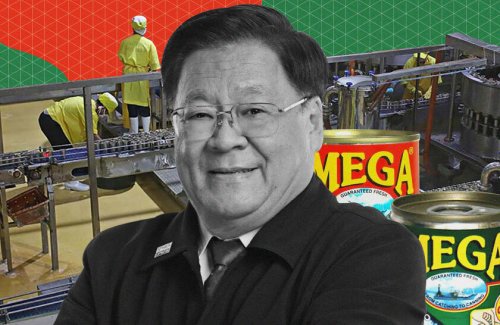
Filipino Founder of Mega Sardines William Lim Shares Business Wisdom

Mega Global Corporation began as a fishing vessel in 1975 and is now one of the Philippines’ most successful canned sardine manufacturers. It has 88 ships, two functioning factories, one under development, and two headquarters.

The company’s founder William Lim said that her wife was from a fishing family and his enthusiasm for fishing sparked his successful business – but his entrepreneurial journey wasn’t easy.

Be a risk-taker

He advised taking calculated risks and anticipating outcomes. “When we came up with advertisements, in three to six months, our sales started to improve slowly. You need to spend to build your brand name so people will have confidence in your product,” he told Esquire.

Good Brand Communication

By learning how to communicate effectively to store owners and consumers about your brand, you will be able to differentiate it from its competitors. “Because nobody knew our brand, supermarket owners did not want to accept our products to be on their shelves,” he told Esquire Magazine, he had to personally visit the stores to convince them for a chance to sell their product. 

Adapt to the times

Simply abandoning ineffective old methods, and always taking opportunities to improve.

Remain focused on your vision

Never forget what the goal was when starting and always remember what the company stands for. He added that when it comes to making decisions about the company, these guiding principles will serve as the primary motivation and compass. “If you keep changing your focus, you have less time to succeed. You have to put your heart and mind to your vision and never give up, no matter the odds,” he tells Philstar.

Image Source Sharon Cuneta Youtube Vlog

Uncategorized

Filipino-Chinese Lester Yu Of Fruitas Holdings Inc. Further Expands His 25+ Brand Portfolio

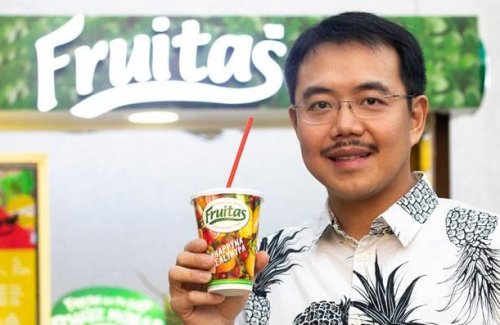
One of the leading groups in the food cart industry in the Philippines, Fruitas Holdings Inc., owned by Chinese-Filipino entrepreneur Lester Yu, has expanded its brand portfolio with the acquisition of Ling Nam, a 72-year-old establishment that operates three locations in Manila, Philippines. 

Fruitas’ wholly-owned subsidiary Soykingdom bought 100% of LN Banaue Inc. This firm operates Ling Nam restaurants such Peter K. Fung and Wanton Parlor.

Established in the 1950s, Ling Nam has long served authentic Cantonese noodles, congee, and dim sum. Beef Wanton Noodles, along with various other sizzling and mouth-watering dishes, can be found on the menus of restaurants in Manila’s Banawe and T. Alonzo districts in Quezon City.

Yu’s 25+ brand portfolio is one of the assets to be purchased as part of the acquisition. Soykingdom will pay 60% of the acquisition price when the deal closes. The remaining 40% will be paid till March 2023. The acquisition price is less than 10% of Fruitas’ March 31 assets and book value.

Fruitas had 720 stores across the country as of the end of December 2021, according to Bilyonaryo where they provided customers with fresh fruit shakes and juices, lemonade, coolers, milk tea, desserts, meat-filled pastries, soya-based products, baked goods, and lechon.