Stories

November 8, 2023

SHARE:

Postpartum care is a critical period for new mothers, yet it is often overlooked in our society.

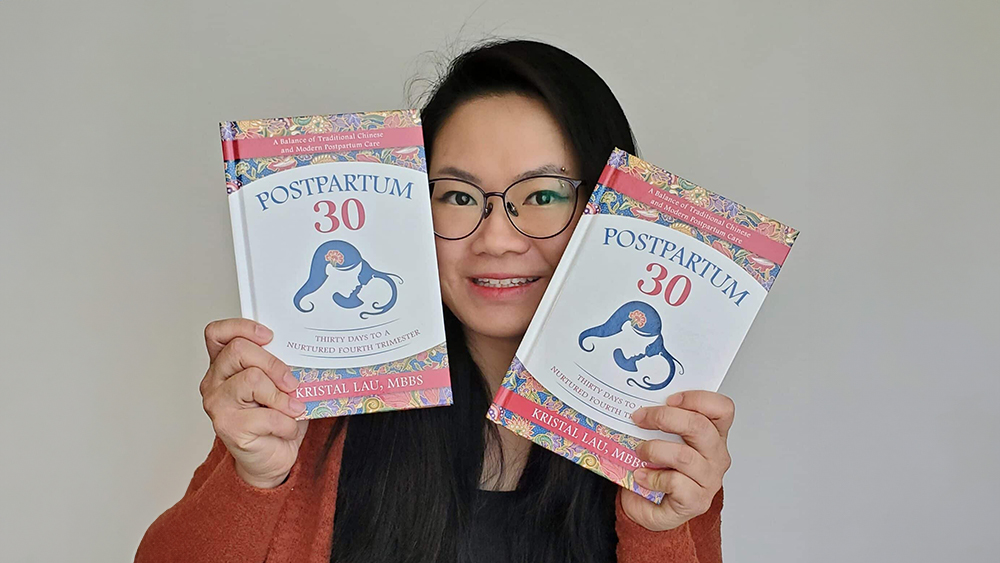
Many women struggle with physical and emotional changes after giving birth, and the lack of support and attention to their needs can lead to postpartum depression and other health issues. This is why Dr. Kristal Lau’s book on postpartum care is a crucial addition to the conversation.

When Kristal joined the AHN community two years ago, she was still pivoting out of her medical career. She shared that her mom has been encouraging her to pursue her idea of writing a book on Malaysian Chinese postpartum confinement practices and include notes from her medical background.

During her confinement month after birthing her first child, Kristal compromised with her mother to modernize some of the confinement practices by medical logic. With a balance of traditional Chinese and modern postpartum care, her book provides a comprehensive guide for modern moms to take care of themselves during this important time while feeling connected to their Chinese roots.

In this article, we will dive into Kristal’s journey as an author. We will also explore why postpartum care should be a mainstream topic and why it is important to prioritize the health and well-being of new mothers.

BECOMING A MOTHER OF TWO

I practiced medicine in Australia as a Basic Physician Trainee before moving to the USA and would’ve chosen to specialize in geriatrics medicine if I hadn’t met my husband.

Ironically, I’ve chosen to work in the perinatal world now, because I used to actively avoid seeing pregnant women patients when I was a junior doctor. I felt intimidated by the responsibility of two lives and potentially more if the patient already had children.

Becoming a mother of 2 while facing the challenges of a modern immigrant from South East Asia to the West (and being a US military spouse) opened my eyes to the importance of postpartum care in setting mothers up to thrive in the postpartum year and beyond. Especially when I was planning for my first confinement practice and had to adapt things to where we were living in rural Alabama. From this experience, I decided that contributing to a small part of the perinatal industry was fitting.

POSTPARTUM 30: THIRTY DAYS TO A NURTURED FOURTH TRIMESTER

The core message of my book entitled “Postpartum 30: Thirty Days to a Nurtured Fourth Trimester” is about preserving a traditional and cultural practice so that it remains relevant to current and future generations. Otherwise, we’d forget!

So, the key components of my book showcase the best of both worlds. I discuss postpartum physiology (what we know today about how the birthing body recovers after birth) and basic Traditional Chinese Medicine (TCM) principles around the postpartum body. 

I have chapters dedicated to adapting confinement practices to fit a modern mom and her family’s needs and lifestyle. I also guide readers on how to respectfully tell their mothers or mothers-in-law that they’d like to practice a modern version of confinement and include them in the picture.

MODERN MOMS WITH CHINESE ROOTS CAN EASILY BENEFIT FROM THIS BOOK

Firstly, it’s written in English! Readers don’t have to know any Mandarin or Chinese dialects (just like me!) to understand the TCM and confinement concepts I discuss in the book.

Secondly, I include historical references about the confinement practice and discuss why certain practices made sense to our ancestors. Finally, I challenge two aspects of the traditional confinement practice head-on. I encourage readers to embrace all the emotions that come with the chaos of the postpartum period instead of pushing them away. And I encourage spouses and partners to be the main confinement support person rather than another family member.

PUBLISHING MY BOOK HAS BEEN VERY SURREAL

I fully invested in writing this book after the overwhelming support from Asian Hustle Network group members when this book was just an idea. I also appreciated the nuances brought up by the AHN members in that defining post which added more to developing my book’s content. My first beta readers were also from the AHN community!

I’ve always wanted to be an author ever since I was a teen, so I can’t believe that I’ve done it! The book has also allowed me to represent a small part of Malaysian and Chinese culture to the world. Plus, it’s my biggest ticket away from medicine and into carving out an unconventional career that works for me!

Making time to write my book was the biggest challenge because I got pregnant with my second baby just after starting a 6-month book coaching program to develop my book. I’ve also been living in Germany since 2020 due to my husband being stationed here at a military base. So, I was writing on and off throughout my pregnancy and postpartum year while juggling our newborn, toddler, deployments, 2 dogs, and trying to thrive in a foreign country. The next biggest challenge was believing in myself, and that I have what it takes to write on this topic.

BALANCE AND EVOLUTION FOR POSTPARTUM CARE

To balance traditional Chinese practices of postpartum care with modern medical logic, I drew from my professional background as a medical doctor and a public health graduate, and my personal background as a Malaysian who grew up with both TCM and modern medicine. I also consulted with my medical peers and a TCM doctor (a connection I made through AHN too!) about how postpartum care from the East and West can meet in the middle.

An example of this balance is compromising on the hair-washing practice. Personal hygiene is a big part of the confinement practice. The strict traditional way is no hair washing for the entire confinement month. A modern compromise is to not wash the hair for the first 2 weeks and once you start washing your hair, make sure to dry it completely while in the warm bathroom before stepping out into a more chilly environment.

As more attention is given to the concept of matrescence, the transition a woman goes through to become a mother, it’s important to recognize the need for nurturing and support during this time.

Physical therapy should be a standard part of postpartum care, as many women suffer from pelvic floor and back pain issues after giving birth. Unfortunately, too many women are told that these issues are “normal” and should be lived with. Pain and discomfort should not be considered normal, and pelvic floor rehabilitation should be a global standard of care for all new mothers, rather than being limited to a few countries or requiring out-of-pocket expenses. The rest of us have to learn how to ask for pelvic floor rehabilitation referrals and likely pay out of pocket for it.

CARING FOR NEW MOTHERS

Two big areas where family members can help a new mother in the postpartum period are to help her feel seen and alleviate her mental load.

Unfortunately, new mothers frequently fade into the background as the newborn baby takes the spotlight. So, holding space for the new mother to grow into her new identity and showering her with attention reminds her that she’s still her own person and that she’s equally important as the baby!

Women and mothers are also commonly the main household manager in many families who do all the planning, troubleshooting, and preempting of troubles. This is the mental load of women and mothers. Alleviating this during the postpartum period isn’t just asking her what help she needs, it’s becoming the Project Manager at home while she recovers.

Asking her what she needs still requires her to plan and troubleshoot, and that doesn’t help lighten her mental load when she needs all the energy to recover from birth and care for the newborn.

MODERN MOTHERS HAVE DIFFERENT NEEDS THAN THE GENERATIONS BEFORE

First, society needs to accept that this generation and the upcoming generation of modern mothers have very different needs and challenges compared to the generation before us and not shame us for it. 

For example, many women in my generation (especially us Millennials in developing countries like Malaysia) have been conditioned to “do-it-all” i.e. excel at our careers and in being a mother. It’s ingrained in us to “mother like we didn’t have jobs and achieve in our career like we didn’t have children”. Why do moms today carry this burden? It’s likely because we were exposed to conflicting messages about womanhood and motherhood while growing up. We were empowered to be anything we wanted and that we could achieve anything we put our minds and hard work to i.e. embrace the modern woman identity. Yet, we’re still pressured to marry before 30 and start having kids while constantly reminded, “Don’t waste your education by becoming a stay-at-home mom!”. Balancing the identities of an empowered modern woman with the traditional (and biological) roles within motherhood is a unique challenge for many moms of our generation.

So, only when society is willing to empathize with this struggle, then they can provide the social, emotional, and mental support to help modern moms thrive as they go through matrescence.

My book normalizes the notion of nurturing mothers from the beginning of their motherhood journey; the postpartum year. I encourage mothers to prioritize themselves and not feel completely guilty about it. And to get comfortable with asking for help and accepting help before things get too overwhelming. It’s nice to be recognized as a SuperMom but it’s also nice to not have to live up to that image.

CONNECT WITH KRISTAL

Instagram: @mamaswingwoman

Facebook: @mamaswingwoman

Twitter: @drkristallau

LinkedIn: Kristal L.

Website: mamaswingwoman.com

Book webpage: tinyurl.com/pp30book

Author webpage: Kristal Lau – Mandala Tree Press
Related Articles

Image by Lorephil Toledo

Uncategorized

Filipina Single Mother in Canada Grew Her Cleaning Job Into a Million-Dollar Janitorial Business

We’ve all heard the stories of people who have started with next to nothing and come out ahead. They are able to turn their passions into successful businesses while providing them with a sense of purpose. But what does it really take to become a successful entrepreneur? 

As a Filipina single mom who built a business in Canada, Lorephil Toledo had to overcome a lot of challenges before achieving success. She is now the CEO of her own company and an inspiring Filipino dreamer for female entrepreneurs around the world. 

At a young age, Lorephil was already used to running her own business. She used to sell clothes, shoes, and underwear at school to pay for her own food. She has never been shy, and she even uses her skills to provide tutoring services in order to increase her income. 

In 2011, Lorephil sought work in Canada. Her oldest was 2 and her youngest was 11 months. She was unhappy because she had to spend so much time away from her children in order to earn. 

She overcame homesickness and missed her children by cleaning. “I found myself distracted by cleaning houses because I was homesick. I’m dreaming that my children are in here while I’m doing housework. I felt good every time I cleaned the house,” she explained.

Lorephil quickly realized that she could turn her pastime into a profitable business. Lorephil started the successful CanaJan Inc., a janitorial services company. Through her entrepreneurial spirit and hard work, Lorephil was able to serve the community with the best janitorial services.  

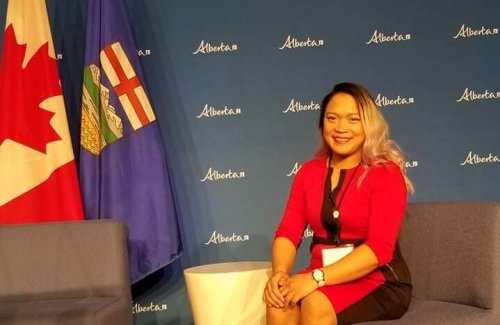
She started out on her own and now oversees a team of 15 people. More than 350 of her clients are consistent, and she brings in millions of dollars annually. She is a multi-award winner, having been named Entrepreneur of the Year, New Citizen of the Year, and New Business of the Year in addition to being named Ambassador of the Filipino Canadian Trades. She was also invited to speak by the provincial government of Alberta.

When sharing her story, Lorephil mentioned a few of the lessons she has learned along the way. She encouraged everyone to have big goals. She believes that there is no impossibility in life, even for the poor, and that there should be no limit to one’s dreams. 

She advises to work hard, “If you want to succeed, you have to work hard for it.” She felt dreams can’t come true without labor. She worked seven days a week for her company. She got four hours of sleep, skipped holidays for five years, and reinvested her money.

Lorephil is a firm believer in the saying “ “Don’t Quit.” She is confident that every difficulty can be overcome and that there is always a way out.

She upholds that in order to properly serve your customers, you must first properly serve your team. This is her reason for treating her employees well and providing free services to her regular customers. She added,  “If you give something to the universe, it will come back double times.”

Image Source: JG Summit

Uncategorized

The Notable Filipino Entrepreneur Who Used His Peanuts Enterprise To Establish An Empire

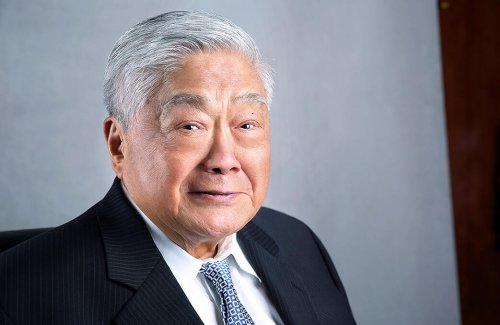
“Choose to be an entrepreneur because then you desire a life of adventure, endless challenge, and the opportunity to be your best self.” — a remarkable statement from “Big John”, the founder and former chairman of JG Summit, one of the largest companies in the Philippines. 

John Gokongwei, a Filipino businessman, investor, and philanthropist, died in 2019 at age 93, but his legacy and business lessons continue to inspire. John created JG Summit, a worldwide conglomerate with assets in one of the Philippines’ largest Telecommunications companies PLDT, Manila Electric Company, and other international companies.

John’s grandfather, Pedro Gotiaoco, was one of Cebu’s richest persons in the 19th century. He was from Fujian province in China and was the owner of the massive trading firm Gotiaoco Hermanos. However, their family went bankrupt during the Great Depression, leaving them homeless.

John, his mother, and five siblings returned to China while his father stayed in the Philippines. At 14, he started selling peanuts to support his family. He quickly realized a bicycle would help him get more done. He saved money and eventually had enough to sell his goods in nearby cities.

At 17, he followed in his family’s footsteps and entered the trading business. He used a small boat to transport goods between Cebu and Manila. 

In order to put his siblings through school in China, he had to double his work. After the war, John saw it as an opportunity to expand his trading business internationally. Amasia Trading, his first company, sold and bought goods in the United States, Manila, and the Visayas region. 

Resulting from his fruitful dealings in Amasia Trading, John finally got to see his family again. When they get back to the Philippines, they helped run their father’s business which is American-Asia Trading. 

He then got interested in the cornstarch sector but needed the funds to get started. After numerous banks turned him down to secure a loan, Dr. Albino Sycip of China Bank lent him P500,000 ($8900). John founded Universal Corn Products in 1954, and eventually expanded into variety of products, it became Universal Robina Corporation (URC).

URC became one of the country’s major food and beverage firms, while one of the Philippines’ largest business empires, the JG Summit Holdings continues to grow. He also founded Consolidated Food Corporation (later CFC), Cebu Pacific Air, and Robinson Retail Holdings. According to Forbes, John was the third richest Filipino at the time of his death.

Big John’s success was largely a result of his management style and leadership abilities, in addition to the fact that he has proven to be a crafty business leader. He will be forever remembered as a self-made billionaire who began by selling peanuts and was one of the most enduring entrepreneurs in history. 


Image Source: Brian Flaherty / The New York Times

Uncategorized

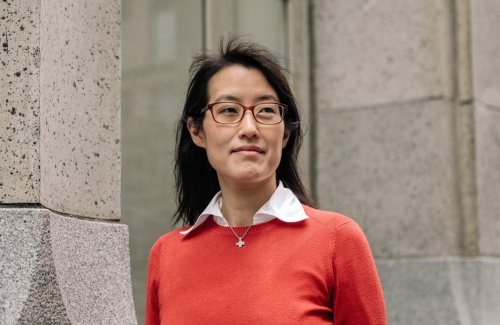
Former Reddit CEO Ellen Pao On Being A Confident Woman In The Male-Dominated Tech Industry

Greater diversity in tech overall could solve some of the industry’s biggest problems, including fighting disinformation, hate speech, and harassment in online spaces, said the former Reddit CEO, Ellen Pao in a recent podcast interview.

While women have made achievements in tech, their numbers are still low. A survey from AnitaB.org, a global group for women engineers, predicts it could take 12 years for women to see equality in the industry.

In 2012, Pao sued her then employer Kleiner Perkins Caufield & Byers for gender discrimination in San Francisco. The jury sided with the VC firm, but Pao became the face of the issue.

Pao shares with Jennifer Palmieri in her podcast that facing the Silicon Valley guys’ club inspired her to lead Reddit in 2014. During her time as the CEO of one of the biggest discussion websites, she didn’t have imposter syndrome as she had always thought that she had seen so many “horrible” male CEOs and board members.

The Taiwanese-American felt confident in her qualifications despite the Silicon Valley narrative that favors Caucasian and male college dropouts. “Maybe I’m not going to be perfect, and maybe I’m going to make mistakes, but it’s not going to be like some of these other mistakes I’ve seen.”

One of Pao’s priorities, when she was at Reddit, was strengthening the anti-harassment policy and clearing the site of nude pictures and revenge porn. Critics of the plan, mostly men, argued such measures were a form of censorship.

Today, however, Pao thinks that current tech leaders are driven to not prohibit hate speech because it boosts social media engagement and profitability.

As the majority white, male, and affluent tech leaders don’t see and experience problems the same way marginalized communities do, Pao believes that they can’t solve these issues.

Pao credits her mother, who is an engineer, for instilling in her a strong sense of right and wrong, which led her to speak up when she witnessed overqualified women and colleagues of color not getting promoted at the same pace as White men.

Image Source Colin Boyle/Block Club Chicago

Uncategorized

North Side Immigrant Rights Group Foster Community By Folk Drumming

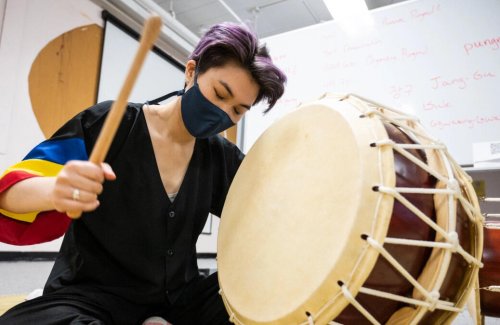
Hana Center, a nonprofit organization for Asian American and immigrant rights, provides neighbors new opportunities to teach them traditional Korean folk drumming, which activists frequently use in their advocacy. 

Community engagement coordinator Won Joon Lee tells Block Club Chicago that the group teaches Pungmul, a Korean folk tradition with deep historical roots. It originated in Korea’s pre-industrial farming culture and used the hourglass-shaped janggu (a double-sided drum) to protest immigration and racism. 

Lee explained that during the Japanese occupation of Korea from 1910 to 1945, public gatherings were prohibited except for musical performances, making Pungmul a form of resistance. 

In 2017, two long-standing organizations,  the Korean American Community Services, and the Korean American Resource and Cultural Center were combined to become Hana Center, named from the Korean word for “one.”

The organization has a long history of youth Pungmul programming, but this summer marked the first time the non-profit offered classes for adults interested in advocacy work. 

The first-ever class will proceed after the initial session of eight weeks has passed. As the new program expands, the instructors intend to continue enrolling new students in it on an ongoing basis.

Hana Drum School instructor Inah Jeong said Pungmul drumming is loud as planned, and they are culturally and politically distinct. Korean immigrants may connect with Chicago immigrants and join the immigrant rights and citizenship march, she tells Block Club Chicago.

The ensemble delivered its first drumming class this summer, but new students are always welcome to join in. Residents and community organizations can benefit from such events, according to the center’s administrators.

Choi tells Block Club Chicago that the current situation is both exhausting and frightening, but she believes the strong and loving communities they form may provide joy even in difficult times.

Their communities enable them to change the world now and in the future. The goal according to Choi is to turn community building into advocacy that targets racial, gender, and economic concerns along with immigrant rights.

Hana Center is located at 4300 North California Avenue in Irving Park. It also offers services to address needs related to citizenship and immigration, housing, and other areas.