Stories

September 2, 2023

SHARE:

Meet Jennifer Guo and Adam Szakacs, a couple with a creative vision. They wanted their child to cherish both her Chinese and Jewish roots, despite living far from family. So, they invented something extraordinary.

Inspired by their grandmothers’ unexpected friendship over mahjong, they reimagined the game as “Not Your Ma’s Jong.” This isn’t just any game; it’s a lively card version of mahjong that celebrates their backgrounds. It carries a powerful message – embracing your heritage and sharing it with others is something to be proud of.

Through Not Your Ma’s Jong, Jennifer and Adam hope to bring people closer. By sharing traditions, they aim to show that understanding each other’s cultures can create harmony.

In an exclusive interview with Asian Hustle Network, Jennifer and Adam share their journey in creating “Not Your Ma’s Jong.” Read through as we get a glimpse of how this game could help forge connections and celebrate diverse cultures.

Whether celebrating certain holidays, traveling together to meaningful places, or simply making a memorable recipe together, spending quality time together is the most important thing – and playing a game like Not Your Ma’s Jong is one way to spend time together.

Jennifer Guo

Can you tell us about the inspiration behind creating Not Your Ma’s Jong and how it connects to your Chinese and Jewish heritage?

Jenn: I learned how to play mahjong as a kid by watching my grandma play in China. Mahjong was a part of our daily lives and at the center of every family occasion. For me, mahjong is a way to connect with those memories.

My grandma used to split her time between her home in Xi’an, China, and Toronto where she stayed with my parents. In 2014, we brought my grandma to visit Adam’s granny who was healing from a hip injury. My grandma speaks only Mandarin, so we started by translating some simple hellos and small talk. It was so special to have them meet and communicate with each other.

Adam: At one point, we were talking about their respective cultures and the things they enjoy. My granny plays a lot of card games and also mentioned mahjong. Jenn’s grandma’s eyes lit up, and she told us about playing throughout her life. Jenn’s grandma is certainly the more avid player, but once my granny’s hip recovered and she was back home, they were able to play together.

Jenn: When I was pregnant with our first daughter in 2018, we started thinking about how we could connect our children with their cultures and heritage. I realized that living in Canada, they would not have the same exposure to Chinese traditions like mahjong as I did growing up. We started thinking about ways to honor the memories we had of growing up with our parents and grandparents and decided to create a simplified version of mahjong, which became Not Your Ma’s Jong.
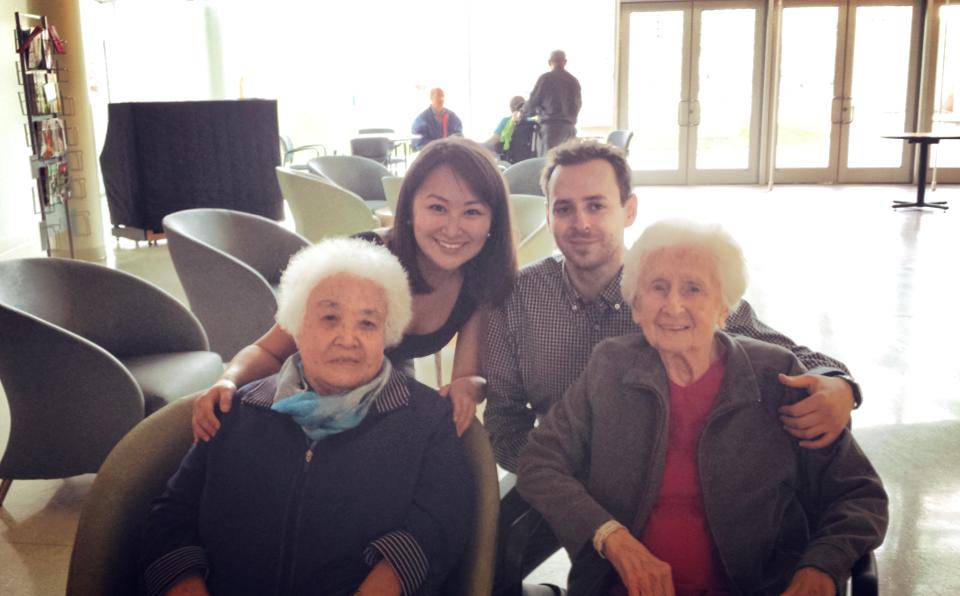
Jenn and Adam with their grandmas

As an international card game played around the world, what do you believe makes Not Your Ma’s Jong unique and appealing to a diverse audience?

Adam: We realized that even though our grandparents played mahjong and we played with them, we never played with our friends. We started asking around and kept hearing the same thing–most of our friends had heard of mahjong or seen their families play, but few knew how to play themselves.

Jenn: Not Your Ma’s Jong is a simplified version of mahjong, using 75 cards as opposed to 144 tiles in the traditional game. The rules are also simplified to create a fast-paced and fierce game that anyone can pick up quickly. When we started playing test versions with our friends, the excitement showed us we were on to something!

Could you share some examples of how you incorporated Chinese and Jewish emblems into Not Your Ma’s Jong? How do these cultural elements enhance the gameplay experience and foster cultural understanding?

Jenn: We wanted to dedicate the game to our grandmas. Many of the cards are symbols from growing up with them – some with Adam’s Jewish granny, and some with my Chinese grandma. Some center around memories of family feasts we’d eat together, gifts they’d give us, or how they made us feel – and while the symbols are specific to our cultures, those memories and feelings are universal.

Other cards are a bit whimsical – we imagined what their friendship could have been if they had lived near each other earlier in their lives. Things like doing tai chi together in a park, or building a muscular snowman together! We wanted to make them relatable for people who grew up in any culture, with special winks for people who grew up Chinese or Jewish.

What are some of the challenges you faced while developing and popularizing Not Your Ma’s Jong? How did you overcome those challenges, and what lessons did you learn along the way?

We had a lot of fun creating Not Your Ma’s Jong – but turning it into a product and making people aware of it was hard! After the initial Kickstarter campaign, the remaining games sat in our home for over a year until we started to get some media attention. We were fortunate that a blog article turned into a newspaper feature which then got our story and the game featured on TV twice! Hasbro took an interest at that point, licensed the game and it’s now being sold around the world. This showed us that people love it once they hear about it! That initial exposure was the hard part.

Can you share any heartwarming stories or feedback you have received from players of Not Your Ma’s Jong?

Adam: The initial Kickstarter campaign was a very personal experience for us. We received stories and repeat orders from some of the earliest recipients of the game, sharing how they played with their parents, children, or nieces and nephews, and how it caused them to reminisce about their own family stories when they saw the illustrations on the cards. We still love getting emails and seeing reviews from people who feel a connection to the game.

What advice would you give to individuals or families who are seeking to explore and celebrate their own cultural heritage? How can games like Not Your Ma’s Jong play a role in this process?

Jenn: It was important to us to not let our families’ cultures and memories fade away for our daughters, and creating this game was one of our ideas to do that. I know it’s hard – especially with young kids – but I think it’s important for parents to think back on their childhoods and choose some of the traditions that they want to continue with their children. Whether celebrating certain holidays, traveling together to meaningful places, or simply making a memorable recipe together, spending quality time together is the most important thing – and playing a game like Not Your Ma’s Jong is one way to spend time together.

In conclusion, what message or lasting impact do you hope Not Your Ma’s Jong will leave on players and society as a whole?

Jenn: The world can sometimes feel so divided – we hope people see this game, and the story behind it, as a small example of how people with different cultural backgrounds and languages can find common ground and develop a friendship. We hope they get a glimpse into Chinese and Jewish cultural experiences and relate with their own experiences too!

CONNECT WITH NOT YOUR MA’S JONG

Instagram: @notyourmasjong

Threads: @notyourmasjong

Website: notyourmasjong.com
Related Articles

Image Source openthemagazine.com

Uncategorized

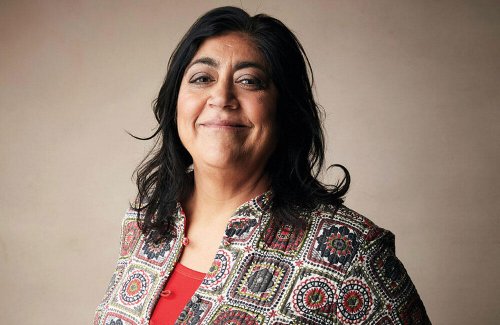
Director Gurinder Chadha On Shaping Her Successful Career By Celebrating Difference

“People might tell you that you’re the odd one out. Remember you’re not, you too are the mainstream. The world might try to make differences a pejorative thing, but I’ve carved out a whole career by celebrating it,” says the 62-year-old film director, Gurinder Chadha, in her recent candid interview with The Guardian.

Gurinder Chadha was born in Kenya, then a British colony. Her family was part of the Indian diaspora in East Africa. They moved to London when she was two and rented a single bedroom. She recounts being shoved into a metal bed frame by their landlord’s son. Her mother was devastated but couldn’t comfort her. “I still remember the indignity and injustice,” she adds.

For a while, she even refused to eat Indian food and had her chapatis with jam and butter. At age 10, she ran away from home and considered it an “escape” to be more British.

Gurinder considers the 2002 box-office hit ‘Bend It Like Beckham’ she directed a watershed moment. She tells The Guardian that until then, the perception was that Indian girls in the UK were obeying and submissive to strict families, but that wasn’t their experience.

“As an immigrant kid, you realise early on you and your parents live different realities,” she adds, “You can fight and rebel, or accept your parents for who they are, work around them, and get on with it. That’s what we did.”

It took three years to get the sports comedy-drama film green-lit. Everyone told her an Indian girl playing football wouldn’t attract the audience. However, it’s the only film to be released in every country since it debuted 20 years ago. “For people on the margins all over, it was transformative”

Unfortunately, her father died suddenly in 1999, and he never got to see Gurinder’s biggest achievements. This made her unappreciated her success for a long time as her father wasn’t there to share it with. It changed when she became a mother of twins in her late 40s, “Having my children celebrate my work has seen something shift within me. Finally, I’ve started to let myself believe it”

280828065_10210184429204132_8785869350725322057_n

Uncategorized

26-Year-Old Filipino Entrepreneur Turns Waste Coconut Shells Into A Thriving Business

With zero funding, Filipino entrepreneur MJ Loleng built her start-up company, Ecobriqs Charcoal Briquettes, an innovative eco-friendly charcoal business from waste coconut shells.

She was able to attract investors with her idea who also had a passion for sustainability and providing employment to those who are poor in the Philippines, as she said that she experienced being poor herself. MJ wants to show that poverty is no reason to give up on ambitions.

MJ wrote on her Facebook, “For the past 4yrs I was just crystal focus on surviving and making things happen. I know I’ve always wanted to help, and I know that I can do it by building a business.”

When “Samgyeopsal” or Korean BBQ restaurants became popular in the Philippines, Ecobriqs experienced a surge in popularity. Briquettes were the ideal kind of coal to use since they did not produce smoke or odor and could be used more than once.

The pandemic drove several eateries to close, putting Ecobriq into a major setback for half a year, but MJ thought of another idea. She collaborated with her friends and opened their own Korean BBQ restaurant, Umma’s Samgyup Café, with a starting capital of P5,000 ($90).

As a result of MJ’s expanding business portfolio, she is now able to bring in more than P100,000 ($2000) per month, and learned stock trading in order to increase her income.

Her advice to aspiring entrepreneurs is to be persistent in achieving their goals, “I also didn’t know how we got this far. I just keep the faith, believe in my team, took the risk, give it ALL IN, and did my best” 

Image Source John Andrew Dangca Facebook

Uncategorized

From Former Janitor To Leading A Flourishing Filipino Restaurant In Australia

Who would have thought that the odd jobs of a janitor and a street vendor would lead to such a great story? This is what actually transpired to John Andrew Dangca, the owner of a Filipino restaurant in Canberra, Australia.

Before establishing his popular restaurant among Filipinos, he worked as a street vendor and janitor. Despite his difficult beginning, he was determined to succeed. He saved money and eventually opened his own restaurant. His business success has allowed him to provide for his family. 

Salu-Salo Restaurant, which has been serving Filipino cuisine in Canberra, Australia was also impacted by the pandemic. Fortunately, he was able to adapt by pivoting to a delivery and take-out model. 

He says that they’ve been able to weather the challenge because of the support of their customers. Andrew admitted that he reaches out to his customers to order some food, and if they do, he personally travels to them, regardless of the distance. 

His journey to Australia began when he was young and open to the idea of studying or working abroad. His aunt sponsored his trip to Australia in 2013, where he enrolled in college and began training as a cleaner. It was never easy for him to juggle a job and schoolwork, but he did it because he wanted to provide for his family.

Andrew’s story demonstrates that it is possible to achieve success despite challenging circumstances if one is willing to work hard and never give up. “I put in a lot of effort and always try to do my best in order to be where I am now,” he stated on a Philippine TV show. 

He proved that beginning in a low position, such as working as a janitor or street vendor, is not an obstacle to future success. Rather, this will serve as the fuel that propels you forward toward achieving your goals.

Untitled design

Uncategorized

Humphry Slocombe Launched Filipino-Inspired Ice Cream In Collaboration With Popular Eatery Señor Sisig

There is nothing quite like a scoop of ice cream on a hot day, as we’re sure you’ll agree! And what better way to enjoy one than with a tasty serving of delectable creations alongside your best dishes?

This summer, the renowned Filipino food truck now restaurant Señor Sisig will open a branch in the food hall of the San Francisco Bay Area and collaborate with the Filipino-inspired experimental ice cream Humphry Slocombe.

They have been starting to develop a new ice cream flavor that evokes childhood and promotes the favorite dishes with an accompanying dessert. According to SFGate, both businesses have decided to work together as they get ready to become Ferry Building tenants.

It may be a new flavor for Humphry Slocombe customers, but it’s not for Filipinos. Made with cinnamon and bananas, the ice cream is as delicious as it sounds. Named “churron”, a mash-up of “churro” and “turon,” a Filipino caramelized fried banana roll.

The new Señor Sisig restaurant will serve drinks with Filipino and Mexican tastes including ube, pandan, and calamansi.

Stop by one of the six Humphry Slocombe locations around the Bay Area to enjoy this new flavorful ice cream before it sells out!