Stories

August 16, 2023

SHARE:

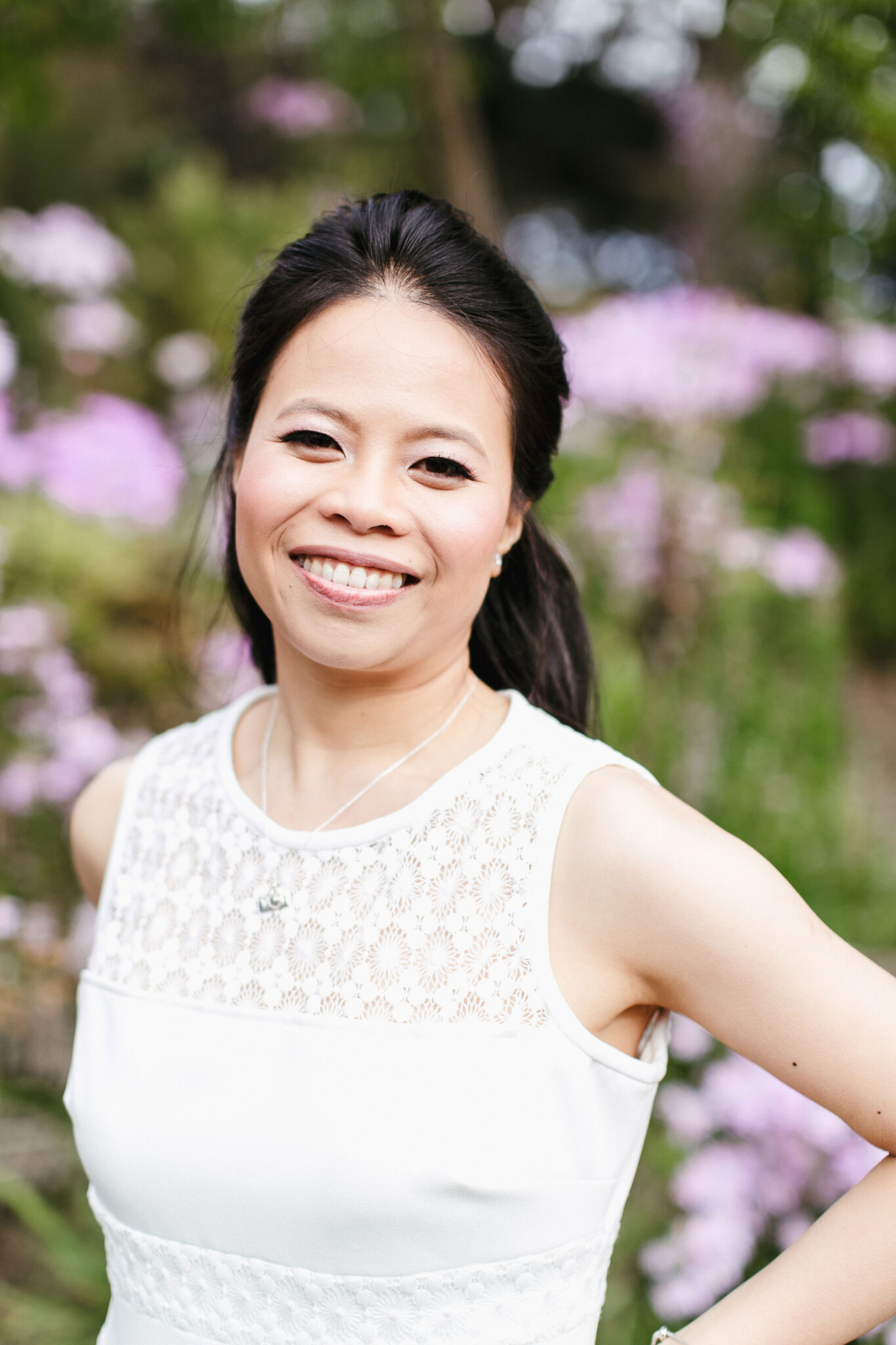
Pianpian’s own experience struggling with leadership and relationships in her professional life inspired her to create a solution that would help others facing similar challenges.

Amotions, founded by Pianpian Xu Guthrie, is a platform that aims to improve managers and hybrid teams’ productivity and connection by upskilling their soft skills such as emotional intelligence with AI-powered coaching.

Recognizing that not everyone can afford an executive coach or passively consume content to learn skills like emotional intelligence, interpersonal skills, and leadership skills, she set out to create an accessible and affordable platform that could provide people across various social-economic circumstances with the tools and support network they need to reach their potential.

At Amotions, they believe that each person has unlimited potential and can grow with the right support and encouragement, and with the right tools and support, anyone can achieve greatness.

COMING UP WITH THE IDEA OF AN AI VIRTUAL COACH

Growing up in a rural village house in Taishan, China, Pianpian’s parents worked tirelessly to provide her with education and opportunities. When she discovered the internet in high school, it opened up a world of possibilities for her, allowing her to connect with mentors and educators from around the world.

Pianpian received her master’s degrees in sociology from Yale University with a thesis on social mobility and psychological well-being. She was a teaching and research fellow in social science at Yale and Hong Kong University of Science and Technology. She then led product management and growth at multiple tech companies in hybrid and remote settings before founding Amotions, Inc.

Inspired by her own struggles with managing teams and relationships in the tech industry, Pianpian came up with the idea of building an AI virtual coach that could help people regulate their emotions in high-pressure situations, build better connection with their colleagues and people around them, and reach their full potential.

“I had the idea of building an AI virtual coach which can listen to me and give me tips when I am raising my voice and say “Seems like you are getting upset, take a deep breath, calm down first, so you are not getting into an argument with your coworkers and destroy your relationships.” Then as I discussed the idea with the team members and potential users and customers, I realized that we can also utilize the power of a human support system,” Pianpian shares.

Amotions uses technology to connect users with knowledgeable peers, coaches, advisors, and mentors, providing a powerful network of support for those looking to advance their careers and personal development. Amotions is poised to transform the way people learn and grow, empowering individuals to reach their full potential with the help of technology and human kindness.

WHERE AMOTIONS COMES IN

Millions of people struggle with emotion management and relationship issues in their personal and professional lives, but there are no accessible and affordable solutions. Executive coaches are expensive, and passive learning methods like books and videos are often ineffective in learning important skills like emotional intelligence and leadership.

As teamwork and collaboration become increasingly important in the modern workplace, there is a growing need for individuals to improve their interpersonal skills and develop emotional intelligence. This is where Amotions comes in.

Amotions aims to provide a platform and support network for everyone to continue to grow themselves both professionally and personally. Their solutions are designed to be accessible and affordable for people of all social-economic circumstances around the world.

“As a mother, I want my children to have the self-motivation and support network to grow themselves, and have great relationships in their professional and personal lives. I hope to create the kind of environment needed for them and many others. The world will be a better place when a lot of people are happy with their lives and care about each other,” Pianpian said.

IMPROVING THE PERFORMANCE OF MANAGERS AND HYBRID TEAMS

Amotions leverages AI-powered coaching to enhance the connection and performance of managers and hybrid teams.

Through daily practices, real-time insights, communities, and AI-powered coaching conversations, Amotions helps upskill people-facing roles, leading to improved employee efficiency and engagement.

With sentiment analysis and recommendations, powered by AI, and integration with calendars, Slack, and Zoom for context, Amotions provides a platform approach that allows companies, experts, and coaches to upload content. Users can also converse with an AI coach and participate in peer communities for support and practice. 

AMOTION-AL CHALLENGES

One of the biggest challenges that Pianpian faced in building Amotions was determining the best products and experience to address these challenges and acquire customers and users.

“We have been reaching out to people in our network, as well as reaching out to potential users and customers, and having lots of conversations with them. Support from people like the Asian Hustle Network founder Bryan Pham and members like Jenny He, Kerry Wei, Jane Lee and others helps too, as well from other founders, mentors, friends, alumni from Yale, Sun Yat-sen University, and other universities I attended, former colleagues, and kind people I encountered,” Pianpian shared.

THE FOUNDING TEAM

The founding team of Amotions is comprised of Pianpian Xu Guthrie, Jerry Hong, and a few other engineers and designers.

Pianpian has over ten years of experience as a product lead at various companies, including GoDaddy, Ticketmaster, Priceline, and several startups. She also earned a Master’s degree in Sociology from Yale University, providing her with a deep understanding of social science.

Jerry, on the other hand, has over 20 years of experience as a senior software engineer and manager, working for companies such as Ticketmaster and several startups.

With their extensive backgrounds in software product development and social science, the founding team brings a unique perspective to creating effective solutions for emotion management and relationship issues in professional and personal lives.

NOT YOUR ORDINARY WORKPLACE TRAINING SOLUTIONS

Amotions differentiates itself from other workplace training solutions in the market by offering an AI-powered coaching platform that provides quick solutions for users’ problems, available 24/7.

Unlike traditional corporate trainings, which are not effective for long-term learning, Amotions’ platform allows users to learn by doing, reflecting, interacting with others, and getting real-time feedback. Additionally, the platform is affordable and accessible for people from various socio-economic backgrounds, offering daily practices, peer communities, sentiment analysis, and recommendations powered by AI.

Amotions’ approach focuses on developing soft skills, such as emotional intelligence, interpersonal skills, and leadership skills, that are essential for success in the modern workplace, providing a comprehensive solution that goes beyond one-off training sessions.

THE FUTURE FOR AMOTIONS

Pianpian envisions the company as a tool to empower millions of individuals worldwide to reach their full potential and transform organizations through high-performing teams and next-generation leaders.

“We start with helping managers and teams develop soft skills and solve problems they face, and I can see that we expand to help employees upskills and reskills also technical skills and functional skills, and to be the biggest player in the professional development and personal development space,” she said.

As the company grows, it plans to continue leveraging technology to personalize the experience and provide real-time insights and recommendations to users.

We are looking to connect with founders and company leaders and angel/pre-seed/seed investors interested in innovation and building high-performing teams to get feedback on what we are building and learn more about their needs. Please let me know if you are interested in connecting with me for a 15-minute conversation, or if you know if anyone I should connect with.

What can you offer to this community?

Happy to help with manager training and leadership development, soft skills development, product management, emotional wellness, Chinese and Japanese cultures and markets, or any way I can. We also offer free trials and discounted access to our product.  

CONNECT WITH PIANPIAN

Website: amotionsinc.com

Linkedin: Pianpian Xu Guthrie

Twitter: @PianpianCarolyn

Related Articles

linkedin-jpeg

News

Former Actress Jennifer Yen Integrates Traditional Asian Remedies into Her Modern Skincare Brands

Jennifer Yen, the founder of beauty companies Purlisse and Yensa, has seamlessly integrated traditional Asian ingredients into her product lines.

In her conversation with Boston University, Jennifer shares valuable insights into her entrepreneurial journey and the transformative power of traditional Asian remedies in the beauty industry.

Growing up in a Chinese American family, Yen was exposed to the healing power of traditional remedies from an early age. From her grandmother’s soothing green tea to her mother’s revitalizing black rice and mushroom soups, Yen realized that these remedies could be translated into effective skincare products. Her own struggles with sensitive skin and adult acne, exacerbated by her acting career (she portrayed Vypra in Power Rangers Lightspeed Rescue), further motivated her to create a restorative, clean-beauty line.

Image Source: Twitter

In 2008, Yen launched her first company, Purlisse, featuring a range of products infused with ingredients passed down through generations. And in 2018, Yen introduced Yensa Beauty, a cosmetics line infused with eight Asian “SuperBlacks,” including black rice and black seaweed. Inspired by her mother’s vitality-boosting meals, Yensa aims to modernize Asian cultural wisdom for everyday women. 

While Purlisse caters to a millennial audience, Yensa primarily targets Gen X customers, tailoring products to their unique requirements.

Featured Image Source: Linkedin

Cool Author photo that I haven't publicly used yet-jpeg

Stories

Chinese American Writer Celebrates Family Bonds and Cultural Heritage in New Book About Dim Sum

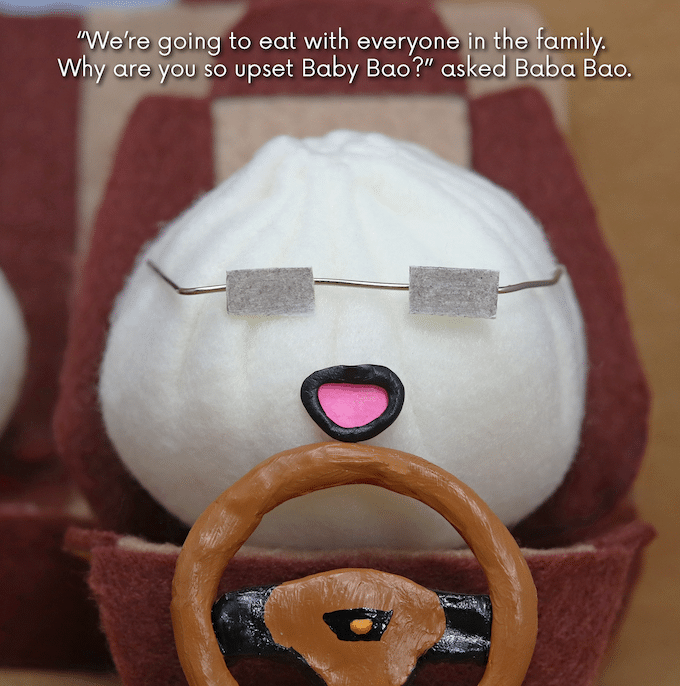
In a time when the world seemed to close its doors, Los Angeles native and talented writer Kesia Eng found her inspiration for her  delightful children’s book titled “Baby Bao at Dim Sum.”

Kesia shares with Asian Hustle Network her motivation and experiences behind this captivating story that captures the essence of family bonds and the rich cultural heritage of East Asian cuisine.

Growing up, Kesia cherished her visits to dim sum restaurants with her family. The savory aroma, the clinking of chopsticks, and the joy of feasting on delicious food became the backdrop of countless treasured memories.

Dim sum not only brought her family together but also offered a window into her Chinese heritage, teaching her the values of respect, care, and love for others. Ultimately, these shaped her identity and inspired her to write this book.

The pandemic threatened to rob younger generations of the invaluable experiences Kesia cherished, making her determined to pass on the cultural significance of dim sum to kids and share it with others.

In her debut children’s book, “Baby Bao at Dim Sum,” Kesia beautifully weaves a tale that explores the importance of family, selflessness, and the joy of bonding over a delicious meal. This book serves as a tool for parents and children to read together, sparking meaningful conversations about the values embedded in East Asian culture.

Join us as we delve into the story behind “Baby Bao at Dim Sum” through an exclusive interview with Kesia Eng.

Dim sum helped me better understand and appreciate my parents and our Chinese culture. I think I can speak for many American kids who have immigrant parents: There aren’t a lot of things in common between our upbringing and theirs. But food is our shared connection.

Kesia Eng

KESIA’S INSPIRATION FOR WRITING “BABY BAO AT DIM SUM”

As with most recent creative endeavors, the idea for the book sprouted during the pandemic. Everything was closed. Schools were shut down. Sports games were canceled. Even my favorite Target store started closing at 8 p.m. The world truly was ending. But the most devastating thing? My beloved dim sum restaurants have stopped indoor dining.

I know it didn’t seem significant. There’s plenty of other food. Plus, we can still get takeout. But I grew up coming to these restaurants with my family. Going there was a real treat as a kid – taking in the savory aroma that fills the air, hearing the excited chatter and clinking of chopsticks all around you, and of course, feasting on all the varieties of delicious food. Every time I came back from college for the weekend, my parents would take me to eat dim sum – it was a huge part of our everyday life.

Most importantly, dim sum helped me better understand and appreciate my parents and our Chinese culture. I think I can speak for many American kids who have immigrant parents: There aren’t a lot of things in common between our upbringing and theirs. But food is our shared connection. Food isn’t just something you eat. When you look closely, the experience of dim sum is filled with the values of East Asian culture:

  • pouring tea for the oldest person at the table first, and your own cup last
  • serving food to others before yourself
  • keeping an eye on everyone’s cup so you can refill it for them
  • fighting to pay for the check (and never backing down, even if you have to chase down the waiter and force your Visa card into their hands) 
  • and so on

All of the above embody community-oriented respect, care, and love for others. It’s how my parents showed how deeply they loved our family, even through the mundane act of eating at a restaurant. When my mom saves the biggest and best dumpling for me, or when my dad reaches across the table to fill my teacup first, I know it’s because they love me. And it’s a way for me to show my love in return – pouring their tea first, giving the best dim sum piece to them, (and yes, now that I’m a post-grad adult, literally fighting to pay that check). It’s not just nostalgia – dim sum is an essential part of my heritage, shaping how I’ve grown up, who I am, and who I want to become.

With COVID, it seemed like the pandemic would take these valuable moments away from younger generations. To be honest, it made me sad because I didn’t want them to grow up without having that experience, and thus a practical understanding of their cultural background. It’s a learning moment I want to pass on to kids and share with other people too.

“BABY BAO IS ME”

Part of the reason why I chose to focus on the theme of family and selflessness is in reaction to a lot of Asian American stories today that center on the difficult relationships that kids have with their immigrant parents.

I think the current popular narrative sometimes pushes this idea of hyperindividualism; that it’s all about the self and what the self wants. I totally understand the heart behind where that narrative/story comes from but sometimes it can demonize our parents for being hateful because they don’t agree with everything we say or do what we expect. Granted, nobody is perfect. But I think it’s important to have empathy towards our parents who grew up in a different environment than we did. We can try to put ourselves in their shoes, imagine the upbringing they had, the hardships they went through, etc.

And to be honest, I wrote it because of my own revelation. Baby Bao is me. I wrote Baby Bao as myself because I definitely was not a self-sacrificial loving kid growing up. It wasn’t until college that I realized I had taken their love and care for granted. I think it’s easy for us to be selfish and maybe not consider what our parents would appreciate or how they care for us. They do love us, but maybe it isn’t expressed in the exact fashion we expect it to be. 

FULL CREATIVE CONTROL AS A SELF-PUBLISHER

I knew the route of traditional publishing was long and a bit arduous. I felt like there were many gatekeepers and I didn’t want the flow/speed of my project to be hindered because of it.

It kinda goes like this: after you do your due diligence on finding the appropriate literary agent, you have to keep cold-emailing them about your manuscript, hoping they’d want to support you and your book. And finally landing a literary agent could range from a few months to a few years. They’re the best resource to connect you to a traditional publisher who would get your book published. 

But why wait for someone to give me the green light when I could just get my book out directly to the audience? I like to think I have an entrepreneurial spirit , because when I really believe in something, I don’t want to wait for someone to give me approval to do it. I just want to go for it. So I decided to self-publish my idea.

I think what’s truly unique about this book is that the illustrations are not 2D animated artwork that’s common in picture books. I can’t draw to save my life and I didn’t have enough funds to hire an illustrator, so I brainstormed ways to figure out how I was going to make the visual part of the story come to life.

While rummaging through my bookshelf, I found an old book my parents bought when I was young, that taught simple Chinese words. The front cover looked so interesting to me – it was a claymation of a girl. That basically spawned the idea of using claymation/”stop-motion” as the illustrations of the book.

I made all the sets, characters, and mini items by hand with lots of construction paper, cardboard, and other materials. I then taught myself product lighting, photography, and photo editing. I also run all the social media accounts. And this is in addition to writing the story myself, so it was truly a one-woman production.

Fun fact: I gave my book to Netflix Bling Empire’s Christine Chiu!

WHAT KESIA HOPES THAT READERS WILL TAKE AWAY

If I can narrow it down to just 3 takeaways I hope parents and children get out of this book, it’s that (1) family is important (2) loving others often requires self-sacrifice but is definitely worth it and (3) dim sum is an avenue we can use to love and cherish our families more!

I wanted parents and their children to think deeply about the message together. And that desire played a huge part in why I decided to deliver that through the form of a children’s book. I think the nature of children’s books often necessitates parent-child bonding because parents often read to their kids who aren’t strong independent readers yet.

So the book, “Baby Bao at Dim Sum” is a great opportunity for parents to bond with their cute kiddos just by reading it together. It also leads parents to talk through the story more with their children by mentioning the cultural values of it, going over the universal value of family, and asking them insightful questions about what they learned or what they noticed. 

DIVERSITY AND REPRESENTATION IN CHILDREN’S LITERATURE

I’m seeing a lot of great Asian American children’s books recently and I envision “Baby Bao at Dim Sum” adding depth to the representation of the Asian American experience in children’s literature.

The book shows that parents and/or family relatives ought to be given importance as well.

Additionally, the book does a great job showing and not just telling how the cultural values common in East Asian culture (community-oriented respect, care, and love for others) are embedded into the subtle actions (pouring tea for the oldest person at the table first and your own cup last, serving food to others before yourself, and keeping an eye on everyone’s cup so you can refill it for them) during a traditional Chinese meal.

Representation is showing the authentic experience of something, and I think showing chicken feet, regardless of people’s initial reaction to it, is an important unfiltered experience of dim sum. So I made it a mission for myself to include the chicken feet dish in my children’s book (right on the first page) because it’s an iconic Chinese cultural food. I think just because it’s different from what most people outside of the culture may see, it doesn’t make it weird or gross. Walk into a dim sum restaurant and you see it on the tables of so many diners.

I hope the story is an easy and welcoming way for people unfamiliar with East Asian culture, to learn about it and get a glimpse of what really goes on during an authentic Chinese meal of dim sum. Additionally, I think it’s a perfect book for East Asian families to personally connect with those experiences and pass them down to younger generations. 

It really warms my heart to see so many parents message me that their little ones love the book, want to read it every night with them, or want to eat dim sum because of it. Seeing those comments and messages never gets old!

UPCOMING PROJECTS

I drafted several storylines for the next potential “Baby Bao” adventure, and have whittled it down to two options. I can’t reveal when this project is going to be done just yet, but it’s in the works! Many of my readers have expressed that they’d love to see more of Baby Bao, so I’m happy to continue working on more stories with him as the protagonist.

In terms of other work, I’m actually in the process of finalizing a manuscript for my next writing project: a satirical poetry book about early adulthood! I enjoy comedy and I enjoy satire, so of course, I had to try writing with that flair. The book is a witty take on young adult life and pokes fun at relatable moments we experience in careers, friendships, and love. Final touches are being added. Release date TBA but aiming for before this fall season. 

Readers can expect that I’ll be pursuing different writing projects because I want to build upon my writing skills and flex my creative muscle. I think I have a knack for knowing my audience well and crafting stories that are relatable to all of us on a human level. So I’m really excited to continue exploring various story ideas and styles of writing to see what I’m the best at and produce work that my readers would love.

CONNECT WITH KESIA / BABY BAO AT DIM SUM

Instagram: @babybaoatdimsum

Tiktok: @babybaoatdimsum

Amazon: BUY HERE

Email: babybaoatdimsum@gmail.com

Website: kesiaeng.com

NPR-jpeg

News

21-Year Old Who Had Motor Skill Challenges Breaks Record as World’s Fastest Rubik’s Cube Solver

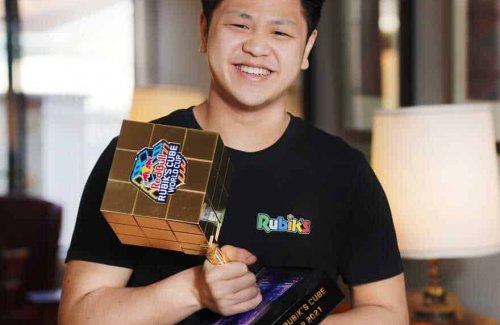
Max Park, a 21-year-old Korean-American from Cerritos, California who lacked fine motor skills, as a symptom of his autism, emerged as the world’s fastest Rubik’s cube solver, setting a new world record of solving the cube in just 3.13 seconds.

According to NPR, Max faced motor skill difficulties during his preteen years as a result of autism, making even simple tasks like unscrewing a water bottle cap a challenge for him. Now, Max can solve a Rubik’s cube faster than most people can read a sentence.

During a recent competition in Southern California on June 11th, Max astounded the speedcubing community by setting a new world record for the fastest 3x3x3 Rubik’s cube time, clocking in at a mind-boggling 3.13 seconds. Matthew Dickman, the senior delegate for the United States and Canada at the World Cube Association, described Max’s achievement as the “holy grail of records.”

Max’s journey began at the age of 9 when he developed an interest in the Rubik’s cube. His mother, Miki, took the initiative to learn how to solve it herself through YouTube tutorials. Within a mere couple of days, Max solved the puzzle effortlessly. This newfound passion for cubing led him to participate in his first speedcube competition in downtown Los Angeles at the age of 10.

Image Source: Guinness World Record

The popularity of speedcubing has surged in recent years, with over a dozen competitions held worldwide each weekend and a registered base of over 140,000 cubers from 140 countries. These events encompass various challenges, ranging from blindfolded solves to one-handed techniques.

However, the original 3x3x3 cube remains the centerpiece of the sport, attracting the most skilled competitors who have mastered hundreds of algorithms to conquer the puzzle. The speedcubing scene has become increasingly competitive, with participants continually pushing the limits, often beating their rivals by mere fractions of a second.

Schwan, Max’s father, said that his success gives a sense of hope for the parents too, that their child can find something they’re passionate about and it will help give them a sense of purpose.

As Max continues to break barriers, his impact extends far beyond solving a puzzle. His achievements serve as a symbol of determination, resilience, and the boundless potential that lies within each of us.

Featured Image Source: NPR

the guardian-jpg

News

Indian Immigrant Uncovers South Asian Stories Through Media Platform

Founded by Snigdha Sur in 2019, the Juggernaut is a subscription-based website that breathes life into forgotten histories and brings depth to current topics.

Sur was born in India and immigrated to the United States with her parents in 1990. Growing up in the Bronx and Queens, she experienced firsthand the lack of media outlets catering to South Asians of her generation. This led her to create a platform that would bridge the gap and provide authentic representation.

Sur’s journey towards launching the Juggernaut was marked by exceptional academic achievements and valuable professional experiences. After completing her undergraduate studies at Yale University, she embarked on a career in management consulting, working at prestigious firms like McKinsey & Company. She then pursued an MBA at Harvard Business School, where she honed her strategic acumen and entrepreneurial spirit.

Juggernaut’s mission is to uncover compelling stories that frequently go overlooked. The platform quickly gained traction, capturing the attention of a diverse audience eager for meaningful storytelling. 

Sur faced her fair share of challenges along the way. During the COVID-19 pandemic, Sur adeptly adapted the platform’s focus, demonstrating resilience and a commitment to delivering the content that resonates most with the Juggernaut’s audience.

Looking ahead, Sur envisions a future where the Juggernaut becomes a household name, synonymous with South Asian storytelling and expertise. Drawing inspiration from successful media ventures like the New York Times and the Athletic, Sur envisions a platform that collaborates with major productions, offers narrative consultation, and produces compelling content across various mediums. 

Featured Image Source: The Guardian