Stories

July 10, 2023

SHARE:

SHUMINGYU is an esteemed designer womenswear brand that finds its roots in the poetic essence of Chinese art.

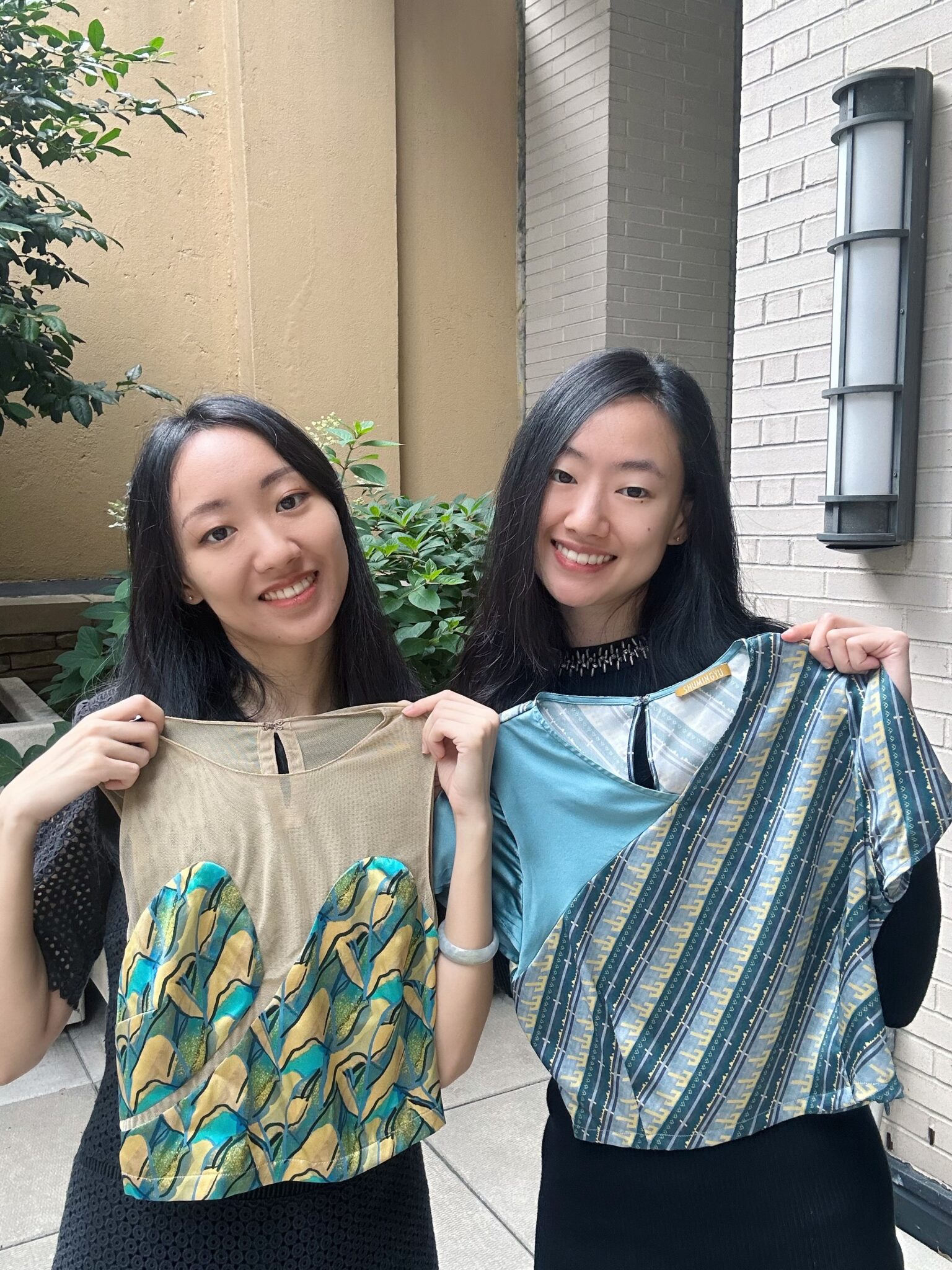
Alvina Ding and Laura Ding, the talented sister team behind the brand, have embarked on a remarkable venture to preserve and interpret the artistic lineages of China through the medium of fashion.

With their deep personal connection to their heritage as second-generation Chinese Americans, their brand serves as a heartfelt expression of their cultural journey and a platform to share the cultural memories passed down through generations. The name SHUMINGYU holds great significance, as it pays tribute to the profound Chinese saying “落叶归根”, which invokes the powerful imagery of autumn leaves falling towards their roots, returning to the soil that once nurtured it.

Throughout history, Chinese artists have expressed their poetic selves through various art forms such as painting and poetry. SHUMINGYU draws inspiration from this legacy. Alvina, as the designer, and Laura, in charge of marketing, collaborate to create a collection that captures the elegant beauty inherent in Chinese aesthetics.

In an exclusive interview with Asian Hustle Network, Alvina and Laura walked us through their journey of preserving Chinese artistic lineages through fashion.

WHAT INSPIRED THEM TO CREATE SHUMINGYU

Alvina and Laura: We always had a passion for Chinese culture. As Chinese Americans, we were fortunate to grow up in a household that gave us exposure to the beauty of the culture such as its poetry and the arts, despite not being able to visit that often.

The fact that we were physically removed from the country of our cultural heritage, in many ways enabled us to appreciate the culture even more. We spent the next decade in between the U.S. and China, completing our undergraduate degrees in Beijing, kickstarting our early professional careers, and finishing graduate school in the U.S. It was during this time that the idea for SHUMINGYU was conceptualized. 

Alvina: The idea for SHUMINGYU was first planted in my mind in college, where I was formally introduced to the canon of Chinese artistic lineages as a Chinese art history major. I thought it was odd that despite the breadth and nuances of Chinese aesthetics that were crystalized over thousands of years, it was rarely reflected in modern fashion products. To me, culture should not be relegated to a museum. It has meaning only when it is a part of one’s daily life. While I was studying fashion design at Parsons and Laura was in business school, we began to turn this idea into reality. I want this type of beauty to be seen, not only in rarified spaces such as classrooms and museums but by more people through a medium such as fashion that can be a part of our everyday lives. This fuels me as a fashion designer. 

HOW SELF-DISCOVERY INFLUENCED THEIR AESTHETIC AND VISION

During our young adult years living between China and the U.S., we came to understand that identity is multifaceted.

There isn’t one way to be American, Chinese, or Chinese American. Cultural identity and heritage are not limited by where you were born or what period you are living in. It is something that is constantly evolving, passed down through generations, and shaped by the people who are currently living and breathing it.

This motivated us to combine the cultural fluency we gained over the years with design as a universal language to create SHUMINGYU. This is our way of sharing our perspectives on the beauty of Chinese aesthetics and the artistic lineages that have come before us with a global audience.

THE CREATIVE PROCESS

Alvina: I first decide on a particular theme, which is either a genre of Chinese art or a type of craft. Then I dive into research on the theme for a month or two. I read academic papers and art history books to understand the significance of this kind of genre, the elements that influenced its formation, what type of art it had an impact on later, its philosophical underpinnings, where the colors come from, and literary references. I look at the most representative pieces of art from the genre and identify the most distinctive characteristics that will define the overall feel of the collection.

During this process, I am looking at art objects that have graced the courts of emperors, the gaze of connoisseurs, and the hands of skilled artisans. From the free-spirited brushwork of ink paintings, the rhythmic flow of poetry, and the delicate luster of ceramics, all of this informs my final design decisions.

As I do the research, I see designs in my head. I visualize the images and colors and capture what I see into sketches, which I then translate into prints. Once I finish my prints, I think about what silhouettes they would work best on. From then on, it’s about deciding what fabrics work best for each design and seeing how different designs fit together into an overall collection.

SHOWCASING CULTURAL HERITAGE INTO THEIR DESIGNS

Each of our collections has a specific theme, and then we incorporate that theme into the custom prints that we develop, as well as the silhouettes of our designs. For example, our first collection ‘Of Blue Mountain and Verdant Forests’ was designed around the theme of Chinese landscape paintings. Therefore, each custom print that we developed is rooted in a piece of artwork, literature, or philosophy that is connected to landscape paintings. Our hope is that with each piece a customer wears, they can discover a new piece of culture.

Example 1:

The print of our Brushwork Dress is inspired by a brush stroke technique from the Southern Song Dynasty landscape painting The Joy of Harvest. Developed by the painter Li Tang from the Northern Song dynasty, the technique is called the “axe-cut stroke” and uses angular, staccato brushstrokes to depict the rocky surfaces of mountain peaks. The brush stroke derives its name from its visual resemblance to chopped wood and is one of two major brush strokes used to depict the texture of rocks in landscape paintings. The color of the dress is inspired by the golden brown hue of the painting scroll and the style lines are outlined in the shape of mountain ranges. The skirt hem shape is symbolic of the reflection of mountains in the water.

The Joy of Harvest is a masterpiece by Song Dynasty artist Ma Yuan (1160 – 1225), one of the most influential landscape painters of his time.

Example 2:

The print of our Spring Mountains Set is inspired by the mountain ranges from the Sui Dynasty painting Spring Excursion, widely cited as the earliest surviving work of Chinese landscape painting. The print traces the delicate, twisting brush strokes that outline the rise and fall of spring mountains in the distance. The colors are inspired by the luxurious powdered gold, malachite green, and azurite blue pigments used in the painting.

Painted by artist Zhan Ziqian, Spring Excursion was one of the first paintings to give prominence to mountains and rivers over human figures. It is considered a seminal work that marks the genesis of the most influential category of Chinese art for thousands of years to come.

FOSTERING A DEEPER APPRECIATION OF CHINESE AESTHETICS AMONG A GLOBAL AUDIENCE

We want to share the breadth, depth, and nuances of Chinese aesthetics with a global audience through our clothing. By offering an alternative aesthetic view to the exotified and caricatured version of Chinese fashion that has been perpetuated throughout the past century, we want to move beyond the set of narrow motifs that have defined what Chinese fashion can look like and open the door into a world where design is created by those who live and breathe the culture and comes from an informed and nuanced perspective.

Perhaps one of our prints will spark someone’s interest in understanding a particular artistic movement in history or thinking about how Chinese aesthetics is perceived today. If our pieces can inspire people to value culture more and spark conversations, then we’d consider that a success. 

WHAT LIES AHEAD FOR SHUMINGYU

We already have a lineup of themes for our future collections, and some designs are already in the works for our second and third collections. We also want to integrate more types of fabrics, silhouettes, and crafts into our designs.

In addition to clothing, we have future plans to expand into accessories, including handbags and fragrances. We are excited to bring our vision to life, step by step, and hope that others are excited to come along on this journey as well!

CONNECT WITH SHUMINGYU

Instagram: @shumingyuofficial

Website: shumingyu.co
Related Articles

Image Source: Luis Sinco / Los Angeles Times

News, Stories

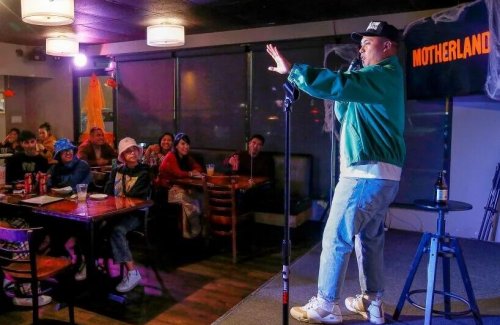
Enjoy Your Favorite Filipino Dishes Along With A Comedy Show at Eagle Rock’s Kusina Filipina

Big egg-shaped platters filled with famous egg noodle pancit, mouthwatering pork sisig, cold cans of beer, and blithe stand-up comic acts are offered as part of the restaurant’s unique dining experience.

The brain behind the comedy events is Filipino-American C.J. Toledano, who was born with the background necessary for such lighthearted entertainment.

The Eagle Rock neighborhood of Filipino Americans is the ideal fusion in creating the weekly program that is so exceptionally Los Angeles.

The restaurant’s co-owners, Jun Miranda and Vener Ramos, greased the wheels to serve the dishes and beverages that the predominantly Filipino audience was clamoring for when actress and stand-up comedian Felicia Folkes performed.

Toledano recalled how the Wednesday show got started and said in the Los Angeles Times that Jun Miranda was all about it.

“He just said, ‘The restaurant is yours on Wednesday nights,” Toledano stated which was backed by Miranda saying “I immediately said yes. Of course, I wanted to help the Filipino community.”

Toledano, who co-hosts the program with Orolfo and Rob Haze, stressed that the event is not just for mutual benefit but that “I have a specific vision for the show and the comedians who do it. [I want] people I’m fans of,” he continued.

He added that the intensely vibrant, funky, and fatty flavors of Filipino cuisine at “Motherland”— including the crispy sisig,a deep-fried chopped pork belly flavored with a little of lemon juice, diced onion, bell pepper, ginger and, a little of chicken liver spread;  dinakdakan, a combination of grilled and boiled pork belly mixed with onions, peppers — and mayonnaise; chicken adobo with quail egg and fried potatoes; and halo-halo, among others—are just as electrifying as the acts on stage.

“I’m a Filipino guy who grew up in Pennsylvania. I didn’t have many Asian friends. So the show is really killing several birds with one stone — I’m in touch with a culture I was never close to. I’m seeing old friends. New comics. It’s exciting for me,” Toledano admitted.

116018653_728607294654083_6041310441211220664_n

Stories

Her Father Ignored Her For 8 Months When She No Longer Wanted To Be A Doctor

This may have happened to you (maybe not the musical writing part), or you may know someone from an Asian background who is currently struggling as their parents had strongly expected or already had chosen a job for them.

But how many of you have bravely rejected your parents’ desires, and followed your true passion? Take it from this courageous girl, Joy Regullano. You might remember her from the viral YouTube sketch called White Fetish, or various random acting gigs like the TV Series Crazy Ex-Girlfriend (her line was “Yeah, bitch!”) or Modern Family (with her line was “You fools!”).

That’s right, Joy is quite too far from wearing a white coat. She’s an actress, comedian, and writer — every Asian parents’ nightmare. So when she told her parents that she didn’t want to be a doctor anymore, her father didn’t talk to her for 8 months. Years later, she wrote a comedy musical about it, called Supportive White Parents.

“Working on this musical has been a major part of my healing journey (my parents are imperfect people who were just passing down intergenerational trauma) and maybe it can be part of yours too,” Joy expresses.

Read through as Joy shares how she has discovered her passion for comedy, and her journey to healing and acceptance through her musical.

MY WHOLE LIFE, I THOUGHT I WAS GOING TO BE A DOCTOR JUST LIKE MY PARENTS

My parents were born and raised in the Philippines. My dad grew up very poor in one of the provinces, but after scoring in the top percentage of all students across the country on an exam, he got a scholarship to a prestigious science high school in Manila that was all expenses paid. My parents met in medical school, and soon after graduating, they came to the US by way of New York. Eventually, they made their way across the country to Eagle Rock in LA and then Orange County, where I grew up. 

My whole life, I thought I was going to be a doctor just like my parents. I tried my best to be the perfect daughter. I got straight A’s and took piano lessons since I was 3 and violin lessons starting at 8. (Well, actually, I got one B+ in AP/IB Physics, but we don’t talk about that B+) I studied math outside of school at Kumon and played educational computer games because it was a productive use of my time. I read medical books my parents had lying around the house and had subscriptions to science magazines in high school, for fun.

But as I grew older, there was a part of me that was starting to love writing and making people laugh. For 7th-grade vocabulary exercises, I cared more about making my sentences funny than using the word right. My favorite part about English and Spanish group projects was writing the scripts and acting in them. I wrote bad high school poetry. But I didn’t think that was an acceptable thing to want to do with my life, so I shoved that part down, deep inside me. I did write for the school newspaper and compete in speech contests and debate teams, but that was about the extent of my (public) creative life. 

But as I grew older, there was a part of me that was starting to love writing and making people laugh.

-Joy Regullano

I LOVED FEELING LIKE I COULD MAKE THE AUDIENCE LAUGH AND CRY JUST BY TELLING AN HONEST STORY

I went to UC Berkeley pre-med and was planning to take over my dad’s clinic when he retired. But in the first semester of my freshman year, I got a B on my first math test and a C on my first chem test, and I panicked. After some soul-searching, I realized I wasn’t actually passionate about any of that and ended up cycling through a bunch of different majors before landing on Theater and Southeast Asian Studies.

I wrote a play in college about a friend who had passed away in high school, and when I put it up in front of an audience, I was hooked. I loved feeling like I could make the audience laugh and cry just by telling an honest story. Just by being myself. I wanted to do that for the rest of my life. I loved Tina Fey and Amy Poehler’s work so much that I couldn’t even watch them for a long time because it hurt that I wasn’t doing what they were doing. 

WHITE PARENTS: A MUSICAL INSPIRED BY MY LIFE

I wrote the book and the lyrics to a comedy musical called “Supportive White Parents” about an Asian girl who tells her parents she doesn’t want to be a doctor anymore, and when they’re disappointed, she wishes on a shooting star for supportive white parents. Eventually, she learns to love her Filipino parents for who they are. My friends Sam Johnides and Tony Gonzalez wrote the music.

The musical was inspired by my life. When I told my parents I didn’t want to be a doctor like them and take over my dad’s clinic, my dad yelled at me, called me selfish, and didn’t talk to me for 8 months. I was absolutely devastated, even though I knew that making people laugh and cry was what I had been put on this earth to do. 

I felt so jealous of my white theater classmates with their seemingly endlessly supportive white parents. And funny enough, they were jealous of me because I had something called “discipline”, played multiple instruments, and knew other languages. And thus, the seed of a musical was born.

Eventually, she learns to love her Filipino parents for who they are.

-Joy Regullano

LAUGHING AT OURSELVES CAN BE ONE OF THE BEST WAYS TO HEAL

There aren’t many Asian American musicals, let alone comedy Asian American musicals. One of my teachers says that comedy is the back door to the truth. I think that laughing at ourselves can be one of the best ways to heal, as well as realizing that we are not alone. 

We as a generation are going through this together, and also, we, as well as our parents, are the products of society and intergenerational trauma. We are all imperfect people who are trying the best we can with the tools we have. 

ACCEPTANCE IS THE QUICKEST WAY TO SANITY AND PEACE

I love the serenity prayer. There are some things that we can change, and we should do what we can to change those things. There are some things we can’t change, and it’ll drive you crazy trying to. You can’t control other people. You can only control yourself. The sooner you can accept other people are how they are, the sooner you’ll stop giving your energy away. 

Also, one thing I learned that blew my mind is that it’s actually not love, to wish that your parents or family were different than who they are. If what I was asking from them was to love me for exactly who I am, with all my imperfections, isn’t that what I should be giving them too? Unconditional love and acceptance? (That’s not to say that you shouldn’t have boundaries – that could be a whole other article.) But accepting things you can’t change is the quickest way to sanity and peace. 

If what I was asking from them was to love me for exactly who I am, with all my imperfections, isn’t that what I should be giving them too?

-Joy Regullano

It’s a daily practice. But try it! After reading “The Subtle Art of Not Giving a F*ck”, I tried to imagine that I only had one f– to give a day. How much energy would I be saving by only getting bent out of shape over the most important things!? I’m not really good at giving only one f– a day. But I’ll keep trying.

One more thing – some people need to be angry before they move to acceptance. I know I did, and I still feel angry sometimes. Accepting yourself and your feelings is part of the process too. Wherever you are in your journey is okay.

CONNECT WITH JOY

Instagram: @supportivewhiteparents @joyregullano

Twitter: @swpmusical @joyregullano

Website: www.supportivewhiteparents.com

Be on the lookout for the upcoming Supportive White Parent concept album, to be released in January 2023, with singles leading up to it! 

Image Source: Melissa Keomoungkhoun / Tatsu Dallas

News

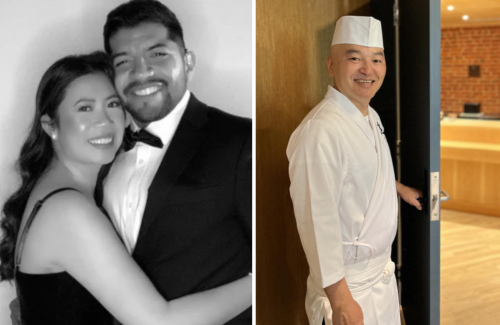
Dallas Omakase Restaurant Makes Memorable Dining Experience For Deaf Couple With Staff Using ASL

Victor Montiel and Melissa Keomoungkhoun were on the verge of tears as they expressed their gratitude to the Tatsu Dallas’ personnel for making their experience unforgettable.

The couple, who are both deaf, revealed in Today that they are used to getting ready in explaining themselves using their voices and American Sign Language, displaying texts from their phones, or even asking for pen and paper.

Melissa’s sister was worried that interaction with the staff would be difficult because she was aware that “omakase” means that diners receive meals that include foods chosen especially by the chef, which means more word-of-mouth discussion.

In advance of this, Melissa wrote Tatsu to inquire as to whether they could still enjoy the meal to its fullest without being able to hear the chef describe each course. She was shocked to learn that they had already gotten the tasting menu, which also listed the available drinks/cocktails, and that a complete menu will be available when they visited.

What surprised them more was the night of their reservation as they were greeted in American Sign Language (ASL) by the staff, including the Beverage Director who is the wife of the chef-owner.

Melissa was quoted saying that “With the staff signing at Tatsu, we didn’t feel left out even though it created some attention in the room.”

She also shared that they gazed in wonder at the excellent service that they received.

The excellent personnel and food service that Tatsu delivers to its guests were posted on Twitter by Melissa’s sister Nataly Keomoungkhoun, the online dining editor of D magazine. Her tweet received thousands of likes and retweets.

The chef-owner Tatsuya Sekiguchi, claims that when working in New York City, he had an encounter that solidified his resolve to always offer the best service he can, he stated “I believe that everyone and every day are unique.” He went on to clarify that his current objective is to just make every meal a special and memorable one.

In her tweet, Nataly put into words how Tatsu exceeded the couple’s expectations where they had the best experience possible.

Image Source: Michael Tran / FilmMagic file

News

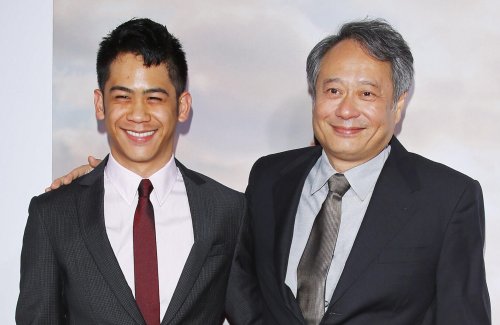
Award-Winning Director Ang Lee To Direct Bruce Lee’s Latest Biopic With Son As Lead Role

Multi-award-winning director Ang Lee is set to direct Bruce Lee’s latest biopic with his son Mason Lee playing the role.

The martial arts legend died young at 32 in 1973, a month before “Enter the Dragon,” the first Hollywood/Hong Kong film he co-produced, was set to premiere as mentioned in NBC News.

Since his passing, many biopics have been made like Dragon: The Bruce Lee Story, Bruce Lee: A Dragon Story, Bruce Lee: The Man, and many more.

And now, the Academy Award–winning director of “Brokeback Mountain” and “Life of Pi,” along with Lawrence Grey, Ben Everard, Brian Bell, and Shannon Lee, Bruce Lee’s daughter, will be directing and co–producing his newest biopic in honor of him as an actor, style icon, leader, and philosopher who brought martial arts to the global stage.

Ang’s son, Mason Lee, who is known for his roles in “Hangover Part II” and “Billy Lynn’s Long Halftime Walk,” will be playing the role.

“Accepted as neither fully American nor Fully Chinese, Bruce Lee was a bridge between East and West who introduced Chinese Gung Fu to the world, a scientist of combat and an iconic performing artist who revolutionized both the martial arts and action cinema,” Ang Lee was quoted saying.

He also said that he feels driven to share the story of this intelligent, singular human being who craved belonging, possessed incredible strength in a 135-pound frame, and through unrelenting hard work, converted impossible goals into reality.

Ang Lee is the first person of color to win the Oscar for best director and directed the 2000 martial arts film “Crouching Tiger, Hidden Dragon,” the highest-grossing foreign-language film in U.S. history. 

As an accomplished director, 12 of his 38 films which were nominated for Academy Awards won. 

Meanwhile, 3000 Pictures president Elizabeth Gabler said that Ang has long dreamed of directing Bruce Lee’s biopic, an inspirational tale of twists and turns, a story of the timeless premier real-life action hero.