Stories

March 10, 2026

SHARE:

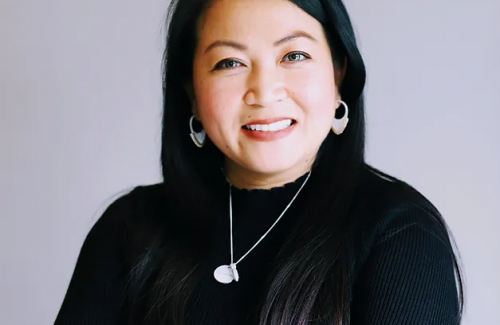
The first time Alice Shikina stepped into a Muay Thai ring, the moment felt bigger than the fight itself. The gloves were heavy, but what weighed more was everything she had been carrying in the months before.

She was in her late thirties, newly divorced, and raising two young children on her own. Her kids were just two and five years old, and the life she had carefully built no longer looked the same.

At the same time, she was trying to establish herself as a mediator and build her own business from the ground up. She didn’t know it yet, but the self-trust she was about to forge in that ring would become the foundation of how she led others through their own conflicts.

The Fight Before the Fight

Kickboxing began as a way to cope during a season that felt completely overwhelming. It gave Alice a physical outlet when her thoughts wouldn’t quiet down and her emotions felt too heavy to carry.

A few months later, Alice’s coach asked if she would consider competing. The idea unsettled her because she had never fought before and had never faced someone trained to strike back. For two months, she wrestled with the decision. What frightened her most was not losing, but the possibility of doubting herself under pressure.

When she finally committed, her routine became disciplined and demanding. She trained three hours a day, carving out time in the early mornings and late evenings while continuing to care for her children and grow her work.

The night before her first fight in Iowa, a coach told her that the real fight was already over because it happened during the grueling months of preparation. Once she realized that, her nerves calmed and a quiet steadiness took over. Even as she approached the ring to step in and fight, she felt unusually calm. She didn’t win that match, but she stayed on her feet until the final bell, and for a woman rebuilding her life, that was more than enough.

What the Ring Taught Her About Pressure

Alice went on to fight three more times. Afterwards, Alice turned her sights to competing in triathlons and even placed first in her age group at the Alcatraz Duathlon. While the medals were nice, the real reward was the quiet discipline she built through the discomfort of training.

She came to understand that fear does not simply fade with time. It softens only when you decide to move toward it.

She also learned that preparation changes how you carry yourself in difficult moments. When you put in the work, you stand differently, breathe more steadily, and think more clearly under pressure.

Today, those lessons shape how she sits with couples navigating divorce and teams facing workplace conflict. When emotions rise and conversations begin to unravel, she remains steady, drawing on the same discipline that once kept her composed in the ring.

Building Her Practice on Her Own Terms

Alice now runs Shikina Mediation and Arbitration full-time, helping divorcing couples, families, and organizations reach agreements they once thought were out of reach. Most clients come to her when communication has broken down and trust feels fragile.

Early in her career, she tried building her business by networking with attorneys, but quickly saw the bias against non-attorney mediators in a field long dominated by older white men. Instead of forcing herself into a system that did not fully welcome her, she shifted her focus to working directly with couples and workplace clients, growing her practice into a thriving full-time business over the past decade. In 2025, Alice was awarded the prestigious Raymond Shonholtz Visionary Peacemaker Award by San Francisco’s Community Boards.

Her work has expanded beyond the mediation room. She hosts the podcast, Negotiation with Alice, now over 100 episodes strong. She authored the book Negotiating with Your Kids, and continues to teach communication and conflict resolution to executives and C-Suite staff. As a second-generation Okinawan American whose parents survived the Battle of Okinawa as children, resilience runs deep in her story. 

Nothing in business, she says, will ever feel as intimidating as stepping into a ring to face an unknown opponent. In that ring, she rebuilt her confidence. At the mediation table, she now helps others rebuild their lives with clarity, courage, and peace.

Discover more from Alice Shikina here:

📍LinkedIn

Learn more about Shikina Mediation and Arbitration here:
📍Facebook

📍Website

Related Articles

Image Source: The Harvest Official Trailer - YouTube

News

Upcoming ‘The Harvest’ Movie Features a Hmong Family and the Strength and Endurance of their Bond

Recently, Asian Americans are receiving a lot of praise in both film and television. The fact that Asian Americans are becoming more visible is fantastic, but most of these movies just focus on Chinese Americans, which is limiting for other Asians, particularly South and Southeast Asians.

This is what inspired Caylee So’s The Harvest, highlighting the Hmong community, illustrating how similar and yet dissimilar this culture is to what western society considers to be “Asian.”

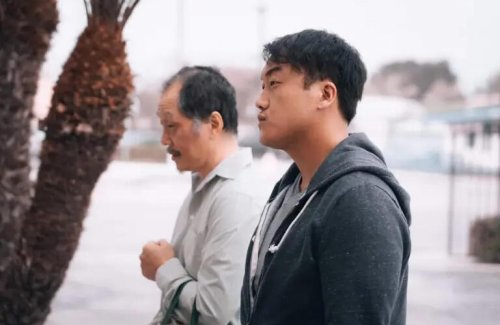
The synopsis of the movie is that, Thai Moua returns to his family’s home in Southern California after several years of living in San Francisco to find his entire world in chaos.Thai and his family maintain a brave façade while witnessing the debilitating effects of his father Cher’s kidney failure. Thai is torn between trying to please his father and wanting to live his own life, between being a good son and growing up, but most of all, he is conflicted about keeping the cause that has kept him away for so long a secret.

The Harvest addresses the tenacity and endurance of family ties and how they can carry us through even the most trying times in a powerful and sympathetic way.

Doua Moua, who plays Thai and also wrote the compelling screenplay, said in a press statement, “As an actor, I was told my type of Asian does not fit into the narrative of America, which led me to writing narratives that I wanted to tell. I want to redefine what diversity really means and that is inclusion in front and in back of the camera.”

The show stars Doua Moua (Mulan & Gran Torino), Perry Yung (Warriors & The Knick), Dawn Ying Yuen, Chrisna Chhor, Lucas Velazquez, Hua Lee, Alfonso Caballero, Tomas K Thao, Mai Moua, Tsabmim Xyooj, Kue Lee, Chai Yang, ZhongKhang Yang, Mary Ly, Amery K Thao, Anneston Pisayavong, Arianna Rivas, Blake Kevin Dwyer, Greg Yoder, Christine Lin, and Tress Glenn.

The Harvest is not yet scheduled for release.

Image Source: Bloomberg

Stories

Mala Gaonkar – The Woman in Charge of the Biggest Hedge Fund Launch

With $1.8 billion under management, Mala Gaonkar’s SurgoCap Partners began trading and made history as the largest debut of a woman-led hedge fund in the industry’s history.

SurgoCap Partners invests in technology’s influence on financials, industrials, healthcare, and corporate data. The 20-person company bets on and against equities and can invest 25% of its assets in privately held enterprises.

At an investor conference in June, Gaonkar expressed her support for ServiceNow Inc., an enterprise software provider that aids in workflow automation.

Born in the US and raised in Bengaluru, India, Mala was a Kauffman Fellow. After graduating from Harvard with an MBA and economics degree, she founded Lone Pine in 1998. Later, she managed technology, media, internet, and telecom bets as a portfolio manager. She led the firm’s long-only funds.

She is also a founding trustee of Ariadne Labs, the Queen Elizabeth Prize for Engineering, the Tate Foundation, and Surgo Ventures, a charity that produces data-driven social and health solutions.

She is setting aside $100 million in capacity at SurgoCap for smaller endowments, foundations, and organizations that support marginalized populations or address climate change. She has amassed $35 million thus far.

Mala signed the Giving Pledge that she would devote the majority of her wealth to charitable causes.

Image Source: Legacies of War

News

First Lao-American and Millennial To Sit As Chair Of The US Campaign To Ban Landmines – Cluster Munition Coalition

Legacies of War (LoW) CEO Sera Koulabdara is the new Chair of the US Campaign to Ban Landmines – Cluster Munition Coalition (USCBL-CMC). She will be the first millennial, BIPOC, and afflicted nation native to assume the job.

LoW is the only worldwide U.S. advocacy and educational organisation that addresses the repercussions of the American Secret War in Laos and its battles in Cambodia and Vietnam during the Vietnam War, including UXO disposal and victim/survivor support.

Héctor Guerra, Director of International Campaign to Ban Landmines (ICBL), has welcomed LoW, acknowledging their work as a great example of global collaborative efforts in supporting communities affected by landmines and cluster munitions.

According to Mary Wareham, Arms Advocacy Director of Human Rights Watch, there could not be a better placed organization to coordinate the USCBL-CMC than LoW, as it is committed to ensuring that the US joins and adheres to the international treaties prohibiting antipersonnel landmines and cluster munitions.

CEO of Roots of Peace, Heidi Kuhn, also recognized how fortunate USCBL-CMC is to have Sera as Chair, with her unique qualifications as a leader in mine action, and her family heritage in Laos as the basis of her passion. She claimed that Sera brings a renewed spirit of home to the UXO campaign.

Sera shared in her bio in LoW’s website, that she hopes to make a positive difference in the lives of the people in her father’s beloved homeland, Laos, and to create hope for future generations.

Image Source: Business News PH

Stories

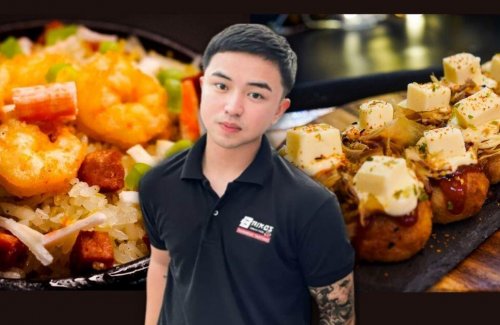
Through Perseverance, Young Entrepreneur Operates 5 Fried Rice Restaurants and 30 Takoyaki Stalls At Age 21

Rice is an essential part of the Asian diet, and it is enjoyed in many different forms. One of these is the classic fried rice, which everybody knows is a tasty and easy meal.

At the age of 21 years old, Briko Galeon from Tarlac City, Philippines, was able to expand his Korean Spam BKB Fried Rice business to 5 branches in just a span of 3 months. Aside from this, he also has a takoyaki business that he was able to expand into 30 branches within 1 and a half years of operation.

One of Briko’s franchisees, Sharmaine Anne De Leon, shared that she used to scroll social media posts about Korean fried rice and have cravings for it. She also said that BKB Fried Rice products are really good, and that’s why getting a franchise with BKB was an easy decision for her.

Briko shared that his inspiration for putting up businesses was his parents. He wanted to give back to his parents and be able to buy them gifts using his own money. Due to his success, he was able to buy 2 cars and is now providing for his family’s needs.

There isn’t an age too young or too old for a person to become an entrepreneur. Briko’s advice is to find a product that you genuinely love or are passionate about. Once you do this, it will be easier for you to learn about the product, its market, and how to serve it.