Stories

November 4, 2025

SHARE:

When Nisha Desai and Alice Zhang met at Harvard Business School, neither of them expected that a casual conversation about their frustrations with therapy would spark the idea for something much bigger.

As they juggled graduate school and their own mental health, they often felt therapy wasn’t built for people like them – they spent more time explaining their background to their therapists than actually healing. 

They realized it wasn’t just them – there’s a gap in mental healthcare that left many in the Asian and multicultural community feeling unseen and misunderstood.

That shared realization became the seed for Anise Health: a platform built to make therapy culturally attuned, accessible, and truly effective for the AAPI community.

A Problem They Both Knew Too Well

Before their paths crossed, both founders had already seen the same issue from different directions.

Nisha, who grew up in Florida in a family of healthcare entrepreneurs, had always been drawn to questions of access and equity in care. After studying finance and marketing at the University of Pennsylvania’s Wharton School and earning her MBA from Harvard, she worked in healthcare investing and later in digital product management at Humana. It was there, while helping build a mental health app, that she started hearing a troubling pattern from thousands of users – the same barriers she had personally faced.

Nisha recalls that people weren’t saying therapy didn’t work. They were saying it didn’t fit, that they didn’t feel understood.

Alice, meanwhile, came to the same conclusion through her own deeply personal experiences. Born in China, raised across Japan and Canada, and now based in New York, she calls herself a “third culture kid.” Her multicultural background gave her adaptability, but also a sense of never fully belonging anywhere.

That feeling resurfaced when she sought therapy during business school. Despite being fluent in English, she found herself translating her own emotions for her therapist – explaining why criticism from parents felt like love, or why pursuing excellence felt non-negotiable.

Alice remembers feeling exhausted after each session, explaining her background again and again, and leaving each time feeling unseen.

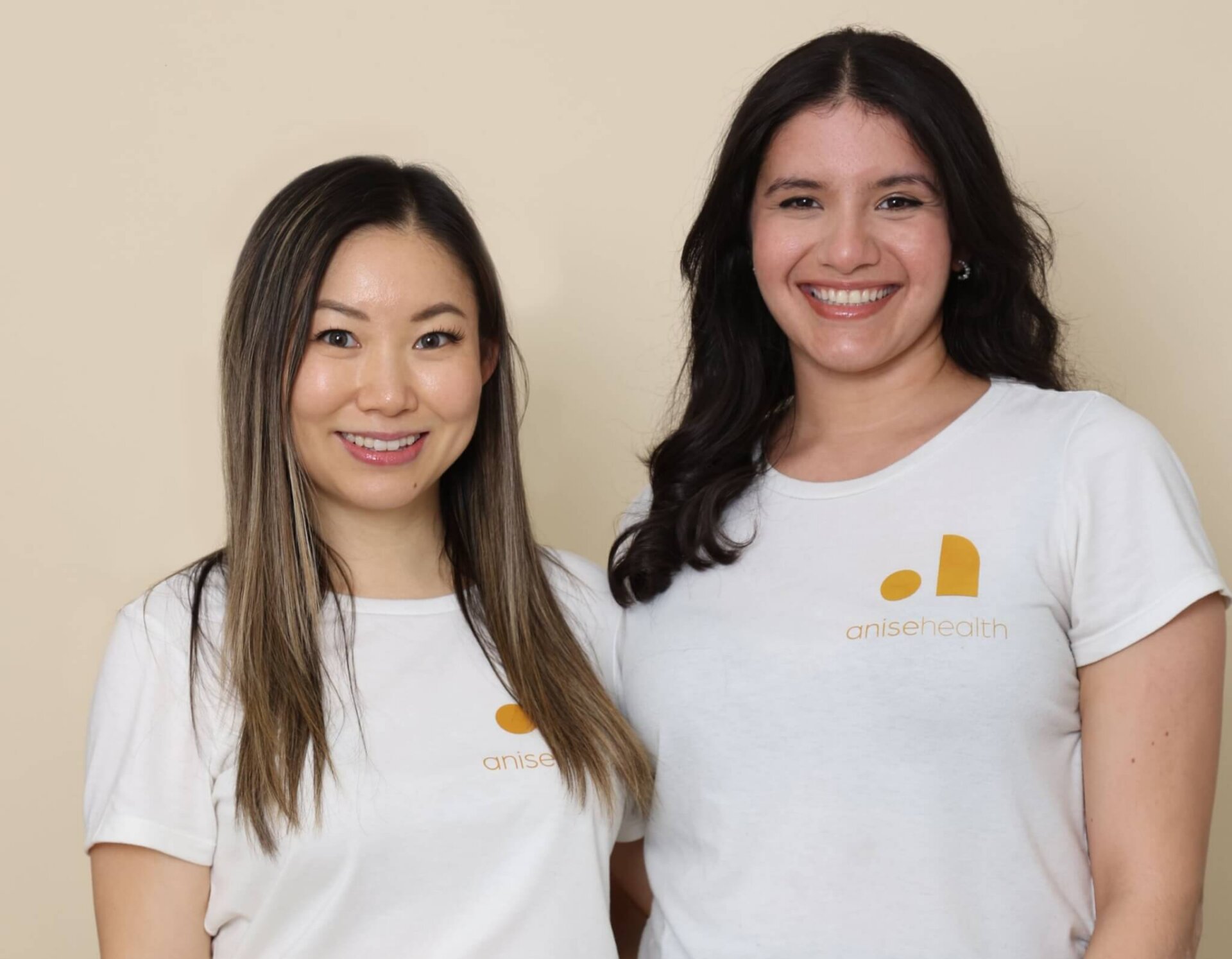
Alice Zhang (left) and Nisha Desai (right)

Building a Culturally Grounded Model of Care

After that pivotal conversation at Harvard, the two women began mapping out what culturally attuned mental health care could look like. They spoke to clinicians, patients, payors and community leaders, testing how cultural nuance could be integrated into evidence-based therapy and coaching.

They envisioned a new kind of care model: one that didn’t require clients to educate their therapists or set aside their cultural identity at the door. Instead, therapy would start from a place of understanding.

“Alice and I really built Anise to be what we believe our community has needed during our upbringing. What we kind of wished for ourselves through our own personal journeys with therapy.”

But building what didn’t yet exist came with challenges. They had to prove — to investors, clinicians, and even the broader healthcare system — that cultural context wasn’t just a “nice to have,” but essential to effective care. Many mental health professionals hadn’t been trained to deliver culturally adaptive therapy, so Anise Health had to design that framework from the ground up: provider training programs, accurate diagnostic tools, tailored care plans, curated resources and a scalable model for personalized, culturally attuned care.

Their persistence paid off. What started as late-night brainstorming sessions between classes evolved into a fully fledged mental health platform that blends clinical rigor with cultural empathy.

Growing the Movement

Since its founding, Anise Health has facilitated over 10,000 paid appointments and built a network of 60+ licensed providers across multiple states. The company is now expanding through insurance partnerships that make culturally attuned care more affordable and accessible.

Behind the scenes, Nisha leads operations and product design, while Alice drives partnerships and provider training.

Their complementary strengths, coupled with a shared sense of purpose, have helped Anise Health raise $6.4 million in funding and gain recognition as one of the top 10 most innovative Asian Pacific-led companies to watch by NYSE, Y Combinator, and Gold House.

Redefining the Future of Mental Health for Asian Communities

For both founders, Anise Health’s success goes beyond numbers. It’s about shifting how mental health is understood and delivered, starting with a community that has long been underserved and stigmatized.

“Our goal isn’t just to make care available,” Nisha says. “It’s to make it effective, culturally relevant, and sustainable within the healthcare system.”

By creating a new gold standard of culturally attuned care, Nisha and Alice aren’t just helping Asian Americans access therapy that finally feels like it speaks their language – they’re reimagining what inclusive mental health care can look like for everyone.

Learn more about Anise Health at anisehealth.co

Related Articles

Image Source: FOX5 New York

News

Manhattan’s Chinatown Receives $20M Funding For 11 Post-pandemic Revitalization Projects

Manhattan’s Chinatown is one of the neighborhoods that has been impacted the most severely by the pandemic.

New York Governor Kathy Hochul unveiled eleven transformational projects that would be part of the initiative to help the Chinatown community reopen corridors, restaurants, businesses, and cultural institutions. 

The projects include:

  • Renovating Kimlau Square
  • Beautifying the Park Row connection to Chinatown
  • Upgrading a section of Sara D. Roosevelt Park
  • Installing murals and light projection art throughout Chinatown
  • Expanding light-up Chinatown street lanterns
  • Opening a community health & wellness center
  • Reopening the childcare and family support center at Smith Houses
  • Creating a Building Upgrades Fund
  • Creating a Chinatown welcome arch/gateway
  • Establishing Asian Culinary Arts of New York
  • Establishing the Chinatown Cultural Welcome Center

“These critical investments will transform the neighborhood and create a more vibrant and inviting destination for locals and visitors alike while enriching the neighborhood by improving foot traffic, economic and cultural activity.” Governor Hochul said in a statement.

Image Source: K.M. Cannon / Las Vegas Review-Journal

News

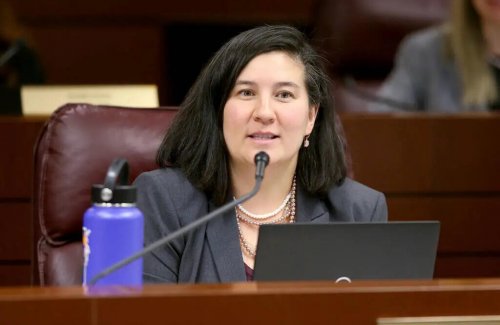
Rochelle Nguyen Sits As The First Asian American Nevada Senator

Clark County Commission appoints Nevada’s first Asian American senator, Rochelle Nguyen, a state assemblywoman. 

“I plan on working hard to ensure we are adequately funding our public schools, that health care is affordable as well as accessible, and that all voices are represented,” Nguyen said, who will replace former state Sen. Chris Brooks for a job in the private sector.

Nguyen was nominated by Senate Majority Leader Nicole Cannizzaro, D-Las Vegas. The new Nevada senator’s appointment to the Finance, Judiciary, and Health and Human Services committees for the next parliamentary session was made public by the Democratic caucus. She will hold the position’s vice chair.

The caucus acknowledged her efforts on “landmark” legislation, which included reforming the criminal justice system, regulating short-term rental agencies, and advocating for victims of domestic abuse.

When Brooks was elected to the state Senate in 2019, Clark County made the decision to nominate Nguyen to replace Brooks in the Assembly. She eventually won the election for the seat in both 2020 and 2022.

Image Source: Vedant Fashions

News

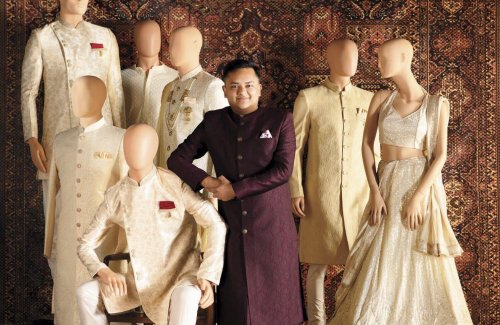
Vedant Fashions Founder Made It To India’s Richest List From Selling Affordable Indian Wedding Couture

Ravi Modi started Vedant Fashions in 1999 with the Manyavar brand, selling pajamas, saris, sherwanis(long-sleeved outer coats), kurtas, lehengas (ankle-length skirt), and salwar sets (trouser-and-tunic combination).

Vedant Fashions designs clothes but outsources bulk of the manufacturing. It currently has 590 outlets in 228 Indian towns and 13 in North America and the UAE. 

Manyavar is its flagship men’s line, while Mohey is its 2015 women’s collection. Both are mid-premium or affordable aspirational.

According to Forbes, Modi listed 15% of the company on the Indian stock exchanges in February—the basis of his $3.75 billion fortune that adds him to the ranks of India’s richest this year for the first time.

Modi grew up with three sisters in Kolkata. His father was a first-generation entrepreneur who opened a clothes company in 1975. Kolkata’s AC Market is one of the city’s earliest air-conditioned markets, including clothing, jewelry, and electronics retailers. 

The 45-year-old billionaire lives in a big bungalow on the outskirts of Kolkata where he grows his own fruits and vegetables. With 30 years of retail expertise, he provides a fresh perspective on money and career. “Earning wealth without earning time is meaningless,” he told Forbes.

Moreover, according to Forbes, he spends a quarter of his time on business, asset management, and philanthropy, and the rest on health, relationships, and learning. His daily activities include meditation, yoga, and studying strategies of retailers such as LVMH, Nike, and Uniqlo.

Image Source: G’s Kpop Kilig Facebook

Stories

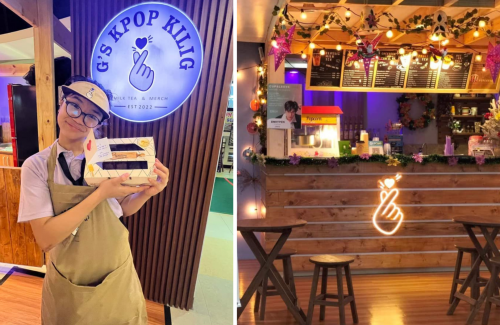
13-Year-Old Took Her Fangirling Into Greater Heights, Opens a K-Pop Inspired Milk Tea Shop

Filipino teenager Given Mendoza turned her fangirling into a business. As a K-Pop fan, she loves collecting merch of her favorite Korean pop idols. 

Given realized that these items can increase in value. She then found a way to earn by reselling them and worked on growing the business.

With the business’ great potential, the 13-year-old launched her online store, G’s KPop Kilig, “I decided to buy some albums for myself. I also bought some extra albums to sell, to see if I can earn profit,” she told the local news.

Later on, she was able to save enough to open a physical store in Baguio City, Philippines, and sells milk tea and K-Pop merch. As an “Army ”of the popular Korean group BTS, she also incorporates some inspiration to her milk teas.