Stories

December 1, 2023

SHARE:

In a world where living spaces are getting smaller and furniture quality is declining, one entrepreneur is striving to make a difference.

Yvonne Hung, a city-dweller who has lived in some of the world’s largest metropolitan areas, knows firsthand the challenges and constraints of living in small apartments. It can be difficult to have friends over because there isn’t enough space or seats.

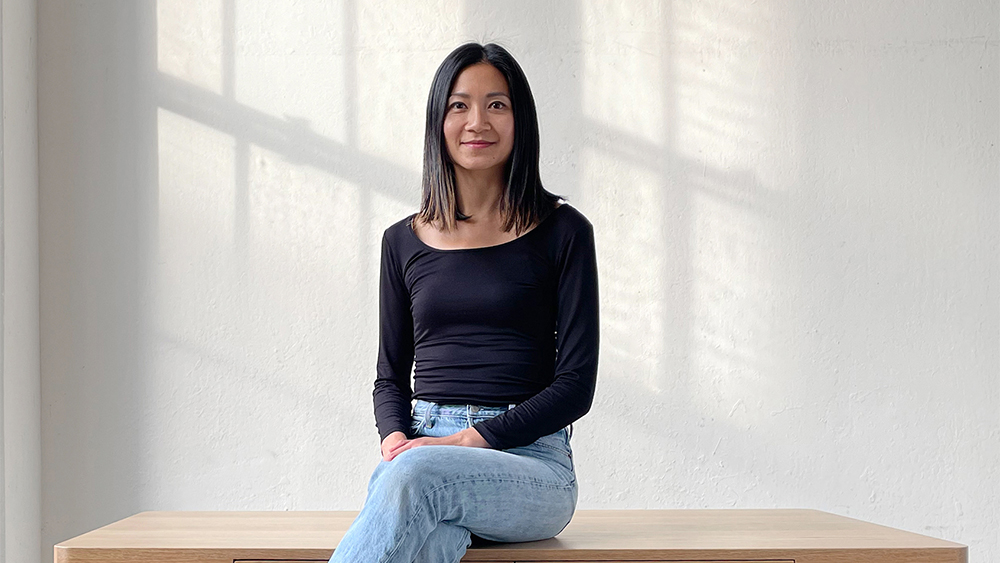
For this reason, she founded Otelier in 2020, a San Francisco-based furniture studio with a focus on sustainability, and providing innovative products that are useful even for small spaces.

Yvonne believes that the home is the most intimate social space, and people shouldn’t have to sacrifice that due to a lack of space. Her latest project is called the Quartet, a multi-functional side table that unstacks into four stools.

While the retail industry and consumers have embraced fast furniture with low prices, poor construction, copied designs, and single usage, Otelier is committed to changing that. Yvonne and her team are determined to create sustainable, high-quality furniture that will stand the test of time. With Otelier, urban dwellers no longer have to choose between comfort and the environment, and Quartet is just the beginning of a new era in furniture design.

Quartet, a side table that transforms into four stools.

OTELIER STRADDLES BETWEEN A DESIGN STUDIO AND AN E-COMMERCE BRAND

I’ve always had an obsession with cities—the way they develop over time, how they are shaped by their geographies and industries, and of course how culture and way of life make each city unique.

In fact, I started my career in urban planning, which is what I studied at the Harvard Graduate School of Design. My goal, as cheesy as it sounds, has always been to make the world a better place to live for all. With Otelier, I’m trying to do it at a much smaller scale—the home—because that allows me to get up close and personal with users, and also be hands-on with the creative process.

So much of my design principles still go back to urban planning. For example, I chose to focus on apartment living because higher-density housing is a much more efficient and sustainable way to accommodate a growing population, as compared to single-family homes which encourage urban sprawl. Likewise, sustainability and the cradle-to-cradle approach is always a huge factor in the product design process because protecting the earth is always top of mind.

This generation is going through a lot of changes—higher housing prices, more frequent moving, and smaller apartments are some trends that make life different from what it was 20+ years ago. Activities that used to take place in person, such as work and meetings, now happen online. Social media is both hastening new ideas and increasing anxiety. I think there are many opportunities to address these issues. For me, it’s starting with the most intimate space, the home, and how we can make it a happy experience.

Otelier straddles between a design studio and an e-commerce brand. It’s rare to be both. Most consumer furniture brands aren’t strong on design—there’s a lot of copying of whatever’s trending—and most design studios don’t follow through with the manufacturing and sales process. 

I aspire to do both under Otelier. As a designer, I want to explore and experiment, whether it’s with product ideas, new materials, or collaborations with little constraint. And as an entrepreneur, I want to create an e-commerce brand whose products make an impact at scale.  I’m still figuring out how to do both with very limited resources as a solopreneur.

BIGGEST CHALLENGES AND OPPORTUNITIES IN SUSTAINABLE FURNITURE DESIGN

It seems there’s a race to the bottom in the consumer furniture industry—make it as cheap as possible, sell more, and maximize profits. It’s no wonder why the EPA says the US produces 12 million tons of furnishing waste a year. Not only are these items going into the landfill, but they also contain a lot of non-recyclable and/or non-biodegradable materials. The challenge is that now consumers are trained to believe their furniture should be dirt cheap and don’t realize these problems, similar to the case of fast fashion. 

There’s also a lot of greenwashing everywhere. For example, using recycled plastic bottles is great, but turning them into something that cannot be recycled again is worse than just making another plastic bottle from it because it could then be recycled several more times.

One of my pet peeves is when companies call plastic leather vegan leather. It’s just plastic! Otelier is far from perfect, but I am committed to being honest and looking for the best alternatives that are currently available and financially feasible.

Fortunately, I do think there is a subset of mindful consumers that want high-quality furniture that’s sustainably produced. There are several smaller independent brands, like Otelier, that are trying to address this problem in the furniture space, and a lot of material science and manufacturing companies exploring more sustainable alternatives.

That said, when it comes to innovation on the sustainability front, it’s easy to design or prototype a concept, but much harder to make it commercially viable. I’m fascinated by a lot of the new materials that are currently in development, such as bioplastics. I’m also interested in blockchain for tracking supply chains. But in reality, these ideas are far from being commercially available, especially to small companies like Otelier.

My long-term goal is to have two areas of focus: one for blue sky explorations, including the use of new materials, and a second for producing durable and commercially viable products for the masses. For now, since I’m bootstrapping, the current focus is more on commercially viable products using what’s available today.

There’s plenty we can do now to improve the furniture industry. Taking a methodical approach, I typically break down a product into its materials, manufacturing, logistics & transportation, usage, and end-of-life condition, and then minimize the footprint for each factor. 

MAKING SURE OTELIER PRODUCTS ARE SUSTAINABLE

I use materials that are biodegradable and/or recyclable and minimize the use of petroleum-based plastics for both our products and packaging. The Quartet, for example, uses wood and suppliers that are certified by the Forest Stewardship Council (FSC) to ensure that we’re sourcing from sustainably managed forests. I also use hardwood because it’s more durable since longevity is key to sustainability. Metals are also great for durability and recyclability. My hope is that we create zero landfill waste.  

Otelier is not perfect; I still rely on the existing transportation and energy systems that are available today. For what I cannot control, I use carbon offsets so that our products are carbon neutral. And I also plant trees to compensate for the wood used in our products.

If all businesses take responsibility for their own environmental footprint, we’d be in a much better place.

THE GOAL IS TO ENCOURAGE MENTAL AND PHYSICAL WELLNESS AT HOME

I’m still at a very early stage with Otelier, but I have so many ideas! It takes me a lot of time to develop each since I work alone. 

I think the way this generation lives, post-COVID, requires more flexibility from our home, no matter if you’re living alone or have a family with kids. Some recurring themes in my furniture are multi-functionality and space-saving features. I also am fascinated by objects that are interactive. In a way, I enjoy designing experiences enabled by an object rather than the object itself. For example, the Quartet is a side table that unstacks into four stools. But the goal is to encourage friendship and bonding at home. The furniture is a means to that end.

Eat-Work Table, designed for people working from their kitchen or dining rooms. The height-adjustable table can be used as a dining table.

LONG-TERM GOALS FOR OTELIER

The ultimate goal is to build a brand that creates beautiful and useful furniture that enriches the lives of urban citizens, while also being sustainable and accessible. I hope Otelier will be an international brand, given that apartment living is relevant everywhere. 

From a service perspective, my vision is to create a platform that sells both new and used Otelier furniture.Resale is really a key to countering the fast-furniture problem. Although our furniture is heirloom quality, I think most people of this generation would prefer to just sell their used furniture rather than passing it down to their kids and grandkids. So making resale easy is a service that could benefit everyone.

Innovation is really important to me. I’m not here to create what already exists. I really hope that Otelier can pioneer commercializing some of the sustainable materials that are currently in development. It’s still early days, so there are lots to explore, learn, and create.

CONNECT WITH YVONNE

Website: https://otelier.com

Instagram: @otelier_home

Facebook: @otelierhome

Tiktok: @otelier.com

Kickstarter: https://www.kickstarter.com/projects/otelier/quartet-a-side-table-that-transforms-into-four-stools?ref=8rnt6m

Related Articles

250605 (1)-jpg

Blogs, Development

Fishing for Success: Using the STP Model to Grow Your Brand

Marketing is like fishing—there are plenty of fish in the sea, but each type requires a different approach. Knowing your audience is not an open-and-shut case. It is the process of researching, analyzing, and evaluating your audience base. 

The following framework, STP, serves as your fishing rod—helping you cast with purpose and reel in the right catch.

S – Segmentation

The world isn’t a monolith. People have diverse needs and preferences—but some will share common demands that align with what your business offers. 

That’s why audience segmentation matters. By understanding the unique traits of each group, you can identify which ones are the best fit for your brand. 

audience-segmentation

T – Targeting

Now, after you have an overall picture of the market, it’s time to focus your efforts. Targeting means selecting the specific segment—or segments—that your brand is best positioned to serve. 

This is where you shift from broad insights to strategy, adapting your message, products, and services to meet their needs.

target-audience

P – Positioning

Now, it’s not just about who you are—but it’s also about who they think you are. 

Positioning answers the question: Why should they choose you? Whether it’s your values, pricing, design, or experience, positioning helps you own a unique space in the market.

brand-positioning

Why Asian Hustle Solutions?

To grow your brand, the goal isn’t just to reach a large audience—it’s to build a loyal segment that will stay with you over time. Getting to know this audience takes patience and insight. That’s where Asian Hustle Solutions comes in to support you every step of the way.

If you want to learn more about our services, visit the Asian Hustle Solutions website at asianhustlenetwork.com/services/

chester-yow-png

Stories

From Singapore to New York: How Chester Yow Turned Doubt Into Drive

Breaking New Ground in a Foreign Land

For Chester Yow, the decision to leave Singapore, his hometown, wasn’t an excursion but rather a mission. After two years in the military, Chester aimed to challenge his own comfort zone, venturing far away from the familiar into the unknown of a new country on the other side of the world. “I wanted to prove that I can be successful in another country, in another city,” he shares. While it is common that many Asians would like to take the stable route to be near their community, Chester wanted to flip the script and rewrite his story.

Drawn to the fast pace and competitive spirit of New York City (NYC), Chester quickly realized that real estate was made for him—because for a person who doesn’t enjoy 9-to-5 office jobs like Chester, real estate allows the flexibility while maintaining the discipline needed to survive in NY. It is this combination of freedom and responsibility that has become the driving force for him to start building a network from scratch in this city that never sleeps.

Chester Yow, a Licensed Associate Real Estate Broker and Founder of the Chester Yow Team at SERHANT, smiling confidently in professional attire.
Chester Yow | Licensed Associate Real Estate Broker and Founder of Chester Yow Team at SERHANT

Shattering Stereotypes in the Heart of New York

“If you can make it there, you’ll make it anywhere.” It’s a common, inspirational pipeline when speaking of New York. It’s inspiring enough to imply that challenges will always remain—not to bring you down, but to toughen you up. Chester’s no exception. With a heart filled with unrelenting passion and determination, it was still not enough—especially when dealing with racial discrimination and prejudice.

As a fresh-off-the-boat Asian in the U.S., he soon faced the harsh realities here—that discrimination can be both subtle and publicized at the same time. “You do get looked down on as a ‘minority’ at times, and people tend to judge or doubt you faster. I sometimes get, ‘Wow, your English is so good’ (English is the spoken language of Singapore), or ‘Why aren’t you a doctor, lawyer, or accountant?’” he recalls.

Chester Yow, a Licensed Associate Real Estate Broker and Founder of the Chester Yow Team at SERHANT, who overcame early challenges in the U.S. such as racial discrimination and cultural differences, smiling confidently in professional attire.
Chester faced many challenges during his early days in the States, including racial discrimination and cultural differences. 

But instead of surrendering to the stereotypes, Chester leveraged them as inspiration. “I work harder than the next person, I study harder, I make sure I’m more prepared, I do everything necessary in my power so that there’s no doubt in anyone’s mind to question my capabilities.”

And his effort paid off. By exceeding expectations and proving himself with actual results, Chester is, step by step, changing common misconceptions—not only for himself but also for an Asian working in real estate in New York. Then, even those who doubted him reached out to him for work.

What grounds me is knowing why I work so hard and who I’m working for—my family, my loved ones, my future self 30 years down the road, and my own future family. I’m working hard for them. Having that quiet confidence to keep my head down and keep going is crucial, too.

The Life-Changing $450 Million Development Project

“Tough times don’t last, tough men do”—a quote from my military days that has stuck with me. Ryan Serhant also says, “You are allowed to quit—just make sure it’s on your best day.” You control your own destiny, and building mental toughness is essential to success. Mentorship is crucial for any entrepreneur, and one of Chester’s mentors can be traced back to his military days.

That advice led to a breakthrough in his career. One of the biggest turning points came in 2017, when Chester helped launch a $450 million luxury real estate project in Manhattan. As part of the SERHANT. team, he had the opportunity to bring the project to Ryan Serhant—one of the industry’s most prominent figures—and collaborate directly with his top-tier team.

Ryan Serhant (left) and Chester Yow (right) standing together, both in professional attire, smiling confidently.
Ryan Serhant (left) and Chester (right)

“That project didn’t just help me close more deals (and earn more), it grew my network with consumers and other top agents, to learn the ropes of new development, and to work and learn closely with Ryan, thus growing my career exponentially,” Chester shared. It was an experience that catapulted his career and opened doors that might’ve otherwise taken years to access.

Staying Rooted on Unfamiliar Ground

As someone who grew up in Asia, Chester was raised with a mindset rooted in caution and logic. “We’re often taught to think of the worst-case scenario, to lead with reason, and to stay guarded and conservative. But that can sometimes come off as negative or dismissive,” he said. Living and working in the U.S. challenged those values and pushed him to adopt a more balanced approach. “I’ve learned not just to be prepared for the worst, but also to lead with optimism, follow my heart, and be vulnerable. Embracing failure and change has been key to my growth.”

That flexibility in mindset has helped Chester adapt and thrive in a fast-paced environment like New York. Even after many years away from Singapore, he’s maintained a strong connection to its culture and community. He regularly attends events and is active in organizations that support Asians in NYC. “There are so many ways to stay connected to being Singaporean and Asian here,” he shared. “I have a great group of friends and partners—we collaborate, support each other’s businesses, and stay rooted in our culture. In fact, 70% of my clients are Asian, and working with them helps me stay connected as well.”

Connect With Chester Yow

“Work hard, work smart, stay persistent, and block out the noise around you. Find a purpose that gets you out of bed every day and use it as your daily motivation. Hold on to the people who believe in you—and forget the ones who don’t.”

Website: Chester Yow

Instagram: @chester.yow

250529_AHS-EMAIL-MKT-jpg

Blogs, Development

Winning with Keywords: How AHS Boosts Your Search Results

Words are not just a compilation of letters—there’s power and impact beneath them that can alter your brand’s SEO performance. Here are three tips to choose keywords with the right strategy and the right timing.

Look for Problem-Based Words

Instead of targeting what people want, focus on the audience’s problems. Before they want to buy, they have to be seen first. Scout public forums to find how users address their problems.

problem-based-words

Analyze SERP Intent, Not Just Search Volume 

Not every high-volume word should be used if the top results associated with that word are irrelevant to your content type.  Always check the SERP (search engine results page) to see Google’s current favorites—blogs, products, videos, etc.

focus-on-serp-intent

Track Keyword Trends by Season or Event

Utilize tools like Google Trends to identify rising keywords linked to seasons, holidays, or industry events. With the right timing, these short-term spikes will help drive quick traffic.

track-keywords

Why Asian Hustle Solutions?

At AHS, we help brands grow smarter with SEO that starts with strategic keyword analysis. By understanding search intent, trends, and real user problems, we find the terms that actually drive traffic and conversions—not just clicks.

If you want to learn more about our services, visit the Asian Hustle Solutions website at asianhustlenetwork.com/services/

Julie-Kim-cover-jpg

Stories

Breaking Boundaries and Making Laughter with Julie Kim

From the Boardroom to the Comedy Club

Julie Kim didn’t begin her career in comedy—she initially followed the stereotypically ‘Asian’ path of stable jobs in academia and office work. Born and raised in Toronto to a Korean immigrant family, her upbringing took place in a tight-knit, two-bedroom apartment above her family’s grocery store. “At one point, there were seven people in the apartment,” she recalls. “And for a solid six or seven years, I slept on the pull-out sofa bed in the living room.”

With multiple degrees under her belt—including a Master’s and two attempts at a PhD—she straddled the worlds of business, education, and motherhood. Amidst the hustle and bustle, there remained a silent passion in her for a creative life. “At first, I wanted to speak well to stand out among a sea of old white men in boardrooms,” she says. “I also wanted to do a difficult, admirable thing. It was a checkbox.”

Julie Kim | Comedian

A Dramatic Shift to Comedy

Julie didn’t quit everything overnight to pursue comedy. She experimented with it while holding multiple stable jobs, contract roles, while also pursuing her PhD, oscillating between full and part-time focus on her studies. But passion has a way of growing, and eventually, she did what she had to—crossing what she describes as ‘a bridge between conventional pursuits and creative pursuits.’ She stepped away from academia, turned down secure opportunities, and entered a world full of uncertainty and creative risk.

However, Julie was no stranger to the industry’s harsh stereotypes. She faced mistreatment and discrimination, navigating everything from blatant racism to sexism disguised as condescension.  “One booker tried to push me out of the scene because I winced when someone tried to make me kiss him against my will,” she shares.  “A few local comics hated or resented me from the start because I didn’t ‘need’ to do comedy—as if they deserved it more because I had other options. It was a different kind of discrimination I hadn’t encountered before, but for sure it taught me to stay far, far away from the bitter ones in this industry.”

Jumping to comedy, Julie Kim’s now one of Canada’s most sought-after comedians.

Despite this, Julie pressed forward like the boss that she’s always been. “I had to learn how to produce and promote my own shows. And that built tenacity,” she says. “Now, I’m centered in my identity. My cultural identity and my confidence in it are central to much of the  success I’ve had in the past few years.”

Today, she’s one of Canada’s most sought-after comedians, performing alongside stars like Ronny Chieng, Atsuko, JR de Guzman, and more as she headlines major comedy clubs across North America. “This is the best time of my life,” she says. 

“I’m having the time of my life. But also, I’m still working on a little scarcity mentality and the feeling of constant survival mode,” she shares. “Part of me really enjoys that and part of me needs a new car and a real vacation.”

Being a Mom on the Mic

Being a mother in comedy isn’t easy—especially when constantly on the road. Julie has faced criticism from all sides: family members, fellow parents, and the weight of societal expectations. ‘I deal with it by blocking people out of my life or turning them into jokes—or both,’ she says with a laugh.

Her journey as a mother isn’t separate from her comedy—it is integral to it. “To do my work well, I need to be grounded, happy, and creative. So I try more and more to take care of myself to be those things,” she reflects. “I think it’s an accomplishment to still be writing and performing after more than a decade of true hustling. It’s taken a lot of grit, perseverance, some audacity, and foolishness.”

Julie Kim’s experience as a mother isn’t separate from her comedy career.

Julie Kim’s list of accolades is stacked: writing and producing Simu Liu’s iconic I Am Canadian monologue at the JUNO Awards, winning a 2023 Canadian Screen Award, and headlining four sold-out Just for Laughs shows in Toronto.  She’s also written for Kim’s Convenience and Run the Burbs, two shows centred around Asian Canadian families that have reached global audiences. 

As she continues to tour across North America, Julie is also working on upcoming television and film projects and producing her new podcast, Bothered. Next, she will prepare for a new 2026 tour of her solo storytelling show called ‘No One Special’ and writing her first book. 

Connect With Julie Kim

Website: https://www.juliekimcomedy.com/shows 

Podcast: https://www.juliekimcomedy.com/podcast 

Instagram: @juliekimcomedy

YouTube: @JulieKimComedy 

Facebook: Julie Kim

TikTok: @juliekimcomedy