Stories

July 5, 2023

SHARE:

In the bustling world of Hollywood, where dreams are forged and narratives come to life, Korean American screenwriter William Yu has emerged as a rising force.

Hailing from Philadelphia, Hong Kong, Boston, and New York, and now based in Los Angeles, William has taken the leap from having a successful advertising career into the world of screenwriting, fueled by a desire to create ambitious stories with vibrant and nuanced characters and to challenge the boundaries of Asian American representation.

William writes sharp, biting stories about witty underdogs who rise to upend the systems that they’ve been held back by.

Projects like “Good Boy,” a dramedy exploring the clash between personal dreams and familial expectations, and his feature romantic comedy “It Was You,” recognized by the esteemed Black List, showcase William’s talent and ambition. As an alum of the prestigious Sundance Episodic Labs and the NBCU Launch TV Writers Program, his work not only contributes to the larger conversation on Asian American representation in the entertainment industry but also pushes the boundaries of storytelling.

In an interview with Asian Hustle Network, William gives us a front seat on his journey as a screenwriter. Join us as we delve into his inspiring story.

TRANSITIONING FROM HIS ADVERTISING CAREER TO BECOMING A SCREENWRITER

Before becoming a screenwriter, I worked in advertising as a Creative Strategist for some years. Having this professional background not only gave me the structure and discipline that I’ve carried over to writing but also instilled a self-starter mindset that gets excited by creative ideas that go against the grain.

Two things happened. The first: I hit a quarter-life crisis after finding a list of goals I had written down after I graduated college. I realized that I had accomplished most of these milestones, but was finding my mental health was quickly deteriorating to the point where I had to make a change.

The second: I had recently created a project called #StarringJohnCho that sparked a viral, global conversation about Asian representation in media. Seeing so many communities engage in this movement demonstrated to me that a profound cultural shift was happening. I could either sit on the sidelines in advertising and continue to critique Hollywood from the outside, or I could dive into this world, participate in the craft, and write the stories I wish I knew. So, I took the leap.

CHALLENGES OF BEING A SCREENWRITER FROM AN UNDERREPRESENTED BACKGROUND

I entered Hollywood because I wanted to expand the definition and labels that have traditionally been assigned to the Asian American community, to go from “good” and “bad” to “awkward” and “messy” and “joyful” and “gut-wrenching.” But as much as I want to create characters and narratives that are rooted in my experience, I need to write stories that are first and foremost–entertaining.

As a screenwriter from an underrepresented group, there is always a well-intentioned instinct to cast our people in a soft, non-offensive glow. But who wants to watch that film or TV series? Part of the representation that I want to add to is demonstrating that as much as we are brave and tenacious, we are also flawed and dangerous, whether that’s in a small indie project or a massive studio tentpole. I believe that the faster we can jump into that conversation, exciting stories are destined to follow.

ABOUT THE DRAMEDY “GOOD BOY”

The short film is a proof of concept for a TV series I’m developing that’s been workshopped through the Sundance Episodic Labs. It’s a personal story that’s loosely based on my time working at Bodega – the world-famous sneaker shop started in Boston – and various conversations and feelings that I’ve had with exes, best friends, my family, and other people that I love.

Streetwear is a world where the clash of cultures is the point. There is no “right answer” – It’s funny and ugly and inspiring. Isn’t that the case for life as well?

‘Good Boy’ was my way of reflecting on moments in my life when I’ve felt cared for, hurt, joyous, and lost. I tried to not just depict what I was feeling, but also reflect on why I felt those feelings. When I first started writing the original pilot script in the Fall of 2019, I was simultaneously embracing my own agency in my life. My hope is that this story might nudge others to also own their journeys moving forward.

MORE OF WILLIAM’S PROJECTS

I’m extremely proud of ‘It Was You,’ my feature romantic comedy that’s like if Nora Ephron’s ‘You’ve Got Mail’ was set in Manhattan Chinatown. The script was voted to the annual Black List – a compilation of the most well-liked unproduced scripts in Hollywood – and ‘Crazy Rich Asians’ director Jon M. Chu is attached as a producer. I’m such a massive fan of those ‘90s-era rom-coms and this story was such a light to write during the pandemic. 

My latest TV project is a political scandal drama called ‘Koreagate’ which is based on the true story set in the 1970s of a charming swindler in Washington D.C. known as “The Asian Gatsby” who was found to be bribing U.S. Congressmen in the name of South Korean interests. It’s a wild, pulpy, fast-paced tale in the vein of The Wolf Of Wall Street and The Post that showcases America at its best and its worst. And it all really happened!

WILLIAM’S CONTRIBUTION TO ASIAN AMERICAN REPRESENTATION IN THE ENTERTAINMENT INDUSTRY

My main goal as a storyteller is to create ambitious stories with vibrant and nuanced characters. If I can hold up my end of the equation, I believe the representation conversation will only expand and grow in complexity.

What’s so exciting is that this is a LARGE conversation, there are so many voices and stories from our community that have yet to come to the forefront. And when we all overlap and intersect and discuss, that’s when the magic happens.

WILLIAM’S ASPIRATIONS LOOKING FORWARD AS A SCREENWRITER

First off, my biggest hope right now is that the WGA strike ends soon and that the studios pay us writers what we deserve.

What excites me is continuing to push my ideas to new heights in terms of scale and wonder. Stories that push the boundaries of the imagination. That wink at you while flipping you off. I’ve been working on a family adventure blockbuster and romance crime drama lately, and have a romantic comedy feature script that takes a surprise turn into a thriller in the works next. Right now, I feel drawn to stories that feel twisted and that showcase characters brushing up against the extremities of who they are.

ADVICE TO THOSE WHO WANT TO START A CAREER IN THE ENTERTAINMENT INDUSTRY

I can only really speak for the screenwriting side of things. This industry may seem like it’s an image-driven business, but it’s actually a product-driven one.

Everyone has an idea for a story, so make sure you’re the one that has a script (or scripts!) ready to go when someone asks. Know that there are lots of stories of those who follow the “rules” or those who are “exceptions”, but know that there is no “right way” of making it in this industry. Lastly: Be kind.

CONNECT WITH WILLIAM

Instagram: @its_willyu

Twitter: @its_willyu

Website: itswillyu.com

Stream Good Boy

Good Boy Instagram: @goodboyteevee

Good Boy Twitter: @goodboyteevee

Good Boy Website: goodboytv.com
Related Articles

Image Source: The Denver Post

News

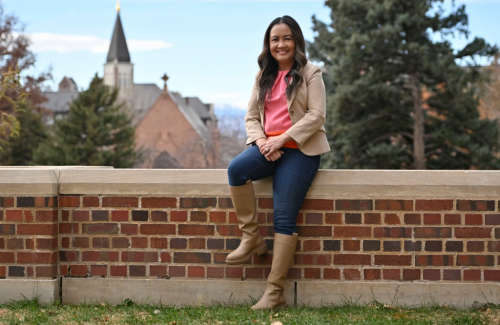
Denver’s Vietnamese Refugees Share New Life While Keeping Family’s Heritage

Because of the chaos that was happening in their homeland in the 1970s, thousands of Vietnamese fled and some, later on, found a home in Colorado.

The melancholic memory is still fresh for Nga Vương-Sandoval, who, at the age of three, had to temporarily stay in refugee camps in the Philippines, Guam, and Arkansas.

She was with the about 2 million people who were unhoused and still have from within the shock of their suffering. 

It had been very challenging for them as they had to leave behind the good life they have in Vietnam and even depart from their relatives in order for them to leave safely.

Starting their life all over again, Denver has become a home to the 24,000-man Vietnamese Americans.

After being able to establish their community and found a home in the place, Nga said “I’m proud to say that it’s the city that I love, it’s the state that I love.”

Meanwhile, Vo, a 21-year-old grandchild of a Vietnamese who grew up in Aurora after his grannies and parents left Vietnam in the 1990s to seek a better life, had the experience of living in “a very diverse place.”

Knowing very little about his family’s past in Vietnam, he conducted a research project to unleash an “inherently American story,” according to him. 

Enabling people to have a glimpse of the refugees from a different perspective, Vo made use of his relatives as objects of his photography.

“Even though we moved here, they still lived a very Vietnamese life,” Vo said in Denver Post, 

It was also in his research that he found out how the majority of his family members were able to escape Vietnam while being robbed of cash and gold on their way.

He also mentioned how his family kept their culture by still practicing them in Denver which contributed to what America is, a place with diverse cultures. 

Despite having to start from scratch, they were able to begin life anew and even owned an Asian supermarket, Asian cinema, and Truong An Gifts.

His family also started the Far East Center shopping mall in 1987, home to him and his cousins and even to the Asian community.

Image Source: Silicon India

News

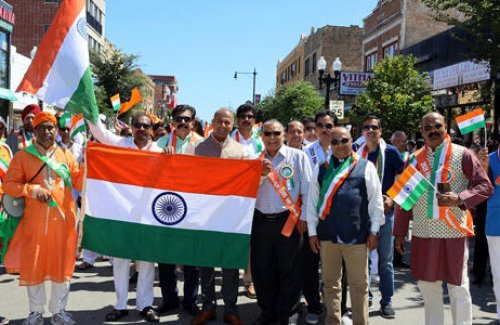
South Asians Found Second Home in Devon Avenue’s “Little India”

At Devon Avenue in Chicago, immigrants from India discovered a taste and comfort of their home country.

The area, commonly referred to as “Little India,” has served as a shelter for Indians who miss their culture.

Finding a home in it, Indians such as National Indo-American Museum board member Beverly Kumar, go there every now and then, especially when she craves Kalakand, a traditional Indian fudge.

According to Kumar, “It’s very comforting knowing that just 14 miles away from my house, there is an essence of Little India.” She also mentioned how reminiscing it is to see familiar sights, sounds, scents, and flavors when visiting Devon Avenue since it makes her feel as though she has never left home.

The area not only became a haven for Indians, but also for other South Asians who opened grocery stores, sari and jewelry stores, as well as many other enterprises in addition to food stores.

In the middle of 1960s, the place it became the second and fourth-largest enclave for Indian and Pakistani Americans, respectively.

The Federal Immigration and Naturalization Act of 1965 ushered in the first wave of South Asian immigration, which established settlements for South Asian professionals in Chicago, while the second phase arrived in the 1980s and 1990s.

Psychotherapist Ranjana Bhargava was one of the first immigrants who yearned for vegan food and searched for spices to sate her craving for Indian cuisines, which she found at Mexican places.

Between the first and second waves, businesses such as The Sari Palace sari store and Indian grocery stores began to thrive there.

Since then, a new community has been created where Indians continue to practice their culture through activities like viewing Indian movies, getting together, playing instruments, performing traditional dances, and eating.

The once Jewish-dominated place became a mainly Indian community which captivated more visitors where one can meet not only Indians but people of different races.

Image Source: Olivier Koning / Honolulu Magazine

Stories

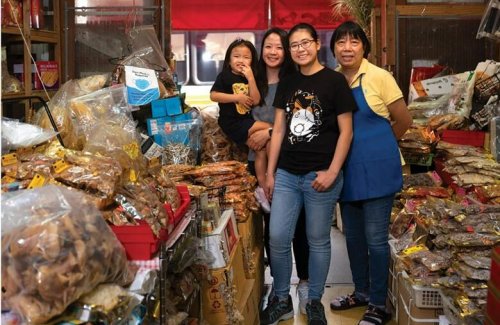
Chinatown’s Oldest and Most Respected Businesses Proudly Carried On By Next Generation

The blood of entrepreneurship runs through the veins of Chinatown’s Chinese food business owners, as three of the longest-running businesses have their children enter the management fields of their family business.

Tony and Selina Chun, together with Alan and Helen Chun, who have been in the business for decades, fully trusted their children to run the meat market company they bought in the 1980s.

The older generation passed it down to their children believing that they would treat it the same way they had after 40 years of building and creating the Chinatown cornerstone with crispy roast pigs, burnished roast ducks, and glazed char siu along with butcher store and seafood vendor.

Frankie, 35, and his cousins are now in charge of running the company that they established through diligence and thrift. Given that they have a family business to manage, Frankie has known since then that he won’t take long in any career.

He was reported in Honolulu magazine as saying, “I knew that anything I was going to pursue wasn’t going to be lengthy, because the family would always ask us back for support.”

He and his cousins learned the operations as a result of early exposure to the business and used them as a means of support, which pleased their parents, especially when they took their first vacation in four decades.

Meanwhile, Liana Fang, whose parents Wesley and Jie Mei Fang founded Sing Cheong Yuan Bakery, assists in running the business.

The pair bought the bakery from its original owners and then expanded it by bringing in more goods. The homemade goods were prepared using original family recipes that they later improved.

The 27-year-old claims she adores Chinatown but acknowledges that she is more passionate about cooking than baking. “It’s so authentic. I love Asian food, the fresh markets, the mom-and-pop shops,” she said.

Completing the list, the 33-year-old daughter of Sun Chong supermarket co-owner Ann Sung also contributes to management of the business.

Sun helps them sell their products and other items by marketing it online and by helping accomplish other stuff needed in the business.

Sun, who grew up at the shop with her cousins, said that their business is like a thread that can connect generations. She also claimed that coming home after studying abroad was like paying back her mother, who had done everything for her. Sun plans to update and improve her mother and aunt’s traditional business structure.

Image Source: Yahoo! Life

Stories

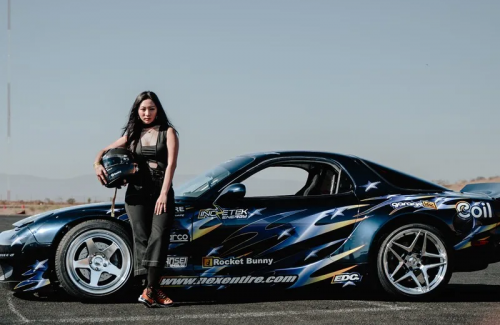
29-Year-Old Drift Racer Sara Choi Excels With Prowess In Male-Dominated Industry

Sara Choi, a South Korean drift racer, is one of the rare female drift racers who compete on an equal or even higher level with men in the automotive industry.

“Men have egos. Men have pride,” says Choi upon knowing that some guys dislike her. 

The 29-year-old was taken care of by a gang of automobile kids after leaving her Hawaii home at 15 and this is when she first acquired her curiosity and passion in cars.

Cool as she is, Choi drives a car at 70 mph while it “drifts” due to oversteering and also has to deal with microaggressions and crude remarks about her body as a drift racer.

Being one of the few women of color who is so skilled at it, vehicles are more than simply a hobby, a source of celebrity, or a source of income to her. Not only did she find a great deal of thrill when she drives sideways at high speed, but a new family as well.

“In Hawaii, we only have three freeways. Every Wednesday and every weekend, they would host a “car cruise meet” at the military base, which was everyone—sometimes up to 200 or 300 cars—going on the freeway and just racing. I would always go with my friends to that,” Choi said in Cosmopolitan. 

When Choi got her first full-time work at a tuning shop, she got a 1999 Civic through her boss, which she paid for with every paycheck. This marked the beginning of her passion for cars. 

After being introduced to drifting, she traveled to Japan, the country where the practice first emerged, years later. After completely experiencing the pleasure of drifting there, she grew passionate about it to the point that it became not only a hobby but a career.

Choi revealed that she is still debating whether or not to compete because it is a male-dominated field and that she is experiencing psychological difficulties.

She is currently concentrating on running racing events to keep the fire going.

One big achievement she had in the arena was when she created the Acura mod, a vehicle she worked on for three months for the SEMA exhibition in Las Vegas.

Additionally, Choi encouraged other women who want to pursue drift racing to “Just do it,” adding that they should put themselves out there to connect with individuals in the field.