Stories

July 5, 2023

SHARE:

In the bustling world of Hollywood, where dreams are forged and narratives come to life, Korean American screenwriter William Yu has emerged as a rising force.

Hailing from Philadelphia, Hong Kong, Boston, and New York, and now based in Los Angeles, William has taken the leap from having a successful advertising career into the world of screenwriting, fueled by a desire to create ambitious stories with vibrant and nuanced characters and to challenge the boundaries of Asian American representation.

William writes sharp, biting stories about witty underdogs who rise to upend the systems that they’ve been held back by.

Projects like “Good Boy,” a dramedy exploring the clash between personal dreams and familial expectations, and his feature romantic comedy “It Was You,” recognized by the esteemed Black List, showcase William’s talent and ambition. As an alum of the prestigious Sundance Episodic Labs and the NBCU Launch TV Writers Program, his work not only contributes to the larger conversation on Asian American representation in the entertainment industry but also pushes the boundaries of storytelling.

In an interview with Asian Hustle Network, William gives us a front seat on his journey as a screenwriter. Join us as we delve into his inspiring story.

TRANSITIONING FROM HIS ADVERTISING CAREER TO BECOMING A SCREENWRITER

Before becoming a screenwriter, I worked in advertising as a Creative Strategist for some years. Having this professional background not only gave me the structure and discipline that I’ve carried over to writing but also instilled a self-starter mindset that gets excited by creative ideas that go against the grain.

Two things happened. The first: I hit a quarter-life crisis after finding a list of goals I had written down after I graduated college. I realized that I had accomplished most of these milestones, but was finding my mental health was quickly deteriorating to the point where I had to make a change.

The second: I had recently created a project called #StarringJohnCho that sparked a viral, global conversation about Asian representation in media. Seeing so many communities engage in this movement demonstrated to me that a profound cultural shift was happening. I could either sit on the sidelines in advertising and continue to critique Hollywood from the outside, or I could dive into this world, participate in the craft, and write the stories I wish I knew. So, I took the leap.

CHALLENGES OF BEING A SCREENWRITER FROM AN UNDERREPRESENTED BACKGROUND

I entered Hollywood because I wanted to expand the definition and labels that have traditionally been assigned to the Asian American community, to go from “good” and “bad” to “awkward” and “messy” and “joyful” and “gut-wrenching.” But as much as I want to create characters and narratives that are rooted in my experience, I need to write stories that are first and foremost–entertaining.

As a screenwriter from an underrepresented group, there is always a well-intentioned instinct to cast our people in a soft, non-offensive glow. But who wants to watch that film or TV series? Part of the representation that I want to add to is demonstrating that as much as we are brave and tenacious, we are also flawed and dangerous, whether that’s in a small indie project or a massive studio tentpole. I believe that the faster we can jump into that conversation, exciting stories are destined to follow.

ABOUT THE DRAMEDY “GOOD BOY”

The short film is a proof of concept for a TV series I’m developing that’s been workshopped through the Sundance Episodic Labs. It’s a personal story that’s loosely based on my time working at Bodega – the world-famous sneaker shop started in Boston – and various conversations and feelings that I’ve had with exes, best friends, my family, and other people that I love.

Streetwear is a world where the clash of cultures is the point. There is no “right answer” – It’s funny and ugly and inspiring. Isn’t that the case for life as well?

‘Good Boy’ was my way of reflecting on moments in my life when I’ve felt cared for, hurt, joyous, and lost. I tried to not just depict what I was feeling, but also reflect on why I felt those feelings. When I first started writing the original pilot script in the Fall of 2019, I was simultaneously embracing my own agency in my life. My hope is that this story might nudge others to also own their journeys moving forward.

MORE OF WILLIAM’S PROJECTS

I’m extremely proud of ‘It Was You,’ my feature romantic comedy that’s like if Nora Ephron’s ‘You’ve Got Mail’ was set in Manhattan Chinatown. The script was voted to the annual Black List – a compilation of the most well-liked unproduced scripts in Hollywood – and ‘Crazy Rich Asians’ director Jon M. Chu is attached as a producer. I’m such a massive fan of those ‘90s-era rom-coms and this story was such a light to write during the pandemic. 

My latest TV project is a political scandal drama called ‘Koreagate’ which is based on the true story set in the 1970s of a charming swindler in Washington D.C. known as “The Asian Gatsby” who was found to be bribing U.S. Congressmen in the name of South Korean interests. It’s a wild, pulpy, fast-paced tale in the vein of The Wolf Of Wall Street and The Post that showcases America at its best and its worst. And it all really happened!

WILLIAM’S CONTRIBUTION TO ASIAN AMERICAN REPRESENTATION IN THE ENTERTAINMENT INDUSTRY

My main goal as a storyteller is to create ambitious stories with vibrant and nuanced characters. If I can hold up my end of the equation, I believe the representation conversation will only expand and grow in complexity.

What’s so exciting is that this is a LARGE conversation, there are so many voices and stories from our community that have yet to come to the forefront. And when we all overlap and intersect and discuss, that’s when the magic happens.

WILLIAM’S ASPIRATIONS LOOKING FORWARD AS A SCREENWRITER

First off, my biggest hope right now is that the WGA strike ends soon and that the studios pay us writers what we deserve.

What excites me is continuing to push my ideas to new heights in terms of scale and wonder. Stories that push the boundaries of the imagination. That wink at you while flipping you off. I’ve been working on a family adventure blockbuster and romance crime drama lately, and have a romantic comedy feature script that takes a surprise turn into a thriller in the works next. Right now, I feel drawn to stories that feel twisted and that showcase characters brushing up against the extremities of who they are.

ADVICE TO THOSE WHO WANT TO START A CAREER IN THE ENTERTAINMENT INDUSTRY

I can only really speak for the screenwriting side of things. This industry may seem like it’s an image-driven business, but it’s actually a product-driven one.

Everyone has an idea for a story, so make sure you’re the one that has a script (or scripts!) ready to go when someone asks. Know that there are lots of stories of those who follow the “rules” or those who are “exceptions”, but know that there is no “right way” of making it in this industry. Lastly: Be kind.

CONNECT WITH WILLIAM

Instagram: @its_willyu

Twitter: @its_willyu

Website: itswillyu.com

Stream Good Boy

Good Boy Instagram: @goodboyteevee

Good Boy Twitter: @goodboyteevee

Good Boy Website: goodboytv.com
Related Articles

Image Source: CBS

News

Eric Kim To Lead CBS Entertainment and Studios As New Executive Vice President

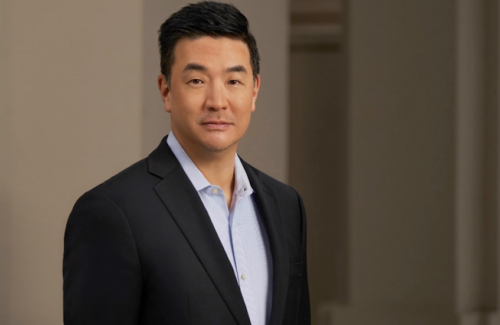
Eric Kim has been recently promoted as CBS’ Executive Vice President for Current Programs after serving as Senior Vice President in the same company where he worked for 11 years.

He succeeds Amy Resisenbach who has just advanced as President of CBS Entertainment.

Kim will now be functioning in his new position to oversee the primetime and daytime programs.

Reisenbach mentioned in Deadline that in working with Kim for more than ten years, she has always been amazed by the latter’s remarkable expertise in programming, in working with showrunners, and in dealing with people whom he works with.

While still the SVP, Kim supervised comedy and drama series production in Blue Bloods, FBI: Most Wanted, FBI: International, and CSI.

Kim had a strong background in the field working in live-action series for Nickelodeon and Teen Nick for two years and was the then-VP for Current Programming at the CW for 3 years.

Moreover, Kim has been a part of the creative team that launched the new network when The WB and UPN networks merged as well as the executive at UPN from 2004 to 2006.

Kim entered the world of the entertainment industry by working for Jonathan Demme on the Academy Award-winning Philadelphia. 

He is a graduate of the University of Pennsylvania where he took a Bachelor of Arts in English Literature.

CBS TV Studios President David Stapf said, “His (Eric’s) leadership has earned the trust and respect of both the industry and his colleagues at the Studio and Network. As Eric steps into this new role, I’m looking forward to seeing the impact he makes both within the creative community and on our series that are enjoyed by global audiences.”

Image Source: Tammy Sun Linkedin

Stories

Through Personal Experience, Tammy Sun Starts Up Carrot Fertility Company To Help Women Start Families

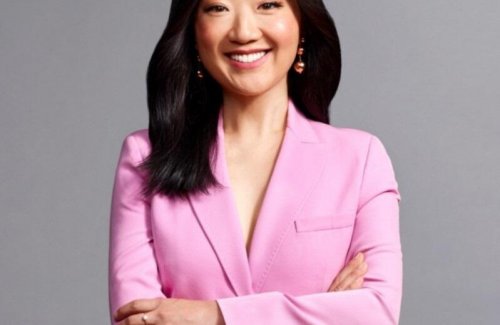
At 34, Tammy Sun went looking for egg fertilizing services as she thought of starting a family of her own someday. But in her quest, she, unfortunately, found out that she has “premature ovarian failure.”

The mysterious disorder indicated negative effects on Tammy’s fertility that she had to go through several egg-freezing cycles which cost her $40,000.

Working in Evernote tech company that did not have fertility treatment benefits, the medication was very costly for her.

With this in mind, Sun put up Carrot Fertility, a fertility care provider, in 2016.

Carrot Fertility partnered with different companies to include fertility services in their health coverage where employees can avail of egg freezing, IVF, adoption, pregnancy, menopause treatments, and others.

In MSNBC, the CEO and founder stated that “The company was born out of a desire to make sure that every single person, regardless of their age, their sex, their sexual orientation, gender identity, marital status, race or geography would have equal access to high-quality care.”

Not only did the service provider address women’s concerns but also men’s as according to her, fertility is a human health issue for both sexes.

A year after Carrot’s onset, it has already acquired over $200 million in investments from first-class firms and is now a partner of above 800 companies.

Supporting millions of workers, including their families, Carrot is set to process claims worth $500 million.

Tammy also revealed that 95% of their clients remain in their respective jobs because of Carrot.

Unlike other businesses which declined during the pandemic, more than a three-fold increase in the use of the platform was observed during the time and up until now as many availed of mental and emotional health services.

Many companies partnered with Carrot to encourage employees to stay especially during the Great Resignation period.

Now, Carrot Fertility is the leading global platform for fertility healthcare and family-forming benefits.

Image Source: Richie Fernandez Facebook

News

Filipino Family Grows COVID Financial Aid From Government Through Fishball Sauce Business

Filipino Richie Fernandez, a new entrepreneur, was able to launch a business venture that now generates a five-digit income with the help of $100 in financial aid from the government.

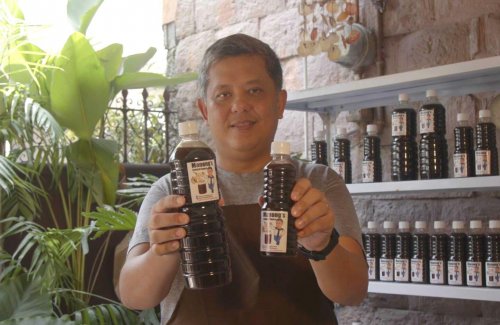
During the height of the pandemic lockdowns, Richie and his family chose to grow the help by opening Manong’s Fishball Sauce, “We thought of how to grow and prolong the money,” Richie said.

With his family’s fondness of eating street food fish balls but at the same time considering the limitations posed by the pandemic at that time, the family decided to sell bottled fishball sauce so people could just enjoy it at home with their own-cooked fish balls.

The modest family business prospered through hard work and perseverance. Not only do they sell their product in the Philippines but they now also export to Japan, Australia, Austria, and the US.

Image Source: The Sacramento Bee

News

Asian American Community Is Prospering In Folsom Sacramento County

The number of Asian American immigrants in Folsom multiplied five-fold from 2000 until last year as found out by the US Census Bureau.

Among them are Chalamcherla of India, Steven Wang of China, and Marcus Yasatuke of Japan.

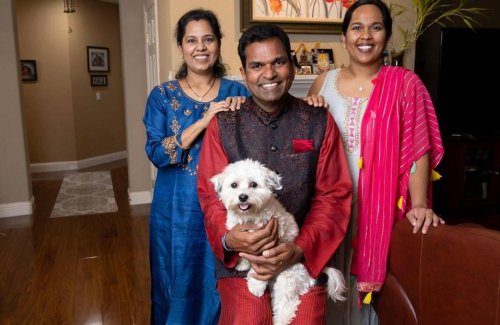
51-year-old Chalamcherla long decided to come to Folsom after falling in love with the city while attending the birthday celebration of a friend’s son, but it wasn’t until 2006 that he actually did so after spending two years in Singapore and the Bay Area.

Nearly ten years after arriving in the country, Steven Wang, who is currently Folsom’s city attorney, became a citizen.

Back then, it was hard for tourists to enter the US but Wang, together with her brother and mother, swiftly passed the immigration after saying that they would be visiting Disneyland, the only place he knew. 

Wang, who is now a lieutenant colonel, has been a member of the US Army Reserve since 2004. During that time, many of his fellow soldiers were losing their lives while serving, and Wang felt in danger.

Because of this, he worked in Folsom city before finishing the necessary time to serve in his Afghanistan deployment, and he told The Sacramento Bee, “I don’t know if every company is like this, but Folsom has been quite supportive of the military.”

Additionally, in 2003, Marcus Yasutake, 45, moved to Folsom with his wife after receiving job offers from Placerville and Roseville. They were able to reside there and raise a family of three children.

Communications director Christine Brainerd of the city of Folsom said that Asian Americans are likely attracted to the area on the same note as why many citizens choose to call Folsom home.

The head of the Sacramento Asian Pacific Chamber of Commerce’s economic development team believes that the tech-based companies in Folsom may be one factor for the recent increase in Asian residents.

Marcus cited the excellent school system in Folsom as one of the reasons why he came there, whilst Chalamcherla claimed that technology plays a significant role in the city’s increasing Asian population.

Racial discrimination is far from nonexistent in Folsom. That’s why Chalamcherla urges other Asians to immerse them in Asian culture.