Stories

August 29, 2024

SHARE:

Navigating the world of law and order as an Asian American can be convoluted. However, as John D. Tran Talks about working with start-ups like AHN, overcoming industry barriers, and the power of mentorship.

A fun fact that encapsulates John’s impact is that he was the trademark attorney who helped protect and register the ASIAN HUSTLE NETWORK name back in 2019—a contribution that underscores his dedication to empowering the Asian American community.

As a Partner at the Rhema Law Group®, John has spent over 20 years working as a Registered Patent Attorney, Intellectual Property Counsel & IP litigator, driven by a mission to aid startups & emerging companies navigating the complex business world. 

Finding Balance & Purpose in the Madness

In 2012, with the arrival of their boy-girl twins, John and his wife Rosalind Ong switched gears. Both seasoned lawyers at larger firms, the duo seized this joyful moment and joined forces to partner at a private law firm, Rhema Law Group, which specializes in intellectual property, business, and corporate law. While people may think being a lawyer trades much of one’s freedom for endless tedious readings into acts and regulations, John finds a nice work/life balance being a “cool” dad to twins (double the coolness), playing basketball, and being an avid sports fan, but finds ultimate enjoyment in spending time with friends and family.  

Protecting the Interests of Start-Ups & Emerging Businesses

Working as a lawyer for startups can be tough, considering how new and fragile they are in the market. While his work requires a focus on quality, integrity, and community, John treats startups with extreme care and attention, prioritizing personalization and case-by-case flexibility for each of his clients. He understands that these new businesses often operate on tight budgets, but also wants his clients to recognize the importance of investing in intellectual property protection right from the start. 

This is not just about legal protection—it’s an act of partnership, building relationships with the clients, getting to know who they are, and helping them grow. John said in an interview with AHN:

“With start-ups, even those backed by investors or venture capitalists, you’re usually dealing with a limited budget that needs to be responsibly allocated across various areas, such as R&D, marketing, sales, employment, and more. A good IP attorney will understand these constraints and focus on identifying the core IP of the start-up that needs to be protected from the outset while determining which IP can be addressed later.

Also, we find it important to conduct IP ‘think tank’ sessions, where we work closely with our clients to identify what protectable IP the company has and then develop an overall IP portfolio strategy. From trademarks, patents, copyrights and even trade secrets, approaching a business’s IP ensures that the start-up’s IP is properly protected at every stage of its growth. It’s incredibly rewarding to work with start-ups and emerging companies, watching them grow and mature over the years, and being a small part of their journey to success.”

John finds pride in working with primarily Vietnamese, Asian and minority-run companies.  His client list ranges from the small entrepreneur with an idea to multi-million dollar manufacturers with hundreds of employees working overseas. 

Building Leaders and Communities

His legal acumen has been shaped by mentorship, as he profoundly affirms his gratitude and advocacy for what mentorship has given him, “I think mentorship is so important, and I wouldn’t be where I am today without being fortunate enough to be mentored by some great people in my life, both professionally and personally.”

Above all, mentorship is not just a veteran-novice work of professional guidance, but, to John, it is a way of personal growth for everyone involved. This mindset coheres with his work ethic, where he hones his expertise (as startups can be quite a hard case to crack, your honor) while supporting their growth. 

“Mentoring builds up individuals, individuals build up communities, and communities raise families, support businesses, and can become the social networks that bring people together. For me, personally, mentorship has been a valued and rewarding part of my life. My wife and I have been fortunate to mentor several individuals for over 15 years, many of whom we met while volunteering at a leadership camp for foster care and at-risk teens.”

For John, mentorship is about time, consistency, and authenticity—qualities he embodies both professionally and personally.

“One particular mentee has become a little brother to me. We have mentored Salesi since he was 12, and then he served in the Army after high school and later worked at our law firm as a paralegal. Now, we’re proud to say that he has just been accepted to law school on scholarship! He was the first in his family to graduate from college and is now on his way to becoming a lawyer. Watching him grow and being there with him through the years has been such a rewarding experience, and it truly highlights the power of mentorship.”

A photo of John D. Tran (L) with his mentee who served in the Army and has just been accepted to law school on scholarship.

Navigating the Legal Landscape as an Asian American

Now, let’s get to the part where most Asian parents will be intrigued to see—being an Asian American attorney. There’s nothing that excites them more than when their kids come home and say “I want to be an attorney.” Respect, stability, and profitability—needless to say more. However, as an Asian American attorney in a predominantly white male-dominated industry, John has faced a sense of isolation and underrepresentation within the industry, forging the urge to always have to outperform himself. 

“I remember the first time I appeared in court on a case—the judge looked at me, smiled, and asked if I was still in law school because I looked so young (haha). It’s that Asian curse! But thinking back now, although there have been great strides made in recent times, the legal industry is still greatly underrepresented when it comes to Asian American attorneys. In my field of intellectual property law, I primarily practice before the federal courts, which are still largely dominated by older white males. That’s just the way it is, and as an Asian American attorney, you can sometimes feel like you’re the only one and feel pressure to prove that you belong in such a competitive space.”

John has overcome them by focusing on his craft and building a reputation for doing great work. John’s advice to aspiring legal professionals all comes down to self-awareness and passion, emphasizing the importance of choosing a practice area that aligns with one’s strengths and personality, as well as the value of giving back through mentorship and community service.

“Matching your personality and skill set to a particular area of law is often overlooked. For example, if you’re an extrovert who likes to be ‘in the action’ of things, becoming a transactional attorney who drafts contracts and agreements at your desk all day may not be the best fit for you. Conversely, if you’re more of an introvert, choosing to become a litigator where you’re in court frequently and presenting oral arguments to a judge or jury may not be a good fit either… Additionally, I think serving on some non-profit organizations and local organizations are things that help provide joy & fulfillment, including what we talked about earlier regarding the power of mentorship.”

Connect With John D. Tran / Rhema Law Group®

“One thing I love about the law is that, for the most part, it is impartial.  So, if you’re a good attorney doing great work, it doesn’t matter if you’re white, black, brown, or blue,, there’s no limits to what you can achieve and accomplish.”

X: @patentjt

Website: www.rhemalaw.com 

Contact:  jdt@rhemalaw.com | 949-852-4430 

Related Articles

Image Source: Yahoo! Life

Stories

29-Year-Old Drift Racer Sara Choi Excels With Prowess In Male-Dominated Industry

Sara Choi, a South Korean drift racer, is one of the rare female drift racers who compete on an equal or even higher level with men in the automotive industry.

“Men have egos. Men have pride,” says Choi upon knowing that some guys dislike her. 

The 29-year-old was taken care of by a gang of automobile kids after leaving her Hawaii home at 15 and this is when she first acquired her curiosity and passion in cars.

Cool as she is, Choi drives a car at 70 mph while it “drifts” due to oversteering and also has to deal with microaggressions and crude remarks about her body as a drift racer.

Being one of the few women of color who is so skilled at it, vehicles are more than simply a hobby, a source of celebrity, or a source of income to her. Not only did she find a great deal of thrill when she drives sideways at high speed, but a new family as well.

“In Hawaii, we only have three freeways. Every Wednesday and every weekend, they would host a “car cruise meet” at the military base, which was everyone—sometimes up to 200 or 300 cars—going on the freeway and just racing. I would always go with my friends to that,” Choi said in Cosmopolitan. 

When Choi got her first full-time work at a tuning shop, she got a 1999 Civic through her boss, which she paid for with every paycheck. This marked the beginning of her passion for cars. 

After being introduced to drifting, she traveled to Japan, the country where the practice first emerged, years later. After completely experiencing the pleasure of drifting there, she grew passionate about it to the point that it became not only a hobby but a career.

Choi revealed that she is still debating whether or not to compete because it is a male-dominated field and that she is experiencing psychological difficulties.

She is currently concentrating on running racing events to keep the fire going.

One big achievement she had in the arena was when she created the Acura mod, a vehicle she worked on for three months for the SEMA exhibition in Las Vegas.

Additionally, Choi encouraged other women who want to pursue drift racing to “Just do it,” adding that they should put themselves out there to connect with individuals in the field.

Image Source: Twrl Milk Tea

Stories

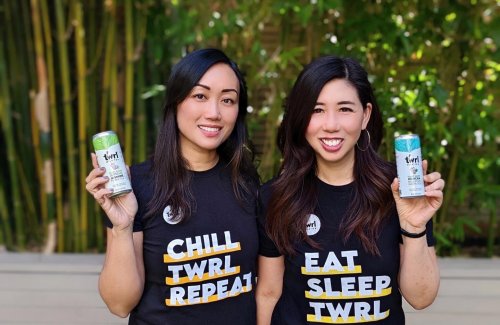
These Two Moms Started Milk Tea Company To Take Pride Of Their AAPI Identity

In order to realize their dream of founding a food company, Olivia Chen and Pauline Ang chose to create Twrl, a milk tea business that embodies their beliefs as mothers, graduates of Berkeley, and members of the AAPI community.

For their whole 20-year friendship, they have always shared a love of food.

In spite of the challenges of setting up a tiny business in the midst of a pandemic, Pauline took the time to experiment and eventually make the tea she wanted. In the Twrl, she invented the first vegan, low-sugar, and low-fat milk tea.

The two eventually hired a co-packer and a food scientist for their canned and on-the-go product.

The co-founders’ early supply purchases from small family farms had been stirring. They were able to help them by making them their suppliers and even assisted them to get non-GMO certification through their products.

Because peas have a neutral flavor, require very little water, and produce significantly fewer carbon emissions than soy and almonds, Twrl used them to make sustainable milk tea.

Olivia and Pauline chose the name Twrl for their company based on a Chinese tale about brewed tea. Twrl is a company that embodies tradition and history with a touch of modernism.

As Asian-Americans who grew up drinking milk tea as part of their family heritage, they are major admirers of it and have even changed its ingredients with their loved ones.

Olivia went on to say that teas in cafés have extremely high-calorie content, low-quality ingredients, and impractical portability. In Twrl, they created its antithesis.

Olivia said they are motivated by the need to create a product that accurately represents America as a nation of immigrants, just like them and their families. A company that offers people the chance to blend their races and serve as role models in the community.

She clears up that as the organization’s founders, they are an Asian-American brand rather than an Asian or American brand.

Image Source: qz.com

Stories

How This CEO and Co-Founder of Insurance Company Raised $25M During Her Pregnancy

Founding a business startup and starting a family simultaneously was proved possible by the CEO and co-founder Hanna Wu of Amplify Life Insurance, a life insurance platform focused on helping people build wealth.

Wu first realized the importance of insurance policy when her 20-year-long best friend lost his father and financial backbone at the same time after the latter’s father died of cancer.

Upon knowing more than a year ago that she was pregnant, it gave her mixed emotions as a 16-hour working woman who travels from here and there.

Trying to sort out the situation, she researched articles on early-stage founders as moms but failed to find ones that fit.

As a BIPOC member, she sought a community from the same race who are also women founders only to find out that barely 7% of the global fintech community are women and that they only receive 2.4% of the total capital invested for startups.

Finding no one, Wu felt alone and wondered how others balanced the various startup stages while starting a family.

The journey was never easy for Wu but truly, hard work, goal orientation, and perseverance make everything achievable.

Wu started to plan everything before and after her delivery and how she would be able to raise funds for her business considering the time when the market dropped so low.

While thinking about getting a nanny and how the set-up would be after her delivery, Wu engaged in lower-stakes conversations to test investor sentiments, and fortunately, she was able to secure a large reinsurer’s venture arm.

Wu also woke up early in the morning daily to study for her investment adviser exam and everything else she did with her impending delivery as motivation.

Three days before finally giving birth, they signed the term sheet for the company.

In the 9-month time of pregnancy and struggle towards establishing the business, Wu raised over $25 million in investments and thereafter hired a full leadership team, kicked off their RIA status, signed several significant partnership contracts, and grew their revenue four times: everything planned in her to-do list.

With her success, she shares in Quartz 5 work strategies to prepare for parenthood:

Sort your parental leave plan. It’s harder for early-stage founders to take leave, but preparing your care plan and naming what’s important to you.

Consider your travel schedule. Prioritize travel by business needs, and don’t be afraid to break from the way it “should be” done.

Become an expert on roles and responsibilities at home. You, your co-parents, and caregivers must become experts on the roles and responsibilities at home. Stay connected to the right people and in the right ways. 

Plan for everything and expect failure. Be easy on yourself when mistakes happen, or roadblocks pop up.

You don’t have to choose. We don’t have to choose between our careers and families. It’s not easy, it will be far from perfect, and undoubtedly you’ll need a lot of support, but you can have it all if that’s what you want.

Image Source: NBC Sports

News

Dallas Stars Jason Robertson Carves Name in NHL History As Highest Pointer in Latest Season

Jason Robertson made NHL history by playing the second longest-drawn-out game in franchise record and the most lengthy game in Dallas history.

With 22 goals, the most in the NHL, the 23-year-old Filipino-American left winger for the Dallas Stars, made his season a success.

Robertson extended his point streak to 13 games, tying the Dallas Stars record set by Dave Gagner in the early 90s with a point over their opponent Blackhawks on Wednesday.

On Thursday night, he scored three goals, which were assisted by Joel Kiviranta and Wyatt Johnston, as well as Oettinger’s 31 saves in a shutout victory.

His 39 points ranked second in the league, trailing only Connor McDavid and setting himself as the highest-pointer in the 24 games of the season for Dallas Stars. 

Leading the way for the Stars, the victory was the team’s second straight triumph and was the 10th time Dallas had scored points in the previous 11 games.

Additionally, Miro Heiskanen and Roope Hintz also both enjoyed multi-point outings with three and two assists, respectively.

Stars coach Pete DeBoer reportedly claimed that “Robo is a guy that’s honestly hard to defend because he scores in a bunch of different ways,” according to the Dallas Morning News.

“He can score off the rush, he scores kind of lurking around the quiet areas of the ice waiting for the puck to come to him. It always seems to come to him. Tougher to defend a guy like that isn’t predictable,” the coach continued.

Coach Pete also remarked on how amazed he was to see Robertson play such an exceptional game and how incredible the player was for making it seem simple despite the difficulty of the game.

With his nightly exploits, Robertson is starting to catch the attention of the hockey world, which is quite an achievement in a market like Dallas, far from the hockey capital of Toronto. 

He’s outperforming expectations for his $7.75 million cap charge and propelled himself into the early race for the Hart Trophy.

Furthermore, Dallas Stars captain Jamie Benn stated that Robertson is leading the attack with confidence.