How Haruka Nishimatsu Defined Modern Leadership by Cutting His Salary to $90,000 a Year to Save Jobs
Stories
January 23, 2026
SHARE:
In the modern corporate landscape, it is common to see executives receive massive bonuses even as their companies face financial turmoil. Haruka Nishimatsu, the former head of Japan Airlines, famously broke this cycle by putting his employees’ security before his own wealth. He recognized that a company is only as strong as the people who keep it running every day.
When the airline faced billions in debt and the threat of bankruptcy, Nishimatsu decided to slash his own salary to just $90,000. This move ensured that he was feeling the same economic pressure as the frontline workers he led. His choice was a profound statement that leadership is a responsibility to others rather than a path to personal enrichment.
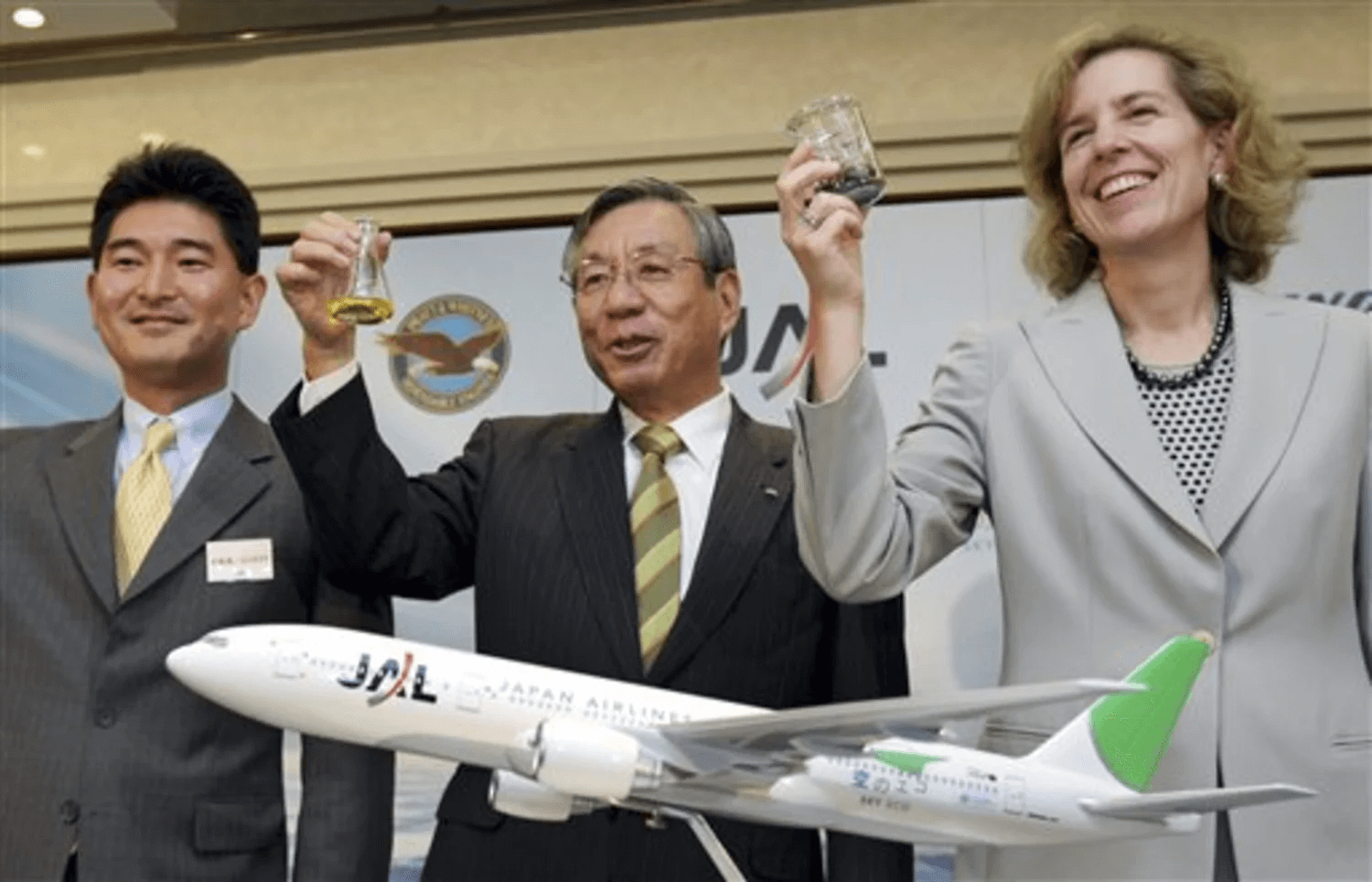
Image Source: NBC News
Leading by Example Through Shared Sacrifice
Nishimatsu discarded the traditional perks of his high-ranking position to remain grounded with his workforce. He traded a private limousine for the city bus and waited in line for lunch at the staff cafeteria.
These daily actions removed the social distance that typically separates a CEO from the rest of the office. By working at a regular desk in an open-plan room, he made himself accessible to everyone in the building.
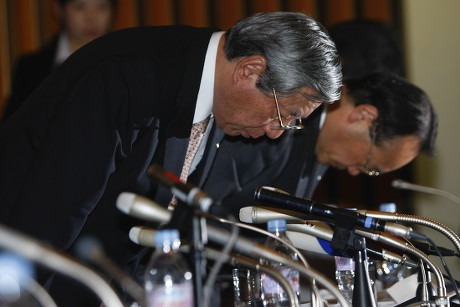
Image Source: The Wall Street Journal
Prioritizing People Over Short-Term Profits
During the 2009 financial crisis, Nishimatsu refused to use mass layoffs as a quick fix for the company’s rising debt. He understood that protecting the livelihoods of his staff was more important than protecting the executive payroll.
This commitment to job security built a deep sense of trust and loyalty throughout the entire organization. His strategy proved that a business can navigate a crisis without ever abandoning its moral compass.
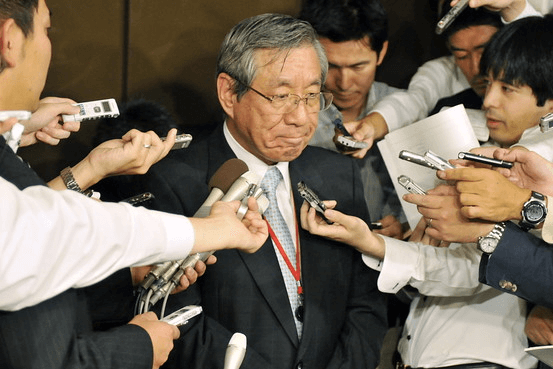
Image Source: The Wall Street Journal
The True Source of Professional Respect
Nishimatsu demonstrated that real authority is earned through character and shared experience rather than a fancy title. He did not need a corner office or a massive paycheck to command the respect of his pilots and flight attendants.
His influence came from the fact that he stood right beside them when the company was struggling. This style of leadership serves as a timeless reminder of what it means to be a true steward of a brand.
This historic event on March 12th, Sunday, at the iconic Ferry Building in San Francisco, seeks to spotlight the unique experiences and challenges of Asian women both in the past and present.
Asians Are Strong’s founder, Hudson Liao, shared that last year’s event was inspired by the national day of remembrance for the 6 Asian women victims who were murdered during the Atlanta Spa Shootings in 2020.
Shinhong Byun (center), president of the Korean American Bar Association of Northern California, is comforted by friends and family after an emotional address during the ‘Break the Silence’ event at the Asian Art Museum on March 16, 2022. (Beth LaBerge/KQED)
‘Our Time’ is the only event of its kind that solely focuses on Asian Women. Attendees can expect to see 20+ resource groups for Asian women, an interactive, global art project, a live podcast taping of the renowned May Lee show, a stand-up comedy set by rising star Jiaoying Summers, speeches from Asian women leaders like Helen Zia and Gia Vang (co-founder of The Very Asian Foundation), and panel discussions with Asian women business leaders like Victoria Fu (CEO of a skincare brand, Chemist Confessions).
Left to right: May Lee, Jiaoying Summers, Gia Vang, Victoria Fu
In addition, there will be free self-defense workshop led by TUFF Love, poetry readings, resource tabling from community groups like the Asian Women Shelter and Narika, an art exhibit dedicated to historical Asian women figures.
Asians Are Strong’s mission is to empower and protect Asian and Pacific Islanders, which aligns with the event’s goals. It is crucial to highlight the experiences of Asian women in mainstream discourse to prevent their experiences from going unnoticed and forgotten, “Representation is the only way to break stereotypes.” said Liao.
Interested individuals can support the organization’s mission beyond attending the event by signing up to be a volunteer, and supporting their programs including free self-defense workshops for the elderly. The organization also accepts donations.
Liao also urges people to be engaged and active with organizations like Asians Are Strong and other groups that they will be showcasing at the event., “We would also love help to amplify this event so all Asian women and our allies can come to be a part of history.
For those unable to attend in person, they will have a live stream of the event so that anyone, anywhere in the world can participate in this historic celebration.
The Taiwanese-American basketball player Jeremy Lin features in the HBO documentary short 38 at the Garden, which has been nominated for an Oscar.
The documentary follows New York Knicks point guard Jeremy Lin’s remarkable 2012 season. Lin, an undrafted Harvard graduate, scored 38 points at Madison Square Garden against the Los Angeles Lakers, confirming his hot streak and the “Linsanity” craze.
38 at the Garden honors a turning point in Lin’s life and highlights a global phenomenon that went beyond basketball. The video contrasts the pride that the Linsanity era afforded Asian-Americans with the recent rise in anti-Asian sentiment.
38 At The Garden is a Mr. Fahrenheit and GTG Entertainment production. The film is directed by Frank Chi and produced by Travon Free and Samir Hernandez. Executive Producers, Patricia Sun, Brandon Chu, Kai Huang, Mike Lee, Dave Lu, and Paul Sri. For HBO, executive producer, Bentley Weiner.
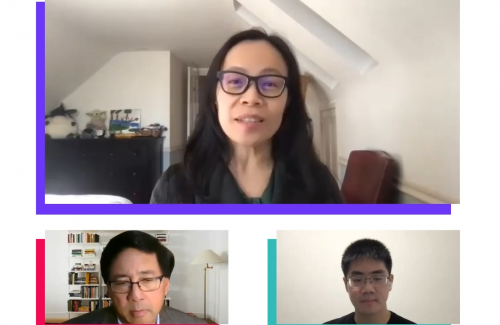
Food is a way for us to connect and tell stories by engaging all of our senses. Nielsen Noodles is a series where we gather to share our own stories while discussing insights and current events over a bowl of instant noodles. We virtually shared a bowl of noodles with Michael Lai, CEO and Co-Founder of Famous Media Group and AsianFeed, along with Randall Yip, Founder and Executive Editor of AsAmNews; two trailblazers in AANHPI news and journalism.
(Top) Randall Yip , (Bottom L-R) Patricia Paturangi, Michael Lai
Which noodle dish did you choose to bring to the conversation?
Randall brought a bowl of wonton noodle soup from his family’s favorite hole in the wall, sharing, “All of my favorite items thrown into one… I picked this because it reminds me of my mom … she loved to sit around the table and get the family together and just talk, that was her excuse to get the family together.”
Michael shares, “I brought my favorite brand of instant ramen, I usually add an egg and some bok choi… I always remember coming home from practice, my parents were a little too tired to cook so we all would eat instant noodles and share conversations about our days. Memories and nostalgia from childhood are what these noodles remind me of.”
Tell us about your news outlet, what is the story behind founding each of your outlets?
Randall recalled growing up in a time where the only Asian American role model on TV was Bruce Lee. While he and his friends idolized the kung fu star, he felt his community was missing critical daily representation in news.
“I wanted to share a different light, we tried to focus on Asian Americans who were role models breaking stereotypes. On the second front, we wanted to have a daily news site because Asian Americans were missing a news site where you could follow Asian American News on a daily basis. So from the very beginning, we’ve operated 365 days a year and we have not deviated from that, ” says Randall.
Michael comes from a different generation of representation. While striving for authentic storytelling connects both Michael and Randall, Michael aims to build a community of Gen Zers through short form, sociable content.
“We’re an Asian-centric digital media brand, founded just last year, and grown to more than 200,000 followers across social channels. Designed at conception as a media brand to celebrate the shared cultural experiences of the younger generations in America and around the world.
Growing up I was one of three Asian Americans in my entire school district, I often felt alienated from my Asian American identity. Outside of my parents, there weren’t really many opportunities for me to connect with others who shared my culture and ethnic background… My goal was to create a digital space that I feel I would have benefited from when I was younger, where stories that were important to me were the focus and where I could connect with others who shared similar cultural experiences.” says Michael.
Why is it so important that diverse media be well-represented in the industry?
Nielsen research has found that certain shows with diverse representation both in front and behind the scenes, attracted more of that audience group – we want more of what’s familiar. From a similar standpoint, it’s also important to have diverse-owned media equally represented in the media ecosystem.
“There are so many diverse community-centric stories to be told. The only way to make sure these stories are told in an authentic manner is for them to be told by members of the community in front of the camera, and behind the camera as well. It’s so important because there are so many cultural nuances and contextual clues that I think are important. Audiences these days can really tell when something is just superficial versus something that is truly authentic and a project designed to forward and advance the community,” notes Michael.
He continues to say, “Especially this younger generation growing up, I think there are so many independent content creators emerging, creating amazing content that resonates not only with their own individual community, but also with the broader community at large. I think that is super important, and a trend that will continue to really advance the representation.”
Why is it so important for advertisers to invest in Asian American-owned media?
When we think of advertisers, we often think of Fortune 500 companies and major brands but in a community, such as Asian Hustle Network, we have inspiring entrepreneurs building Asian American-owned businesses. This year Nielsen started a Diverse-owned Media Initiative to help raise visibility of diverse media suppliers so they have a fair and equitable chance to get in front of ad buyers.
Randall says, “I think the smart brands realize that they can’t continue doing what they have been doing. They need to expand their reach and customer base.”
Michael says, “[Advertisers] are really starting to realize that Asian Americans are an important audience too. I think we’re one of the most rapidly growing consumer demographics in terms of pace of growth and authentic messaging is important… For advertisers to want to connect with those audiences, I think it’s extremely important, specifically for Asian Americans, to diversify their marketing budgets to allocate some of that budget for those audiences.
Michael explains further “It’s not just Asian-Americans consuming this content, there are so many instances where K-POP, BTS, Blackpink, Squid-game, Korean dramas, as well as other Asian Entertainment groups. It’s just amazing how widespread it has become, it’s not just Asian-Americans, it’s really everybody is engaging as a whole in these stories that are inherently culturally Asian-based.
Final Slurp!
Michael and Randall have many things in common, especially their desire to champion equity in journalism, entertainment, and storytelling.
Randall urges up-and-comers: “Every brand comes with its own story, every entrepreneur has their own story to tell. Don’t be afraid to tell your story and don’t be afraid to pitch it to media outlets. You’re going to find that there will be a lot of interest…Be Inspiring!”
Media is where the unique stories and voices of our community can be found. As our community becomes even more diverse, providing opportunities for greater equity in media and enabling more diverse voices becomes even more critical. The people behind the stories who are from our community — from journalists to media owners — continue to stand together to open up more opportunities for future generations of storytellers. Thank you Michael and Randall for paving the way with your passion and commitment.
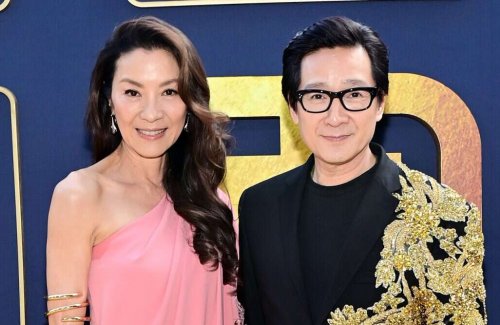
“I think we’ve broken that glass ceiling, we’ve ninja-kicked it to hell,” said Michelle Yeoh on a panel for the Television Critics Association on Friday. “And hopefully it will never come back, broken like Humpty Dumpty pieces.”
Michelle was born in Malaysia and was a major Hong Kong action movie star before moving to America to a vastly different Hollywood landscape. She said that there were no roles out there that represented Asians before, the Hollywood situation has been improving for Asian actors and directors.
Yeoh reunites with her “Everything Everywhere” co-star and fellow Globe winner and Oscar favorite Ke Huy Quan in “American Born Chinese.”
Quan broke out as a child actor but eventually dropped out of acting because the roles were so scarce. He said that it was challenging to be an Asian actor as there were not many opportunities. It didn’t work out for him for two decades, but the landscape has changed.
According to Quan, the audience may react to the show with various emotions. Some are going to be upset, while others might find it humorous. He claimed that he experienced a vast range of feelings while portraying his character.
American Born Chinese was based on the 2006 graphic novel of the same name by Gene Luen Yang, follows struggling student Jin Wang (Ben Wang), who meets a Chinese-born student and is pulled into a supernatural world that includes Yeoh as the undercover Goddess of Mercy and Daniel Wu as the Monkey King. The series is set to premiere on Disney+ in 2023.