Stories

December 13, 2022

SHARE:

This may have happened to you (maybe not the musical writing part), or you may know someone from an Asian background who is currently struggling as their parents had strongly expected or already had chosen a job for them.

But how many of you have bravely rejected your parents’ desires, and followed your true passion? Take it from this courageous girl, Joy Regullano. You might remember her from the viral YouTube sketch called White Fetish, or various random acting gigs like the TV Series Crazy Ex-Girlfriend (her line was “Yeah, bitch!”) or Modern Family (with her line was “You fools!”).

That’s right, Joy is quite too far from wearing a white coat. She’s an actress, comedian, and writer — every Asian parents’ nightmare. So when she told her parents that she didn’t want to be a doctor anymore, her father didn’t talk to her for 8 months. Years later, she wrote a comedy musical about it, called Supportive White Parents.

“Working on this musical has been a major part of my healing journey (my parents are imperfect people who were just passing down intergenerational trauma) and maybe it can be part of yours too,” Joy expresses.

Read through as Joy shares how she has discovered her passion for comedy, and her journey to healing and acceptance through her musical.

MY WHOLE LIFE, I THOUGHT I WAS GOING TO BE A DOCTOR JUST LIKE MY PARENTS

My parents were born and raised in the Philippines. My dad grew up very poor in one of the provinces, but after scoring in the top percentage of all students across the country on an exam, he got a scholarship to a prestigious science high school in Manila that was all expenses paid. My parents met in medical school, and soon after graduating, they came to the US by way of New York. Eventually, they made their way across the country to Eagle Rock in LA and then Orange County, where I grew up. 

My whole life, I thought I was going to be a doctor just like my parents. I tried my best to be the perfect daughter. I got straight A’s and took piano lessons since I was 3 and violin lessons starting at 8. (Well, actually, I got one B+ in AP/IB Physics, but we don’t talk about that B+) I studied math outside of school at Kumon and played educational computer games because it was a productive use of my time. I read medical books my parents had lying around the house and had subscriptions to science magazines in high school, for fun.

But as I grew older, there was a part of me that was starting to love writing and making people laugh. For 7th-grade vocabulary exercises, I cared more about making my sentences funny than using the word right. My favorite part about English and Spanish group projects was writing the scripts and acting in them. I wrote bad high school poetry. But I didn’t think that was an acceptable thing to want to do with my life, so I shoved that part down, deep inside me. I did write for the school newspaper and compete in speech contests and debate teams, but that was about the extent of my (public) creative life. 

But as I grew older, there was a part of me that was starting to love writing and making people laugh.

-Joy Regullano

I LOVED FEELING LIKE I COULD MAKE THE AUDIENCE LAUGH AND CRY JUST BY TELLING AN HONEST STORY

I went to UC Berkeley pre-med and was planning to take over my dad’s clinic when he retired. But in the first semester of my freshman year, I got a B on my first math test and a C on my first chem test, and I panicked. After some soul-searching, I realized I wasn’t actually passionate about any of that and ended up cycling through a bunch of different majors before landing on Theater and Southeast Asian Studies.

I wrote a play in college about a friend who had passed away in high school, and when I put it up in front of an audience, I was hooked. I loved feeling like I could make the audience laugh and cry just by telling an honest story. Just by being myself. I wanted to do that for the rest of my life. I loved Tina Fey and Amy Poehler’s work so much that I couldn’t even watch them for a long time because it hurt that I wasn’t doing what they were doing. 

WHITE PARENTS: A MUSICAL INSPIRED BY MY LIFE

I wrote the book and the lyrics to a comedy musical called “Supportive White Parents” about an Asian girl who tells her parents she doesn’t want to be a doctor anymore, and when they’re disappointed, she wishes on a shooting star for supportive white parents. Eventually, she learns to love her Filipino parents for who they are. My friends Sam Johnides and Tony Gonzalez wrote the music.

The musical was inspired by my life. When I told my parents I didn’t want to be a doctor like them and take over my dad’s clinic, my dad yelled at me, called me selfish, and didn’t talk to me for 8 months. I was absolutely devastated, even though I knew that making people laugh and cry was what I had been put on this earth to do. 

I felt so jealous of my white theater classmates with their seemingly endlessly supportive white parents. And funny enough, they were jealous of me because I had something called “discipline”, played multiple instruments, and knew other languages. And thus, the seed of a musical was born.

Eventually, she learns to love her Filipino parents for who they are.

-Joy Regullano

LAUGHING AT OURSELVES CAN BE ONE OF THE BEST WAYS TO HEAL

There aren’t many Asian American musicals, let alone comedy Asian American musicals. One of my teachers says that comedy is the back door to the truth. I think that laughing at ourselves can be one of the best ways to heal, as well as realizing that we are not alone. 

We as a generation are going through this together, and also, we, as well as our parents, are the products of society and intergenerational trauma. We are all imperfect people who are trying the best we can with the tools we have. 

ACCEPTANCE IS THE QUICKEST WAY TO SANITY AND PEACE

I love the serenity prayer. There are some things that we can change, and we should do what we can to change those things. There are some things we can’t change, and it’ll drive you crazy trying to. You can’t control other people. You can only control yourself. The sooner you can accept other people are how they are, the sooner you’ll stop giving your energy away. 

Also, one thing I learned that blew my mind is that it’s actually not love, to wish that your parents or family were different than who they are. If what I was asking from them was to love me for exactly who I am, with all my imperfections, isn’t that what I should be giving them too? Unconditional love and acceptance? (That’s not to say that you shouldn’t have boundaries – that could be a whole other article.) But accepting things you can’t change is the quickest way to sanity and peace. 

If what I was asking from them was to love me for exactly who I am, with all my imperfections, isn’t that what I should be giving them too?

-Joy Regullano

It’s a daily practice. But try it! After reading “The Subtle Art of Not Giving a F*ck”, I tried to imagine that I only had one f– to give a day. How much energy would I be saving by only getting bent out of shape over the most important things!? I’m not really good at giving only one f– a day. But I’ll keep trying.

One more thing – some people need to be angry before they move to acceptance. I know I did, and I still feel angry sometimes. Accepting yourself and your feelings is part of the process too. Wherever you are in your journey is okay.

CONNECT WITH JOY

Instagram: @supportivewhiteparents @joyregullano

Twitter: @swpmusical @joyregullano

Website: www.supportivewhiteparents.com

Be on the lookout for the upcoming Supportive White Parent concept album, to be released in January 2023, with singles leading up to it! 
Related Articles

The Spruce Eats-jpg

News

Vietnamese-Owned Food Brand Takes Over Whole Foods’ Instant Noodle Aisle with Bold Asian Flavors

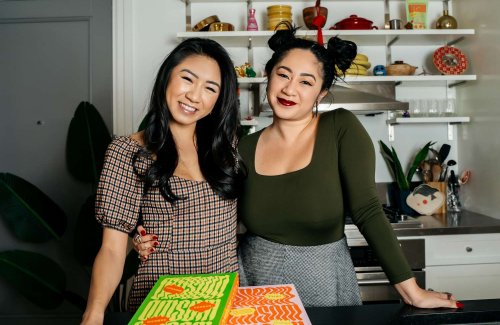
Omsom is a vibrant Asian food brand, owned by Vietnamese sisters Vanessa and Kim Pham, that has been on a mission to reclaim and celebrate the true flavors of Asian cuisine.

Aside from providing delicious food, Omsom aims to promote and educate on the richness of Asian-American culture on a national scale. Since its founding in 2020, the brand has fearlessly embraced its heritage, evident in its bold brand names, products, and engaging storytelling across digital and physical channels.

Now, Omsom is making waves by expanding its presence in Whole Foods with its latest offering, Omsom Saucy Noodles. These flavorful noodles come in enticing varieties such as Soy Garlic, Coconut Lemongrass Curry, Garlic Black Pepper, and Chili Sesame, priced at $4.99 MSRP. Last year, Omsom introduced its line of sauces, including Krapow, Vietnamese BBQ, Yuzu Misoyaki, and Spicy Bulgogi, to Whole Foods stores nationwide.

Omsom’s expansion to Whole Foods is an important milestone since it allows the brand to reach a bigger audience and migrate from online presence to in-store availability. Customers may now readily access Omsom products locally and get a taste of the vivid Asian flavors thanks to the fast expanding community of over 175,000 people.

Omsom competes in the instant noodle market that is dominated by well-known brands like Kraft Heinz and Nissin Foods, but the company distinguishes itself by providing convenience and quality. Unlike the conventional dry powder seasoning found in many instant noodle products, the company takes pleasure in providing sauces of restaurant-quality.

“But at the end of the day, I think when you’re playing in a category like noodles, like it’s got to be the taste; it’s got to be the product. And I think we’re bringing something really unique to the category,​” Kim Pham explains to Food Navigator.

Featured Image Source: The Spruce Eats

LA Times-jpeg

News

How a Local Grocery Turned into One of The Largest Supermarket Chains in The US

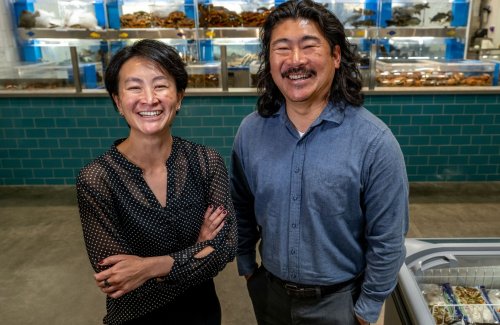
99 Ranch is a beloved Asian supermarket chain turned into a national powerhouse, under the management of the second-generation owners, Jonson and Alice Chen.

Established in 1984 in Westminster by their Taiwanese immigrant father, Roger Chen, the grocery store has now evolved into one of the largest Asian supermarket chains in America, with 58 stores in 11 states and its headquarters in Buena Park, California.

Catering extensively to ethnically Chinese communities, 99 Ranch Market has become more than just a grocery store for many Asian Americans in California. The name “99 Ranch” carries a double meaning: “ranch” symbolizes freshness, while “99,” pronounced “jiu jiu” in Mandarin Chinese, conveys longevity – signifying the company’s pursuit of near perfection with a commitment to constant improvement.

Jonson and Alice Chen represent the new generation of leadership steering the nearly 40-year-old grocery chain’s expansion across the United States. As children, they spent countless weekends at the store and their childhood experiences provided them with valuable insights and knowledge.

Today, the company grows most of its produce on specialty farms across the United States and Mexico, with a team of over 7,000 employees, 82% of whom are bilingual, to cater to the diverse needs of their customers.

According to Yahoo FInance, Part of 99 Ranch’s success lies in its responsiveness to the changing tastes of its customers. As trends evolve, the company actively includes Filipino ingredients, skewers, and spicy Sichuan flavors in their offerings.

As the Chen siblings carry the legacy of 99 Ranch forward, their commitment to serving their community and striving for excellence remains steadfast, ensuring the supermarket chain’s continued success on a national scale.

Featured Image Source: LA Times

tatler asia - maia & elaine-jpeg

News

These Dynamic Female Duos are Redefining the Food and Beverage Industry

The food and beverage industry, long dominated by men, is witnessing a transformation as a new wave of young female duos are making their mark and reshaping the sector to reflect their own vision. These inspiring women are blending their Asian heritage with a global upbringing and a willingness to take risks, showcasing the power of collaboration and innovation.

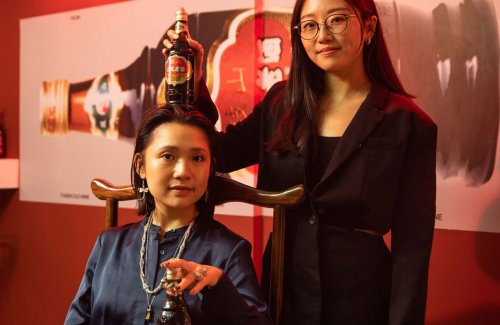
Elaine Chen and Maia Mah perfectly demonstrate this, as the regional director and creative director of Fukien Old Wine, a 181-year-old Chinese cooking wine brand. They organized a cocktail pop-up event at Soho House Hong Kong, combining traditional Chinese wine with modern trends.

Despite facing initial skepticism from their male-led head office, Chen and Mah are determined to introduce new ideas and adapt to societal changes. The success of the event surprised their colleagues, highlighting the duo’s ability to think outside the box.

Meanwhile, in Taiwan, Square Jao, a production designer, and her partner Lily Lin opened Plants Eatery, the country’s first gluten-free, whole-food restaurant. After the Fukushima disaster, Jao and Lin embarked on a mission to promote sustainable eating and raise awareness about the impact of food choices on the environment.

While vegetarianism is already popular in Taiwan, Jao and Lin’s restaurant offers strictly plant-based, gluten-free options, avoiding processed mock meats. Aside from their restaurant, they also published a cookbook in hopes to influence culinary schools to embrace plant-based and gluten-free cuisine, according to Tatler Asia.

In Japan, Eri Miyagi and Miki Nomura, both third-culture kids raised in the US, co-founded Cabi, a condiment brand aimed at introducing the flavors of Japan to Gen Z and Millennial home cooks. Cabi’s debut seasonings, including umami dashi soy sauce, sweet yuzu vinegar, and zesty sansho peppercorn miso, are designed to be versatile and cater to the modern urban lifestyle.

The rise of these female duos serve as an inspiration for a lot of underrepresented individuals, and remind us that with the proper determination and great collaboration, anything is possible.

Featured Image Source: Tatler Asia

seattle opera-jpeg

News

‘Bound’ Premieres at Seattle Opera Illuminating the Struggles and Triumphs of Asian Americans

Huang Ruo’s captivating chamber opera, “Bound,” made its highly anticipated premiere at Seattle Opera’s Tagney Jones Hall.

The opera sheds light on the enduring discrimination faced by Asian Americans, a social issue that has persisted since the enactment of the Chinese Exclusion Act in the late 1800s. Huang Ruo, a prominent Chinese composer, openly explores these themes, creating a thought-provoking, visually stunning, and musically intense work. Teaming up with librettist Bao-Long Chu, a Vietnamese poet, both artists made their Seattle Opera debuts, showcasing their impressive talents and expertise.

“Bound” narrates the experiences of second-generation Asian immigrants who grapple with their cultural heritage while striving to be fully embraced as Americans. Inspired by the true story of a high school student imprisoned due to truancy, the opera delves into the conflicts between individual aspirations and familial obligations. 

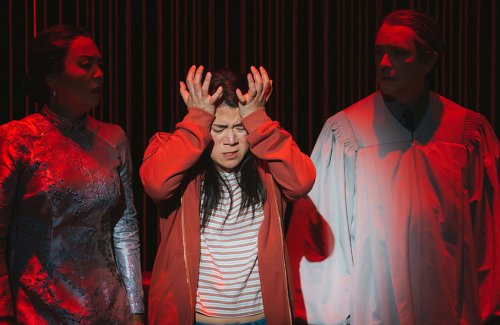
The characters in “Bound” are intricately bound in their own ways. Diane Tran, the protagonist portrayed masterfully by Karen Vuong, grapples with the rules and expectations of being a second-generation Asian adult, constantly torn between her family, work, and education. Khanh, Diane’s mother, haunted by guilt and memories, remains tied to her immigrant past. Judge Moriarty, who sentences Diane to imprisonment, represents an unjust system lacking empathy and understanding.

Huang shared with The Seattle Times that he aspires to fill every performance with a diverse audience, showcasing how opera reflects the lives and times of contemporary society. He firmly believes that opera is not solely for the elite few, as it reflects the diverse experiences of many.

Featured Image Source: Seattle Opera