Stories

July 4, 2023

SHARE:

Mai Hlee’s journey is a testament to the power of resilience and hard work.

Mai’s entrepreneurial spirit comes from her mother, who taught her life-long skills. Mai’s resilience is evident in her journey to paying off her student loans, living frugally, and raising a family of 6. She started her first online business documenting her journey on her blog where she shared savings tips to help others save too

Despite experiencing mental health challenges and social anxiety, she found strength in vulnerability and persevered to become a public figure in her community. Her tenacity and resourcefulness show that with hard work and determination, anything is possible.

THE HUSTLE STARTS EARLY

Born in a refugee camp in Thailand after her family fled the aftermath of the Vietnam War, Mai’s parents and older siblings swam across the Mekong River in the middle of the night to escape to Thailand, where they lived in a refugee camp for seven years. Mai was born in 1984 and when she was 3 years old, Mai and her family were accepted into the United States. Mai became the first in her family to receive a full public school education.

Mai learned to hustle at an early age. Her dad was a machine operator and made $6 an hour while her mother found odd jobs and became a seamstress while taking care of her and her other 8 siblings. Mai had to learn how to use a sewing machine at an early age so that she could help her mom. While she was sewing letters on college sweatshirts and hoodies alongside her mom, other kids her age were playing outside. “Now that I look back, I am so grateful for the life-long skills that my mom taught me. My entrepreneurial spirit comes from her,” Mai said.

TURNING ADVERSITY INTO MOTIVATION

When her parents were able to buy their first personal computer that she had to share with her siblings, she took the opportunity to learn how to code in HTML. And at the age of 12, she secured an internship at Ohio.com.

But despite how hard she worked, she still struggled financially in college. There was a time when she had no more than $5 in her pocket and faced the dilemma of using it to either buy gas or get a slice of pizza. You could say that she starved most days.

During her childhood, church people would knock on their door on weekends and bring giant, clear trash bags filled with donuts. Donuts that no one else wanted. It was one of her best memories as a child because she never got to eat sweets. Only to find out that all those years, she has been eating expired donuts. “I came home one night crying my eyeballs out and telling myself that one day I would never ever be poor again or allow my future children to experience what I did.”

FROM FRUGAL LIVING TO INFLUENCER SUCCESS 

After graduating from the College for Creative Studies with her Bachelor of Fine Arts in 2007, she already had a full-time job as a Web Designer lined up for her at an advertising agency. She used the money from her job to publish her own cultural Hmong magazine, with 10,000 in circulation at its peak, and eventually, she went to work for a startup company as a Frontend Developer. She took on side jobs, building websites, designing logos, and doing photography.

When she was pregnant with her first daughter in 2011, she still had over $50,000 in student loan debt, and was paying the bare minimum. She wasn’t taught or prepared to manage her own finances and her parents worked so hard to provide for a family of 11 that even they were stretched thin.

She made a promise to herself to pay off all her loans before her daughter started her own educational path. So she started to live as frugally as possible. She sold anything she had that was worth anything, learned how to extreme coupon. She documented her journey, shared deals and saving tips on a blog and on social media. She amassed a 170,000+ following on Facebook and 50,000 on Instagram.

Before the term Influencer even became popular, she was already working with brands like Nestle, Pampers, Kellogg’s, Walmart, and Sam’s Club. She was able to make multiple six-figures in passive income from Amazon, Google Adsense, and other sources. Eventually, she was able to pay off the full amount of her student loan, and even took her kids to Disney World twice.

Just last year, Mai received two scholarships and a fellowship to attend Harvard University and Michigan State University to further enhance her public speaking and leadership skills. This year, she became an honorary Ambassador and was chosen to travel to Japan to learn about the culture, economy and its people.

FINDING STRENGTH IN VULNERABILITY

Despite her digital and online success, she was diagnosed with PTSD due to a harrowing situation that caused her to have social anxiety and mental health problems, including self-doubt. “Meeting my husband saved me. While others pointed their fingers and laughed at me, he was my protector and my biggest supporter.”

While Mai was in college, she entered a Hmong pageant and became the Miss Lao-Hmong Wisconsin in 2004 without any experience or formal training. The pageant became a platform for Mai to advocate for her community while bringing awareness to the Hmong genocide in Laos. She joined two more pageants after that but shortly after the last pageant and in the summer of 2008, Mai became the victim of a cyber stalker.

Her perpetrator used social media to harass, terrorize and sabotage her life. He had spent weeks gathering images of her, from creating a fake social media account to friending her, lifting and gathering photos of her, and making video collages with explicit messages to taunt her. 

Mai couldn’t trust anyone around her because she had no idea who it was. She just knew it had to be someone who had been watching her for a long time. She reached out to the police but they were unable to identify the cyberstalker.

One night, she decided to use her technical background in Web Design to track her cyber stalker, and the perpetrator was eventually found and arraigned. However, Mai faced backlash from her community when they found out her cyber stalker was a Hmong man. Relatives that supported her initially turned against her, and the woman she had interviewed for her magazine’s front cover dropped out. Mai’s parents were pressured by the Hmong elders to drop the case. Traditionally, Hmong girls are taught to be quiet, timid, and domesticated at an early age.

But Mai was their daughter, so they supported her. Mai had to face her stalker in court and be judged, after a year of waiting for her case to be brought to a trial because the cyberstalker did not budge or take a plea.

The case lasted one week, and the jury found the stalker guilty.

THE LIGHT AT THE END OF THE TUNNEL

After a decade of healing and overcoming her anxiety and fear of being around people, she was voted by the people to be a public figure in her community. Mai now oversees a more than a billion dollar annual budget, attends conferences, public events and is proud to share her experiences with others.

Overcoming PTSD and her mental health challenges made Mai a more resilient person. After the cyberstalking, becoming an outcast in her community, and facing a grueling trial, she looked back on her life and what she went through and realized that she came out as a stronger person. There was nothing anyone could say or do that would hurt her. She had been at the lowest of the low and now, there was nowhere else to go, but up.

During the trial, Mai met her now husband, Adam. Although he knew what happened to Mai, his kindness and support for her never wavered. While everyone was quick to judge her and cast her away, he protected her.

Mai’s parents didn’t live long enough to see her success, and her husband lost his parents when he was younger, so raising their family has been challenging.

But despite all the hardships she has been through, Mai has overcome adversity and continues to thrive in her personal and professional life through hard work and determination.

“When my darkest clouds lifted, I saw just how beautiful the sunlight really was. There is a light at the end of the tunnel.” -Mai

TIPS ON PASSIVE INCOME

  1. Define your niche. Usually, it’s what you love to do or what you’re very interested in. For me, it was personal finance.
  2. Be consistent. Just like a full-time job, show up on time and schedule your tasks and get them done, consistently  
  3. Show up as your true self and you’ll build the right audience –people who are eager to know you and be in your circle
  4. Pitch to brands that you’re passionate about. I would look at things I already have in my house and look up the brand’s story, the founders, and identify what I can bring to the table to make them even better
  5. Automate or outsource anything that you don’t like to do so that you can focus on the things that spark your passion

ADVICE FROM ONE HUSTLER TO ANOTHER

Don’t ever let people tell you that you can’t do it. Don’t let people define your future. Listen to your intuition, that inside voice that is telling you what feels right. When you get rejected by clients or hiring managers, ask them what you can do to be better next time and the kind of person they’re looking for. 

Forge a different path: when people are “Zig-ing” –you “Zag.”  

CONNECT WITH MAI

Facebook: Mai Hlee

Instagram: @maihleex

Website: maihleex.com

Related Articles

News

Three Business Heirs in Asia Pave the Way for Socially Conscious Investments

Across Asia, a new wave of second- and third-generation business heirs is redirecting family enterprises toward sustainable investments, challenging traditional profit-centric businesses.

Komal Sahu, Chief of Sustainable Finance at AVPN, the largest network of social investors in Asia, notes that younger generations are recognizing their family’s wealth as a catalyst for positive transformation. By integrating environmental, social, and governance factors into their investments, these heirs aim to drive positive change while maintaining financial viability.

Al Jazeera has shared three business heirs across Asia that exemplifies this:

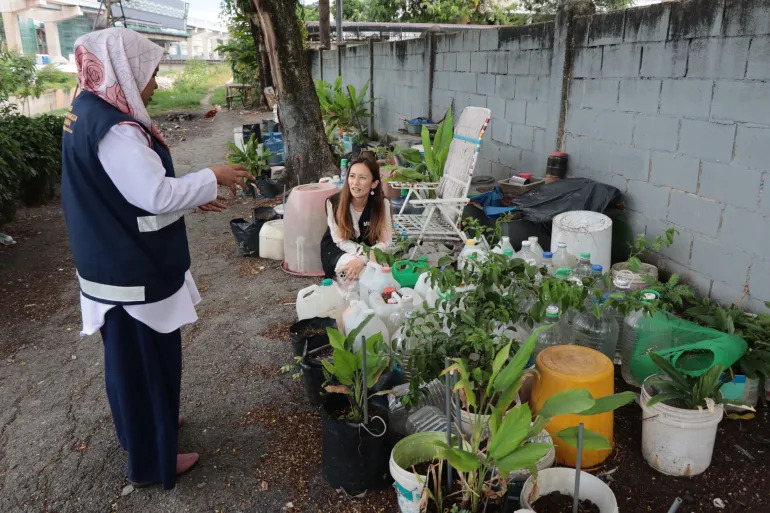
In Malaysia, 27-year-old Abe Lim, an heir to a lubricant and cleaning products business, departed from her father’s profit-focused approach, despite being groomed to take over the company. Instead, she founded Purpose Plastic, successfully transforming discarded plastic into home decor and other products while emphasizing sustainability.

Image Source: Al Jazeera / Abe Lim

In some cases, the older generation encourages innovative thinking to secure the ongoing success of their businesses. The Lopez family in the Philippines, known for success in telecommunications and energy, divested from coal in 2016 to focus on renewable energy. Marianna Lopez Vargas, partnerships manager at the Oscar M Lopez Center, believes that a complete transition to renewables is achievable with the right incentives.

Singapore-based Fernando Scodro, responsible for his family office’s investment strategy, is educating his family about socially conscious investing, which leads to impactful investments like COGNI, a Brazilian startup focused on energy efficiency.

As these Asian business heirs redefine success, their commitment to sustainable investments signals a profound shift toward a more socially and environmentally conscious business landscape.

Featured Image Sources: Al Jazeera, Esquire PH, X

107308298-1695918669890-107308298-1695912316230-230920-mi-10-MM-jae-byun00_00_21_07Still021_REV-jpg

News

A Teacher and Basketball Coach’s Path to a Six-Figure Income in Orange County

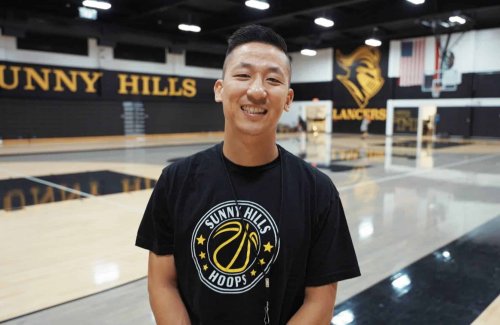
Meet Jae Byun, a math teacher and basketball coach in Orange County, California, who’s making a six-figure salary doing what he loves.

Originally majoring in business economics at the University of California, Irvine, Jae initially set his sights on a financial industry career. However, after completing internships in that field, he felt a desire for something different.

During his senior year in 2013, he accepted a coaching position at his former high school in Orange County, guided by the stability and income potential his coaches emphasized in the teaching profession.

“It wasn’t going to make me a millionaire, but it was going to allow me to have time and freedom. That really appealed to me,” he said to CNBC.

Born in South Korea, Jae moved to California at a young age and grew up valuing hard work, learning from his truck driver father and spa worker mother. His parents were concerned about him at first and disappointed that he took a career in education, but eventually, they came around with the fact and loved that Jae now lives with them. Jae is paying them $800 for rent and helping with household expenses, even though they told him that he didn’t need to.

Image Source: CNBC

It took Jae about six years to reach his current salary of nearly $115,000, including coaching stipends and summer programs. He actively manages his money, saving half of his monthly income and investing in retirement accounts. Even with some unexpected expenses, Jae remains committed to financial stability.

Looking ahead, Jae plans to generate extra income and ensure a comfortable retirement for his parents.

Featured Image Source: CNBC

IMG_1735-jpg

Stories

How This Solo Female Founder Leverages Technology to Create Authentic Relationships

Ever found yourself in a new place, surrounded by unfamiliar faces, looking for friends or a community that shares your interest? Erin Zhao knows that feeling all too well.

With a childhood marked by frequent moves, each relocation brought Erin the recurring challenge of seeking kindred spirits who matched her enthusiasm for outdoor activities like cycling, golfing, and hiking. But here’s the thing: we live in an era where it’s so easy to connect with people virtually, have friends online, and yet feel like something’s missing.

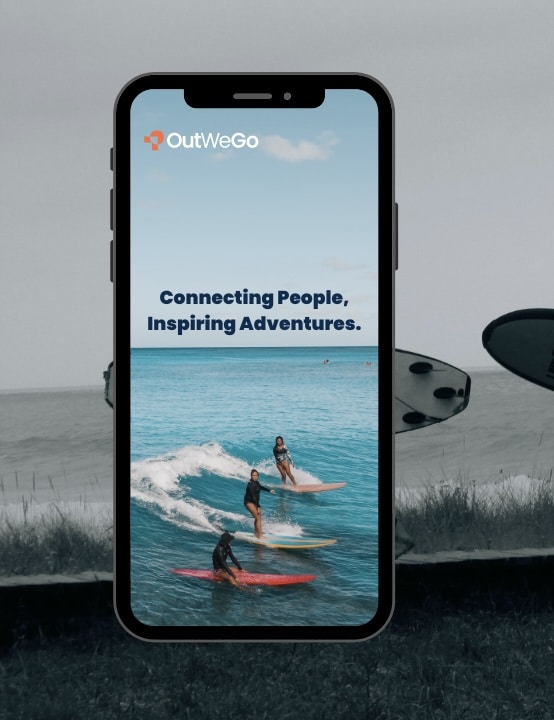
As a person who loves solving puzzles and coming up with creative solutions, Erin founded OutWeGo, a wellness platform headquartered in the Bay Area, designed to combat feelings of loneliness and disconnection by facilitating personalized activities in an exclusive and curated community.

The Challenges of Being a Solo Female Founder and First-Time Entrepreneur

Erin faced distinctive challenges on her path to establishing OutWeGo, specially as a solo female founder and a first-time entrepreneur. One of them was finding the delicate balance between technological innovation and a human-centric vision.

Creating a digital platform that encourages authentic personal connections demands not only technical skills but also a deep understanding of social dynamics and user safety. Erin tackled this challenge by immersing herself in user feedback, embracing iterative design, and ensuring the platform was not only secure but also intuitively designed.

Another challenge that Erin faced was the weight of responsibilities that comes with being a solo founder. Managing everything from product development to marketing, finance, and user experience without the buffer of co-founders meant an increased workload and the necessity for rapid up-skilling in various domains.

Erin met this challenge head-on by embracing continuous learning, taking online courses, and networking with experts to acquire knowledge beyond her initial expertise.

Creating a Solution to the Problem

While doing extensive market research, including interviews with her friends and strangers, Erin found that the struggle of having real, meaningful connections these days is widespread. She discovered that many people, particularly those relocating or seeking companionship for specific activities, faced difficulties in finding suitable partners.

Realizing the commonality of this problem, Erin saw a clear opportunity to leverage technology and create a solution with OutWeGo.

Bridging the Gap with OutWeGo

Erin’s mission with OutWeGo is clear – to facilitate genuine, meaningful connections by bridging the gap between digital interactions and real-world social experiences. The vision is to create an exclusive, curated platform where individuals bond over shared interests, particularly in outdoor and sports activities.

For the Asian community, OutWeGo serves as a powerful tool for empowerment. The platform fosters inclusivity, providing a space where Asians in the diaspora can connect with peers who share similar backgrounds, values, and passions. OutWeGo nurtures a sense of belonging and solidarity, reinforcing cultural connections and supportive networks among Asians living abroad.

OutWeGo Cycling Activity

Erin’s role in advancing overall wellness and social cohesion aligns with the principles of diversity, inclusivity, and mutual respect, making a tangible difference in the lives of the Asian community.

Connect with OutWeGo

Website: outwegosocial.com

Instagram: @outwegosocial

Linkedin: OutWeGo

107029357-1647031565961-Francis_Lau_-_B-roll_Stringoutmp400_24_35_15Still004-jpg

News

The Unspoken Truth About Early Retirement Based on This 42-Year-Old Retired Engineer

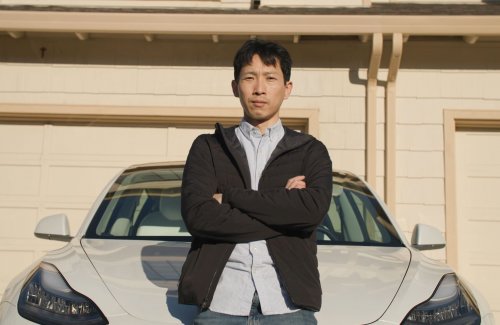
In the pursuit of early retirement, Francis, a 42-year-old electrical engineer, made headlines when he quit his job in 2017 with a substantial $1.2 million in savings and investments.

At the time, he embraced the FIRE (Financial Independence, Retire Early) movement, a concept that advocates for financial freedom and early retirement. However, Francis’s unique journey and subsequent return to work shed light on the misconceptions surrounding the desire for complete retirement.

According to CNBC, upon leaving his engineering role, where he earned a $120,000 base salary plus additional equity and bonuses, Francis discovered that a life without work became “really boring.” Contrary to the belief that most people aspire to retire early, he contends that what individuals truly seek is a sabbatical or extended break from their careers, typically lasting a year or two.

Image Source: CNBC

He had $1.2 million in savings and investments when he quit his job, and he shared that the trick to getting there was spending as little money as possible. First, he paid off his house, which cost $22,000 a year. Then, he tried hard to spend as little money as possible on everything else. 

He cut out things like streaming services and even went without a cellphone for a bit. Francis is also really good at using credit cards to get points, and he has more than 20 of them at a time. This helps him get extra value for his money.

Even though he enjoyed two years of not working and traveling, Francis got a bit bored and decided to start working again in 2019. But this time, he focused on his YouTube channel with 350,000 followers, making videos about money topics. It turns out people loved it, and he now makes around $10,000 a month from YouTube. This money covers his living costs, and whatever is left goes into his savings.

“Now I no longer call myself ‘retired’ because I am putting in my full-time effort into YouTube,” Francis shared to CNBC. “I’d like to put a lot more work into it and grow it … I think it’s a work in progress.”

Featured Image Source: CNBC